Madrid royal sites: El Escorial, Aranjuez and the Royal Palace in 2 days
El Escorial: Monastery Site Guided Tour
Quick answer: Madrid sits at the centre of Spain’s royal heritage — within 50 km you have the Royal Palace in the city itself, El Escorial monastery 55 minutes by Cercanías (Philip II’s austere granite complex in the Sierra foothills), and Aranjuez 50 minutes south (the Bourbon summer palace and formal gardens on the Tagus). Two days covers all three comfortably, tracing the arc of Spanish royal architecture from Habsburg austerity to Bourbon opulence.
The history of Spain’s monarchy is inscribed in its buildings in a way that no museum can replicate. Philip II chose granite and sobriety at El Escorial in the 1560s, building a monastery-palace-mausoleum in the Sierra de Guadarrama foothills that was as much a statement of religious seriousness as political power. The Bourbon kings who replaced the Habsburg line in 1700 took the opposite approach — marble, mirrors, formal French gardens, painted silk — and their response to El Escorial is the Royal Palace in Madrid itself and the summer retreat at Aranjuez.
Visiting all three gives you a two-day concentrated course in Spanish royal history from the Counter-Reformation to the Age of Enlightenment. The buildings are the argument.
| Duration | 2 days (1 in Madrid, 1 split between El Escorial and Aranjuez) |
| Getting to the sites | Cercanías C-8a to El Escorial (~55 min), C-3 to Aranjuez (~50 min) |
| Cost | Around €10–€20 in train fares plus €25–€40 in site entries |
| Pace | Full second day — an early start is essential to cover both sites |
| Best time | April–June for Aranjuez strawberries and gardens; autumn for El Escorial |
Day 1: The Royal Palace and Habsburg Madrid
Morning: Royal Palace — the Bourbon palace on a Habsburg site
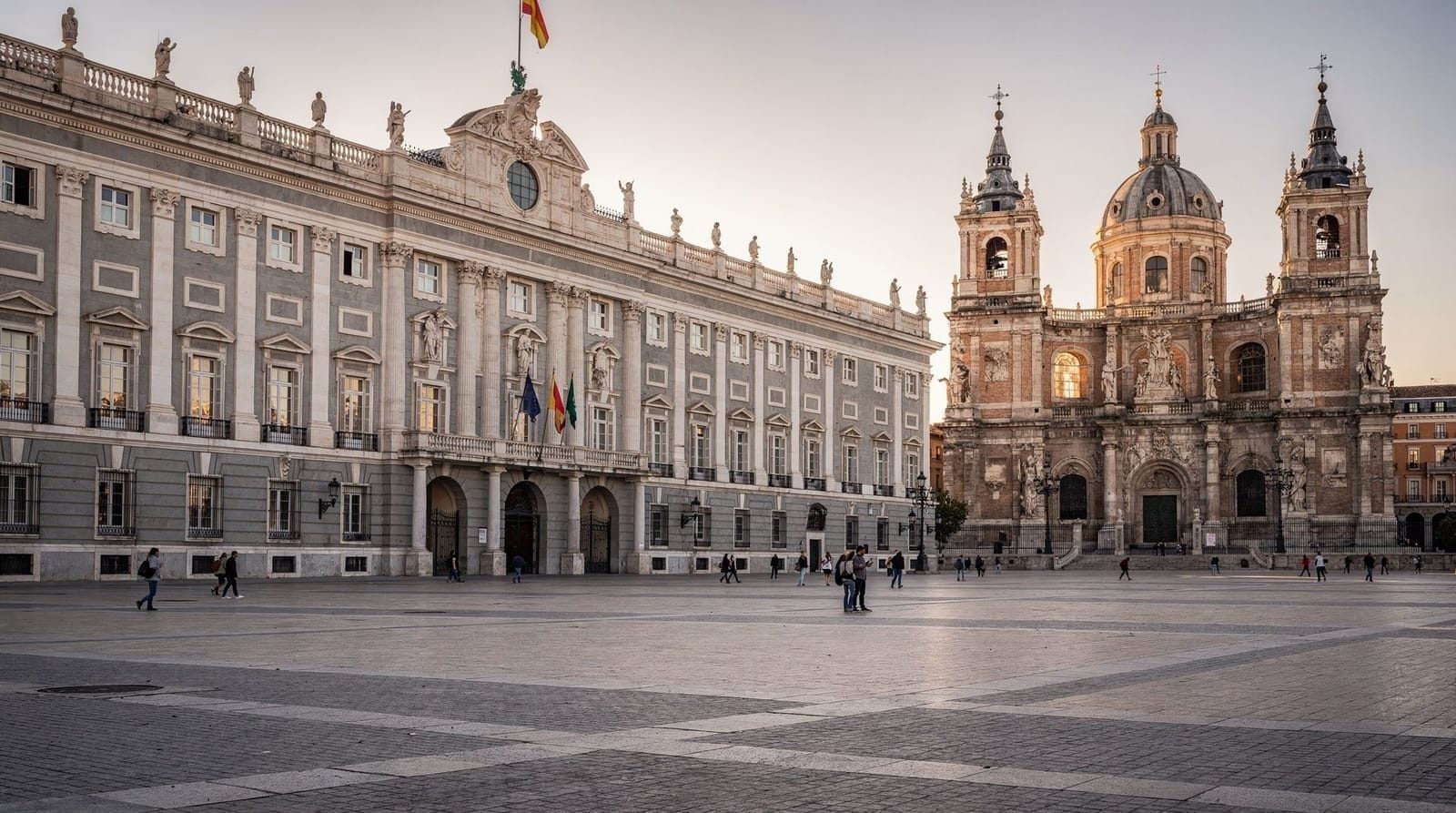
Start at the Royal Palace of Madrid when it opens at 10 am. Pre-book a Royal Palace fast-access ticket — this is Madrid’s most-visited paid attraction and walk-in queues in peak season (April–May, September–October) regularly reach 45–60 minutes. With a pre-booked ticket you walk past the queue directly to the entrance.
The Palacio Real’s backstory is essential to understanding what you are looking at. The current building replaced the original Habsburg Alcázar, which burned down in a spectacular fire on Christmas Eve 1734. Philip V — the first Bourbon king of Spain, grandson of Louis XIV of France — used the occasion to build a replacement that would make a statement about the new dynasty. He commissioned Filippo Juvara and later Giambattista Sacchetti (after Juvara died) to build something in the Italian Baroque style, deliberately rejecting the Bourbon taste for French design to signal his accommodation with Spanish tradition, while also deliberately outscaling El Escorial and every other European royal residence.
The result has 3,418 rooms across 135,000 square metres — the largest functional royal palace by floor area in Western Europe, though the Spanish royal family has lived at the Zarzuela Palace since the 1930s and uses the Palacio Real only for state ceremonies. The circuit open to the public covers around 50 rooms.
The rooms to understand:
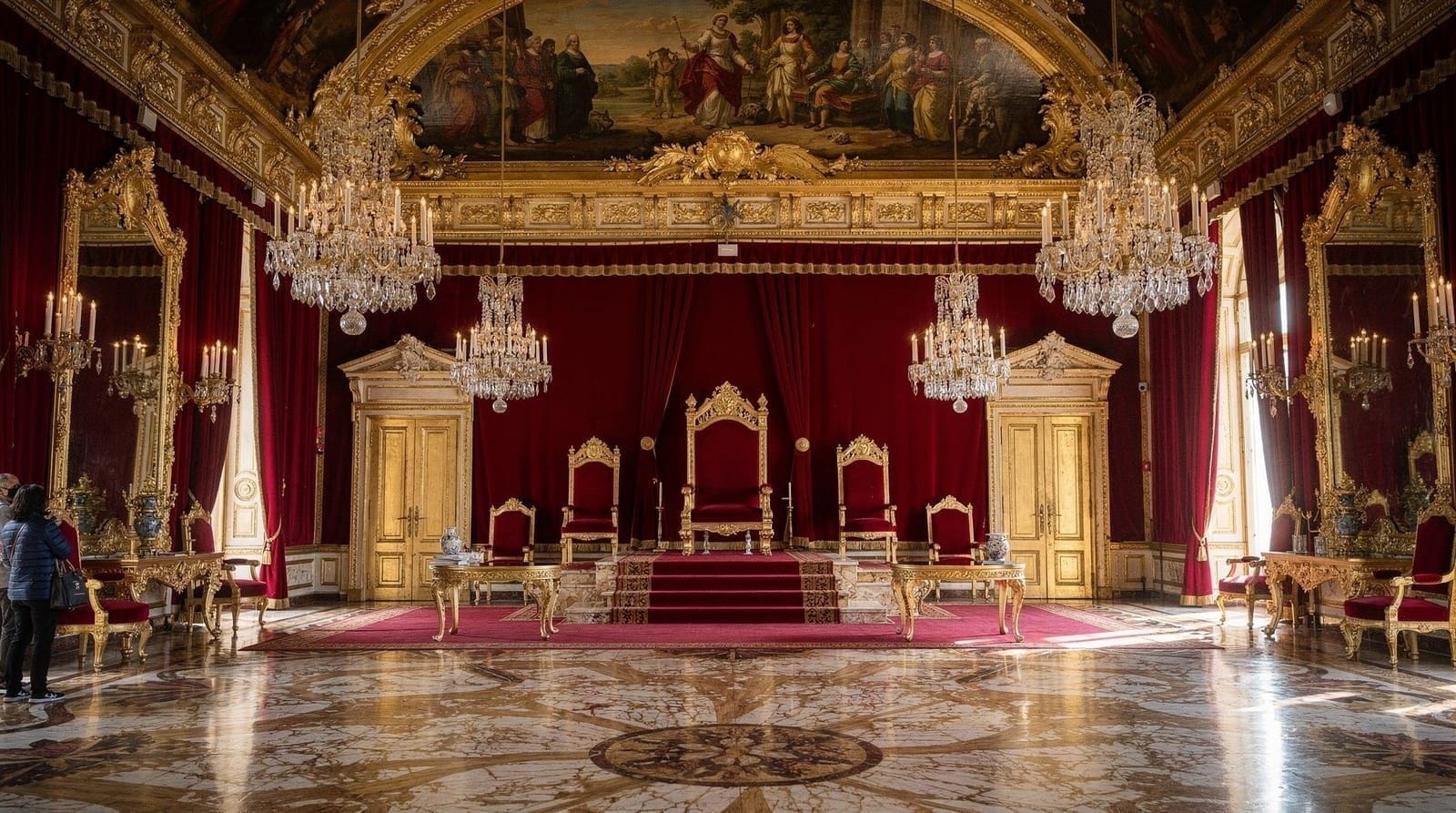
The Throne Room is the palace’s formal centrepiece. The ceiling fresco is by Giovanni Battista Tiepolo — the same Venetian master who painted several rooms in Würzburg’s Residenz — and depicts the Allegory of the Spanish Monarchy. A 1,500-piece Bohemian crystal chandelier, four Venetian pier glasses, and 18th-century Neapolitan gilded furniture from the workshop of Mattia Gasparini frame the experience. The two lion-guardian thrones are still used during state visits when foreign heads of state are received.
The Gasparini Room is the king’s ceremonial dressing room — a full-room immersive environment of embroidered Chinese silk walls and ceiling, Neapolitan mosaic floor, and embroidered furniture. Mattia Gasparini oversaw the design over 15 years from 1760; the room is his masterpiece and one of the most complete 18th-century decorative-arts interiors in Europe.
The Royal Armoury is separately justifiable as one of the world’s best collections of medieval and Renaissance weapons and armour. The holdings include Charles V’s personal battle armour (worn at the Battle of Mühlberg, 1547, and documented in Titian’s famous equestrian portrait), Hernán Cortés’s armour from the conquest of Mexico, and an unbroken sequence of royal armour from the 15th to the 17th century. Allow 30–45 minutes here alone.
Allow a total of 90–120 minutes for the full circuit.
Midday: Almudena Cathedral and the Austrias quarter
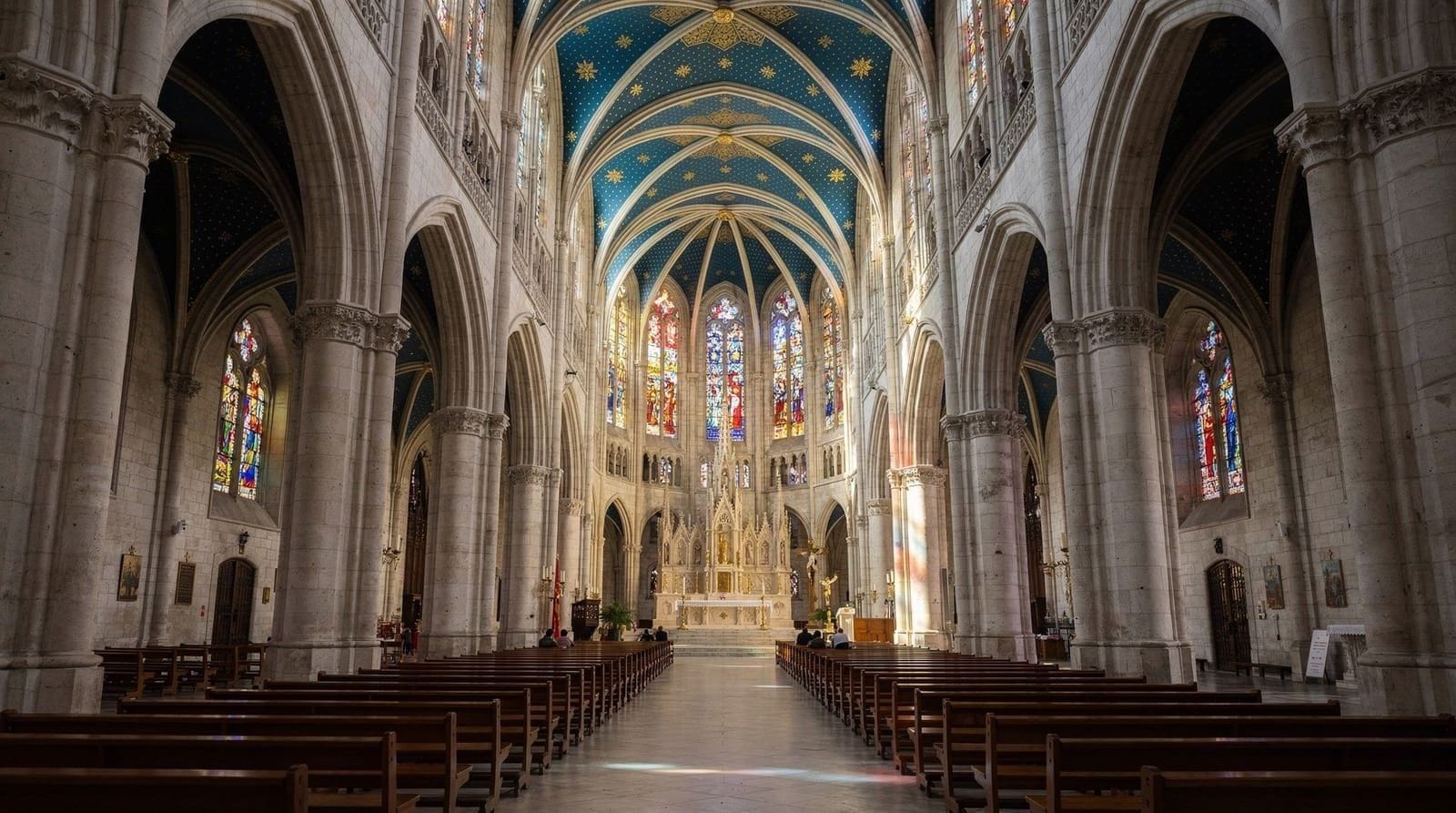
Immediately across the Plaza de la Armería from the Royal Palace, the Catedral de la Almudena is Madrid’s main cathedral, completed in 1993 after a construction process that began in 1879 and was interrupted repeatedly by war and political upheaval. The result is architecturally unusual: the exterior is neo-Gothic, the interior is a 20th-century interpretation of Gothic form with modern stained glass that ranges from traditional iconography to brightly coloured contemporary panels.
Entry is free. The cathedral museum (small, on the eastern side) has a good collection of medieval and Renaissance religious art; the rooftop terrace (ticket required) offers views over the palace and the western city.
Walk east from the palace into Madrid de los Austrias — the Habsburg-era streets that were the original city core before the Bourbon transformation. The neighbourhood’s name comes from the Austrian (Habsburg) dynasty, los Austrias, who ruled Spain from Charles I (Charles V of the Holy Roman Empire) to Charles II. The streets are still structured as they were in the 16th–17th century: narrow, cobbled, clustered around the parish churches and convents that Philip II endowed.
Plaza Mayor (completed 1619 under Philip III) is the grandest public space of this era — an arcaded Renaissance square originally used for markets, trials, bullfights, and royal proclamations. The Juan de Herrera-inspired design (also his work on El Escorial) gives both spaces a family resemblance: severe horizontals, grey slate roofs, minimal ornamentation. Walk through rather than sitting at the terrace cafés, which are tourist-priced.
From Plaza Mayor, continue east through the Arco de Cuchilleros into the food streets of La Latina for lunch. A menú del día on Cava Baja is the honest option at €12–€15 for three courses.
Afternoon: Habsburg history walk and evening
Spend the afternoon in the Austrias quarter and La Latina with the Habsburg and Bourbon history guide as context — this guide traces the political and cultural arc from Charles V to Philip VI and makes the buildings you have seen and will see on Day 2 considerably more legible.
The Convento de las Descalzas Reales (near Sol, limited opening hours) is an extraordinary Habsburg interior — founded in 1559 by Joanna of Austria, endowed with Flemish tapestries designed by Rubens and a collection of Habsburg royal portraits — that adds further context to this itinerary. Check opening hours before you go; visits are limited.
Dinner in La Latina or Barrio de las Letras. This is an early night if you are combining El Escorial and Aranjuez on Day 2.
Day 2: El Escorial (morning) and Aranjuez (afternoon)
The logistics of Day 2 require an early start, since El Escorial (morning) and Aranjuez (afternoon) are in opposite directions from Madrid.
Morning: El Escorial
Take the Cercanías C-8a from Atocha or Chamartín to El Escorial station. Trains run approximately every hour from around 6:30 am; the journey from Chamartín takes approximately 55 minutes. From El Escorial station, bus 661 or 664 (five minutes, €1.10) or a 15-minute uphill walk brings you to the monastery entrance. Taxis from the station cost €4–€6.
Aim to arrive at the monastery by 10:00 am. Allow three hours for the complex.
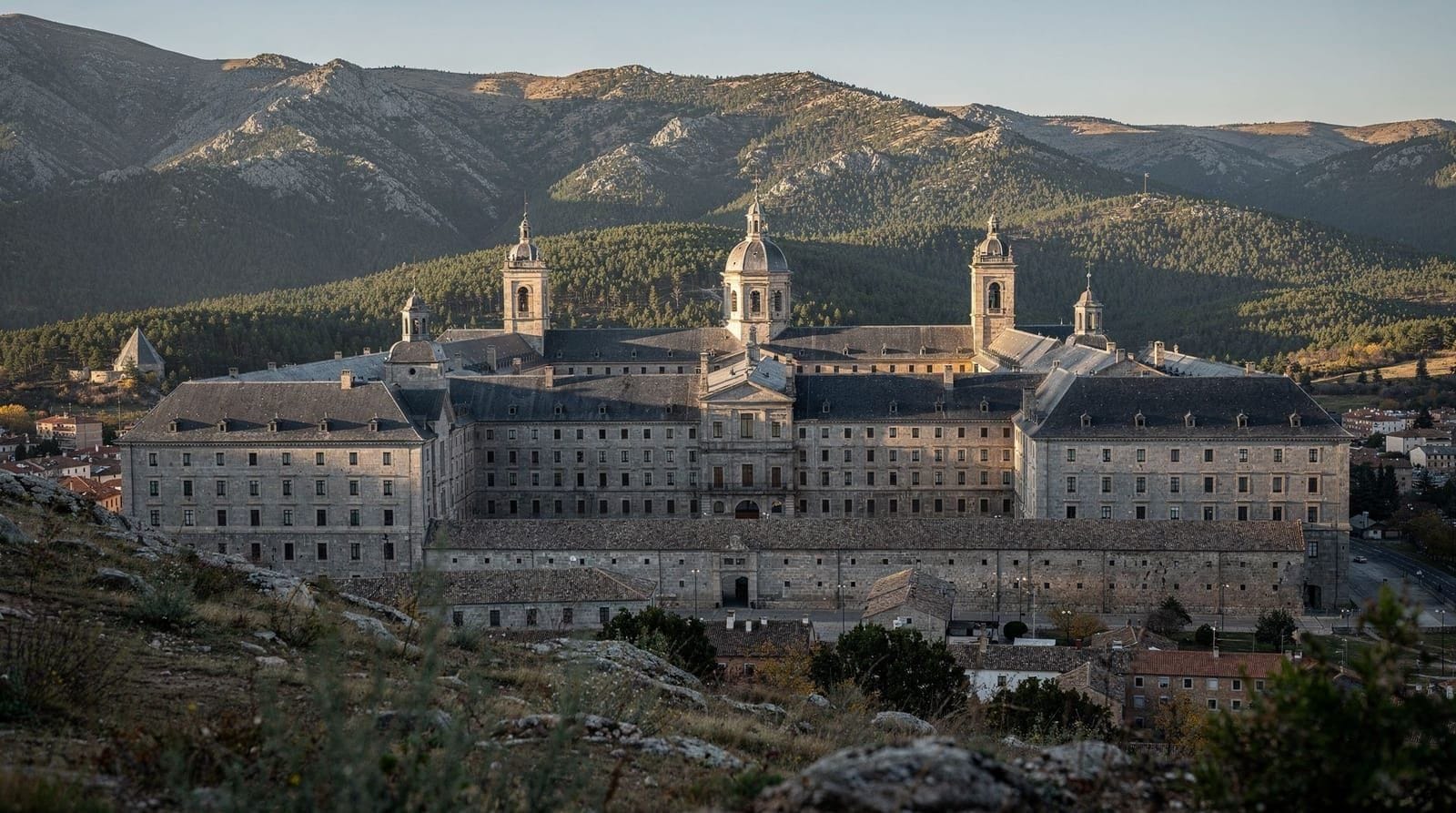
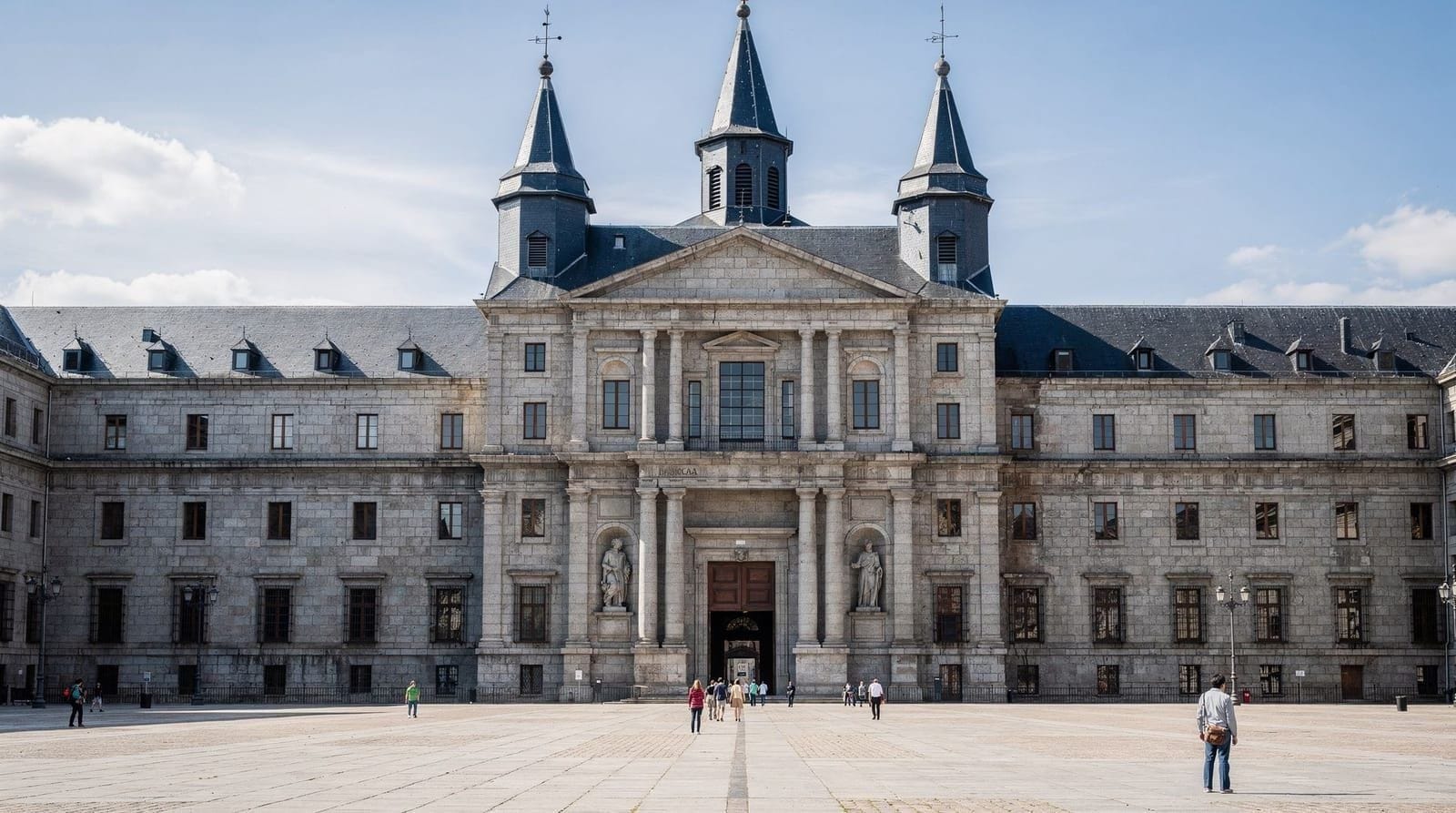
El Real Monasterio de San Lorenzo de El Escorial (closed Mondays) was built by Philip II between 1563 and 1584 as the dynastic answer to all questions. The brief was extraordinary: a royal palace, a functioning monastery (for the Hieronymite order), a seminary, a library, and a mausoleum for the Spanish royal family — all combined in a single complex in the Sierra de Guadarrama mountains, 50 km from Madrid. Philip II famously described the building he wanted as a palace for God and a hovel for a king.
The result, designed primarily by Juan de Herrera, is 207 metres long, 161 metres wide, has four towers at its corners, 4,000 windows, 86 staircases, and 15 km of corridors. The exterior is purely austere — grey granite, no ornament, horizontal lines — in complete contrast to the Palacio Real and Aranjuez that came after it under the Bourbon dynasty.
The interior is another matter entirely.
The Panteón de los Reyes beneath the high altar is one of the most powerful spaces in Spain. Reached by a gilded baroque staircase descending from the main basilica, it is an octagonal room lined with black marble sarcophagi arranged in tiers around three walls — 26 kings and queens of Spain, from Charles I (died 1558) to Alfonso XIII (died 1941). The only monarchs missing are Philip V and Ferdinand VI, who were buried at other sites. The atmosphere is solemn, dark, and completely unlike any other royal mausoleum in Europe.
The Library is 65 metres long — the full width of the monastery’s principal floor — with a barrel-vaulted ceiling painted in fresco by Pellegrino Tibaldi and shelves of 40,000 volumes arranged spine-inward. Philip II ordered the books shelved with their spines facing inward (the opposite of normal practice) — the official explanation being that the spines disturbed the visual harmony of the room; the darker interpretation being that this made the titles illegible to visitors and prevented casual reading of potentially heretical texts. The illuminated manuscripts and atlases in the cases along the centre are particularly fine.
The Basilica has a high altar retablo by Juan de Herrera and contains El Greco’s Martyrdom of Saint Maurice and the Theban Legion in the sacristy — one of the few El Greco works that Philip II actually commissioned, and one he ultimately rejected for the high altar (he found it too concerned with personal religious ecstasy and insufficiently doctrinal). The rejection helped drive El Greco to Toledo, where he spent the rest of his career.
The El Escorial monastery guided tour is strongly recommended for a first visit — the complex’s historical significance requires explanation at each space to make full sense. Entry without a guide is possible but substantially less rewarding; the Panteón and the Library in particular need context.
For visitors arriving from Madrid on a day trip, the Madrid to El Escorial half-day trip includes transport and entrance.
Return to El Escorial station by 14:00 to allow sufficient time in Aranjuez.
Afternoon: Aranjuez — the Bourbon answer
From El Escorial station, take the Cercanías back toward Madrid (direction Atocha) and then Cercanías C-3 south from Atocha to Aranjuez. Total journey time from El Escorial is approximately 90 minutes. Alternatively — and more efficiently — take a taxi from Madrid (€30–€35, 45 minutes) directly to Aranjuez in the early afternoon, skipping the train change.
Arrive in Aranjuez by 15:00.
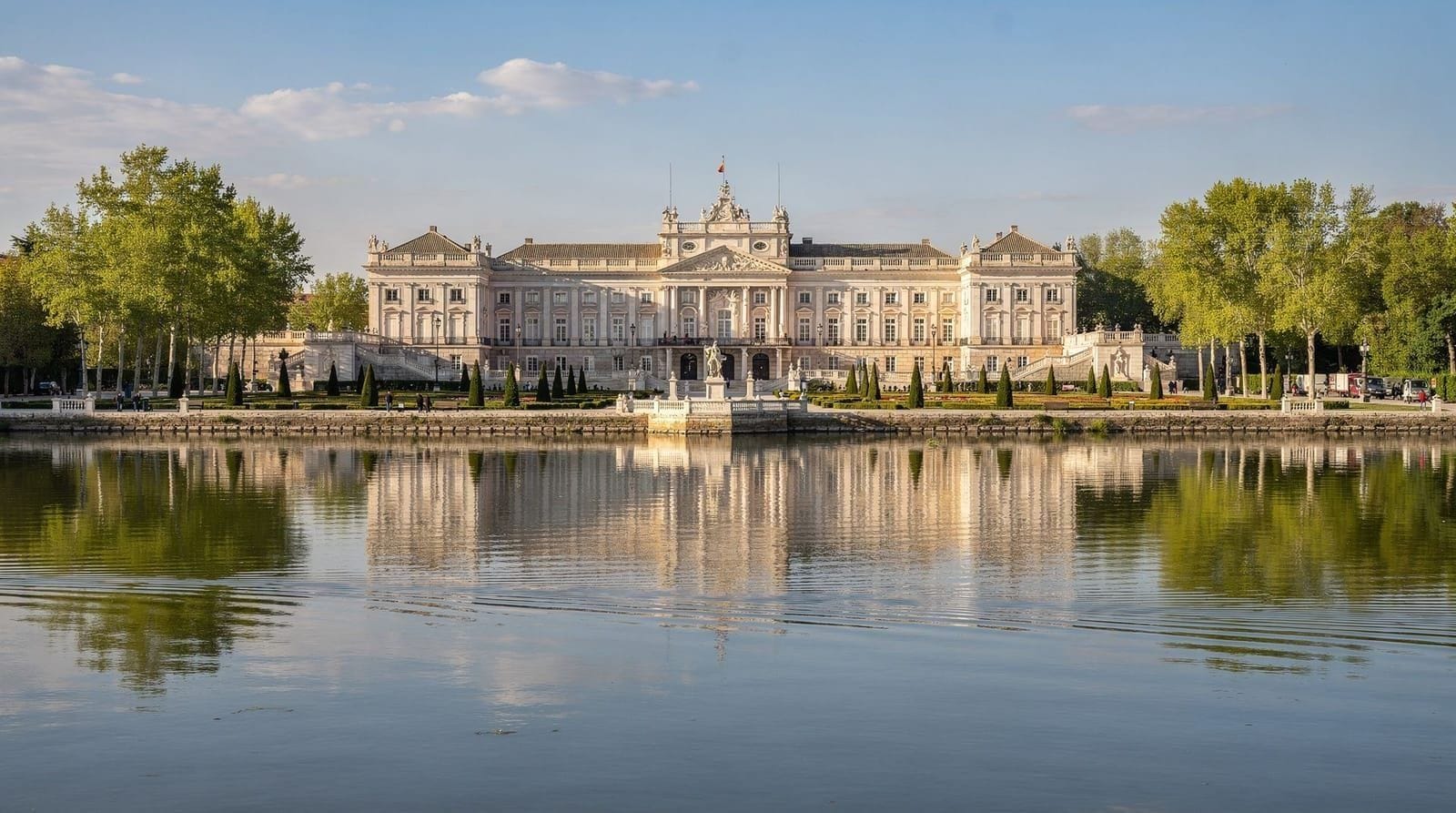
Aranjuez (pronounced ah-RAN-hweth) is the Bourbon counterpoint to El Escorial’s Habsburg severity. The royal residence here was transformed in the 17th and 18th centuries into Spain’s answer to Versailles — a formal palace complex surrounded by French-style gardens on the fertile flood plain of the Tagus river.
The Palacio Real de Aranjuez (closed Mondays and Tuesdays) has a circuit of royal apartments that are the most complete Bourbon interior in Spain outside the Palacio Real in Madrid. The highlight rooms: the Porcelain Room (entirely lined with hand-painted royal blue and white porcelain tiles in a Chinese-influenced style, made at the Buen Retiro porcelain factory in Madrid — comparable to the Porcelain Room in the Palacio Real), the Arabian Room (a 19th-century fantasy of Moorish Revival style, commissioned by Isabella II and built by modelling Islamic plaster decoration from the Alhambra in Granada), and the Throne Room with its Charles IV-era furnishings.
The palace gardens are the real star and deserve at least 60–90 minutes. Three distinct garden styles reflect different eras and tastes:
The Parterre Garden (closest to the palace) is a formal French geometric garden with box hedges, fountains, and topiary — the Bourbon import of Le Nôtre-style garden design to Spain.
The Island Garden (Jardín de la Isla), enclosed by a canal on the opposite side of the Tagus from the main palace approach, is a 16th-century Renaissance garden predating the Bourbon redesign — it was here that Philip II planted some of the first exotic botanical species brought from the New World, making Aranjuez an early centre of botanical study.
The Prince’s Garden (Jardín del Príncipe), stretching 2 km along the river, was laid out in the 1760s for the Prince of Asturias (the future Charles IV) in the English landscape style — informal, naturalistic, with a lake, a Chinese pavilion, and a gondola pavilion built to house the royal river vessels.
The private Aranjuez tour from Madrid combines transport and a private guide for the palace and gardens.
Strawberries. Aranjuez’s market gardens have supplied the Spanish court with strawberries since the 16th century; the fresas de Aranjuez variety (April–June) are sold in every bar and restaurant in the town in season. If your visit falls in this window, eat them. They are served as a dessert, sometimes with cream, sometimes plain. The quality is genuinely different from ordinary supermarket strawberries.
Dinner in Aranjuez before the return train, or return to Madrid (50-minute Cercanías C-3 from Aranjuez station, trains every 20–30 minutes) for dinner in La Latina or Barrio de las Letras.
The dynasty in three buildings
This itinerary traces Spain’s royal history in compressed form:
El Escorial (1563–1584): The Habsburg worldview — absolute religious authority, God’s empire on earth, the king as God’s first servant rather than God’s representative on earth. The austerity is deliberate; ornamentation would be vanity.
Royal Palace in Madrid (1738–1764): The Bourbon import of Italian-French court culture. The king as the embodiment of civilised power, surrounded by paintings, tapestries, and porcelain that demonstrate cultural sophistication. The same political power, different language.
Aranjuez (17th–18th century): The pleasure palace — where the court retreated from the ceremony and politics of the Palacio Real to enjoy the spring countryside, the gardens, the river, and the strawberries. The private face of royal power.
The Habsburg and Bourbon history guide provides the narrative that connects all three.
Realistic cost for the two days
Budget roughly €183–€263 per person across both days, excluding your Madrid accommodation: the Royal Palace ticket €18, dinner in La Latina €25–€35 on Day 1, Cercanías fares to El Escorial and Aranjuez around €10–€16 combined, El Escorial entry or guided tour €12–€35, the bus or taxi from El Escorial station €1–€6, the Aranjuez palace entry or private tour €9–€40, and meals on Day 2 (lunch near El Escorial, strawberries and dinner in Aranjuez or back in Madrid) €30–€45. Choosing the guided options over self-guided entry roughly doubles the day-2 cost but is worth it for El Escorial specifically, where the context genuinely changes the experience.
Why the Day 2 sequence runs El Escorial first
Doing El Escorial in the morning and Aranjuez in the afternoon, rather than the reverse, is a deliberate choice worth understanding rather than just following. El Escorial requires the fuller mental engagement — the Panteón and the Library reward attention that is easier to give early in the day. Aranjuez’s gardens work well in softer afternoon light and do not demand the same concentration; wandering the Parterre and Island Gardens as the day cools down is genuinely more pleasant than doing it at 10 am. The train logistics also favour this order: the connection from El Escorial back through Madrid to Aranjuez is the itinerary’s only awkward leg, and doing it mid-afternoon rather than first thing avoids compounding an early start with an immediate connection.
Practical notes
- El Escorial is closed on Mondays. If Monday falls on Day 2 of your itinerary, swap the days — Aranjuez on the morning, El Escorial in the afternoon — or restructure the whole itinerary by a day.
- Aranjuez palace is closed on Mondays and Tuesdays. Both sites have the same Monday closure; check official Patrimonio Nacional hours before finalising dates.
- El Escorial timing. The monastery is large; three hours is the minimum for a proper visit. An early 10:00 am arrival leaves enough time before the 14:00 departure for Aranjuez.
- No car required. Cercanías trains handle both day trips from Madrid efficiently; the only inconvenient leg is El Escorial → Aranjuez (requiring a Madrid connection), which can be replaced by a direct taxi if time is tight.
- Best season. Spring (April–June) for Aranjuez — the strawberry harvest is on and the gardens are at their best. Autumn is excellent for El Escorial — the Sierra has autumn colour and the palace is less crowded than in summer.
- Combine with the Sierra de Guadarrama. The Sierra de Guadarrama guide describes the mountain terrain immediately behind El Escorial; if you have a third day, a walk in the Sierra or a drive through the Guadarrama Pass is the natural addition to this itinerary.
- Footwear and stamina. Both sites involve substantial walking on hard stone floors (El Escorial) and gravel garden paths (Aranjuez); comfortable, broken-in shoes matter more here than on a typical museum day, since there is little soft flooring to relieve tired feet.
Frequently asked questions about Madrid’s royal sites
Is it possible to see El Escorial and Aranjuez in one day?
Yes, with careful planning. Leave Madrid for El Escorial at 9:00 am, allow three hours at the monastery, and head to Aranjuez by 14:00. You arrive in Aranjuez by 15:30 and have 2.5 hours before closing — enough for the palace circuit and a walk in the Parterre Garden. It is tight but workable.
Which royal site is most impressive?
Most visitors find the Panteón de los Reyes at El Escorial the most viscerally powerful space; the Royal Armoury in the Palacio Real in Madrid the most internationally famous; and the Aranjuez gardens the most beautiful overall. All three are architecturally exceptional.
Do I need a guide at El Escorial?
A guide makes a significant difference here. The monastery is large and contextless without historical background; a guide explaining the political and religious significance of each space — particularly the Panteón and the Library — transforms the visit. The self-guided audio tour is a usable alternative; the organised guided tour from Madrid is the most convenient option.
Can I visit the Valle de los Caídos on the same day as El Escorial?
It is possible but tiring — the Valle de los Caídos (Valle de Cuelgamuros) is 13 km from El Escorial by taxi. Adding it requires a full day in the El Escorial area rather than the morning-and-Aranjuez structure of this itinerary. See the el-escorial-from-madrid guide for the combined visit logistics.
What if I can only fit in one of El Escorial or Aranjuez?
Choose based on what draws you more: El Escorial for religious and political history, austere architecture, and the Panteón de los Reyes — a genuinely solemn, powerful space. Aranjuez for gardens, a gentler pace, and (in season) the strawberries — a more relaxed half-day than a history-dense one. History-focused travellers should lean El Escorial; anyone wanting a lighter, more scenic day trip should lean Aranjuez.
Two-day summary
| Day | Focus | Notes |
|---|---|---|
| Day 1 | Royal Palace, Almudena Cathedral, Austrias quarter | La Latina dinner |
| Day 2 morning | El Escorial monastery | Cercanías C-8a, ~55 min from Madrid |
| Day 2 afternoon | Aranjuez palace and gardens | Cercanías C-3, ~50 min from Madrid |
Top experiences
Bookable activities with verified prices and instant confirmation on GetYourGuide.