Pickpockets and safe areas in Madrid: the honest guide
Madrid: Prado Guided Skip the Line
Is Madrid safe and where do pickpockets operate?
Madrid is a safe city by European capital standards — violent crime against tourists is rare. The genuine risk is pickpocketing, concentrated in specific locations: Puerta del Sol (especially on crowded evenings), El Rastro Sunday market, Metro Line 1 (Gran Vía to Tribunal), Gran Vía, and the area around the Prado and Royal Palace. These are not dangerous areas — they are crowded tourist areas where professional thieves operate. The countermeasures are simple and effective: front-worn bag or money belt, phone in a secure pocket, valuables in the hotel safe.
| Main risk | Pickpocketing, not violent crime |
| Hotspots | Puerta del Sol, El Rastro, Metro Line 1 (Gran Vía–Tribunal), Gran Vía |
| Safest areas | Barrio Salamanca, Chamberí, Retiro eastern zone |
| Cost of countermeasures | €0 — front pocket, crossbody bag, hotel safe |
| Worst time | Weekend evenings, summer afternoons, New Year’s Eve |
Madrid’s safety context: what the data actually shows
Madrid is a safe European capital. Violent crime against tourists — robbery with violence, assault, sexual assault — is statistically rare and not a meaningful planning concern for the overwhelming majority of visitors. Puerta del Sol at 23:00 on a Saturday is not dangerous in the sense of physical threat; it is crowded, animated, and the location for opportunistic theft.
The real risk is pickpocketing, and that risk is highly geographically concentrated. Understanding where it happens and why is sufficient to neutralise most of it.
The honest framework: Madrid’s petty crime problem is a professional-theft problem, not a general crime problem. The pickpockets operating in tourist hotspots are often organised, skilled, and systematic. They operate in places where visitors carry phones and cash and are distracted. They avoid residential areas where there are no suitable targets and local social pressure exists.
This means the risk is essentially elective: go to the hotspot areas carrying your passport, phone, and all your cash in accessible pockets, and you are a reasonable target. Go to the same areas with nothing in your back pocket and your bag worn in front, and the risk drops to near-zero.
The pickpocket hotspots: specific locations
Puerta del Sol
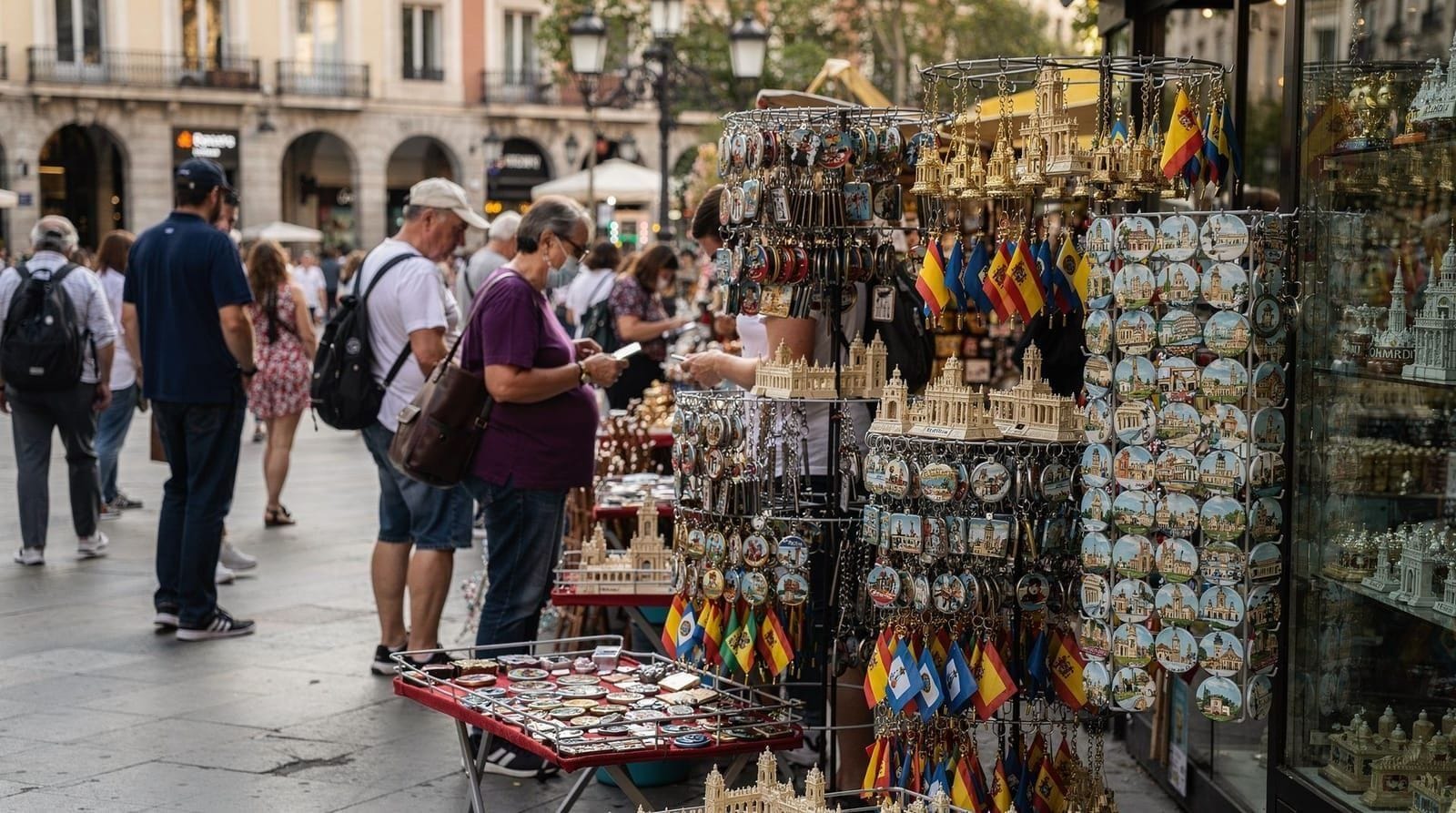
Sol is Madrid’s Times Square equivalent — the most visited point in the city, constantly crowded, the junction between multiple metro lines and the main tourist pedestrian routes. It is also the highest-concentration pickpocket zone in Madrid.
When the risk is highest: Weekend evenings (Friday 20:00–Saturday 01:00, Saturday 20:00–Sunday 01:00), public holidays, summer afternoons (July–August when it fills with tourists), New Year’s Eve (extreme crowd density).
How it happens at Sol: Professional extraction in the crowd. In the densest moments, you feel nothing. Your phone was in your back pocket; now it isn’t. The thieves move quickly and in pairs — one creates a brief contact (a stumble, a bump) while the other extracts. No engagement is necessary on your part.
Counter: Phone and wallet in front trouser pockets (not back pockets). Bag worn crossbody with the bag section in front of you, not hanging loose at your hip or back.
El Rastro Sunday Market
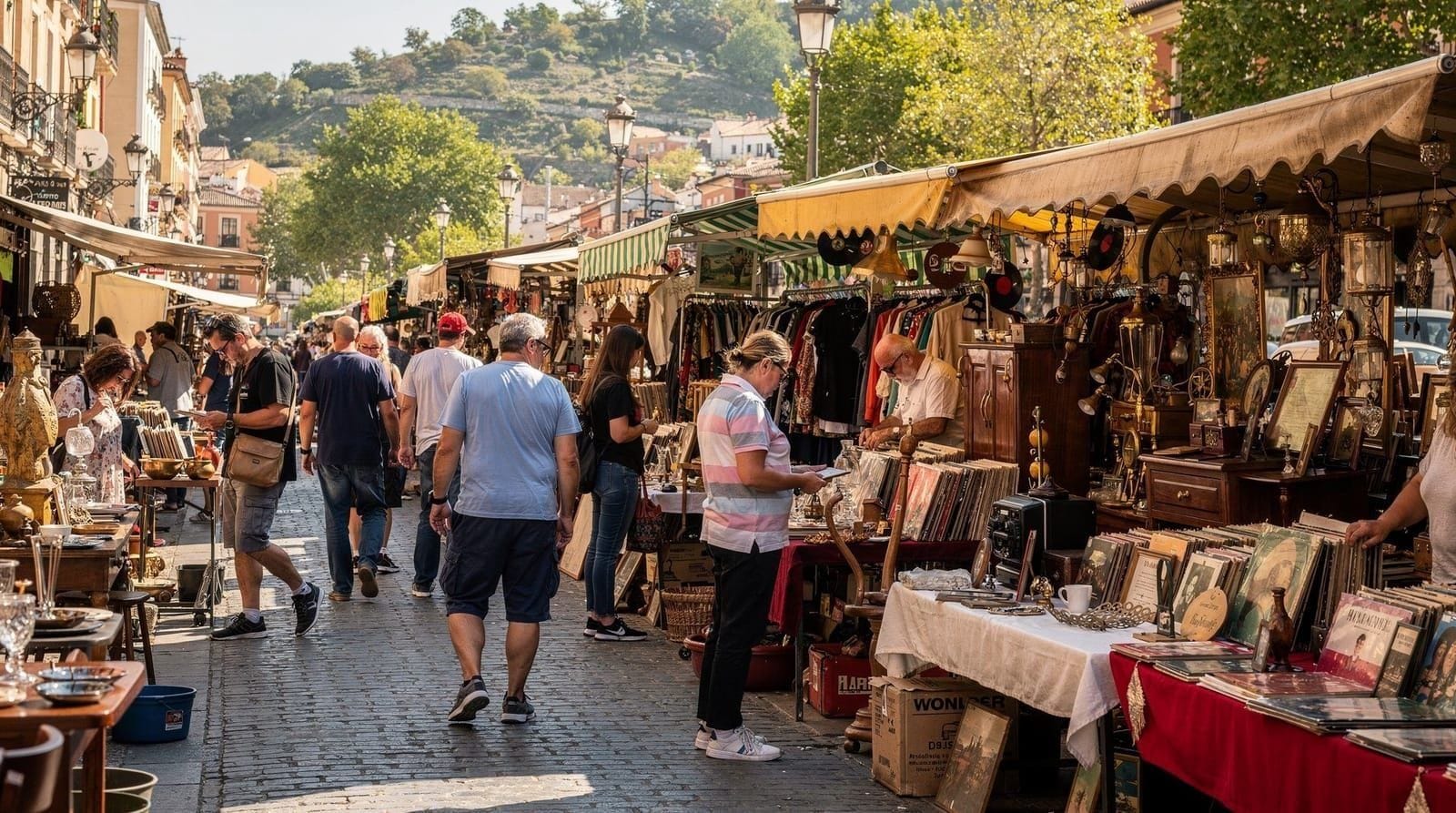
The Rastro is one of Madrid’s great free experiences and also a genuine pickpocket hotspot — the combination of crowds, narrow streets, and distracted browsers is ideal for professional thieves.
The high-risk point: The main street (Calle de la Ribera de Curtidores) and the tributary streets at their most crowded, typically 10:00–13:00 on Sunday.
Counter: Do the Rastro with the same precautions as Sol. Leave your second bank card at the hotel. Market browsing puts your hands on objects and your attention off your belongings — this is precisely when extraction happens.
See the El Rastro guide for navigating the market itself.
Metro Line 1: Gran Vía to Tribunal
The most tourist-concentrated metro segment in Madrid. The technique here is usually pushing onto the carriage as doors close — creating a brief crush — combined with skilled extraction.
Counter: Move your bag to your front in crowded metro carriages. If someone pushes aggressively as you board, check your pockets immediately.
Gran Vía (the main shopping boulevard)
The Gran Vía between Plaza de España and Callao is one of Madrid’s busiest pedestrian streets. Street crime here is lower than at Sol but the concentration of tourists with phones out taking photos creates opportunity.
Specific sub-risk: Phone theft from hands. People walking while looking at their phone are occasional targets for quick grabs. Slightly more awareness walking through crowded sections is sufficient.
Prado–Royal Palace corridor
The tourist walking route between the Prado and the Royal Palace passes through the historic centre. The area itself is safe; the risk is the concentration of distracted tourists. More opportunistic than organised. If you’re carrying a bag through the Plaza Mayor or Puerta del Sol stretch of this route, keep it in front of you — both squares sit inside the highest-density pickpocket zone in the city.
Risk by location: quick reference
| Location | Risk level | Main technique | When |
|---|---|---|---|
| Puerta del Sol | High | Crowd extraction | Weekend evenings, summer |
| El Rastro | High | Distraction in crowds | Sunday 10:00–13:00 |
| Metro Line 1 (Gran Vía–Tribunal) | Medium–high | Door-closing crush | Rush hour |
| Gran Vía | Medium | Phone grabs | Daytime, crowded stretches |
| Salamanca / Chamberí | Low | — | — |
The safe areas: where crime is minimal
Salamanca district
Barrio Salamanca (east of central Madrid, around Calle de Serrano and Calle de Goya) is one of the lowest-crime residential areas in Madrid. Wealthy, calm, home to Madrid’s luxury retail. Street presence of the neighbourhood acts as social deterrence. Walking here at any hour is not a meaningful safety concern.
Chamberí
The northern residential district around Plaza de Chamberí is similarly safe. Local, quiet, not on the tourist circuit. The area has good restaurants and an authentic neighbourhood feel — see the Chamberí destination page — with minimal crime.
Retiro and Salamanca eastern zone
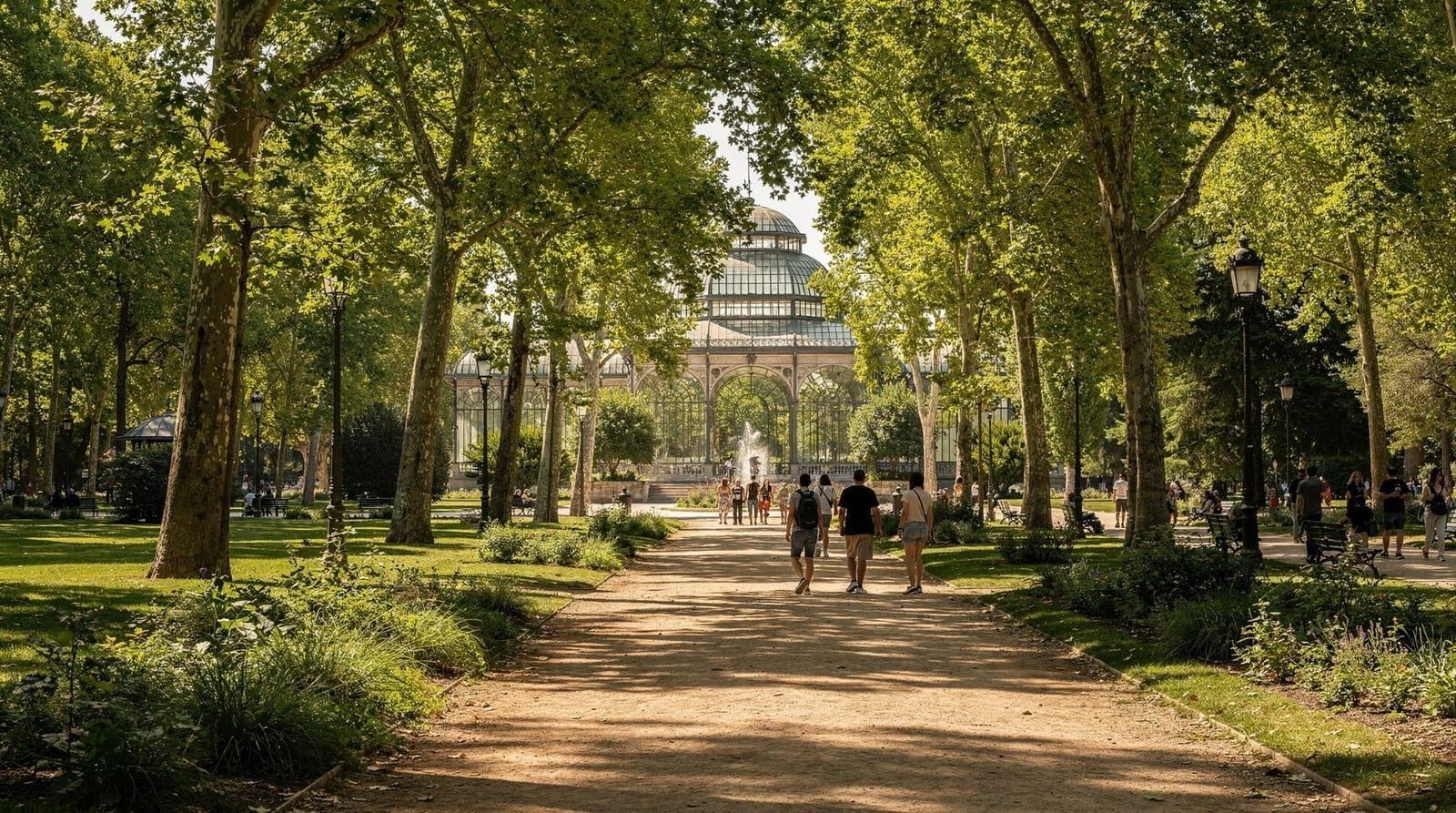
The residential area east of the Retiro park (around Calle de Alcalá east, Calle de Narváez) is safe and quiet. The park itself is safe during daytime and evening hours.
Practical protection: what actually works
Hierarchy of what to protect:
- Passport — Keep in the hotel safe whenever possible. Carry a phone photo of the data page. Losing your passport is the most disruptive outcome; losing cash is annoying but manageable.
- Main bank card — Carry it, but keep it separate from your other cards. If your wallet is taken, you want one card you can immediately report stolen while still having another to access money.
- Phone — The most common theft target because it has both monetary and data value. Front pocket or inner jacket pocket only in crowded areas. Wrist straps for phones are available and work.
- Cash — Carry what you need for the day (€40–60 typically). Leave the rest at the hotel.
Bag security:
- Rucksack: Move to your chest in crowded metro carriages, markets, and Sol. Wearing it on your back in a crowd is presenting an accessible target.
- Crossbody bag: Most practical for city use — small, worn in front, zipper facing up. One of the more theft-resistant options without being conspicuous.
- Handbag: If carried over one shoulder, wear it on the side away from traffic (if on a pavement) and hold it rather than letting it swing.
What not to worry about:
- Your hotel room (standard European security; use the safe for valuables)
- Restaurants and bars (not a meaningful theft environment)
- Daytime exploration of any tourist area (awareness is sufficient)
- Night buses and late metro (safe in the physical threat sense)
Museums, queues and palaces: staying alert where you stand still
Some of the most exposed moments of a Madrid trip are not on the street at all. They happen in queues. When you stand in a slow line outside a major sight, you are stationary, your attention is on the ticket office or your phone screen, and you are surrounded by people who are also distracted. For a thief, that is the same set of conditions as a crowded junction, with the extra advantage that you cannot easily walk away.
Two habits help. First, arrive with tickets already sorted so that you are not digging through bags and pockets in public. Second, keep your bag in front of you and your hands free of loose items while you wait. If a long queue is the thing that worries you, pre-booked entry shortens the time you spend standing around; for the Prado that can mean a guided visit with skip-the-line entry, which also keeps you with a guide and a group rather than drifting alone through the busiest rooms. The same logic applies at the Royal Palace, where an expert-led visit with priority entrance removes most of the waiting in the square outside.
Inside the museums themselves, theft is much less common than outside, and bag rules and cloakrooms mean you will often be asked to leave larger items anyway. Use the cloakroom for anything bulky, keep a small crossbody bag for your phone and a card, and enjoy the art. The Golden Triangle art walk is easy and safe to follow as long as you apply the same front-of-body rule between the three museums, particularly on the pavements and crossings where crowds bunch up.
Arrival day and airport transfers
The first hours in a new city are when people are most exposed: you are tired, carrying luggage, reading signs in an unfamiliar language and often looking at a phone for directions. Plan your arrival so that you are not doing all of this at once in a crowd. Read the route before you leave the airport, know which station you are heading for, and keep your luggage within sight and within touch at all times on the train or metro.
The airport to city guide explains the main options, and the Madrid metro guide covers how the network works once you are in the centre. If you are arriving late or with heavy bags, a taxi or ride-hailing car directly to your accommodation removes the most crowded part of the journey; the taxi vs Uber comparison helps you choose. Whatever you pick, do not put your phone on a café or station table while you check the route, and do not hand it to a stranger who offers to help with directions.
Spotting the moment: behaviours that should make you check your pockets
Most pickpocketing relies on a small number of recognisable moments. Learning them is more useful than memorising a list of streets.
- An unexpected bump or stumble in an otherwise open space. If there is room to walk around you and someone collides with you anyway, check your pockets.
- Someone is very eager to help, brushing something off your clothes or pointing at your shoes. The helpful hands are the distraction.
- A sudden commotion near you: a dropped bag of coins, an argument, a stranger holding a clipboard or petition and asking for a signature. Anything that makes a group of people turn their heads together works in the thief’s favour.
- A crowd that closes in behind you at the door of a metro carriage or on an escalator, especially when there is no obvious reason for the crush.
- A stranger standing unusually close while you use a cash machine or look at your phone.
The response is the same in every case: stop, touch the pocket or bag that matters, and move away from the contact. Do not chase anyone. If something is gone, the first priority is your cards and phone, not confronting people you cannot identify.
Walking the old centre with confidence
The historic core is compact and the most rewarding way to see it is on foot. The sensible approach is not to avoid it but to move through it with a plan. The Austrias and Plaza Mayor area is full of photogenic corners and terraces where it is easy to relax too much, so decide in advance which streets you will cut through. A walk with a knowledgeable local can be a good way to see the centre while someone else watches the route; if you like that idea, a guided city walk that includes the Royal Palace combines the main sights in one organised group, and the free walking tours guide lists the alternative if you prefer something looser.
If you are planning a first visit, the tourist traps in Madrid article is a useful companion to this page, since scams at restaurant tables and on the street often overlap with the pickpocketing techniques described above. The first-time Madrid tips post is another quick read before you travel, and the Madrid tourist traps to avoid piece covers the non-theft side of the same problem.
Lavapiés: the nuanced reality
Lavapiés deserves specific mention because it gets an exaggerated negative reputation. The neighbourhood has historically had higher crime rates than wealthier areas, but it has changed significantly in the past decade. It is now a genuinely interesting, diverse, culturally rich area where visitors exploring its street art, Moroccan and Indian food scene, and alternative cultural venues are not at unusual risk during normal hours.
The honest qualifier: some streets in the heart of Lavapiés, after midnight, have occasional open drug dealing. This is visible but not directed at visitors. The risk of physical confrontation or theft is minimal if you are walking through rather than engaging. Daytime and early evening exploration is entirely fine.
Where to stay if safety is your top priority
Choosing accommodation in a lower-crime, residential neighbourhood is a straightforward way to reduce your overall exposure — you spend your evenings and mornings, when you’re most likely to be tired and less alert, in a quieter environment. Barrio Salamanca and Chamberí are the two clearest choices; both are well connected by metro to the historic centre, so you are not trading safety for inconvenience. The where to stay in Madrid guide covers the full range of neighbourhoods with safety as one of several factors, alongside price and proximity to sights. If you prefer to stay centrally for convenience, Barrio de las Letras is a reasonable middle ground — more tourist traffic than Salamanca, but not a genuine crime hotspot.
Solo travellers and nightlife safety
Solo travellers, particularly at night, should apply the same location-based logic as daytime pickpocket avoidance: the risk in Madrid’s nightlife areas (Malasaña, Chueca, La Latina) is overwhelmingly about opportunistic theft in crowded bar streets rather than personal safety in a broader sense. Standard precautions apply — keep track of your drink, know how you’re getting back before you go out, and avoid displaying a phone or wallet unnecessarily in crowded bar queues. Night buses and the metro (where still running) are safe in the physical sense at any hour; the Madrid nightlife guide and late night Madrid guide cover the practical logistics of getting around after dark.
Frequently asked questions about Pickpockets and safe areas in Madrid
Where exactly do pickpockets operate in Madrid?
The main hotspots are well-documented: Puerta del Sol (the most crowded tourist junction, especially evenings and weekends); El Rastro Sunday flea market (dense crowds on Calle de la Ribera de Curtidores, particularly the narrow tributary streets); Metro Line 1 between Gran Vía and Tribunal (packed, distraction is easy); Gran Vía (the main pedestrian shopping boulevard, especially the stretch between Plaza de España and Red de San Luis); the tourist cluster around the Prado and the path between the Prado and the Royal Palace. Operations include distraction techniques (someone bumps you, an 'assistant' retrieves your wallet while you're distracted), friendly approaches (map-holding, 'rosemary' gift), and skilled extraction in crowds.Is Lavapiés safe for tourists?
Lavapiés has a reputation for crime that is partly outdated and partly overstated for the area's current character. The neighbourhood has gentrified significantly since 2010 and is now one of Madrid's more interesting residential areas (see the Lavapiés guide). Petty crime exists at a slightly higher rate than in Salamanca or Chamberí, but daytime exploration on foot is not a meaningful risk for most visitors. Avoid late-night solo walking in the darker streets around Calle del Mesón de Paredes after 02:00. The street art and multicultural food scene make it worth visiting; treat it like any city neighbourhood and you will be fine.Is the Metro in Madrid safe?
The metro is safe in the sense that you are not in danger of physical harm on any line at any hour. Pickpocketing does occur on the most tourist-heavy lines and stations: Sol, Gran Vía, and Callao on Lines 1, 2, and 3 are where professional thieves operate. The tactic is almost always distraction in crowds during peak hours. Practical countermeasure: phone goes in a zippered front pocket or trouser pocket, not the back pocket; bag goes in front of you (rucksack moved to your chest in crowded carriages). Metro late at night is operationally fine on all lines.Which Madrid neighborhoods are safest?
Salamanca district (Barrio Salamanca) is the safest area in Madrid by crime statistics — a wealthy residential neighborhood with minimal street crime. Chamberí (north central residential) and Almagro are similarly low-risk. Retiro (around the park, east side) is very safe. Barrio de las Letras (Huertas) has increased in tourist density and some opportunistic theft occurs, but it is not a high-crime area. The key pattern: residential neighborhoods where locals outnumber tourists have significantly lower petty crime rates than tourist-footprint areas.What specific pickpocket techniques are used in Madrid?
The documented techniques: the 'ketchup/mustard squirt' (someone 'accidentally' spills something on you, then helps clean it while an accomplice takes your wallet or phone); the crowd press at Sol on busy evenings (professional extraction in the crowd, no distraction needed); the 'found ring' (stranger shows you a ring they 'just found', invites you to share the sale, distracts you); the 'rosemary gift' (a woman presses a sprig of rosemary into your hand claiming it's a free blessing, then aggressively demands money while a partner works nearby); map distraction (stranger asks to look at your phone's map, swipes the phone). All of these have the same counter: carry less, wear it forward, keep your hand on what matters.Should I use a money belt in Madrid?
A money belt (worn under clothing) is the most secure option for passport and emergency cash. However, it is inconvenient — you cannot access it quickly in a shop or restaurant. The practical system: keep daily-use cash (€40–60) in a front trouser pocket or a small zippered bag worn crossbody in front of you. Keep your passport in the hotel safe (carry a phone photo of the information page). Keep your main bank card separate from your cash. If you lose your wallet with daily cash, it is annoying and costs €40–60. If you lose your passport and all cards at once, the trip is significantly disrupted. The money belt's real value is separating these risks.What should I do if I am pickpocketed in Madrid?
File a denuncia (police report) at the nearest Comisaría — required for any insurance claim. The main police station in the city centre is at Calle de Leganitos 19 (near Sol). Many foreigners also use the tourist police office at Calle de Leganitos 19, which has staff experienced with visitor complaints. Cancel your bank cards immediately via your bank's app or hotline. Contact your embassy or consulate if your passport was taken. In most cases of street pickpocketing, the cash is gone and the item is not recovered — the report exists for insurance purposes.