Late night Madrid: what happens after midnight and how to navigate it
Madrid: Food Tour Tapas Spanish Wine
What can I do after midnight in Madrid?
After midnight in Madrid: bars are still in full swing, clubs are just opening, Chocolatería San Ginés is open 24 hours from Thursday to Sunday for churros, the night bus runs until 06:00. The city genuinely does not slow down until 05:00 on weekends. This is not tourist marketing — it is how Madrid lives.
In brief: Midnight in Madrid is roughly equivalent to 21:00 in London or 22:00 in Paris. The city is not winding down — it is in the middle of its evening. Clubs open at 01:00. The most popular restaurants are still turning tables at midnight. This is structural, not just weekend behaviour.
| Where | Malasaña, Chueca, La Latina, Huertas |
| Cost | around €30–40/couple for dinner + bars; €80–100 for a full night out |
| Getting home | Metro until about 01:30, night buses to 06:00 |
| Peak hours | 02:00–04:00 for clubs; midnight for bars |
| Best for | night owls; families with young children may prefer an earlier wind-down |
Why Madrid is genuinely late
Madrid’s late schedule is not a myth or tourist marketing. It is rooted in two structural realities:
1. Spain’s time zone: Spain runs on Central European Time (UTC+1 in winter, UTC+2 in summer) despite being geographically in the Western European time zone. This is a legacy of Franco’s 1940 decision to align Spanish clocks with Nazi Germany. The practical effect: solar noon in Madrid is at 14:30 instead of 12:00, and sunset in summer is at 21:30–22:00. Everything shifts accordingly. Lunch at 14:30 is not late — it is when the sun is actually at its peak.
2. The siesta-office cycle: The traditional Spanish workday includes a long midday break (13:30–16:00 or similar) and extends to 20:00–21:00. Dinner at 22:00 is the logical consequence of finishing work at 20:30.
The result for a visitor: if you want to experience Madrid at the right time, you need to either adjust or accept that you are seeing the early stages of everything.
What happens, hour by hour
Midnight to 01:00: the bar peak
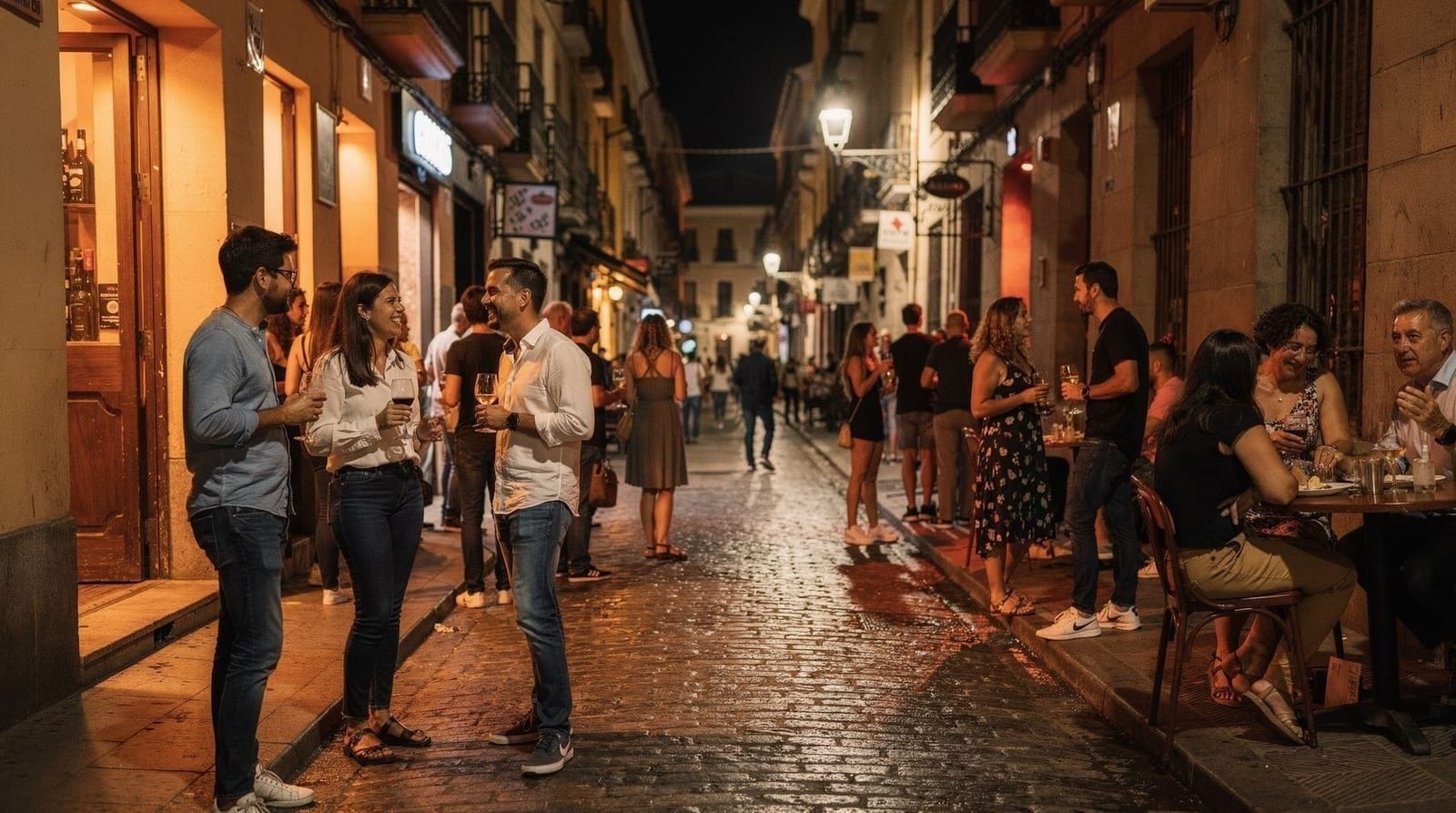
At midnight, Madrid’s bar scene is at its busiest. Malasaña’s bars are full. Chueca’s cocktail bars have queues. La Latina still has people at outdoor tables. Restaurants are serving last orders.
This is not yet the club hour — it is the pre-club transition. People are finishing bar-hopping and deciding where to go next. A taxi to a club district will encounter traffic.
What to do: Stay in the bar you are in, or move to a new bar if the evening calls for it. The Malasaña bars guide covers the best midnight options.
01:00 to 02:00: clubs opening and filling
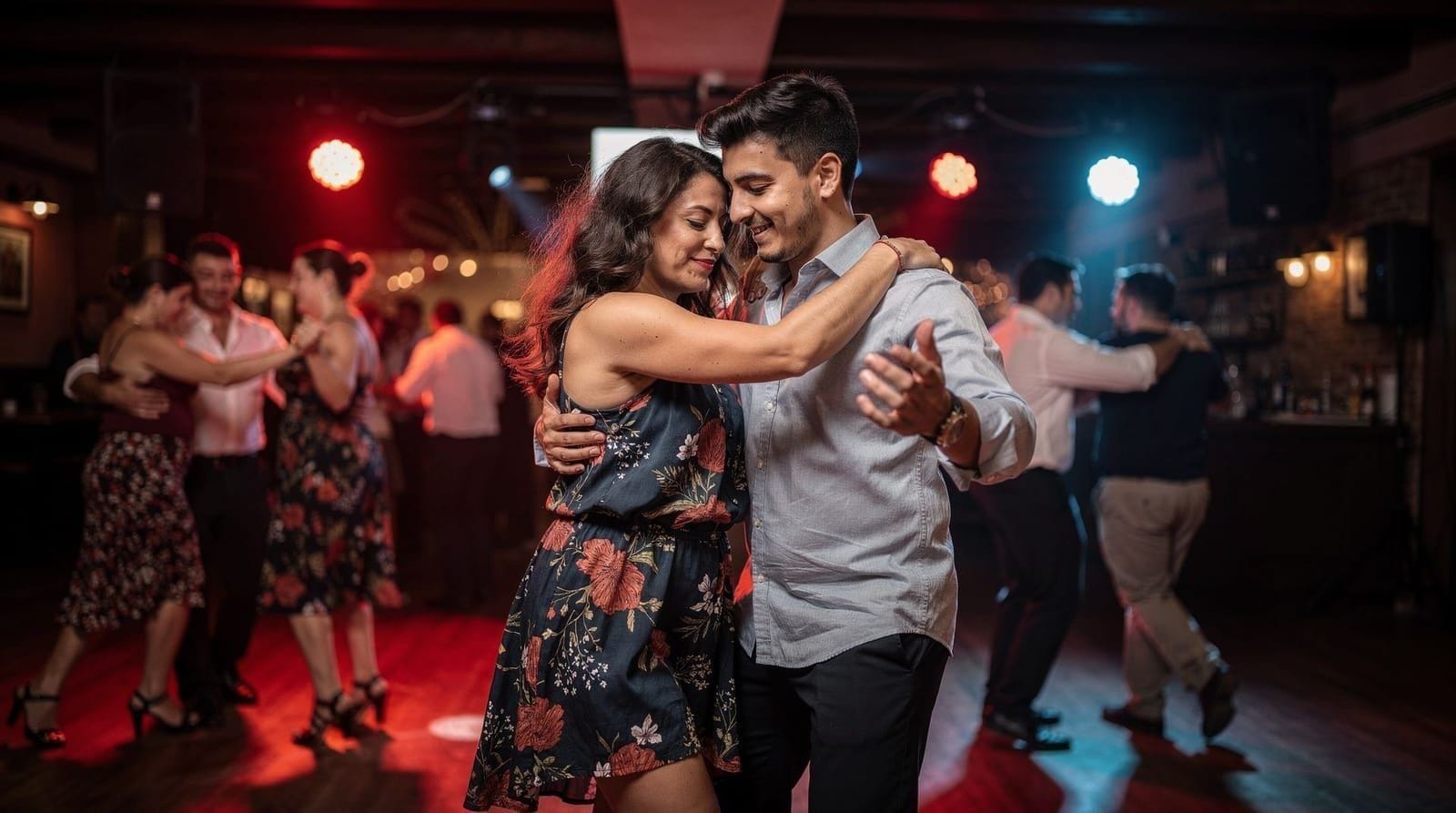
Madrid’s major clubs (Kapital, Joy Eslava) open at midnight but are meaningfully busy only from 01:00–01:30. The serious clubs (Fabrik, Sala Caracol) are just hitting their stride. This is when the transition from bar to club happens for most people who are staying out.
Metro note: The metro runs until about 01:30 every night. After the metro stops, night buses and taxis take over.
02:00 to 04:00: peak club hours
The fullest, highest-energy period in Madrid’s nightlife. Clubs are at capacity. Taxis are hard to find at street level — use apps (Uber, Cabify, MyTaxi). The streets in Malasaña and Chueca are still populated; not dangerous, but the character shifts from social evening to late-night.
This is the window that most visitors miss by leaving too early or arriving too late.
04:00 to 06:00: the final stretch
Some clubs close at 05:00; others (Fabrik) continue until 07:00 on big nights. The streets empty gradually. A visible cohort moves toward Chocolatería San Ginés on Pasadizo de San Ginés for churros before going home. The night bus network continues to run.
06:00 to 08:00: transition to morning
The city is not fully asleep — early workers, delivery drivers, and the last clubbers occupy the same streets. The best bakeries are just opening. Market stalls in La Latina are setting up (not El Rastro, which is Sunday only, but the daily market at Mercado de la Cebada). If you have been up all night, coffee at a café that opened at 06:00 is possible.
Late-night food in Madrid
Chocolatería San Ginés (Pasadizo de San Ginés 5)
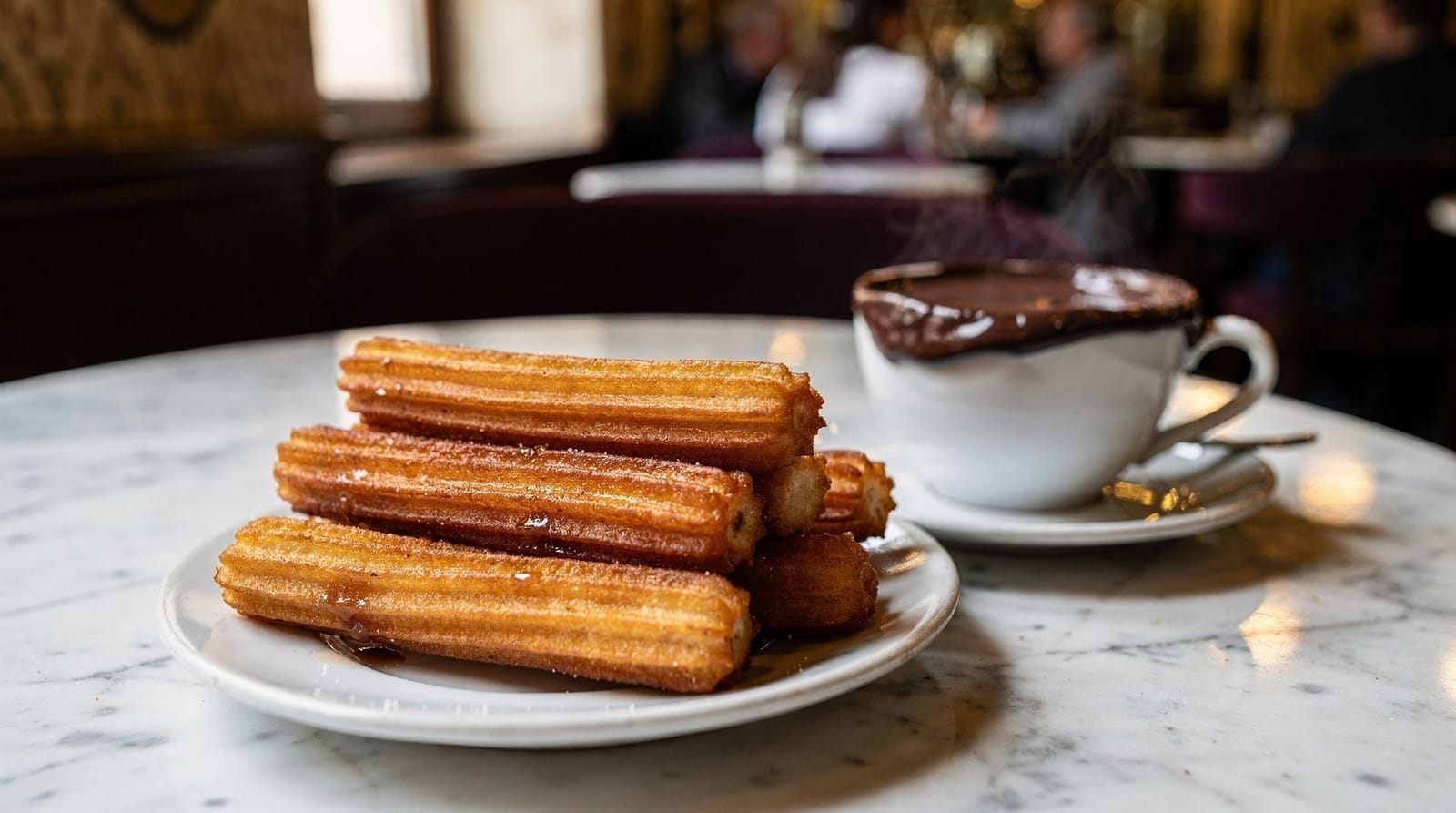
The most important address for late-night Madrid. Open 24 hours from Thursday to Sunday. At 04:00 on a Saturday, the clientele is exclusively people who have just come from clubs — most of the city’s nocturnal population passes through at some point in the night. The churros and hot chocolate are identical at 04:00 as at 10:00. See the full churros con chocolate guide.
El Brillante (Glorieta del Emperador Carlos V, near Atocha)
Technically open late (often until 02:00–03:00) and located near the Atocha train station hub, this bar is famous for its bocadillos (sandwiches) and its calamares. See the bocadillo de calamares guide.
Kebab shops and late-night options
Madrid has the same geography of late-night kebab shops as any European city. Around Malasaña, Gran Vía, and Chueca, Turkish and Middle Eastern fast food is available until dawn. Functional rather than interesting, but useful context.
24-hour petrol station shops
For a different perspective on late-night Madrid: 24-hour petrol station convenience stores (Repsol, Cepsa) around the M-30 ring road are open all night. This is primarily relevant for drivers and for understanding the ecology of a city that never fully sleeps.
Late-night transport
Night buses (búhos — owls): Madrid runs night buses on 26 routes radiating from Plaza de Cibeles. They run from 23:30 to 06:00, roughly every 25–30 minutes on main routes. Fare: same as day metro (€1.50–2.00 with a travel card, €2.00–3.00 without). Routes cover all main areas including Malasaña, Chueca, La Latina, Lavapiés, and the major residential areas.
Taxis: Available throughout the night but harder to find at street level between 02:00 and 04:00 (peak demand). Use apps: MyTaxi (now FREE NOW), Uber, or Cabify. All operate 24 hours. Surge pricing applies in peak late-night hours — budget 1.5–2x the normal fare.
Night driving: Madrid’s roads at 03:00 are uncongested. Driving under the influence is illegal and there are frequent checkpoints on routes from club districts. Do not consider it.
Late-night safety
Madrid at night is safe by European city standards. The main risks are:
- Pickpocketing in crowded bars and clubs (front pocket, never leave bags unattended)
- Drink spiking (standard precaution — do not accept drinks from strangers in clubs)
- Overpriced taxis from street-hawkers outside clubs (always use apps or confirm the meter is running before starting)
The central nightlife neighbourhoods (Malasaña, Chueca, La Latina, Huertas) are all populated until dawn on weekend nights. The streets are not empty; you are not isolated. The risk profile is low. If something feels wrong, move toward a populated street or an establishment that stays open (San Ginés from Thursday to Sunday, a petrol station, any bar that is still open).
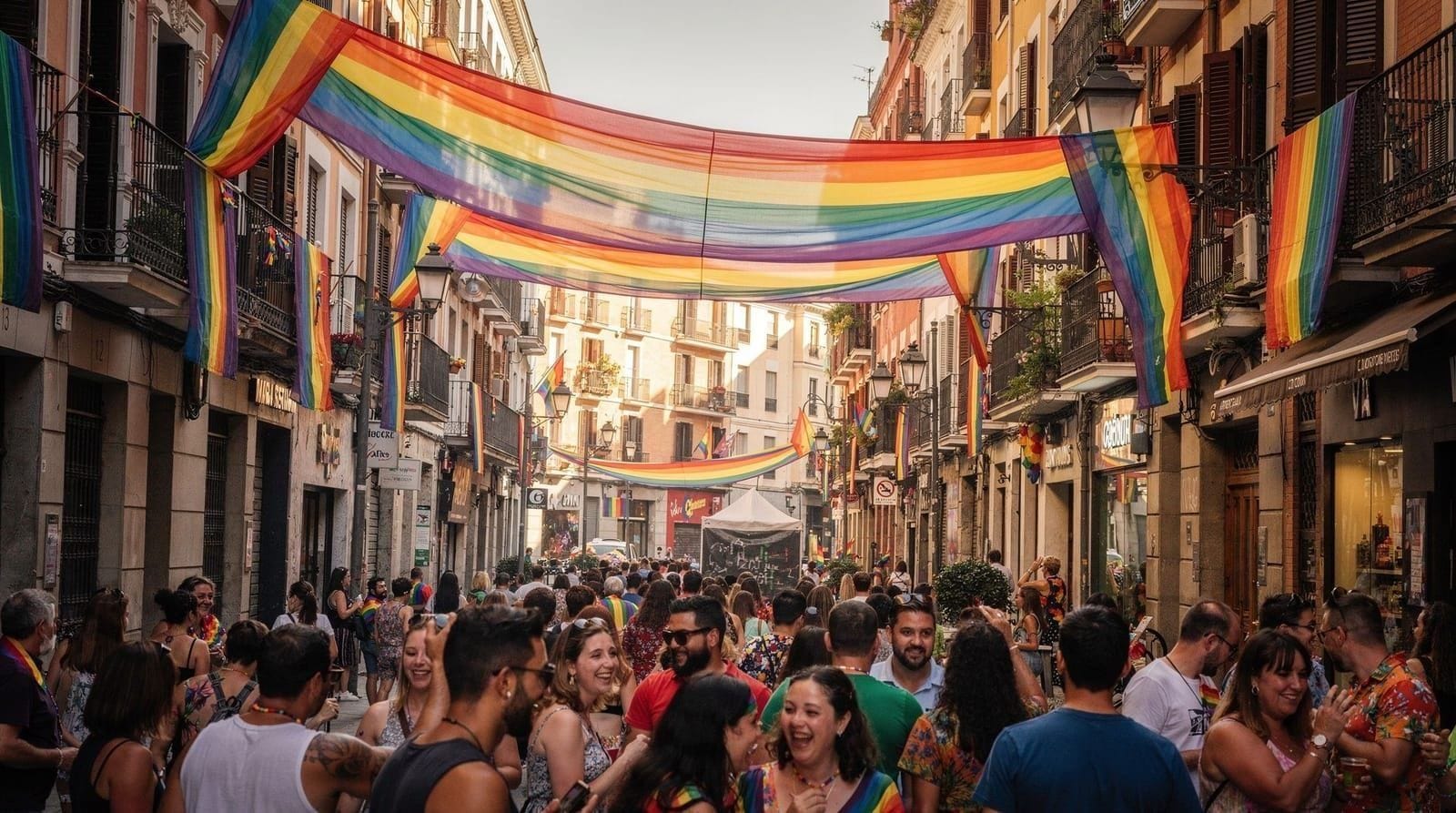
For women travelling alone or in pairs: Madrid is consistently rated among the safer major European cities for women at night, and the busy central nightlife districts reflect that — but the standard precautions still apply: share your location with someone, avoid unlit side streets when a well-lit main street is an option, and trust your instincts about a venue or a person over politeness. Chueca in particular has a strong, visible LGBTQ+ community presence that many solo women also find reassuring for its inclusive, watchful atmosphere.
The night bus as a city experience
An underrated Madrid experience: the night bus at 03:30. Take any búho bus line from Plaza de Cibeles toward the outskirts. The passengers are the cross-section of Madrid that never appears in tourist guides — night-shift workers going home, people returning from family dinner in the suburbs, the last stragglers from clubs, occasional unusual characters who have their own reasons for being on the bus at this hour.
This is Madrid without the tourism layer. The buses are old and rattle; the stops are announced in Spanish only; it is nothing like an experience sold on a travel website. It is simply the city at an hour when it shows its actual self.
It costs the same as a daytime bus fare and requires no booking — if you’re curious about a Madrid that most guides never mention, riding one búho line out and back is a low-stakes, low-cost way to see it, and it pairs naturally with a churros stop at San Ginés either before boarding or after returning to the centre.
Planning your late night
The most common mistake: trying to do everything on the same night. A Madrid late night works best with a clear intention:
Option A: Long dinner (21:30), bar-hopping in Malasaña (23:00–01:00), club (01:30–04:00), churros (04:30), taxi home.
Option B: Tapas (20:00), cocktail bars in Chueca (22:00–01:00), club or dancing bar (01:30–03:30), home by 04:00.
Option C: Rooftop drinks at sunset (21:00), dinner (22:30), one bar (00:30), bed by 02:00 — the moderate version for people who do not want to lose the next day.
All three are valid. The worst version is arriving at a club at midnight (when it is empty), leaving at 01:00 (when it is filling), and concluding that Madrid nightlife is underwhelming.
See the full Madrid nightlife guide for the complete picture.
If you would rather start the evening with a guide who knows which counters to stand at, a guided tapas and Spanish wine evening is a gentle way into Option A or B: you eat and drink in the early hours, then peel off to a bar of your own choosing. For the first-night tourist who wants the city lit up before any bar-hopping, a panoramic night bus ride gives you the lay of the land without any walking. Neither is essential; both simply take the planning off your plate. The food tour guide and the Madrid at night guide help you decide whether a structured evening suits you.
For a fuller picture of where to eat before the bars, the tapas guide, the best tapas bars and the wine bars guide all feed naturally into the first part of a late night. If you are building the whole trip around evenings like this, the Madrid for foodies itinerary and the first weekend itinerary show how to fit a late night between daytime plans, and the Madrid for couples itinerary suits the quieter Option C version.
Where you sleep changes how the night ends. Staying in or near Malasaña, Chueca or Sol means a short walk home when the metro has stopped, which is worth weighing in the best area for first-timers guide. If your base is further out, check the getting around guide and the taxi vs Uber guide before you commit to a route home. The rooftop options are collected in the rooftop bars guide, and the Chueca neighbourhood page and Malasaña neighbourhood page describe the streets themselves.
What Madrid looks like at 03:00
For visitors who want to understand the city’s nocturnal reality:
At 03:00 on a Saturday morning in July, the streets of central Madrid are not empty. The area around Chueca (Calle de Pelayo, Calle de Hortaleza) has pedestrian traffic comparable to a normal weekday at 19:00. A group of people in their fifties is leaving a late dinner. A queue has formed outside a small club on a side street. Taxis — real taxis and app-booked ones — circulate continuously.
This is the structural difference between Madrid and most northern European capitals. London at 03:00 has quiet streets punctuated by late-night bus users and club queues. Madrid at 03:00 has the normal density of a city that happens to be awake.
The most striking aspect for many first-time visitors: there are children. Spanish children in Spain, up at 03:00 on a Saturday because their parents are. This is not unusual. It is normal. The rhythm of Spanish family life accommodates late nights — children nap; families eat late; the concept that children must be in bed by 20:00 is emphatically not Spanish.
This structural lateness extends into the working week too, not just weekends. A Tuesday dinner at 22:00 is unremarkable; a Wednesday bar with a modest crowd at midnight is not evidence of a special event. Visitors who assume Madrid’s late rhythm is a weekend-only performance for tourists are consistently surprised to find the same pattern, at a slightly lower volume, on weeknights.
The mechanics of a very late night
For those who want to stay out until dawn, the physical experience requires some planning:
Hydration: Madrid’s summer nights are dry (continental climate, low humidity). The heat that built up during the day dissipates slowly. Dancing in a club at 02:00 in July dehydrates faster than expected. Drink water between alcoholic drinks.
Shoes: If you intend to walk between bars and clubs (the default Madrid mode), comfortable but presentable shoes matter. The distance from La Latina to Malasaña on foot is 20 minutes. From Malasaña to a Salamanca club area is 30 minutes. Cobblestone streets in old Madrid are hard on heels.
Cash: ATMs are available throughout the city 24 hours. Many late-night bars and clubs are cash-only or prefer cash for entry fees. Carry €60–80, split between a couple of pockets rather than one wallet, as a small precaution in crowded club settings.
Phone battery: Uber/Cabify for the journey home requires a working phone. The city’s charging culture (café plugs) is not accessible at 03:00. A portable battery pack is practical for very late nights.
Layering: Even summer nights cool noticeably after 03:00, particularly on rooftops or if you’ve been dancing and stepped outside to cool down. A light layer that packs down small is worth carrying even when the evening starts warm.
The next morning: recovery options
A very late Madrid night has a morning-after structure:
08:00–10:00: The quality bakeries open. The best bread in Madrid is available fresh at 08:00. If you have been awake all night, the city’s best pastries are waiting.
10:00–12:00: Sunday morning café culture. If the previous night ended at 05:00 and you slept for a few hours, Sunday morning at a neighbourhood café with coffee and churros is exactly the right recovery format. See the churros guide.
12:00+: The vermut hour begins, and the Sunday cycle restarts. See the vermut guide and the Sunday cocido guide.
Madrid’s nocturnal culture and its Sunday daytime culture are not in conflict — they are on the same rhythm, separated by a few hours of sleep. The person eating churros at 05:00 and the person drinking vermut at 12:00 may be the same person, having managed a few hours of sleep in between.
The tourist trap version of late-night Madrid
Not all late-night Madrid is equal. There is a tourist-facing late-night circuit that looks like a good night but is overpriced and mediocre:
What to avoid:
- “Flamenco show + tapas” packages sold outside tourist restaurants in Sol (€45–65 for poor-quality flamenco and worse tapas)
- Clubs that advertise specifically to tourists with English-language promotion near Sol and Plaza Mayor
- Bars that employ touts outside to bring in passing tourists (these are the equivalent of La Latina’s tourist restaurants — paying for customers rather than earning them)
The tell: If someone on the street is actively trying to get you into a bar or club, that bar or club is not one that good-quality customers seek out independently.
The authentic late-night experience — Malasaña’s local bars, Chueca’s cocktail culture, a good club for music — does not require any external direction. You walk in and it is happening.
Weather and the late-night experience
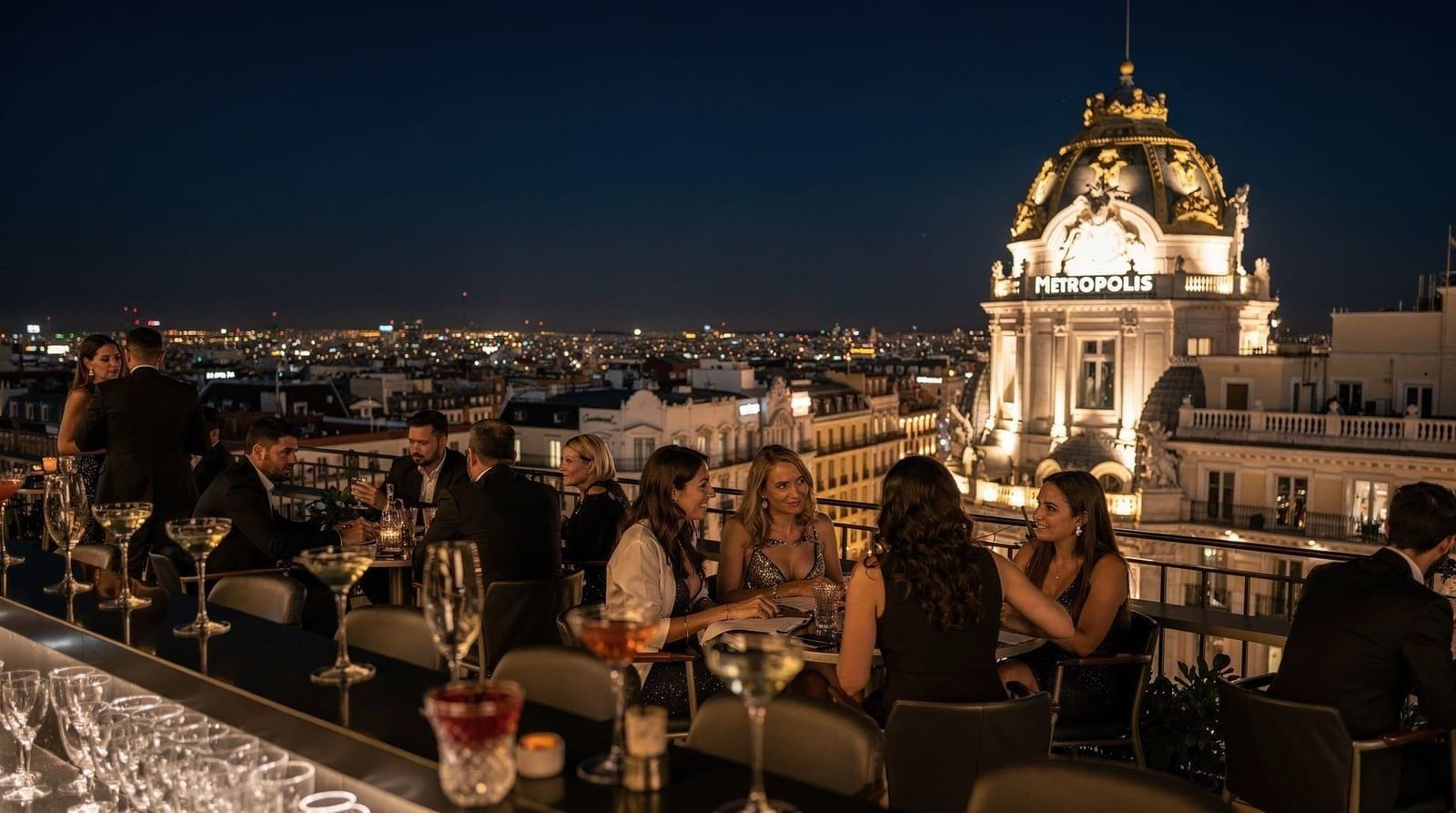
Summer (June–September): The most active period. Outdoor terraces until midnight. Club AC on full power. Summer solstice (late June) — Madrid’s midnight sky is still faintly light. At its best: a warm night, a rooftop view of the city, a glass of something cold. See the rooftop bars at night guide.
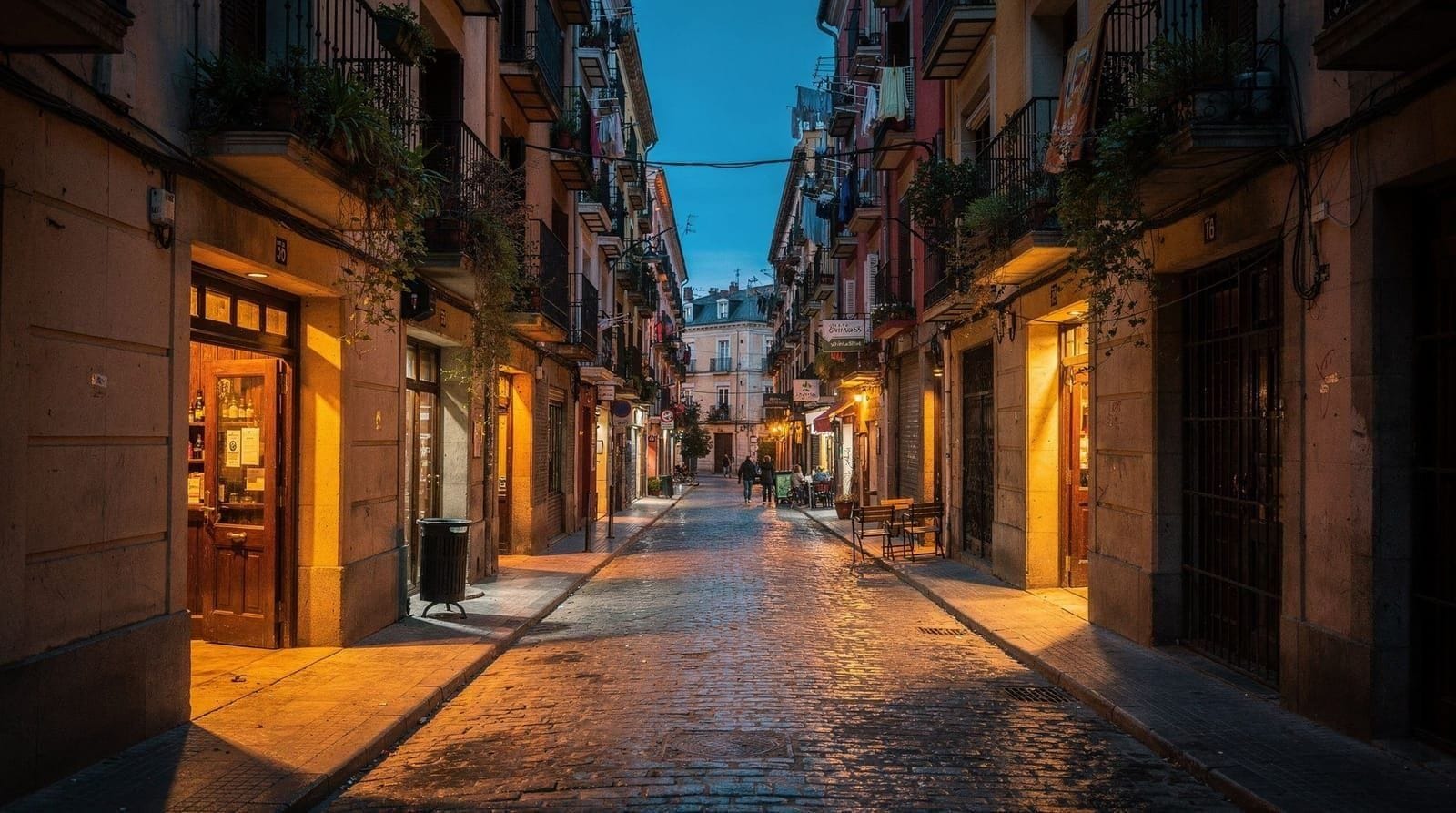
Autumn (October–November): Shorter evenings mean nightlife starts earlier and moves indoors faster. The cobblestone streets of La Latina at 23:00 in October, street lamps illuminated, a few outdoor tables still occupied — a different but equally compelling scene.
Winter (December–February): The outdoor elements are gone. What remains: warmly-lit interior bars, the best flamenco season (performers are not on summer festival circuit), and the extraordinary New Year’s Eve countdown in Puerta del Sol — the most televised moment in Spain.
Spring: The best season for combining outdoor terraces with comfortable temperatures. April and May see the most appealing balance.
Night transport: a complete guide
The transport logistics of a very late Madrid night are more complex than daytime movement, and getting them wrong strands you at 04:00. This section covers every option:
Metro (until about 01:30): The metro is the cleanest and cheapest option until its last service. All central lines (1, 2, 3, 5, 10) run through the nightlife areas (Sol, Bilbao, Chueca). The last train on weekdays departs the central stations at approximately 01:30, every night of the week.
Night buses (búhos — “owls”): 26 routes operate from 23:30 to 06:00 on all nights. All routes start from Plaza de Cibeles. Frequency: every 30–40 minutes on main routes, hourly on secondary routes. Fare: same as day bus (€2.00 without transport card, €1.50 with a 10-trip card). The búho network covers all major residential areas including Malasaña, Chueca, La Latina, Lavapiés, Chamberí, Salamanca, and the university area.
Apps (Uber, Cabify, FREE NOW/MyTaxi): All three operate 24 hours. Surge pricing applies during peak demand (01:00–04:00 on weekends). A surge-priced Uber from Kapital club to Malasaña at 03:00 on Saturday might cost €18–22 — compare to €8–10 without surge. Booking 10–15 minutes ahead reduces surge pricing because you are booking before the demand peak hits.
Street taxis: Official Madrid taxis are white with a red stripe and run meters. Finding one at street level at 03:00 in Malasaña or Chueca is possible but may require walking toward main roads (Gran Vía, Paseo de Recoletos). The taxi rank at Puerta del Sol is usually operational until dawn. Agree or confirm the meter before the journey — tourists are sometimes quoted flat fares that exceed the metered price.
Walking: Distances between the main nightlife areas are walkable:
- Malasaña to Chueca: 10 minutes
- La Latina to Sol: 12 minutes
- Huertas to Sol: 8 minutes
- Sol to Kapital (Atocha): 20 minutes
- Sol to Chocolatería San Ginés: 3 minutes
At 04:00 in summer, walking between these points is comfortable (still 22°C+) and safe. In winter, the walk is colder but still safe.
The Madrid night in literature and film
Madrid’s nocturnal culture has a documented presence in Spanish literature and film:
Pedro Almodóvar’s early films (from the 1980s) are the most complete cinematic document of the movida madrileña and the culture of Malasaña and Chueca. “Pepi, Luci, Bom y otras chicas del montón” (1980) and “Entre tinieblas” (1983) show the neighbourhood as it was.
Arturo Pérez-Reverte’s “La Reina del Sur” includes scenes of Madrid nightlife with the specific geography of Chueca and the Latin American community that was emerging in the 1990s.
Eduardo Mendoza’s work captures Madrid in transition from the 1970s through the democracy period.
For a visitor interested in the cultural context of Madrid’s nightlife beyond the practical, these references provide the background that makes the evening more resonant than a simple sequence of bars and clubs.
The honest recommendation: one genuinely great Madrid night
Rather than a comprehensive itinerary, one specific recommendation for a first-time Madrid night that works:
21:00: Dinner in La Latina — Almendro 13 if you can get a table, any neighbourhood bar if you cannot. Two tapas and a glass of wine each. €30–40 for two.
22:30: Walk to Malasaña (20 minutes on foot through the old city). First bar on Calle del Espíritu Santo.
00:00: Second bar. The neighbourhood is now at its busiest.
01:30: Walk to Chocolatería San Ginés for churros. Yes, it is early for churros in Madrid terms. But this is the point where a visitor’s body clock and Madrid’s social schedule meet — you have seen the city at its most alive, and the churros mark a satisfying conclusion.
02:00: Taxi home.
Total cost: €80–100 for two people. Total experience: the essence of Madrid’s food and social culture in one evening.
For those with more energy and a willingness to adjust their next day: replace step 4 with a club (Kapital, 01:30–05:00) and move the churros to 05:30. The full experience costs another €30–40 per person and another day of recovery.
If you’d rather have the late evening curated for you, a private after-dark guide can string together bars, a flamenco stop, and local context in one structured outing without you needing to plan the route yourself:
Madrid after-dark private experience with a local guideLate-night Madrid by traveller type
Solo travellers: Madrid’s late-night scene is genuinely solo-friendly — bars in Malasaña and Chueca are set up for standing and chatting, and it’s normal to strike up conversation at the counter. Stick to well-lit, populated streets between venues, and keep your phone charged for booking a ride home; the general safety notes above apply doubly when you don’t have a group to fall back on.
Couples: The rooftop-drinks-then-dinner-then-one-bar pattern (Option C above) suits couples who want atmosphere without an exhausting night. Booking a rooftop table ahead matters more for couples than solo travellers or groups, since the best sunset slots fill first.
Groups of friends: The full bar-hop-to-club sequence (Options A and B) works best with a group, both for splitting late-night taxi costs and for the safety-in-numbers factor around 02:00–04:00 when streets are liveliest but judgment (yours and others’) is more variable.
Families with children: Spanish family culture genuinely does extend into the evening — it’s normal to see children out at 22:00 or even later for a family dinner — but the 01:00+ bar and club scene is an adult world. Families should treat “late night Madrid” as ending around 23:00–23:30, with the churros con chocolate guide offering a family-friendly late treat that doesn’t require navigating club-hour crowds.
Budgeting a Madrid night out by style
| Style | What it includes | Approx. cost/person |
|---|---|---|
| Moderate (Option C) | Rooftop drink, dinner, one bar | €40–55 |
| Standard (Option A/B) | Dinner, 2 bars, churros | €40–50 |
| Full night (+ club) | Dinner, bars, club entry/drinks, churros | €70–90 |
| Budget | Tapas dinner, one neighbourhood bar, walk home | €25–35 |