Malasaña bars: the local guide to Madrid's most authentic nightlife neighbourhood
Madrid: After Dark Private Local
What makes Malasaña different from other Madrid nightlife areas?
Malasaña is the neighbourhood where madrileños go rather than where they send tourists. The bars are smaller, more local, less designed. Music is more diverse (indie, rock, electronic). There is no tourist-bar strip or club circuit. It is the most genuinely neighbourhood nightlife in central Madrid.
In brief: Malasaña is the Madrid neighbourhood most resistant to tourist-bar homogenisation. The bars here serve the people who live there first. The streets have genuine character — punk bar next to natural wine spot next to 80-year-old bodega. No dress code, no VIP tables, no tourist menus.
| Where | North of Gran Vía, Metro Bilbao / Tribunal / Noviciado |
| Cost | Beer €2.50–3.50, cocktail €8–12, no cover at bars |
| Best time | Thursday evening for the most local feel |
| Getting there | 15–20 min walk from Sol, or Metro |
| Vibe | Casual, no dress code, small independent bars |
What Malasaña is and why it matters
Malasaña was the centre of Madrid’s movida madrileña — the explosive cultural and social movement that erupted after Franco’s death in 1975 as the city collectively exhaled and reinvented itself. The neighbourhood’s creative energy was real: artists, musicians, filmmakers, and writers (Almodóvar started here) converged on its cheap rents and permissive atmosphere.
The movida is history now, and Malasaña has gentrified substantially. But it has retained something that most Madrid neighbourhoods have lost: a bar culture that serves the people who actually live there. The contrast with Cava Baja (now significantly tourist-facing) or Huertas (a mixed tourist-student scene) is real.
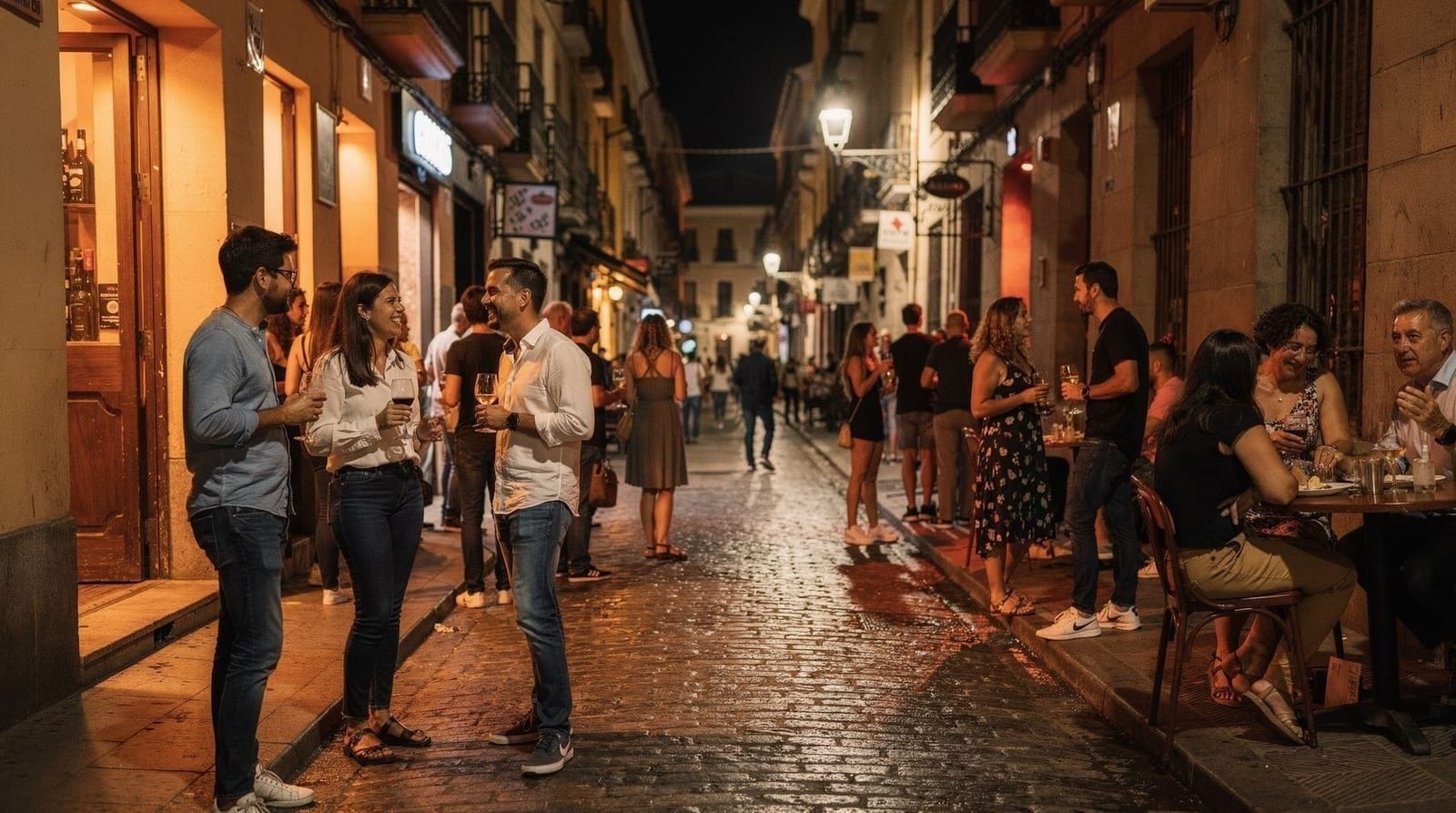
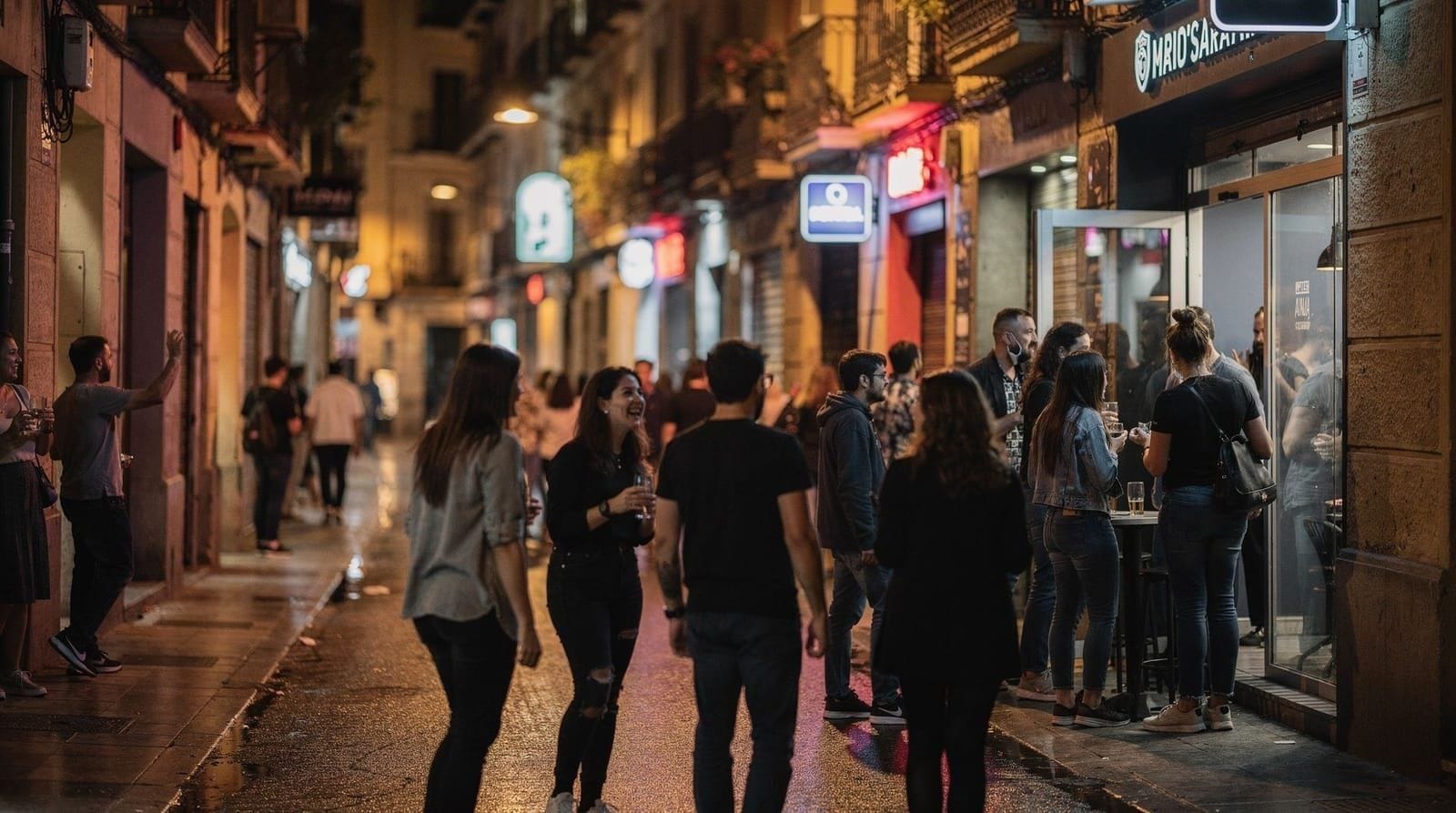
Walking through Malasaña on a Friday evening at midnight, the people in the bars are primarily local — an office worker on his third beer, a group of twenty-somethings sharing a bottle of wine, a couple at a corner table who have been coming to the same bar for ten years. This is rare in the tourist-dense centre of any European city.
The key streets
Calle del Espíritu Santo
One of the two essential Malasaña bar streets. Runs from Glorieta de Bilbao south through the heart of the neighbourhood. Mix of bars in old premises with almost no renovation — vintage furniture, handwritten signs, music that changes by bar. Particularly good for the 22:00–01:00 window before the clubs.
Standouts: La Vaca Flaca (a narrow wine bar with good by-the-glass selection), Lolina Vintage Café (1980s decor, excellent cocktails at honest prices, always full by 23:00), and several unnamed bars with no English signage that are reliably good.
Calle de la Palma
The natural wine bar street. The street has the highest concentration of serious natural wine bars in Madrid, alongside older neighbourhood bars that have been there since before natural wine was a concept. A good street to walk and choose as you go.
Standouts: La Palmera (traditional bodega, vermut), and wine shops that open their back rooms for tastings.
Calle de Manuela Malasaña
Named for the neighbourhood’s own martyr (Manuela Malasaña was killed during the May 2 uprising of 1808 against Napoleon’s forces — see the Dos de Mayo guide). A wider, slightly more commercial street with a mix of bar types including La Musa (the neighbourhood’s most reliable restaurant-bar combination).
Plaza del Dos de Mayo
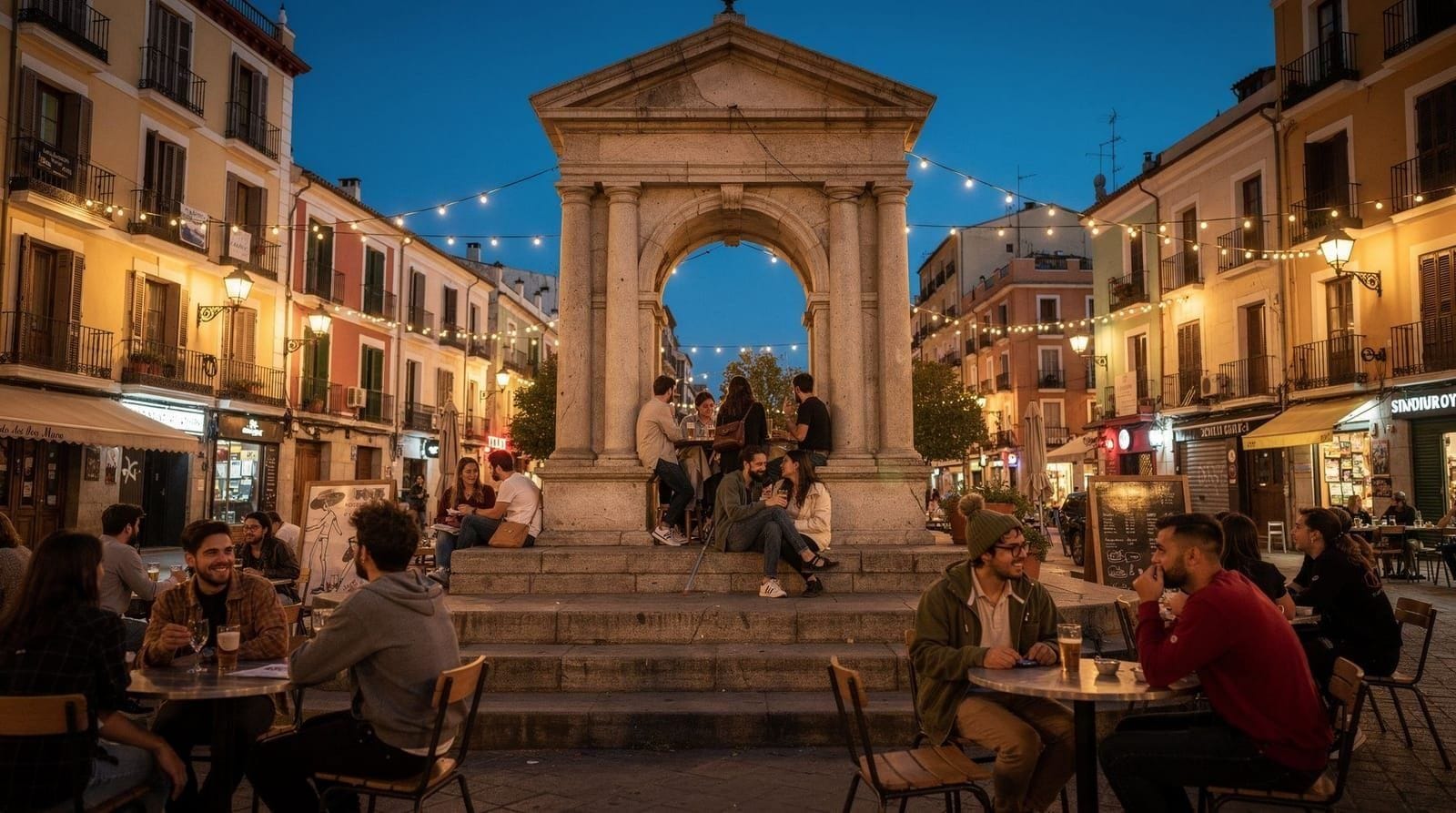
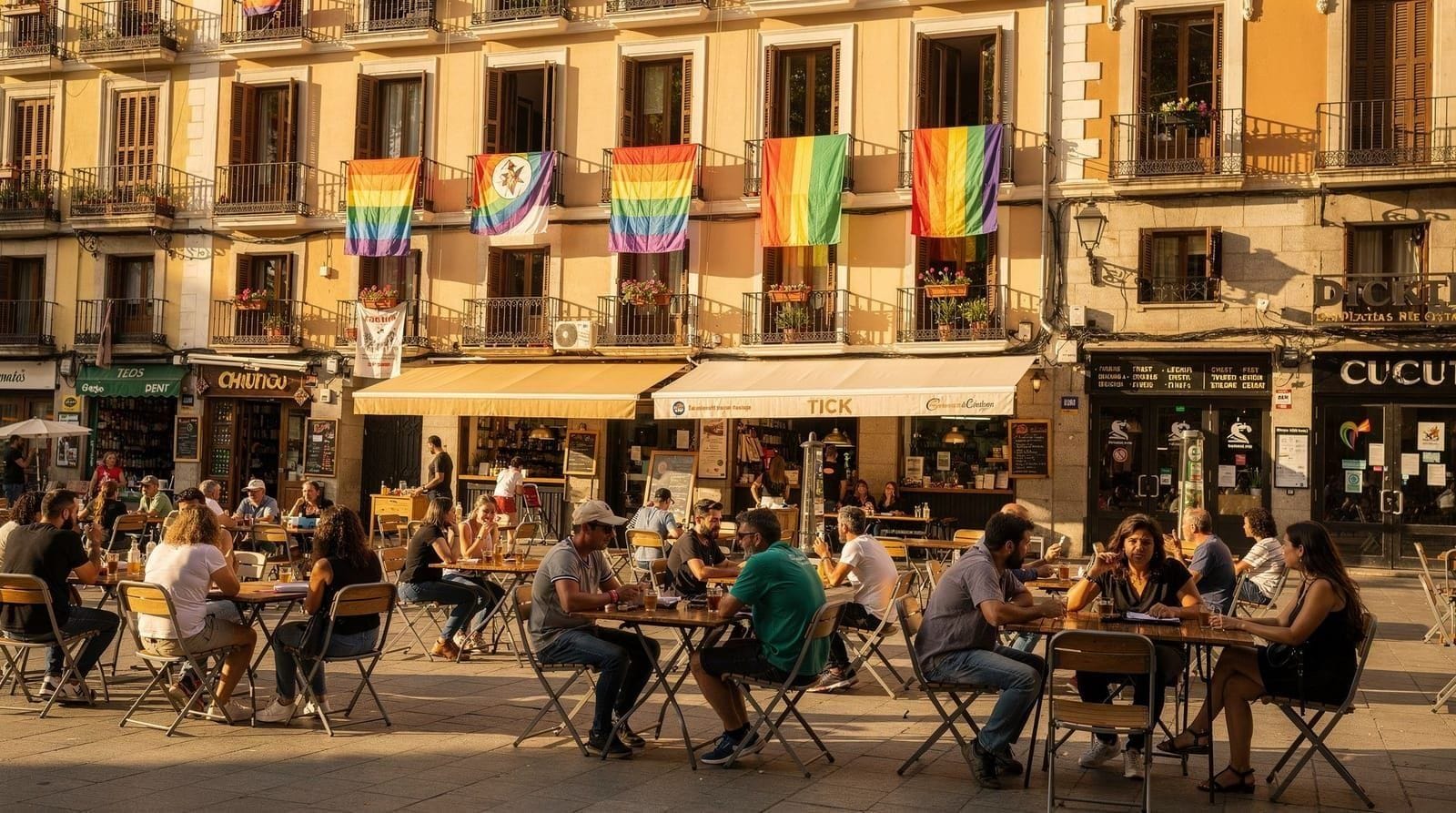
The neighbourhood square — surrounded by bars with outdoor seating, the historical heart of Malasaña. On warm evenings, the plaza itself fills with people sitting on the ground, drinking from bottles bought at a nearby shop, because that is what happens when a good public square exists in a Spanish city. The bar terraces on the plaza are priced normally; the do-it-yourself version is even cheaper.
The bars worth knowing
La Vaca Flaca (Calle del Espíritu Santo): A wine bar in a narrow space with good by-the-glass options and a small food menu. Relaxed, good music (not too loud), local clientele. Open from 19:00.
Lolina Vintage Café (Calle del Espíritu Santo 9): 1980s-kitsch decor, good cocktails (€8–12), popular with designers and creatives. Full by 22:00 on weekends; get there before then or accept standing.
Bodega de la Ardosa (Calle de Colón 13): The essential traditional bodega — see the vermut guide for full details. Best on Sunday morning for the vermut ritual; also good at night for a simple glass of wine at the barrel.
El Dos de Mayo (Plaza del Dos de Mayo 4): Terrace bar on the main square. Standard bar, excellent location. Go for the atmosphere, not the sophistication of the drinks.
Café del Espejo (Malasaña branch, various): Good cocktails in a slightly more polished environment than the street bars. More expensive but reliable.
Medias Puri (Calle de la Luna): An old-style Madrid bar that has survived every gentrification wave by being exactly what it always was — cheap wine, basic food, local clientele. No Instagram interest; all actual neighbourhood function.
Music venues in Malasaña
Café La Palma (Calle de la Palma 62): A live music venue and nightclub in one. The front is a café-bar; the back has a stage that hosts concerts (indie, electronic, jazz) most nights from 20:00, then transitions to a club after midnight. Entry: free for concerts, €5–10 for club nights. One of the most important small music venues in Madrid.
El Sol (Calle de los Jardines 3, nearby): A legendary Madrid rock venue that opened in the 1970s and has hosted virtually every Spanish rock act of significance. Now mixed programming — concerts, DJ nights, themed events. Check the weekly programme.
Siroco (Calle de San Dimas 3): A medium-sized venue with rotating programming — electronic music nights, indie concerts, reggae. Younger crowd than El Sol. €5–12 entry depending on the event.
When to go to Malasaña
Thursday evenings (22:00–02:00): The “Thursday night” culture in Madrid is strong — many madrileños start their weekend on Thursday. Malasaña is packed but not oppressively crowded, and this is when it feels most local.
Friday and Saturday (22:00–05:00): The busiest nights. Bars fill by midnight and continue until 04:00–05:00. The energy is genuinely impressive but also more crowded.
Sunday afternoon (12:00–17:00): The vermut ritual — see the vermut guide and the Sunday cocido guide. This is Malasaña at its most neighbourhood-appropriate.
Summer evenings: The neighbourhood’s outdoor culture peaks in June through September. Plaza del Dos de Mayo becomes a living room, bars push tables onto the street, and the whole area operates until dawn.
Getting to Malasaña
Metro: Bilbao (Lines 1 and 4), Tribunal (Lines 1 and 10), or Noviciado (Line 2). All are 5–10 minutes’ walk from the neighbourhood heart. See the getting around by Metro guide if you’re combining Malasaña with the rest of the city on the same trip.
From Sol: 15–20 minutes’ walk north through Gran Vía and Fuencarral.
At night: Metro until about 01:30 every night. After that, night buses or Uber/Cabify from the neighbourhood. Taxis can be harder to find at 03:00 in Malasaña — book via app. Walking back to a Sol or Gran Vía hotel is a genuinely reasonable option even at 02:00 — Malasaña’s connecting streets stay populated late, unlike some of the quieter routes elsewhere in the centre.
Malasaña vs Chueca vs La Latina at night
| Malasaña | Chueca | La Latina | |
|---|---|---|---|
| Vibe | Local, indie, varied | Cocktail bars, LGBTQ+ scene | Tapas transitioning to bars |
| Dress code | Casual | Smart casual | Casual |
| Closing time | 04:00–06:00 | 04:00–06:00 | Midnight–02:00 |
| Tourist density | Low–medium | Medium | High (decreasing after midnight) |
| Music | Diverse | Electronic, pop | Background |
| Price | Low–medium | Medium–high | Medium |
See the full Madrid nightlife guide for the complete city picture.
The movida madrileña: why Malasaña matters historically
Understanding Malasaña’s nightlife requires a brief historical detour. After Francisco Franco’s death in November 1975, Spain underwent a rapid social transformation that was as intense as any in post-war Europe. The movida madrileña — literally “the Madrid movement” — was the cultural eruption that happened when the repression of 40 years of dictatorship suddenly lifted.
Malasaña was its geographic centre. The neighbourhood’s cheap rents attracted artists, musicians, filmmakers, and countercultural figures who could not have existed two years earlier. Pedro Almodóvar’s first films were financed on almost nothing and shot in these streets. The bands of the era — Alaska y los Pegamoides, Radio Futura, Mecano — played tiny venues like El Sol.
The movida lasted roughly from 1976 to the late 1980s. Its legacy in Malasaña is architectural and cultural: the bars that opened in the late 1970s and 1980s that are still there today, the building facades spray-painted then that are now preserved as urban art, the clientele of people in their 60s who were in these bars when they were 20 and who still come on Thursday evenings.
For a visitor, this context explains why Malasaña’s bars feel different from any other European nightlife neighbourhood: they carry actual history, not manufactured authenticity.
Daytime Malasaña: before the bars open
Malasaña has a daytime identity that is worth knowing before the evening:
Coffee culture: The neighbourhood has several excellent independent cafés that attract the design, creative, and tech community. Federal Café (Plaza del Comandante Las Morenas) is an Australian-run café that is one of the best for coffee in central Madrid. Regularly cited as a neighbourhood institution.
Vintage shopping: Malasaña has the highest concentration of vintage clothing shops in Madrid. Calle de Velarde, Calle de los Molinos, and the surrounding streets have genuine secondhand and vintage dealers alongside newer boutiques.
Food market: Malasaña’s local market (Mercado de los Mostenses, on the neighbourhood’s western edge) is a working food market with halal butchers, international food suppliers, and traditional Castilian stalls. Less curated than the Mercado de San Miguel but more representative of actual Madrid.
Morning before 13:00: The neighbourhood is quiet — a very different atmosphere from the evening. The bars are closed; the cafés are full of people working on laptops. The streets are navigable without crowds.
Practical neighbourhood survival guide
Cash: Many Malasaña bars prefer cash, especially the older ones. Some have an ATM inside; most have one within two blocks. Carry €40–60 in cash for a night of bar-hopping.
Noise levels: Malasaña bars are loud. This is structural — small spaces, loud music, many people. If you want conversation, arrive before 22:00 when the decibels are lower. After midnight, shouting is the communication mode.
Queues: At popular bars (Lolina, La Musa), queues form on Friday and Saturday evenings from around 21:30. Some bars let you put your name on a list; others are first-come-first-served. Arriving before 21:00 avoids most queues.
Smoking: Spain allows smoking on bar terraces (outdoor seating). Indoor smoking is prohibited. If a bar terrace is your preference, most Malasaña bars that have one will have smokers on it. Factor this into seat selection.
Dress code: None. Malasaña is genuinely casual — the full spectrum from people who came directly from work to people who changed before going out. No door policy at bars.
Malasaña late-night eating
After midnight, food options in Malasaña are limited but exist:
- Bocadillo from a 24-hour bar: Several bars in the neighbourhood stay open late and serve simple sandwiches.
- Kebab shops: On Fuencarral and Gran Vía adjacent streets.
- Chocolatería San Ginés: 15 minutes’ walk from Malasaña (near Sol). Open 24 hours. The classic end to a Malasaña night.
The late-night Madrid guide covers the full post-midnight city.
Malasaña’s relationship with gentrification
The neighbourhood transformation is worth naming honestly. In the early 2000s, Malasaña had cheap rents, ageing buildings, a young artist community, and bars that cost almost nothing. In 2026, it has boutique hotels, craft coffee shops, restaurants charging €50 a head, and rents that have doubled in a decade.
The change has been rapid even by European gentrification standards. The causes are the standard ones: low initial prices, proximity to central employment, cultural cachet from the movida era, and the self-reinforcing dynamic of cool-seekers attracting investors who raise rents until the original community can no longer afford the neighbourhood.
What survives is a mix of the original and the new: the old bodega next to the craft cocktail bar next to the boutique. Some of the bars on Calle del Espíritu Santo have been operating since before the movida. Some of the wine bars on Calle de la Palma opened in 2020.
The honest assessment: Malasaña is still Madrid’s most neighbourhood-authentic nightlife area in central Madrid. But it is not what it was. The bars that feel most real are the ones that existed before the neighbourhood became famous.
Budget drinking in Malasaña
Malasaña remains one of the cheaper central Madrid nightlife neighbourhoods compared to Chueca or the hotel bar circuit. Rough price guide:
- Beer (caña): €2.50–3.50 at most neighbourhood bars
- Glass of house wine: €3–5
- Cocktail: €8–12 (less than Chueca’s €12–16)
- Entry: No cover charge at bars; €5–12 at music venues
A night in Malasaña — dinner (€20 at a neighbourhood restaurant), four bars (€40 in drinks across the evening) — costs approximately €60–80 per person all-in. Significantly less than an equivalent evening at hotel rooftop bars and commercial clubs.
Walking the full Malasaña bar circuit
A practical walking route for an evening in Malasaña:
Start: Plaza del Dos de Mayo (accessible from Bilbao or Tribunal metro). Have a drink at one of the terrace bars on the square.
Section 1: Walk south on Calle de Manuela Malasaña. La Musa is here if you want food. Continue to the junction with Calle del Espíritu Santo.
Section 2: Walk north on Calle del Espíritu Santo. Lolina Vintage Café is midway. Continue to Calle de la Palma junction.
Section 3: Calle de la Palma west — the natural wine bars (La Palmera). Turn back toward the centre.
Section 4: Return through Plaza de San Bernardo or directly through the neighbourhood streets back toward Noviciado metro.
This circuit covers approximately 2 km on foot and passes 15–20 bars. You will stop at 3–5. Allow 3–4 hours for a casual evening.
Malasaña and the broader Madrid bar scene
Malasaña is one node in Madrid’s distributed nightlife geography. The complete picture:
- La Latina: Tapas and early evening, strongest on Sunday afternoons
- Malasaña: Local bar culture, Thursday through Saturday nights, genuinely neighbourhood
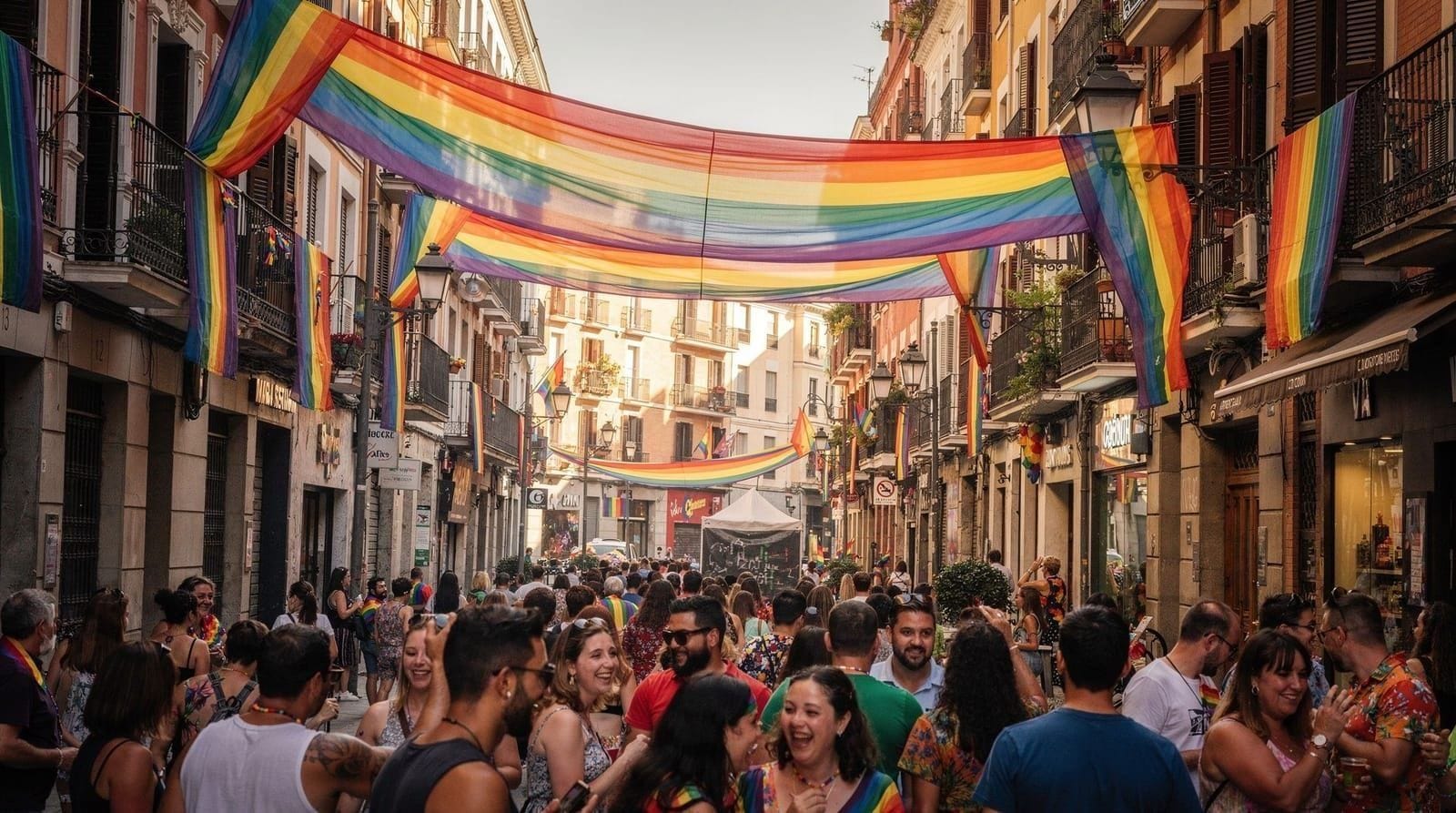
- Chueca: Cocktail bars, LGBTQ+ scene, later and slightly more polished
- Huertas/Barrio de las Letras: Mixed tourist-local scene, inconsistent quality
- Commercial clubs (Kapital, Fabrik): Large-scale clubbing, 01:00–06:00
The Madrid nightlife guide maps all of these. For Malasaña specifically, the guide above covers the essential geography. For the Chueca overlap and LGBTQ+ scene, see the gay Madrid guide.
Solo drinking in Malasaña
Malasaña works well for solo visitors in a way many nightlife neighbourhoods don’t. The bar-counter culture — standing with a drink rather than needing a table — makes arriving alone unremarkable, and the smaller bars mean you’re often standing shoulder-to-shoulder with regulars who will happily talk if you strike up a conversation. Federal Café and the wine bars on Calle de la Palma are particularly comfortable solo, since ordering a glass and a small plate at the counter is completely normal there. Avoid the loudest club-adjacent bars after 01:00 if you’re solo and want conversation rather than just noise; the earlier 20:00–23:00 window suits solo visitors best.
A guided introduction if you want local context
Independent bar-hopping works well once you know the streets, but a first-night guided introduction removes the guesswork about which door to walk through — useful if you’re only in Madrid briefly and want the context (the movida history, which bars are genuinely local vs newly opened for tourists) without researching it yourself:
Madrid after dark private tour with a local guideIf the natural wine bars of Calle de la Palma appeal but you would rather have someone explain what you are drinking, a tapas and wine tasting led by a local guide is a relaxed way to start the evening before you head out on your own.
For a first night when you want to eat as well as drink, a walking food and drinks tour with a local guide links several stops together, and you can still finish the night at your favourite Malasaña bar afterwards.
What Malasaña isn’t
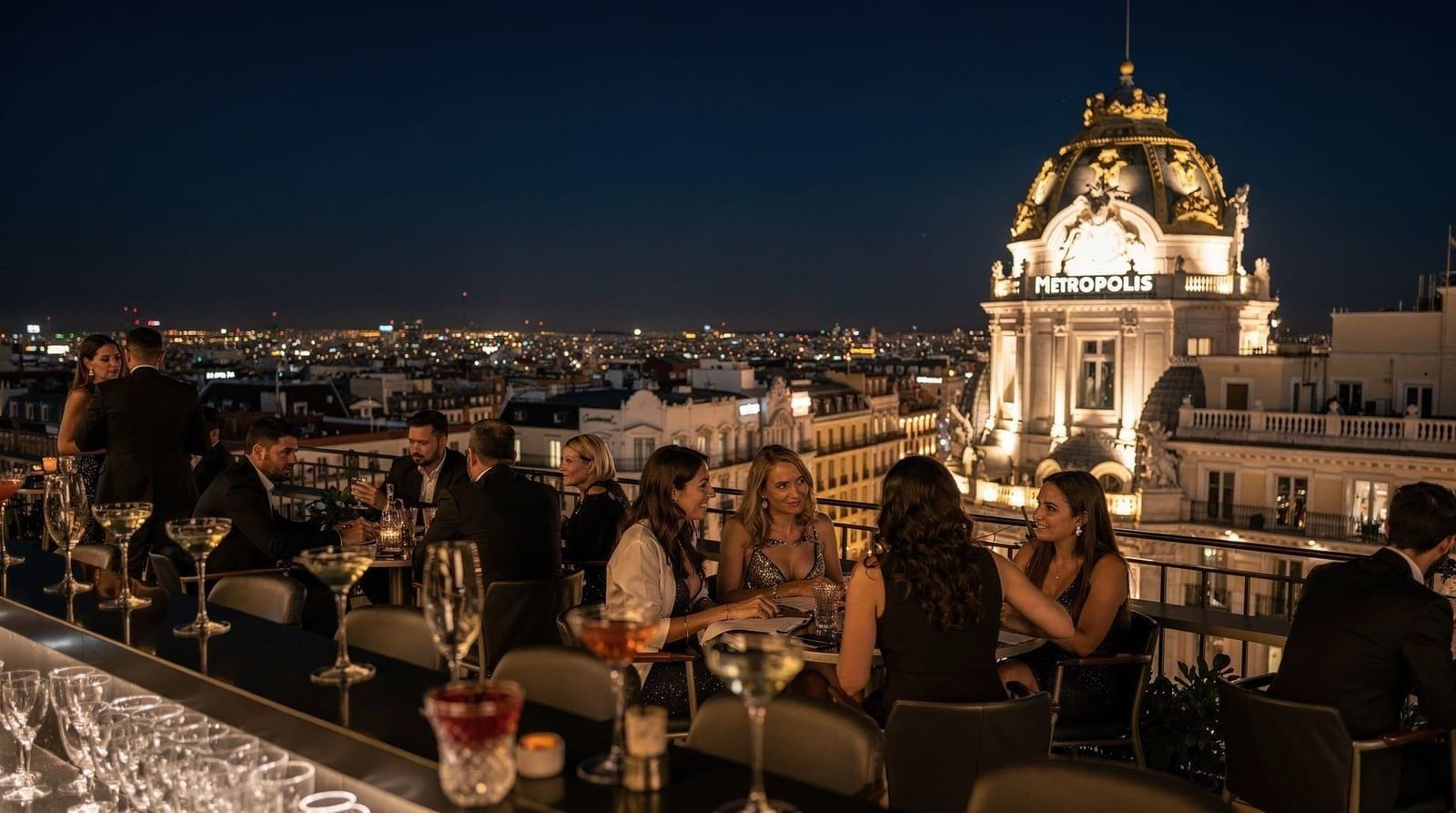
Worth being clear about the limits: Malasaña is not the place for a dressy night out, bottle service, or a rooftop view — for that, Chueca’s cocktail scene or the rooftop bars guide are the better fit. It’s also not a late-night dining destination; the food is bar snacks and the occasional sit-down restaurant like La Musa, not a place to plan a proper dinner around. Malasaña’s strength is specifically the small-bar, low-key, genuinely local evening — go in with that expectation and it delivers; go in expecting a polished big night out and you’ll be disappointed.
Frequently asked questions about Malasaña bars
Is Malasaña safe for a night out?
Yes, Malasaña is a safe, busy neighbourhood at night with a strong pedestrian presence until the early hours. Standard urban precautions apply — keep an eye on belongings in crowded bars, and use an app-booked taxi rather than hailing on the street after 03:00, when availability drops.
Do I need to speak Spanish to enjoy Malasaña’s bars?
No, but it helps for the smaller, older bars where English is less common than in the centre’s tourist zones. Most bartenders under 40 speak workable English; the classic bodegas run by an older generation sometimes don’t, though pointing and smiling gets you a long way for ordering a caña or a glass of wine.