Free walking tours in Madrid: what they cost, how they work, and which to choose
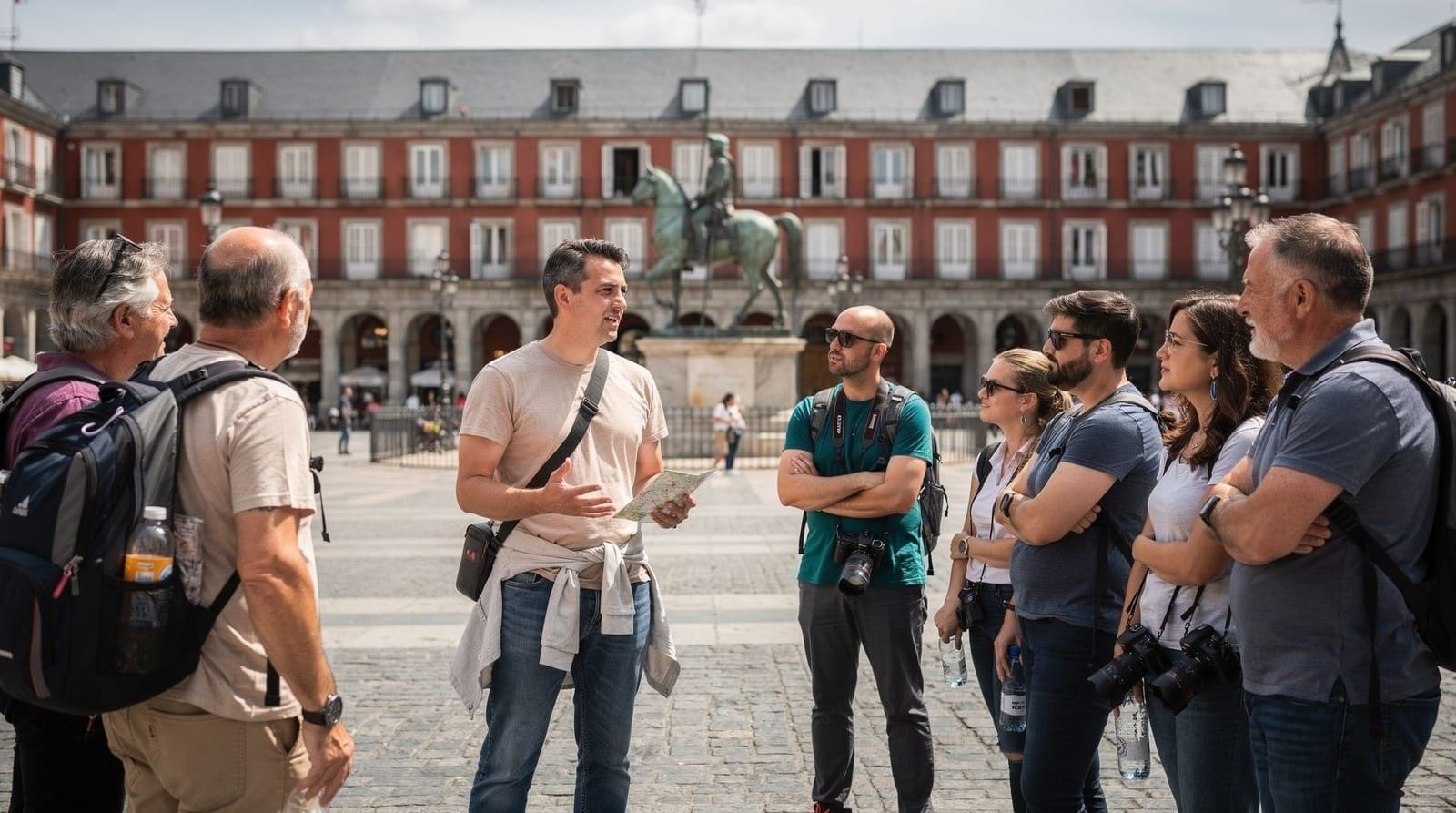
Madrid: Old Town Walking Tour
Are free walking tours in Madrid really free?
No — Madrid's 'free' walking tours are tip-based. No upfront payment, but the guide earns only from tips. The expected range is €10–15 per person for a 2–3 hour tour. If you pay less, the guide may not cover their operating costs. Budget €12–15 per person if you want a quality experience and to treat the guide fairly.
In brief: Madrid’s free walking tours are tip-based, not actually free. Budget €12–15 per person. The standard tour covers the historic centre in 2–2.5 hours and is a genuinely good introduction to the city — but choose carefully, because group sizes vary from 8 to 40+ people.
| Real cost | €10–15 tip per person (not actually free) |
| Duration | 2–2.5 hours standard route |
| Group size | 8–40+ people, varies widely by operator |
| Meeting point | Puerta del Sol or Plaza Mayor |
| Best time | Weekday mornings (smaller groups) |
What “free” means in practice
The “free walking tour” model works like this: a guide operates under a company or independently, charges nothing upfront, and earns entirely from tips given at the end. There is no compulsion to pay a specific amount — but there is a strong social expectation, and the guide’s livelihood depends entirely on the group’s generosity.
In Madrid in 2026, €10–15 per person is the realistic minimum for a quality 2–3 hour tour. Most guides suggest €10 as a floor. If you pay less — or nothing — the experience becomes economically unfair to the person who spent three hours sharing their knowledge of the city.
The practical implication: if you’re budgeting for a walking tour, budget €12–15 per person. This is not significantly less than a paid tour (which starts at around €15–20 upfront), but the format remains popular because there is no financial commitment before you start.
The appeal for many travellers is psychological as much as financial: paying nothing upfront removes the risk of a bad tour costing you money before you’ve experienced it, and it lets undecided travellers try the format without commitment. For a family or group deciding at the last minute whether to join a walking tour, that flexibility is genuinely useful, even if the eventual cost ends up similar to a paid alternative.
What the standard tour covers
The classic Madrid free walking tour covers the historic core in roughly 2 to 2.5 hours. Typical stops include:
Puerta del Sol — the central square, the “zero kilometre” marker, the statue of the Bear and the Madroño tree. Most tours start here. The guide explains why Sol feels chaotic (it’s actually several different traffic patterns converging) and what the 2011 protests meant for modern Madrid.
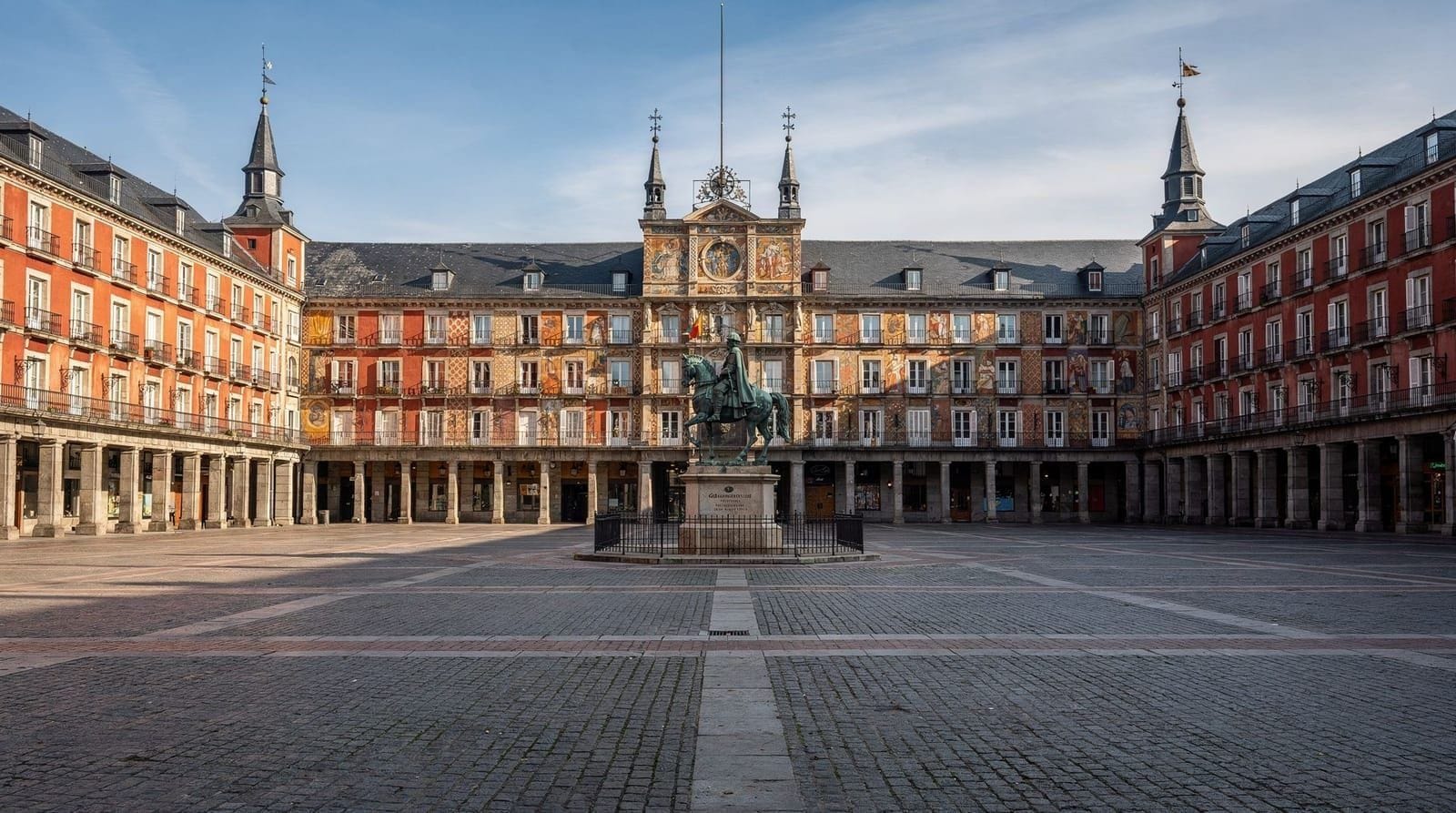
Plaza Mayor — the Habsburg-era square, its 237 uniform balconies, and the Felipe III equestrian statue. The guide usually notes which restaurants to avoid (almost all of them, on a budget) and where the original fish and egg market was held. See the plaza mayor guide for deeper history.
Mercado de San Miguel — often a pass-by rather than entry, but the guide explains what the market actually sells versus what tourists are paying for.
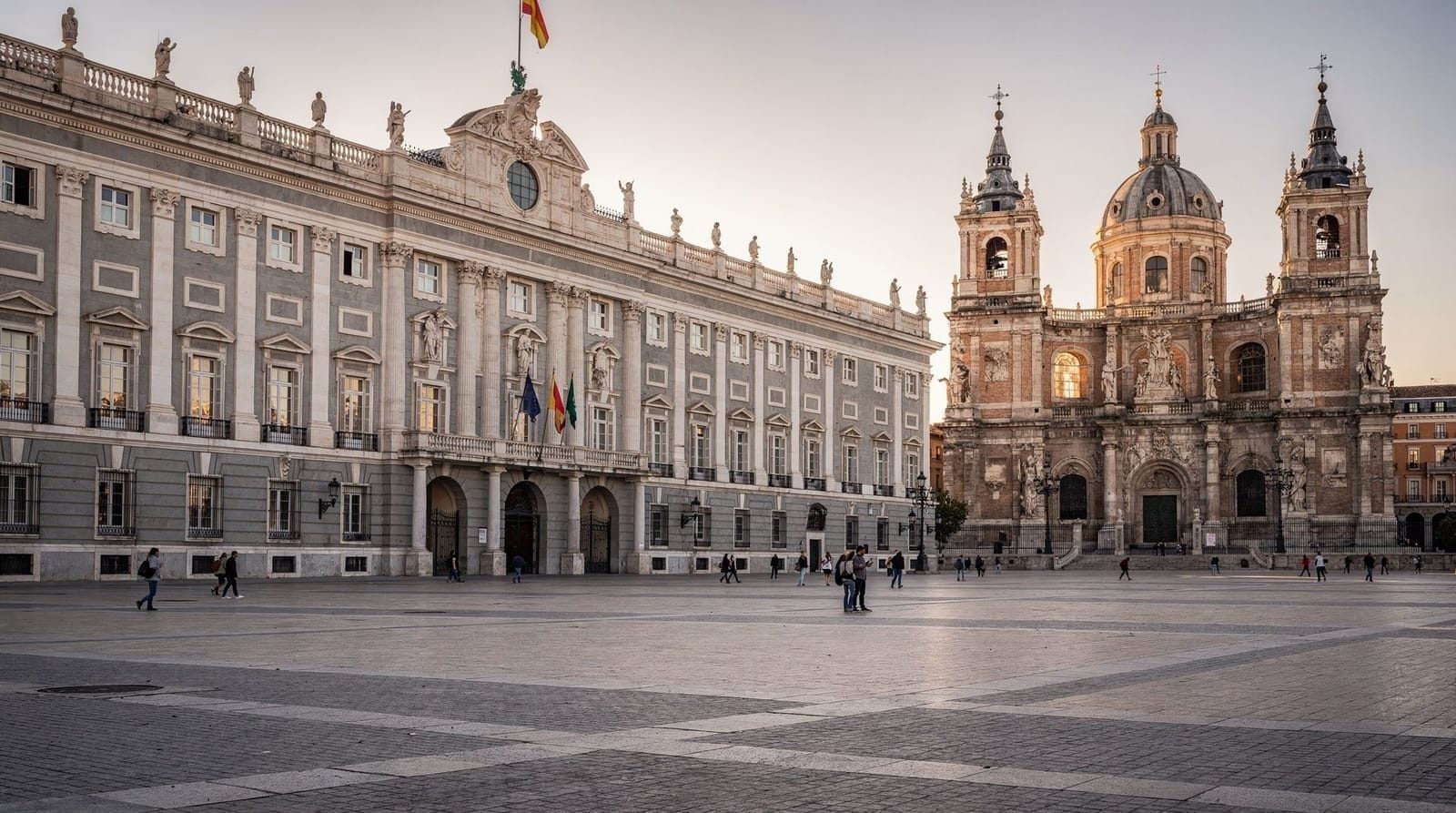
Royal Palace exterior and Almudena Cathedral — the palace itself requires a ticket, so tours view from the Sabatini Gardens or the Plaza de Oriente. The cathedral is free to enter; some guides walk inside briefly.
La Latina / Cava Baja — the tapas district, with notes on which streets to return to for lunch or evening. See the La Latina guide for more detail.
Optional extensions: Some tours continue to the Rastro market area or Lavapiés, depending on the operator.
The Old Town Walking Tour is the standard paid alternative — fixed-price, confirmed guide-to-group ratio, and ticket confirmation before you show up.
The honest group size problem
The main variable in any free walking tour is group size. Tours can range from 8 people to over 40. A group of 40 means:
- You may not hear the guide clearly in open squares
- The group moves slowly between stops
- Personal questions or interactions are impossible
- The overall experience feels generic
Paid alternatives and private tours solve this. But if you book a free tour from a reputable company, mornings on weekdays generally have smaller groups than weekend afternoons. Booking online (rather than walking up) also sometimes signals which tours are already filling up.
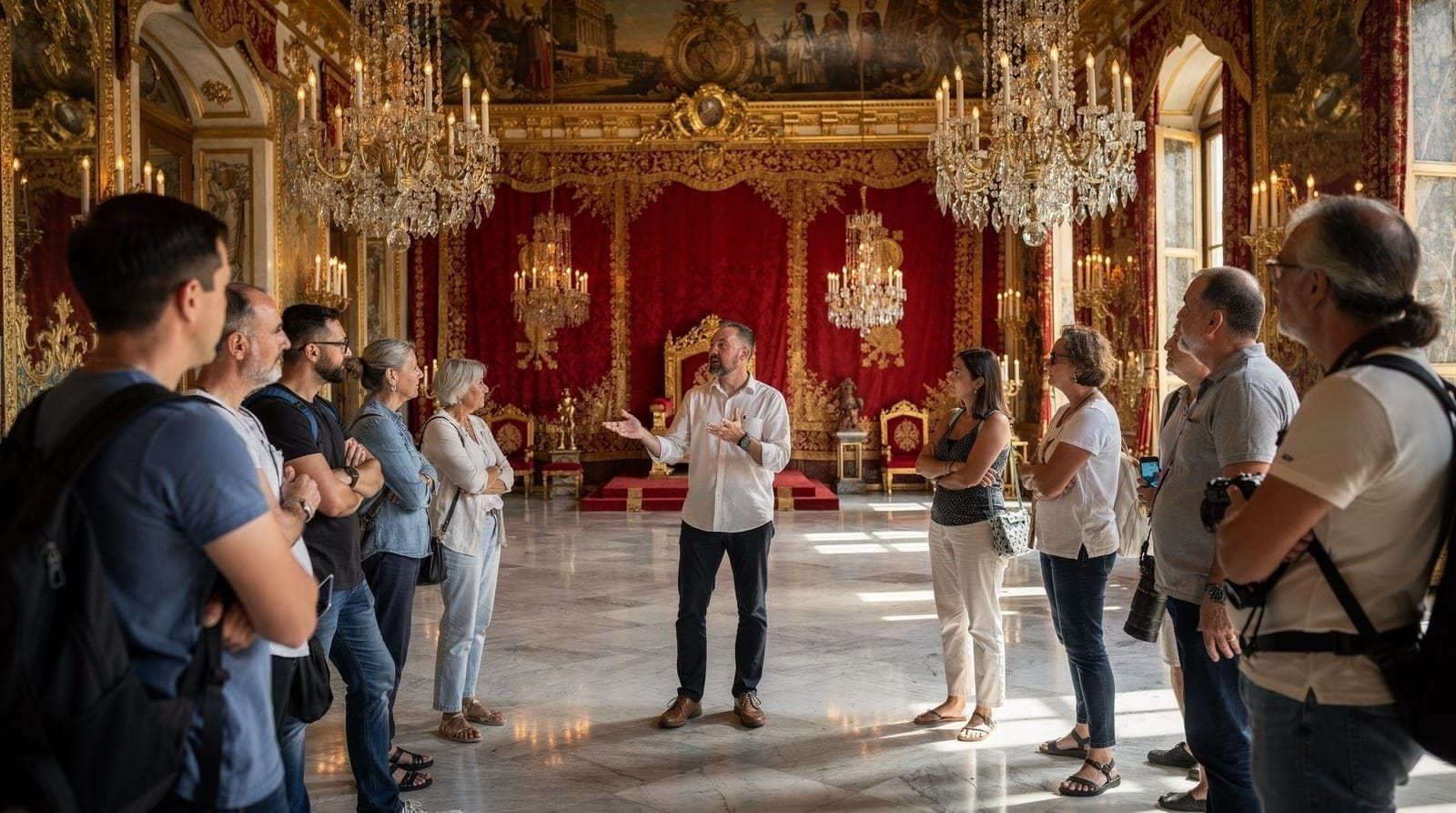
The Welcome to Madrid guided visit is a small-group paid option at a modest price that guarantees a more personal experience.
Which operators are worth using
Several companies run free walking tours in Madrid. The most established include Sandemans New Europe (the largest global operator), Wolk Walking Tours, and several independent guides who operate under their own names. Quality varies more by individual guide than by company — the same company might have an excellent morning guide and a mediocre afternoon one.
Practical filters to apply when choosing:
- Check reviews on GetYourGuide and Viator from the last 3 months. Tour quality changes with guide turnover.
- Look at group size estimates in recent reviews. If multiple reviews mention “30+ people,” factor that in.
- Book the morning tour if you have flexibility. Afternoon tours attract more last-minute groups and are typically larger.
- Prefer operators who cap group size. Some companies advertise a maximum of 15–20 people per group.
For a self-guided alternative, see guided vs self-guided tours.
Themed tours beyond the historic centre
Beyond the standard old-town route, several companies offer themed walks worth knowing about:
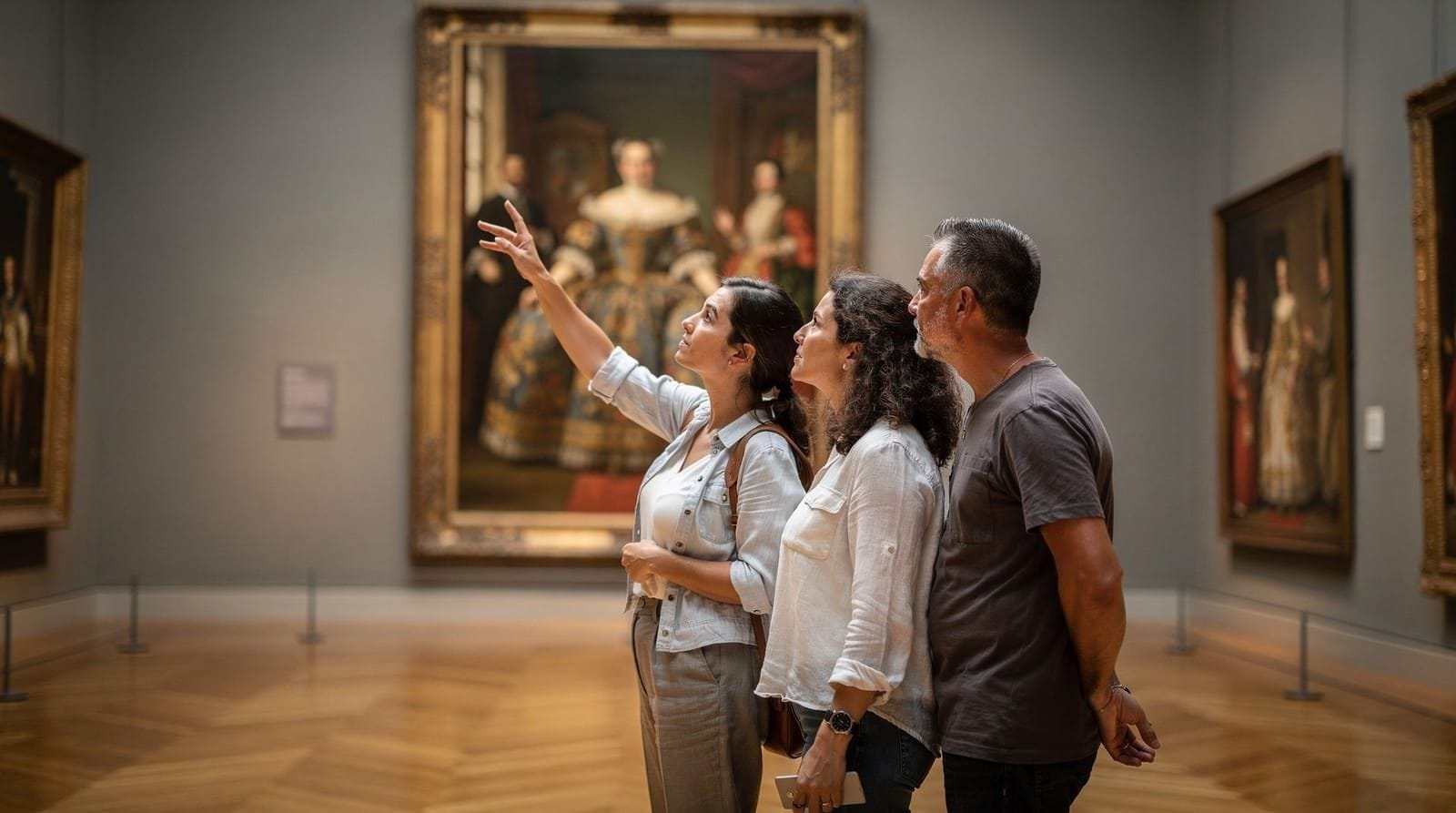
Literary Madrid (Barrio de las Letras): The neighbourhood where Cervantes, Lope de Vega, and Quevedo lived and died. Calle Huertas has Quevedo’s words inscribed in the pavement. See the Barrio de las Letras guide for the full context.
Lavapiés street art: The most genuine street art district in Madrid, mixing political murals, commissioned works, and a neighbourhood that has resisted gentrification more successfully than Malasaña. See the Lavapiés guide for orientation.
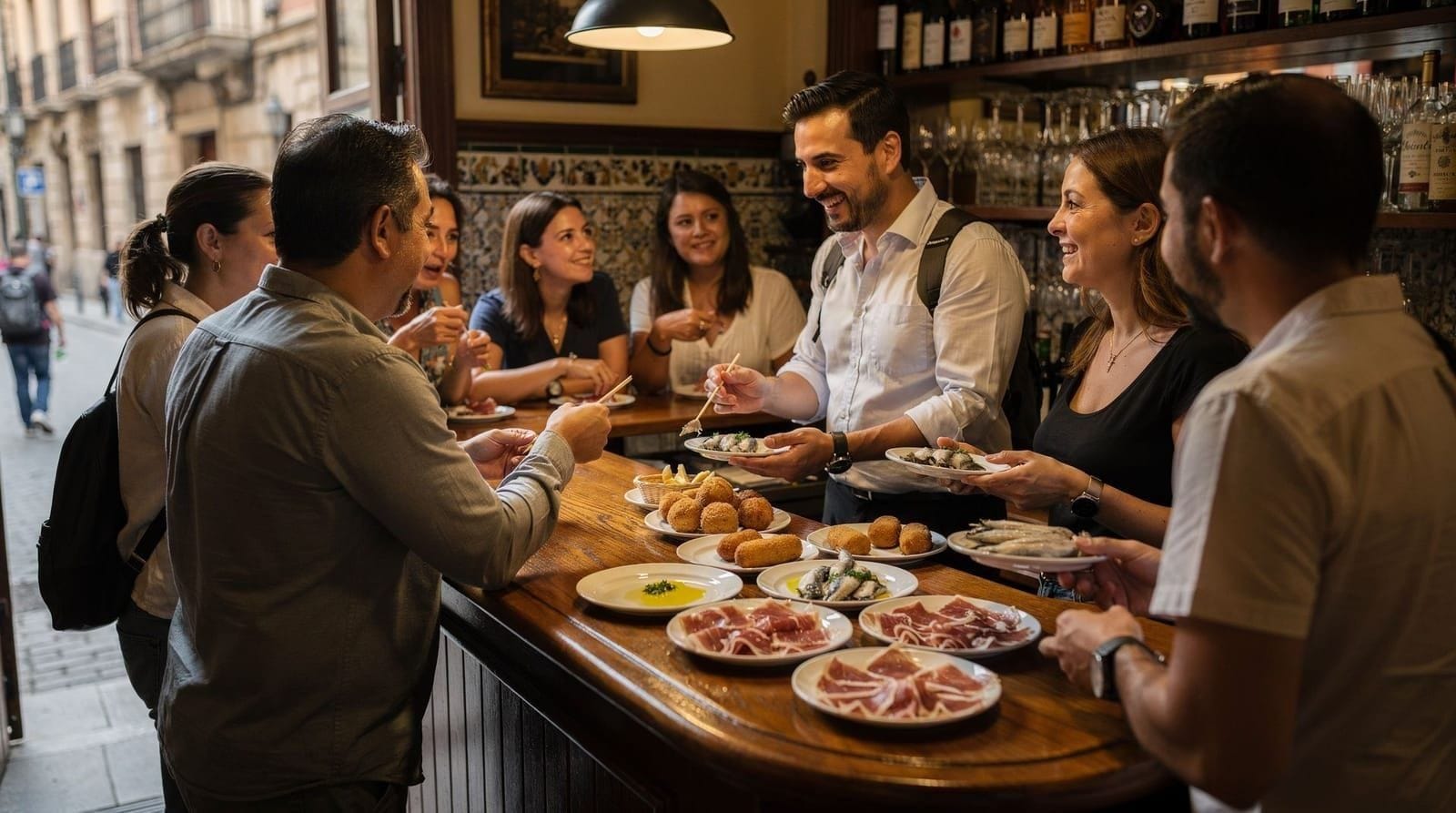
Food walking tours: Focused on tastings at specific markets and bars — different category than a sightseeing walk. See the dedicated food walking tour guide.
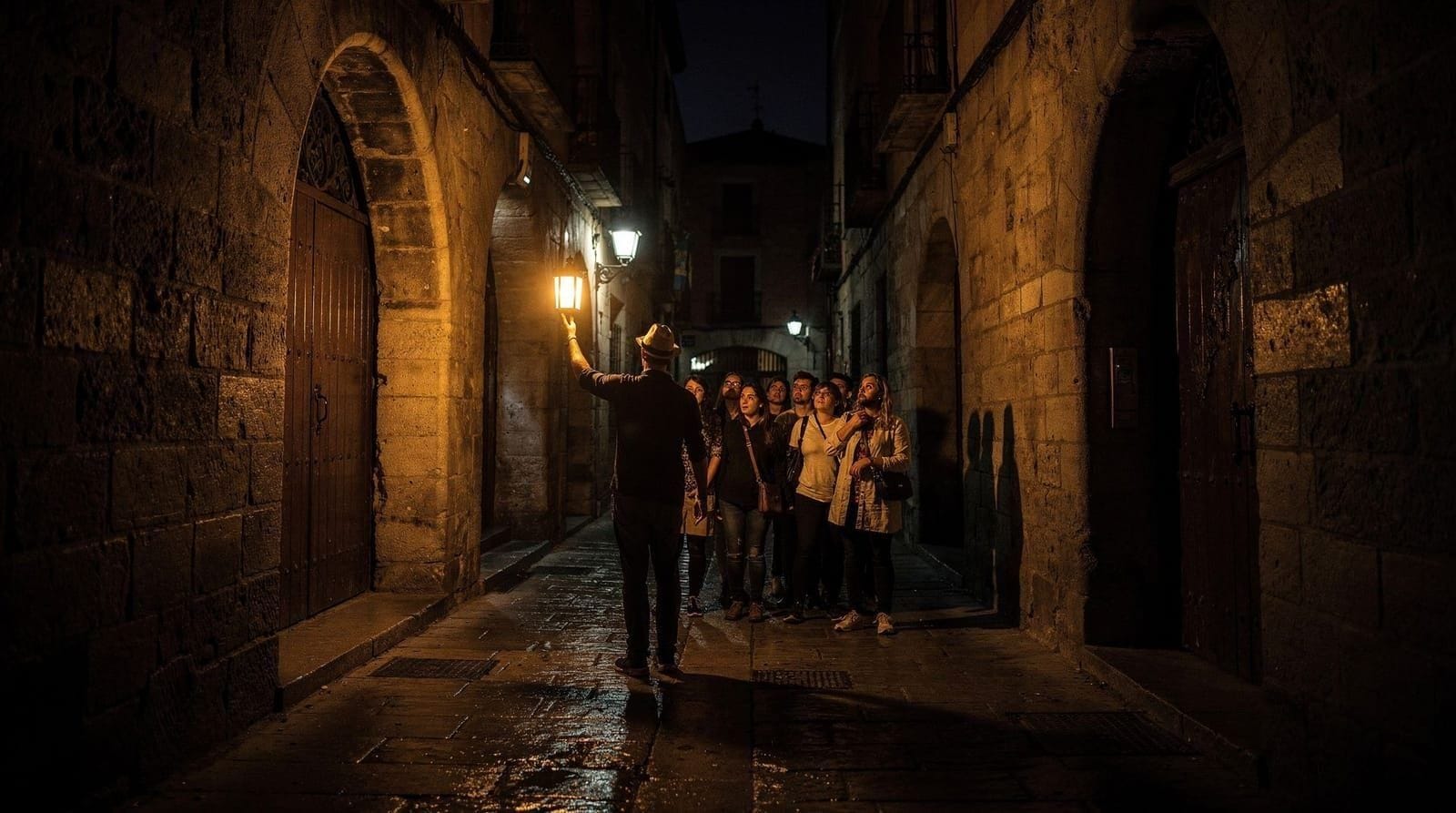
Ghost and legends tours: Usually evening departures, covering the darker history of the Inquisition, royal intrigue, and urban legends. See ghost and legends tour.
Free tour vs paid small-group tour: the real comparison
| Factor | Free (tip-based) | Paid small-group |
|---|---|---|
| Upfront cost | €0 | €15–25 |
| Real cost | €10–15 tip | €15–25 |
| Group size | 5–40+ | 6–12 (capped) |
| Guide accountability | Lower | Higher |
| Route flexibility | Standard | Sometimes customised |
| Booking security | Usually required | Always confirmed |
For first-time visitors on a tight budget who are comfortable with variable quality, the free tour is a reasonable starting point. For visitors who want a reliable, intimate experience, the small-group paid tour is worth the slightly higher cost.
The best-rated Old Town walking tour offers a guided small-group experience with confirmed booking.
Practical logistics
Meeting points: Most operators use Puerta del Sol (look for a coloured umbrella or a sign) or Plaza Mayor. Confirm with your specific operator when booking.
What to wear: Comfortable shoes. The historic centre is paved with uneven stone in places. Madrid summers are hot — hat and water in July and August.
Duration: Budget 2.5–3 hours including a few queue moments at popular spots.
Languages: English runs most frequently. Spanish, French, and Italian available with some operators. Check schedules if you need a specific language.
When to book: At least the night before for popular morning slots, especially March–October.
Weather: Tours operate in rain. If it’s raining, the guide will abbreviate or sheltered stops. Madrid gets very little rain, especially April–September.
How to integrate a walking tour into your Madrid trip
A free or paid walking tour works best as day one orientation — it gives you the bones of the historic centre and lets you make informed decisions about what to return to in depth. After the tour, you will know which museums need booking in advance, which streets are worth an evening return, and which areas to explore independently.
The 3-day Madrid itinerary builds the walking tour as the morning anchor for day one. If you have only one day, the one-day Madrid guide suggests fitting the tour into the morning and spending the afternoon at the Prado.
What makes a good free walking tour guide in Madrid
The quality variable in free walking tours is higher than in paid tours, partly because the self-selection mechanism is different. Any guide can set up a free tour and rely on a steady stream of new arrivals who have not read recent reviews. The following signals — observable before or shortly after the tour starts — indicate a quality guide:
Preparation for the day: A good guide arrives early, has notes or cue cards for specific buildings, and knows what is currently open or closed (construction, special events). An unprepared guide makes improvised comments that are vague or inaccurate.
Specific stories with dates and names: “This square was built in 1619 under Felipe III” is information. “Felipe III’s court accountant embezzled 3,000 ducats in the construction budget, was tried in this very square, and given 200 lashes” is a story. Good guides have the specific version.
Honest about group size: A guide who mentions that the group is unusually large today and adjusts (speaking louder, taking less-crowded route variations) is adapting. A guide who is simply unaware of the group size problem is not.
Self-awareness about the “free” model: The best free tour guides address the tip expectation directly and honestly at the tour’s start — not apologetically, but professionally: “This is how I earn my living; at the end, give what you think was worth it.” This directness usually correlates with the guide’s overall quality.
Local, recent knowledge: A guide who mentions what was in the news about Madrid last week, what festival is happening this weekend, or what the best current restaurant in La Latina is — shows genuine engagement with the city rather than a scripted tour.
How to tip: the social dynamics
The tip at the end of a free walking tour is one of the more socially complex moments in travel. Practical guidance:
When to tip: At the designated “thank you” moment at the tour’s end. Do not tip during the tour or give in the middle.
How much: €10–15 per person is the current Madrid standard for a 2.5-hour tour. If you are a group of 6+ people and the guide ran the tour specifically for you (small group), tip on the higher end of that range — the guide earned less from fewer people.
How to give: Cash directly to the guide. The guide will either have a hat, a cup, or will simply receive it in their hand. Do not overthink the physical mechanics.
If you are budget-constrained: €5–8 per person is below the standard expectation but acknowledges the service. Less than €5 per person is generally considered a poor return for 2.5 hours of professional work.
The fairness argument: The guide chose this model knowing the economics. They earn less per person on large groups and more on small ones. Your individual tip is one data point in their average. Giving a fair tip for good work supports the model; giving nothing or very little makes it unsustainable.
The free tour as a foundation for independent exploration
The most practical use of a free walking tour in Madrid: use it to identify the five or six specific places you want to return to independently. After the tour ends, you know:
- Which street the guide mentioned is worth returning to in the evening (usually a tapas street in La Latina or Huertas)
- Which museum the guide said is underrated (often the Sorolla Museum or the Naval Museum — less visited than the Golden Triangle)
- Which building’s interior is worth a dedicated visit (the Descalzas Reales convent, often mentioned)
- What specific dish to try at a specific bar the guide uses as an example
The walking tour gives you a map with annotations. Everything after the tour is your own exploration, guided by the specific interest the guide activated.
For building your full Madrid itinerary from this foundation, see the how many days in Madrid guide and the Madrid first weekend itinerary.
Free walking tours with children
Families should think carefully before booking a standard free walking tour, since the format (standing for 2–2.5 hours, adult-paced historical narration, large groups) does not suit most children under 8. The content — Habsburg dynastic history, embezzlement scandals, architectural detail — is aimed at adults and older teenagers. For families wanting a walking-based introduction to the historic centre, a private guide who can adapt pacing and content to children, or simply a self-guided walk using the Plaza Mayor guide and Puerta del Sol guide with built-in stops for a snack or a playground, tends to work better than the standard tip-based tour.
Weather contingency for outdoor tours
Madrid’s climate means rain rarely disrupts a walking tour, but summer heat is the more common practical issue. Guides on July and August tours typically build in shaded stops and move at a slightly slower pace, but the outdoor, standing format is still demanding at 35°C+. If booking a summer tour, choose the morning slot (10:00–11:00) over an afternoon one, bring water, and wear a hat — the guide cannot shorten the route significantly without cutting content that other participants expect. For visitors sensitive to heat, an evening or early-morning self-guided version of the same route, using the Plaza Mayor guide for context, avoids the exposure entirely.
Frequently asked questions about Free walking tours in Madrid
How much should I tip on a free walking tour in Madrid?
The honest range is €10–15 per person for a standard 2–3 hour tour. Many operators suggest €10 minimum. If the guide was exceptional or the group was very small (guide earns less from fewer people), €15–20 is appropriate. Paying nothing is technically allowed but makes the experience economically unviable for guides.What do free walking tours cover in Madrid?
Most cover the historic centre: Puerta del Sol, Plaza Mayor, Mercado de San Miguel, the Palacio Real exterior, the Almudena Cathedral, and La Latina. Some operators offer specialist routes: street art in Lavapiés, literary Madrid around Barrio de las Letras, or the Habsburg quarter. Duration is typically 2–2.5 hours.When do free walking tours run in Madrid?
Most operators run daily, with morning starts (10:00 or 11:00) and an afternoon option (16:00 or 17:00). Meeting points are usually at Puerta del Sol or Plaza Mayor. Booking online is recommended — tours are not always guaranteed for small last-minute groups.What languages are free walking tours available in?
English tours run most frequently, usually 2–3 times daily. Spanish-language tours are also common. French, German, and Italian tours are available from some operators but less frequent — check individual company schedules. The guide ratio is one guide per language group.Is a 'free' walking tour better than a paid walking tour?
Not necessarily. Paid small-group tours (typically €15–25 upfront) often have a guaranteed maximum group size (6–10 people), licensed guides with formal credentials, and more focused itineraries. Free tours can have groups of 30+ people — harder to hear the guide, less personal. Both formats have excellent and mediocre operators.What meeting point should I use for free walking tours?
Most operators meet at Puerta del Sol — look for guides holding a coloured umbrella or sign. Confirm the exact meeting point when you book. Plaza Mayor is another common location. Arrive 5–10 minutes early.Do I need to book in advance for a free walking tour?
Recommended but not always required. Booking online guarantees your place and sometimes gets you better placement in the group. Walk-ins are usually accepted if there is space, but popular morning tours in spring can fill up.Are there themed free walking tours beyond the historic centre?
Yes — Lavapiés street art, the literary Barrio de las Letras, a Malasaña neighbourhood walk, and even ghost/legends tours in the evening are offered by some operators. These tend to run less frequently than the standard old town route.
Top experiences
Bookable activities with verified prices and instant confirmation on GetYourGuide.