Madrid in one day: the essential layover itinerary
Madrid: One Day Private Guided
Quick answer: One full day in Madrid is tight but workable. Start at the Royal Palace by 9 am, walk through the Austrias quarter to Puerta del Sol and on to the Prado for a focused 90-minute visit, then taper into La Latina for tapas and finish at the Temple of Debod for sunset. Stick to the metro for the airport runs; everything else is on foot.
Madrid rewards a single day more than almost any other European capital — it is compact, the metro is fast, and the headline sights are genuinely close together. The trick is sequencing: mornings at the monuments (before the tour buses arrive), midday in the museums (before the heat peaks in summer), afternoons in the eating and drinking neighbourhoods, and evenings at the viewpoints.
This itinerary is designed for anyone with a true layover or a single free day, including people arriving by AVE from another Spanish city. If you have a second day available, the Madrid first weekend plan picks up where this one ends.
| Duration | 1 day (works as a long layover of 6+ hours) |
| Pace | Fast — one monument, one museum, one neighbourhood, one sunset |
| Getting around | Mostly on foot; metro Line 3 or 10 for the Temple of Debod |
| Budget | Around €70–€110 for the day, excluding accommodation |
| Best time | Any season; arrive at the Royal Palace right at opening |
Morning: Royal Palace and the Austrias quarter
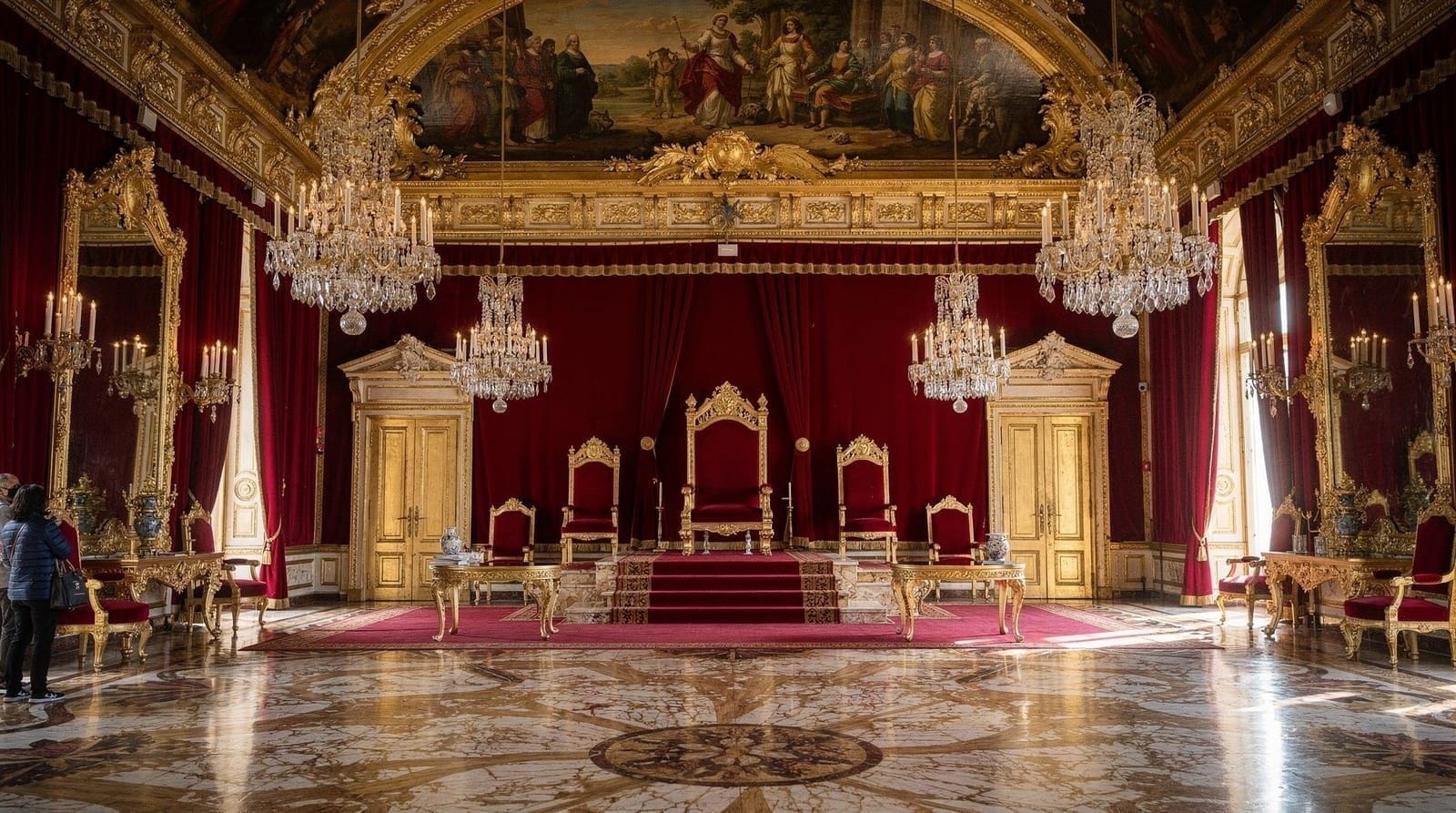
Arrive early. The Royal Palace of Madrid opens at 10 am, and if you are there when the doors open you will have a good 30 minutes ahead of the organised groups. The state rooms — the Throne Room’s Tiepolo ceiling, the Gasparini Room’s embroidered walls, the dining room that seats 140 — justify every minute.
Book the Royal Palace fast-access ticket in advance; the queue for walk-in tickets in high season can run 45–60 minutes and eats directly into your day.
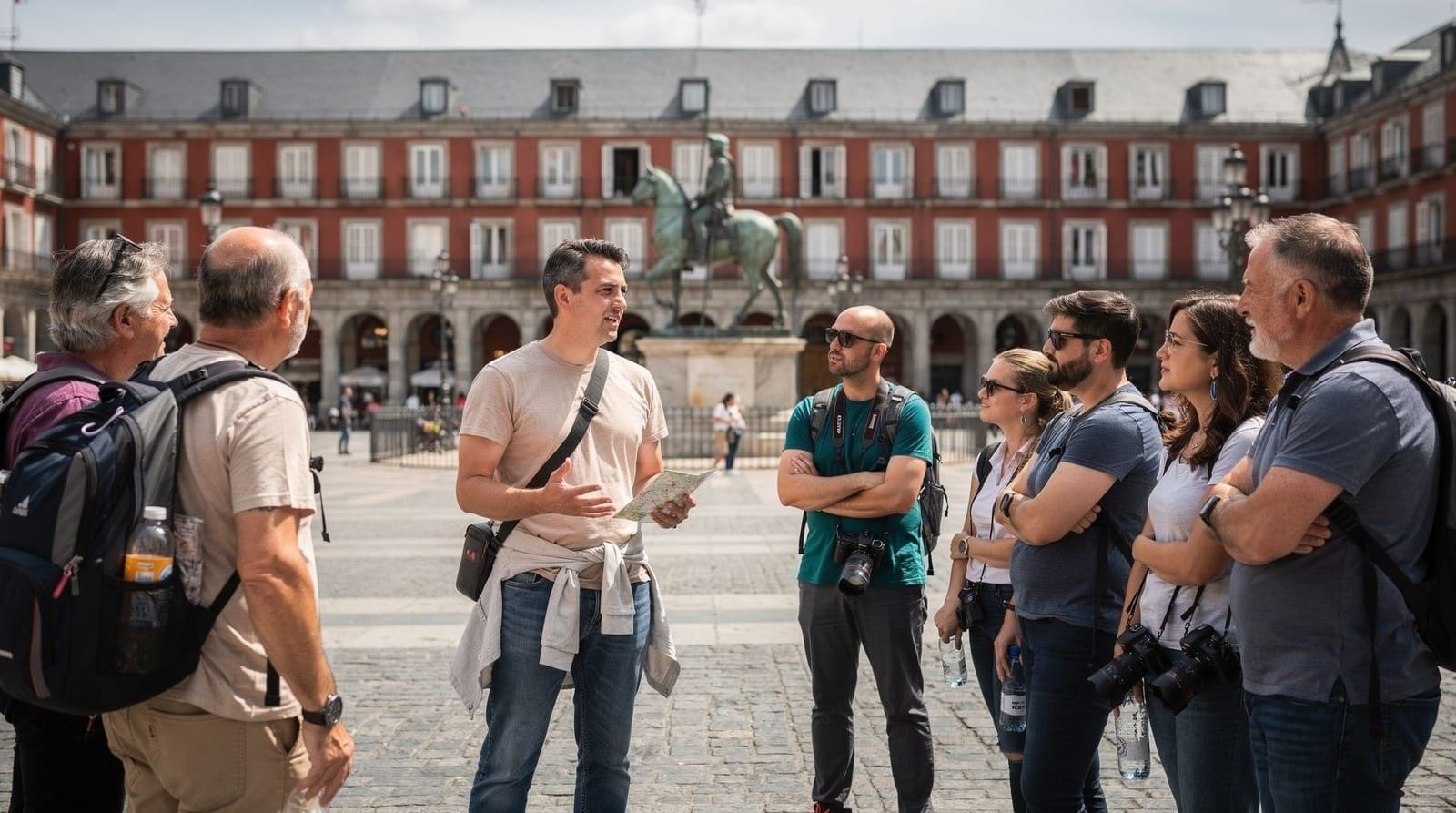
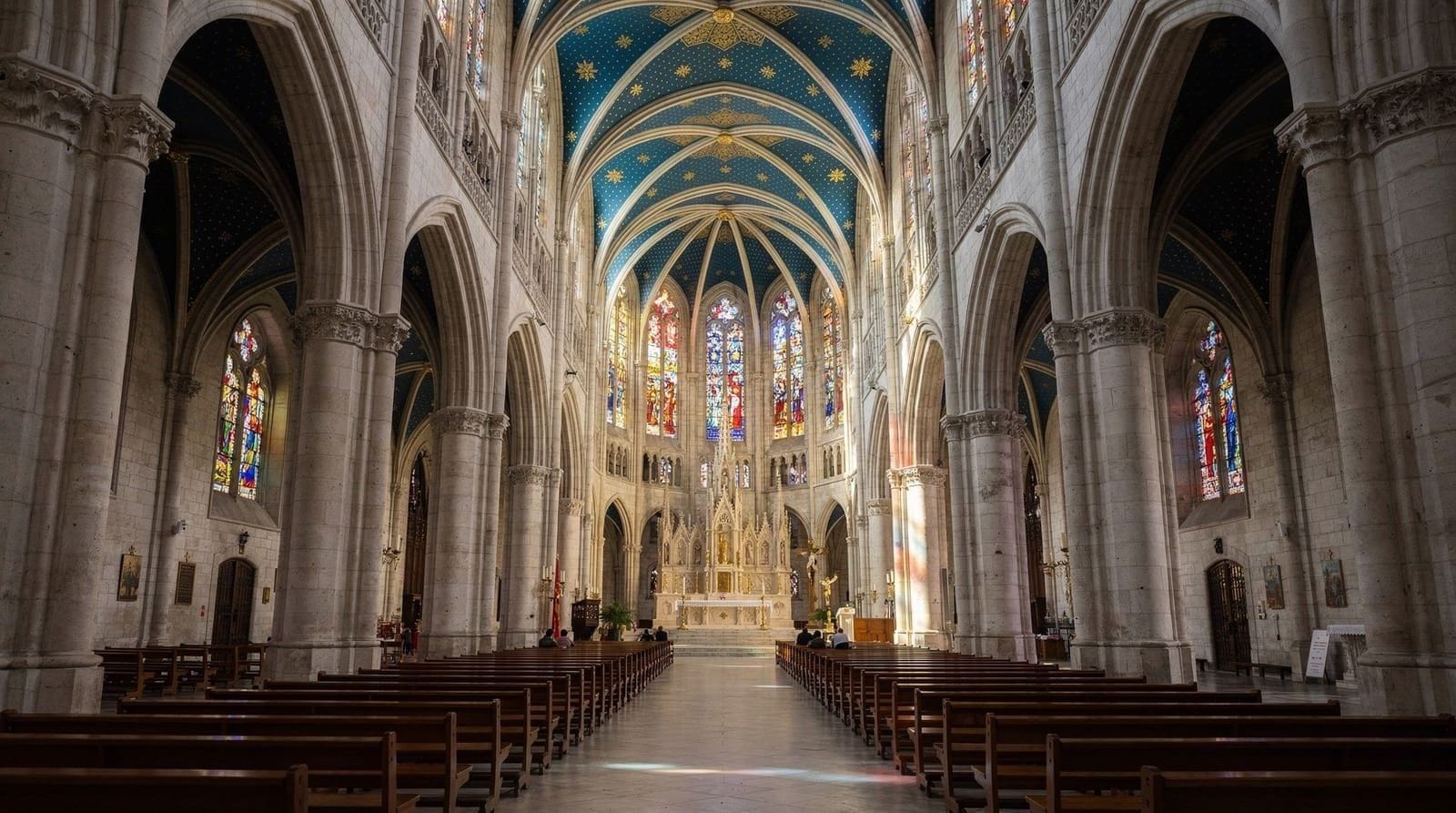
After the palace, cross into Madrid de los Austrias and walk the loop from the Catedral de la Almudena through the cobbled lanes of the old Habsburg quarter to Plaza Mayor. The square itself is always busy; the best approach is to walk through it rather than sit down at the terrace cafés, which charge double the neighbourhood rate. Continue east along Calle Mayor to Puerta del Sol — the exact centre of Spain, marked by a bronze plaque and usually thick with street performers.
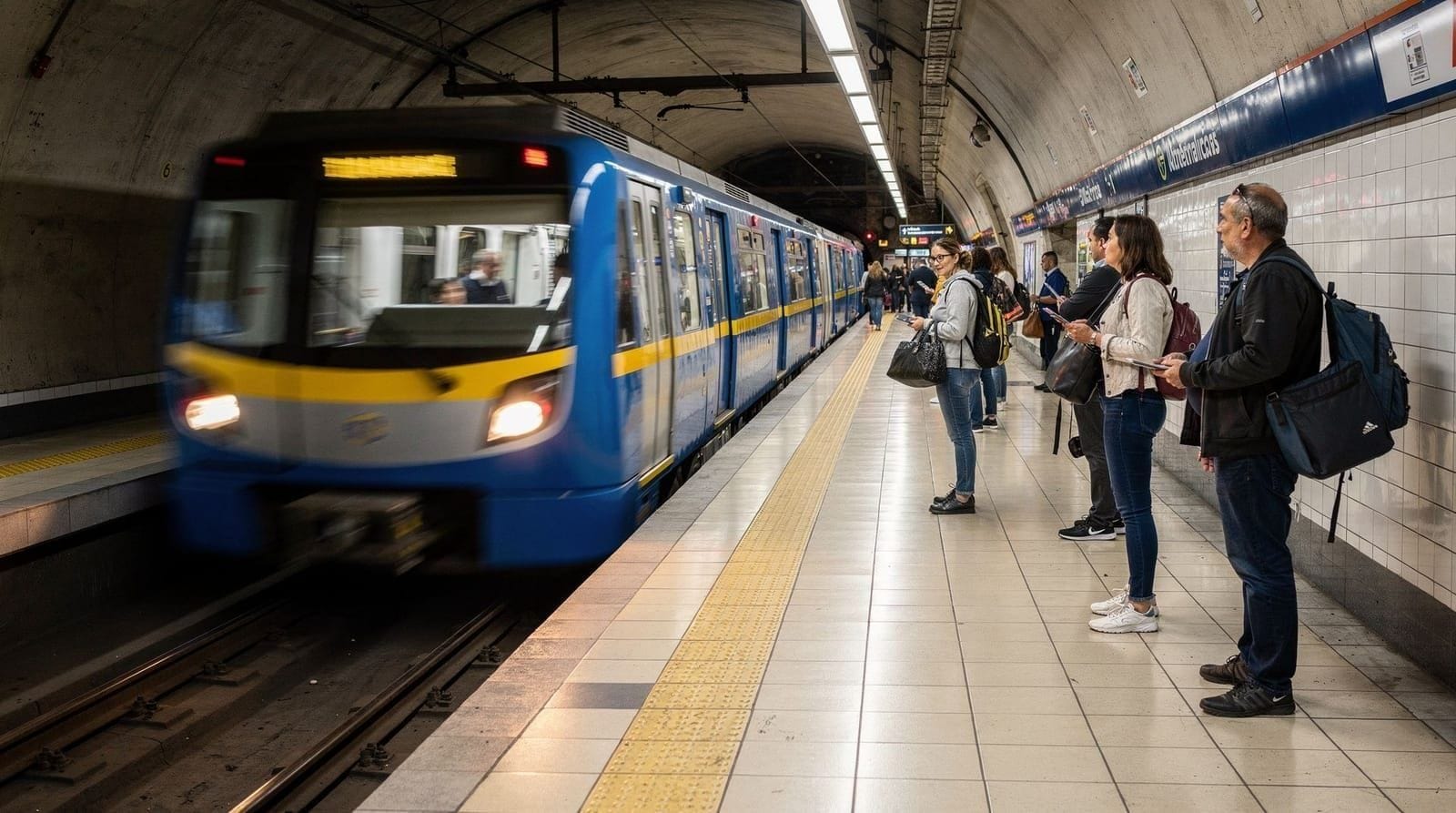
Practical note: Metro Sol (Lines 1, 2, 3) is the spine of the city. From Atocha or Chamartín, a single metro ticket costs around €1.50–€2. If you are arriving from the airport on Metro Line 8, get a Tourist Travel Pass, which waives the €3 airport supplement and covers all subsequent rides. See the Tourist Travel Pass guide for the best-value option by day count.
Mid-morning: the Prado, focused
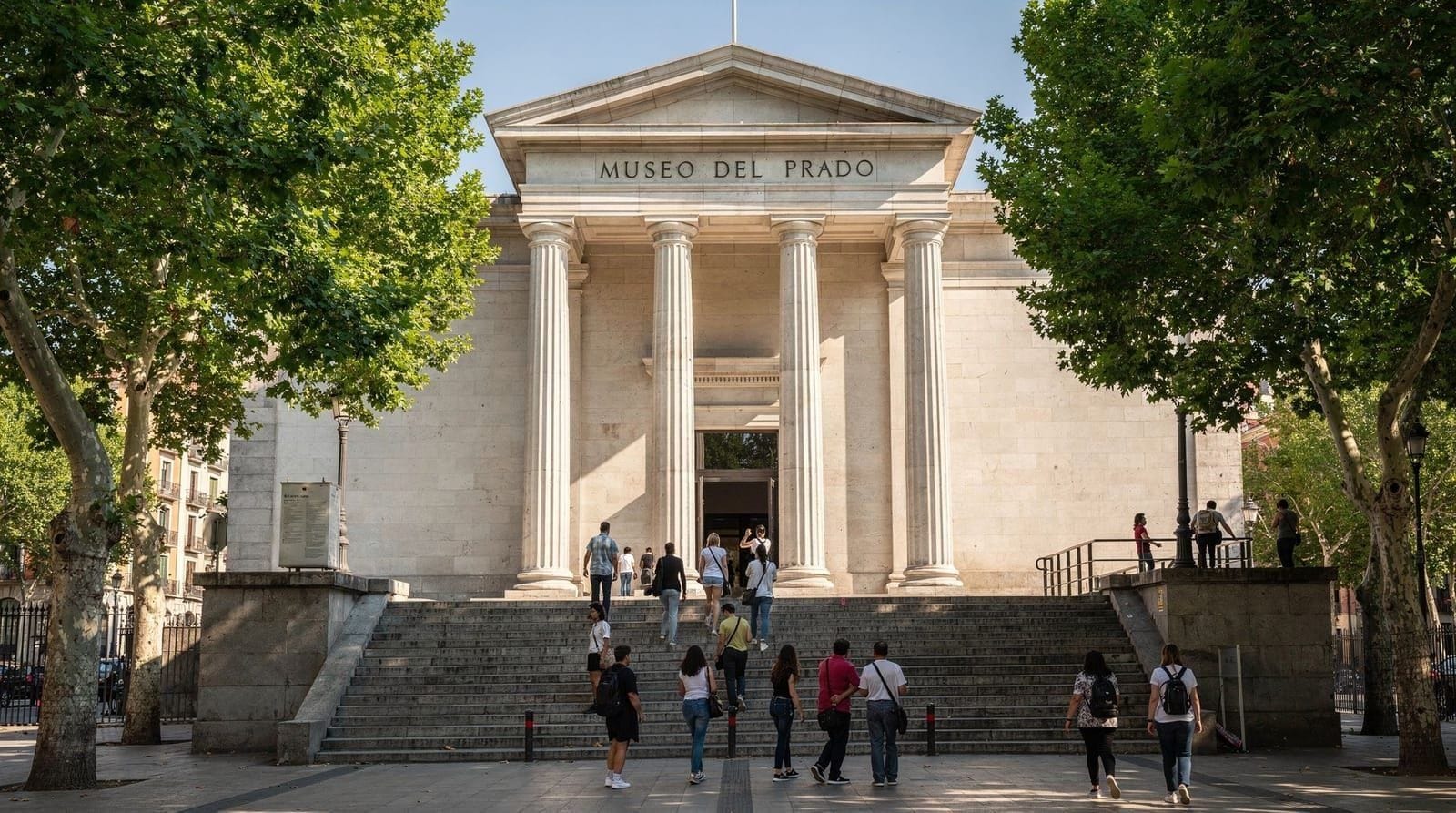
Walk or take the metro from Sol to the Prado Museum — it is about 20 minutes on foot through the Barrio de las Letras, or three stops on Metro Line 2 to Retiro. You have roughly 90 minutes here on a one-day visit; that is enough to see the rooms that matter and not enough to do everything, so choose your battles.
The non-negotiable rooms: Velázquez (Rooms 12–15, especially Las Meninas), Goya (floors scattered throughout, but the Black Paintings in Room 67 on the ground floor are the ones to seek), and El Greco (Rooms 8B and 9B). Bosch’s The Garden of Earthly Delights is in Room 56A — ten minutes in front of it is better than an hour with the audio guide half-attending.
The Prado skip-the-line guided tour is worth considering if you want context; a good guide will cover the essential rooms efficiently and give you the why as well as the what.
Free-entry windows: The Prado offers free admission Monday to Saturday 18:00–20:00 and Sundays 17:00–19:00. On a single-day visit this probably does not fit the schedule, but it is worth knowing if you are building a very tight budget day. The museum-free-hours guide lists all three golden triangle museums.
After the Prado, take a break in the Retiro Park — the main gate is directly opposite the museum. A 20-minute walk around the Estanque (boating lake) is the natural decompressor between the intensity of a museum visit and lunch.
Lunchtime: La Latina tapas
Head to La Latina by metro (Prado → Tirso de Molina or La Latina station, three stops). This is where Madrileños eat and drink on Sundays — the neighbourhood around Cava Baja and Cava Alta concentrates more good tapas bars per square metre than anywhere else in the city.
Order by standing at the bar, not sitting at a table (you pay more to sit). A caña — the small draft beer that arrives in every bar in Madrid — costs €2–€3.50 and frequently comes with a free bite. The tapas guide identifies the bars worth queueing for; on a tight one-day schedule, try Casa Lucas (Cava Baja 30) for modern pintxos or Taberna Tempranillo (Cava Baja 38) for honest wine and jamón.
A full La Latina bar-hop lunch with three rounds costs roughly €15–€20 per person. Sit-down menú del día (three courses plus wine) is €12–€15 at neighbourhood restaurants — avoid the Plaza Mayor fringe, where the same menu costs €20–€25 and the quality is lower.
Afternoon: Reina Sofía or the golden triangle walk
After lunch, choose one of two routes depending on energy and interest.
Option A (art focus): Return to the Reina Sofía on Atocha (15 minutes walk from La Latina). The permanent collection is centred on Picasso’s Guernica and the Surrealist and post-war Spanish art that surrounds it. Allow 60–90 minutes. Like the Prado, the Reina Sofía has free entry on certain evenings and Sunday afternoons — check the museum-free-hours guide for current windows.
Option B (neighbourhood walk): Walk the golden triangle route from La Latina through Barrio de las Letras to the Thyssen-Bornemisza. The golden triangle art walk guide maps the best café and bookshop stops between the three museums.
Evening: Temple of Debod and Gran Vía
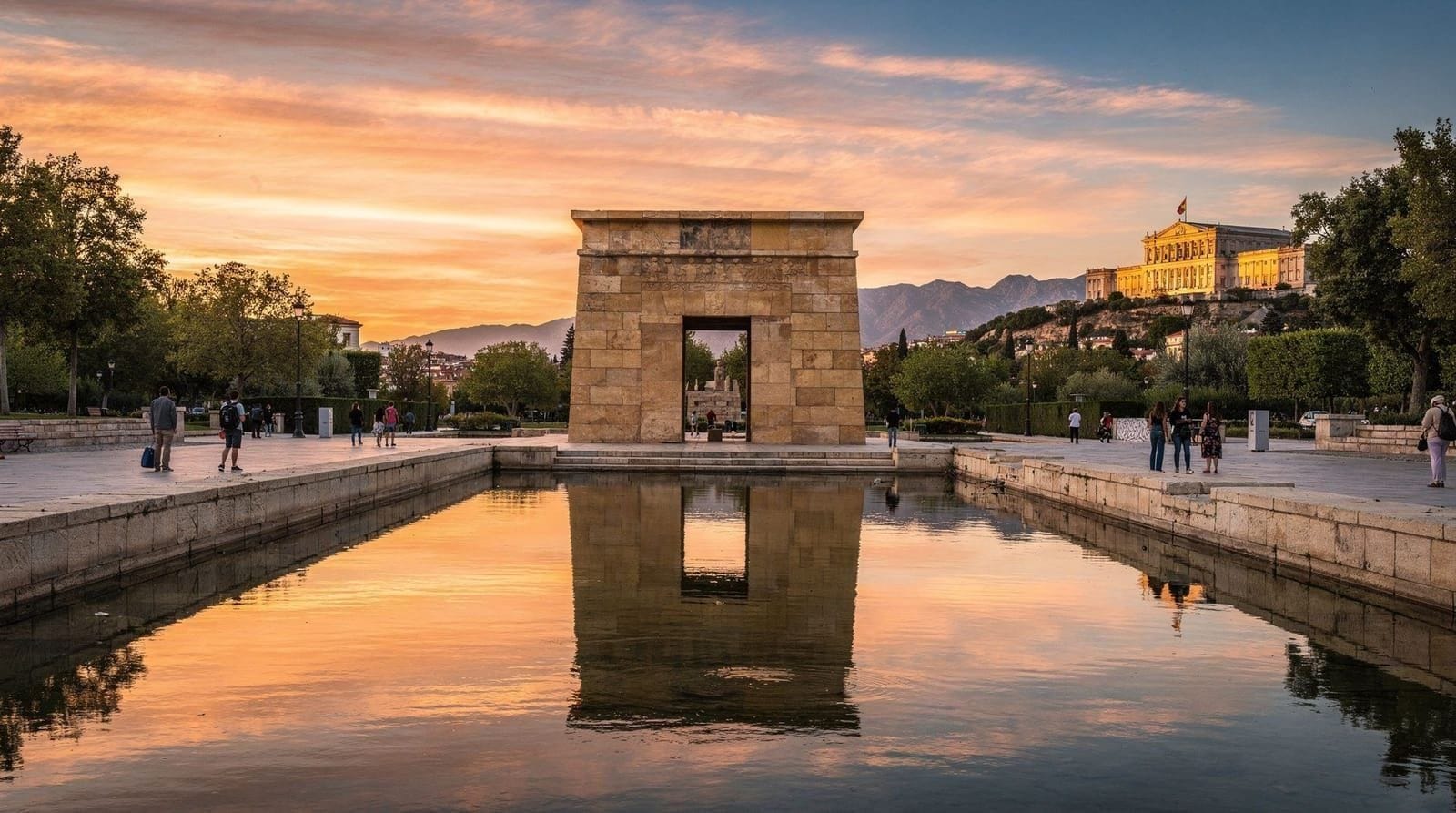
Madrid has excellent sunsets from the Temple of Debod, the authentic ancient Egyptian temple in Parque del Oeste that faces west over the Casa de Campo reservoir. Arrive 45–60 minutes before sunset to get a good position; entry to the temple interior is free. From La Latina or Sol, take Metro Line 3 to Ventura Rodríguez or Line 10 to Príncipe Pío — both are a 10-minute walk.
After sunset, walk down to Gran Vía for the classic night view of Madrid’s main boulevard lit up. This is the place for a cocktail before dinner — the Azotea del Círculo de Bellas Artes rooftop, two minutes off Gran Vía, charges €5 entry for the best elevated city view and a drink on top of it.
Dinner in Madrid happens at 9 pm or later. If you are heading to the airport or train station the same night, plan backwards from your departure — Barajas is 20 minutes on metro Line 8, and the city-wide taxi flat fare to anywhere inside the M-30 ring is €33.
Practical tips for one day
- Book the Royal Palace and Prado online. Walk-in queues in peak season (May, September, October) are 45–60 minutes each; pre-booking saves 2 hours of standing in line.
- Walk between Sol, the Austrias, La Latina, and Barrio de las Letras. The distances are 10–20 minutes at most; the city was built for strolling.
- Metro lines you will use: Line 1 (Atocha–Sol–Gran Vía), Line 3 (Sol–La Latina, Sol–Ventura Rodríguez), Line 2 (Sol–Retiro). Single tickets ~€1.50–€2; a Tourist Travel Pass covers everything.
- Eat at bar height. Standing at the bar (at the barra) is always cheaper than table service in Madrid tapas bars.
- Summer heat (June–August): Use the midday museum visits to stay cool. The Prado’s interior is a reliable refuge from 35°C afternoons.
- Need a guide for the whole day? A Madrid old-town walking tour in the morning handles the historic quarter and gives you the rest of the day free to self-guide.
Alternative one-day plans by interest
The Royal Palace–Prado–La Latina–sunset sequence above is the honest general-purpose one-day plan, but if you have a specific interest, small substitutions make a real difference. Art-focused visitors with no interest in the Royal Palace can swap the morning for an extended 2.5-hour Prado visit followed by the Thyssen-Bornemisza in the early afternoon, skipping the palace entirely — the golden triangle art walk guide maps this route. Food-focused visitors can compress the Royal Palace to a 45-minute exterior-and-Almudena-only visit and spend the freed time on an extended La Latina and Mercado de San Miguel circuit. Neither substitution changes the day’s total length; both simply reallocate the hours toward what you actually came for.
Frequently asked questions about one day in Madrid
Is one day enough in Madrid?
One day covers the top tier: Royal Palace, Prado, La Latina tapas, and a sunset viewpoint. You will not see Reina Sofía and Thyssen too — budget at least three days for the full golden triangle at a comfortable pace. The how-many-days-in-madrid guide breaks this down honestly.
Where should I eat on a one-day visit?
La Latina for lunch (Cava Baja/Cava Alta neighbourhood), and somewhere in Malasaña or Chueca for dinner if you are staying the evening. Avoid the restaurants immediately adjacent to Plaza Mayor and Puerta del Sol — they are overpriced by 30–50%.
Can I do Madrid Airport in one day on a long layover?
Yes — the flat taxi fare from Barajas to the centre is €33 each way, and the Metro Line 8 runs to Nuevos Ministerios in 15–20 minutes (€4.50–€5 with airport supplement). A minimum of five hours landside is realistic to do the Royal Palace or the Prado and lunch, with buffer time for transit.
What is the best order for sightseeing?
Royal Palace early (before the heat and crowds), Prado mid-morning (controlled interior temperature, time to queue-dodge), La Latina for lunch, afternoon museum or neighbourhood, Temple of Debod for sunset.
Do I need a car for one day in Madrid?
No. The historic centre is compact and walkable; the metro covers the rest. A car in central Madrid creates more problems (ZTL zones, parking costs, narrow streets) than it solves.
What should I cut first if I am running behind schedule?
Drop the afternoon museum option (Reina Sofía or the golden triangle walk) before anything else — it is the one component with a real alternative (a future trip) and the least time-sensitive. Keep the Royal Palace, Prado, and the Temple of Debod sunset; these three anchor the day and are hardest to reschedule around timed entries and daylight.
Why the one-day sequence works
The Royal Palace → Prado → La Latina → sunset sequence is not arbitrary — it follows the logical and physical geography of Madrid from west to east, and from morning crowds to afternoon shadows.
The Royal Palace opens at 10 am and is at its least crowded in the first 30–45 minutes, when the tour buses have not yet arrived and the walk-in queue is short. The Prado at 11:30 am or noon catches the shift between the morning rush and the lunch thinning; the free evening window (18:00–20:00) is an option if you prefer to time it that way. La Latina at 14:00–15:00 is peak tapas time — every bar is functioning, every kitchen is open, and the neighbourhood is at its best. The Temple of Debod at sunset (19:00–21:00 depending on season) is the natural end to a west-to-east circuit that has covered the width of the historic city.
The only structural alternative worth considering: start at the Prado and do the Royal Palace in the afternoon. Prado opens at 10 am; you can be in the building before the tour groups settle. The trade-off is that the Royal Palace walk-in queue is at its most manageable in the early morning, so pre-booking remains essential either way.
The most important 30 minutes
In a one-day Madrid visit, the single most important decision is what to spend the longest time on at the Prado.
If you have only 90 minutes: Las Meninas (Room 12) and Goya’s Black Paintings (Room 67). These are the two works that justify the whole museum, and they are not adjacent — you will have to navigate between the ground floor (Goya) and the first floor (Velázquez), which takes you through other significant rooms en route.
If you have 2 hours: add Bosch’s Garden of Earthly Delights (Room 56A). Forty-five minutes in front of this triptych is not too long.
If you have the full morning: add El Greco (Rooms 8B and 9B, first floor), Titian (Rooms 26–29, ground floor), and Rubens (Rooms 28–29, ground floor).
The Prado museum guide has the room-by-room navigation that makes a time-limited visit efficient.
Getting to and from Madrid for a one-day visit
From Madrid Barajas airport: Metro Line 8 to Nuevos Ministerios (15–20 minutes), then change to Line 10 or Line 6 and continue inward. The €3 airport supplement on metro tickets is waived by the Tourist Travel Pass. A flat-fare taxi from Barajas to anywhere inside the M-30 ring costs €33 (24/7, fixed rate, no negotiation needed).
From Madrid Atocha or Chamartín (arriving by AVE from another city): Both stations connect directly to the metro. Atocha is on Lines 1 and 3; Chamartín is on Line 1 and Line 10. From either station to Sol takes 5–10 minutes by metro.
From Madrid airport terminal: T4 (International) connects to the metro at T4 terminal building. T1, T2, T3 are connected by the airport shuttle bus within the terminal precinct and share a metro stop. All terminals are on Metro Line 8.
The airport to city guide covers all transport options with current prices and realistic journey times.
What a realistic one-day budget looks like
Budget roughly €73–€113 for the day, excluding accommodation: the Royal Palace ticket €18, the Prado entry or guided tour €15–€35, a La Latina tapas lunch €15–€20, transport (single metro tickets or a one-day Zone A Tourist Travel Pass at €10.30) €5–€11, and a pre-dinner rooftop drink at the Círculo de Bellas Artes €5–€10 plus the drink itself. If you are on a true layover and skipping dinner in the city, subtract accordingly. Splitting the day between only two paid sights (Royal Palace and Prado) rather than adding the Reina Sofía keeps both the budget and the pace realistic for a single day.
Hour-by-hour summary
| Time | Activity |
|---|---|
| 9:00–10:30 | Royal Palace |
| 10:30–11:30 | Austrias quarter, Plaza Mayor, Puerta del Sol |
| 11:30–13:00 | Prado Museum |
| 13:00–14:30 | La Latina tapas lunch |
| 14:30–16:30 | Reina Sofía or golden triangle walk |
| Sunset | Temple of Debod, then Gran Vía |
What to pack for one day of intense sightseeing
- Comfortable walking shoes. The Royal Palace → Prado route covers 2–3 km of cobbled and paved streets; the afternoon temple walk adds another 2–3 km. Flat, broken-in shoes are more important than almost any other decision.
- Water bottle. Madrid tap water is excellent (potable, clean, routinely praised in blind taste tests against bottled water). A refillable bottle means you will never be thirsty and never need to pay €2 for a plastic bottle.
- Light layers. Even in summer, the museums are air-conditioned to near-cold temperatures; a light layer is useful after 35°C streets.
- A printed or downloaded metro map. The Madrid metro app works well, but having an offline version avoids the moment when your phone battery dies in the middle of the afternoon and you need to find La Latina station.
Top experiences
Bookable activities with verified prices and instant confirmation on GetYourGuide.