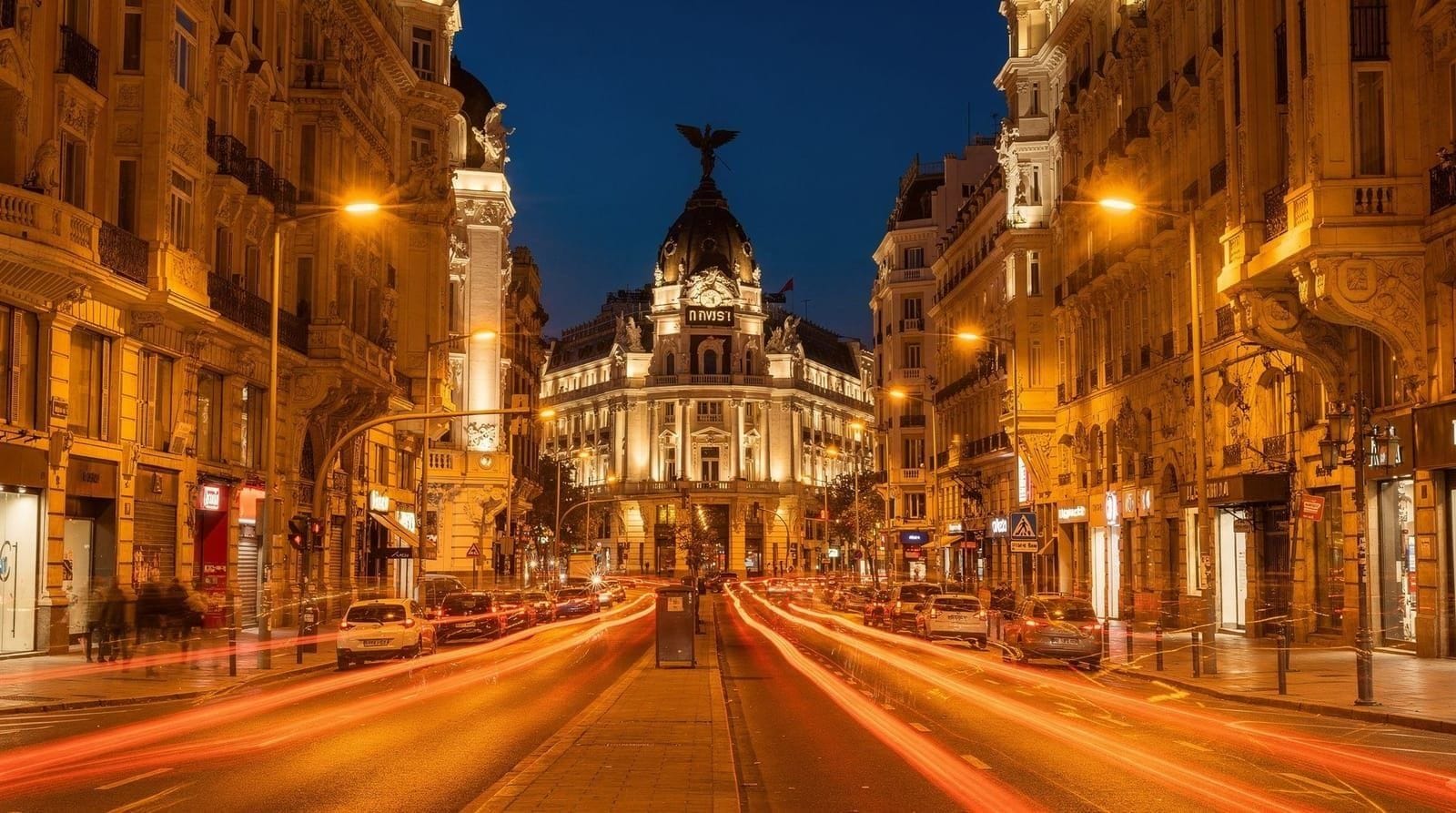
Ghost and legends tours in Madrid: what to expect and what's worth it
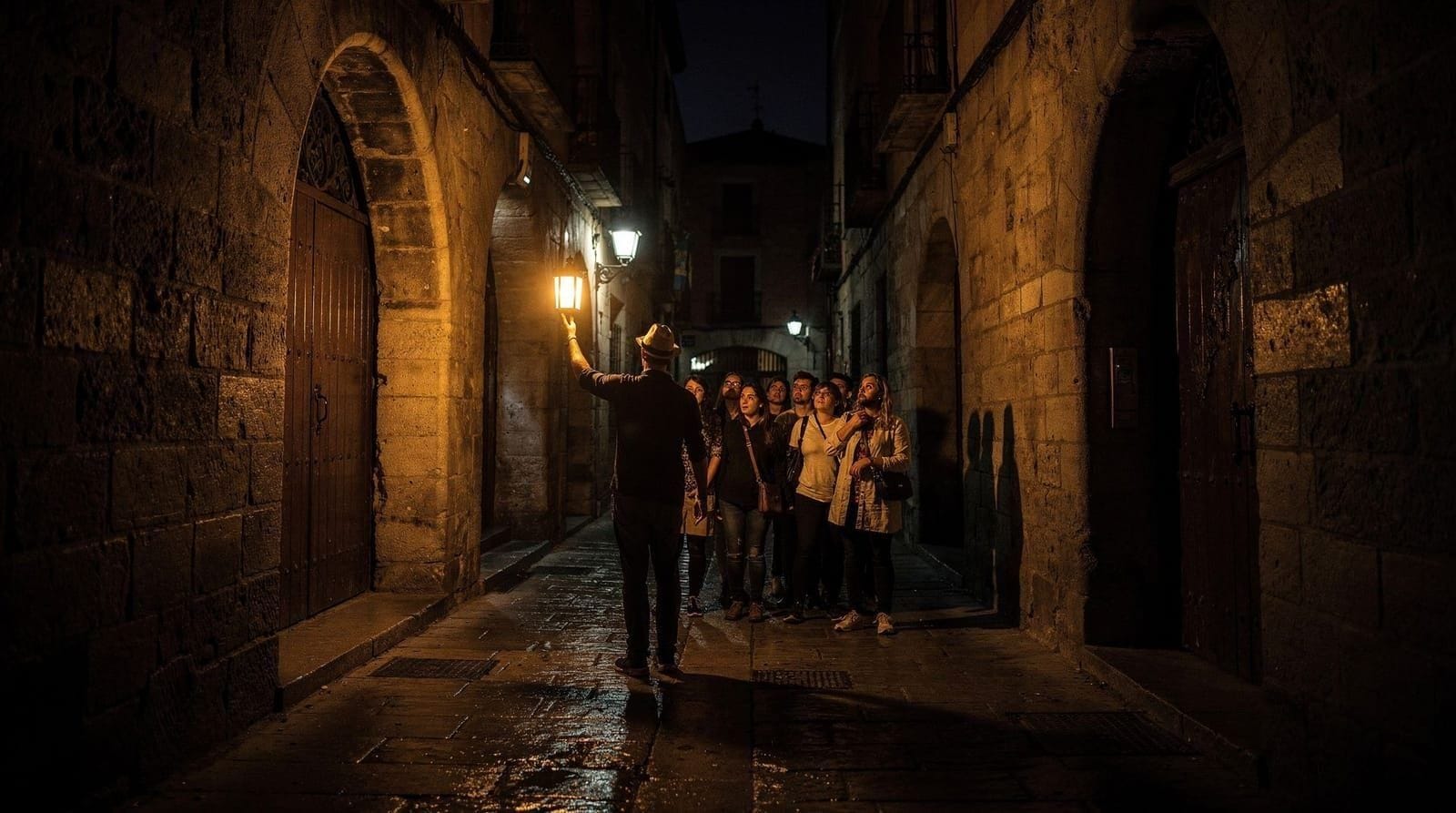
Madrid: Inquisition Legends Evening Walk
Are ghost and legends tours in Madrid worth doing?
Yes, with the right expectations. These are walking tours that cover real, documented dark history — the Spanish Inquisition, Habsburg family scandals, medieval executions, and genuine urban legends. They are not horror shows or actors jumping out at you. If you want to understand the darker layers of Madrid's history in an engaging evening format, they are excellent. Expect 1.5–2 hours, central historic district, groups of 10–20.
In brief: Madrid’s ghost and legends tours are among the more substantive of their type in any European city, because Madrid’s actual history contains genuinely dark material — the Inquisition was not a figure of speech here. The best tours use it as a framework to illuminate real, documented history rather than invented spectacle.
| Where | Habsburg historic centre — Plaza Mayor, Puerta del Sol, Calle Mayor |
| Cost | around €20–30/person for a shared evening walk |
| Time needed | 1.5–2 hours |
| Starts | usually 20:00–22:00, later in summer |
| Best for | teens and adults; young children may find content disturbing |
Why Madrid has excellent material for dark history tours
Most cities’ ghost tours rely heavily on invented legend or heavily embellished folklore. Madrid’s dark history is largely documented and extraordinary.
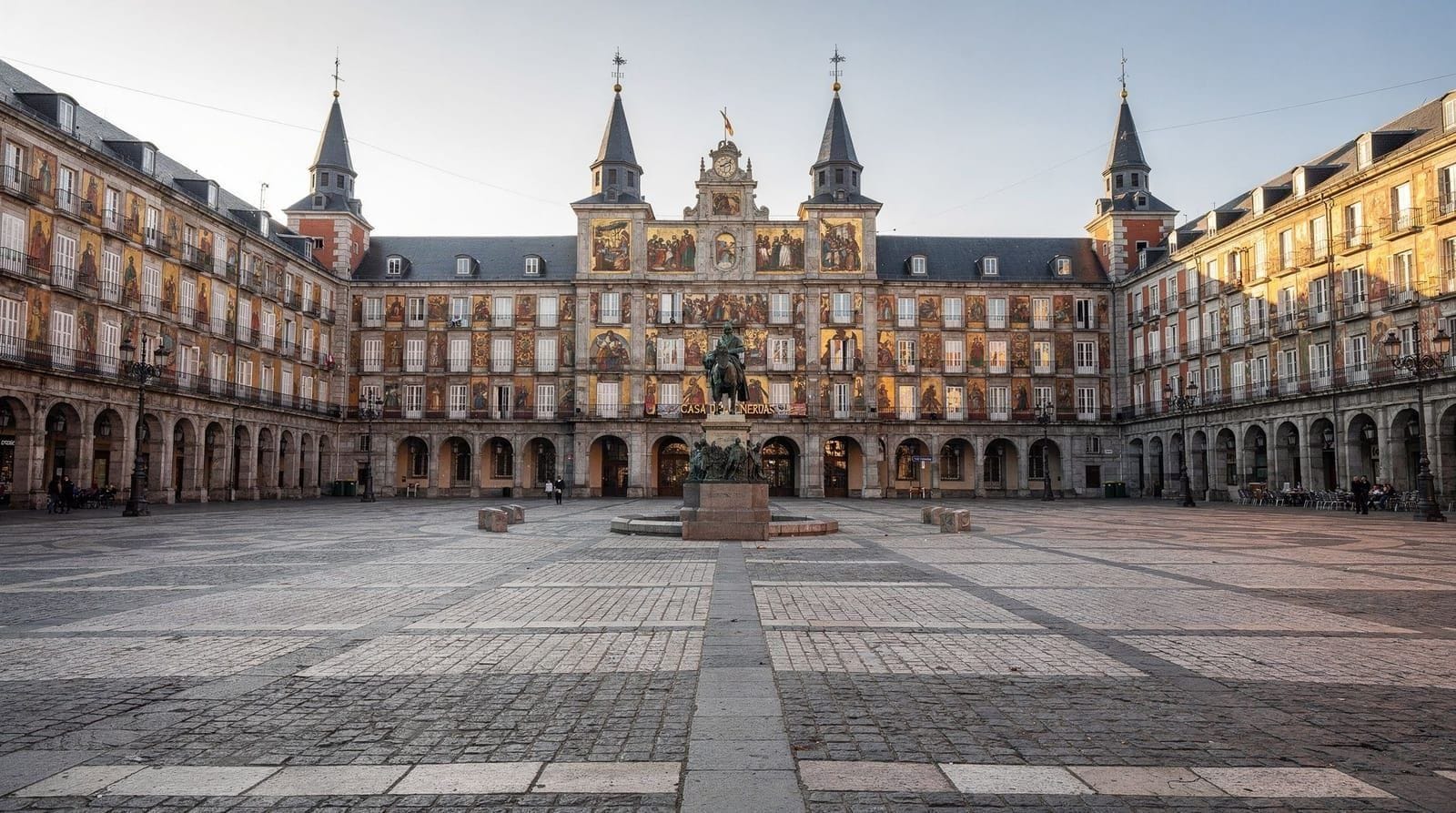
The Spanish Inquisition: Founded in 1478, the Spanish Inquisition was headquartered in the capital for much of its operation. The Plaza Mayor — built in its current form in 1619 — was explicitly designed for, and used for, auto-da-fé: public ceremonies in which heretics were sentenced and executed. Philip IV presided over them from the balcony. This is not legend; it is documented Habsburg court history.
The Habsburg dynasty: The Spanish Habsburgs are a case study in dynastic tragedy. Philip II’s son Don Carlos was imprisoned in the Royal Palace and died (circumstances disputed). Philip IV’s wife Isabel de Borbón died young; his second wife Mariana of Austria was 30 years younger than him. Charles II, the last Habsburg, was so severely disabled by generations of inbreeding that his death (1700, childless) triggered the War of the Spanish Succession. The family history of the people who built Madrid is genuinely extraordinary.
The Convento de las Descalzas Reales: One of the most extraordinary buildings in Madrid — a royal convent in the centre of the city, founded by the daughter of Charles V, containing the mummified remains of several royal women. See the Descalzas Reales guide.
The auto-da-fé of 1680: The largest single Inquisition ceremony in Madrid’s history took place in the Plaza Mayor, presided over by Charles II and his new queen. 120 people were tried; 21 were executed. The full ceremony lasted 14 hours. This is one of the most thoroughly documented events in Madrid’s history.
What the tours cover: the best routes
The Madrid Inquisition Legends Evening Walk is the most focused historical option — it covers the Spanish Inquisition’s operation in Madrid specifically, with the Plaza Mayor as the centrepiece and routes through the Habsburg quarter. Two hours of substantive history, not theatrical performance.
For a broader dark history coverage including legends, ghosts, and more contemporary stories:
The Madrid after-dark private experience with a local guide allows you to customise — if you want more Inquisition history and less ghost folklore, or if you want the guide to focus on the specific period you are most interested in, this is the format for that.
Which one to book:
| Shared evening walk | Private after-dark guide | |
|---|---|---|
| Group size | 10–20 people | Just your group |
| Focus | Fixed Inquisition-centred route | Customisable by period/topic |
| Pace | Set schedule, ~2 hours | Flexible timing |
| Price | Lower per person | Higher, but shared among your group |
| Best for | Solo travellers, couples, budget-conscious | Families, history buffs wanting depth |
The route: where you go
Most Madrid ghost and legends tours operate in a compact area within the Habsburg historic centre. Key locations typically included:
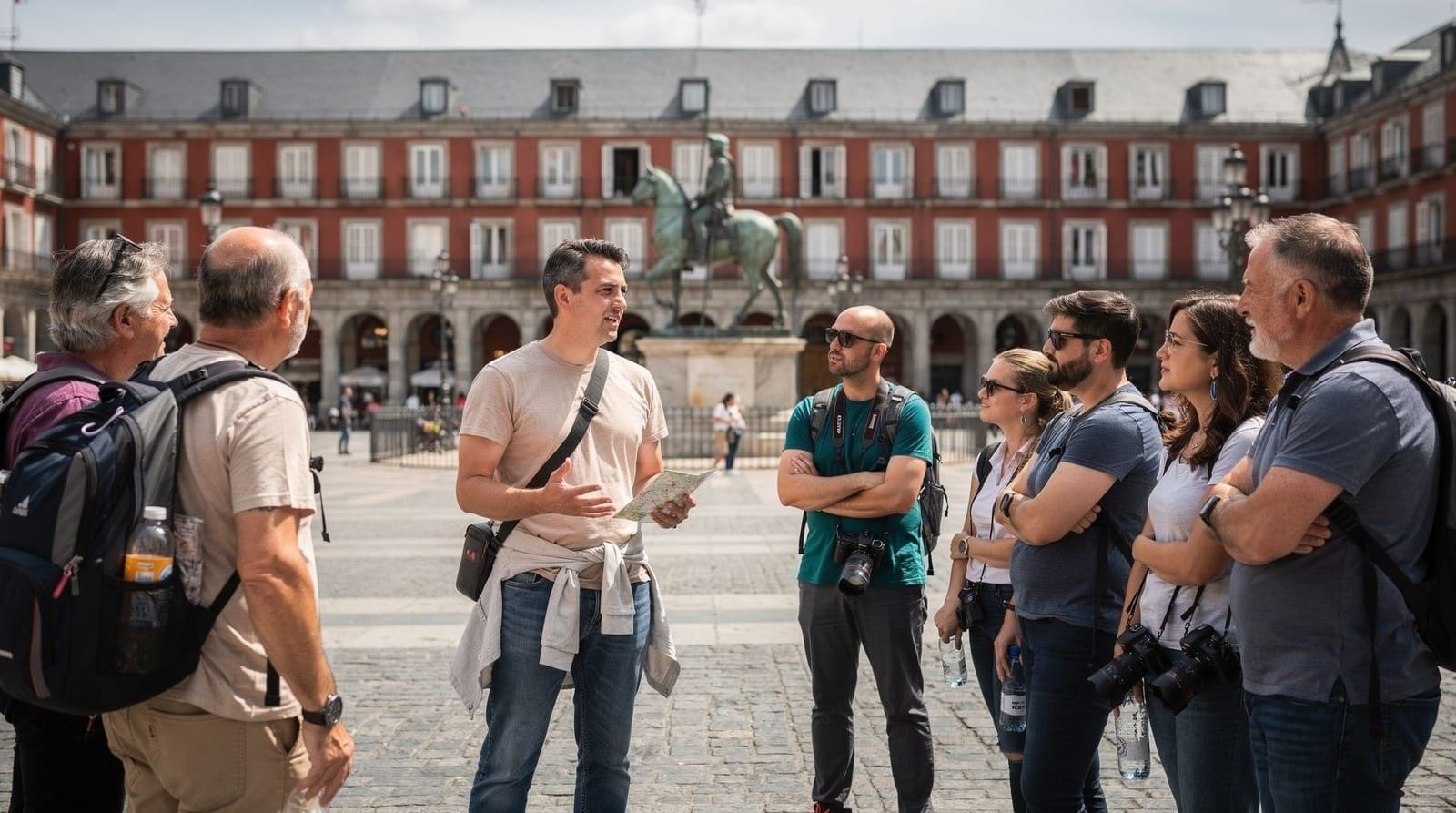
Plaza Mayor: The physical stage for the auto-da-fé. Standing in the square at night, with the uniform balconied facades surrounding you, the guide can describe exactly how the ceremony was arranged — the grandstands, the processional order, the placement of the condemned. The square was designed partly for this purpose.
Puerta del Sol: Once the eastern gate of Madrid, the Sol area has layers of dark history — the location of the Inquisition’s main jail, executions, and the original city walls. See the Puerta del Sol guide.
Calle Mayor and the Habsburg quarter: The oldest streets of Madrid, where the original medieval city operated — the courts, the churches, the slums, and the courtiers. The corridor from Plaza Mayor toward the Royal Palace runs through the original urban core.
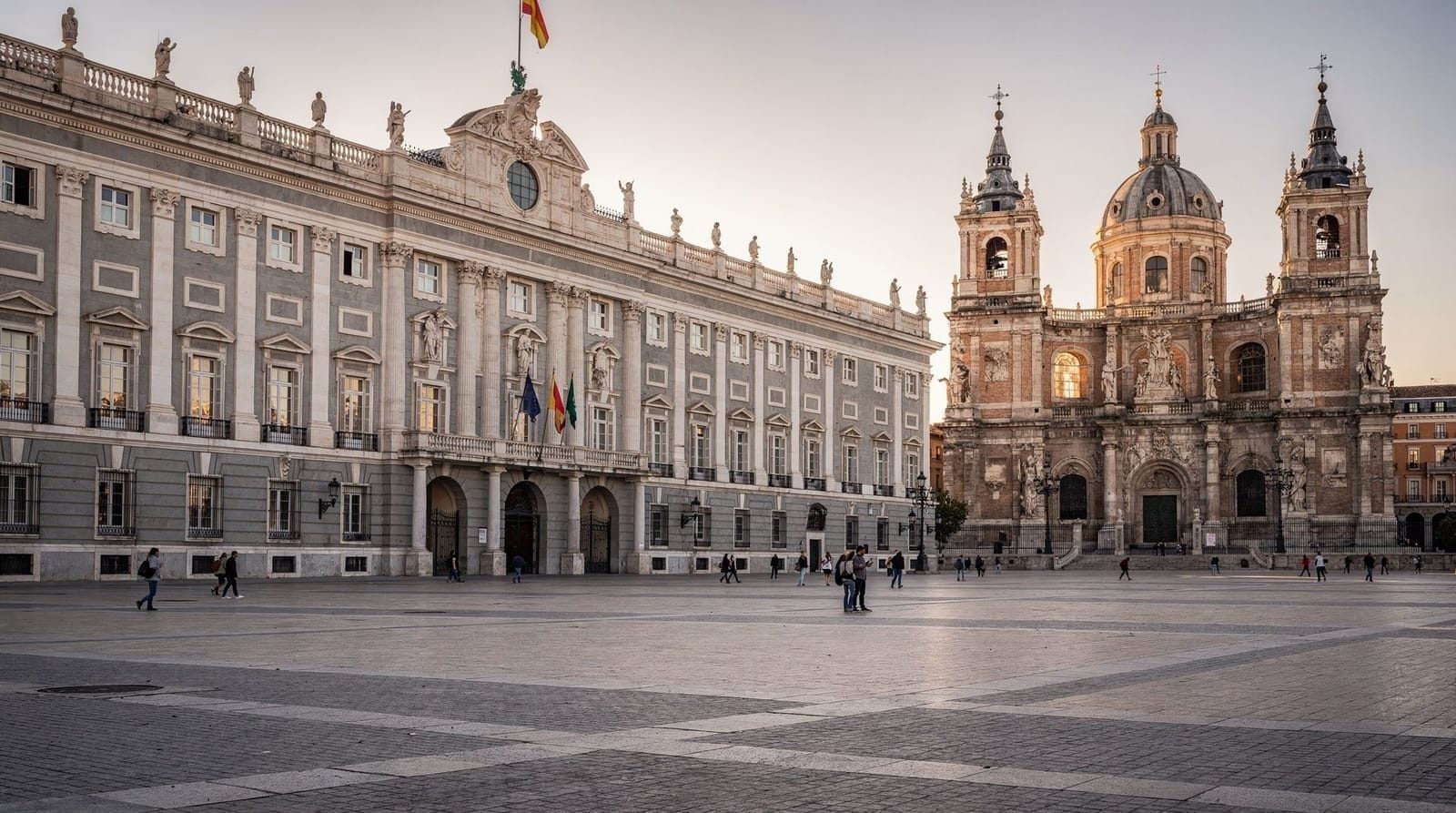
The Taberna del Alabardero area: Near the Royal Palace, the streets around the palace had their own micro-economy of servants, craftspeople, and the people who served the court — and the people who died in its service.
La Latina and the Court of Miracles: The mythologised “Court of Miracles” — a gathering of beggars, thieves, and social outcasts in the medieval city — has a geographical basis in La Latina. Real enough to generate several centuries of legend. See the La Latina guide.
What makes a good ghost/legends tour guide
The difference between an excellent and mediocre guide on this circuit is depth. The best guides:
- Cite specific cases with names, dates, and documented outcomes
- Connect the history to the architecture you are standing in front of
- Do not pretend that every story is verified when it is clearly legend
- Adapt to the group’s interests (more Inquisition vs more supernatural, more history vs more storytelling)
The weakest tours use the dark history framing to tell generic European spooky stories that could be set anywhere. Ask specifically about the Inquisition history before booking — if the guide cannot tell you the name of the 1680 auto-da-fé ceremony or the role of the Plaza Mayor, they are relying on generic content.
Good to combine with
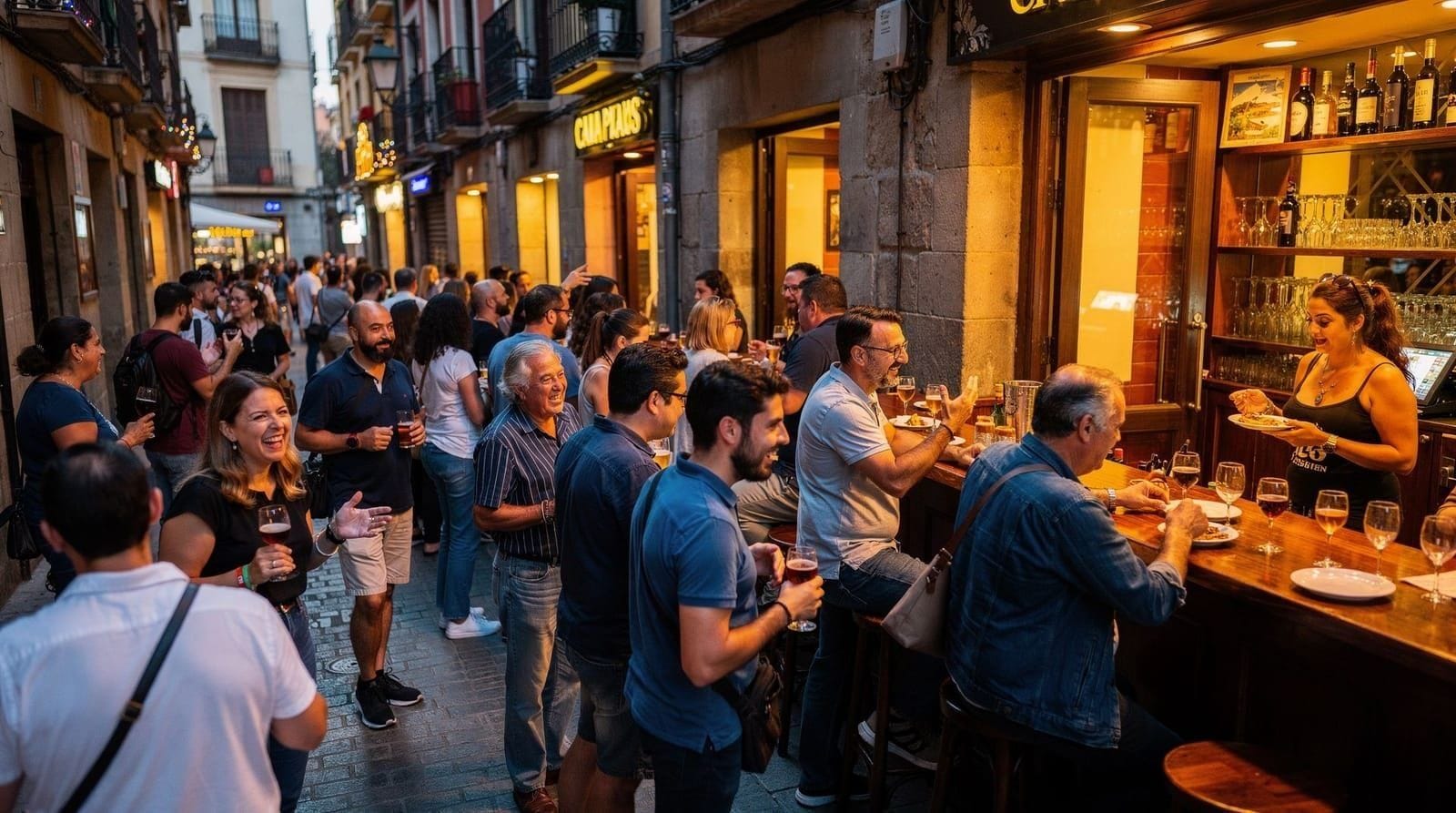
Dinner in La Latina: Most tours end around 22:00 or 23:00. Madrid’s restaurant peak is 21:30–23:00 — timing works perfectly. Walk 5 minutes to Cava Baja for the full tapas experience.
Madrid at night (broader): The ghost tour gives you the historical layer; the broader Madrid at night guide covers what to do with the rest of the evening.
Flamenco show: If you book a 20:00 tour, you can finish by 22:00 and attend a late flamenco show. See the best tablaos guide.
The Habsburg history in daylight: The Habsburg and Bourbon history guide covers the full dynasty context that the night tours draw from — worth reading before or after the tour to get the full picture.
Practical notes
Meeting point: Most operators use Puerta del Sol or Plaza Mayor. Confirm specifics when booking.
Languages: English tours run most frequently. Spanish-language versions available. French sometimes available — check schedules.
Group size: Usually 10–20 people. The smaller the group, the better the experience.
Age: Suitable for teenagers and adults. Children under 10 may find the content disturbing; parents should use judgment.
What to wear: Comfortable shoes (old city streets are uneven stone), warm layer in autumn and winter (evenings cool quickly in Madrid).
Physical: 1.5–2 km of walking on cobblestones. No significant inclines.
Photography: Low light but many operators allow phones and cameras. The Plaza Mayor at night is well-lit; the narrower streets less so.
Accessibility: The route is entirely on foot over uneven historic cobblestones with no seating along the way — it is not well suited to wheelchairs, strollers, or anyone with limited mobility. If that’s a concern, ask the operator about alternative formats before booking.
Language check: Confirm the language of your specific slot when booking — the same operator often runs both English and Spanish departures on the same evening, and it’s easy to book the wrong one by accident.
Cancellation: Madrid gets essentially no rain in summer. Most tours run in any weather, but check operator cancellation policies for winter.
Best time of year: Spring and autumn evenings (April–June, September–October) are mild enough to walk comfortably for two hours without a heavy coat, and it gets dark early enough (by 21:00–21:30) for the atmosphere to work. Summer tours start later, around 21:30–22:00, because it stays light until nearly 22:00 — that pushes dinner even later, which suits Madrid’s late rhythm but is worth planning around if you’re jet-lagged. Winter tours benefit from earlier darkness (from around 18:00) but bring a genuinely warm layer, as the old town’s narrow streets funnel a cold wind after sunset.
Booking window: These tours are less seasonally sold-out than, say, the Royal Palace, but weekend evening slots in high season (June–September, and around Christmas) do sell out a few days ahead. Booking 2–3 days in advance is generally enough outside peak weekends.
The honest assessment
Madrid’s dark history is real, documented, and extraordinary. A well-run ghost and legends tour is genuinely one of the best ways to understand what the city was in the 16th and 17th centuries — the centre of a global empire, the location of its most powerful religious institution, and a place where the line between state power and religious authority was non-existent.
The “ghost” framing makes it accessible and entertaining. The history makes it genuinely interesting. Combined, a quality tour here is better than most of the equivalent tours in London, Prague, or Edinburgh — because the source material is stronger.
For the broader context of Madrid’s Habsburg history, see the Habsburg and Bourbon history guide and the Plaza Mayor guide.
Five specific stories the best guides tell
The quality of a ghost and legends tour is mostly a function of whether the guide knows the specific stories — with dates, names, and documented outcomes. Here are five of the most compelling:
1. The auto-da-fé of 1680
The most dramatic documented event in Plaza Mayor’s history. The largest single Inquisition ceremony in Madrid involved 120 people — 67 tried in effigy (already dead or fled), 53 in person. Of those present, 21 were executed, 18 “reconciled” (punished and released), and others given lesser sentences. The ceremony lasted 14 hours and was attended by King Charles II and his queen, Empress María Ana of Neuburg, on the day of their entry into Madrid. The king’s balcony seat is still visible on the Casa de la Panadería north facade.
The event is documented in extraordinary detail by the court chronicler and by multiple foreign ambassadors’ reports. The location is not changed. Standing in the Plaza Mayor with this context is a completely different experience from standing there without it.
2. The death of Don Carlos
Philip II’s son from his first marriage died in 1568 at age 23, six months after being imprisoned in his rooms in the Alcázar (the original palace, now the site of the current Royal Palace). The official cause was illness. The actual cause was disputed for centuries — starvation, suicide by cold water immersion, or murder on his father’s orders are the competing theories. Philip II’s grief, or guilt, was noted by contemporaries. The story fed centuries of European anti-Spanish propaganda and became the basis for Schiller’s play Don Carlos and Verdi’s opera.
3. The Devil of la Cebada
A more explicitly legendary story: a character said to have made a diabolical pact in the old Plaza de la Cebada (now in La Latina) in exchange for wealth. The story is clearly mythological but was a genuine piece of oral tradition in Madrid’s popular culture. A good guide will distinguish what is documented history and what is legend — this is an example of the latter, used to illustrate how the Inquisition’s omnipresence affected everyday social fear in 16th-century Madrid.
4. The palace beneath the palace
During excavations for the current Royal Palace’s foundations in the 18th century, workers found substantial remains of the original Alcázar (destroyed by fire on Christmas Eve 1734). The Alcázar had been the home of the Habsburg kings for two centuries. Some of those remains are accessible in the palace’s lower archaeological area. The fire itself — which destroyed an unknown quantity of works from the royal art collection, including Velázquez paintings — is one of the great art losses of European history.
5. The Buen Suceso hospital ghosts
Near the current Sol square, the site of the old Buen Suceso hospital (demolished in the 19th century) is traditionally associated with several urban legends about plague-era deaths and mass burials in the medieval city. The legends are not well-documented, but the physical reality — that Sol was indeed a gateway and hospital zone with high mortality during the epidemics of the 16th–17th centuries — gives the location real historical weight.
How the Spanish Inquisition actually worked in Madrid
A short primer for visitors who want context before or after the tour.
The Spanish Inquisition was established in 1478 by Ferdinand and Isabella, primarily to investigate conversos (Jewish converts to Christianity suspected of continuing Jewish practice in secret). It was distinct from the medieval Papal Inquisition — it was operated by the Spanish Crown, not directly by the Pope, giving it unusual political independence.
In Madrid, the Inquisition operated from its headquarters in the city from the late 15th century. The process for accused individuals was as follows: arrest and imprisonment (often months before any charge), a period of investigation during which the accused was encouraged to confess voluntarily, formal presentation of charges, opportunities for defence, a sentence ranging from penances (public humiliation, fines) to reconciliation (loss of property, imprisonment) to relaxation to the secular arm (execution by burning, either in person or in effigy if the person had already died or fled).
The auto-da-fé was not typically an execution event — it was a public sentencing ceremony, and most participants received non-lethal sentences. Executions happened separately, at a different location. The dramatic conflation of auto-da-fé with mass burning is a Protestant Reformation-era propaganda construction; the actual events were bureaucratic and juridical, with public spectacle as their primary function.
This context does not diminish the horror of the institution. It does make the history more accurate — and more interesting — than the simplified version that most ghost tour guides default to.
For more on this history, see the Habsburg and Bourbon history guide.
How it compares to other cities’ dark-history tours
Visitors who have done a ghost or dark-history walk elsewhere in Europe sometimes arrive expecting a similar mix of folklore and invented atmosphere. Madrid’s version leans further into documented fact than most equivalents. London and Edinburgh tours often rely on plague-era folklore and undocumented hauntings because the surviving written record is thinner or the sites have been rebuilt repeatedly.
Madrid’s Habsburg-era buildings and institutional records — court chronicles, ambassadors’ letters, Inquisition case files — survived largely intact, so a good Madrid guide can cite a specific date, name, and outcome for most of what they describe. That does not make Madrid’s tours less atmospheric; walking the same stone streets the condemned walked, at night, with that level of documented specificity, tends to land harder than generic ghost-story delivery. It does mean the “worth it” calculation depends more on the guide’s grasp of real history than on production value or theatrics.
The best combinations for a full dark-history evening
Combination 1: Ghost tour + Torres Bermejas flamenco
- 20:00: Ghost/Inquisition tour (2 hours)
- 22:00: Torres Bermejas flamenco show (1.5 hours)
- 23:30: Late drinks in Huertas
This combination gives you two of Madrid’s most specifically Spanish experiences in one evening.
Combination 2: Ghost tour + La Latina dinner
- 20:30: Ghost tour (2 hours)
- 22:30: Dinner in La Latina (the best bars close late)
- 24:00: Optional further bar hopping on Cava Baja
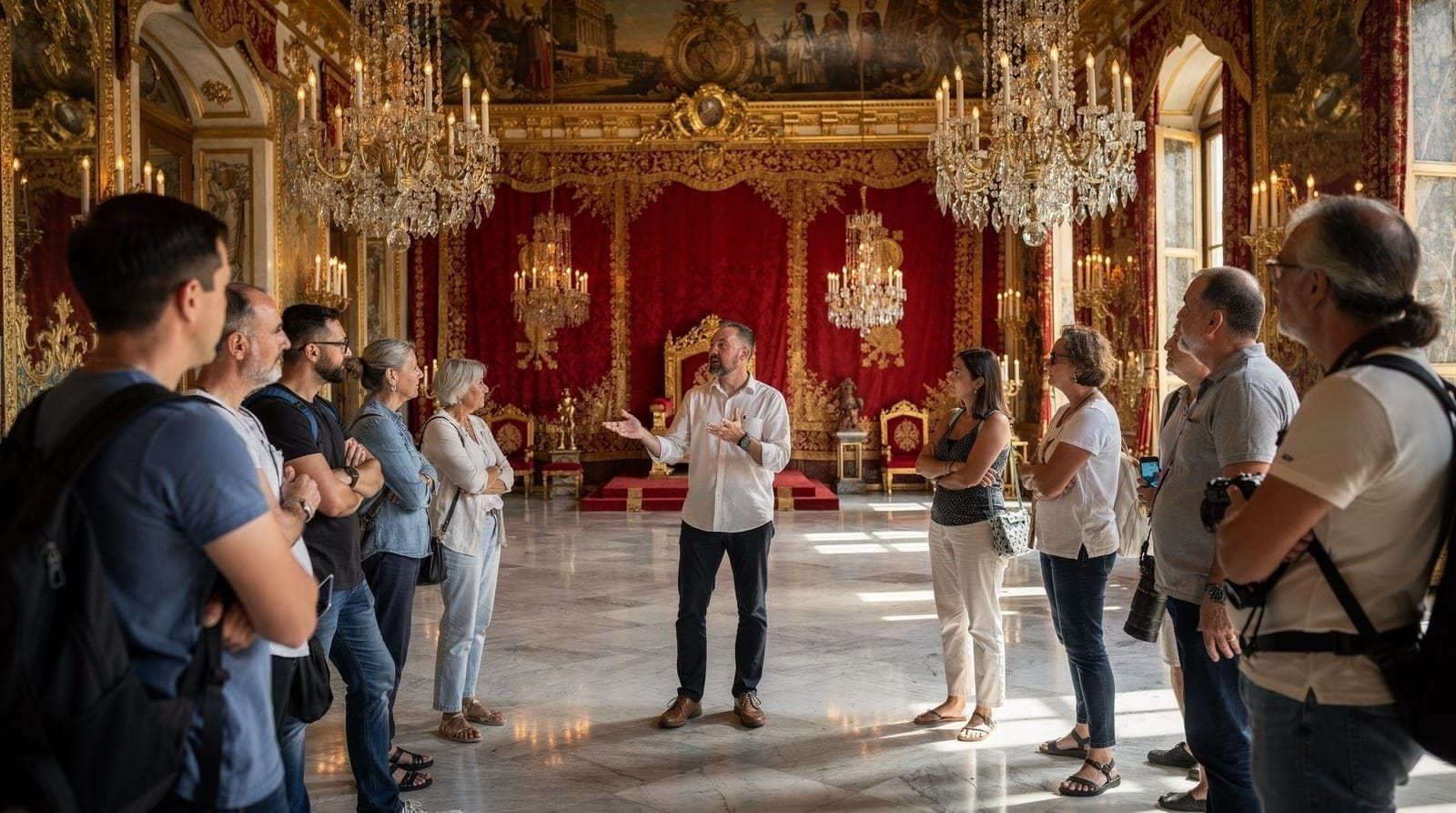
Combination 3: Museum context + evening tour Spend the afternoon at the Royal Palace (seeing the armour collection, the throne rooms, and understanding the scale of the Habsburg court), then join the ghost/Inquisition tour in the evening for the darker layers of the same history. This pairing — daytime palace, evening dark history — is one of the most complete ways to understand 16th–17th century Madrid.
See the Madrid at night guide for the full evening context.
Who should skip it
If you get genuinely unsettled by discussion of executions and imprisonment, or you are travelling with children under 10, a ghost/legends tour is not the right evening activity — the material is real history, not staged scares, but that can be more unsettling for sensitive visitors, not less. In that case, a straightforward free walking tour covering the same streets by day gives you the architecture without the darker framing. Budget travellers should also compare against a general guided vs self-guided comparison before committing to a paid evening tour.
Frequently asked questions about Ghost and legends tours in Madrid
What does a Madrid ghost tour actually cover?
The best tours cover the Spanish Inquisition (Madrid was a major centre; the Plaza Mayor was used for auto-da-fé — public trials and executions), Habsburg royal intrigues (Philip II's family had exceptional levels of tragedy), the legend of the Countess of Chinchón, the Court of Miracles in La Latina, and specific sites around the old town with documented violent histories. The 'ghost' framing is a hook; the actual content is substantive history.Are Madrid ghost tours actually scary?
Not in a jump-scare way. The darkness and atmosphere of the old town at night, combined with stories of genuine historical violence and tragedy, create a kind of atmospheric unease. Most adult visitors find them more fascinating than frightening. Children under 10 may find the content disturbing — teens typically enjoy them.What time do ghost tours depart in Madrid?
Most depart between 20:00 and 22:00, taking advantage of darkness. Summer tours leave later (21:00–22:00) to start in darkness. Book specific slots — times vary by operator and season.Is the Inquisition tour the same as a ghost tour?
The Spanish Inquisition evening walk specifically focuses on the history of the Inquisition in Madrid — the processes, the locations, the documented cases. Ghost tours typically use the Inquisition as one of several threads alongside royal murders, urban legends, and other dark history. Both are interesting; the Inquisition tour is more historically rigorous.How long are Madrid ghost/legends tours?
Standard duration is 1.5–2 hours. The route covers the historic centre on foot — typically 2–3 km. Wear comfortable shoes as the old streets are uneven stone.Can I combine a ghost tour with dinner?
Yes — most tours end around 22:00 or 23:00, which is actually the right time to start dinner in Madrid (restaurant peak is 21:30–23:00). La Latina is a 5-minute walk from most tour endpoints and has excellent tapas bars open late.
Top experiences
Bookable activities with verified prices and instant confirmation on GetYourGuide.