Plaza Mayor is overpriced: what to know before you sit down
Madrid: Up and Down e-bike
Are the restaurants at Plaza Mayor in Madrid overpriced?
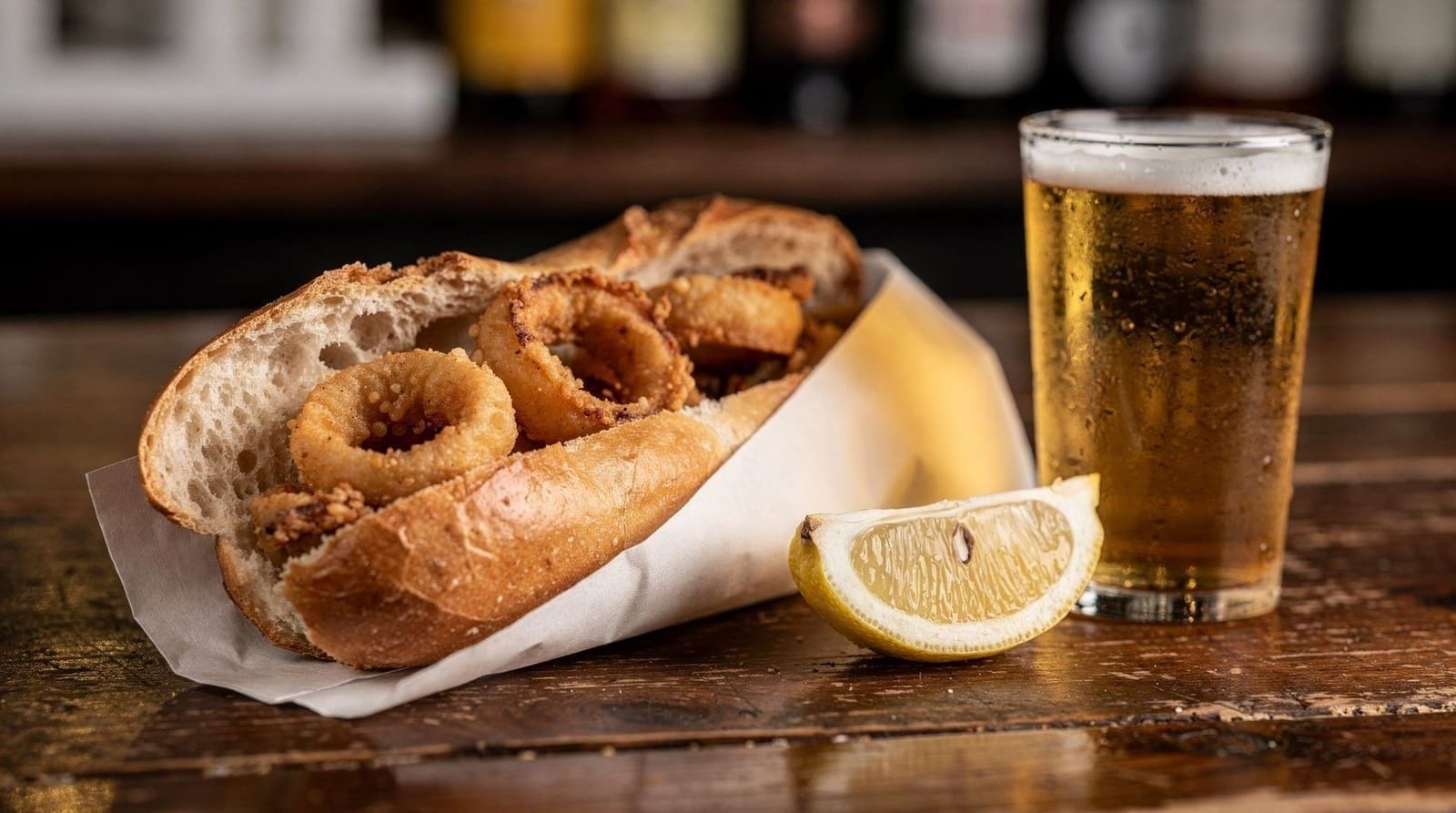
Yes, significantly. A bocadillo de calamares (squid roll, Madrid's street food icon) costs €7–10 at Plaza Mayor versus €3–4 one street away. A beer costs €4–5 versus €2–2.50 at a neighbourhood bar. The plaza itself is worth visiting for the architecture and atmosphere — but eating there means paying a 100–200% surcharge purely for the location. The alternative: visit the plaza, then eat on Calle de Toledo, Calle del Almendro, or anywhere in La Latina, two minutes' walk.
| Markup at the arcades | Around 100–200% vs neighbourhood prices |
| Nearest fair-priced alternative | Calle de Toledo or La Latina, 2–5 min walk |
| Worth paying for | The view, once, consciously — not a full meal |
| Exception | The Christmas market (late Nov–5 Jan), fairly priced |
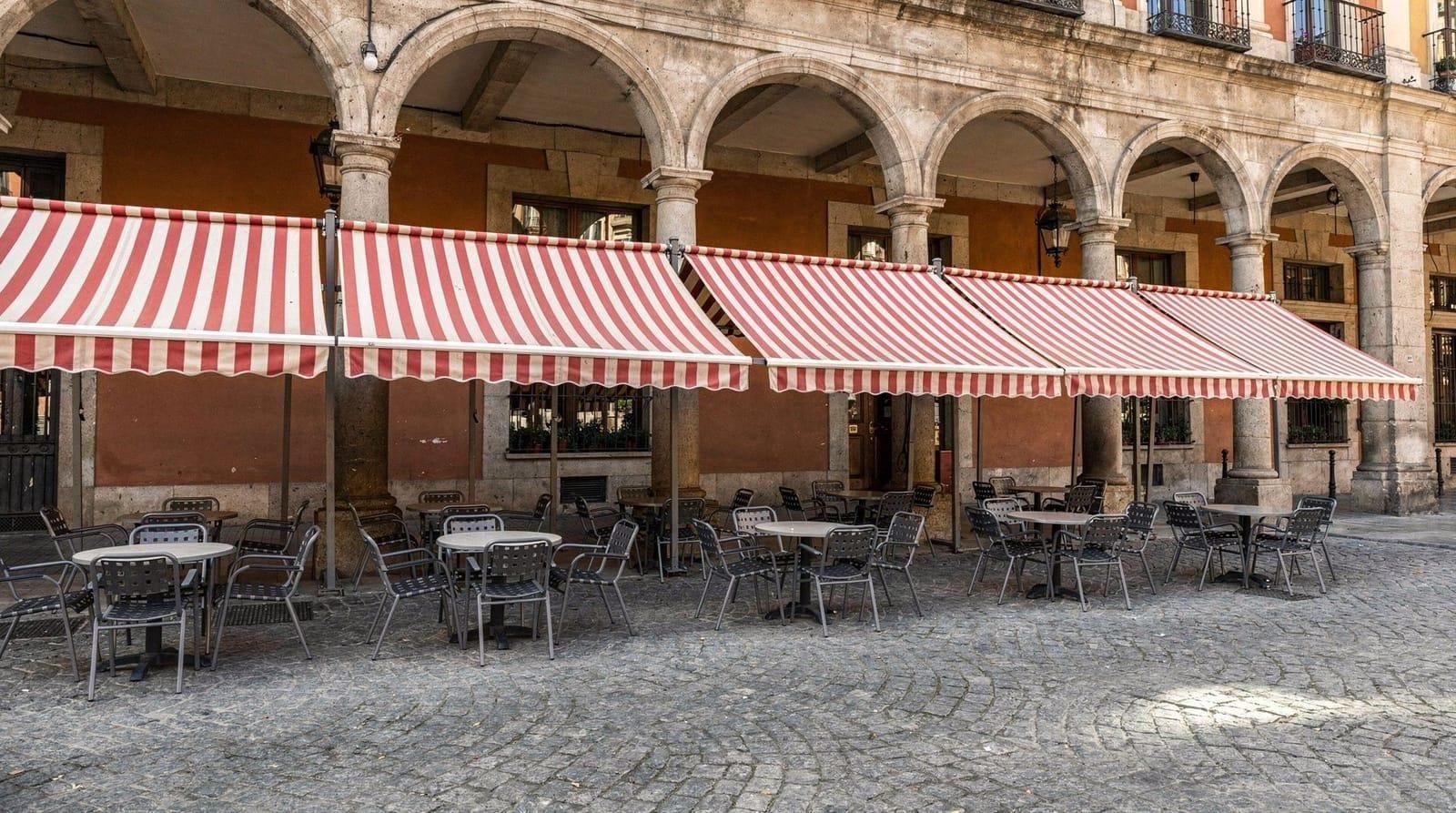
| Best time to just look, not eat | Early morning, before terrace furniture is out |
Plaza Mayor is worth seeing — just not eating at
Let’s start with what is genuinely worth your time about Plaza Mayor:
The architecture is outstanding. The 17th-century Habsburg enclosure — a perfect rectangle of identical Baroque façades, arcaded on all four sides, with the Casa de la Panadería (Bakery House) painted in mythological frescoes at the northern end — is one of the finest public spaces in Spain. The equestrian statue of Felipe III at the centre, cast in 1616, set the stylistic template for royal squares across the Spanish Empire. Simply standing in the middle of the square and looking at the proportions is worth the 10 minutes.
The problem begins when you sit down.
For the architecture and history side of the square — what to look at, how it was built, and the archways that connect it to the rest of the historic centre — see the full Plaza Mayor guide. This page focuses specifically on the pricing problem and what to do about it.
The price breakdown: exactly what things cost
The following prices reflect verified 2025–2026 data at Plaza Mayor arcade restaurants versus the equivalent at neighbourhood establishments within a 5–10 minute walk:
| Item | Plaza Mayor price | Neighbourhood price |
|---|---|---|
| Café con leche | €3.50–4.50 | €1.20–1.80 |
| Caña (small beer) | €4–5 | €1.80–2.20 |
| Tinto de verano (wine and lemon soda) | €5–7 | €2.50–3.50 |
| Bocadillo de calamares | €7–9 | €3–4 |
| Ración of patatas bravas | €9–12 | €5–7 |
| Ración of jamón ibérico | €18–28 | €10–16 |
| Menú del día (3 courses) | €22–28 | €10–14 |
| Paella for 1 (don’t order) | €18–25 | — |
The pattern is consistent: 100–200% markup for the location. The food quality does not improve proportionally — in several cases it is lower, because these kitchens serve tourist volume rather than building neighbourhood reputation.
Why the prices are what they are
Real estate economics explain the pricing directly. The arcade spaces in Plaza Mayor have some of the highest commercial rents in Madrid — comparable to prime Calle Serrano retail, which is to say, among the most expensive commercial property in the country. Every caña you order has a contribution to the rent baked into the price.
The second structural reason: zero repeat customer incentive. A local neighbourhood bar depends on Madrileños eating lunch there three or four times a week. Its business model requires maintaining consistent quality and price to retain regulars. Plaza Mayor restaurants serve a perpetual flow of first-time visitors who will never return. The incentive to maintain food quality at the expense of margin does not exist in the same way.
This is not unique to Madrid — it is the economics of tourist-footfall real estate in any major city. But knowing it in advance means you can use the plaza correctly: as a sightseeing stop rather than a meal destination. The same pattern shows up across Madrid’s other high-footfall tourist zones — see the tourist traps in Madrid guide and tourist menu traps for the wider picture beyond Plaza Mayor specifically.
What to do instead: the alternative geography
For coffee: Any bar on Calle de Toledo heading south from Plaza Mayor. The stretch between the Plaza itself and Calle de los Estudios (3 minutes walking) has several neighbourhood bars where café con leche is €1.40–1.80. The difference of €2+ per coffee over a trip means €10–20 saved with no quality loss.
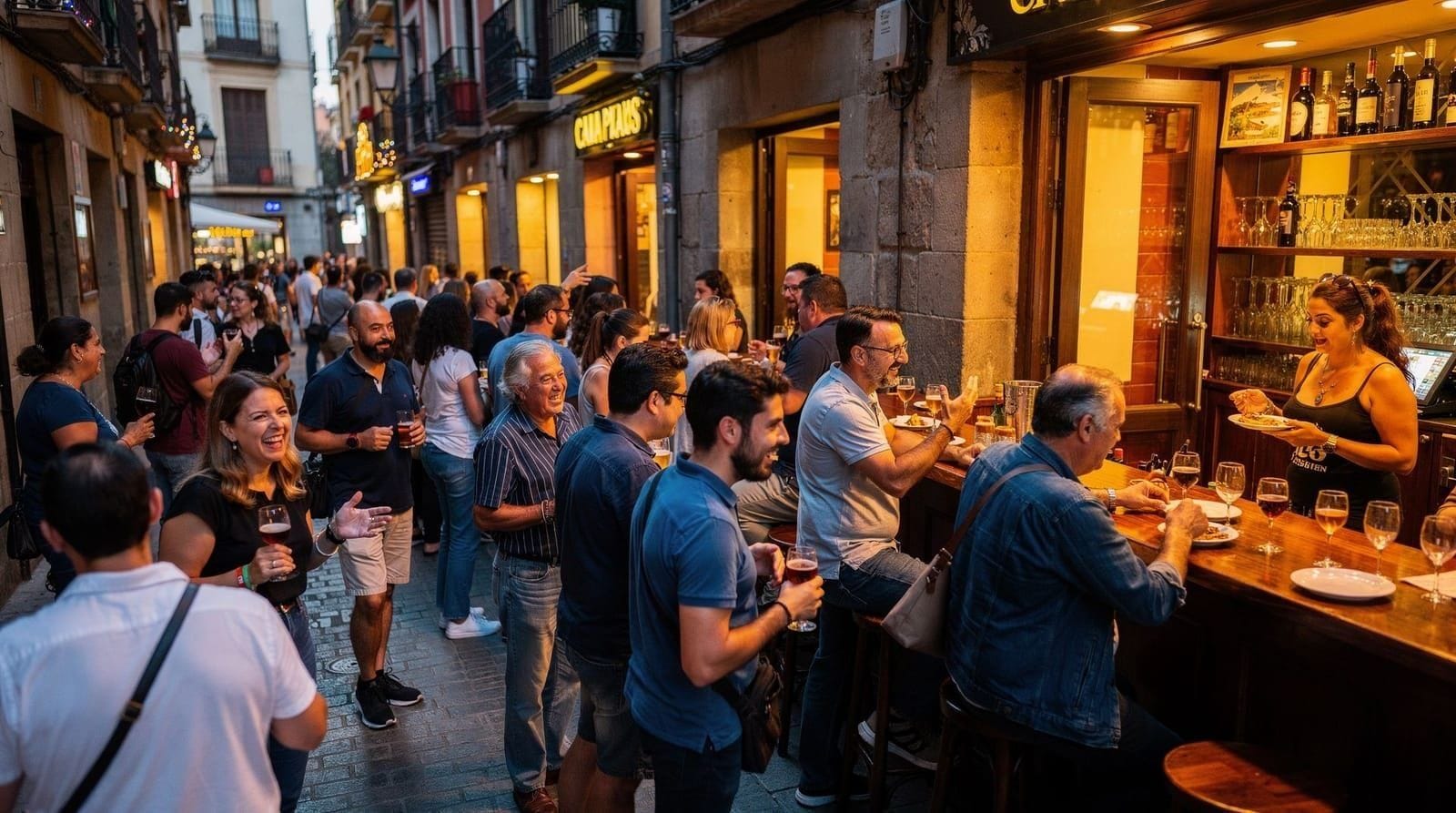
For a caña and a tapa: Walk south down Calle de Toledo and turn left into Calle del Almendro. This is the beginning of the La Latina tapas circuit. Within 2 minutes, you have access to some of the best traditional tapas in Madrid at prices that reflect neighbourhood competition rather than tourist real estate.
For bocadillo de calamares specifically: The canonical version is not at Plaza Mayor. Bar La Campana, just off Plaza Mayor, is considered by many Madrid food guides to be the best in the city — €3.50 for a well-made bocadillo. See the bocadillo de calamares guide for the complete picture.
For a proper meal: The where to eat in La Latina guide covers restaurants within a 5-minute walk of Plaza Mayor that serve excellent traditional Madrid cooking at prices 50–60% lower than the plaza arcades.
The terrace question: is the view worth paying for?
The honest answer: occasionally, in very specific circumstances. If you are on a first visit to Madrid, know exactly what things cost, and consciously decide that the view of the square from under the arches is worth paying €5 for a beer (instead of €2 around the corner), that is a legitimate choice. You are buying an experience, not a beer.
The problem is that most visitors sitting at Plaza Mayor terraces don’t make this calculation consciously — they sit down because it looks appealing, don’t check prices before ordering, and arrive at a €30–40 bill for two coffees and a shared tapa with a degree of surprise.
If you want a scenic Madrid terrace with proper food value: The terraces in the Barrio de las Letras (Calle de las Huertas area, 10 minutes from Plaza Mayor) provide outdoor dining at normal prices in a pleasant neighborhood context. The Retiro park’s café kiosks are modest but authentic. The temple of Debod area at sunset offers atmosphere without a restaurant bill.
The Sunday stamp market: the exception
One thing Plaza Mayor genuinely does well every Sunday (and some holidays): the stamp and coin collectors’ market. From around 09:00 to 14:00, dealers set up tables in the arcades with stamps, coins, antique postcards, militaria, and banknotes. This is a genuine long-standing local institution — not a tourist market, but a collectors’ market that happens to be in a tourist location. If philately or numismatics interest you, it is worth a look. Entry: free.
The maths over a full trip
The per-item markup looks modest in isolation — €2 more for a coffee, €4 more for a beer — but it compounds quickly if Plaza Mayor becomes a default meeting point for coffee breaks during a multi-day stay. Two coffees a day for a 4-day trip at the plaza’s prices versus a neighbourhood bar works out to roughly €15–20 in pure markup, enough for an extra tapas round or a museum ticket. The lesson isn’t to avoid the square — it’s architecturally worth every visit — but to treat it as a stop, not a base, for anything involving your wallet. For a broader sense of where else in Madrid this same tourist-price pattern shows up, and where it doesn’t, the Madrid on a budget guide covers the full picture.
A sensible way to spend a morning around the square
The easiest way to avoid the pricing problem is to build the visit so that you never need to sit down under the arcades. Arrive early, when the terrace furniture is still stacked and the square feels like a courtyard rather than a stage set. Walk the full perimeter, look up at the frescoes on the Casa de la Panadería, step through a few of the arches to see how the square connects to the streets around it, and then leave before the first tour groups gather. If you want the history behind what you are looking at, the Plaza Mayor guide and the Habsburg and Bourbon history guide give the context that makes the stop more than a photo.
From there, a short walk takes you to the places where a coffee or a caña is priced for people who live here. The Puerta del Sol guide and the Sol centre guide cover the other side of the old centre, and the Royal Palace guide is a natural next stop in the opposite direction. Plan your meal around one of these walks rather than around the square itself, and the markup becomes something you read about instead of something you pay.
Seeing the centre without anchoring yourself to a terrace
Part of the trap is physical: Plaza Mayor is flat, enclosed and full of chairs, so it invites you to stop. Moving through the centre with a bit of momentum changes the equation. Some visitors prefer to cover the old town and the wider city on two wheels, and an electric bike ride across the city’s hills and quieter corners is one way to see a lot without ever being tempted by a tourist table. The e-bike tours guide explains what to expect, and the Madrid by bike guide covers the practical side of cycling in the capital.
If you would rather stay on foot, the free walking tours guide and the food walking tour guide both fold the plaza into a route that ends at a sensible table. A guided versus self-guided comparison can help you decide which style suits you. For a more flexible option, a guided e-bike ride that avoids the steepest effort keeps you moving between the sights and away from the terraces. Whichever you choose, ask your guide or your host for a recommendation instead of choosing the first place with a free table.
Ordering like a regular once you have left the arcades
Leaving the plaza is only half of the saving; the other half is knowing how to behave in a neighbourhood bar. Order at the bar if the place is busy, watch what the people around you are eating, and do not be shy about pointing. A caña with a small tapa is the classic opening move, and the Madrid tapas guide and the best tapas bars guide explain how the rounds work. For a longer sit-down, the eat like a local guide walks through the rhythm of a Madrid day, and the cocido madrileño guide and churros con chocolate guide cover two classics that taste better away from the tourist centre.
If you have only an hour and want a snack, the mercados guide lists markets where the food is the point, and the vermut guide describes the pre-lunch ritual that locals still keep. None of these require you to compare menus against a tourist price list; they simply work at neighbourhood rates, which is the whole argument of this page.
When it is fine to relax the rule
A guide about overpricing can sound stricter than it should. Plenty of travellers are on a short break, tired after a long flight, and happy to pay a premium for an easy seat in a beautiful place. That is a perfectly reasonable decision as long as you make it knowingly. Decide in advance what you will spend, order one thing, and enjoy it slowly instead of ordering a round of snacks you would never buy elsewhere. Read the prices on the board, ask for the bill when you are done, and check it against what you ordered. The goal is not to win an argument with a waiter; it is to leave the square feeling that you chose the experience rather than stumbled into it.
For a wider sense of what a smart, relaxed trip looks like, the how many days in Madrid guide and the best area for first-time visitors guide help you choose a base where good food is a short walk away. And if you want to see where this page sits within the bigger honesty picture, the overrated and underrated guide and the Madrid tourist traps blog post place Plaza Mayor alongside the other spots worth treating with a little scepticism. The Plaza Mayor restaurants blog post tells the same story from a diner’s point of view.
How this compares to Madrid’s other famous tourist squares
Plaza Mayor is not uniquely overpriced among Madrid’s landmark spaces — it’s simply the most visited, so the pattern is most visible there. Puerta del Sol’s surrounding cafés carry a similar, if slightly smaller, premium. The Austrias / Plaza Mayor district more broadly has pockets of both — tourist-priced arcades a few metres from genuinely fair neighbourhood bars, often on the same block. The practical rule that applies across all of them: if a terrace has a laminated multilingual menu with photos of the food, expect tourist pricing; a handwritten chalkboard in Spanish is a reasonable signal you’ve found a locals’ spot.
Frequently asked questions about Plaza Mayor is overpriced
How overpriced is Plaza Mayor compared to nearby streets?
The price differential is consistent and significant. A caña (small beer): €4–5 at plaza arcades vs €1.80–2.20 at a local bar. Bocadillo de calamares: €7–9 vs €3–4. Tortilla española (slice): €8–10 vs €4–5. A basic lunch: €20–30 per person vs €10–15 at a menú del día restaurant in La Latina. The quality does not improve to match the price — in many cases, the food quality is lower than at local neighbourhood restaurants that have a reputation to maintain with regulars.Is it acceptable to just sit at Plaza Mayor and have a coffee?
It is acceptable in the sense that no rule prevents it. But a coffee (café con leche) at the plaza's arcades costs €3.50–4.50; the same coffee at any neighbourhood bar within a two-minute walk is €1.20–1.80. Over a two-hour visit, the difference is immaterial. But if you are on any budget at all, the money is not buying you better coffee — it is buying you the view of the square, which is free from any position including standing in the middle of the plaza.Why is Plaza Mayor so expensive?
The location rent. Plaza Mayor arcades have some of the highest commercial real estate rates in Madrid; that cost is passed directly to customers. The second factor: these restaurants operate on tourist volume and turnover rather than repeat local customers. A local neighbourhood restaurant depends on regulars returning three times a week for lunch — it has a strong incentive to maintain price and quality. A Plaza Mayor restaurant turns over tables of first-time visitors who will never return, removing most of the quality incentive.Is there anything worth eating or buying at Plaza Mayor?
At the Christmas market (November–January): the nativity figure (belén) stalls are genuinely good and fairly priced for their product category. The traditional sweet stalls (turrón, polvorones) are acceptable — not dramatically cheaper than elsewhere, but not a rip-off for a specialty purchase. The stamp and coin market that operates on Sunday mornings in Plaza Mayor is a legitimate local institution. But regular food and drinks — no better elsewhere at half the price.What are the best alternatives immediately near Plaza Mayor?
Calle de Toledo heading south (2 minutes): traditional Madrid tascas and tapas bars at local prices. Calle del Almendro and Cava Baja (La Latina, 5 minutes): the classic tapas circuit with consistently good quality at normal prices. Calle de la Cuchillería (the street through the southwest arch of Plaza Mayor itself): slightly better than the plaza arcades but still overpriced — walk further. Plaza de la Villa (3 minutes north): a quieter square with a couple of reasonable café terraces. Mercado de San Miguel (adjacent to Plaza Mayor): beautiful but also tourist-priced — better for a single artisan purchase than for a meal.What about the bocadillo de calamares — is Plaza Mayor the only place to get it?
The bocadillo de calamares is Madrid's most famous street food but it is not specific to Plaza Mayor. The famous association comes from the concentration of tourist activity in the area. Good versions (better versions, at a third of the price) are available at: Bar La Campana (Calle Botoneras 6, just off Plaza Mayor, considered by many the best version in the city); Bar El Brillante (near the Reina Sofía, an institution); any working-class bar in La Latina. The bocadillo de calamares guide covers the full picture.How can I tell if a restaurant near Plaza Mayor is tourist-priced before sitting down?
Check the menu board outside for prices before you sit — legitimate restaurants display them clearly. A laminated multilingual menu with photos of the dishes is a strong signal of tourist pricing; a handwritten chalkboard in Spanish, or a menu with no English translation at all, usually indicates a neighbourhood spot. Crowds of tourists with cameras out and empty tables of locals is another reliable tell.Does the pricing pattern extend beyond Plaza Mayor to nearby streets?
Yes, gradually. Calle de la Cuchillería (through the plaza's southwest arch) is somewhat better than the arcades but still elevated. Prices normalise progressively as you move further from the square — by the time you reach Calle de Toledo or Cava Baja in La Latina, you're at genuine neighbourhood rates. The transition isn't a hard line; it's a gradient over roughly 5–10 minutes of walking.