Madrid in winter: cold, affordable, and the best time for museums
Madrid: Inquisition Legends Evening Walk
Is Madrid good in winter and how cold does it get?
Madrid in winter is underrated. Temperatures average 5–10°C by day (dropping to 0–3°C at night), with occasional snow — the city sits at 650m on the Castilian Plateau. Museums are nearly empty, hotel rates drop 30–40% versus spring, and the city's culture and food scenes run at full intensity. The cold is dry and manageable with a proper winter coat. January–February are the best months for art lovers and budget travellers.
| Day temp | 5–10°C, milder in December |
| Prices | 30–40% lower than spring/autumn peaks |
| Best for | Museums, opera, budget travellers |
| Pack | Proper coat, waterproof shoes, layers |
| Big events | Christmas markets, Three Kings (5 Jan), ARCO (early Mar) |
Why winter in Madrid is underrated
The travel industry consistently oversells Madrid in spring and ignores it in January–February. This is backwards from the perspective of the thoughtful visitor. Winter in Madrid offers:
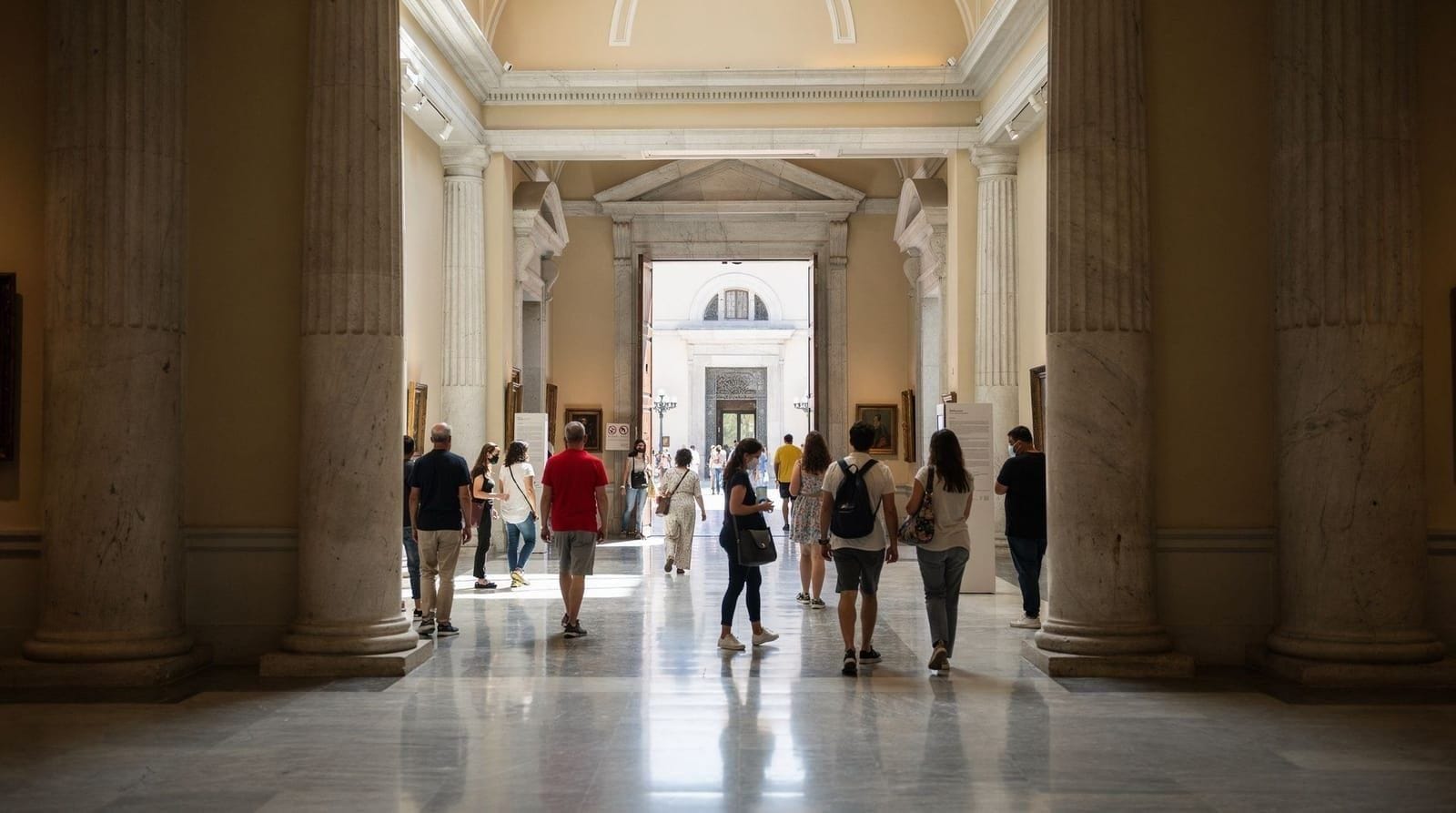
- Museums nearly to yourself — the Prado and Reina Sofía in January have the attendance levels of a quiet Tuesday in spring
- Hotel rates 30–40% lower than the April–May or September–October peaks
- A local Madrid that is fully operational — all restaurants, bars, cultural venues running at normal speed
- The city’s arts and music season at full intensity (concerts, theatre, opera)
What you lose: outdoor café culture (it’s 7°C), park strolling (possible but brisk), and the atmospheric evening light of spring and autumn.
Month by month: December, January, February
December: festive and mild
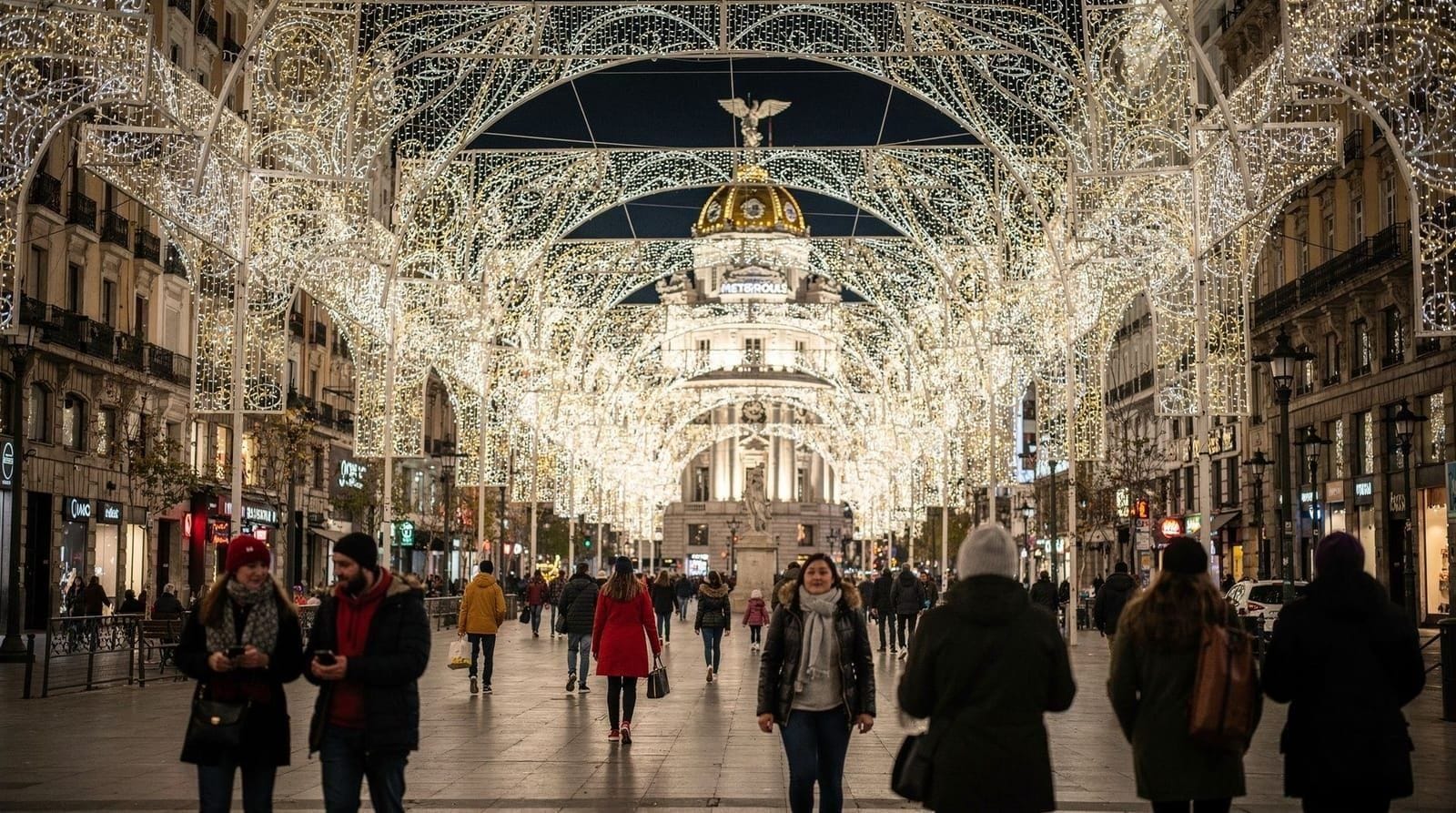
December is the warmest winter month — averages 10–14°C by day, 4–6°C at night. The Christmas season transforms central Madrid from late November: the Gran Vía is strung with lights, Plaza Mayor hosts its market, and Calle Serrano and the Salamanca district put on elaborate shop window displays.
Christmas in Madrid: The city’s Christmas decorations are elaborate and the atmosphere genuinely warm. The Plaza Mayor market runs from late November to 31 December — nativity figures (belenes), ornaments, tree decorations, and the traditional Christmas sweets (polvorones, turrón, roscos de vino). It is the most densely commercial version of the festival in Spain, but the decorations and setting are genuine. See the dedicated Madrid at Christmas guide for the full programme.
31 December — New Year’s Eve: The Puerta del Sol grape countdown is a real Madrid tradition, not a tourist performance. Arrive at Sol by 20:00 if you want to be inside the central area. The crowds are enormous but the atmosphere is celebratory rather than threatening.
An evening history and legends walking tour works well in December — the cold and the dark enhance Madrid’s Habsburg Gothic atmosphere.
January: the quietest month
January is peak low season. After the Three Kings Parade on 5 January (Cabalgata de Reyes — a major civic event with floats and costumed participants distributing sweets), Madrid settles into quiet.
ARCO Madrid (the international contemporary art fair at IFEMA) is held in early March (4–8 March in 2026), just after the winter months.
Museum access in January is exceptional. The Prado on a January weekday at 10:00: minimal queue, the Velázquez rooms at walking pace rather than shuffle. If seeing these collections properly matters to you, January is the month to come.
Accommodation: January is the cheapest month of the year. Mid-range hotels in the centre run €70–120 per room that would cost €120–180 in spring. The same applies to apartments and Airbnb-type rentals.
Weather: January averages 9–10°C by day, 2–4°C at night. Snow is possible — a light dusting 1–2 times on average. Bring a proper winter coat and waterproof boots. The cold is dry and less biting than northern European cities at the same temperature, but Madrid wind from the Sierra Guadarrama is sharp.
February: the art fair month
ARCO Madrid is the anchor event. The fair (4–8 March in 2026) brings international gallery owners, collectors, and art-world visitors to the city. The programming around the fair is excellent — galleries across the city open free shows, public art events, and evening openings.
Valentine’s Day (14 February): Madrid restaurants offer prix-fixe dinners at every level. Mid-range spots (€35–60 per couple) are fully booked by early February; book 2–3 weeks ahead if visiting then.
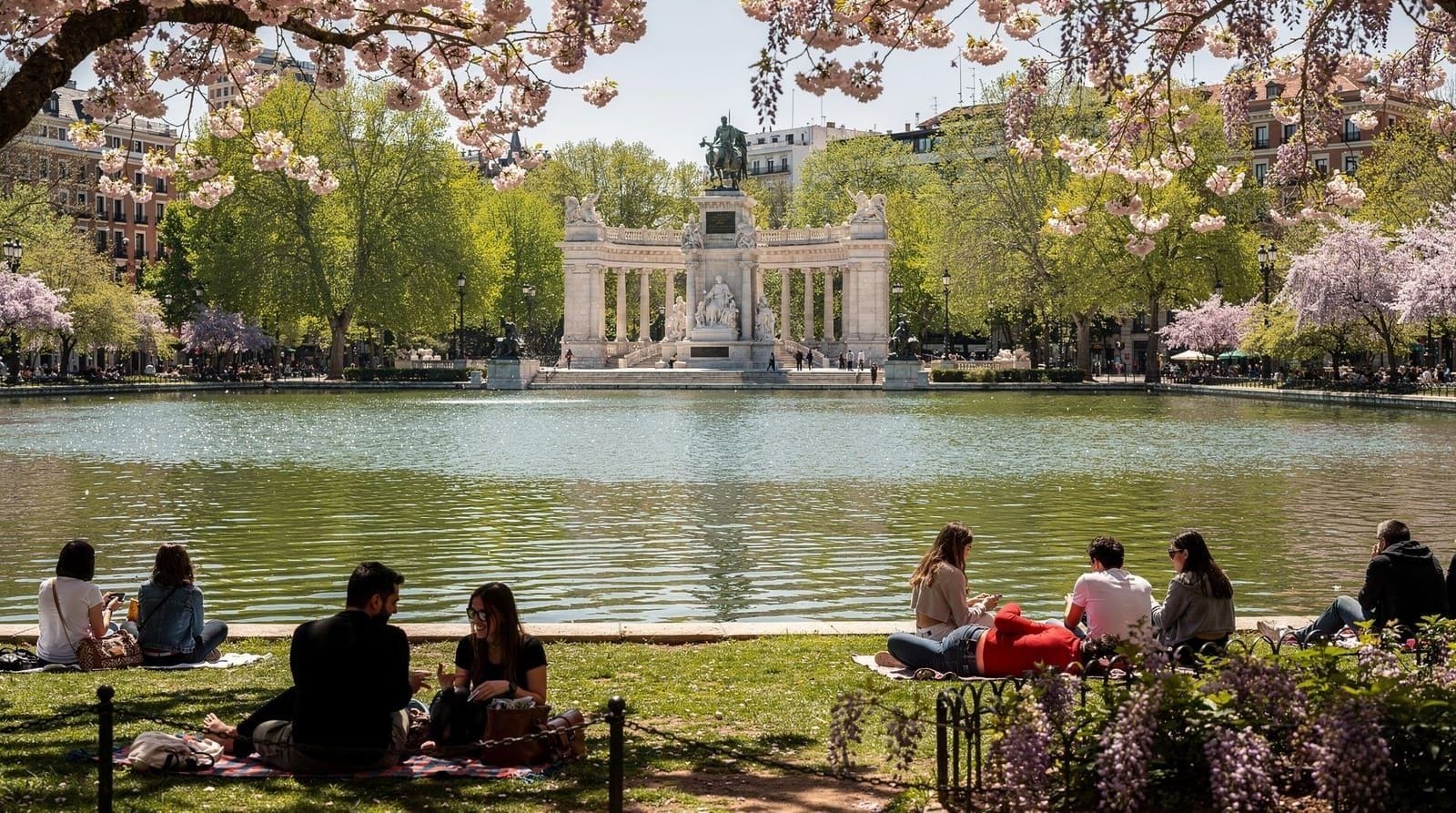
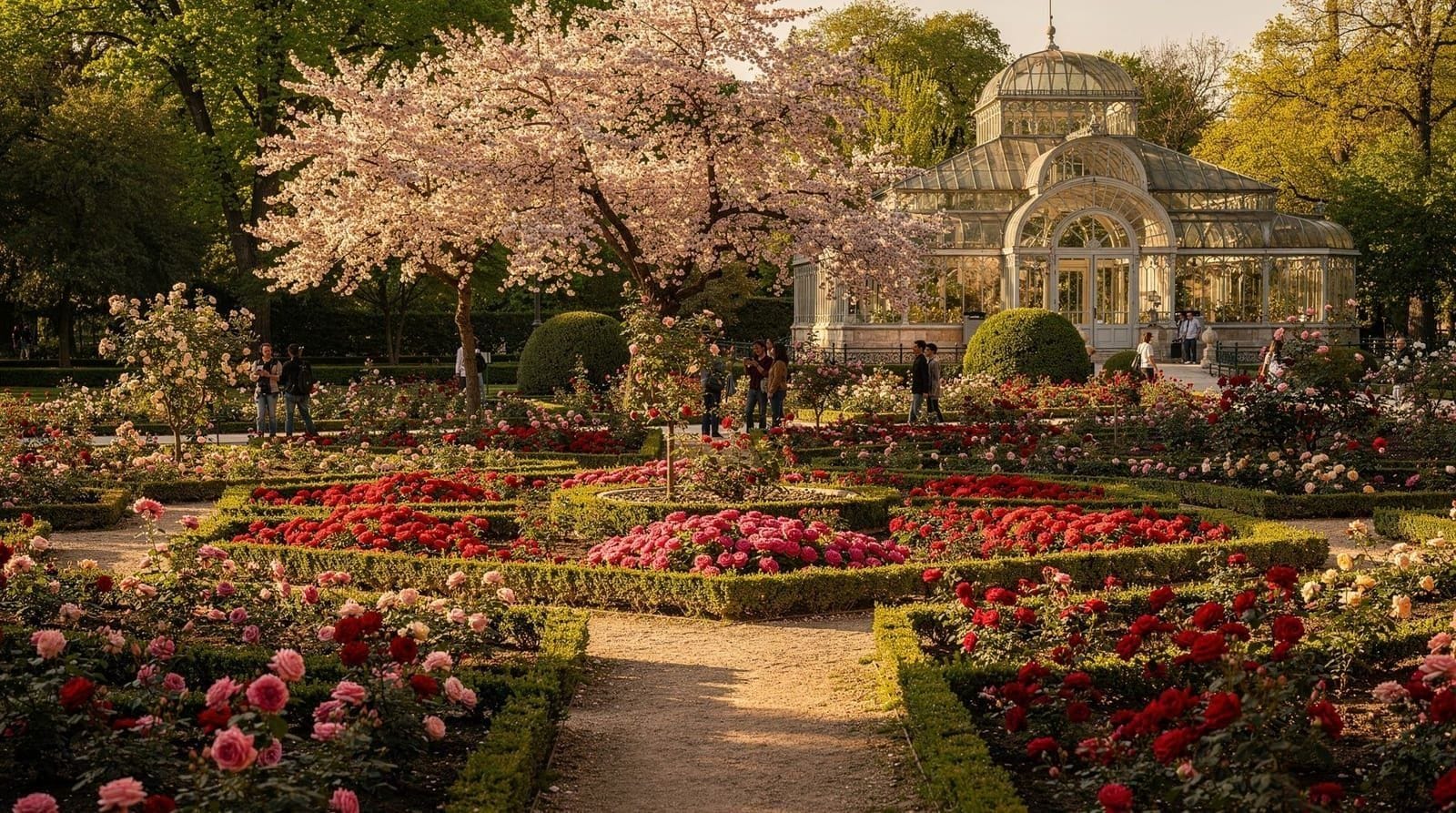
End of winter: By late February, Madrid starts warming toward spring. Almond trees in the Retiro park and in parks across the city begin blooming — the first sign of the spring season. March-to-May is when Madrid is at its most beautiful, see the Madrid in spring guide.
What to do in Madrid in winter
Museums without queues
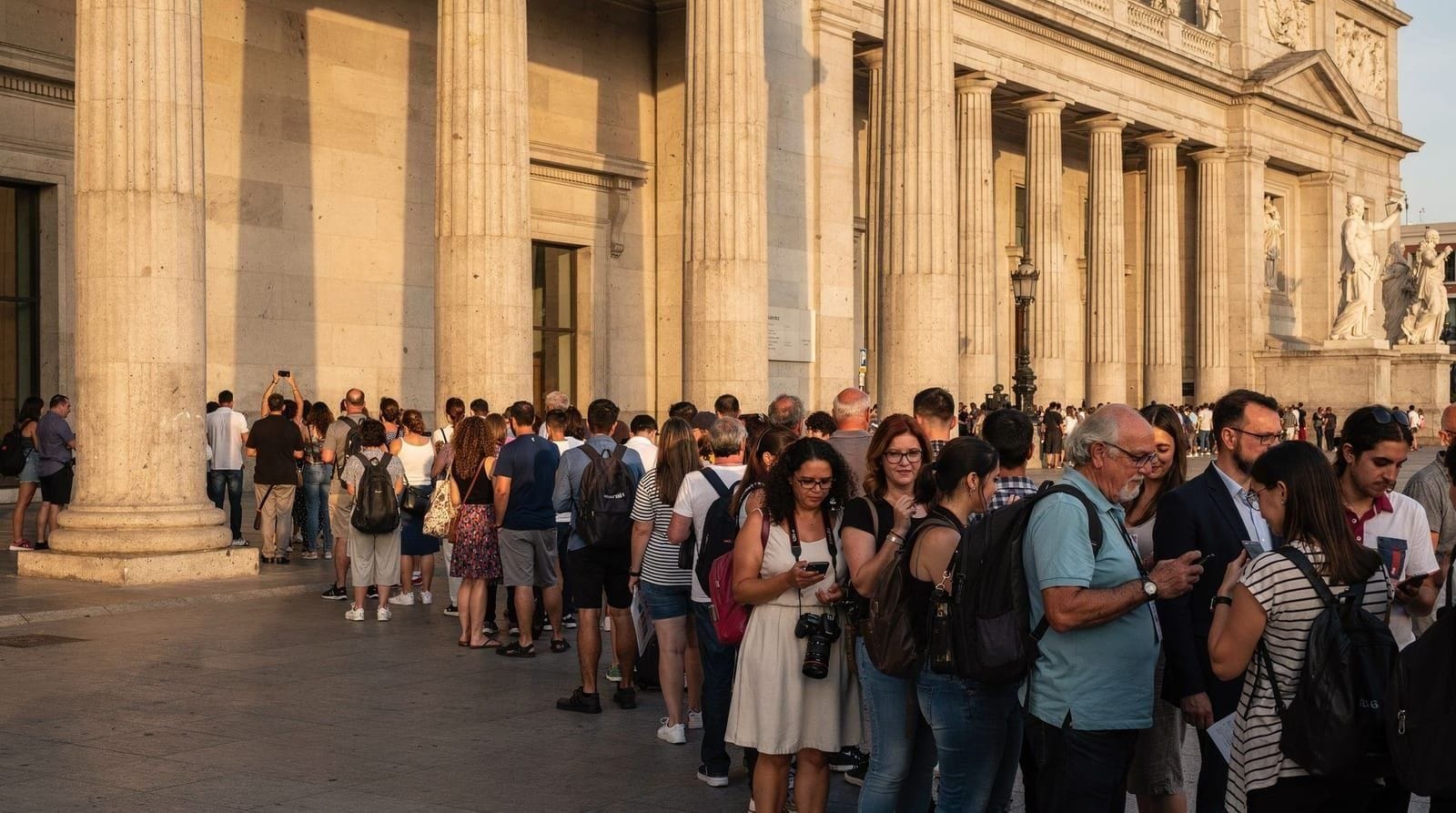
The case for a winter museum visit cannot be overstated. In January, the Prado is a completely different experience from April or October. The free evening windows (18:00–20:00 weekdays) in January have 10-minute queues versus 45 minutes in spring. See the museum free hours guide for exact times.
Best winter museum schedule:
- Monday: Thyssen (free for permanent collection)
- Tuesday–Friday morning: Prado (10:00, minimal crowd)
- Sunday 10:00–14:30: Reina Sofía (free, calm)
- Any day: Museo Sorolla (always free, rarely crowded even in summer)
Building a winter day around one big museum and one small one works better than trying to see everything. Start with the Prado museum guide to decide which rooms matter to you, then keep the afternoon for the Reina Sofía or the Thyssen, where the warmth indoors is part of the appeal. If you would rather have someone steer you through the highlights, a guided Prado visit with priority entry is a calm way to use a cold morning. Art-minded visitors who want the full sequence in a few days can also follow the golden triangle art walk, which suits winter pacing well because nothing forces you outdoors for long.
Opera and classical music
The Teatro Real (Madrid’s opera house, Plaza de Oriente) runs its full season November–July. This is one of Europe’s major opera venues and the winter season brings the main productions. Prices range from €15 (high gallery) to €250 (stalls). Book at least 3 weeks ahead for main operas.
The Auditorio Nacional de Música (Salamanca district) hosts the Orquesta Nacional de España and visiting orchestras throughout winter. The Auditorio’s programming is broadly accessible — many concerts under €30.
Football
Both Real Madrid (Bernabéu, Chamartín) and Atlético de Madrid (Cívitas Metropolitano, east Madrid) play Liga home games throughout December, January, and February. Winter weather occasionally postpones postpone mid-week games but rarely cancels them. The Bernabéu stadium tour runs year-round and is excellent on a winter weekday when crowds are thin.
The Bernabéu guided tour is worth doing in winter when the crowds are manageable.
Warming up with food and drink
Winter is when Madrid’s bars and taverns feel most like themselves. Plan your walking around meals: a long lunch in a traditional restaurant, a late-afternoon pause for churros con chocolate, and an evening of small plates in a busy neighbourhood. The Madrid tapas guide and the best tapas bars list give you places to start, while the Mercado de San Miguel is a convenient indoor stop when the wind picks up. A guided option such as a tapas and wine tasting with a local guide turns a cold evening into the main event rather than something to endure.
Resist the urge to eat in the squares around the main sights just because they have heaters; the same tourist-menu logic applies in winter as in summer, as the tourist menu traps guide explains.
Royal sites and indoor landmarks
Cold days suit the big interiors. The Royal Palace guide covers what to prioritise inside, and the Almudena Cathedral sits just across the square, so the two combine into one compact outing. Both are far easier to enjoy in winter than on a crowded spring weekend, and if rain or a hard freeze arrives you simply swap the Retiro for another interior. The rainy day with kids ideas also work as a general wet-weather plan for adults.
Day trips: Sierra de Guadarrama
The Sierra de Guadarrama — the mountain range north of Madrid — is entirely different in winter. The ski stations at Navacerrada and Valdesquí operate December–March. For non-skiers, Cercedilla offers winter hiking through snow-covered pine forests. The Cercanías C-8a from Atocha reaches Cercedilla in 45 minutes (€5.40 return). Roads to the mountains close occasionally in heavy snowfall; check before going. The Sierra de Guadarrama day trip guide has the practical details, and the Cercedilla and Navacerrada page describes the area in more depth.
Historic cities are also rewarding in winter, since the walking is more comfortable without summer heat, though you should dress for exposed streets and hilltop viewpoints. The Toledo day trip guide and the Segovia day trip guide are the natural choices, and the day trips by train overview helps you pick between them. Short winter daylight means starting early and keeping the plan simple.
Practical winter information
Opening hours: All major attractions operate on standard winter hours. Some are open longer in December (holiday season). Check museum websites for Christmas Day (25 December) and New Year’s Day (1 January) closures — both are likely closed or with reduced hours.
Eating and drinking in winter: Madrid’s café culture moves inside. The traditional morning ritual is intact year-round — café con leche and a tostada (grilled bread with olive oil and tomato) at a neighbourhood bar. Winter is cocido madrileño season — the city’s iconic chickpea stew, slow-cooked and served as a three-course meal, is best eaten between November and March when the weather demands it. The cocido madrileño guide covers where to get the real version.
Transport: Madrid’s metro, buses, and AVE trains run normally in winter. Snow occasionally disrupts bus services in outer suburbs. Taxis are more expensive in cold weather (high demand); use the Uber or Cabify apps as alternatives.
Accommodation: Book 2–4 weeks ahead for December (Christmas and New Year demand). For January–February, 1–2 weeks is usually sufficient. If you are unsure where to base yourself, the where to stay in Madrid guide compares the central areas, and in winter it pays to choose a spot close to the metro so short, cold walks replace long ones.
Planning your length of stay: Winter rewards a slower trip. Short days and cold evenings mean you will do fewer things per day than in spring, so the how many days in Madrid guide is worth reading before you commit, and the 3-day itinerary is easy to adapt by moving outdoor stops to the middle of the day. Travellers on a tight budget will find more ideas in the Madrid on a budget guide, and couples can look at the Madrid for couples itinerary.
Getting around: The metro guide is the most useful companion in cold weather, since the network lets you cross the centre without standing at a bus stop in the wind.
The honest winter assessment
Winter suits specific travel styles:
Best for: Art lovers who want unhurried museum access; budget-conscious travellers; couples who prefer quieter, more local experiences; football fans (full season playing); classical music and opera enthusiasts.
Not ideal for: Visitors primarily interested in outdoor café culture and park life; families with young children who struggle with cold and limited outdoor space; anyone whose main goal is the vibrant nightlife scene (which exists year-round but is most atmospheric when warm evenings allow terrace usage).
The false concern: Many visitors worry that Madrid is “shut down” or depressing in winter. This is not true. Madrid is a large, fully functioning European capital with a strong indoor culture. The restaurants are full, the cultural calendar is dense, and the city’s energy is present — it has just moved inside, which is where much of the best of Madrid lives anyway.
Winter month by month at a glance
| Month | Day temp | Prices | Crowds | Highlight |
|---|---|---|---|---|
| December | 10–14°C | Rising toward holidays | Moderate, high late month | Christmas markets, lights |
| January | 9–10°C | Cheapest of the year | Lowest of the year | Empty museums, Three Kings (5th) |
| February | Similar to January | Still low | Moderate | Quiet, good value |
For the full-year comparison, see the best time to visit guide; for the festive specifics, the dedicated Madrid at Christmas guide covers the market, grape countdown and Three Kings Parade in detail.
Frequently asked questions about Madrid in winter
Does Madrid get snow in winter?
Occasionally, most memorably in January 2021 when the Filomena storm dropped 50cm of snow on the city in 24 hours — the heaviest snowfall in 50 years. In a typical winter, Madrid sees light snow 1–3 times per season, usually in January–February. Snow rarely accumulates for more than 2–3 days in the city. The Sierra de Guadarrama an hour north receives reliable snow from December through March and is accessible by train for day trips.What are the best winter events in Madrid?
Key winter events: Navidad (Christmas markets in Plaza Mayor and surrounding squares, late November to 31 December); Cabalgata de Reyes (Three Kings Parade, 5 January, the biggest parade of the year through central Madrid); ARCO Madrid Contemporary Art Fair (early March, IFEMA convention centre, Europe's major Spanish-language art market); Feria del Libro Antiguo y de Ocasión (December, Parque del Retiro). San Isidro patron saint festival is in May, not winter.Is winter a good time for museums in Madrid?
It is the best time. January and February are the quietest months at the Prado, Reina Sofía, and Thyssen. You can walk through the Velázquez rooms on a January Tuesday morning at 10:30 with almost no other visitors. Queue at free windows is minimal — 10–15 minutes at most. The Royal Palace in January is genuinely uncrowded, with the interiors showing well in winter light.What should I pack for winter in Madrid?
A proper winter coat (wool or down to -5°C), warm layers (Madrid wind can be sharp), waterproof boots or sturdy shoes, gloves and a scarf. December temperatures are milder (10–14°C by day) but January–February can be genuinely cold with wind chill. Madrid is a walking city; cold feet make it miserable. Dress warmly from the base layer rather than relying on the coat alone.Are Christmas markets in Madrid worth it?
Plaza Mayor Christmas market is Madrid's main one — stalls selling ornaments, nativity figures (belenes), Christmas trees, and the traditional roscos and polvorones sweets. The market runs late November to early January and the plaza is decorated with lights. It is crowded on weekends from 17:00 onwards; visit on a weekday morning for the more pleasant experience. Avoid eating at the stalls immediately adjoining the plaza — same tourist markup applies year-round. The market itself is free to browse.Is New Year's Eve worth spending in Madrid?
Yes, if you secure a ticket. The traditional Spanish New Year is centred on the Puerta del Sol — hundreds of thousands gather to eat twelve grapes at midnight (one per chime). The experience is genuine and locally beloved, not a manufactured tourist event. Practical warning: Sol and the surrounding streets are packed from 21:00 to 02:00; you will not move freely. Book a hotel within walking distance of Sol if you plan to attend. Restaurant prix-fixe dinners on 31 December can be good value at mid-range venues (€50–80 covers 5–6 courses); book by mid-December.Is December or January the better winter month to visit Madrid?
December is milder (10–14°C) and festive, with Christmas markets and lights, but prices rise around the holidays and New Year's Eve. January is colder (9–10°C) but the cheapest month of the year for accommodation, with the quietest museums of the entire calendar. Choose December for atmosphere and festivity, January for value and unhurried art viewing.Does Madrid feel closed or depressing in winter?
No — this is a common misconception. Madrid's restaurants, bars, theatres and concert halls all run at full capacity through winter; the city's energy simply moves indoors rather than onto terraces. The main things you lose are outdoor café culture and long park strolls in comfort; everything else, including the football season and the full opera and classical music calendar, runs normally or better than in summer.