Madrid in spring: the best season and why it fills up fast
Madrid: Food Tour Tapas Spanish Wine
Is spring the best time to visit Madrid?
April and May are the best months to visit Madrid. Temperatures sit at 18–24°C, the Retiro park is in full bloom, San Isidro festival (15 May and surrounding week) is Madrid's biggest celebration, and the combination of outdoor café culture, museum access, and day-trip weather is optimal. The trade-off: hotel prices are at their highest and the city is at maximum visitor capacity. Book 6–8 weeks ahead.
| Best months | April–May |
| Temperature | 18–24°C by day |
| Big event | San Isidro festival, week of 15 May |
| Book by | 6–8 weeks ahead |
| Trade-off | Highest prices, busiest museums of the year |
Why spring is Madrid’s peak season
Every city has a season that best captures its character. For Madrid, that season is April–May. The combination of factors that make the city work — the outdoor life, the late evenings, the mix of world-class culture and vibrant street life, the access to the surrounding landscape — all converge in these two months at optimal conditions.
This is not an accident of marketing; it reflects real facts:
- Average daytime temperatures 18–24°C: warm enough for terrace dining, cool enough for walking between monuments
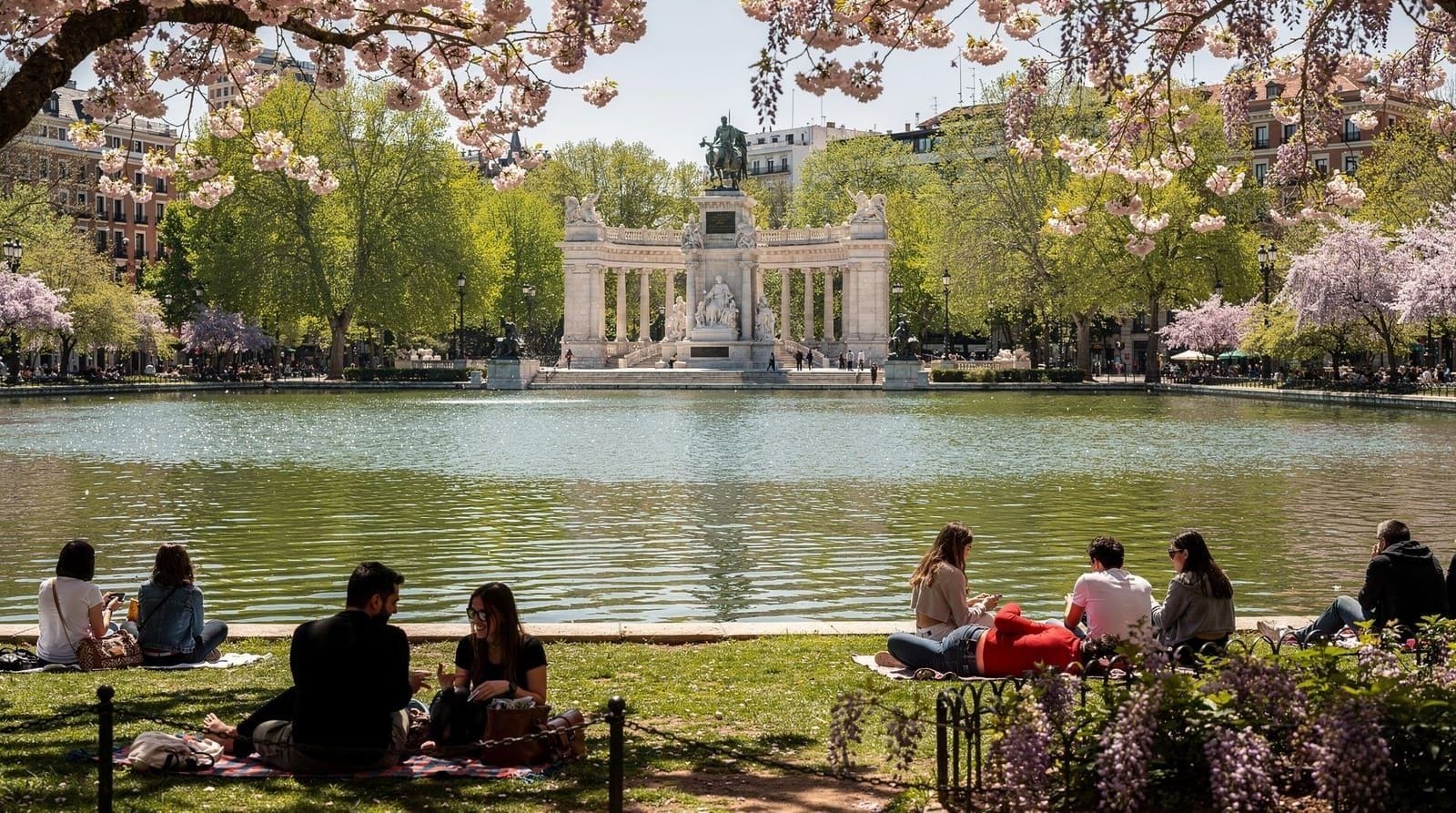
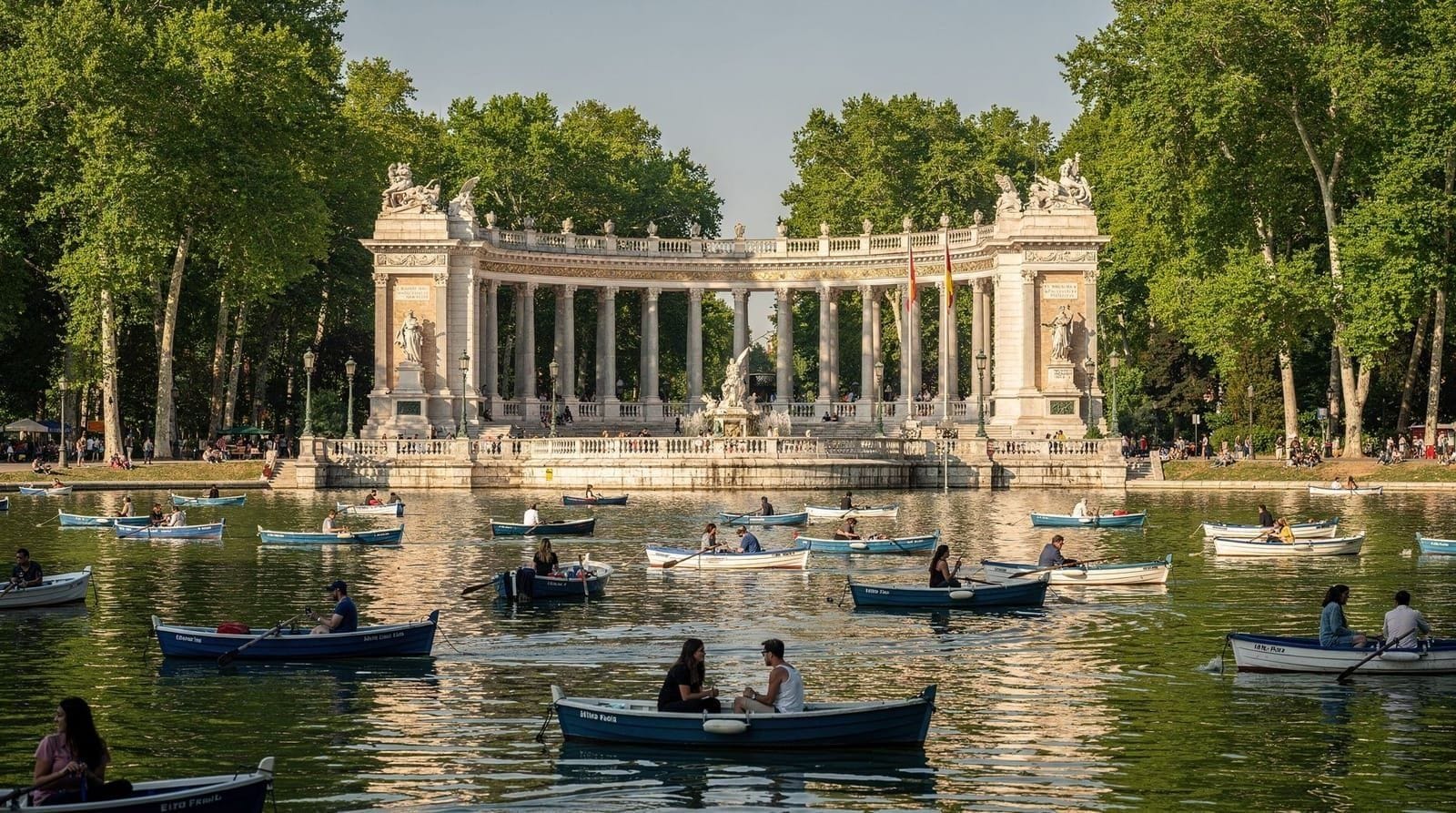
- The Retiro park’s mature gardens in full bloom
- San Isidro festival (May), when the city celebrates its patron saint with a week of free concerts, traditional dancing, and the world’s most prestigious bullfighting season
- Day trips to Toledo, Segovia, and Aranjuez at their most photogenic
- Maximum outdoor culture: terraces open, evening markets active, the city’s social life visible
The trade-off for all of this: everyone knows it. Hotel prices peak, museums are at maximum capacity, and the popular sights require more patience.
Month by month: March, April, May
March: the warming
March is transitional. Early March still feels like winter — overcast skies, 10–13°C, locals still in heavy coats. By late March, the city begins to shift: the café terraces appear, the first warm weekends bring the Retiro alive, and the light starts taking on the quality that distinguishes Madrid spring from the rest of the year.
Practical March: Hotel prices begin rising in the second half of March. If you visit the first two weeks, you get near-winter prices with improving weather — an underrated window.
Almond blossom: The almond trees in the Parque del Oeste and parts of the Retiro bloom in late February–early March. Earlier than cherry blossoms, less photographed, but genuinely beautiful.
Semana Santa (Holy Week): Falls in late March or April depending on the year. See below for details.
April: the prime month
April is many visitors’ favourite month in Madrid. Temperatures settle into the 14–20°C range, rain comes as afternoon showers rather than grey days, and the city is operating at full outdoor capacity without the saturation of May’s festival season.
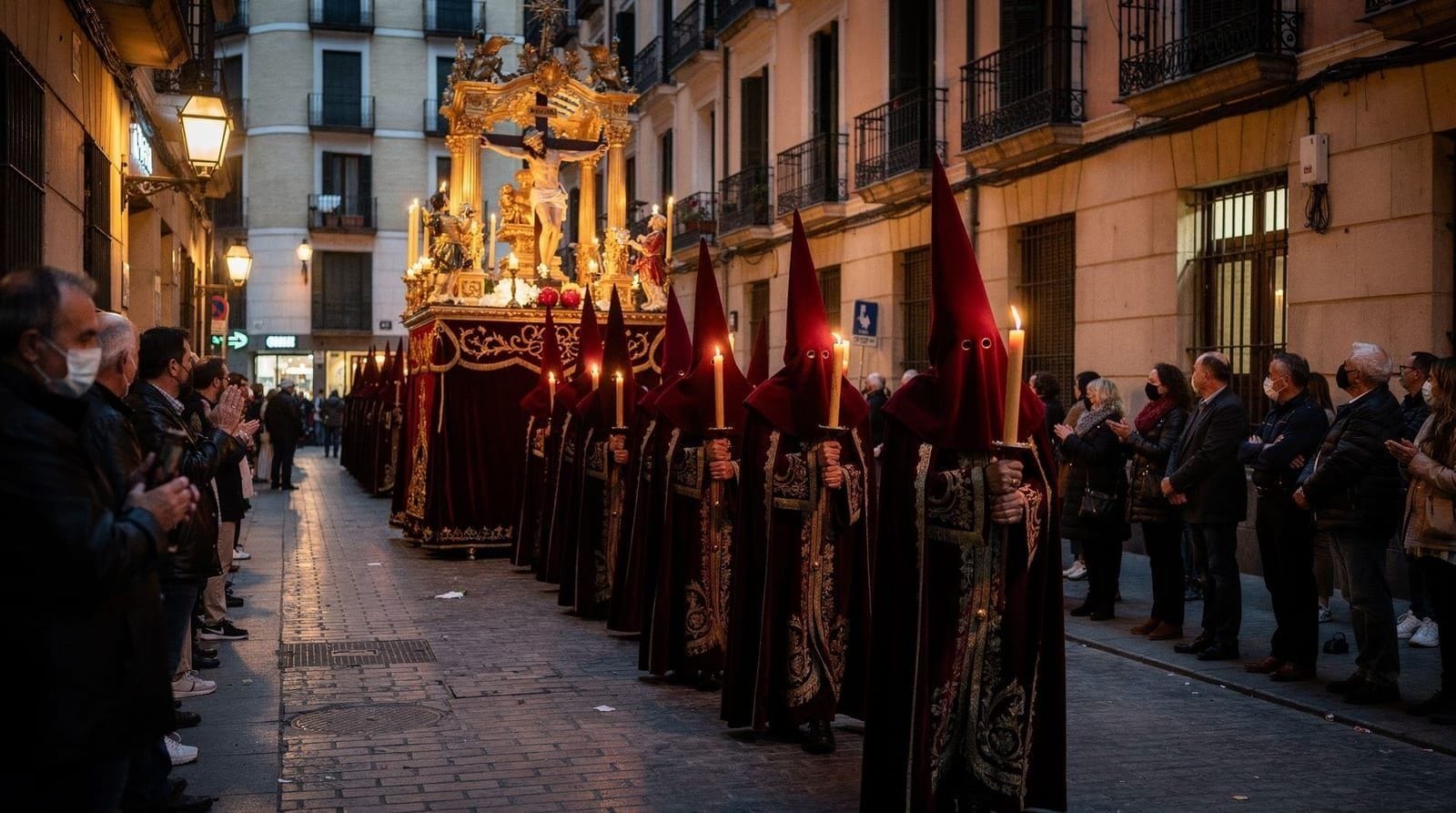
Semana Santa (29 March–5 April 2026): Holy Week events run through the week before Easter Sunday. Madrid’s processions are more subdued than Seville or Málaga, but the atmosphere in the historic centre — the Habsburg quarter around the Austrias neighbourhood, the church streets near La Latina — is worthwhile on Palm Sunday and Good Friday. The Reina Sofía is free all day on Good Friday (Good Friday 2026 falls in April).
Museum free windows in April: Queues begin building to spring levels. Arrive 40 minutes before the Prado free window in April–May to guarantee entry in the first batch.
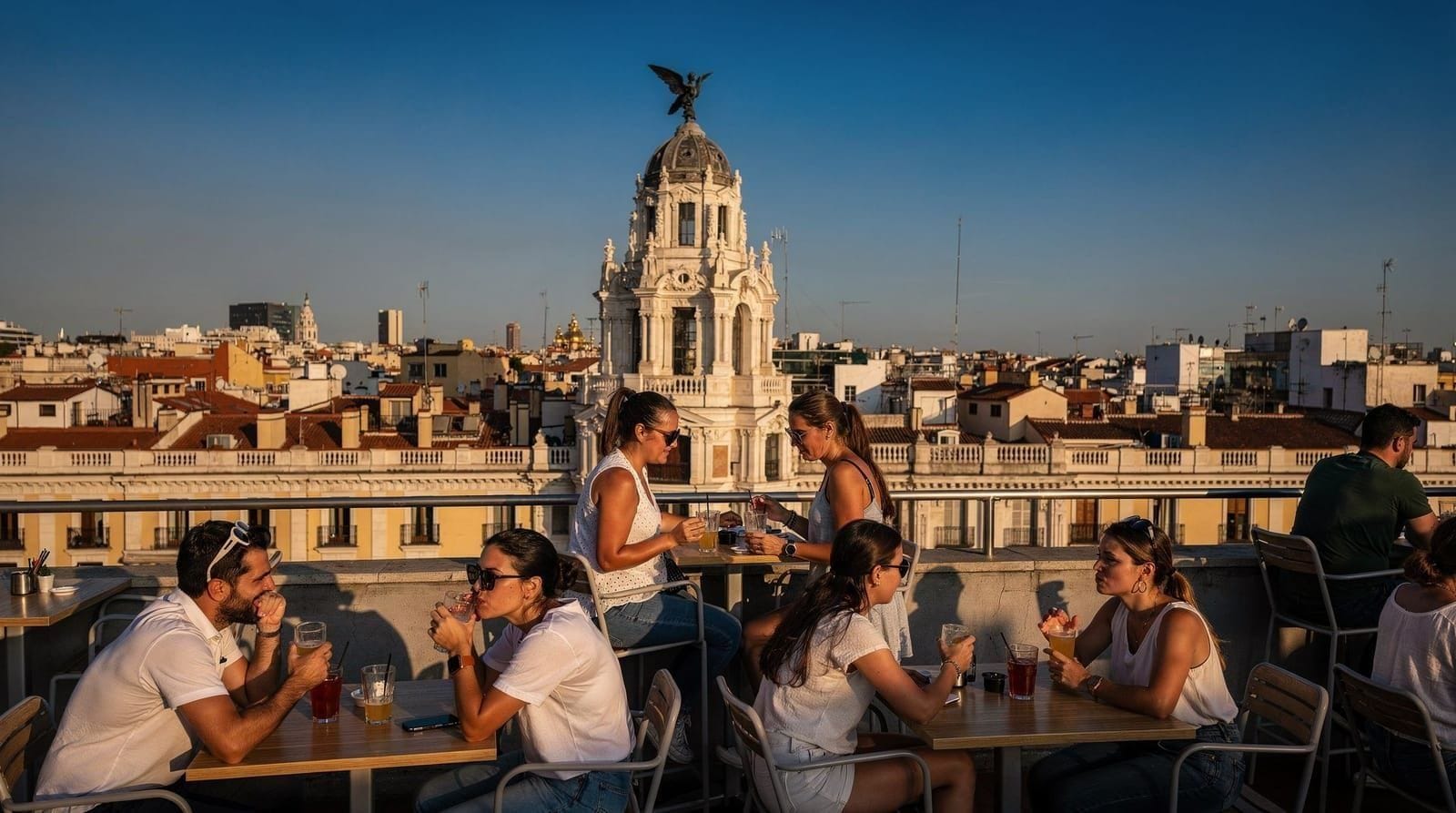
Outdoor life accelerates: The terraces of Malasaña and Chueca fill on warm evenings from mid-April. The outdoor seating culture of Madrid — one of its most distinctive pleasures — is fully visible from mid-April onwards.
A tapas and wine food tour is perfectly suited to April evenings when the terraces are lively but not summer-packed.
May: festivals and peak crowds
May is the most intense month. The city is at full tourist capacity, the San Isidro celebrations dominate the second half of the month, and both Madrid’s best weather and its highest prices coincide.
San Isidro (15 May and surrounding week):
The feast of San Isidro Labrador, Madrid’s patron saint, is the city’s biggest annual celebration. The week of festivities includes:
- Las Ventas corridas: The San Isidro bullfighting season at Las Ventas is the most important in the world — a full month of daily corridas from early May to mid-June, featuring the top matadors. Tickets sell out months in advance for the peak corridas around 15 May. Even if bullfighting is not your primary interest, the Las Ventas atmosphere is culturally significant.
- Pradera de San Isidro: The meadow south of the Almudena (across the Manzanares) becomes a fairground for the week — traditional music, free concerts, chotis dancing (Madrid’s traditional dance), churros stalls, and the romería pilgrimage.
- Neighbourhood verbenas: La Latina, Embajadores, and the Austrias barrios all celebrate with street festivals, live music, and the communal outdoor culture that defines Madrid’s social life.
Rose Garden peak: The Rosaleda del Buen Retiro in Retiro park peaks in mid-to-late May. Worth visiting specifically around 20 May if your visit overlaps.
Spring day trips
Spring is the best season for day trips:
Aranjuez
The Royal Palace and gardens at Aranjuez are at their finest in April–May. The strawberry (fresa) season is April–June, and Aranjuez strawberries are locally famous. The heritage train — “Tren de la Fresa” — runs on selected spring weekends from Madrid, with period carriages and strawberry tastings en route. Cercanías C-3 takes 45 minutes (€3.50). Aranjuez day trip guide has timing and logistics.
Toledo
April–May temperatures in Toledo (18–22°C) are dramatically more pleasant than summer. The cathedral, Alcázar, and medieval streets are best experienced when walking the steep cobbled lanes doesn’t require dehydration management. A half-day guided Toledo tour makes efficient use of a spring morning from Madrid. AVE from Atocha takes 33 minutes (€13–16 return).
Segovia
Segovia in spring — the Roman aqueduct, the Alcázar (the fairy-tale castle) against a backdrop of snow-capped peaks — is one of the stronger day trips in Spain. The AVE takes 27 minutes. Segovia day trip guide covers what to do in a half or full day.
Spring crowds: managing the main sites
Prado Museum: April–May queues at free evening windows are the longest of the year. Options: arrive 45 minutes before the 18:00 free window, or buy a morning ticket online (€18 adult) for a 10:00–12:00 slot with far fewer visitors. The online booking skip-the-queue advantage is significant in spring.
Royal Palace: Free windows exist only for EU and Ibero-American citizens (Monday–Thursday late afternoon), and online advance tickets are available. Spring is when the Royal Palace is busiest — the queues for same-day tickets can reach 60 minutes. Book 2–3 days ahead online.
Retiro Park: The park has no entry fee or reservation required. Simply go on a weekday morning or late afternoon to avoid the peak Sunday-afternoon crowds.
Practical spring information
What to wear: Layers are essential. Madrid spring mornings can be 10–12°C while afternoons reach 22°C. A light coat you can remove, comfortable walking shoes (the cobblestoned streets of the Austrias quarter are unforgiving to thin soles), and a small bag that crosses the body are the basics.
Rain: Spring rain in Madrid is usually brief and comes in afternoon showers. A compact umbrella or light rain jacket is worth carrying from March through mid-May. The showers rarely last more than 1–2 hours and are followed by bright sky.
Booking: Spring accommodation — especially for April and the San Isidro week in May — should be booked 6–8 weeks ahead. The best mid-range hotels fill fast. Restaurants: Tuesday–Thursday lunches fine without booking; Friday–Saturday evenings require reservations at popular spots.
Building a spring day in the city
Spring rewards a rhythm that mixes one big indoor stop with long stretches outside. A sensible shape: a museum in the morning while the light is soft and the crowds are thinner, a slow lunch, then the afternoon outdoors, and a late evening on a terrace when the city really wakes up.
Morning: pick one museum, not three. The Prado museum guide and the Golden Triangle art walk show how to choose between the big collections instead of rushing through all of them. In spring the queues punish ambition, so one well-planned visit beats a scattered morning. If you want to know when entry costs nothing, the museum free hours page lays out the windows, and the honest version of the free-hours advice explains what the queues actually look like in peak season.
Afternoon: green space. Spring is when the parks justify themselves. The Retiro park guide covers the paths, the lake and the rose garden, while Parque del Oeste offers a quieter alternative with its own flowering season. Along the river, Madrid Río is a good option for a long walk or a bike ride when the weather is settled. Cyclists and walkers who prefer a guided pace can look at the Retiro Segway guide or the e-bike tours guide.
Evening: the terrace circuit. This is the part of a Madrid spring that no museum can match. A vermouth before dinner is a local habit, and the vermut guide explains where and how. For the tapas that follow, the best tapas bars and the broader Madrid tapas guide will keep you away from the places that exist mainly for tourists. Neighbourhoods such as La Latina, Malasaña and Chueca are where the terraces tend to fill first on a warm evening.
Choosing where to base yourself in spring
Because spring is the busiest stretch of the year, location matters more than usual. A hotel that is a short walk from the places you actually plan to visit saves energy you will want for evenings out. The where to stay guide compares the central areas, and the best area for first-time visitors is the simplest starting point if you are unsure. Staying near the historic centre keeps the Austrias quarter, Sol and the main sights within walking distance, which suits spring well because walking is exactly what the season is for.
Getting around is easy once you are there. The Metro guide explains the basics, and the tourist travel pass is worth reading if you plan several day trips. For arrivals, the airport to city guide removes the guesswork on the first day.
Spring weekends and local life
Spring is also when Madrid’s weekend habits are easiest to join. On Sundays the El Rastro flea market is a classic morning outing, followed by a drink in the nearby streets of La Latina. Keep an eye on your belongings in crowded places; the pickpockets and safe areas guide has practical advice that applies especially when streets are full. If you are travelling on a tighter budget, free things to do in Madrid and the budget guide show how to enjoy the season without paying peak prices for everything.
For the festival itself, the blog post on the San Isidro festival adds more local colour, and the Semana Santa guide covers the Holy Week processions in more detail if your dates overlap.
How long to stay in spring
Short trips work in spring because the weather lets you spend most of the day outdoors, but a few extra days let you add an excursion without rushing. The how many days in Madrid guide helps you decide, and the three-day itinerary is a good template for a first visit. If you want to combine the capital with a trip out, Madrid and Toledo and Madrid and Segovia show how to pair them sensibly, and the week with day trips stretches the idea over a longer stay. Travellers weighing the two classic excursions can read Toledo vs Segovia before choosing which to put on a good-weather day.
A final practical point: spring weather is changeable, so keep one flexible day in your plan. If a showery afternoon arrives, swap an outdoor plan for a museum or a long lunch and move the park visit to the next clear day. Travellers with children can lean on the Madrid with kids guide for ideas that work whatever the sky does. That flexibility is what turns a good spring trip into a great one.
Spring month by month at a glance
| Month | Day temp | Crowds | Prices | Highlight |
|---|---|---|---|---|
| March | 10–17°C | Low, rising late month | Low, rising | Almond blossom, city warming |
| April | 14–20°C | Moderate | Rising toward peak | Semana Santa, terraces reopen |
| May | 18–24°C | Peak | Highest of the year | San Isidro, Rose Garden peak |
For a season-by-season comparison across the whole year, see the best time to visit guide; for the warmer months that follow, see Madrid in summer.
Frequently asked questions about Madrid in spring
What is the weather like in Madrid in spring?
March is transitional: temperatures range 10–17°C by day, still cold at night (4–8°C). April warms to 14–20°C with the first warm days. May is peak spring: 18–24°C by day, evenings around 12–15°C — perfect for outdoor dining without needing a heavy coat. Rain is possible throughout spring (Madrid averages 40–50mm/month in spring, its wettest season), typically as afternoon showers rather than sustained grey periods. The light in April–May is exceptional, strong but not harsh.What is the San Isidro festival?
San Isidro (15 May, Madrid's patron saint day) is the city's most important local festival. The week surrounding 15 May brings: the San Isidro corridas at Las Ventas (considered the world's most prestigious bullfighting season); free concerts and traditional chotis dancing in the Pradera de San Isidro park; neighbourhood fiestas in La Latina and the surrounding historic barrios; and a general citywide atmosphere of celebration. The Las Ventas corridas sell out months in advance.Does Madrid have Semana Santa (Holy Week) events?
Yes, though Madrid's Semana Santa is less theatrical than Seville or Málaga. Processions occur in central Madrid through Holy Week (date moves each year: 29 March–5 April 2026). The most visible is the morning procession from San Ginés church near Sol on Good Friday. The Reina Sofía is free all day on Good Friday. For the full Spanish Semana Santa experience, Seville or Toledo are more dramatic.Is spring a good time for day trips from Madrid?
The best time for day trips. Toledo in April–May runs 18–22°C — pleasant without the summer oven effect. Segovia in spring is picture-perfect. Aranjuez in spring (royal gardens, Tagus river) is at its finest — the strawberry trains from Madrid run on weekends in spring as a heritage rail excursion. The Sierra de Guadarrama in April still has snow on the peaks but the valleys are green.What should I book in advance for spring in Madrid?
Book in advance: accommodation (especially April and the San Isidro week in May), Las Ventas bullfight corridas if attending (weeks or months ahead), Teatro Real opera if visiting in spring opera season, any skip-the-line museum tickets for the Prado and Royal Palace, and popular restaurants for Friday–Saturday evenings. The practical reality: mid-range hotels in central Madrid that cost €100/night in January cost €160–200/night in May.When does the Retiro park look best in spring?
The Retiro is magnificent from mid-March through May. The Rose Garden (Rosaleda del Buen Retiro) peaks in May — several thousand rose varieties in bloom. The wisteria on the park's pergola walks is fragrant in April. The rowing lake is fully operational from March. On sunny weekend afternoons in April–May, the Retiro fills with Madrileños — families, cyclists, buskers, and anyone wanting to sit under blossoming trees.Is April or May better for a first visit to Madrid?
April is the calmer, slightly cheaper choice — good weather, active outdoor life, without the San Isidro crowds and peak May pricing. May is more intense: the best weather of the year but coinciding with the San Isidro festival, meaning higher prices, fuller museums, and a livelier but more crowded city. A first-time visitor who wants sights without festival crowds should lean April; one who wants maximum atmosphere and doesn't mind the crowds should choose mid-May.How far ahead should I book a spring trip to Madrid?
6–8 weeks ahead for accommodation is the standard recommendation, especially for April and the San Isidro week in mid-May. For Las Ventas corridas during San Isidro, book weeks to months ahead, as the peak dates sell out early. Restaurants generally only need booking for Friday and Saturday evenings; weekday lunches are fine without a reservation even in peak spring.