Semana Santa in Madrid: what to expect during Holy Week
Madrid: Prado Skip the Line Official Guide
Is Semana Santa worth visiting Madrid for, and how does it compare to Seville?
Madrid's Semana Santa (Holy Week, the week before Easter) is a genuine observance with around 70 cofradías (brotherhoods) staging processions, but it is not comparable in scale or visual drama to Seville, Valladolid, or Cuenca. Madrid is primarily a city experiencing a national holiday week — many Madrileños leave for Semana Santa, leaving the city quieter in some ways and busier with domestic tourists from elsewhere. Visit Madrid in Semana Santa for the lower-crowd museum opportunity, not specifically for the processions themselves.
What Semana Santa in Madrid actually is
Semana Santa — Holy Week, the seven days from Palm Sunday to Easter Sunday — is observed across Spain, but Madrid’s version does not have the international profile of Seville’s. That gap is real and worth stating clearly: if you are coming to Spain specifically for the visual drama of penitent brotherhoods, the enormous pasos (processional floats) of the Virgin and Christ, the incense, the drums and the saetas (improvised flamenco prayers), you should go to Seville, Valladolid, or Cuenca. Madrid’s Semana Santa is considerably more modest.
What Madrid does have:
- Around 70 cofradías (religious brotherhoods) that process through the streets during Holy Week
- A city that is relatively emptied of its residents — Madrileños treat this as a holiday week and many leave for other parts of Spain
- A national holiday structure that gives most people 4–5 days off (from Thursday to Sunday of Easter weekend)
- Museums open (the national museums maintain normal schedules) but notably less crowded than usual for April
- Accommodation prices significantly elevated — this is a peak domestic travel period
| Where | Historic centre (Austrias, Almudena Cathedral, Plaza Mayor) for processions |
| Cost | Free to watch processions; hotels run 30–60% above normal April rates |
| Time needed | A single evening for the main processions; museums fill the rest of the week |
| Getting there | Central metro stations (Sol, Ópera, La Latina) serve all main routes |
| Best time | Thursday and Friday nights for the largest processions |
The processions: what to expect
Madrid’s processions concentrate in the historic centre — the streets around the Austrias district, the Almudena Cathedral, the streets connecting to Plaza Mayor, and the major avenues like Calle Mayor, Calle de Alcalá, and the Paseo del Prado.
The largest processions in Madrid are:
Procesión del Silencio — The Silent Procession, typically on Thursday or Friday night. Black-robed penitents, torches, drums (or silence in some years), through the old streets after midnight. This is the most atmospheric of Madrid’s Semana Santa processions.
Procesión del Cristo de Medinaceli — The Brotherhood of the Medinaceli Christ processes from the Basílica Jesús de Medinaceli (near Atocha), which holds a much-venerated 17th-century carving of Christ. This procession draws substantial attendance from local devotees, not only tourists.
Procesión del Santo Entierro (Holy Burial) — On Good Friday, a procession that traditionally represents the burial of Christ. This is the most solemn of the Holy Week events.
Scale comparison: Seville’s Semana Santa involves 57 cofradías, over 60,000 nazarenos (participants in robes), and some individual processions with over 2,500 people and floats weighing 2,000–5,000 kg each. Madrid’s largest processions involve hundreds of participants and smaller floats. The difference in visual scale is significant.
Holy Week museum access
The national museums maintain their normal schedules during Semana Santa with two important notes:
Good Friday (Viernes Santo): Some national institutions close for the day. Others (including the Reina Sofía) remain open on their normal schedule. Confirm each museum’s individual schedule for the year.
Easter Sunday: Normal Sunday schedules apply for most institutions — Prado free 17:00–19:00, Reina Sofía free in the last two hours before its 14:30 Sunday closing (if open that day — confirm on the museum’s website).
Crowd dynamics: Many Madrileños leave the city for Semana Santa, which reduces pressure on the public transport system and on restaurants. However, domestic tourists from elsewhere in Spain and international visitors who specifically target Semana Santa arrive to partially compensate. The net effect in most years: slightly fewer visitors than a normal April week, with the distribution shifted toward religious and culturally-motivated tourists.
The Prado and Reina Sofía during Semana Santa can actually be less crowded than during the second half of April when the weather improves and general spring tourism peaks.
If you would rather not spend Holy Week queuing, a pre-booked visit takes most of the pressure off: a skip-the-line Prado visit with an official guide gives the collection some context, and a skip-the-line Reina Sofía ticket is a simple way to reach Guernica without waiting at the door. Our Golden Triangle art walk and the museum free hours guide help you decide how to combine paid and free visits, and the art lovers itinerary shows how a museum-focused few days fits together.
What closes during Semana Santa
Spain treats the Thursday–Sunday of Holy Week as a national holiday in practice, though the formal public holidays are Good Friday and Easter Sunday. Expect:
- Most government offices and banks: closed Thursday afternoon through Monday
- Many small shops and businesses: reduced hours or closed for the full week
- Restaurants and bars: mostly open (this is a peak revenue period for hospitality)
- Major museums: largely open (confirm each venue)
- El Rastro flea market: operates if Easter falls on a Sunday (as scheduled) — check the year
- Public transport: normal to reduced weekend schedule over the long weekend
The Almudena Cathedral (next to the Royal Palace) runs extended services throughout Holy Week; the schedule of services is posted on the cathedral website.
Where to watch processions
The main procession routes in Madrid concentrate in:
Calle Mayor and connecting streets — The spine of Madrid de los Austrias, running west from Puerta del Sol to the Plaza de la Armería. Processions from various cofradías use this route for access to the Almudena Cathedral.
Around Basílica Jesús de Medinaceli (Plaza de Jesús, near Antón Martín) — The devotion to the Medinaceli Christ makes this one of the most attended Semana Santa events, drawing both tourists and genuine religious visitors.
Plaza Mayor — The enclosed square provides a natural gathering point; some processions cross or pass through the plaza.
Calle de Alcalá — For processions moving toward the Almudena Cathedral from the east.
Viewing positions fill early for the most prominent processions (especially the Friday night Silent Procession). Arrive 45–60 minutes early for a good position along the route.
Practical considerations for visiting Madrid at Semana Santa
Accommodation: Hotel prices increase significantly for Semana Santa — expect 30–60% above normal April weekday rates for the Thursday–Sunday peak. Book 2–3 months ahead for the best availability.
Restaurants: Most restaurants remain open and are not significantly more crowded than normal, since the Madrileños who leave are replaced by visiting tourists. Reservations for dinner are still advisable at popular places.
Transport: If you are planning day trips to Toledo or Segovia during Holy Week — both cities have renowned Semana Santa processions, especially Toledo — book AVE tickets well in advance. The trains are full. Toledo’s Semana Santa is significantly more dramatic than Madrid’s and a logical day trip for the Thursday or Friday of Holy Week.
Weather: Easter in Madrid falls in late March to late April depending on the year. Temperatures range from 12–22°C, with a risk of rain. The processions proceed regardless of weather; some years involve cold evenings requiring a warm layer.
Semana Santa vs other Madrid seasonal events
Madrid’s annual calendar has several events that are more distinctively Madrileño than Semana Santa:
San Isidro (around 15 May) — The city’s patron saint festival, with free concerts in Parque del Retiro and other parks, bullfighting season at Las Ventas, traditional dress (chulapos and chulapas), and neighbourhood celebrations in La Latina and other historic areas. This is a genuinely local festival — less touristic, more Madrileño.
Dos de Mayo (2 May) — The anniversary of the 1808 uprising against Napoleonic occupation, centred on the neighbourhood of Malasaña (where the fighting was fiercest). See the Dos de Mayo guide for the neighbourhood and the historical context.
Verbenas (August) — The neighbourhood patron saint festivals of August, when each district holds its own verbena (outdoor party). La Paloma (La Latina, early August) is the most famous.
For the full seasonal planning picture, see best time to visit Madrid and Madrid in spring.
Should you go to Madrid or Seville for Semana Santa?
If the answer is “Semana Santa itself is the main reason to travel,” go to Seville. The visual, auditory, and spiritual experience of Seville’s processions in early spring — the candlelight on centuries-old images of the Virgin, the saetas sung from balconies, the enormous pasos carried by teams of 24 men in complete synchrony — is on a different scale from anything in Madrid.
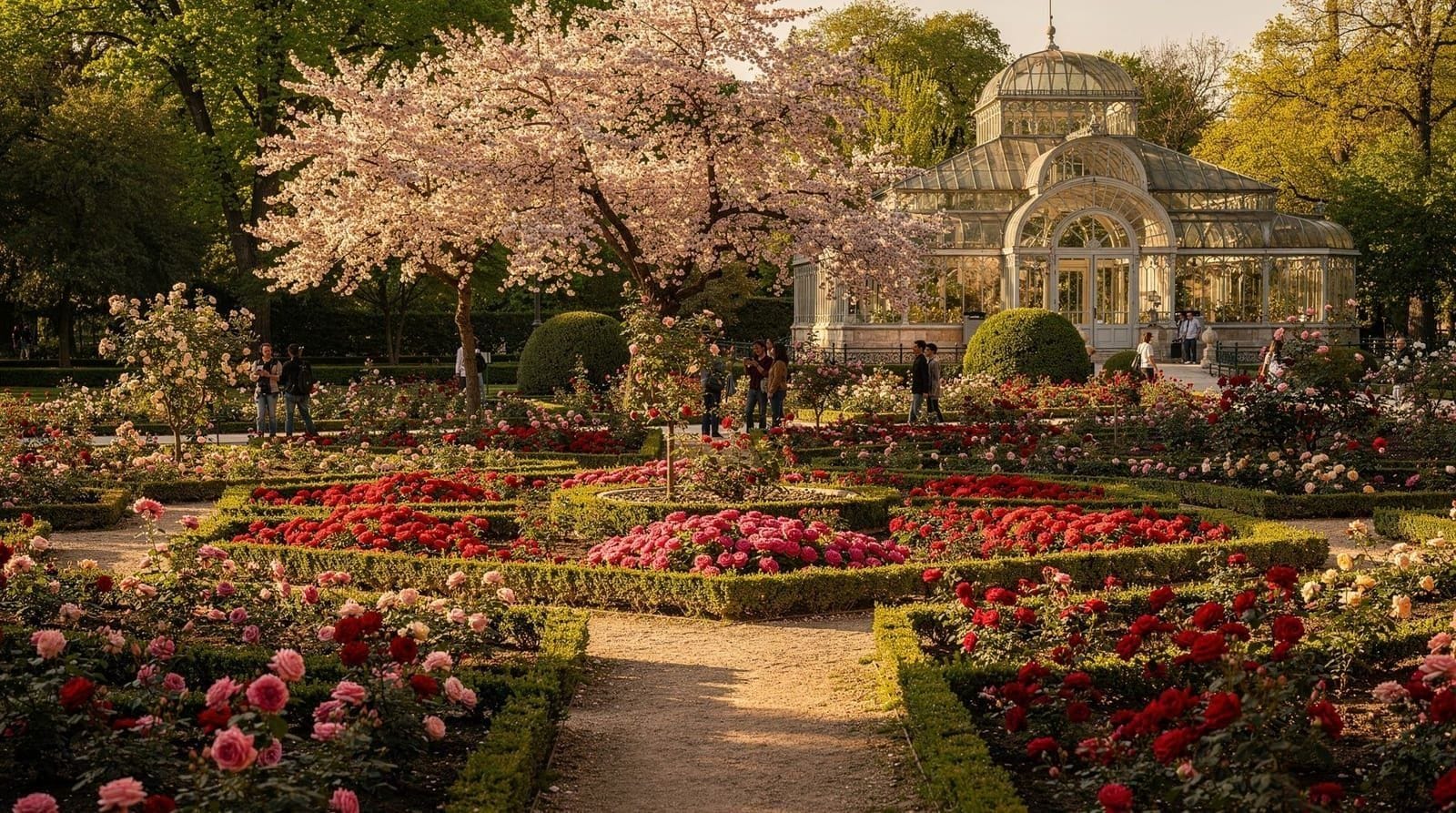
If the answer is “I’m going to Spain in April and Semana Santa is part of the trip,” Madrid is an excellent choice. The city is at its most pleasant in April — temperatures comfortable (15–20°C), parks blooming (the Retiro’s Rosaleda rose garden is spectacular in late April), and the museum collections fully accessible with free entry windows making the economics attractive. You can see processions, visit world-class museums, eat well, and explore the city without the extreme hotel prices and accommodation scarcity that Seville experiences in Holy Week.
The day trip to Toledo (33 minutes by AVE) adds significantly to the Semana Santa experience — Toledo’s processions are among Spain’s most dramatic outside Seville and Valladolid.
The cofradías: who organises Madrid’s processions
Semana Santa in Spain is organised by cofradías — religious brotherhoods that are typically centuries old and maintain specific patron images (a particular Christ or Virgin) that are carried in procession. Membership is voluntary and often hereditary; the role of nazareno (penitent in the processional robe) is a personal religious commitment, not a performance for tourists.
Madrid has around 70 registered cofradías for Semana Santa. The most significant historically include:
Hermandad del Jesús Nazareno de Medinaceli: Attached to the Basílica Jesús de Medinaceli on Plaza de Jesús, this is the most visited cofradía in Madrid because of the particular veneration for the Medinaceli Christ — a 17th-century Portuguese-sculpted image brought to Madrid after being ransomed from North African pirates. First Fridays of the month see enormous queues of devotees waiting to touch the image; Semana Santa processions draw the largest crowds.
Hermandad de la Santa Cruz: One of the oldest in Madrid, dating to the 16th century. Processes through the Austrias district during Holy Week.
Hermandad del Santísimo Cristo de la Fe: Known for the quality of its paso (processional float) and the organization of its processional.
The cofradías are private religious organisations; membership is open to applicants who can demonstrate serious commitment (participation in processions, contribution to the organisation). Several accept foreign members.
Semana Santa dates in the years ahead
Easter is a moveable feast, so Semana Santa falls on different dates each year — this shifts both the weather and the crowd dynamics:
| Year | Good Friday | Notes |
|---|---|---|
| 2026 | 3 April | Early Easter; cooler temperatures likely, closer to Madrid’s spring shoulder season |
| 2027 | 26 March | Very early; pack a warmer layer for evening processions |
| 2028 | 14 April | Later Easter; warmer, closer to peak spring tourism |
An earlier Semana Santa generally means cooler weather and slightly thinner general tourism (since peak spring hasn’t fully arrived), while a later Easter overlaps more with Madrid’s busiest and most pleasant spring weeks. Check the specific year’s dates before booking, since museum free-entry days and public holiday closures are pegged to Good Friday and Easter Sunday rather than a fixed calendar date.
Semana Santa budget and hotel strategy
Hotels in Madrid during Semana Santa 2026 (Easter falls in early April) price at a premium:
Typical Semana Santa hotel premium: 30–50% above comparable April weekday prices for the Thursday–Sunday peak. A hotel that costs €100/night mid-April may cost €140–150 for Easter weekend.
Strategy: Book by January for Easter weekend if you want a good location at manageable prices. By February, the best central options are typically sold out or at peak prices. Accommodation in the peripheral districts (Chamberí, Salamanca, Lavapiés) runs 15–20% cheaper than Sol-Gran Vía for comparable quality.
The Monday discount: Easter Monday prices typically drop immediately and significantly — the long weekend crowd disperses. If your schedule is flexible, arriving Monday for a 4-night stay at Monday–Thursday prices saves substantially compared with a Thursday–Sunday booking.
Religious sites to visit during Semana Santa
Beyond procession-watching, the Madrid religious sites most associated with Holy Week:
Almudena Cathedral (Catedral de la Almudena): Extended masses throughout the week, including the Easter Vigil (Saturday night, typically after 22:00). The interior illuminations during Holy Week are more elaborate than standard. Free entry for services.
Basílica de San Francisco el Grande: The largest church in Madrid (completed 1784), with frescoes by Goya and other contemporaries. Special liturgical programming during Holy Week.
Basílica Jesús de Medinaceli: On Plaza de Jesús, the epicentre of Madrid’s most popular Holy Week devotion. The queues for the Medinaceli Christ’s foot during Holy Week are extraordinary in size.
Iglesia de San Ginés: Near Puerta del Sol, reportedly the oldest church in Madrid (though the current building dates primarily from the 17th century), with an El Greco painting (The Expulsion of the Money Changers) in the Capilla del Cristo.
Practical tips for Holy Week in Madrid
Book restaurants: The city is busy during Semana Santa; popular restaurants require reservations even on weekday evenings during the holiday period.
Museum booking: The Prado and Reina Sofía sell out timed entries more quickly than usual during Holy Week. Book your museum visits 1–2 weeks ahead.
Good Friday: Expect some shops and services to be reduced or closed in the afternoon. The processions are on the streets from mid-afternoon; central Madrid streets near the routes will be crowded.
Weather flexibility: Spring weather in Madrid is variable — processions proceed in rain (usually), but the experience is significantly better in dry conditions. Build flexibility into your schedule.
What to wear: Evening processions, especially the Silent Procession after midnight, can be genuinely cold even in a mild April — bring a warm layer regardless of the daytime forecast. Comfortable shoes matter more than usual, since good viewing spots often mean standing for an hour or more on cobblestones.
Photography etiquette: Processions are religious observances, not staged performances — flash photography is generally discouraged near the pasos, and it’s worth being unobtrusive, particularly during the more solemn moments like the Silent Procession. Locals watching alongside you are often there for genuine devotional reasons.
For the full seasonal picture including the best overall times to visit Madrid, see best time to visit Madrid and Madrid in spring.
Filling the quieter hours around the processions
Processions are an evening affair, which leaves the days free. A relaxed morning in the Retiro or a slow lunch of tapas in La Latina suits the pace of the week, and the Royal Palace sits close to the Almudena Cathedral, so the two combine easily. For a wet afternoon, the Thyssen museum is a good indoor option, and if you want a wider plan for the days around the holiday, the three-day itinerary and the Madrid and Toledo itinerary are good starting points. Before travelling, check the Schengen and ETIAS entry requirements, and for local flavour at the table, the churros con chocolate guide covers a classic holiday treat. For more on the festival calendar, the San Isidro festival article shows what comes next in the city’s year.
Frequently asked questions about Semana Santa in Madrid
Do I need to book anything specific to see Madrid's Semana Santa processions?
No advance booking is needed to watch the processions themselves — they are public, free events on public streets. What does need booking ahead is accommodation and museum timed-entry slots, both of which sell out faster than a normal April week, along with AVE tickets if you plan a Toledo or Segovia day trip during Holy Week.Is Madrid's Semana Santa suitable for children?
Yes, with some planning. Daytime processions and the general Holy Week atmosphere are family-friendly, but the late-night Silent Procession runs after midnight and is better suited to adults or older teenagers. Museums with reduced Semana Santa crowds and Retiro Park in full spring bloom make good family alternatives if a late procession doesn't suit your schedule.