Ávila
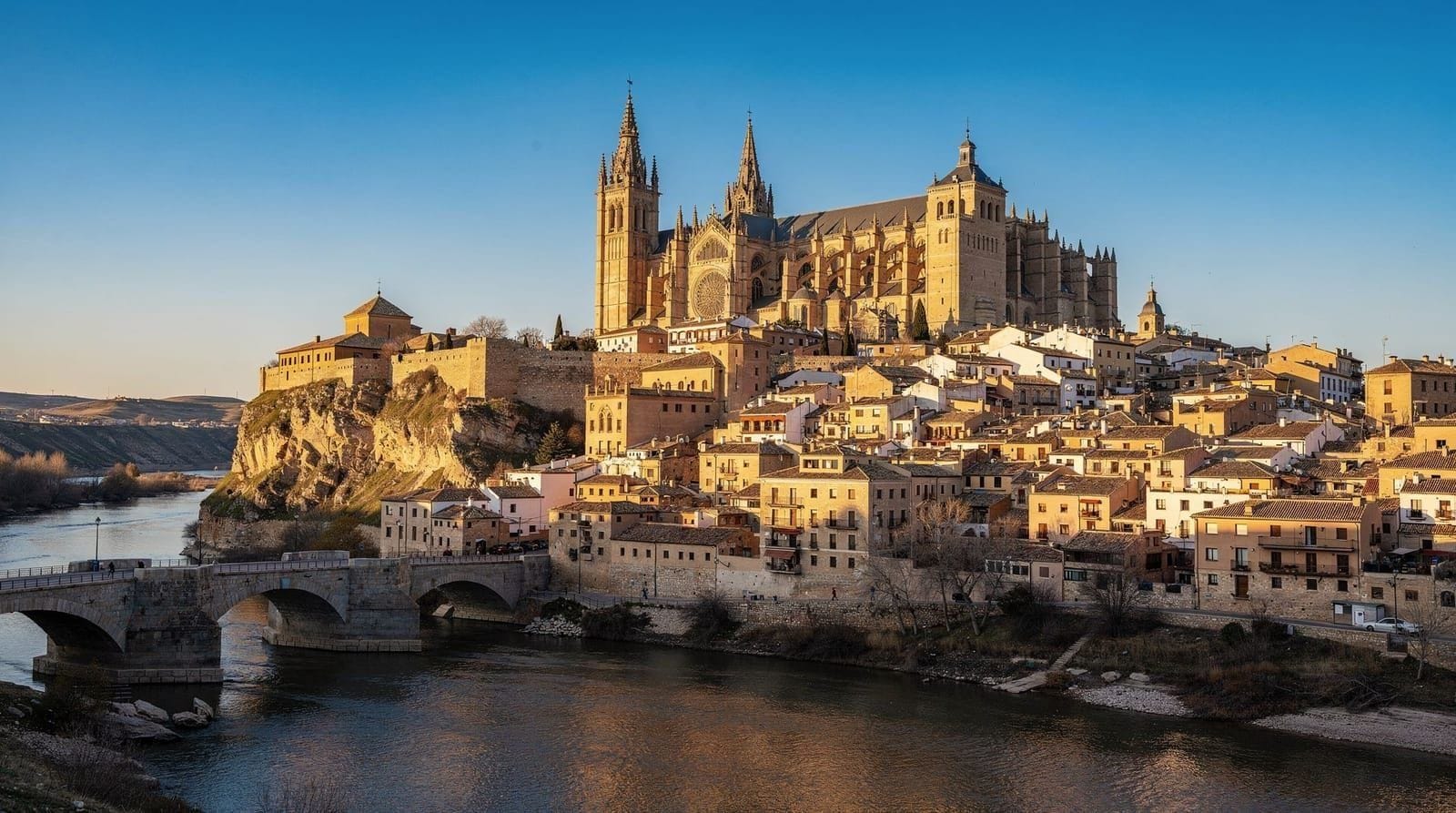
Ávila's medieval walls are the most complete in Spain — 88 towers, 2.5 km circuit. Birthplace of St Teresa. 1h30 by train from Madrid.
Segovia: Ávila Segovia Full Day
Quick facts
- Train from Madrid (Chamartín/Atocha)
- ~1 h 30 min (Avant/regional)
- Train fare
- ~€7–€16 each way
- UNESCO status
- Old town & churches outside the walls since 1985
- Population
- ~57,000
- Altitude
- 1,132 m — coldest provincial capital in Spain
- Wall circuit
- 2.5 km, 88 towers, 9 gates
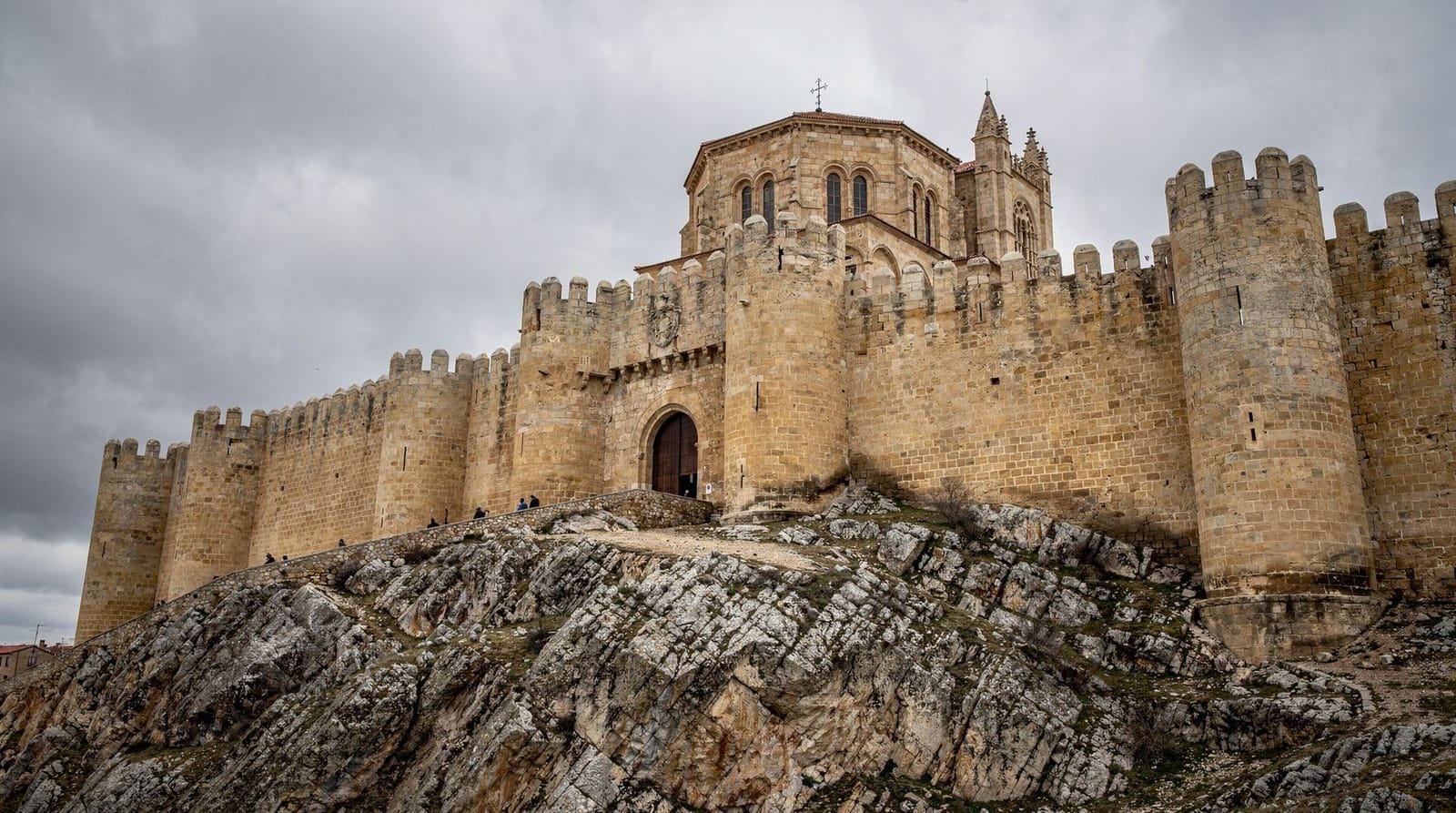
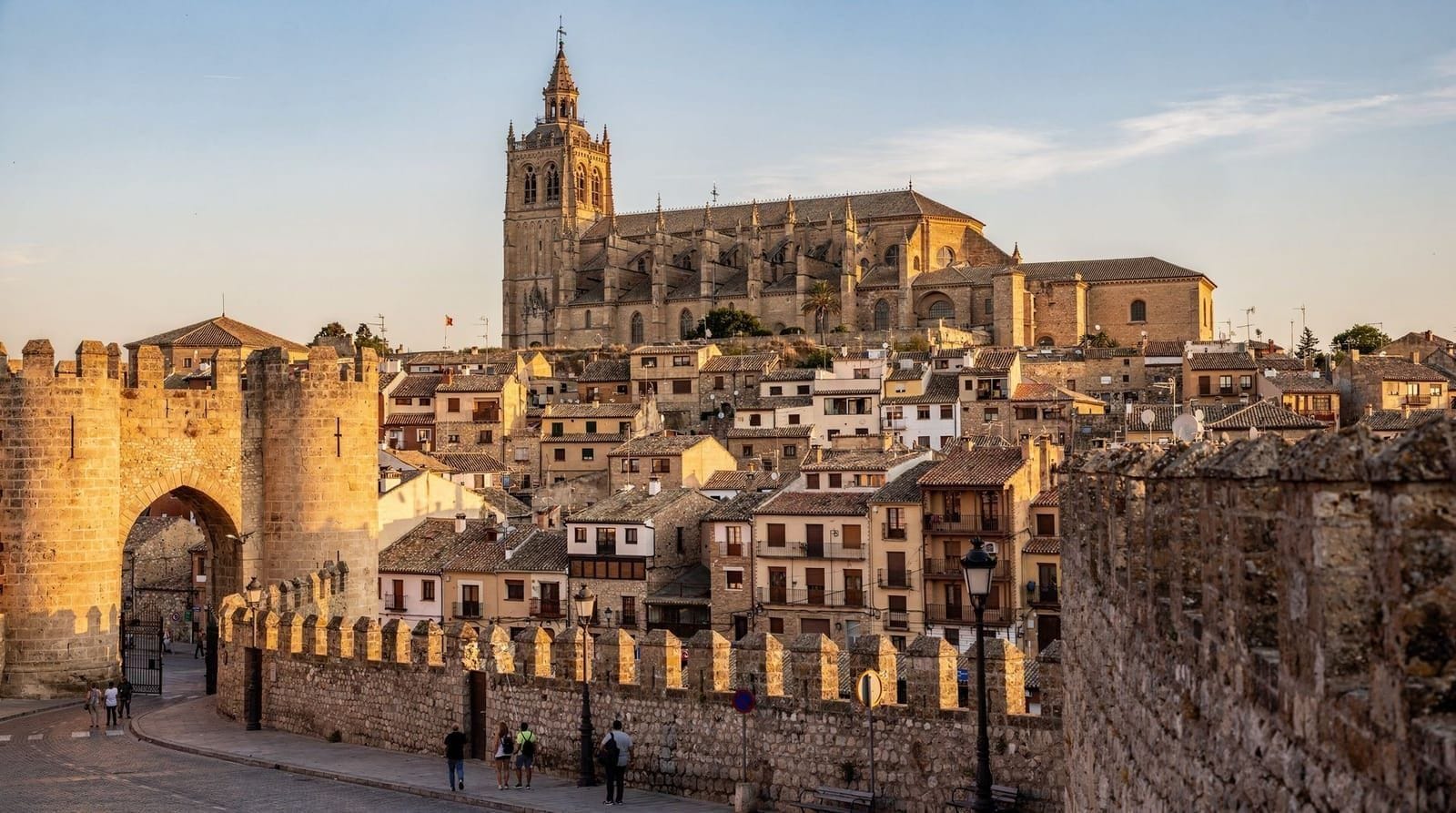
Ávila’s medieval walls are the most complete in Spain and arguably in all of Europe — 2.5 kilometres of 12th-century granite fortifications, 88 semicircular towers, 9 gates, and a walkable parapet circuit that gives a 360-degree view over the Castilian plateau. They were built between 1090 and 1099 under Alfonso VI of Castile as a defensive perimeter for a repopulated frontier city, and they have never been substantially breached. That is 900 years of structural integrity for a military fortification, and it shows.
Ávila sits at 1,132 metres above sea level — the highest provincial capital in Spain — on an exposed granite plateau northwest of Madrid. This altitude gives it a climate that is noticeably different from the capital: cold winters with regular snowfall, mild summers that make it attractive when Madrid bakes, and a quality of light that sharpens the walls against the sky with unusual clarity. It is also the birthplace of Santa Teresa de Ávila (1515–1582), the Carmelite mystic and Doctor of the Church whose convents, relics, and the museum built around her life add a distinctly spiritual layer to the city.
| Where | ~110 km northwest of Madrid, Castilla y León |
| Getting there | Avant/regional train ~1 h 30, ~€7–€16 |
| Wall walk ticket | €8 (€5 reduced) |
| Time needed | Half day (4–5 hours); full day combined with Segovia |
| Best time | April–June, September–October |
Getting to Ávila from Madrid
The Avant/regional train from Chamartín or Atocha reaches Ávila in approximately 1 hour 30 minutes; some services stop at intermediate stations (El Escorial, Robledo de Chavela) and take closer to 1 hour 45 minutes. The fare is €7–€16 each way. About 13 direct trains run per day; check Renfe for the current schedule. Ávila station is about 1 kilometre east of the old city walls — walkable in 15 minutes along a clear path.
By bus: Avanzabus operates services from Estación Sur (south bus terminal) in Madrid to Ávila in approximately 1 hour 30–45 minutes. Departures roughly every 1–2 hours.
Combining with Segovia: Ávila and Segovia are connected by regional bus (line 67, approximately 1 hour, roughly hourly). This makes it practical to do both cities in a single long day from Madrid: AVE to Segovia in the morning, lunch, afternoon bus to Ávila, return train to Madrid. See Ávila from Madrid for the detailed logistics.
Full-day trip from Madrid combining Ávila walls and Segovia AlcázarThe city walls
Ávila’s walls are the first sight and the main reason to come. The fortifications enclose an area of roughly 33 hectares — small enough to comprehend, large enough to walk around in 1.5–2 hours at a leisurely pace. Two sections of the wall parapet are accessible to visitors:
The northern section (accessed from Puerta del Alcázar or Puerta del Carmen) is the longer of the two and passes the Cathedral apse, which was incorporated into the wall itself — the only cathedral in Spain that forms part of city fortifications. The apse’s curved Romanesque architecture is visible both from inside the walls and from the base outside.
The southern section provides the best views over the surrounding plain and the Sierra de Gredos mountains beyond. Entry to the wall walk costs €8 (€5 reduced).
The Cuatro Postes viewpoint — four stone posts 1 km west of the city on the road to Salamanca — is the classic long-distance view of the walls against the Castilian sky, the kind of postcard image that appears on every Ávila photograph. No bus serves it; either walk or take a taxi (€6 round trip with a short wait). Best in the late afternoon when the light is golden.
The Cathedral
Ávila’s Cathedral began construction in the 12th century as a Romanesque church and was completed (mostly) in Gothic style by the 14th century. The apse’s sandstone alternates reddish (magma) and white (normal) blocks in horizontal bands — a decorative technique unique in Spain. The interior has a 16th-century carved alabaster choir screen, carved walnut stalls, and a museum displaying vestments, silverwork, and the tomb of Cardinal Alfonso de Madrigal (“El Tostado,” 1400–1455). Entry €10.
Santa Teresa de Ávila
Teresa de Cepeda y Ahumada was born in Ávila in 1515 and entered the Carmelite convent here in 1536. After years of interior life, visions, and spiritual struggle, she reformed the Carmelite order, founded seventeen convents across Castile, and wrote works on mystical theology that are still read as literature as much as theology. She was canonised in 1622, declared a Doctor of the Church (the first woman) in 1970, and is the patron saint of Spain alongside Santiago.
Her connection to Ávila is tangible rather than merely commemorative:
Convento de Santa Teresa (built on the site of her birthplace in the 17th century): the most visited site in Ávila. The church built over her actual birth room is accessible; the adjacent museum displays her personal relics — including one of her fingers, her walking stick, and handwritten manuscripts. Powerful for pilgrims; interesting for anyone who studies mysticism or Counter-Reformation history.
Convento de la Encarnación (outside the north wall, 10-minute walk): where Teresa lived as a Carmelite for 27 years and experienced the mystical experiences she describes in her Interior Castle. The museum within the convent includes the cell where she lived and letters in her own handwriting.
La Mística church complex: the major religious centre in the old city for Teresa-related devotion, completed in recent decades as a pilgrimage focal point. Open throughout the day; free entry to the church.
Where to eat in Ávila
Ávila’s food identity centres on chuletón de Ávila (a thick bone-in ribeye from local Avileña-Negra Ibérica cattle) and yemas de Ávila (egg-yolk pastries wrapped in tissue paper, the city’s signature sweet).
Las Cancelas (Calle Cruz Vieja 6): the most consistent mid-range restaurant in the old city. Chuletón from Avileña cattle costs €24–€32 for a 600g portion. Good wine list focused on Ribera del Duero.
Restaurante Mesón del Rastro (Plaza del Rastro 1): classic Castilian menu with good judiones (white beans from La Granja), roast lamb, and the local chuletón. Mains €16–€28.
El Molino de la Losa (Bajada de la Losa 12): outside the city walls beside a mill-stream, atmospheric lunch setting in summer. Their roast suckling lamb (cordero asado) is an alternative to the ubiquitous cochinillo of Segovia.
Yemas de Ávila: the standard for this egg-yolk confection is the recipe developed in Ávila’s convents in the 16th century. The most authentic source is the Convento de las Madres Carmelitas at Plaza de la Santa, where cloistered nuns sell them through a revolving hatch. Also available at most pastry shops; look for the handmade versions rather than supermarket packaging.
The churches outside the walls
Ávila’s full UNESCO inscription (1985) covers not just the walls but also the “group of churches outside the walls” — Romanesque churches built in the 12th–13th centuries in the suburbs beyond the fortifications. The most significant:
San Vicente (just outside Puerta de San Vicente, north side): the finest Romanesque church in Ávila, with carved portals depicting the martyrdom of St Vincent and his sisters, and a remarkable 12th-century carved tomb inside. Free entry, though a donation is expected.
San Pedro (Plaza de Santa Teresa, the main square outside the Puerta del Alcázar): a late-Romanesque rose window and elegant proportions. Usually open for morning mass and tourist visits.
Real Monasterio de Santo Tomás (10-minute walk south of the walls): a late 15th-century Dominican royal monastery funded by Ferdinand and Isabella. Contains the tomb of their only son, Prince Juan, who died at 19 in 1497, with an extraordinary alabaster effigy by Domenico Fancelli (the same sculptor who made the monument for the Catholic Monarchs in Granada). Also has an interesting Inquisition history — Torquemada, first Grand Inquisitor, is buried in the sacristy.
Day trip from Madrid to Ávila and Salamanca with monument entriesPractical information
Best time to visit: The altitude makes Ávila genuinely cold in winter (December–February temperatures regularly below 0°C at night, snowfall common). Spring and autumn are ideal. Summer days are pleasant and noticeably cooler than Madrid. Avoid January for practical access if you are sensitive to cold.
Crowds: Ávila receives far fewer tourists than Toledo or Segovia, even on weekends. Early morning tranquility is more or less guaranteed here, unlike the other day-trip cities.
Best photo window: The Cuatro Postes viewpoint in late afternoon for the walls in golden light. The walls themselves from the parapet walk are best in the morning before haze develops.
Time needed: The wall circuit takes 1.5–2 hours at leisure. Adding the Cathedral, Convento de Santa Teresa, and San Vicente church brings the total to 4–5 hours. An unhurried lunch adds another 1.5 hours. A standalone Ávila day trip is a lighter commitment than Toledo or Segovia and suits travellers who want one deep sight (the walls) rather than a full city programme.
The walls at different times of day
The Ávila walls change character completely depending on the time and light. The classic view — the entire perimeter silhouetted against the Castilian sky — is best from the Cuatro Postes viewpoint to the west, accessible on foot in 15 minutes or by taxi, and most photogenic in the late afternoon when the granite glows amber. The walls from the parapet walk are most interesting in the morning: the eastern sections give views over the rooftops and the plain stretching towards Madrid; the northern sections look into the cathedral precinct.
The walls in winter snow — which happens most winters at this altitude — are remarkable. The granular grey granite and the white snowfields create a stark monochrome that the summer tourist images don’t capture. The parapet walks can be slippery; the viewing platforms remain accessible in most conditions.
Night: the walls are illuminated at night, and the effect from the Cuatro Postes viewpoint (or from the Puerta del Alcázar area) is dramatic — a long line of lit stone against a black sky. Worth the short taxi ride after dinner.
Ávila and the Reconquista
Ávila’s walls are not just architectural heritage — they are a primary document of the Castilian frontier strategy in the late 11th century. When Alfonso VI reconquered Toledo in 1085 and expanded Castile southward, he faced the problem of holding the newly taken territory against Almoravid counterattacks from the south. The solution was a programme of rapid fortification and population resettlement (repoblación) of the depopulated frontier towns. Ávila received settlers from Castile, León, and the north; the walls were the infrastructure of that resettlement strategy.
The construction timeline (1090–1099, approximately nine years for 2.5 km of wall and 88 towers) implies a substantial workforce — estimates suggest 2,000–3,000 workers at peak — and the investment reflects the strategic value placed on holding the Duero-Tagus watershed against reconquest. The walls were designed by Raymond of Burgundy, who commanded the Castilian forces and married the future Queen Urraca.
The repoblación did not produce a homogeneous Christian city: the medieval population included Christian settlers, Mozarabs (Arabised Christians who had lived under Moorish rule), Jews, and Mudéjars (Muslims under Christian rule). The traces of this multicultural settlement are visible in the architecture — the Mudéjar decorative elements in some of the city’s churches, the synagogue-turned-convent, and the street patterns that predate the systematic Christian urban reorganisation.
How to fit Ávila into a Madrid trip
Ávila works best as the second stop in a two-city day (Segovia + Ávila is the classic pairing) or as a standalone half-day for travellers particularly interested in medieval military architecture or St Teresa. For a 5–7 day Madrid itinerary, see Madrid week with day trips which slots Ávila on day 4 or 5. The best day trips from Madrid guide ranks it third after Toledo and Segovia for first-time visitors, but places it first for travellers specifically drawn to military architecture.
For the Salamanca combination, the bus from Ávila to Salamanca (80 minutes, €6–€9) makes a two-city day possible but long. See Salamanca for details.
Planning around the rest of your Madrid days
Ávila fits best on a day when the capital’s big museums are already behind you. If you have not yet seen the Prado Museum or the Royal Palace, do those first and keep the walls for a day when you want open sky and a slower pace. The Madrid and Segovia itinerary shows how a Castilian day out slots between city days, and Ávila can be added to it as an extension.
For logistics on the Madrid side, the Atocha vs Chamartín guide explains which station suits your hotel, and the day trips by train page compares rail options for all the nearby cities. Travellers without a car will find the day trips without a car guide a useful companion, since Ávila is easy to reach without one.
If you are still deciding which walled city to prioritise, Toledo vs Segovia lays out the trade-offs for the two more popular options, and the Segovia day trip guide covers the city most visitors pair with Ávila. Those who want a gentler first excursion may prefer the El Escorial monastery, which sits on the train line toward Ávila and works as a lighter alternative.
A stay of a few days in the capital leaves room for this kind of excursion; the Madrid in 3 days itinerary and the Madrid 4–5 days itinerary both leave space for one day outside the city, and Ávila is a quiet choice for it. Travellers who like their history layered can also read about Habsburg and Bourbon history in Madrid before heading out to see an earlier, medieval chapter of Castile.
Ávila versus Segovia and Toledo for wall/fortification history
Ávila is a single-focus destination in a way that Segovia and Toledo are not, and it’s worth being clear-eyed about that before committing a full day to it:
| Destination | Main draw | Time needed | Crowds |
|---|---|---|---|
| Ávila | Complete medieval walls (single sight) | Half day | Light, even weekends |
| Segovia | Aqueduct + Alcázar + old town | Half to full day | Moderate to heavy |
| Toledo | Cathedral, El Greco, three-culture history | Full day | Heavy |
If military architecture and the walls themselves are the priority, Ávila is unmatched and the visit is efficient — most travellers are satisfied within 4–5 hours. If you want a broader city experience with more to see and do, Segovia or Toledo justify the longer journey. Combining Ávila with Segovia (see above) is the way to get both without sacrificing either.
Frequently asked questions about Ávila
What makes Ávila’s city walls special?
Ávila’s walls are the best-preserved complete medieval city walls in Spain and among the finest in Europe. Built between 1090–1099, 2.5 km long with 88 towers and 9 gates, they were constructed to defend a reconquered frontier city and have never been substantially breached. The Cathedral apse is physically incorporated into the wall — unique in Spain. Two sections of the parapet are walkable (ticket €8, €5 reduced).
Who was Santa Teresa of Ávila?
Teresa de Cepeda y Ahumada (1515–1582) was a Carmelite nun born in Ávila who reformed her religious order, founded 17 convents, and wrote theological and mystical works of enduring significance. She was canonised in 1622 and in 1970 became the first woman declared a Doctor of the Church. The convent on her birthplace (Convento de Santa Teresa) and the Convento de la Encarnación where she lived are the main pilgrim sites.
How long does the Ávila wall walk take?
The full wall circuit (both walkable sections) takes approximately 1.5–2 hours at a relaxed pace. The northern section passes the Cathedral apse and gives views into the old city; the southern section overlooks the plains and mountains. Individual sections are accessible from multiple gates.
Is Ávila cold?
Yes. At 1,132 m, Ávila is Spain’s highest provincial capital and its coldest. Winter temperatures regularly drop below 0°C at night with snowfall. Spring and autumn (April–June, September–October) are ideal. Summers are mild — noticeably cooler than Madrid — making it a practical summer excursion. Pack a layer even in July.
Can I combine Ávila and Segovia in one day?
Yes, with planning. Take the AVE to Segovia in the morning (28 minutes from Chamartín), visit the aqueduct and Alcázar, have lunch, take the afternoon regional bus to Ávila (about 1 hour), walk the walls, and return by evening train to Madrid. The combined day requires 10–11 hours and some advance schedule checking. The tour Ávila walls and Segovia full-day tour packages this with transport.
Is one day enough for Ávila?
Yes, and for most travellers more than enough — the wall circuit, Cathedral, and Convento de Santa Teresa together take 4–5 hours, which is why Ávila is usually paired with Segovia rather than visited alone for a full day. Travellers with a specific interest in St Teresa or in Reconquista-era military architecture may want to linger longer, in which case a standalone day is entirely justified.
Is Ávila suitable for a rainy or cold day?
Reasonably, yes — the Cathedral, the Convento de Santa Teresa museum, and the Real Monasterio de Santo Tomás are all indoor and unaffected by weather. The wall walk itself is outdoor and exposed, so a rainy day reduces that portion of the visit; the granite parapet can also be slippery in wet or icy conditions, so take care in winter.
Top experiences
Bookable activities with verified prices and instant confirmation on GetYourGuide.