Segovia and Ávila day trip from Madrid — honest review 2026
Segovia: Ávila Segovia Full Day
Two cities, one day: is the combination worth it?
The combination of Segovia and Ávila in a single day is one of the classic Madrid day-trip routes — popular enough that half a dozen operators run it as a standard itinerary, and popular for good reason: both cities are UNESCO World Heritage Sites, both lie within 130 km of Madrid, and together they provide a compressed survey of medieval Castile’s architectural range. Segovia is Roman engineering plus Romanesque-Gothic refinement; Ávila is purely medieval military, austere and uncompromised.
The trade-off is pace. A combined day gives you highlights of both cities without depth in either. If you are visiting Madrid for a week and have time to allocate two day-trip days, do Segovia and Ávila separately. If you have one day-trip slot available and cannot choose between them, the combination makes sense. The Ávila and Segovia full-day trip from Madrid runs this standard combined format with a licensed guide for both cities.
Segovia: what you are looking at
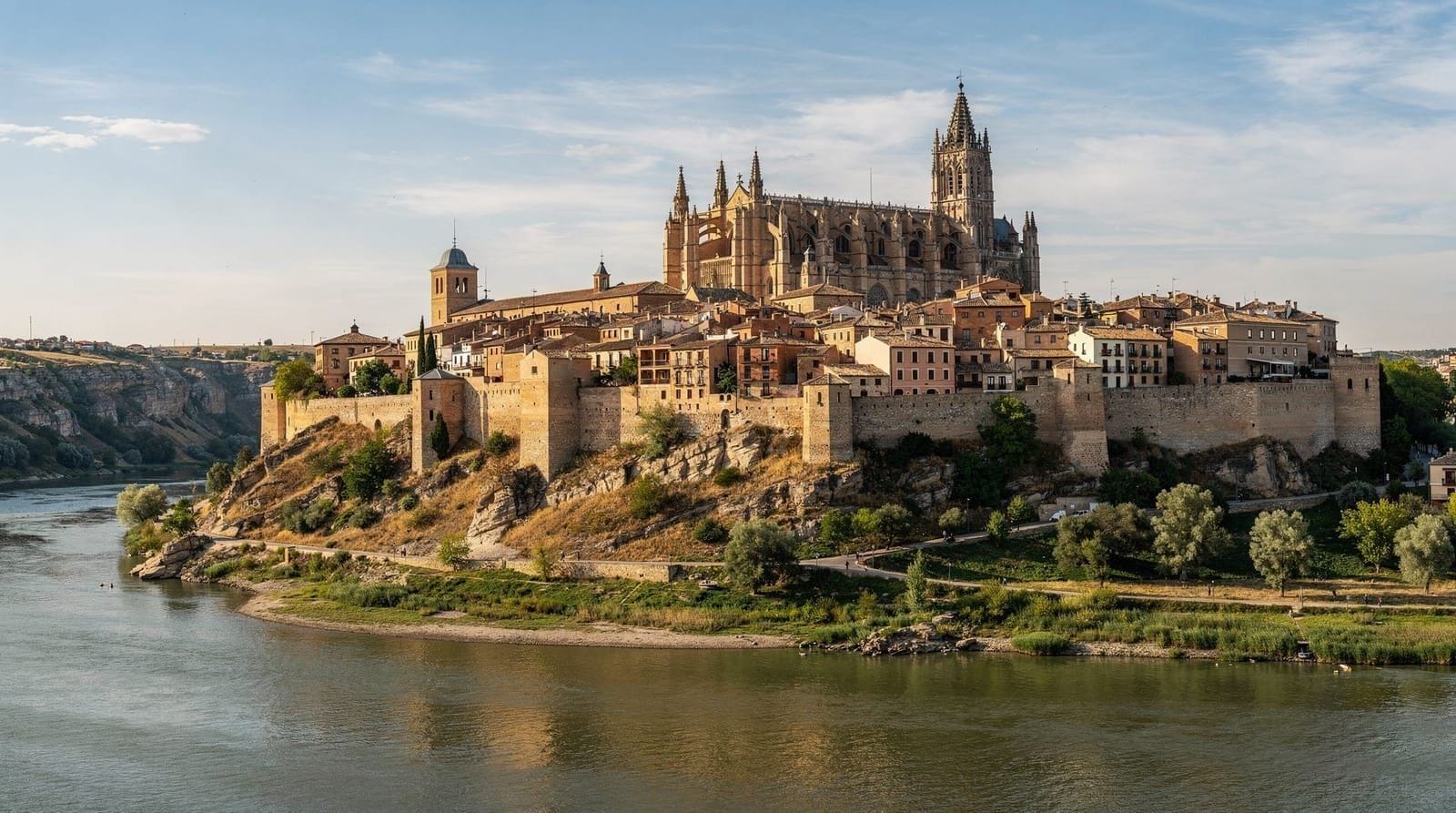
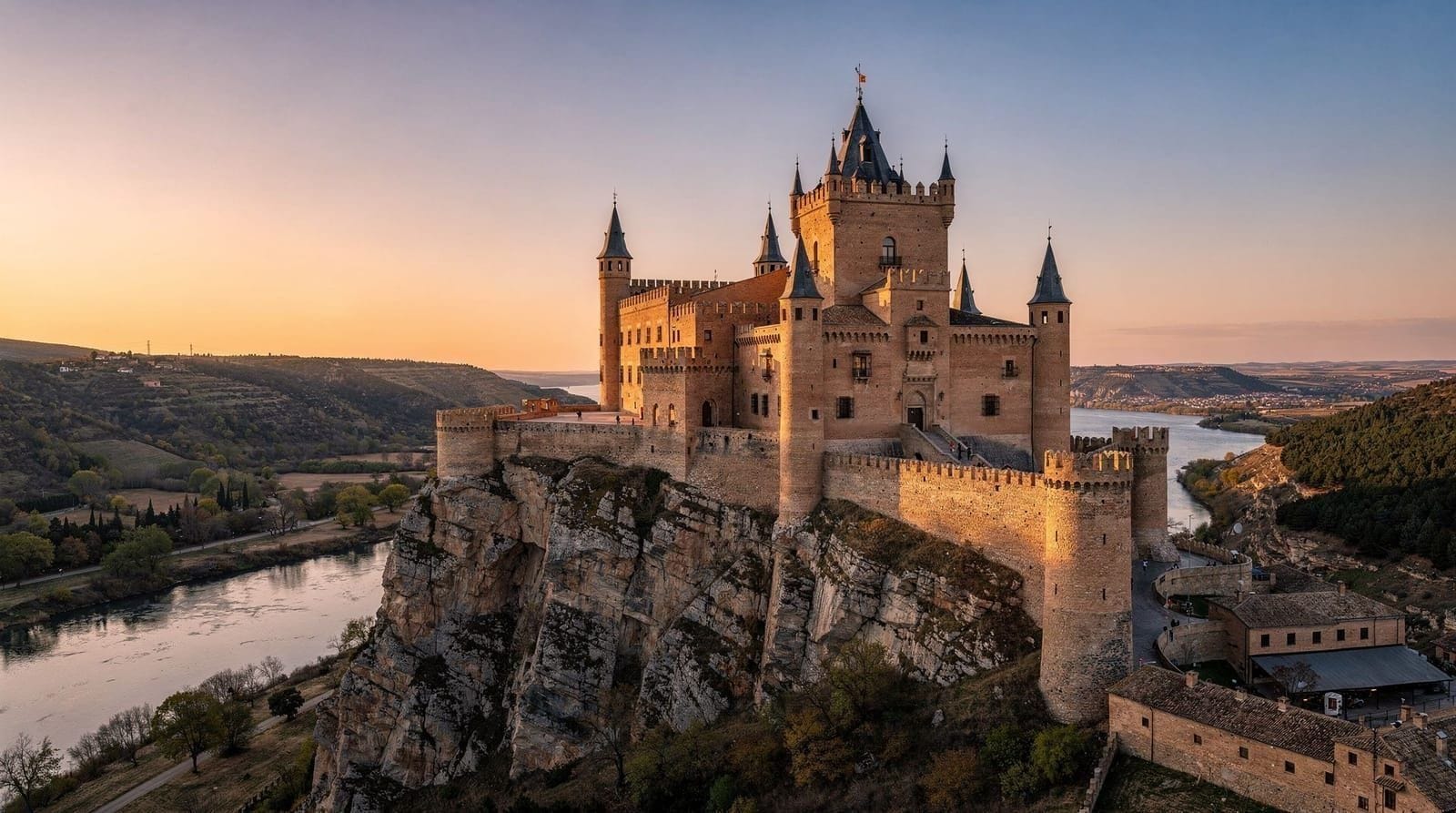
Segovia’s old city sits on a narrow spit of rock between two rivers, terminating at the western point in the Alcázar — a fairy-tale turreted castle that was one of the inspirations for Walt Disney’s Sleeping Beauty castle. The city became a favourite residence of the Castilian monarchs in the 15th century (Isabel I was proclaimed Queen of Castile in Segovia in 1474) and its architecture reflects this royal patronage.
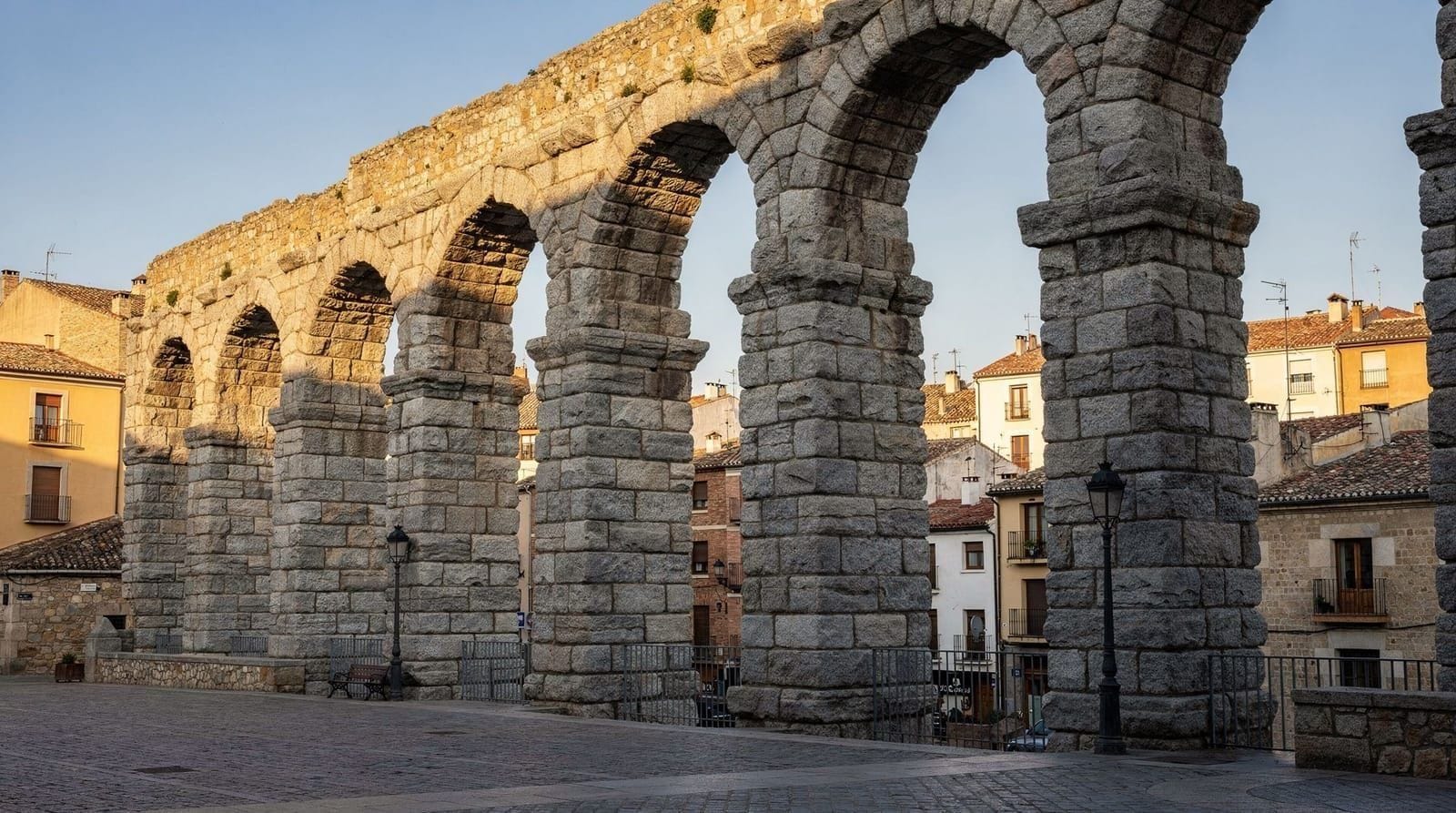
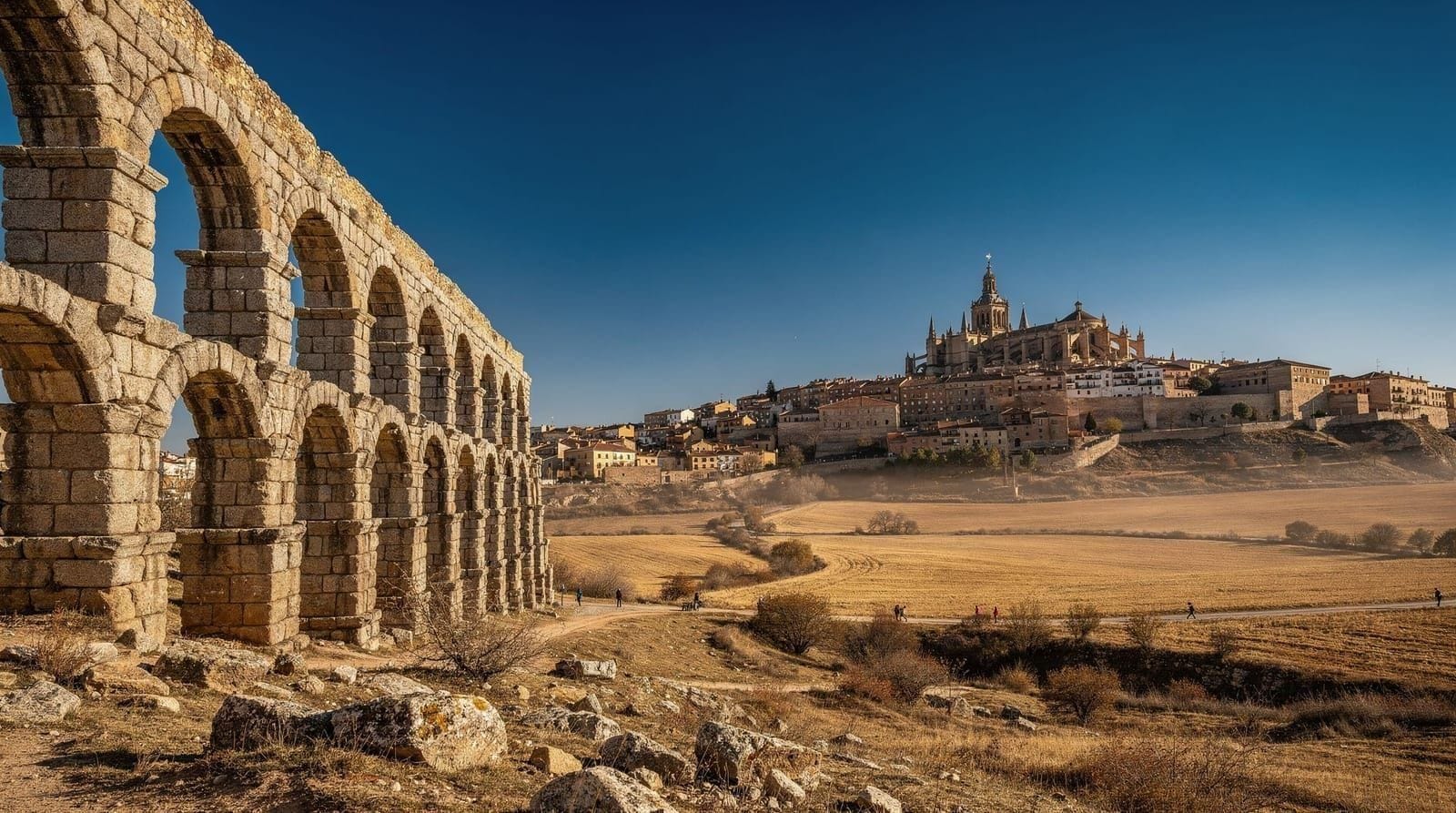
The Roman aqueduct is the first sight on entering the city from the south. The surviving above-ground section — 818 metres, 163 arches in two tiers of undressed granite — arrives into the Plaza del Azoguejo below the old town. No mortar was used; the blocks are held in position by their own weight and precision of fitting. The aqueduct was built to carry water from the Sierra de Guadarrama foothills and remained operational until the 19th century. Stand underneath it: the engineering scale is difficult to process from photographs, easier at full scale.
The Alcázar sits at the western tip of the rock spit above the confluence of the Eresma and Clamores rivers. The building was a Moorish fort, then a Castilian royal palace, then a military academy, now a museum. The exterior — a turreted ship prow of turrets and battlements projecting above the river gorge — is more striking than the interior, which has been heavily restored. The views from the keep (extra entry fee, steep stair climb) across the Castilian plateau are panoramic; the views from the terrace at the castle base are also excellent and free.
The Cathedral of Segovia is the last Gothic cathedral built in Spain (completed 1577, more than a century after construction began) and is sometimes called the “Lady of Cathedrals” — elegant rather than austere, built in warm golden limestone. The cloister survived from an earlier cathedral and was moved stone by stone to the new building.
The Segovia history and charm full-day tour focuses solely on Segovia with more time for the aqueduct, Alcázar, and Jewish quarter — the right option if you decide to prioritise depth over breadth.
Ávila: the walled city
Ávila is 110 km northwest of Madrid, at 1,130 metres altitude — the highest provincial capital in Spain. The altitude, the grey granite construction, and the almost complete preservation of the 11th-century wall give the city a colour and feel distinctly different from Segovia’s golden limestone warmth. Ávila is cool, grey-blue, and uncompromising.
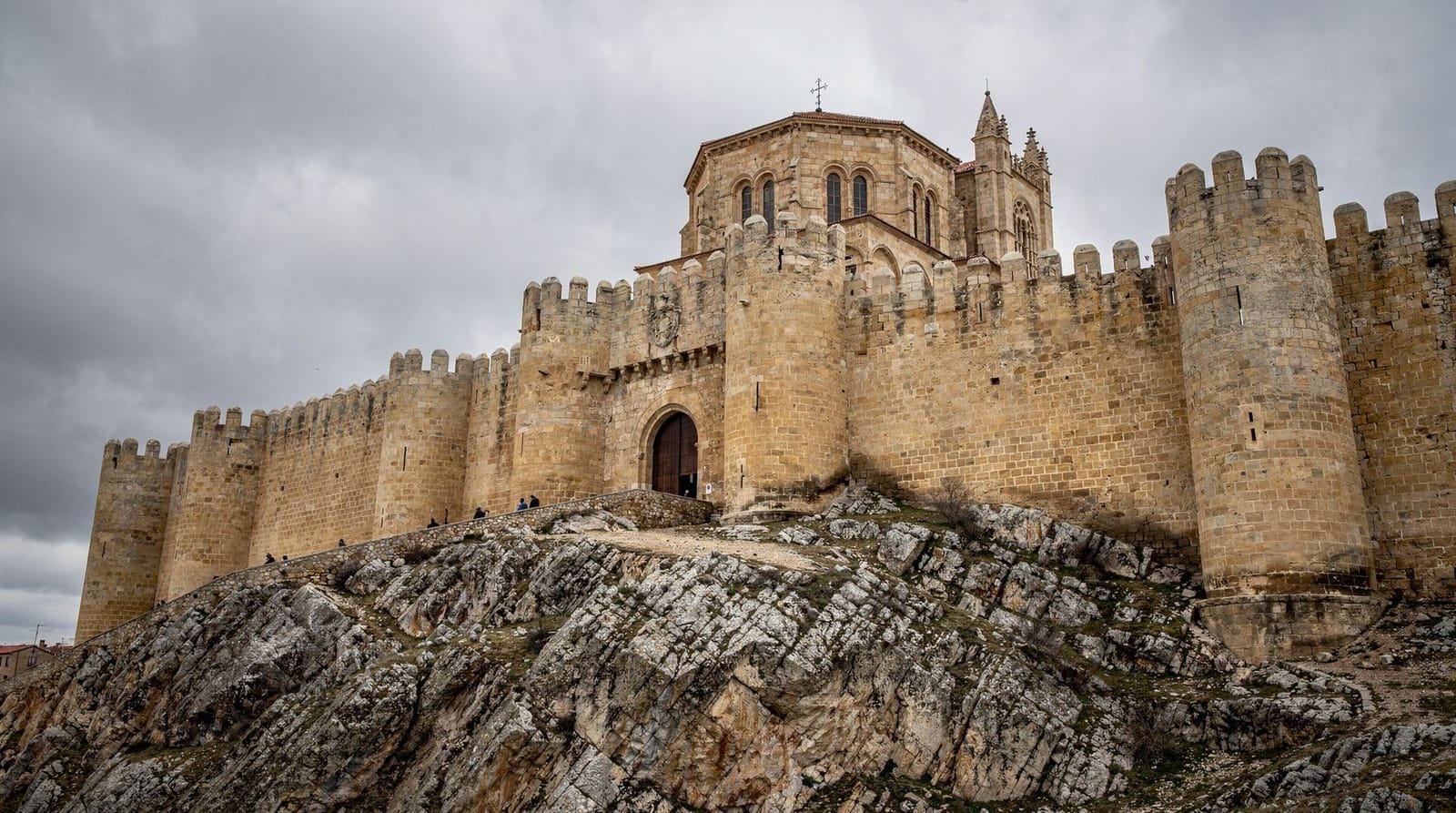
The medieval wall (Muralla de Ávila) is the defining sight. Begun around 1090 under the direction of a Burgundian master mason brought by Alfonso VI, the wall encloses the entire historic centre in a rectangle approximately 900 metres × 400 metres. It survives to nearly its original height (up to 12 metres) along most of its circuit, with 88 cylindrical towers and 9 gates. The wall walks (northern and southern sections accessible with a €6 combined ticket) are the most direct way to understand medieval military architecture in Spain. The view from the top at dawn or dusk — the Castilian plateau extending flat to every horizon, the wall continuing in both directions — is among the most medieval-feeling urban panoramas in Europe.
The Cathedral of Ávila is partly embedded into the wall itself — the apse forms one of the wall’s cylindrical towers, a military-ecclesiastical fusion unique in Spain. The interior is austere Romanesque-Gothic, far less decorated than Segovia or Toledo’s cathedrals. The retablo (altarpiece) by Pedro Berruguete and Juan de Borgoña is the main art-historical interest.
Santa Teresa heritage: Ávila was the birthplace of Saint Teresa of Jesus (1515–1582), one of the most significant figures in the history of Christian mysticism and the Carmelite reform. The city has a concentration of Teresian sites — the Convent of Santa Teresa built over her birthplace, the Convent of the Encarnación where she lived for 27 years, and the mystical grotto in the Cuatro Postes viewpoint area — that attract a substantial pilgrimage-oriented visitor population alongside general tourism.
Combined ticket options
The Segovia and Ávila combined tour with Alcázar and wall tickets includes entry to both the Segovia Alcázar and the Ávila wall walks within the tour price — the most cost-effective format if you plan to enter both.
Individual entry costs: Segovia Alcázar €10; Ávila wall walk €8 (€5 reduced); Segovia Cathedral €4.
DIY vs guided: the honest comparison
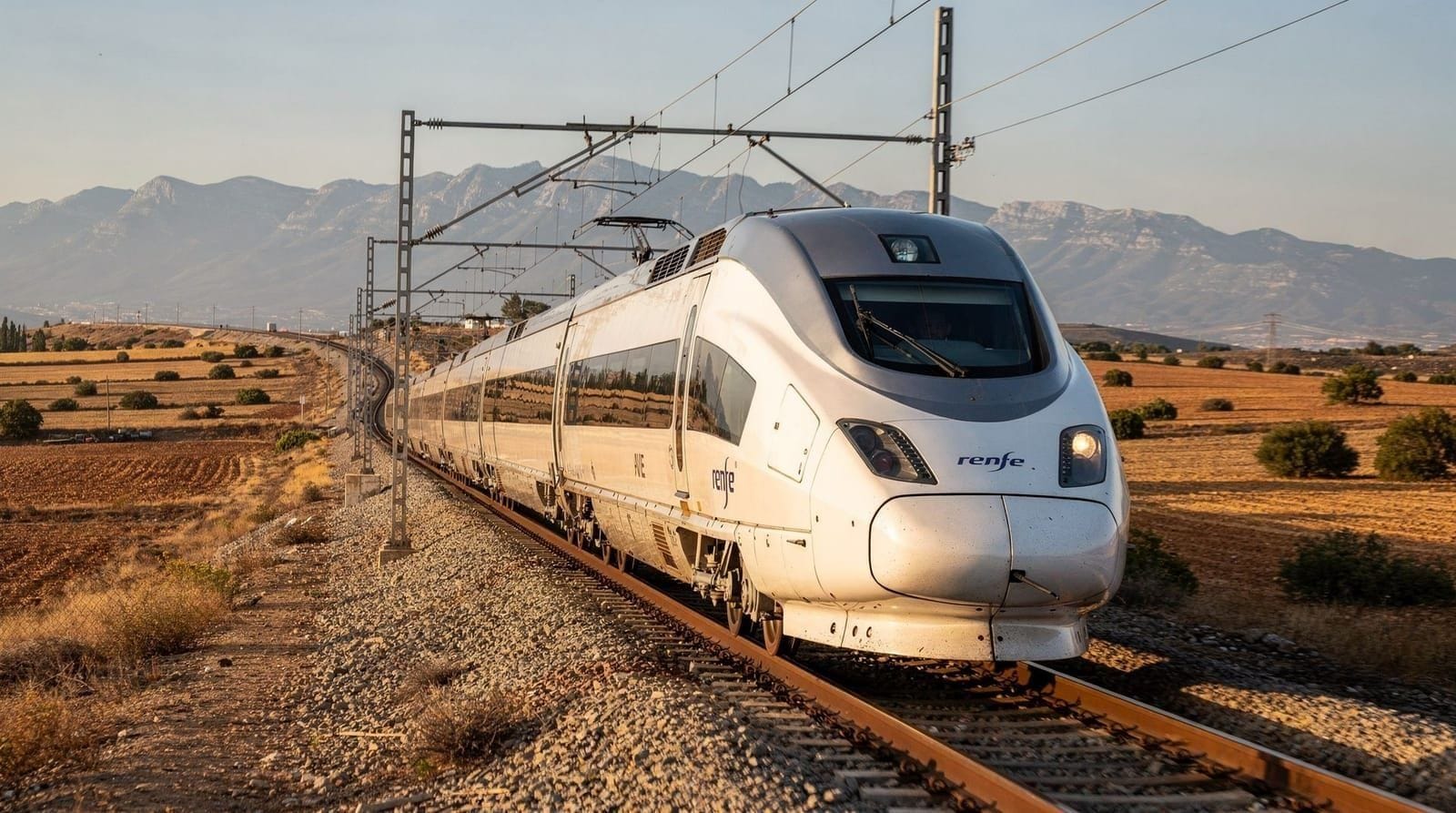
By independent train + bus, you can do Segovia alone in a very efficient day from Madrid (27 minutes by AVE, direct service; fares vary, see the Renfe website). Adding Ávila by bus between the two cities is logistically complex and reduces time in each city substantially. The guided coach format handles the Segovia–Ávila transfer more efficiently than public transport and the licensed guide at both sites adds context that justifies the price premium over independent travel.
For Segovia alone, the train is so fast and cheap that independent travel is hard to argue against. For the combination, the guided tour is the sensible choice.
Practical details
Combined tour duration: 10–12 hours (depart Madrid 08:00–09:00, return 19:00–20:30).
Typical format: Ávila first (cooler and higher altitude, better in morning); Segovia in the afternoon.
Altitude note: Both Segovia (1,001m) and Ávila (1,130m) are significantly cooler than Madrid. In autumn and spring, a light jacket is needed. In winter, both cities can be genuinely cold — check forecast before departure.
Segovia cochinillo: If you want to eat cochinillo asado in Segovia on a guided tour, check whether the tour includes a lunch stop. Most do, typically at a restaurant within the historic centre with a set menú.
See /guides/segovia-from-madrid/ and /guides/avila-from-madrid/ for detailed independent-visit guides to each city, and /guides/toledo-vs-segovia/ for a direct comparison to help choose between Castile’s most visited day trips.
Verdict
The Segovia-Ávila combination is a genuinely rewarding day out of Madrid — two UNESCO cities, two very different characters, one efficiently structured itinerary. Segovia’s aqueduct and Alcázar are visually immediate; Ávila’s wall and medieval austerity reward thoughtfulness more than spectacle. The guided format earns its keep at both sites: the context transforms both cities from impressive monuments into legible pieces of history. If you have two day-trip days to allocate, separate the visits. If you have one, this is a better use of it than rushing a single city.
Compare top tours
Frequently asked questions about Segovia
Can you realistically do Segovia and Ávila in one day?
With a guided day trip that departs Madrid at 08:00–09:00, yes — but it is a full and slightly rushed day. The typical format gives you 3–3.5 hours in Ávila (walls and cathedral) and 2.5–3 hours in Segovia (aqueduct and Alcázar), with travel between them adding about 1 hour by coach. You see the highlights of both cities but cannot linger. Visitors who want more depth should choose one city per day — both reward a slower visit. The combined day trip is best for visitors with limited time who want to compare the two cities or check both off a longer Castile itinerary.Is Segovia or Ávila better for a day trip from Madrid?
They are genuinely different experiences. Segovia is more visually dramatic — the Roman aqueduct arriving into the city from the east is one of the most striking pieces of ancient engineering in Spain — and has more to do within the historic centre (aqueduct, Alcázar, cathedral, Jewish quarter). Ávila is the more austere and contemplative of the two: the complete medieval wall circuit (2.5 km, largely intact from the 11th century) is its centrepiece, and the city's association with Saint Teresa of Ávila makes it a pilgrimage destination with a different character. If you can only choose one, Segovia is the more visually rewarding option; Ávila is more interesting if medieval military architecture or religious history is your focus.How long is the journey from Madrid to each city?
To Segovia by AVE high-speed train (Chamartín station): 27 minutes, fares vary (see the Renfe website). To Ávila by regional train from Atocha or Chamartín: approximately 1 hour 30 minutes, around €7–€16 each way. To both by guided coach: typical departure 08:00–09:00, with Ávila first (1.5 hours from Madrid, 1 hour from Ávila to Segovia). The train to Segovia is exceptionally fast and makes it the easiest Castilian day trip from Madrid independently; Ávila by train is slower but manageable.What is the Roman aqueduct of Segovia?
The Acueducto de Segovia is a 1st or 2nd century AD Roman aqueduct that carried water from the Fuenfría mountain stream 17 km to the city. The surviving section above ground runs 818 metres and reaches 29 metres at its highest point — 163 arches in two tiers, built without mortar, using interlocking granite blocks. It was in operational use until the late 19th century. Entry to view the aqueduct is free (you walk directly around and underneath it); it is visible immediately on arriving in the city.What is included in Ávila's medieval wall circuit?
The Muralla de Ávila is an 11th–12th century Romanesque wall encircling the old city, approximately 2.5 km in circumference with 88 towers and 9 gates. The wall walk is open to visitors in two sections (the northern section and the southern section) on a single ticket of €8 (€5 reduced); the full circuit walk takes 1.5–2 hours. The views from the top of the wall across the Castilian meseta are among the most characteristically medieval townscape panoramas in Spain — flat, treeless plateau to every horizon, the walled city sitting on it like a stage set.What is the cochifrito and where should I eat in Segovia?
Segovia is famous for cochinillo asado (roast suckling pig) — this is the city's culinary signature and it has been cooked here since the Roman period. The traditional method involves slow-roasting a very young pig (under 21 days old) until the skin crisps to glass; the pig is traditionally served carved with the edge of a plate rather than a knife to demonstrate its tenderness. Mesón de Cándido at the aqueduct base is the most famous restaurant (prices reflect it: €35–€45 per person for a full meal); Restaurante José María near the cathedral is equally respected and slightly less touristy. Budget lunch options (menú del día with albóndigas or judiones de La Granja) are available one block off the tourist circuit.