Chinchón
Chinchón's elliptical Plaza Mayor, DOP anís liqueur, and Castilian roast lamb make it Madrid's best village day trip. 50 min by bus from Conde de Casal.
Aranjuez: Aranjuez Chinchón Private 8h
Quick facts
- Bus from Madrid (Conde de Casal)
- ~50 min (Line 337)
- Bus fare
- varies (check the carrier's website)
- Population
- ~5,500
- UNESCO recognition
- Historic ensemble of national interest
- Signature product
- Chinchón anís (anise liqueur, DOP)
- Plaza Mayor
- Elliptical 15th century, tiered wooden balconies
Chinchón is the village that most travel writers call “the most beautiful plaza mayor in Spain” — a claim they make, hedged with appropriate qualification, because the debate about which Spanish plaza mayor is finest is irresolvable, but also because Chinchón’s case is genuinely strong. The plaza is not rectangular but elliptical, with three storeys of wooden-railed balconies forming a continuous curved arcade, built across different centuries by the noble and merchant families who owned the buildings overlooking it. It was used as a bullring for centuries (bullfights still take place here in August), as a film set, and as a model for stage-set designers. Surrounded by the scent of anís from the distillery at the village’s edge, it is one of those places that photographs can’t quite capture — the smell and the scale together are the experience.
The village sits on the southern plains 50 km south of Madrid, accessible by a direct bus in under an hour. It produces Chinchón anís — the anise liqueur made in the village under a Denomination of Origin that limits production to this specific location — and sustains a cluster of Castilian restaurants that have been drawing Madrid day-trippers for decades. It is exactly the right size for a half-day: two hours in the village and on the plaza, a long lunch, a bottle of anís to take home, and the bus back.
| Where | 50 km south of Madrid |
| Getting there | Bus Line 337 from Conde de Casal, ~50–60 min |
| Signature product | Chinchón anís (dulce or seco), €8–€15/bottle |
| Time needed | Half day (3–4 hours) |
| Best for | Village plaza, Castilian lunch, anís tasting |
Getting to Chinchón from Madrid
By bus: Line 337 (operated by Avanzabus) from Conde de Casal metro station (line 6) runs to Chinchón in approximately 50–60 minutes, with stops at intermediate villages. Departures roughly every 30–45 minutes on weekdays, somewhat less frequent at weekends — check avanzabus.com for current times. The bus stops on the main road below the village; a 5-minute walk uphill reaches the plaza.
By car: the A-3 motorway south, then the M-311 to Chinchón, approximately 45 minutes from central Madrid. Parking available on the ring road below the village (free).
Combining with Aranjuez: Aranjuez (Royal Palace and gardens) is 11 km from Chinchón by the M-305. With a car, combining the two is practical and gives a full day (Aranjuez morning, Chinchón lunch and afternoon). See Aranjuez for more.
Private tour from Madrid combining Aranjuez and Chinchón in 8 hoursThe Plaza Mayor
The Plaza Mayor of Chinchón dates from the 15th and 16th centuries, built by successive generations of landowners around an older market square. What makes it unusual is the combination of the elliptical plan — rather than the rectangular grid typical of Castilian plazas — and the three storeys of continuous wooden balconied galleries. Each section of the gallery was built independently by the owner of the corresponding building, producing slight variations in detail (column spacing, railing design, width) that give the whole an organic quality despite its visual cohesion.
The plaza has been a venue for bullfighting since the 17th century. Two bullfights take place here each August during the village festival, with spectators filling the wooden balconies as they do at permanent bullrings. The combination of tiered wooden seating and the oval ground plan makes it aesthetically one of the best bullring settings in Spain, whether you approve of the corrida or not.
The square was used as a filming location for the 1988 film version of Goya en Burdeos and has appeared in numerous Spanish productions. A plaque on one of the buildings commemorates the filming.
The surrounding buildings include the Iglesia de la Asunción (15th–16th century), whose apse occupies part of the plaza’s eastern side. The church contains a painting by Francisco Goya — The Assumption of the Virgin (1783) — one of his early works painted when he was court painter to the Count of Chinchón. Entry to the church is usually free during opening hours.
Chinchón anís
Chinchón anís is a clear anise liqueur produced in the village by the Sociedad Alcoholera de Chinchón, a cooperative distillery operating since the 18th century under the current form (though anise distillation in the area goes back to the 16th century). The DOP (Denomination of Origin) Anís de Chinchón protects the name; only anís produced in Chinchón using the local distillation method can be called Chinchón anís.
The product comes in two main versions: dulce (sweet, 35% ABV, clear, slightly syrupy) and seco (dry, 45% ABV, slightly more pungent). A third version, extra-seco (very dry), is less common. The standard practice in Chinchón restaurants is to end a meal with a small glass of anís dulce or to use it in the local cocktail: resolí (anís mixed with coffee, citrus peel, and sometimes cinnamon, served chilled).
The distillery shop on the outskirts of the village sells the full range and allows tastings. Standard bottle prices: €8–€15 for 70 cl. The shop is the cheapest source; the village restaurants and souvenir shops charge more.
Where to eat in Chinchón
Chinchón has more serious restaurants per capita than almost any village of its size in the region. The combination of Madrid day-trippers and the village’s food reputation has created a concentrated cluster of Castilian kitchens within 200 metres of the plaza.
Restaurante Cuevas del Vino (Calle Benito Hortelano 13): the most celebrated restaurant in Chinchón, installed in a cave cellar beneath the village. Lamb (lechazo asado), suckling pig, garlic soup (sopa castellana), and roasted vegetables from the local market garden. The wine cellar is serious — La Mancha and Ribera del Duero focused. Mains €20–€35. Book in advance; the cave atmosphere alone justifies the reservation.
Mesón de la Virreina (Plaza Mayor 28): directly overlooking the plaza, reliable mid-range Castilian cooking. Good chuletillas (lamb cutlets), tortilla española, local cheese. Mains €14–€22. The plaza-facing terrace tables are premium; book for weekend lunch.
Restaurante El Arco (Plaza Mayor 35): another plaza-view option, good for a light lunch. The menu del día (€14–€16) is good value for the location.
Sopa de ajo (garlic soup): Chinchón’s garlic soup is locally regarded as among the best in the region. The classic preparation is water, olive oil, garlic, paprika, stale bread, and a poached egg — humble ingredients, but in the right kitchen (with good olive oil and proper timing) genuinely good. Order it as a starter at any of the main restaurants.
Day trip from Madrid to Chinchón, Aranjuez, and ToledoThe Castle of the Counts of Chinchón
Above the village stands the ruins of the castle of the Counts of Chinchón — a 15th-century fortified residence now partially converted into a Parador (state-run hotel). The castle courtyard and parts of the exterior are viewable from the approach path; the Parador restaurant is open to non-guests and offers good regional cuisine in the castle setting (mains €22–€35, significantly more atmospheric than the village restaurants). The views from the castle over the surrounding plains and the village rooflines are the best elevated perspective on Chinchón.
Practical information
Timing: weekend lunchtimes in Chinchón are busy with Madrid day-trippers. The plaza restaurants fill by 14:00 on Saturdays. Either arrive early (10:30–11:00, before the lunch crowd) or book the restaurant in advance. The village empties out by 17:00 as people return to Madrid.
What to buy: a bottle of Chinchón anís (dulce or seco), local garlic (ajo de Chinchón, also under a protected designation), and if you find it, local olive oil from the area’s small olive groves.
How to fit Chinchón into a Madrid trip: Chinchón works best as a half-day add-on to a longer Madrid stay, combined with either Aranjuez (11 km away) or Toledo (55 km further south). For a Madrid 3-day itinerary, Chinchón is a good option for the afternoon of day 3 before an evening return to Madrid. See best day trips from Madrid and the Chinchón from Madrid guide for more detail.
Chinchón versus other village day trips
Chinchón is one of several small-village options near Madrid, and each has a slightly different appeal:
| Village | Main draw | Journey time | Best paired with |
|---|---|---|---|
| Chinchón | Elliptical Plaza Mayor, anís | ~50–60 min bus | Aranjuez |
| Alcalá de Henares | UNESCO university city | ~35–45 min train | Standalone half-day |
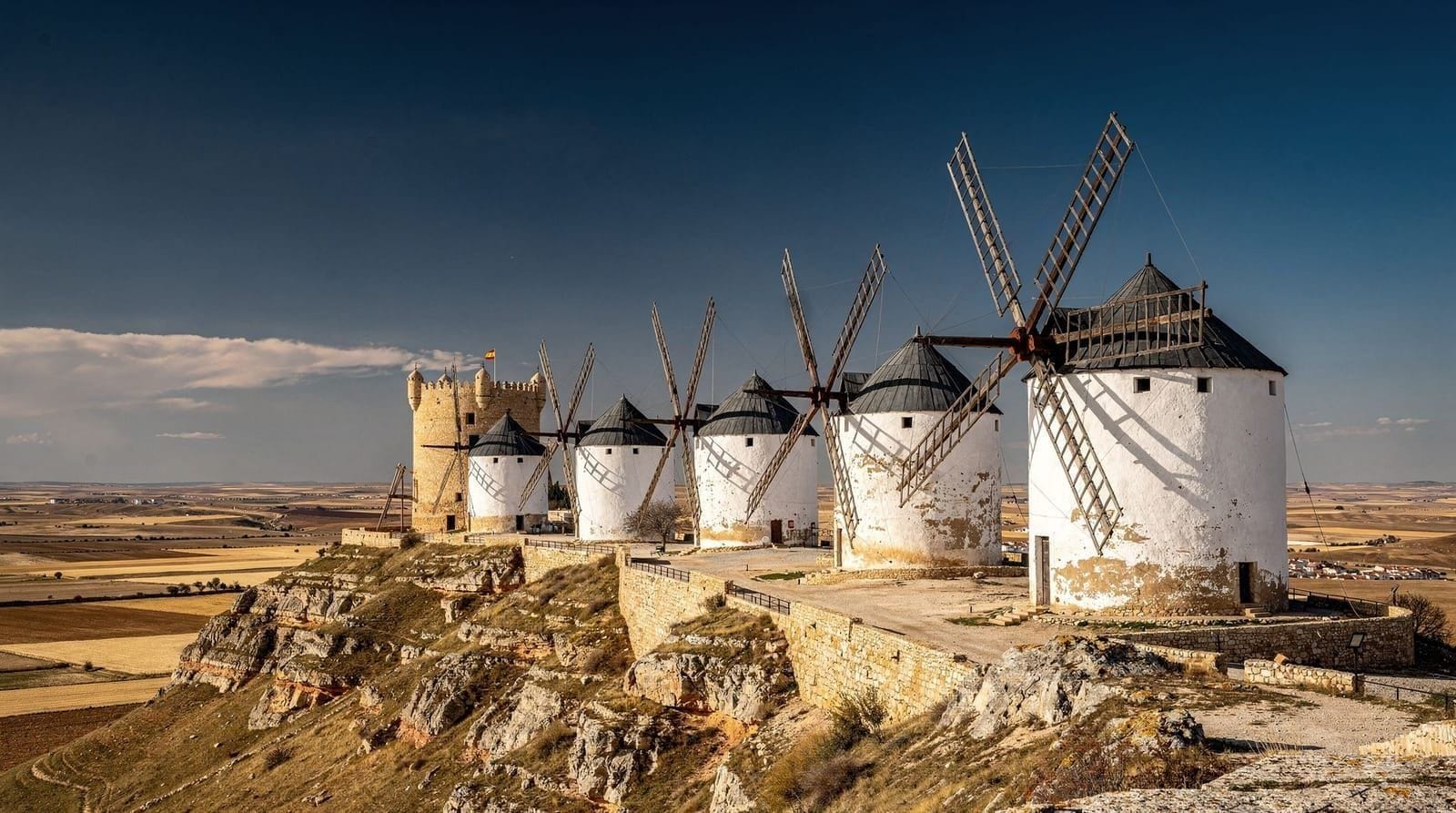
| Campo de Criptana / Consuegra | Don Quixote windmills | ~1 h 30 (car) | Toledo |
| Manzanares el Real | Castle and reservoir | ~1 hour (car/bus) | Sierra de Guadarrama |
Among these, Chinchón has the strongest single “wow” moment — the plaza itself — packed into the shortest visit, which is why it remains the most-booked village day trip from Madrid despite being one of the smaller settlements on the list.
Building a bigger day around the village
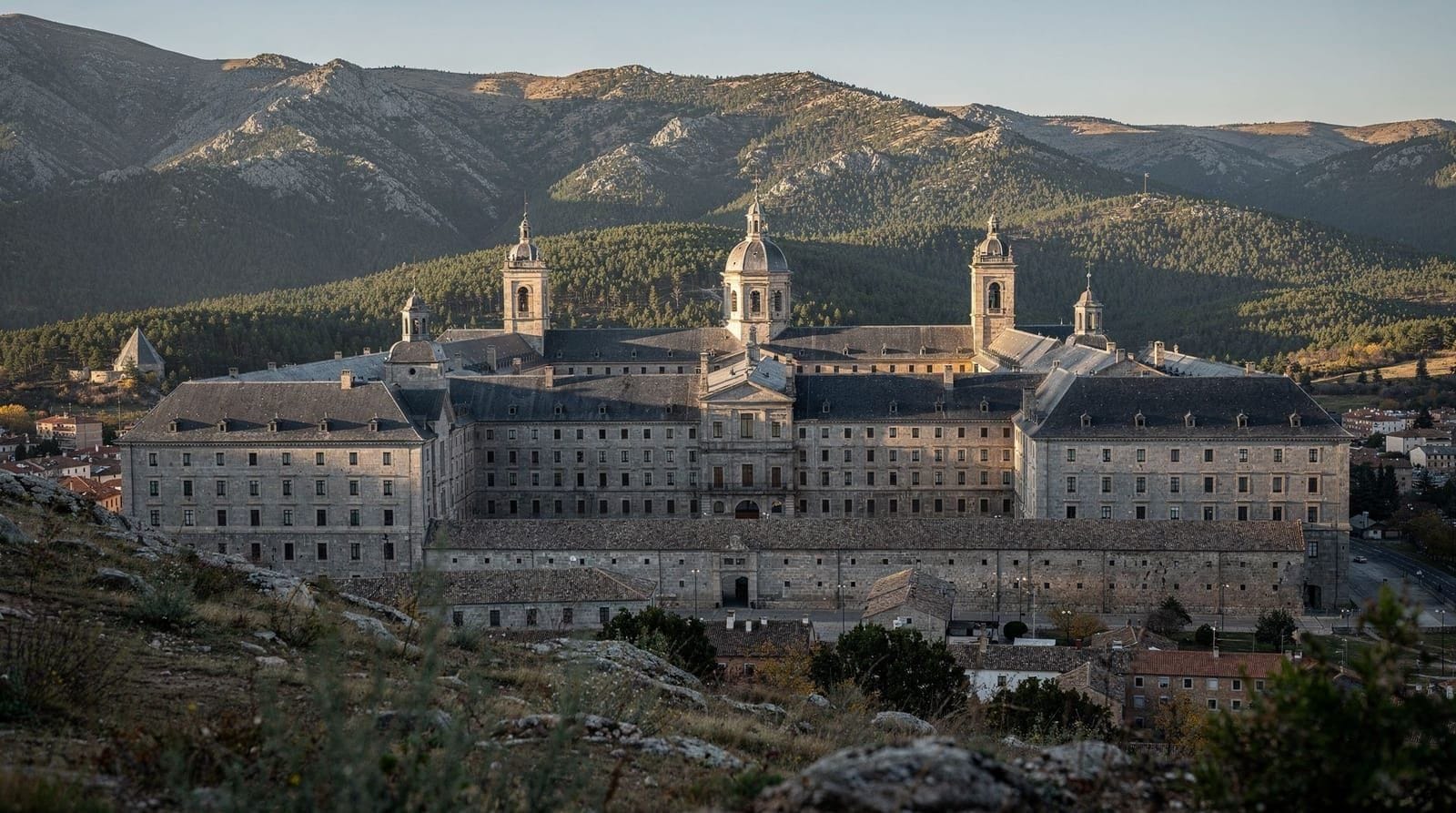
Chinchón is happiest as one piece of a longer plan rather than the whole plan. If the village is your first taste of Castile outside the capital, it pairs naturally with the other small-scale stops on the map. Consuegra offers a very different landscape, and Toledo gives you the full historic-city experience if you want contrast with the intimacy of the plaza. For a royal-site flavour, El Escorial sits in another direction entirely and suits a separate day.
If you are deciding between excursions, the Toledo from Madrid guide and the Toledo vs Segovia comparison will help you weigh a big monumental city against a quiet village. Travellers who prefer not to drive can read the day trips without a car guide, and the blog roundup of hidden day trips from Madrid puts Chinchón alongside less obvious options. For planning the days around your village visit, the Madrid week with day trips itinerary shows how an excursion slots between city days.
Whatever else you add, keep the village itself unhurried: a slow walk around the plaza, a pause in the church, a long lunch, and a stop at the distillery shop are the reasons to come, and rushing them defeats the purpose.
Frequently asked questions about Chinchón
What makes Chinchón’s Plaza Mayor special?
The plaza is elliptical rather than rectangular, with three tiers of continuous wooden-railed balconies built by successive generations of property owners. It functions as a bullring in August, giving it a complete identity beyond the standard Castilian market-square. The combination of scale, architectural warmth (weathered wood, warm stone), and the scent of the adjacent anís distillery makes it one of the most atmospheric village plazas in Spain.
What is Chinchón anís and where can I buy it?
Chinchón anís is an anise liqueur produced under DOP rules in the village, available in dulce (sweet, 35% ABV) and seco (dry, 45%) versions. The distillery shop on the edge of the village is the cheapest source (€8–€15 per bottle); village restaurants and shops charge more. Dulce is more popular as an after-dinner drink; seco is preferred for cocktails.
How do I get to Chinchón from Madrid without a car?
Bus Line 337 from Conde de Casal metro station (line 6) runs to Chinchón in about 50–60 minutes. Departures are roughly every 30–45 minutes on weekdays; check avanzabus.com for current weekend schedules as these are less frequent.
Can I combine Chinchón with Aranjuez?
Yes, easily with a car — the two are 11 km apart on the M-305. By public transport, a direct bus connection between the two is limited; combining them in one day by bus requires careful schedule checking. With a car, the natural order is Aranjuez in the morning (Royal Palace opens 10:00) and Chinchón for lunch and the afternoon.
Is Chinchón worth visiting if I’ve already seen Toledo or Segovia?
Yes — it offers a genuinely different kind of experience: a small, intimate village plaza rather than a full historic city. Visitors who found Toledo or Segovia overwhelming often prefer Chinchón’s scale and pace, and the anís tasting and Castilian lunch add a distinctly local flavour that the bigger cities don’t replicate in the same way.
How busy does Chinchón get on weekends?
Noticeably busier than weekdays, particularly at lunchtime — the plaza-facing restaurants fill by 14:00 on Saturdays with Madrid day-trippers. Arriving before 11:00 or booking a restaurant table in advance avoids the worst of the crowding.
Top experiences
Bookable activities with verified prices and instant confirmation on GetYourGuide.