Chinchón from Madrid: anís, Plaza Mayor & village day-trip guide
Aranjuez: Aranjuez Chinchón Private 8h
How do I get from Madrid to Chinchón by public transport?
Bus 337 departs from Madrid Conde de Casal bus station (Metro: Conde de Casal, Line 6) to Chinchón in approximately 50–60 minutes. Buses run roughly every 1–2 hours on weekdays; check ALSA or the Madrid regional transport schedule for current times. Chinchón is a half-day destination — the Plaza Mayor, castle views, and lunch in a traditional restaurant can be done comfortably in 3–4 hours.
Why Chinchón is Madrid’s best-kept village secret
| Where | 45 km southeast of Madrid, Community of Madrid |
| Cost | Bus fare varies; lunch around €15–35 per person |
| Time needed | Half a day, 3–4 hours on-site |
| Getting there | Bus 337 from Conde de Casal, or by car/guided tour |
| Best time | Weekday mornings, or Sunday for a livelier plaza |
Every guidebook lists Toledo and Segovia. Almost none mention Chinchón. Yet Chinchón has something neither of those cities has: an almost perfectly preserved medieval village atmosphere, a Plaza Mayor that appears on more Spanish wine and anís bottle labels than any other image in Castile, and a local food tradition untouched by tourist menu inflation.
The village sits 45 km southeast of Madrid on a gentle hill — close enough for a half-day, far enough to feel genuinely rural. Arrive mid-morning, walk to the Plaza Mayor, join the locals having a Sunday aperitivo (or a Tuesday quietness), eat a proper cochinillo lunch, and be back in Madrid for the evening. This is the day trip that people who live in Madrid recommend to each other rather than to tourists.
Getting to Chinchón from Madrid
By bus 337 from Conde de Casal (recommended)
The only practical public transport option. Bus 337 (operated by La Veloz / regional services) departs from Conde de Casal bus station, adjacent to Conde de Casal metro station (Line 6).
- Departure point: Conde de Casal bus station, Madrid (Metro Line 6, 5 stops from Nuevos Ministerios)
- Journey time: ~50–60 minutes
- Fare: varies (check the carrier’s website)
- Frequency: Every 1–2 hours; more frequent on weekdays. Check current schedule at ALSA or Madrid regional transport (CRTM) websites
- Arrival: Chinchón bus stop, 5-minute walk from the Plaza Mayor
Return buses to Madrid follow the same route. Check the last bus time before you arrive — evening buses become infrequent.
By car (most flexible)
45 km from central Madrid via the A-3 motorway and M-311. 45–60 minutes drive. Parking available near the Plaza Mayor (small but manageable). A car also allows you to combine with Aranjuez (20 km north) or explore the La Mancha countryside.
By guided tour
Aranjuez and Chinchón private 8-hour tour from Madrid — private guide, combines both villages.
Chinchón, Aranjuez, and Toledo guided day trip — full-day multi-stop tour.
Toledo, Aranjuez, and Chinchón private tour — the full southern triangle in one day.
What to see and do in Chinchón
Plaza Mayor de Chinchón
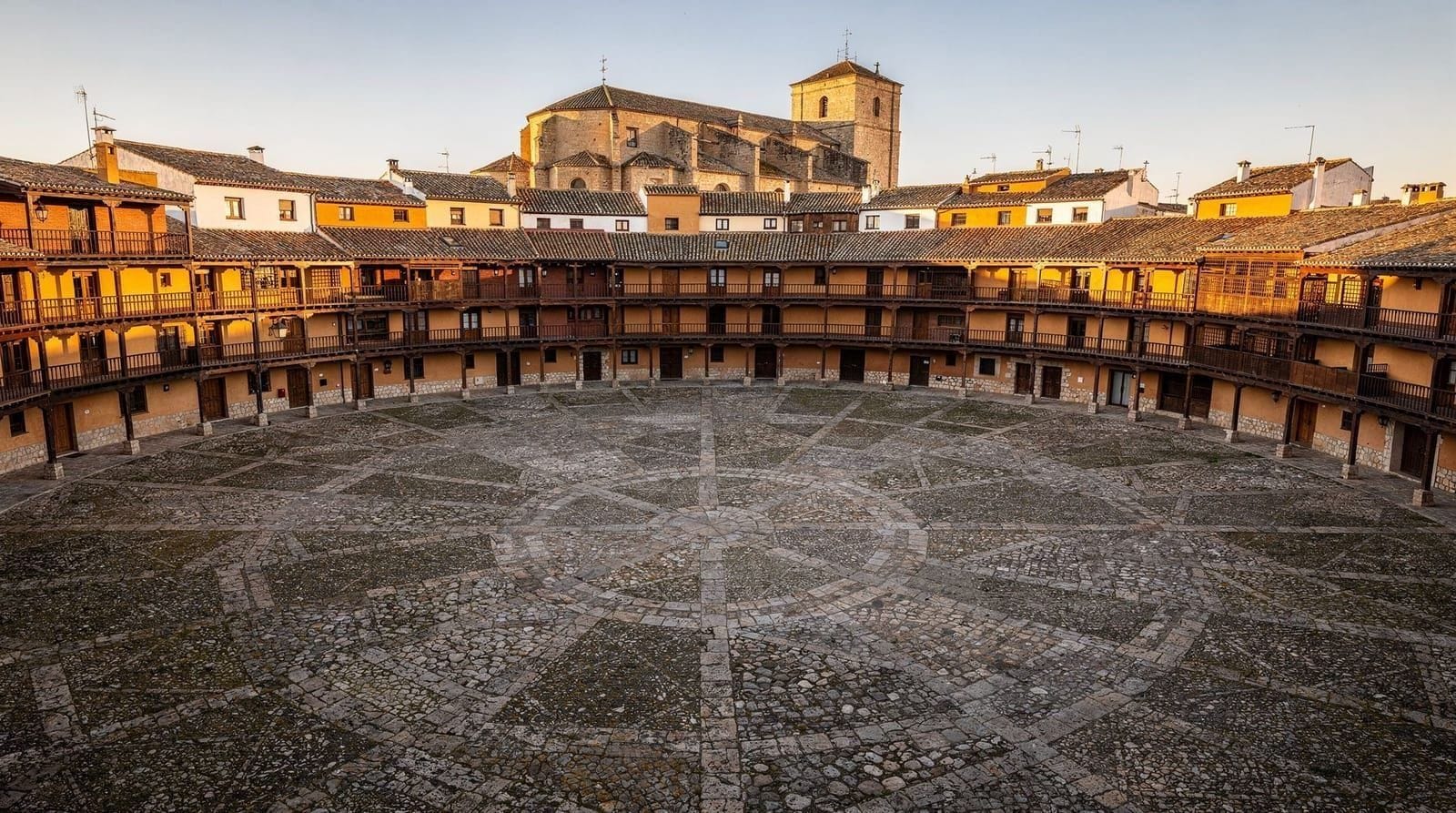
The heart of the village and the reason to visit. The plaza is approximately elliptical, enclosed on all sides by three-storey timber-balconied houses that date from the 15th–17th centuries. The wooden galleries are the defining feature — painted green in the traditional manner, they create a continuous arcade on each level.
The ground level of the plaza contains restaurants, bars, and the tourist office. In summer the interior serves as an open-air cinema. During the San Agustín festival (late August), portable stands convert it into a bullring — one of the few surviving traditional village bullfighting spaces in the Madrid region.
Walk the full perimeter. Note the different house proportions, the varying balcony widths, the old well in the centre. At 09:30 before the tourist buses arrive, or at 17:00 when the afternoon light comes from the west, the plaza is exceptional.
Chinchón anís distillery visit
The main distillery (Alcoholes y Vinos de Chinchón, also known as the Jesús Romero distillery) offers tours and tastings. The anís production process — distilling aniseed with neutral alcohol, then resting in barrels — is explained in context. Buy a bottle of the dry (seco) for mixing or the semi-dry for sipping.
Check the tourist office for current tour schedules; they vary seasonally.
The Church of Our Lady of Grace (Parroquia de Nuestra Señora de la Asunción)
A 16th-century church on the hill above the plaza, containing a painting attributed to Francisco de Goya — the artist’s brother-in-law was a priest in Chinchón and Goya is documented as having visited. The painting (“The Assumption of the Virgin”) is in the sacristy. Ask at the church for access. Free.
Castle views
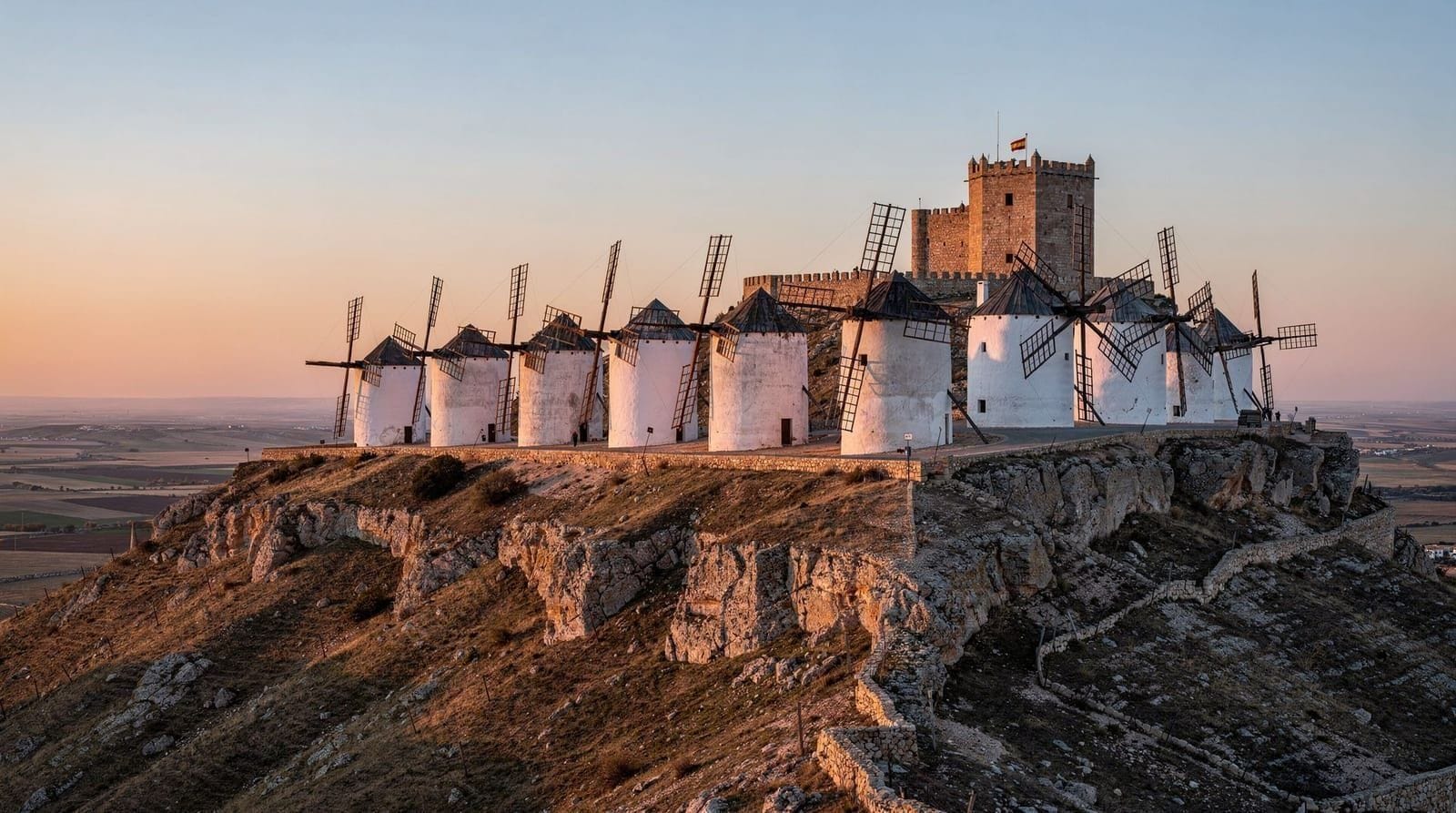
The Castillo de Chinchón (15th century, private property of the ducal family) is not open but visible from the village and from the path leading towards it from the north side of the plaza. Worth a 20-minute walk for the view back over the village.
The surrounding countryside
Chinchón sits in a landscape of olive groves, vineyards, and scattered villages typical of pre-tourism Castile. If you have a car, drive 10 km in any direction and you’ll find landscape unchanged in character since the 17th century — the same landscape that inspired Velázquez to include Castilian farmworkers in the background of his hunting portraits.
Chinchón’s Plaza Mayor: architecture and function
The Plaza Mayor of Chinchón is the result of centuries of incremental construction rather than a single planned design. The plaza’s circular plan was imposed by the topography — the original medieval market occupied a natural bowl in the hillside, and the surrounding houses were built to follow the curve of the land.
The three-storey structure of the surrounding houses reflects social hierarchy: ground-floor arcades for trade and commerce, first floors for family residences, and second-floor open galleries (corrales) used for storing produce and for seasonal overflow accommodation. The wooden balconies — the most photographed element — are structural extensions of the building mass over the covered arcade space, a solution for maximising floor area on constrained medieval plots.
The plaza has served multiple functions simultaneously throughout its history: marketplace (the traditional market is still held here), social gathering place (fiesta, celebration, civic events), and — from the 17th century onward — occasional corrida venue. The portable bullfight stands erected for the San Agustín festival are dismantled within days of the event; the plaza reverts to café tables and daily life immediately afterward.
The 1937 Spanish Civil War came close to destroying this tradition: Chinchón was on the Republican side and the area saw military activity. The village survived relatively intact, which is why the Plaza Mayor reads today as a continuous 15th–17th century ensemble rather than the partial reconstructions seen in many other Castilian villages.
Anís de Chinchón: how it’s made
The production of anís from star anise seeds has been practised around Chinchón since at least the 18th century. The current commercial operations use cultivated anise (Pimpinella anisum) grown locally and imported, distilled in copper pot stills with neutral grain alcohol.
The three types:
Seco (dry): 35% alcohol, crystal clear. Produced by redistilling the neutral alcohol with anise seeds. The driest style, used in cocktails (mixed with water it turns milky-white — the “paloma” or “dove” effect, caused by anise oils coming out of solution). This is the sophisticated choice.
Semiseco (semi-dry): A middle ground; some residual sweetness from added sugar syrup. Good as a digestivo on its own.
Dulce (sweet): Lower alcohol, milky appearance without dilution, drank by itself. More liqueur than spirit in character.
The geographical indication (IGP Anís de Chinchón) covers production in the municipality of Chinchón and a small surrounding area. The Alcoholes y Vinos de Chinchón (La Castellana) distillery is the main commercial producer; the brand is recognisable by the image of the Plaza Mayor on the label.
The village in context: what Castile looked like before mass tourism
What makes Chinchón valuable as a day trip is not just the plaza (impressive as it is) but the evidence it provides for what rural Castile looked like before the 20th century transformed the countryside. The streets around the plaza are built in the same grey-brown stone as the plaza itself; the proportions are modest and functional; the churches are severe. There are no souvenir arcades selling Toledo swords or Segovia ceramic plates.
The village economy is agricultural — saffron, wine grapes, and market gardening — supplemented by weekend tourism from Madrid. The restaurants serve what the surrounding land produces: lamb, suckling pig, local game, and the anís that put Chinchón on the map.
This is not a museum village. People live here, farm here, and use the Plaza Mayor for exactly the purposes it was built for. The authenticity is not performed; it’s structural.
Where to eat in Chinchón
All the serious restaurants are around or near the Plaza Mayor.
Mesón de la Virreyna (Plaza Mayor 28): The classic Chinchón restaurant — cochinillo and cordero asado from a wood-fired oven, served in a dining room with views onto the plaza. Budget €25–35 per person. Reserve for Saturday and Sunday lunch.
Restaurante Cándido (Plaza Mayor 4): Another long-established option; similar menu to La Virreyna, slightly more casual atmosphere. Menú del día (weekdays) at ~€15 is excellent value.
Tapas bars (ground level of the Plaza Mayor): Several bars serve tostadas (toasted bread with various toppings), bocadillos, and tapas with drinks. Good for a lighter option or mid-morning snack.
Anís as aperitivo: In any bar, order “un anís de Chinchón seco” (a dry anís from Chinchón) with a glass of water. Drinking it mixed — called “paloma” (dove) — means you pour it into water and it turns milky-white from the anise oils coming out of suspension. The classic Spanish anís cocktail.
Market day and festivals in Chinchón
Chinchón’s calendar has a few specific dates worth planning around, whether to catch them or deliberately avoid the extra crowds:
Weekly market: A small local produce and general market operates on the streets near the Plaza Mayor on set days each week (check with the tourist office for the current schedule, as timing shifts seasonally) — a good opportunity to see the village functioning as a working agricultural town rather than purely a day-trip destination.
San Agustín festival (late August): The village’s major annual festival, when the Plaza Mayor is converted into a temporary bullring using portable wooden stands, as described in Chinchón’s Plaza Mayor: architecture and function. Accommodation and restaurant tables in the village are harder to secure during this week; if bullfighting doesn’t interest you, visiting the week before or after gives the same village atmosphere without the crowds.
Holy Week (Semana Santa, March/April): Chinchón holds its own processions, smaller and less internationally famous than Toledo’s or Seville’s but genuinely local in character — a good option for visitors who want Semana Santa atmosphere without the crush of a major city’s processions.
Grape and olive harvest (autumn): The surrounding countryside is at its most visually interesting in September–October, when the vineyards and olive groves that supply the village’s wine and oil production are actively harvested — a good season to combine the village visit with a countryside drive if travelling by car.
Chinchón in your Madrid itinerary
Chinchón works as a half-day combined with a Madrid afternoon, or paired with Aranjuez by car or guided tour for a full southern day trip. The best day trips from Madrid guide places Chinchón ninth overall — lower than the UNESCO walled cities but worth making time for if your stay exceeds 4 days.
The day trips without a car guide covers the bus 337 logistics in more detail.
If you are still deciding between the bigger names, the Toledo from Madrid guide and the Segovia from Madrid guide cover the UNESCO cities, and Toledo vs Segovia helps you pick one. Chinchón then makes a gentler second or third outing once those are done.
For the other southern excursion, read the Aranjuez from Madrid guide and the Aranjuez destination page. The Chinchón destination page gives a shorter overview of the village itself.
Travelling by rail instead of road elsewhere? The day trips by train guide and the AVE train day trips guide explain which towns the trains serve. Chinchón is not one of them, which is why the bus matters here.
Building a longer stay around the village
A week in the capital leaves room for a slow village day. The week with day trips itinerary shows where a half-day like this fits, and the Madrid and Toledo itinerary pairs well with a quieter second excursion. If you only have a few days, the 3-day Madrid itinerary is probably better spent in the city.
Because Chinchón is a half-day, the other half of your day can go to something in Madrid. The Madrid city guide for first-timers helps you judge how many days you need, and the hidden day trips blog post lists other quieter options. Those who prefer train logistics will find the day trip by train tips useful for the other excursions.
Getting to the bus station and eating well afterwards
The Madrid metro guide explains how to reach Conde de Casal, and the tourist travel pass guide tells you whether a pass is useful for your plans. Back in the city, the cochinillo and roast tradition is echoed in the cocido guide, and the where locals eat tapas blog post suggests an easy dinner after a long Castilian lunch.
DIY by bus vs guided tour: the verdict
DIY by bus 337 works well for those comfortable with Spanish bus travel. The journey is straightforward and the village is small enough to navigate without guidance. The main risk: check bus return times carefully and don’t miss the last bus (early evening).
Guided tour wins if you want to combine Chinchón with Aranjuez or Toledo in a single day — the lack of direct public transport between these villages makes a car or guide essential for multi-stop southern day trips.
Frequently asked questions about Chinchón from Madrid
What makes Chinchón's Plaza Mayor special?
Chinchón's Plaza Mayor is unique in Spain — a circular (almost oval) three-storey plaza lined with wooden balconied houses, dating from the 14th–17th centuries. Unlike rectangular plazas elsewhere, Chinchón's enclosure gives it an amphitheatre quality. It is used as an actual bullfighting arena during the August San Agustín festival and as an open-air cinema in summer. The wooden balconies are the symbol of Chinchón and appear on practically every bottle of Chinchón anís.What is anís de Chinchón?
Chinchón anís (aniseed liqueur) has been produced in the town since the early 19th century. It comes in three types: dry (seco, ~35% alcohol, clear and sharp), semi-dry (semiseco), and sweet (dulce, lower alcohol, milky-white when mixed with water). The La Castellana and Alcohol Jesús Romero distilleries are the main producers. You can visit the main distillery and buy directly. Anís de Chinchón has Geographical Indication status since 1995.Is Chinchón worth visiting from Madrid?
For those interested in authentic Spanish village atmosphere, absolutely. Chinchón is genuinely unspoiled — small enough that it hasn't been transformed into a tourist economy, large enough to have several excellent restaurants and a living community. The Plaza Mayor alone is worth the 50-minute bus ride. Combine with a long lunch at a traditional restaurant for a full experience.Can I visit Chinchón and Aranjuez on the same day?
By car or guided tour, yes — they are 20 km apart. By public transport, no practical direct connection exists between the two. A guided tour combining Chinchón and Aranjuez is the practical solution for those without a car.What is the Castillo de Chinchón?
A 15th-century castle on the hill above the village, belonging to the Counts of Chinchón (a title now held by the Duchess of Suárez). It is not open to the public but is visible from the Plaza Mayor and the surrounding countryside. The approach path to the castle base gives good views of the village and plain.What should I eat in Chinchón?
Traditional Castilian roast meat — cochinillo (suckling pig) and cordero (roast lamb) are the specialties, cooked in wood-fired ovens. Menú del día in the Plaza Mayor restaurants runs €15–20 (above Madrid city average but justified by the setting). Carcamusas (pork stew) from the Chinchón countryside is also typical. Finish with anís in any bar.
Top experiences
Bookable activities with verified prices and instant confirmation on GetYourGuide.