Consuegra windmills: the Don Quixote day trip from Madrid
Consuegra: Consuegra Windmills Tour
How do I get from Madrid to the Consuegra windmills?
InterBus (or Samar) buses depart from Madrid Estación Sur to Consuegra in approximately 2 hours 20 minutes. Buses are limited — typically 2–3 departures per day each way; check schedules carefully and book in advance. The windmills and castle are a 20-minute walk (2 km, uphill) from the Consuegra bus stop. Given the journey time and limited return buses, this is a full-day commitment that requires careful planning.
| Where | Consuegra, La Mancha, ~160 km south of Madrid |
| Cost | Bus fare varies (check the carrier’s website); castle and mill admission varies |
| Time needed | Full day (2.5-hour journey each way) |
| Getting there | InterBus/Samar from Estación Sur, or guided tour |
| Best time | Late afternoon light; October for the saffron festival |
The windmills of La Mancha
Don Quixote was the first modern novel and still one of the most widely read books in history. Its opening landscape — the dry plain of La Mancha, the white windmills on a ridge that an aging knight mistakes for giants — is among the most recognisable images in Western literature.
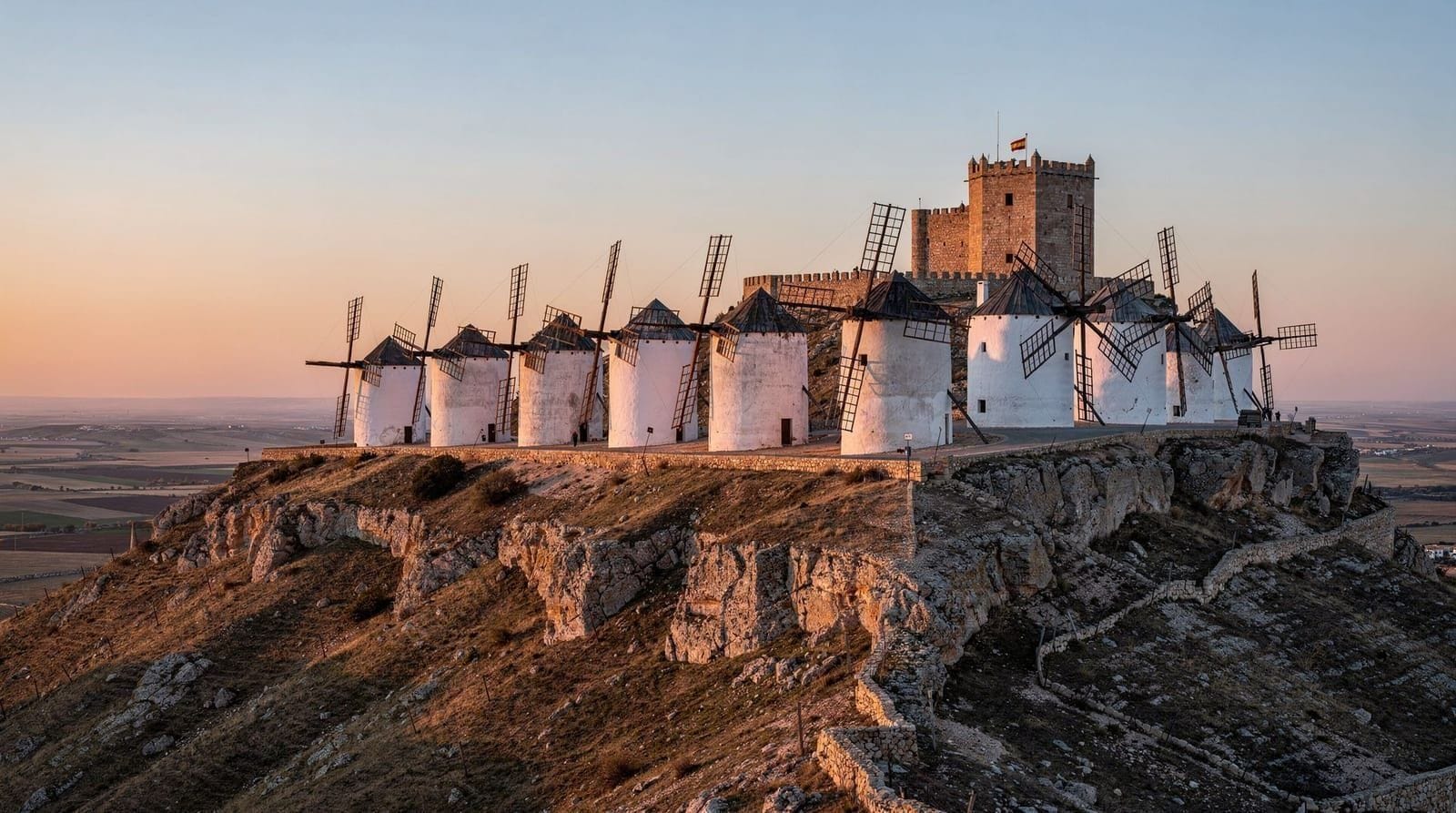
Consuegra has that ridge. Twelve white post-mills in a line above the Castilian plain, a medieval castle at the end, and on a clear day a horizon that extends 50 km in every direction across flat, sun-bleached farmland. No mountains, no trees of significance, no other landmark to interrupt the openness that Cervantes described.
This is the most romantically cinematic day trip from Madrid — and the most demanding logistically. The bus takes 2.5 hours each way; the schedule is limited; the town has minimal tourist infrastructure. But the people who get there tend to feel it was worth every minute of the journey.
Getting to Consuegra from Madrid
By bus from Estación Sur (only public transport option)
InterBus or Samar coaches depart from Madrid Estación Sur (Metro: Méndez Álvaro, Line 6) to Consuegra.
- Departure station: Madrid Estación Sur
- Journey time: ~2 hours 20 minutes
- Fare: varies (check the carrier’s website)
- Frequency: Very limited — typically 2–3 departures per day each way, fewer on weekends
- Critical: Check current schedules at Estación Sur or the bus company website BEFORE planning. Schedules change seasonally. Write down the return bus times before departing.
From Consuegra bus stop: the windmill ridge is 2 km from the town centre. Uphill walk 20 minutes, or take a local taxi (€5) if available.
Return planning is essential. If you miss the last bus, your options are a taxi to Toledo (50 km, ~€50) or an overnight stay. Plan with a comfortable buffer — leave the windmill ridge at least 1 hour before the last scheduled return bus.
By guided tour (most practical option for Consuegra)
Given the limited bus schedule and long journey, a guided tour significantly reduces risk for this day trip.
Madrid Consuegra windmills day tour — bus transport, guided visit to the ridge and castle.
Don Quixote route: Toledo, Consuegra, and Alcalá — full Don Quixote literary circuit in one day.
By car (most flexible)
160 km from Madrid via A-42 south, then A-30 or local roads. 1.5–2 hours drive. Free parking at the base of the ridge. A car also lets you combine Consuegra with Campo de Criptana (50 km) for a second set of windmills in a different landscape.
What to see in Consuegra
The windmill ridge (Cerro Calderico)
Walk from the town up to the ridge — the path begins at the car park area and ascends in 20 minutes on a paved track. Once on the ridge, the 12 windmills stretch in a line from east to west. Walk the full 1.5 km to the castle at the western end; return along the ridge or take the lower path through the back of the hill.
The windmills are cylindrical stone towers with conical roofs and four or six wooden sails. Several are open to visit inside — the mechanical workings are preserved and explained. No admission charge for the ridge itself; some windmills may charge a small entry fee for internal access.
Each windmill has a name from Don Quixote: Rucio (Sancho’s donkey), Sancho, Rocinante (Don Quixote’s horse), Gigante (Giant), Bolero, Clavileño, Mambrino, Quixote, Rociante, Alcancía, Cardenio, and Esperanza. Find them all.
Castillo de la Muela
The castle at the western end of the ridge was originally an Arab fortification (10th–11th century), rebuilt by the Order of Saint John (Knights Hospitaller) after the Christian Reconquest in the 12th century. The order used Consuegra as a major command centre — this was the frontier territory between Christian Castile and Moorish al-Andalus.
Inside: a small but well-presented museum on the Arab period and the military orders; panoramic views from the ramparts. Admission and opening hours vary by season and day; check the official Consuegra tourism website before you go.
The town of Consuegra
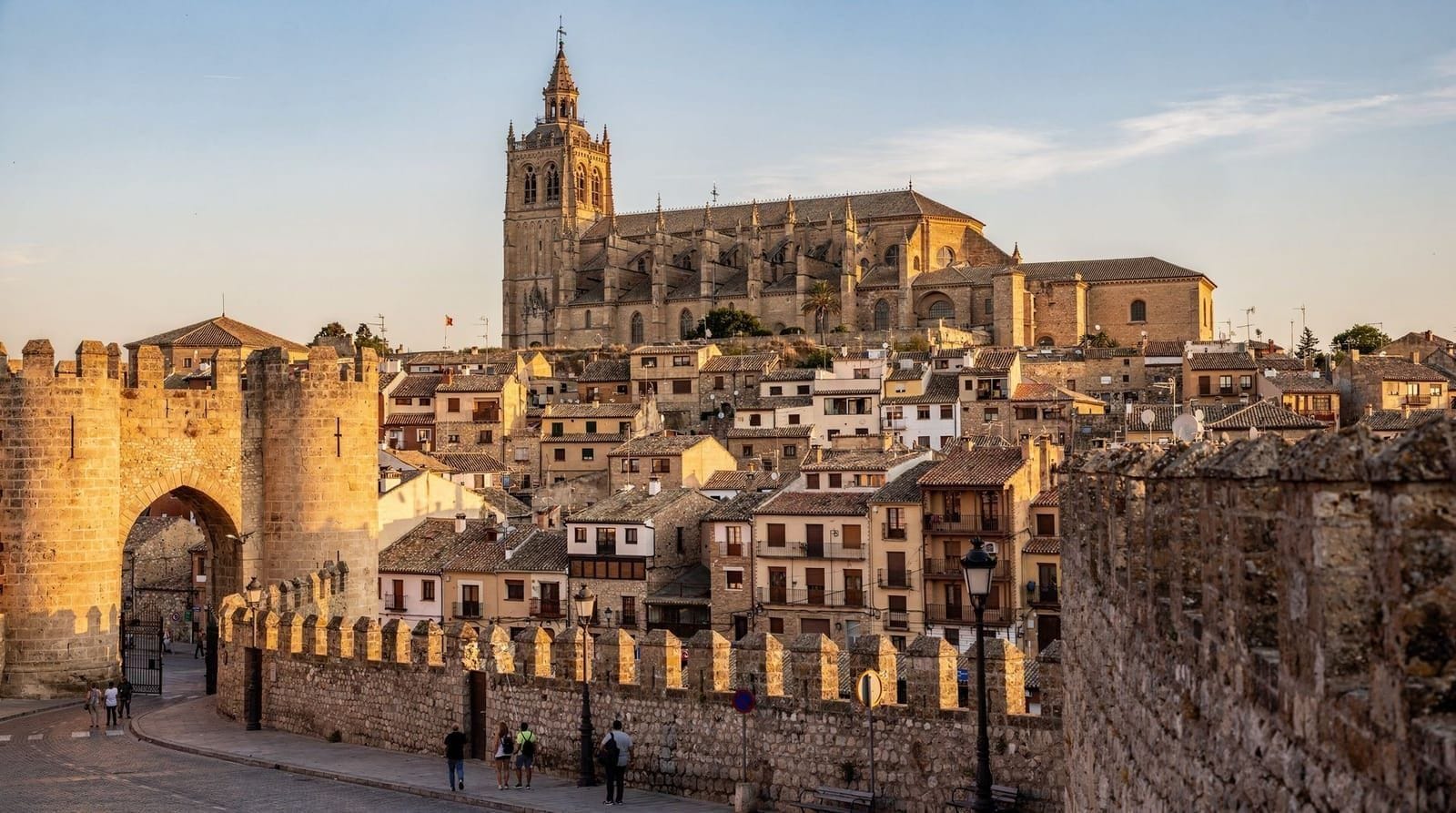
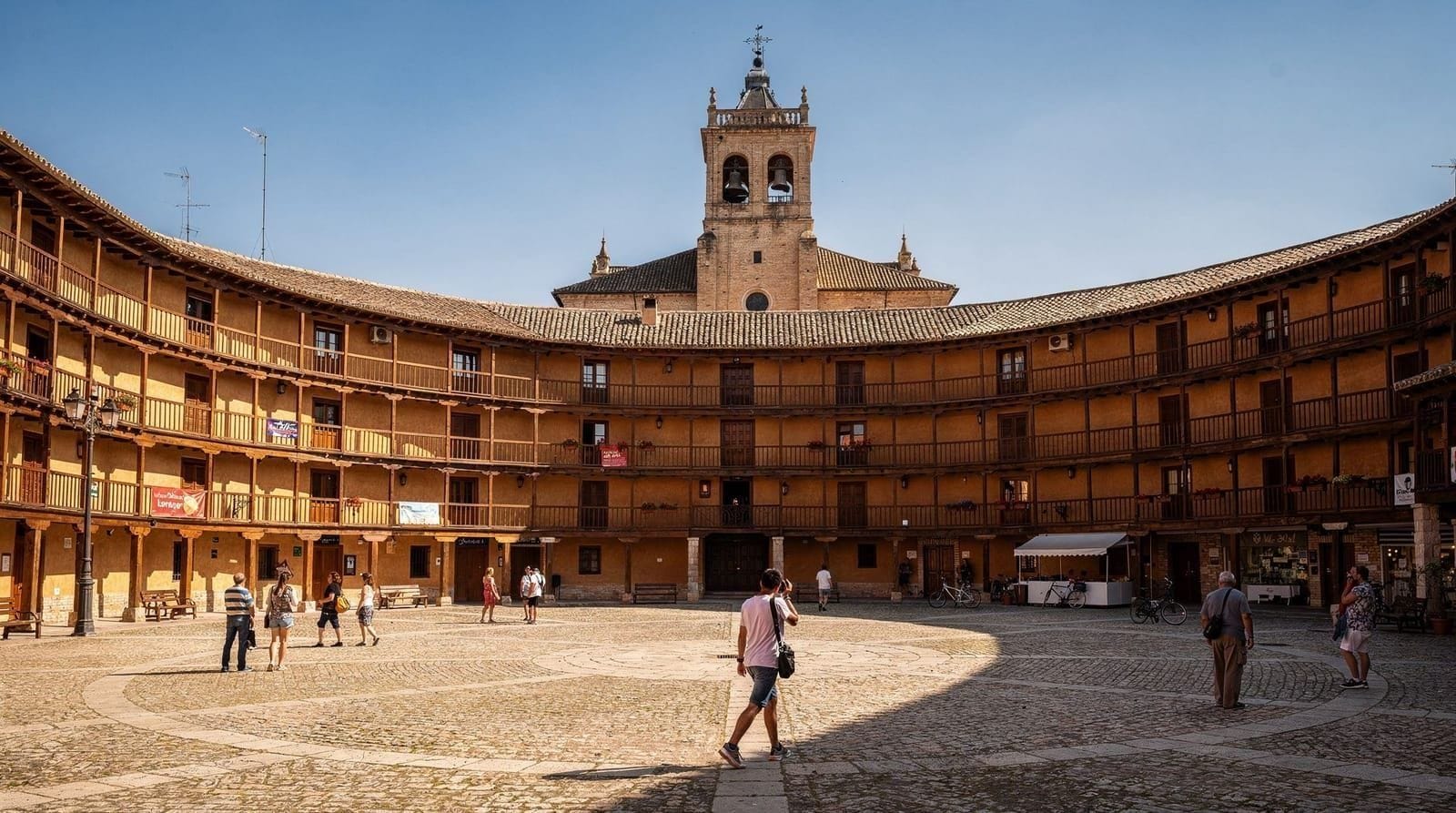
The lower town is a quiet Castilian agricultural town — saffron, wine grapes, and sunflowers are the local crops. The Plaza de España has a Gothic church and a few cafés. The saffron cooperative is occasionally open for visits during harvest (October). Most visitors spend only 15–20 minutes in the lower town, directing the bulk of their time to the ridge.
La Mancha: the landscape Don Quixote inhabits
La Mancha (from the Arabic al-Mansha, meaning “dry land” or “wasteland”) is one of the most accurate geographical names in Spain. The meseta — the high plateau of central Spain, 650–800 metres altitude — stretches for hundreds of kilometres without significant topographic variation. The sky dominates. In summer the land is bleached white-yellow by drought and heat; in winter it turns grey-brown under cold skies. In spring, the cereal crops turn it briefly green; in autumn, the saffron flowers create small purple patches near Consuegra.
This is the landscape that shapes Don Quixote, and it hasn’t changed substantially since 1605 when Cervantes published Part I. The windmills on the Consuegra ridge are the same type (La Mancha post-mills) that were working across the plateau from the 15th to the 19th century — grinding grain, extracting oil from olives, pumping water. There were hundreds of them. Most were abandoned when diesel motors became cheaper and more reliable. Consuegra’s twelve are the best-preserved cluster.
The combination of windmills + castle + flat plain creates a visual composition that has no equivalent elsewhere in Spain. From the ridge on a clear day: a flat horizon in every direction, white windmills along the line, and a medieval castle at the end. It is the image that existed before Cervantes wrote it and will exist after every reader has forgotten the novel.
A practical Consuegra day plan
This destination requires the most careful planning of any Madrid day trip.
The critical constraint: Bus departures from Estación Sur are limited (check current schedule at the bus station or InterBus website). Write down: (1) your morning departure time, (2) your return bus time, and (3) a contingency option if you miss the return bus (taxi to Toledo, ~50 km, ~€50).
Suggested schedule:
07:30 — Depart Madrid Estación Sur (InterBus, direction Consuegra). 10:00 — Arrive Consuegra. 10:15 — Walk uphill to the windmill ridge (20 min). 10:35–12:00 — Explore the windmills (five or six are open inside), walk the full 1.5 km ridge. 12:00–12:45 — Castillo de la Muela: exterior and museum. 13:00 — Descend to town for lunch. 14:00–15:00 — Lunch in town. 15:30 — Check the departure board for your return bus time. Walk back to the bus stop. 16:00–17:00 — Return bus to Madrid.
Arrive back in Madrid: 18:30–19:30, in time for a late dinner.
La Mancha food: what to eat on the Don Quixote route
Cervantes mentioned the food of La Mancha — “a stew of more cow than mutton, salad on most nights, duelos y quebrantos on Saturdays, lentils on Fridays, sometimes a young pigeon on Sundays.” The passage is the earliest literary food diary of a Spanish household and it’s largely accurate for what poor Castilian farmers ate in 1605.
Duelos y quebrantos (“grief and troubles”) — the Saturday dish mentioned by Cervantes — is now interpreted as scrambled eggs with chorizo, ham, and brain or offal. Several Consuegra and La Mancha restaurants serve it as a local heritage dish.
Gazpacho manchego: Despite the name, entirely different from the cold Andalusian tomato soup. A thick stew of game birds (partridge, rabbit), mushrooms, and unleavened bread cooked in an earthenware cazuela over a wood fire. Heavy, rich, intensely flavoured. A genuine La Mancha tradition.
Saffron: Consuegra’s saffron (from the Crocus sativus flower, harvested in October) is among the most prized in Spain. The local saffron cooperative sells at the farm-gate price, significantly below supermarket rates. Buy it if you’re visiting in October–November when fresh-harvest saffron is available.
Where to eat in Consuegra
Consuegra has limited dining options compared to other day-trip destinations. Plan ahead.
Restaurante El Almacén (Calle Colón, near the main square): The most reliable restaurant in town; traditional Castilian and La Mancha dishes (perdiz estofada / stewed partridge, duelos y quebrantos, gazpacho manchego — a thick meat stew, nothing like the cold soup). Menú del día ~€12–15. Basic but honest.
Bar-cafés on the main square: Quick bocadillos and coffee before or after the ridge walk.
Bring food from Madrid: Given the limited options, buying provisions from a Madrid market (Mercado San Miguel or any supermarket) for a picnic on the ridge is a genuinely good option — one of the most spectacular picnic locations in Castile.
La Mancha wine: The area is part of the La Mancha DOP — the world’s largest wine-producing region by area. Local wines are unpretentious, cheap, and consistently drinkable. Any restaurant will have local Tempranillo or Airén by the glass or jug.
Consuegra in your Madrid itinerary
Consuegra is the final, most demanding entry on the best day trips from Madrid list — recommended for travellers with 5+ days who have covered the closer UNESCO cities and want the quintessential La Mancha landscape. See the Madrid week with day trips itinerary for the full week plan.
For the literary route connecting Alcalá de Henares (Cervantes’ birthplace) with the Don Quixote windmill landscape, see the guided tour option above and the Alcalá de Henares guide.
Where Consuegra fits among the other excursions
If the long bus ride puts you off, other excursions give a very different flavour for less transit. The Consuegra destination page covers the town itself, while the Toledo destination page and the Ávila guide cover walled historic cities, and the Segovia guide suits anyone who prefers a train-friendly outing. Travellers weighing several options at once will find the train day trips overview a useful comparison, and the Campo de Criptana page is the natural companion if you want a second set of windmills.
DIY bus vs guided tour: the honest verdict
Guided tour wins for Consuegra — this is a rare day trip where the logistics genuinely favour organised transport. The bus schedule is unpredictable and limited; missing a connection has real consequences. Unless you’re confident in navigating Spanish rural bus services and have built in sufficient buffer time, the peace of mind from a guided tour is worth the cost premium.
DIY makes sense if you’re an experienced independent traveller, comfortable with Spanish, and have verified the bus schedule directly with the carrier before departure.
Combining Consuegra with other La Mancha stops
Consuegra pairs naturally with two other windmill towns if you have a car or a tour that covers them: Campo de Criptana, 50 km away, has a second and arguably more photogenic ridge of windmills set closer to the village itself, and El Toboso (Dulcinea’s fictional hometown) adds a literary detour for committed Cervantes readers. Without a car, combining any two of these in a single day is impractical given the bus frequency — pick one and do it properly rather than rushing between two half-seen sites. Travellers without a car who still want the wider Don Quixote landscape without the bus risk should check the day trips without a car guide for which La Mancha stops are realistically joinable.
Is Consuegra worth it compared to closer day trips?
Honestly, only if you have the time. Toledo and Chinchón deliver more sightseeing per hour of travel, and most first-time visitors to Madrid should exhaust those closer, denser options first. Consuegra rewards a specific kind of traveller: someone who has already done the obvious day trips, cares about the Don Quixote landscape specifically, and is not bothered by spending five hours of a day trip in transit for roughly two hours on the ridge. If that’s not you, the windmills at Campo de Criptana reached via a combined tour, or simply photos, may be the more efficient choice.
Frequently asked questions about Consuegra windmills
How many windmills are in Consuegra?
Twelve windmills stand along the ridge above the Consuegra plain, plus a medieval castle (Castillo de la Muela) at the highest point. All twelve windmills have been restored and several are open to visit inside — each named after characters from Don Quixote (Rucio, Sancho, Rocinante, and so on). The ridge is about 1.5 km long; walking the full length and back takes 1 hour.What is the connection to Don Quixote?
Cervantes set the windmill combat scene in 'a field of La Mancha' in Chapter 8 of Part I of Don Quixote. Consuegra's windmills (and those at Campo de Criptana, 50 km away) are the most dramatic surviving examples of the La Mancha post-mills that Cervantes would have known in the late 16th century. There is no documented proof that Cervantes specifically visited Consuegra, but the location matches his description precisely and the landscape is unchanged.Can I visit the windmills without a car?
Yes, by bus from Madrid Estación Sur — but check schedules very carefully. The bus service is limited and the return journey must be planned before you leave Madrid. Missing the last bus means a taxi to Toledo (50 km, ~€50) or an unplanned night. If bus logistics worry you, a guided tour is significantly less stressful.What else is there to see in Consuegra?
The Castillo de la Muela on the ridge — a 10th-century Arab fortress, one of the best-preserved in Castile-La Mancha — is open to visit. Inside: small museum on Arab history of the region and the Order of Saint John (Knights Hospitaller), who fortified the castle in the 12th century. The town of Consuegra itself is a quiet agricultural community with a Plaza Mayor and the Iglesia de la Santa María la Mayor. The main event is the ridge.What is the Fiesta de la Rosa del Azafrán?
The Saffron Rose festival (Fiesta de la Rosa del Azafrán) takes place in Consuegra each October, celebrating the saffron harvest — the area around Consuegra and Campo de Criptana grows the majority of Spanish saffron. The festival involves saffron-picking demonstrations, traditional dress, and activities around the windmills. Visitor numbers spike significantly in October; the rest of the year Consuegra is very quiet.What time does the light look best on the windmills?
Late afternoon is the classic answer — the low sun from the west illuminates the white windmill faces and casts long shadows across the ridge. Sunrise is equally dramatic if you can manage an overnight stay in Consuegra. Midday high sun creates harsh shadows and bleaches the white walls. Aim to be on the ridge at 17:00–19:00 in summer or 15:00–17:00 in winter.
Top experiences
Bookable activities with verified prices and instant confirmation on GetYourGuide.