Alcalá de Henares from Madrid: Cervantes, university & day-trip guide
Alcalá de Henares: Alcalá Cervantes Museum Day Trip
How do I get from Madrid to Alcalá de Henares?
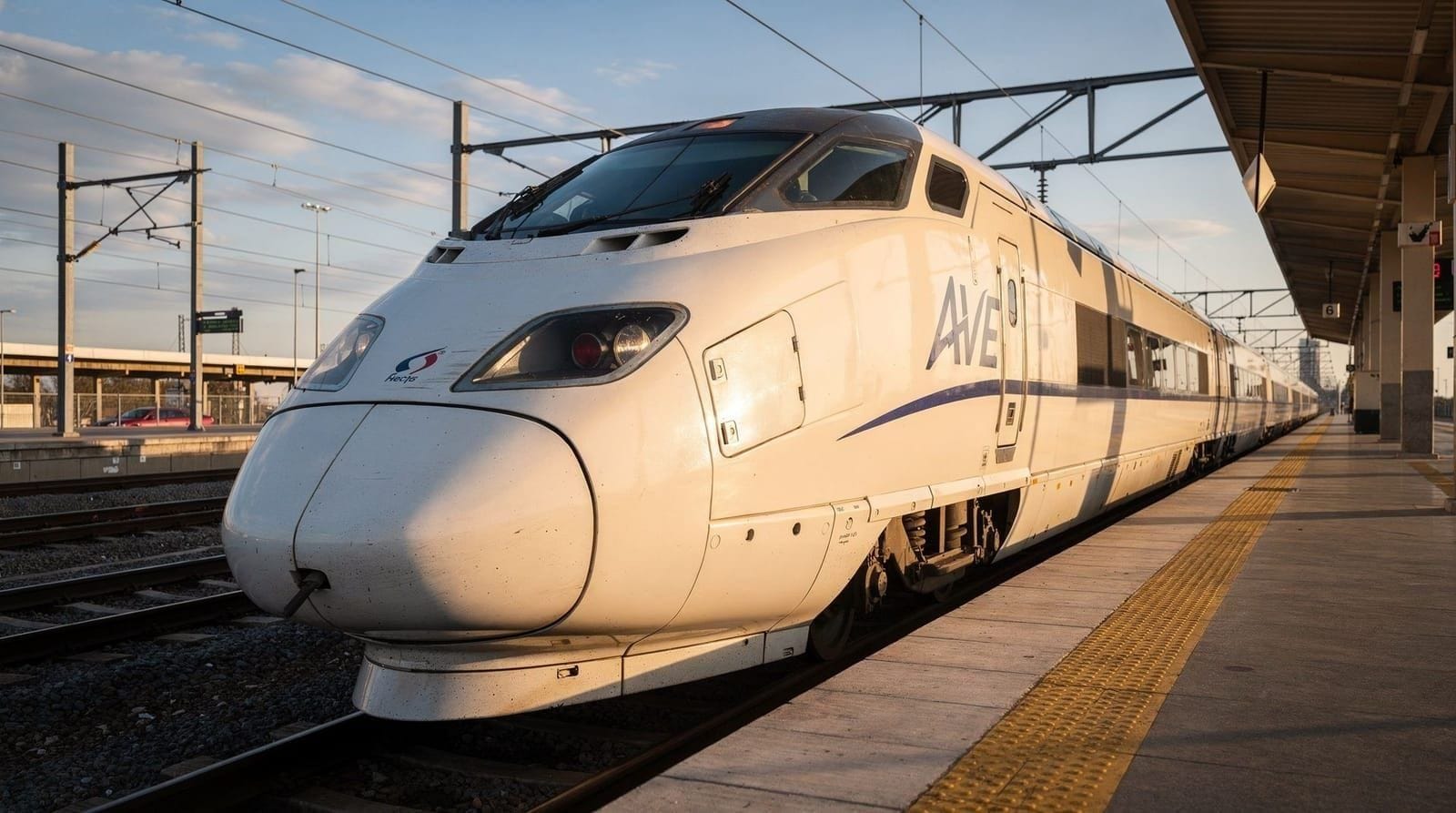
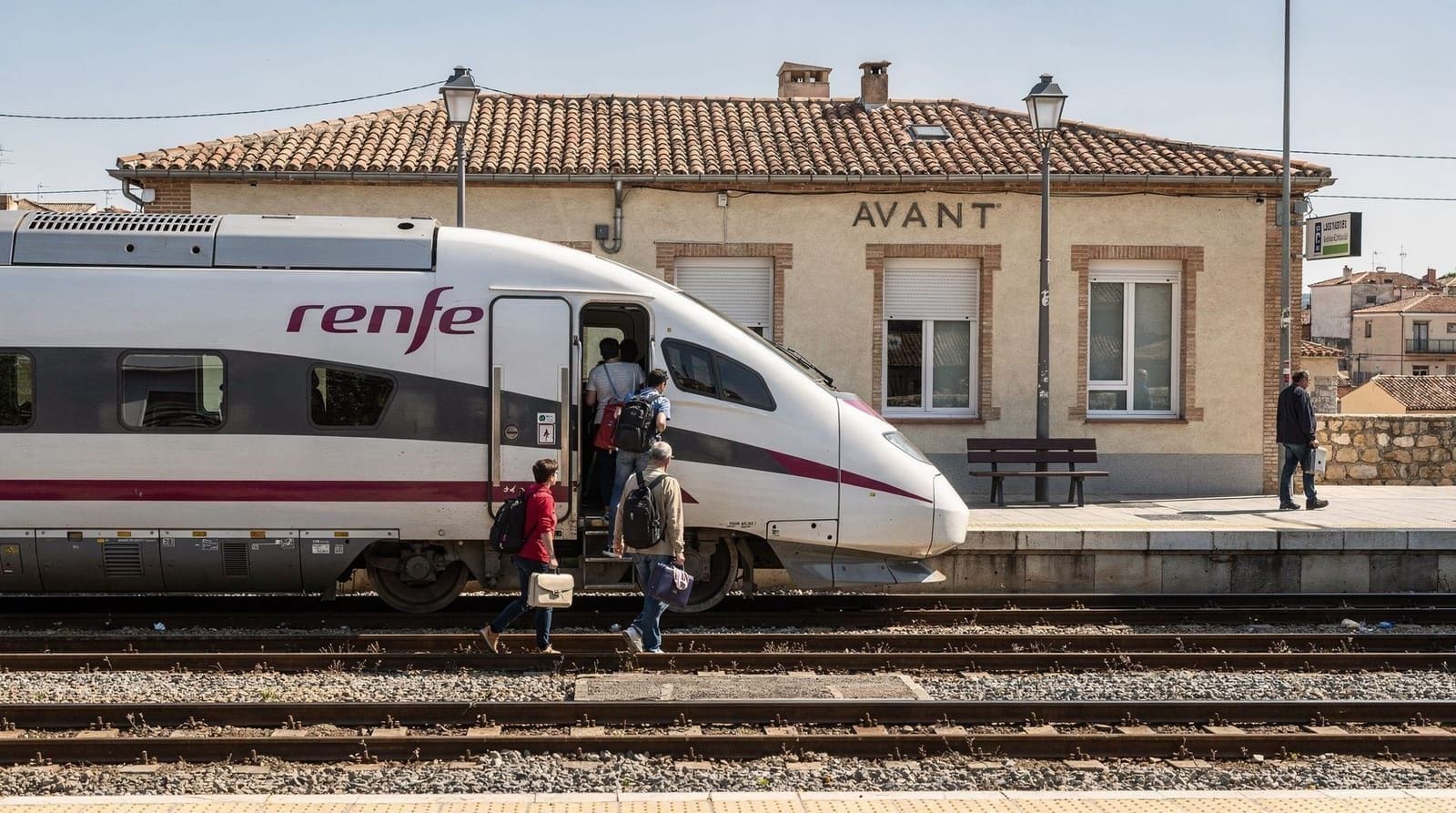
Cercanías C-2 commuter train from Madrid Atocha or Chamartín to Alcalá de Henares takes approximately 40 minutes. Fare: ~€3–4 each way (Tourist Travel Pass valid). The train station is a 10-minute walk from the historic centre. Alcalá's old town is compact — a half-day is sufficient to see the key UNESCO sites: the Colegio Mayor de San Ildefonso, Cervantes' birthplace, and the university quarter.
Alcalá: the university city that shaped Spanish literature
Alcalá de Henares has a claim that no other city in Spain can make: it is the birthplace of Miguel de Cervantes — and his home of Don Quixote is the foundational novel of the Spanish literary tradition. But Cervantes is only one thread. The city’s Cisneros university, founded in 1499, was one of the most consequential institutions in Renaissance Europe: it printed the first polyglot Bible, educated generations of Spanish empire builders, and served as the model for the first universities in the Americas.
UNESCO recognized this in 1998, designating Alcalá as one of the few cities that shaped Western intellectual history from a single location.
And it’s 40 minutes from Madrid by commuter train.
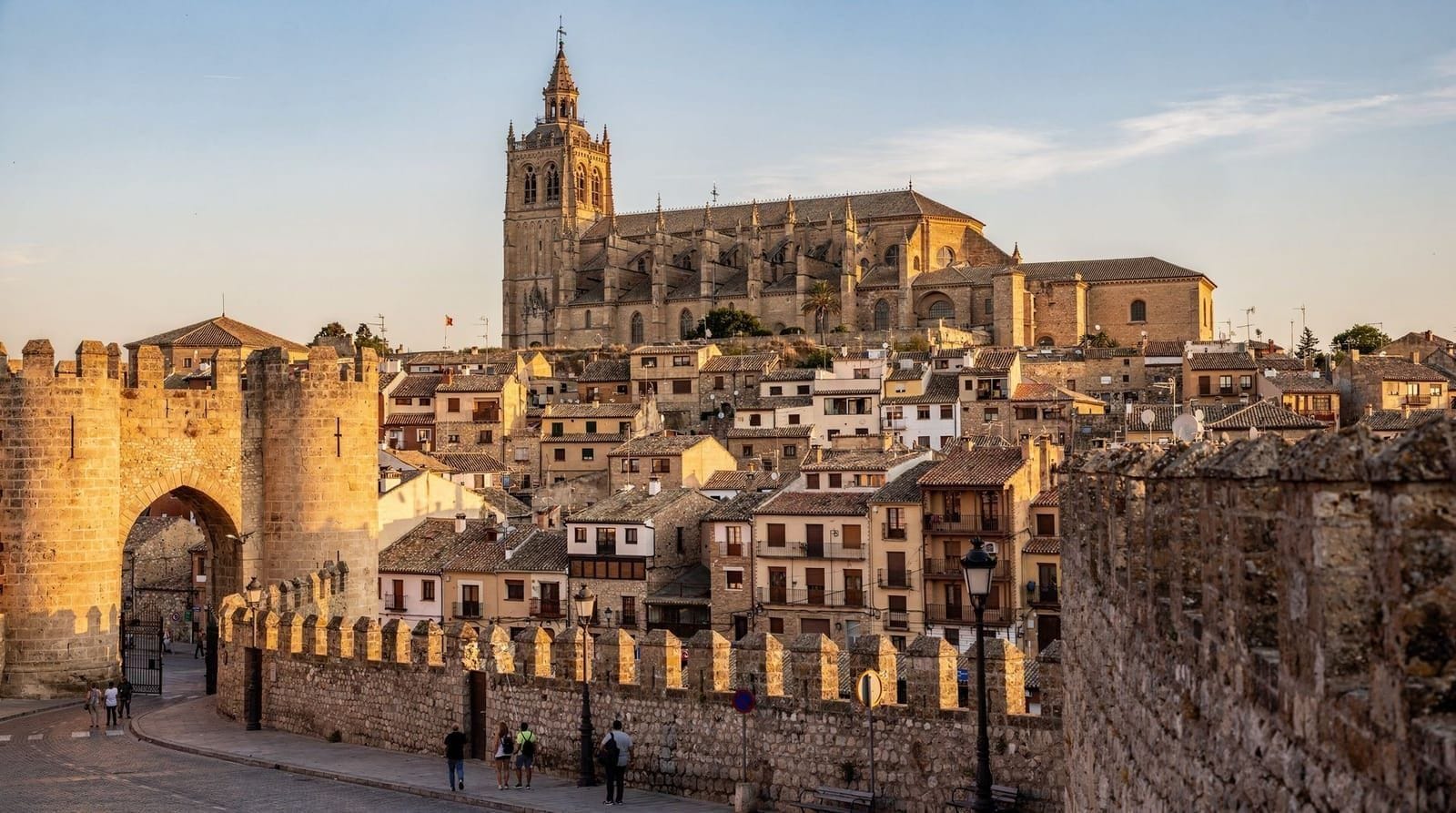
What makes Alcalá particularly appealing as a day trip is what it lacks: the overwhelming tourist crowds of Toledo and Segovia. Alcalá gets a fraction of the visitors, which means the university quarter, the arcaded Calle Mayor, and the museums are quiet, uncrowded, and available at a genuinely local pace.
| Where | Alcalá de Henares, Community of Madrid, ~35km east of Madrid |
| Cost | Around €3–4 each way by Cercanías; free with Tourist Travel Pass |
| Time needed | Half-day (4–5 hours) is enough for the UNESCO centre |
| Getting there | Cercanías C-2 from Atocha or Chamartín, ~40 minutes |
| Best time | Weekday mornings; quieter than Toledo or Segovia year-round |
Getting to Alcalá de Henares from Madrid
By Cercanías C-2 (recommended and cheapest)
The most direct route. Cercanías C-2 trains depart from Madrid Atocha or Chamartín to Alcalá de Henares approximately every 15–30 minutes throughout the day.
- Departure stations: Madrid Atocha or Chamartín (different stops on the same C-2 line)
- Arrival station: Alcalá de Henares — 10-minute walk from the old town
- Journey time: ~40 minutes from Atocha
- Fare: ~€3–4 each way; Tourist Travel Pass valid
- From the station: Walk north along Paseo de la Estación to reach Calle Mayor
The C-2 also stops at Madrid Príncipe Pío and Madrid Sol (Nuevos Ministerios) — useful for picking up the train if you’re coming from the west or city centre.
If you are unsure which of the two main stations suits your hotel, the Atocha vs Chamartín guide explains the difference. For how the commuter network works in general, see the Cercanías guide, and if a pass would simplify your ticketing, the Tourist Travel Pass guide is worth a look before you buy single fares. Alcalá is also one of the easiest options in our roundup of day trips without a car.
By guided tour
Alcalá de Henares Cervantes Museum day trip from Madrid — guided visit with Cervantes museum entry.
Alcalá de Henares and winery half-day tour — combines the historical centre with a local winery visit.
For a literary Don Quixote route combining Alcalá, Toledo, and Consuegra: Don Quixote route: Toledo, Consuegra, and Alcalá.
What to see in Alcalá de Henares
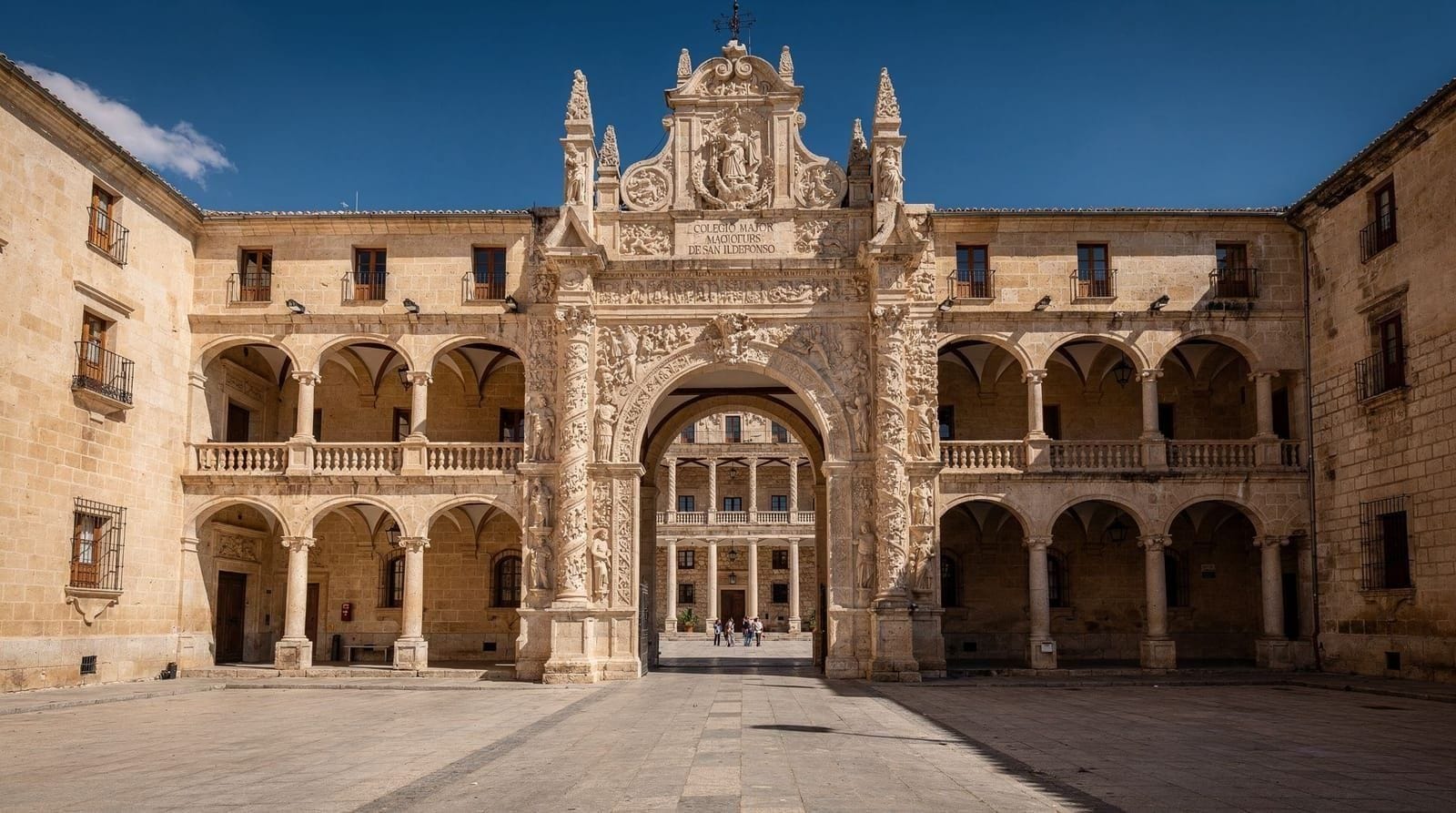
Colegio Mayor de San Ildefonso (University of Alcalá)
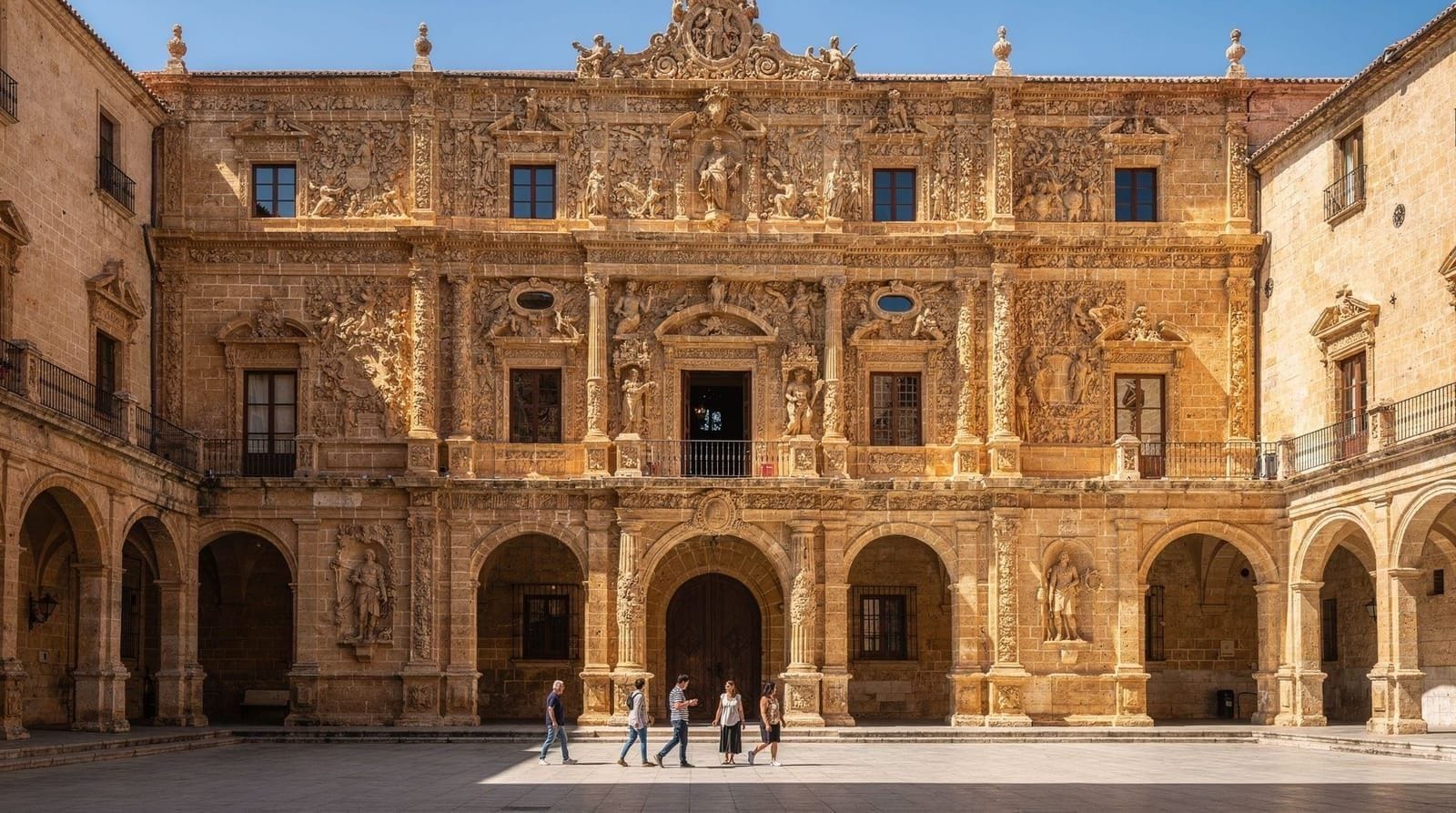
The centrepiece of the UNESCO heritage zone — the main building of Cisneros’ university, with its remarkable Plateresque façade (a style unique to Spain, blending Gothic and Renaissance ornament) completed in 1553. The interior can be visited: the Paraninfo (grand hall where Cervantes Prize for Spanish literature is awarded annually in April) and the cloister of Santo Tomás de Villanueva are highlights.
University tours depart from the main entrance regularly. Guided tours cost €6 (€4 reduced) and run Tuesday to Sunday; check the University of Alcalá guided tours service for current times.
Casa Natal de Cervantes (Cervantes Museum)
The birthplace of Miguel de Cervantes, reconstructed as a museum recreating a 16th-century middle-class home. Rooms furnished in period style; first editions of Don Quixote on display; exhibition on Cervantes’ biography and the context of his writing. A short, well-done museum — allow 45–60 minutes.
Admission: free. Located on Calle Mayor, 5 minutes from the university.
Catedral-Magistral de Alcalá
One of only two cathedrals in the world whose Chapter is attached to a university (the other is in Leuven, Belgium). Gothic cathedral, 15th–16th century. Notable carved choir stalls and the tomb of Cardinal Cisneros. Entry: €2 for the cathedral, cloister and museum (unguided visit).
Calle Mayor
The arcaded main street of the historic centre — one of the best-preserved Renaissance commercial streets in Spain, with continuous 16th-century arcading providing shade and shelter. The city’s best pastry shops and bakeries are concentrated here. Buy almendras garrapiñadas (caramelized almonds) from the street vendors — a local tradition.
Corral de Comedias
A 16th-century open-air theatre (corral), one of Spain’s oldest surviving theatre spaces. Similar in design to the corrales in Madrid (now lost) where the comedies of Lope de Vega were first performed. Guided tours available; check the tourist office for current programming (theatre performances occasionally take place here).
Roman Complutum (optional)
The Roman city of Complutum, predecessor to medieval Alcalá, lies 2.5 km east of the historic centre — reachable by bus or taxi. The Casa de Hippolytus archaeological site contains remarkable Roman mosaic floors and a reconstructed Roman house. Good if you have a full day; skip if you’re pressed for time.
Where to eat in Alcalá
Calle Mayor restaurants and cafés are the easiest options — avoid the tourist-oriented terrace cafés near the university main entrance, which charge more for less. Walk half a block from Calle Mayor for honest menú del día (€12–15).
La Hostería del Estudiante (Colegio de Málaga, near the university): A restaurant inside a restored Renaissance building, operated by the Parador chain. The atmosphere is worth the premium (€25–40 per person); traditional Castilian cuisine. Reserve for weekends.
Almendras garrapiñadas: Buy from street stalls or any bakery on Calle Mayor — the honeyed almonds are the distinctive local confection, made in Alcalá since at least the 17th century.
Cardinal Cisneros and the founding of modern Spanish identity
Francisco Jiménez de Cisneros (1436–1517) is one of the most consequential figures of the Spanish Renaissance and barely known outside Spain. He was confessor to Isabella of Castile, Archbishop of Toledo (the most powerful religious post in Spain), twice regent of the kingdom, Grand Inquisitor, and founder of the Complutense university that became the intellectual centre of Spanish Catholicism.
His political project: to reform the Spanish church from within, creating a clergy educated in Greek, Hebrew, Latin, and Castilian — multilingual and capable of engaging with the Renaissance humanist tradition while maintaining orthodox doctrine. The polyglot Bible he commissioned (the Biblia Complutense, 1514–1517) was the physical embodiment of this: Hebrew, Greek, Aramaic, and Latin in parallel columns, representing the first serious scholarly edition of the complete Bible in its original languages.
Cisneros personally funded the university from his episcopal revenues (he was enormously wealthy by the standards of the time). He designed the curriculum, hired the faculty, supervised the construction — and continued to run both the university and the Cardinal-Archbishop’s administrative apparatus simultaneously. He died in 1517, aged 81, on his way to meet the new king Charles I (the future Holy Roman Emperor) to hand over power.
The university became the model for the first university in the Americas (Mexico, 1551) and for many European institutions. The idea of a planned university city — purpose-built, comprehensive curriculum, residential colleges — was Cisneros’ innovation.
Cervantes in context
Miguel de Cervantes Saavedra (1547–1616) did not have the successful life his literary legacy might suggest. He fought at the Battle of Lepanto (1571), losing the use of his left hand. He was captured by Barbary pirates and spent five years as a slave in Algiers before his family ransomed him. He worked as a tax collector in Andalusia, was briefly imprisoned, and struggled financially for most of his adult life.
Don Quixote Part I was published in 1605, when Cervantes was 57. Part II appeared in 1615, one year before his death. Both parts were immediate bestsellers — translated into English before Cervantes died.
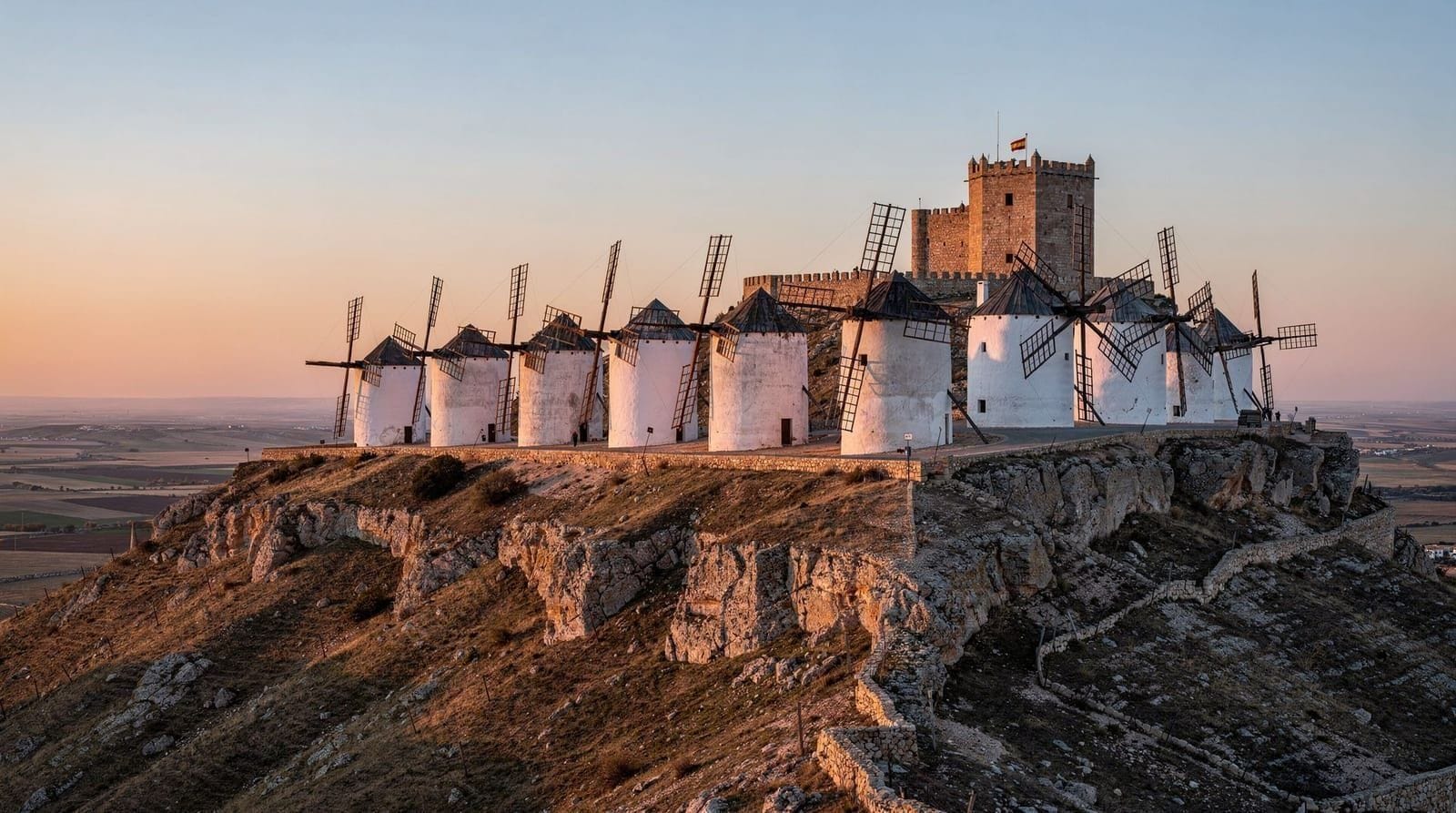
The novel’s joke is layered: Alonso Quijano, a minor nobleman who has read too many chivalric romances, goes mad and believes himself to be a knight errant. The windmills he attacks (believing them giants) are the same La Mancha post-mills visible at Consuegra and Campo de Criptana today. The joke is on him, and on the entire tradition of chivalric romance — but the novel also mocks the reader who reads ironically without recognising how they are also Quixote.
Cervantes’ Alcalá birthplace is partly a pilgrimage and partly an invitation to think about what it means to know someone only through their writing. The house itself is a reconstruction; what’s real is the baptismal record, the date, and the small city that shaped the man who changed literature.
Back in the capital, you can keep following the thread through the Literary Quarter guide, which covers the streets where Cervantes and his Golden Age contemporaries lived and worked, and the Barrio de las Letras destination page. Visiting Alcalá first gives that neighbourhood walk much more context.
A practical Alcalá day itinerary
09:30 — Arrive at Alcalá de Henares station. Walk to Calle Mayor (10 min). 09:45 — Breakfast on the arcade. 10:15 — University of Alcalá guided tour (1 hour, €6). Paraninfo, cloister, library. 11:30 — Casa Natal de Cervantes (45 min, free). 12:15 — Cathedral-Magistral (€2, 30 min). 12:45 — Corral de Comedias (30 min if open). 13:15 — Almendras garrapiñadas from a street stall. 13:30 — Lunch near Plaza de Cervantes. 15:00 — Return to station, train back to Madrid.
Optional extension: Roman Complutum site (2.5 km by bus, 1.5 hours) for those interested in the archaeological layer beneath medieval Alcalá.
Practical notes: The historic centre is flat and pedestrian-friendly, unlike the hilltop old towns of Toledo or Segovia — a genuine advantage if uneven terrain or lots of stairs are a concern. Most sights, cafés and the station are within a 15-minute walk of each other, so a single comfortable pair of shoes is all you need. Public toilets are available at the tourist office on Plaza de los Santos Niños, near the university.
Alcalá in your Madrid itinerary
Alcalá works well as a half-day combined with an afternoon in Madrid, or as part of the Madrid week with day trips itinerary. For literary travellers, combine with Toledo (El Greco, the literary Golden Age context) and Consuegra (Don Quixote landscapes) — see the Consuegra windmills guide and the Toledo from Madrid guide.
The day trips by train guide covers the Cercanías network in full, and the best day trips from Madrid overview puts Alcalá alongside the other options if you’re still deciding where to spend a free day.
How Alcalá compares to Madrid’s other easy day trips
| Destination | Travel time | Character | Crowd level |
|---|---|---|---|
| Alcalá de Henares | ~40 min Cercanías | University quarter, Cervantes, flat and compact | Low — genuinely quiet |
| Aranjuez | ~40 min Cercanías | Royal palace and gardens by the river | Low–moderate |
| Toledo | ~30 min AVE | Hilltop old city, cathedral, El Greco | High |
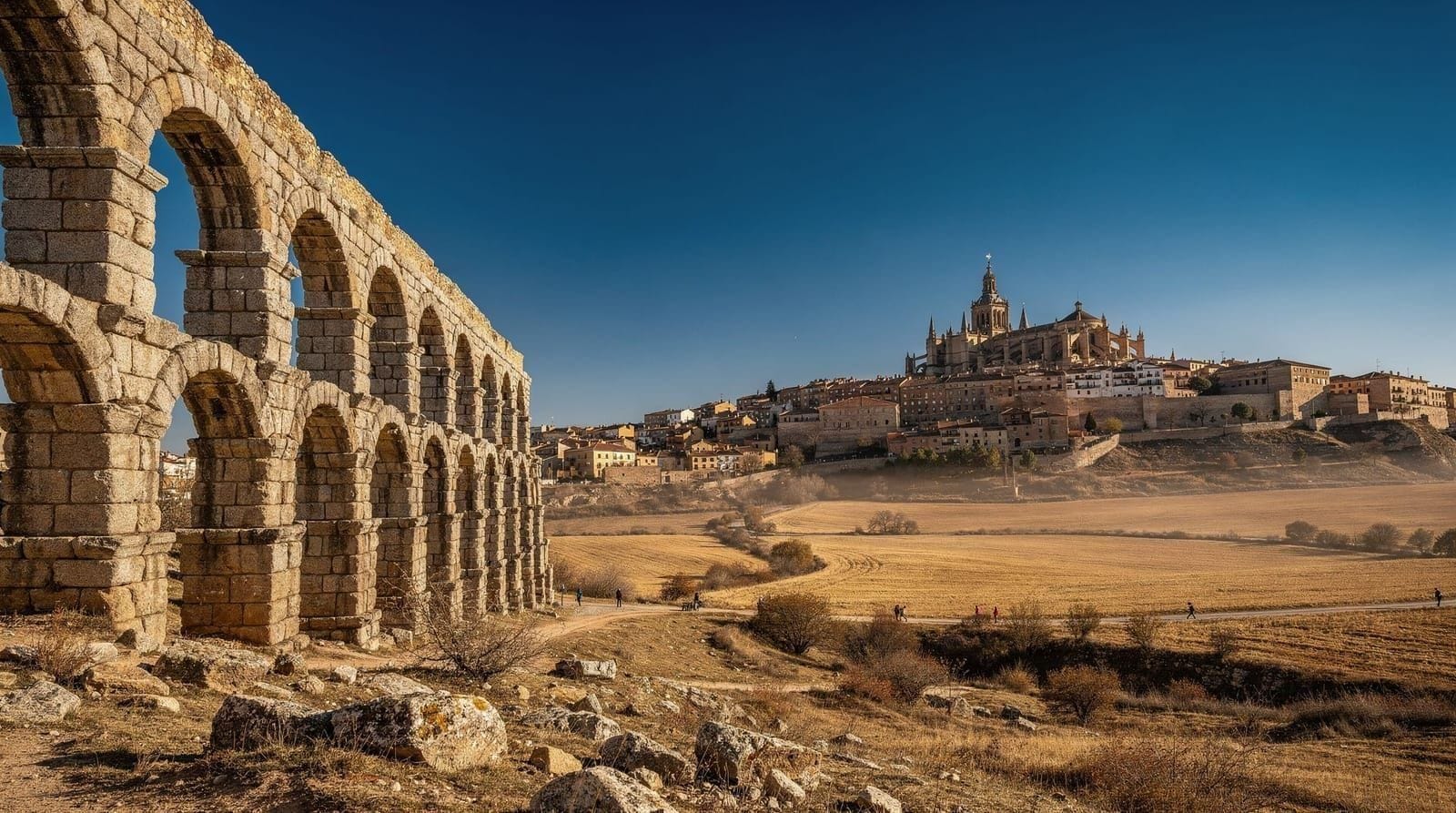
| Segovia | ~30 min AVE | Aqueduct, Alcázar, hilltop old town | High |
| El Escorial | ~55 min Cercanías | Monastery, royal pantheon, mountain air | Moderate |
If crowds are a bigger concern for you than headline monuments, Alcalá and Aranjuez are the two calmest options within easy Cercanías reach of central Madrid. The Aranjuez from Madrid guide is the natural companion read, and if you are weighing the busier pair, Toledo vs Segovia helps you pick. For a Toledo day done properly, the Madrid and Toledo itinerary lays it out.
DIY by Cercanías vs guided tour: the verdict
DIY by Cercanías C-2 is the obvious choice. Alcalá is cheap to reach (~€3–4 one way), easy to navigate, and all the key sites are within walking distance of each other. The city is small and well-signposted. The Cervantes museum and university tours are self-explanatory with English materials.
Guided tour adds value only if you want deep literary or historical context, or if you’re combining it with another day-trip destination (the Consuegra/Toledo/Alcalá Don Quixote route is genuinely interesting as a thematic day).
Frequently asked questions about Alcalá de Henares from Madrid
Why is Alcalá de Henares a UNESCO World Heritage Site?
Alcalá's historic university was one of the most influential in Renaissance Europe. Founded by Cardinal Cisneros in 1499, it became the model for the first Spanish university in the Americas and for many European institutions. The city's historic quarter preserves the original Renaissance university buildings, student residences (colegios), and street layout that defined the 'university city' concept. UNESCO recognized it as a World Heritage City of Knowledge in 1998.Was Miguel de Cervantes really born in Alcalá?
Yes. Miguel de Cervantes Saavedra was baptized in Alcalá on 9 October 1547 (birth date uncertain but likely a day or two earlier). His birthplace house has been reconstructed as a museum recreating a 16th-century middle-class home and displaying first editions of Don Quixote. The house itself is largely a reconstruction — the original structure no longer exists — but the site is authenticated and the museum is well done.What is the Complutense Polyglot Bible?
Cardinal Cisneros commissioned the first polyglot Bible at Alcalá's university — the Biblia Complutense (1514–1517), printed in Hebrew, Greek, Latin, and Aramaic in parallel columns. It was one of the most ambitious publishing projects of the Renaissance. The Alcalá university display includes a replica; the original is in the Biblioteca Nacional in Madrid. 'Complutum' was the Roman name for Alcalá.Is there anything else to see besides the university in Alcalá?
Yes: the Catedral-Magistral (one of two cathedrals in the world attached to a university chapter), the Corral de Comedias theatre (16th-century open-air theatre, one of Spain's oldest still in use), the well-preserved Calle Mayor arcade, and the Archaeological Museum of the Complutum Roman site (Roman Alcalá). The city also has good pastry shops selling traditional almendras garrapiñadas (honey-coated almonds).How long does it take to see Alcalá de Henares?
A relaxed half-day (4–5 hours) covers all the key sites: university buildings, Cervantes house, cathedral, Calle Mayor, and a lunch. The old town is compact — under 1 km across. If you add the Roman Complutum archaeological site (2.5 km from the centre), add another 1–1.5 hours. Full day is comfortable but not necessary.Is Alcalá a good day trip for literary fans?
Excellent. Cervantes was born here; Don Quixote was written by someone who knew Castilian village life intimately. The Museum of Cervantes has good contextual displays. The Colegio Mayor and university buildings were the intellectual backdrop to Spain's literary Golden Age. The Corral de Comedias theatre — where the work of Lope de Vega and Calderón was performed — adds further literary geography.Can I combine Alcalá de Henares with another day trip in one day?
It's possible but tight, since Alcalá deserves at least a half-day on its own. A more comfortable pairing is an early-morning start with Alcalá in the morning and a light Madrid afternoon, rather than stacking Alcalá with Toledo or Segovia the same day — both of those need most of a day themselves. If you want a themed literary day, several guided tours combine Alcalá with Consuegra and Toledo along a Don Quixote route, using a private vehicle to manage the logistics.Is Alcalá de Henares worth visiting if I've already seen Toledo or Segovia?
Yes, and for a different reason: Toledo and Segovia are about medieval and Renaissance monuments and dramatic hilltop settings, while Alcalá is specifically about the history of ideas — a purpose-built university city and the birthplace of Spain's most important writer. It's also flatter, smaller, and far less crowded than either, which makes it a good lower-effort add-on rather than a competing headline day trip.
Top experiences
Bookable activities with verified prices and instant confirmation on GetYourGuide.