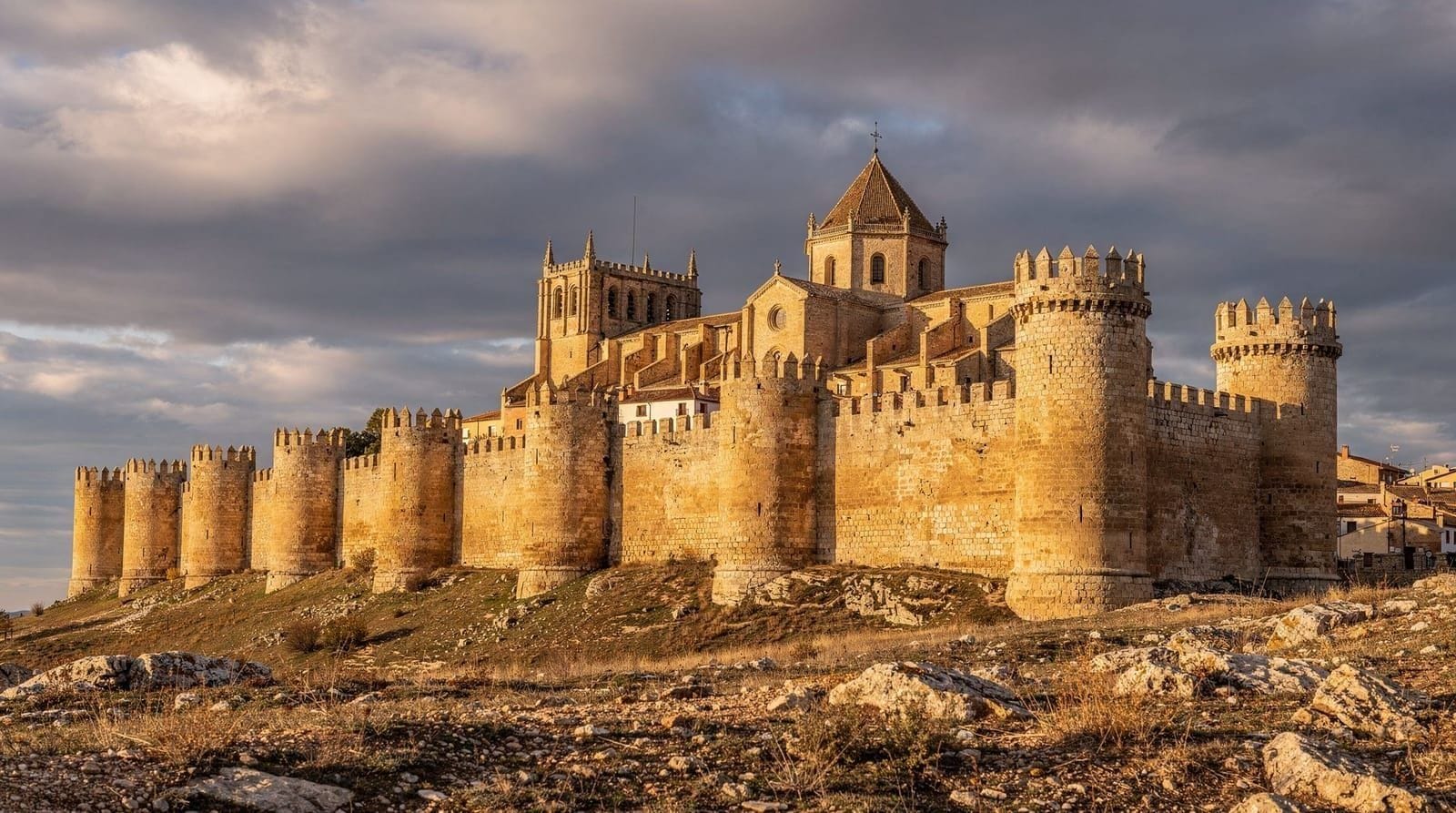
Alcalá de Henares
Alcalá de Henares is 40 min by Cercanías from Madrid. Cervantes' birthplace, one of Europe's first universities, and a compact UNESCO old town. Zone B3
Alcalá de Henares: Alcalá Cervantes Museum Day Trip
Quick facts
- Cercanías from Madrid (Atocha)
- ~35–45 min (C-2 line)
- Train fare
- See Renfe for the current fare
- UNESCO status
- University and historic precinct since 1998
- Population
- ~200,000 (second city of the Comunidad)
- Miguel de Cervantes
- Born here 1547
- Storks
- Breeding colony visible on church towers April–August
Alcalá de Henares is the most accessible day trip from Madrid — 35–45 minutes by suburban Cercanías train, Zone B3 — and one of the least visited, which is puzzling given its credentials. It was the birthplace of Miguel de Cervantes in 1547, home to one of the first universities in Europe (founded 1499), and for a few decades in the 16th century it was the intellectual capital of Spain, producing the Complutensian Polyglot Bible and attracting scholars from across Europe.
The city received UNESCO World Heritage status in 1998 for its University and Historic Precinct. Unlike Toledo’s massive tourism machine or Segovia’s weekend coaches, Alcalá functions as a normal commuter city with a historic core that visitors mostly wander at their own pace. No queues at the monument doors. Students cycling between the faculty buildings. A reasonable menú del día for €12 in the university bar. If you want to see a medieval university city that actually functions as a university city, this is it.
| Where | 35 km northeast of Madrid, Comunidad de Madrid |
| Getting there | Cercanías C-2 from Atocha, ~35–45 min |
| Cost for the day | Roughly €20–€35 including lunch and one paid entry |
| Time needed | Half day (3–4 hours) |
| Best for | Cervantes/literary history, budget day trip, quiet UNESCO city |
Getting to Alcalá de Henares from Madrid
The Cercanías C-2 line from Atocha (or intermediate stations — the C-2 serves much of central Madrid) reaches Alcalá de Henares in approximately 35–45 minutes depending on stops. Trains run every 10–15 minutes during the day. The fare is covered by Zone T of the Madrid Abono Turístico (Tourist Travel Pass); for the current single fare, see the Renfe website. No booking required.
The station is about 800 metres from the historic centre — a 10-minute walk along Avenida Complutense towards the pedestrian old town. Taxis are available if needed but unnecessary.
Guided visit to Alcalá de Henares including Cervantes Museum from MadridThe University of Alcalá
The Universidad Complutense de Alcalá was founded in 1499 by Cardinal Cisneros as part of the reform of Spanish religious and intellectual life. It was one of Europe’s earliest planned universities — designed as a complete academic city with colleges, dormitories, and a central ceremonial complex — and it attracted some of the leading humanists of the 16th century. Erasmus was offered a chair (he declined). The Complutensian Polyglot Bible (1514–1517), the first printed polyglot Bible with parallel texts in Hebrew, Greek, Latin, and Aramaic, was produced here.
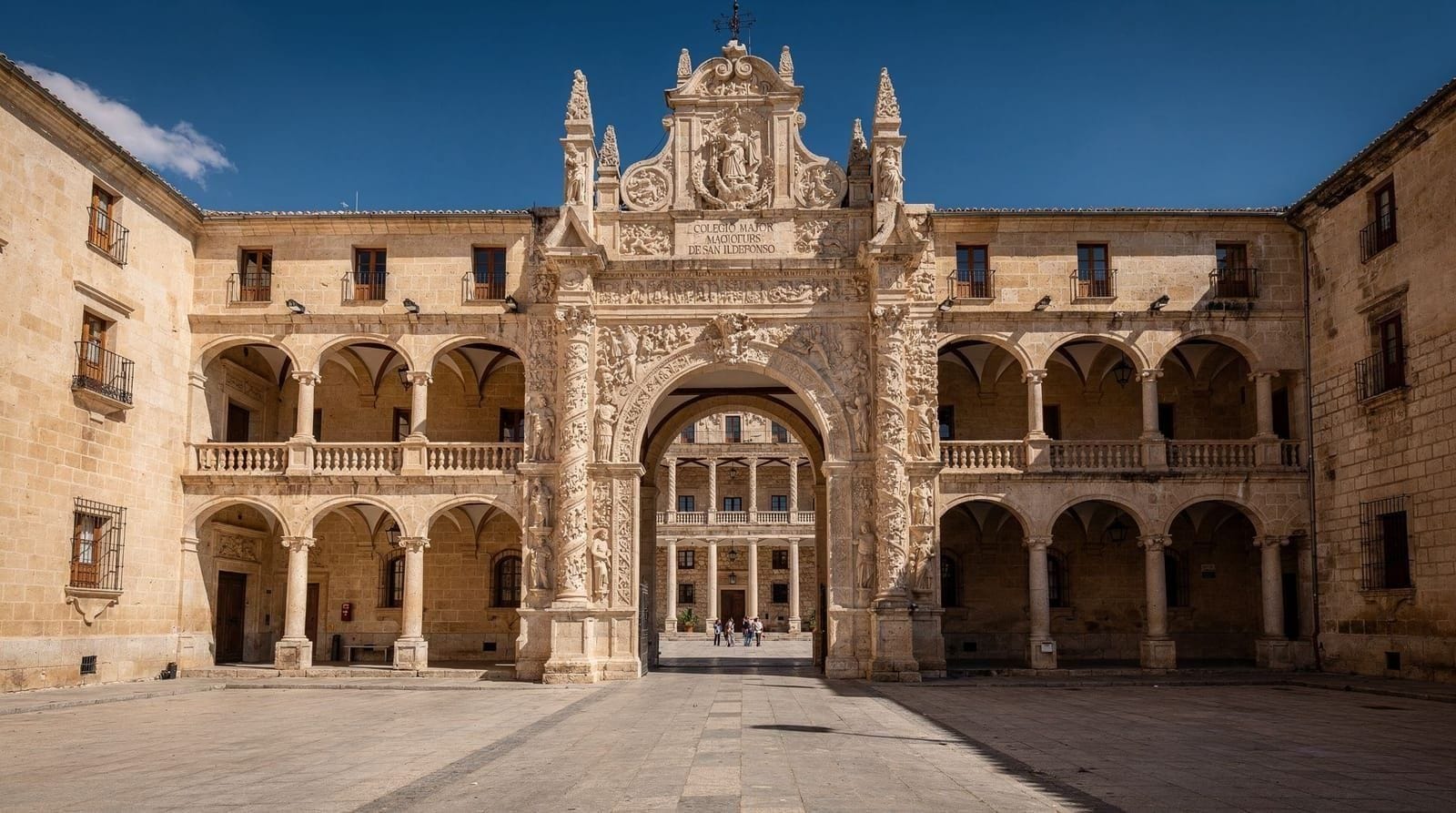
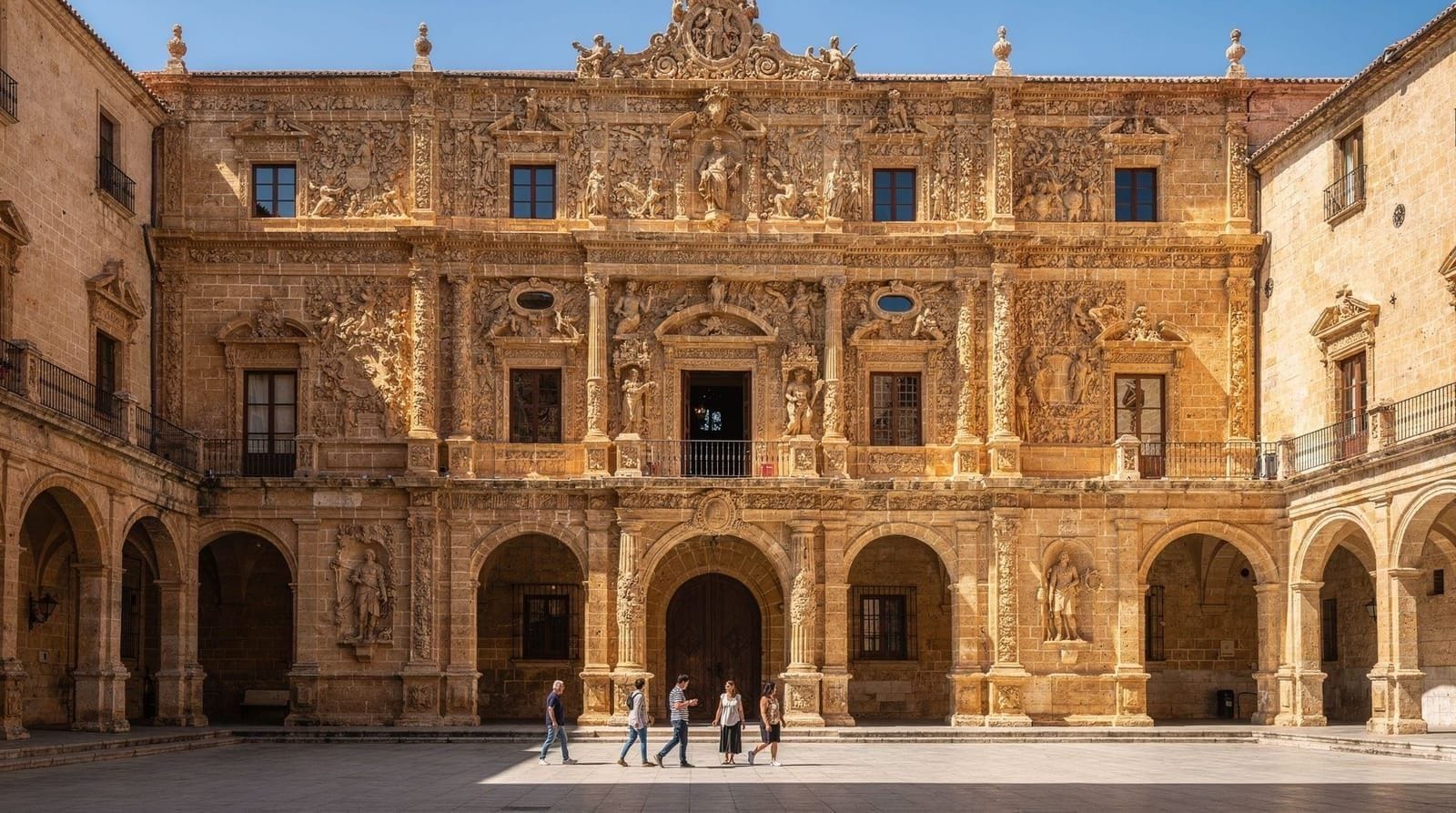
The institution moved to Madrid in 1836 (becoming the current Universidad Complutense de Madrid), but the historic campus in Alcalá was re-established in 1977 and is again a functioning university. The central building — the Colegio Mayor de San Ildefonso — is a UNESCO core site. Its Paraninfo (main hall) has a coffered ceiling and stone gallery; it is the ceremony hall used for the annual Premio Cervantes, Spain’s highest literary prize, awarded on 23 April (Cervantes’ death anniversary) by the King of Spain. Tours of the Paraninfo and university buildings run through the day for €4–€6; check current schedules at the Palacio del Arzobispo visitor centre.
Casa Natal de Cervantes
The house where Miguel de Cervantes Saavedra was born in 1547 — or at least the house consistent with what records suggest was his birthplace — is now the Museo Casa Natal de Cervantes (Calle Mayor 48). The 16th-century structure has been restored and furnished as it might have appeared in Cervantes’ lifetime: a middle-class notary’s household, with the apothecary medicines associated with his father (a barber-surgeon), printed books, domestic implements, and documentary material about Cervantes’ life and the composition of Don Quixote. Entry is free.
The collection focuses on the context of 16th-century Castilian literary culture rather than Cervantes mythology — the display is scholarly and informative rather than hagiographic. Don Quixote (1605, Part I; 1615, Part II) is one of the first and most widely translated novels in world literature, and the museum provides context for understanding the Castilian landscape and culture from which it emerged.
The Calle Mayor and the historic centre
Alcalá’s Calle Mayor is a fine 16th-century arcaded street, one of the longest in Spain (about 900 metres), lined with shops, cafés, and the colonnaded storefronts that give the university city its distinctive civic character. The street runs from the railway station area to the historic centre. Alongside the university buildings and Cervantes’ house, the main sights in the compact old city include:
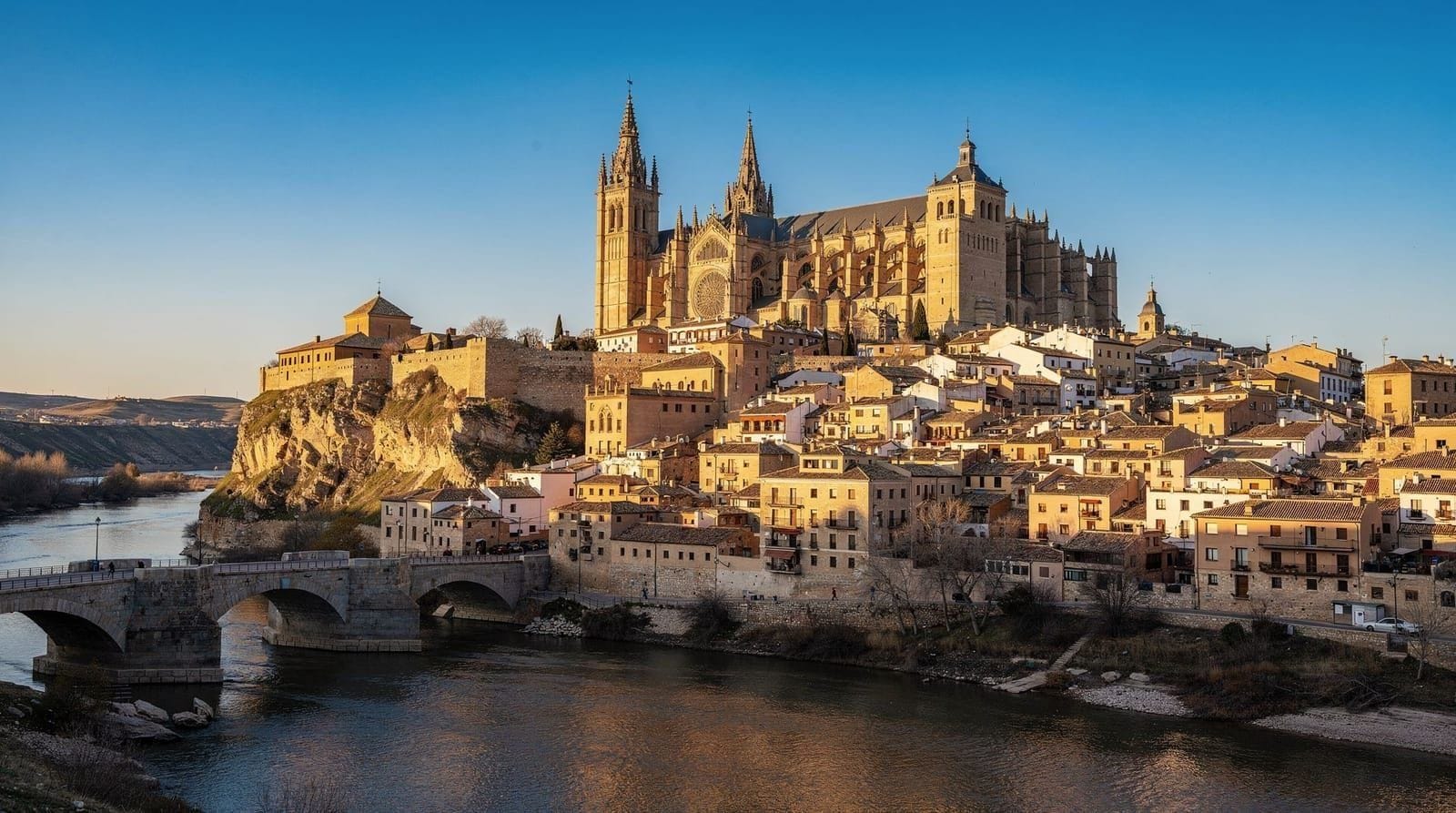
Catedral-Magistral de los Santos Justo y Pastor: the only cathedral in the world whose entire chapter consists of master graduates — a privilege granted by Pope Alexander VI in 1499. The Gothic tower is visible from throughout the centre. Entry €2.
Archbishop’s Palace (Palacio Arzobispal): the complex includes the Puerta de Madrid (a ceremonial arch) and the restored palace courtyard. Historical significance: Catherine of Aragon was born here in 1485; Henry VIII’s first wife. Entry to parts of the courtyard is possible; visitor centre inside.
El Corral de Comedias (Calle Cervantes): one of Spain’s oldest surviving corrales (open-air theatres), dating from 1601. Active theatrical programme during the Cervantes Festival in October; occasionally open for tours outside the festival season.
Storks (cicogüeñas): from approximately March/April through August, white storks nest on the towers of the Cathedral, churches, and historic buildings throughout the city. Alcalá has one of the densest breeding populations in the region; the visible nests (massive stick constructions atop every available tower and belfry) and the wheeling birds are a spectacle in season. Best viewing from Plaza de Cervantes.
Where to eat in Alcalá de Henares
Alcalá has the useful quality of feeding a large local population and university community, which keeps prices grounded. The tourist premium is modest compared to Segovia or Toledo.
El Rincón del Campeador (Calle Escritorios 19): traditional Castilian kitchen, reasonable prices, good cordero asado (roast lamb). Mains €14–€22.
Bar Restaurante El Estudiante (Plaza de los Santos Niños 1): the classic university-district lunch spot, menú del día €12–€14, outdoor tables in the square, reliable.
Los Portales (Calle Mayor, various establishments): the arcaded terrace restaurants along Calle Mayor serve food of mixed quality; choose by checking whether there are locals eating there rather than just tourists with cameras.
Pastry: almendras garrapiñadas (caramelised almonds) are the local confection, sold from stalls along Calle Mayor. €3–€5 per bag.
Cardinal Cisneros and the Alcalá project
The university at Alcalá was the project of Francisco Jiménez de Cisneros (1436–1517) — Cardinal Archbishop of Toledo, Grand Inquisitor, and regent of Castile during the interregnum between the death of Ferdinand of Aragon and the arrival of Charles I. Cisneros was one of the most formidable intellectual and political figures of his era: a Franciscan friar who became the most powerful ecclesiastical figure in Spain, a military commander (he led the 1509 campaign to capture Oran in North Africa at age 73), and the founder of an institution designed to reform Spanish intellectual and religious life.
The university he founded at Alcalá in 1499 was explicitly planned as a tool of religious humanism — the recovery of classical languages and original texts as the basis for theological reform. The Complutensian Polyglot Bible (1514–1517) was the flagship project: six volumes, four languages in parallel columns, produced at Alcalá’s press over a decade using the best available manuscripts and the most competent Hebrew, Greek, and Latin scholars in Europe. The project required acquiring manuscripts from across Europe (some from the Vatican), hiring specialists from multiple countries, and coordinating a publication enterprise of unprecedented complexity.
Cisneros died in 1517, the same year Charles I arrived in Spain. His portrait — severe, thin, intense — hangs in the Paraninfo of the university he built.
Don Quixote and Cervantes
Miguel de Cervantes is Alcalá’s most famous son. Born 1547, baptised in the church of Santa María la Mayor (the record survives), he left Alcalá as a young man and did not make his literary career here. The city’s connection to Don Quixote (1605, 1615) is primarily biographical — the novel was not set in Alcalá and does not directly reference it — but the city has claimed Cervantes with understandable enthusiasm.
Don Quixote is the most widely translated work in the Spanish language and one of the most translated texts in any language. It was the first novel in the modern sense to systematically undercut its own narrative conventions — a book about a man who reads too many novels and can no longer distinguish fiction from reality, written by an author fully aware of the comic and philosophical implications of his subject. The character of Alonso Quixano who becomes Don Quixote is a portrait of misreading so precise that it still functions as a critique of the relationship between reading and identity.
The Museo Casa Natal displays a collection of editions and translations that communicates the global reach of the work — editions in Japanese, Arabic, Hebrew, Swahili, and dozens of European languages occupying the same display cases in the house where Cervantes was born. The object lesson in the universality of a locally born story is not accidental.
The Archbishop’s Palace and Catherine of Aragon
Alcalá de Henares was for centuries the administrative seat of the Archbishops of Toledo — the most powerful ecclesiastical see in Castile. The Archbishop’s Palace (Palacio Arzobispal) complex includes several buildings from different periods; the most significant historical event associated with it is the birth of Catherine of Aragon in 1485. She was the fourth child of Ferdinand and Isabella, born in the palace before her family’s court moved to other residences. She later became the first wife of Henry VIII of England; the failure of their marriage and Henry’s subsequent break with Rome reshaped European religious history. A plaque on the palace exterior marks her birthplace.
The palace complex was substantially damaged in the Spanish Civil War (1936–1939); the Puerta de Madrid gate (17th century, a ceremonial arch) is one of the better-preserved elements and serves as the visual entrance to the university quarter from the west.
The October Cervantes Festival
Each October (dates vary, centred on 23 April which is UNESCO World Book Day and the anniversary of Cervantes’ death), Alcalá holds the Semana Cervantina and related cultural programming. The highlight is the Premio Cervantes ceremony (November, in the Paraninfo), but October in Alcalá brings street performances, theatre in the Corral de Comedias, markets in medieval dress, and a generally festive atmosphere in the old city that is worth planning around.
Combining Alcalá with other trips
Alcalá pairs easily with a Madrid city day — arrive late morning, lunch in the university quarter, walk the old city, return by late afternoon. The low cost and short journey time make it the obvious second-day-trip option after the bigger destinations.
For wine tourism, the guide Alcalá de Henares winery half-day tour covers a combination of the historic city with a visit to a winery in the Vinos de Madrid DO, the wine appellation that covers the area south and east of Madrid. This is an unusual pairing that covers two different aspects of Castilian culture in one excursion.
If the literary thread appeals, the literary quarter guide follows Cervantes’ later life through the Barrio de las Letras in Madrid itself, so a morning in his birthplace and an afternoon in the Barrio de las Letras make a coherent pair. For the practical side of the journey, the Alcalá from Madrid guide goes into the logistics, and the Cercanías guide explains how the suburban network works if you have not used it before. Travellers building a longer stay can slot Alcalá into the week with day trips itinerary.
Alcalá versus the other classic day trips
Alcalá’s case rests on being the cheapest and shortest of Madrid’s UNESCO day trips, not the most spectacular. If you’re deciding where to spend a single free half-day, it’s worth seeing how it stacks up against the bigger names:
| Destination | Journey time | Round-trip cost | Best for |
|---|---|---|---|
| Alcalá de Henares | 35–45 min | ~€7 | Budget, literary history, zero queues |
| Toledo | 33 min (AVE) | ~€25–€30 | Full-day medieval city, cathedral, El Greco |
| Segovia | 28–30 min (AVE) | ~€25–€30 | Aqueduct, Alcázar, cochinillo |
| Ávila | ~1 h 30 | ~€20–€30 | Complete medieval walls |
For travellers with limited time or budget, Alcalá is the obvious first choice — it fits into a Madrid morning without disrupting the rest of the day, and the day trips by train guide covers how to combine it with a second, shorter stop if you have the stamina. For those prioritising spectacle over cost, Toledo or Segovia deliver more per visit, but at three to four times the transport cost and a longer commitment. The Madrid on a budget guide treats Alcalá as the anchor of a low-cost day-trip strategy for exactly this reason.
Practical information
Cost: the cheapest day trip from Madrid at roughly €7 round trip by Cercanías plus free museum entry (Cervantes house is free). A full day including lunch and monument entries costs €20–€35 total.
Best timing: weekday mornings are ideal — the university is functioning, the streets have local life, and the main sights have minimal queues. Weekends bring some tourists but nothing like Toledo or Segovia.
How to fit Alcalá into a Madrid trip: works well as a half-day add-on to a 3–4 day Madrid city trip. Take the C-2 after a Madrid morning, spend 3–4 hours in the historic centre, return for a Madrid evening. The best day trips from Madrid guide covers all options including Alcalá for travellers on a limited budget.
Frequently asked questions about Alcalá de Henares
Why is Alcalá de Henares a UNESCO World Heritage Site?
UNESCO designated the University and Historic Precinct of Alcalá de Henares in 1998, citing it as the first planned university city in the world (founded 1499), a model for later university cities in Latin America, and a well-preserved example of Renaissance urbanism. The Colegio Mayor de San Ildefonso and the planned university quarter were built to Cardinal Cisneros’ specifications as an integrated academic campus.
Was Cervantes really born in Alcalá?
The documentary evidence is strong — a 1547 baptismal record in the church of Santa María la Mayor naming Miguel de Cervantes. The exact house is less certain; the current museum is on the street consistent with the family’s location in period tax records. Whether it is precisely the house or a nearby property, Alcalá’s claim to Cervantes as a native son is well established.
How much does a day trip to Alcalá cost?
The Cercanías C-2 single fare is on the Renfe website. The Cervantes birthplace museum is free. Cathedral entry is €2. A menú del día lunch costs €12–€14. Budget €25–€35 for a full half-day including transport, meals, and one paid entry.
What is special about the Complutensian Polyglot Bible?
The Biblia Complutense (1514–1517), produced at the Alcalá university press under Cardinal Cisneros, was the first printed polyglot Bible: parallel columns of Hebrew, Latin (Vulgate), and Greek (Septuagint) in the Old Testament; Latin and Greek in the New Testament; with Aramaic/Chaldean in the Pentateuch. It was a scholarly landmark of the Northern Renaissance and an early product of the humanist recovery of original languages against medieval Latin translations. Original copies are held in major European libraries.
Is Alcalá de Henares better than Toledo or Segovia for a first day trip?
For a first, spectacle-driven day trip, no — Toledo and Segovia offer more concentrated sightseeing. But for a traveller with a tight budget, limited time, or who has already done the bigger cities, Alcalá is arguably the better choice: it costs a fraction of the transport, has essentially no queues, and its Cervantes and university history is genuinely significant rather than a consolation prize. Many visitors do Alcalá as their second or third day trip rather than their first.
Can I visit Alcalá de Henares in the morning and still see Madrid in the afternoon?
Yes, easily — this is the most common way to fit it in. Take an early Cercanías C-2 (departures every 10–15 minutes), arrive by mid-morning, spend 3–4 hours covering the university, the Cervantes museum, and lunch, then be back in central Madrid by early-to-mid afternoon with time for a Madrid sight or a stroll through Retiro Park.
Top experiences
Bookable activities with verified prices and instant confirmation on GetYourGuide.