Toledo day trip from Madrid — honest review 2026
From Madrid: Toledo Tour with Cathedral and 7 Monuments
Toledo in a day: what you are actually visiting
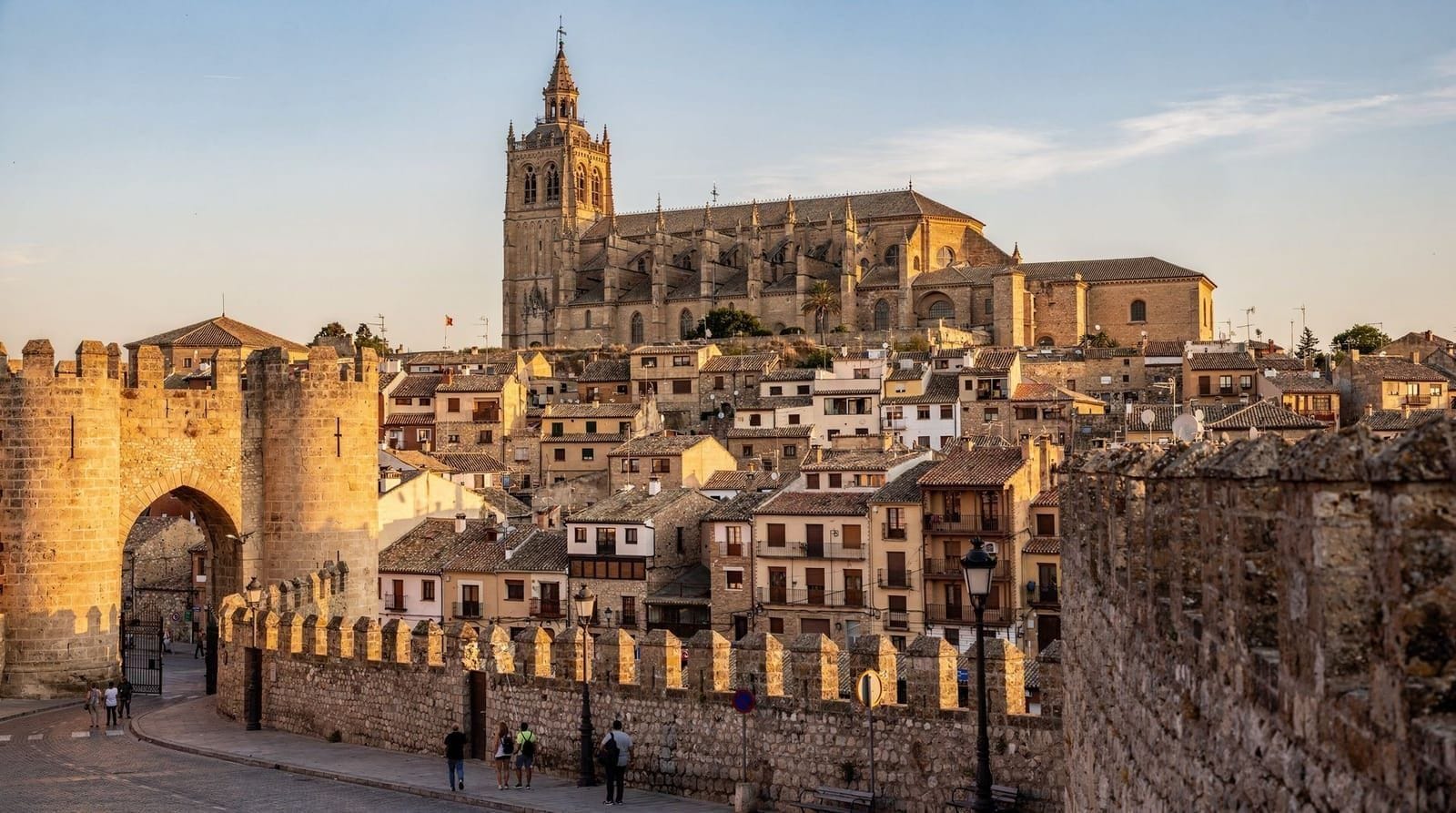
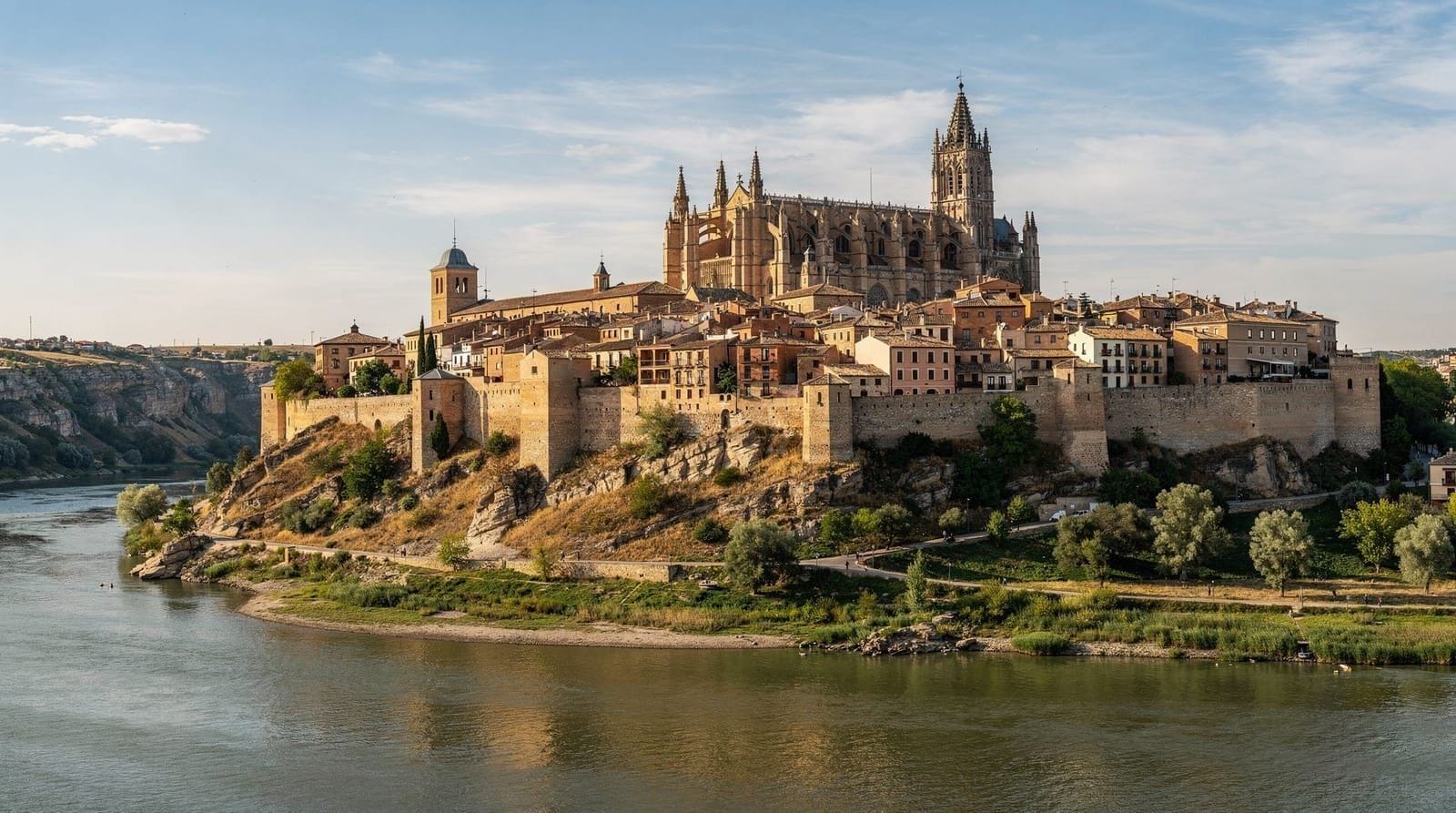
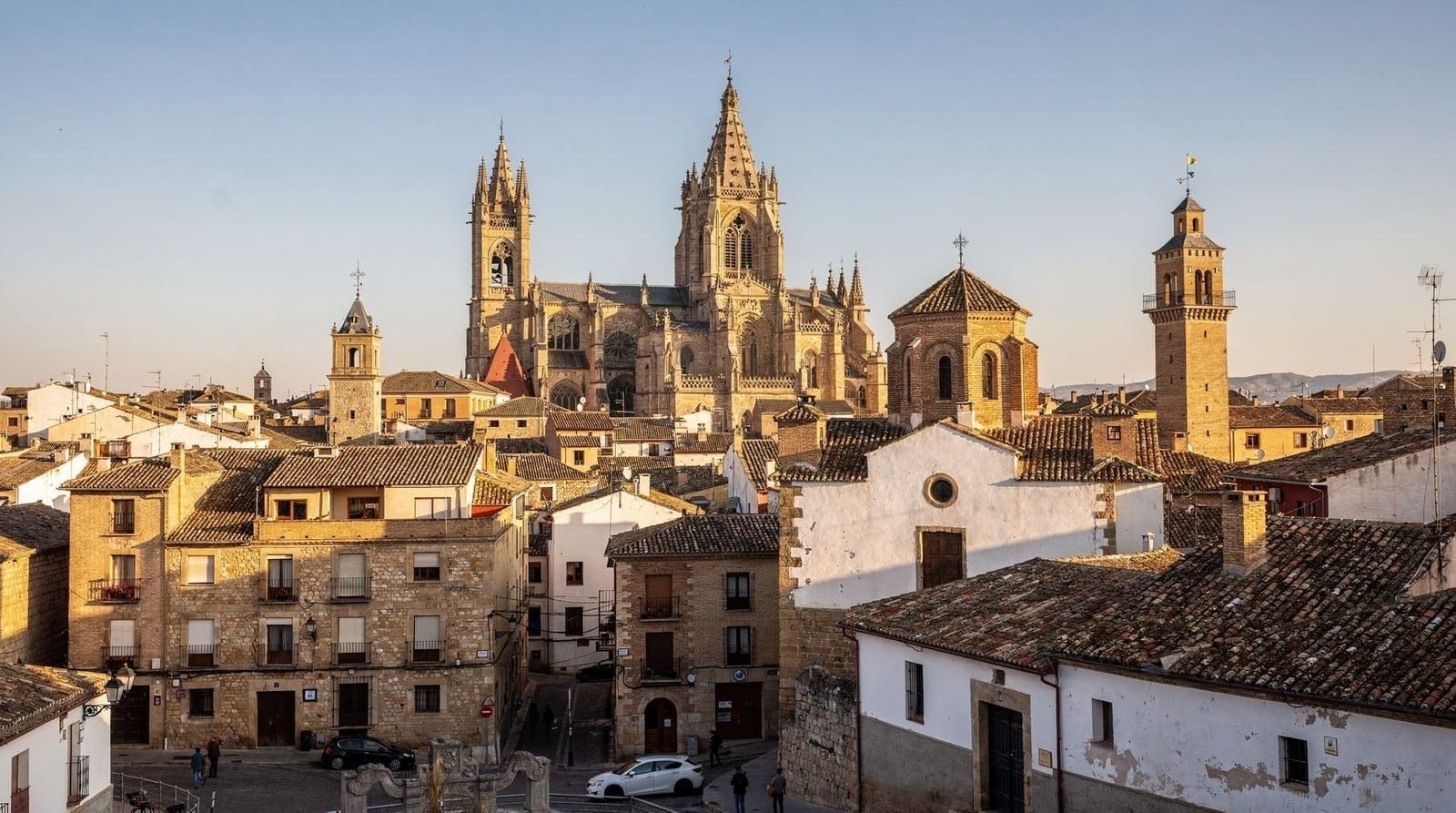
Toledo is 70 km south of Madrid, sitting on a granite promontory almost entirely encircled by a bend in the Tajo river. That geography made it one of the most defensible cities in medieval Iberia and one of the most important capitals in the peninsula. It served as the Visigothic capital before the Moorish conquest, as the seat of the Castilian court for three centuries, and as a UNESCO World Heritage site since 1986.
The city’s significance is inseparable from its history as a centre of convivencia — the coexistence, imperfect but real, of Christian, Muslim, and Jewish communities in medieval Castile. Toledo’s architecture layers these three traditions across 10 centuries of overlapping occupation: mosques converted to churches, synagogues survived and documented, Gothic cathedral built on the site of a mosque, and everywhere the Mudéjar decorative style that is the visual result of Islamic craftsmen working for Christian patrons. Understanding this layering is what transforms Toledo from a picturesque medieval town into one of the most historically significant cities in Europe.
The Toledo full-day tour with optional Cathedral entry is a well-structured format that covers the main sites with professional guided commentary and the flexibility to include Cathedral entry (separately priced) for those who want the interior as well as the exterior.
Getting there: train vs guided tour
By AVE from Atocha: The 33-minute AVE service is the most comfortable and fastest independent option. Trains depart approximately every 30–60 minutes and tickets cost €12–€16 each way. At Toledo station, a direct bus (line 5) or taxi (€8–€10) takes you to the historic centre; the walk from the station is uphill and approximately 20 minutes.
By bus from Plaza Elíptica: The ALSA bus takes 1 hour–1 hour 20 minutes from Plaza Elíptica (Line 5 metro). It costs €6–€8 each way and deposits you near the bus station at the city’s southern edge — a taxi or 15-minute walk to the historic centre.
By guided day-trip coach: Most operators depart Madrid between 08:00 and 09:30 from central pickup points (Gran Vía area, Callao, Atocha). The drive takes 50–75 minutes. The tour handles all logistics, includes a licensed guide for 4–5 hours in the city, and typically offers a choice of monument entry tickets.
The train is best for independent travellers who want flexibility. The guided tour is best for visitors who want context and don’t want to navigate monument queues and ticketing independently.
The Cathedral: the centrepiece
The Catedral de Toledo is one of the three great Gothic cathedrals of Spain (with Burgos and León), begun in 1226 on the site of the Great Mosque of Toledo and not completed until the late 15th century. The exterior — particularly the main west facade and the tower — is impressive from outside. The interior is extraordinary.
Entry costs €12. The interior covers approximately 120 metres long and 30 metres high in the main nave, with 750 stained glass windows, 187 choir stalls in carved walnut, and the transparente — a baroque ceiling pierced to allow natural light into the sacristy, with carved figures of saints and angels emerging from the light shaft, dating from 1732.
The sacristy holds El Greco’s Espolio (Disrobing of Christ, 1579), hung in its original position, as well as portraits of all the Archbishops of Toledo from the 12th century to the present. The treasury contains the 16th-century monstrance of Arfe (Custodia de Arfe), 2.7 metres tall and weighing 180 kg in gold and silver — the most valuable processional monstrance in Spain, carried through the streets during Corpus Christi.
El Greco and Santo Tomé
El Greco (Domenikos Theotokópoulos, born in Crete, trained in Venice, settled in Toledo in 1577) produced his greatest work in this city, and Toledo without El Greco is like Venice without Titian. The painting most associated with Toledo — The Burial of the Count of Orgaz (1586–88), in the church of Santo Tomé — is the first thing most visitors want to see after arriving.
The painting is displayed in a dedicated chapel within the small church (entry €4). It is large (4.8 × 3.6 metres), painted on canvas, and shows the burial of a 14th-century Toledo nobleman attended by heavenly figures descending from above. The division between the earthly and heavenly registers — the realistic portrait group below, the mystical gold-and-blue scene above — demonstrates El Greco’s simultaneous command of naturalistic portraiture and Byzantine spiritual tradition. The two registers touch but do not resolve; that tension is the painting’s subject.
The Toledo 7 monuments guided tour with bracelet pass covers Santo Tomé, the Synagogue of El Tránsito, the Mosque of Cristo de la Luz, and four other monuments in a single combined ticket — the most cost-effective way to see Toledo’s full layered heritage in a day.
The Jewish and Islamic layers
Synagogue of El Tránsito (now the Sephardic Museum, entry €3; free on Saturday from 14:00 and on Sunday): Built in 1355 by Samuel Ha-Levi, treasurer to Pedro I of Castile, the synagogue survived the expulsion of the Jews from Spain in 1492 and was converted to a church. The Mudéjar interior — Hebrew inscriptions in carved plaster alongside Arabic geometric patterns — is the most complete surviving example of Jewish-Islamic-Christian hybridisation in medieval architecture. The museum documents the history of Sephardic Jews in Spain.
Mosque of Cristo de la Luz (included in the tourist bracelet): The oldest monument in Toledo, built as a mosque in 999 AD and converted to a church in the 12th century. The interior retains the original horseshoe arches and Islamic geometry; the apse added by Christian builders sits incongruously against the Islamic geometry. The site is small and takes only 20 minutes, but it is the clearest physical document of Toledo’s 1,000-year religious palimpsest.
Practical considerations
Toledo tourist bracelet: Available at any participating monument, the bracelet covers 7 attractions for €14. It does not include the Cathedral, the Alcázar, El Tránsito or the El Greco Museum (each has its own ticket) but covers San Juan de los Reyes, Santo Tomé, the Santa María la Blanca synagogue, the mosque, and several other churches.
Crowds: July–August weekends are genuinely unpleasant on the main circuit. If you cannot avoid summer, the 08:00 departure guided tour is the right call — you arrive before most.
Lunch: The restaurants directly adjacent to the Cathedral and Santo Tomé are tourist-price (€15–€25 per person for a menú del día). Two blocks away, on Calle de la Plata and Calle Sixto Ramón Parro, local-price restaurants serve the same menú for €11–€14. See /guides/toledo-from-madrid/ for specific recommendations.
Returning to Madrid: If you arrive by train, check departure times before leaving Toledo — the last AVE back to Madrid Atocha in the evening is typically around 21:00–22:00, but schedules vary seasonally.
Verdict
Toledo rewards serious attention and is under-visited relative to its importance. A full day is the minimum; an overnight stay reveals a dramatically different city once the day-trip crowd leaves. For visitors with limited time in Madrid, Toledo is the most historically substantial and architecturally varied of the day trips from the capital — more layered than Segovia (smaller, less complex heritage), more accessible than Cuenca (further, less infrastructure). The guided format is worth it for the convivencia narrative that makes Toledo’s architecture coherent rather than just picturesque. Book the early departure to beat the worst crowds.
Compare top tours
Frequently asked questions about From Madrid
How long does it take to get from Madrid to Toledo?
By AVE high-speed train from Madrid Atocha, the journey takes 33 minutes and costs €12–€16 each way depending on departure time and booking window. By bus from Plaza Elíptica bus station, the journey takes 1 hour to 1 hour 20 minutes and costs €6–€8 each way. By a guided day-trip coach from central Madrid pickup points, departure is typically at 08:00–09:00 and the drive takes 50–75 minutes. The train is the fastest and most comfortable independent option; the coach tour handles logistics including pickup, entrances, and a guide.Is a guided tour necessary for Toledo or can you explore independently?
Toledo is navigable independently and the historic centre is compact enough to walk in 3–4 hours. The main challenge for self-guided visitors is that the key monuments — the Cathedral, the Alcázar, Santo Tomé with El Greco's Burial of the Count of Orgaz, Synagogue of El Tránsito, Mosque of Cristo de la Luz — all charge separate entry and the combined cost adds up. The Toledo tourist bracelet (a combined ticket covering 7 monuments) simplifies this and costs less than individual entries. A guided tour adds context: Toledo's 900 years as a city of three faiths (Christian, Muslim, Jewish coexistence under Christian rule) is not immediately readable from the architecture without explanation.What are the must-see sights in Toledo?
The Cathedral of Toledo (Santa Iglesia Catedral Primada) is the non-negotiable centrepiece: a Gothic masterpiece begun in 1226 with an extraordinary sacristy holding El Greco's Espolio (The Disrobing of Christ) and a treasury room with a 16th-century monstrance weighing 180 kg carried in the Corpus Christi procession. El Greco's Burial of the Count of Orgaz in the church of Santo Tomé is arguably the finest painting in Toledo. The Alcázar (now the Army Museum) offers panoramic views over the Tajo gorge. The Synagogue of El Tránsito and the adjacent Sephardic Museum document Toledo's Jewish heritage; the Mosque of Cristo de la Luz (a 10th-century mosque converted to a church) shows the Islamic layer.Is Toledo crowded?
Yes, heavily in summer and on weekends. The historic centre receives several million visitors per year concentrated in a walled area of roughly 1 sq km. July and August weekday mornings are busy; July and August weekends are extremely crowded on the main tourist route (Cathedral → Santo Tomé → viewpoint over the Tajo). Spring and autumn weekdays are significantly more pleasant. If you visit in summer, go on a Tuesday–Thursday and be inside the Cathedral before 10:00. The tour operators know this: most guided day trips depart Madrid at 08:00 to arrive before the main tourist wave.Is one day enough for Toledo?
One long day (6–8 hours in the city) is enough to cover the Cathedral, Santo Tomé, one synagogue, the viewpoint, and lunch — the core of the visit. Serious art history enthusiasts, those interested in the Islamic heritage layer, or visitors who want to see Toledo in the evening light (the city is dramatically beautiful at night when the tourist crowds have left) would benefit from an overnight stay. The hotels within the walled city are small, atmospheric, and priced at a premium; booking at least 3 weeks ahead for peak season is necessary.What food is Toledo known for?
Mazapán (marzipan) is Toledo's signature product — sold in bakeries throughout the city, with the most traditional shops clustered near the Cathedral. The confection dates to the Moorish period and the recipe has changed little. Carcamusas (pork and vegetable stew) and perdiz a la toledana (partridge cooked in wine and vinegar) are the local meat dishes. The best budget lunch option is a menú del día at a restaurant off the tourist circuit, north of the Cathedral — budget €12–€16 for three courses with wine.