Madrid with family: a practical 3-day itinerary with kids
Madrid: Warner Park Entry Ticket
Quick answer: Madrid works well for families — the city is child-friendly, transport is easy, and there is genuine variety across the age range. Retiro Park and the Parque del Oeste suit toddlers and primary-school children; the Royal Palace and the Prado work for older children (10+) with a focused approach; Parque Warner is a full-day theme park. Budget €50–€80 per adult and €30–€50 per child per day, excluding accommodation.
Madrid’s central districts are more stroller-friendly and child-tolerant than many European capitals — Spanish culture is fundamentally accepting of children in adult spaces, and most restaurants welcome families without the reservation-required formality you find in Paris or London. Dinner at 9 pm with small children is normal here; children eating at a restaurant at 10 pm is not unusual.
The challenge for families is the same as for all Madrid visitors: pacing. The heat in July and August (35–40°C) is brutal for children and makes outdoor sightseeing difficult between noon and 5 pm. Spring (April–May) and autumn (September–October) are the obvious family seasons. Winter is quiet and manageable; kids under 12 often get into the Prado for free.
| Where | Central Madrid, plus Parque Warner (30km south) |
| Cost | Around €50–€80/adult and €30–€50/child per day, excluding accommodation |
| Time needed | 3 full days, no car required |
| Getting there | Metro for city sights; coach transfer or hire car for Parque Warner |
| Best time | Spring (April–May) or autumn (September–October) to avoid the worst heat |
Why three days is the right length for a family visit
Three days is enough to cover Madrid’s genuine family highlights — a park day, a theme-park day, and a choice day — without the exhaustion that comes from packing museum mornings into every single day. This itinerary deliberately keeps only one demanding “adult” sight (the Royal Palace) and treats it as optional depth for younger children rather than a must-do; the emphasis stays on outdoor space, movement, and food, which is what actually keeps children happy through a city trip. If your children are older (10+) and more museum-tolerant, the family-friendly itinerary guide has a version with more Prado and Reina Sofía time built in.
The three-day structure also builds in recovery: Day 2’s full day at Parque Warner is physically tiring, so Day 3 is deliberately flexible with three lower-key options (zoo, Faunia, or a shorter Prado visit) rather than another full-throttle day. Families extending beyond three days should read this alongside the best area for first-time visitors guide for where to base a longer stay, and the rainy day kids guide in case a scheduled outdoor day needs a last-minute swap.
Ordering the days matters more than most families expect. Putting Parque Warner in the middle (Day 2) rather than at the start or end works because it gives one buffer day on each side — Day 1’s lighter park-based pace to ease into the trip, and Day 3’s flexible choice of options to wind down before departure or the next leg of a longer trip. Families who try to fit Parque Warner into a single day alongside a flight arrival or departure routinely find it exhausting; if your flight lands the same morning, swap Days 1 and 2 so the theme park falls on the second full day instead.
Day 1: Retiro Park, Parque del Oeste and churros
Morning: Retiro Park
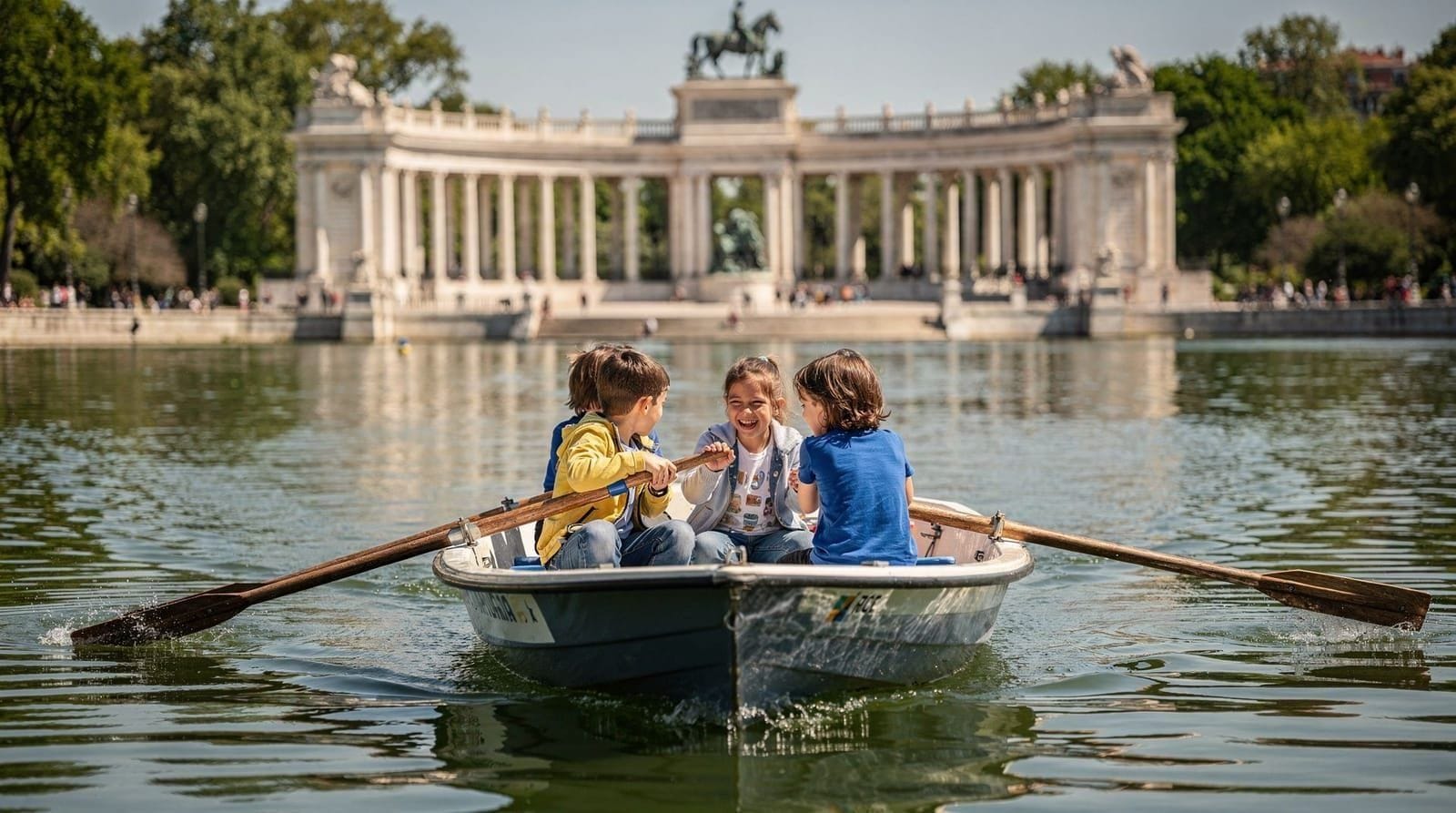
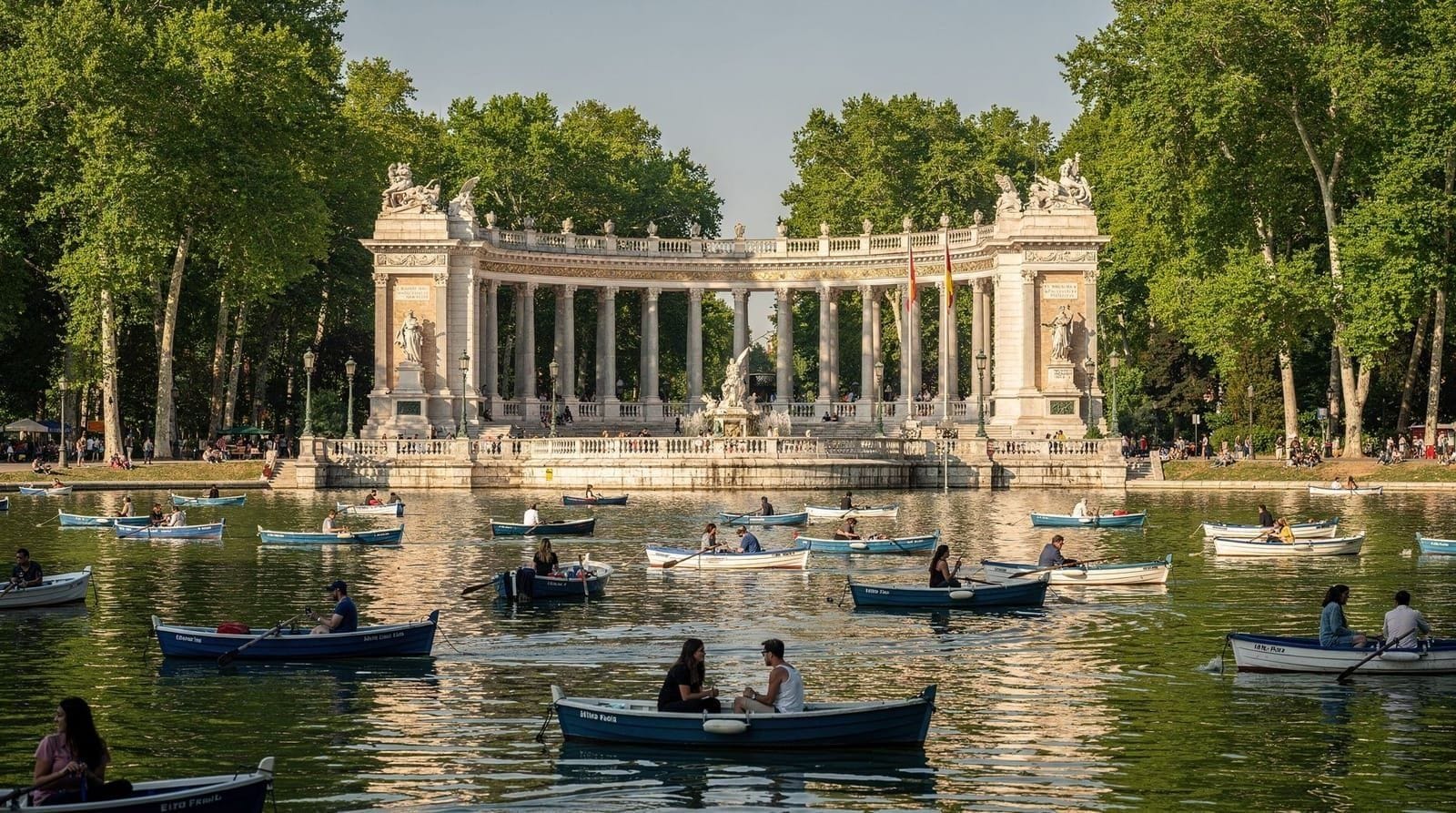
Start at the Retiro Park — 125 hectares of royal gardens in the centre of Madrid, free to enter, and one of the best urban parks in Europe for children. The Estanque Grande (main boating lake) rents rowing boats from 10 am; a 45-minute row costs €6 per boat on weekdays and €8 on weekends and public holidays (up to 4 people) and children love it. The Crystal Palace, a 19th-century glass pavilion at the park’s centre, is closed for renovation works until 2027.
The playground equipment in the Retiro is modest; this is a park for walking, boat-rowing, and ice cream, not for the adventure-playground experience. The Retiro guide covers the park’s full range.
Allow 2–3 hours here in the morning, then exit from the western gate toward the Royal Palace.
Midday: Royal Palace, with honest expectations
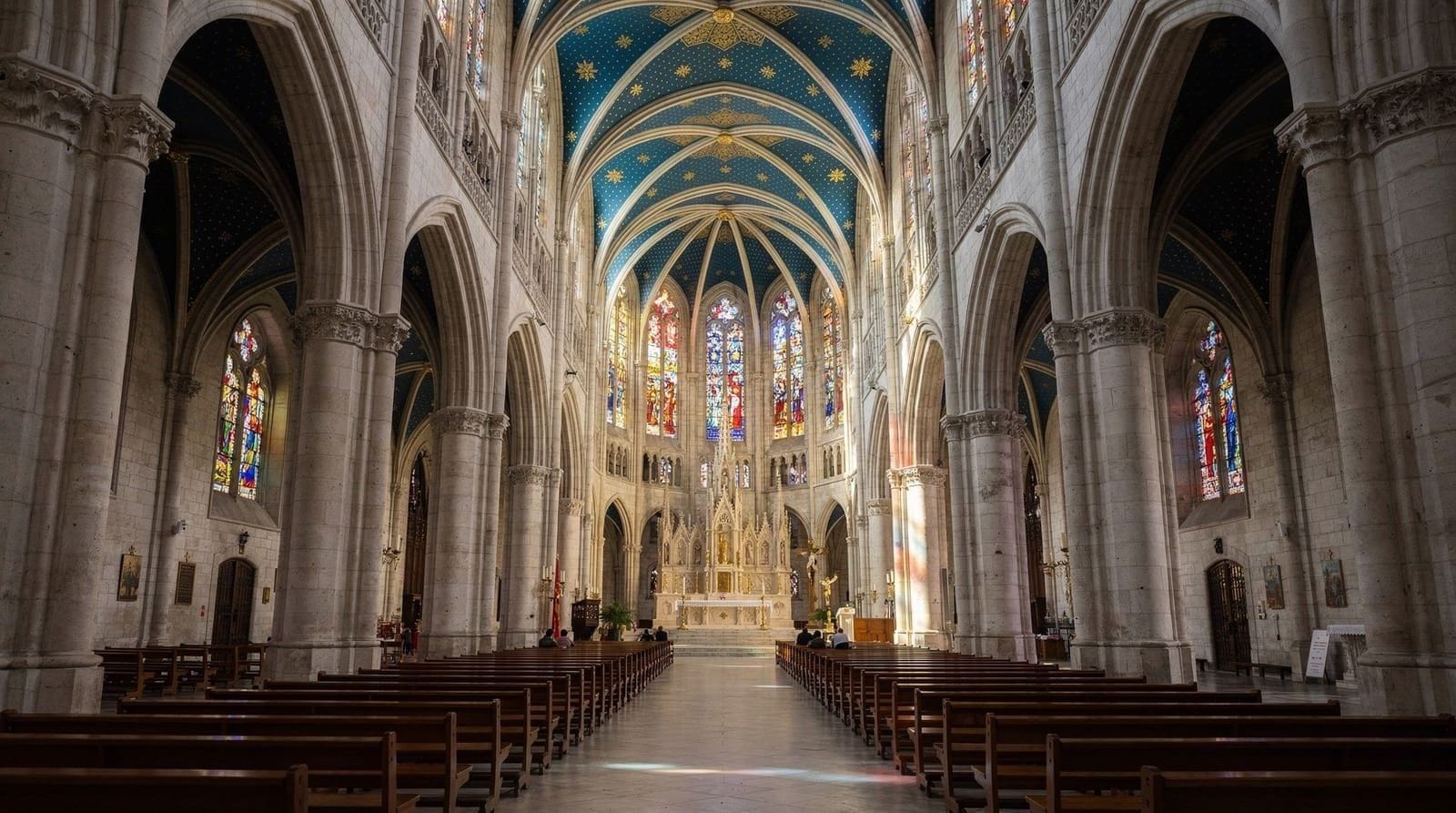
The Royal Palace is best appreciated by children aged 8 and above. Under-8s will get more from the exterior (the enormous courtyard, the Almudena Cathedral across the square, the Changing of the Guard at 12:00 on the first Wednesday of the month) than from the long circuit of state rooms.
The Changing of the Guard is free and takes place on the first Wednesday of the month at 12:00 (except January, July and August) — check dates. It is 15 minutes of soldiers in traditional uniforms — reliable crowd-pleaser for children aged 4 and up.
Book the Royal Palace fast-access ticket in advance and target a 10:00–11:00 entry to be ahead of the school-holiday groups.
Lunch: children eating in Spain is seamless. Most restaurants around the Austrias quarter and Sol/Gran Vía have a menú del día or children’s options; Lateral (multiple locations including one at Puerta del Sol) has a reliable, unfussy menu that children like and is priced reasonably.
Afternoon: Parque del Oeste and Casa de Campo
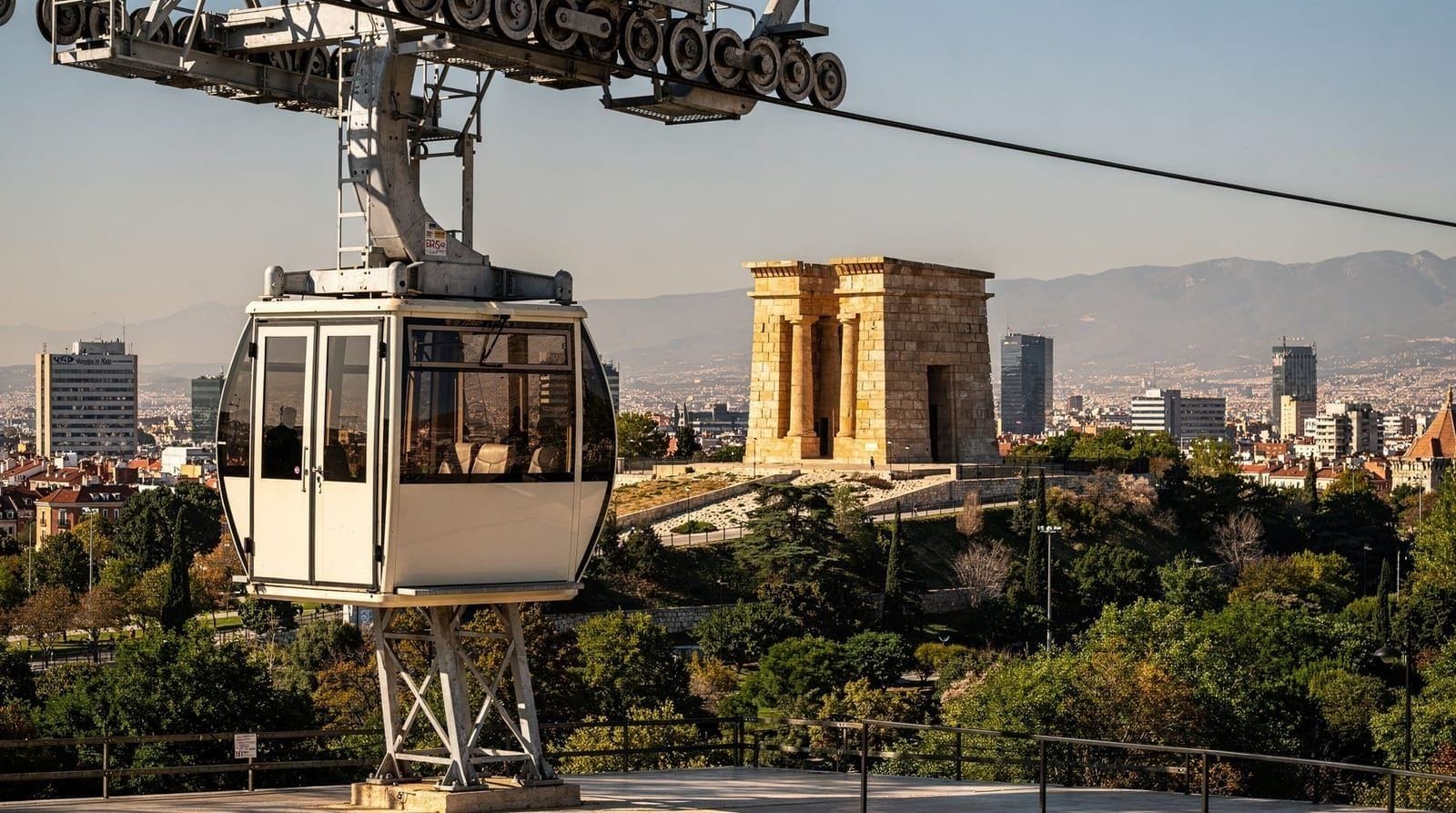
The Teleférico cable car, which normally links the edge of Parque del Oeste with the Casa de Campo park, is closed for a full overhaul; reopening is planned for the first quarter of 2027 (EMT Madrid) — check before you plan around it. The Teleférico kids guide has the background.
In the meantime, walk through Parque del Oeste to the Temple of Debod and the Faro de Moncloa viewpoint, or reach the Casa de Campo on foot or by metro line 10, where there is a large open area with a small amusement section and a café.
End the day with churros. Chocolatería San Ginés (Pasadizo de San Ginés, off Arenal) is the historic address; the thick porras with hot chocolate are universally popular with children. Sit-down, not expensive.
Day 2: Parque Warner full day
Parque Warner is the right dedicated theme park for children ages 4–16 visiting Madrid. The park, 30 km south of the city near San Martín de la Vega, is divided into themed zones (Hollywood Boulevard, DC Comics section with Batman, Superman and Wonder Woman rides, cartoon areas) and has coasters for older children alongside gentler rides for the 4–8 age group.
The Parque Warner ticket with transport from Madrid combines the entry ticket with a coach transfer from central Madrid, which is the most practical option — the park by public transport from the centre is inconvenient (train to Pinto then taxi). Alternatively, drive if you have a hire car; parking is free at the park.
The Parque Warner honest review covers the park in detail: which rides have the best/worst queues, the price premium for in-park food, and whether it is worth the day versus alternatives. The park also has a water park section (Parque Warner Beach) open in summer, which requires a separate or combined ticket.
Full-day strategy: arrive when the park opens (10:00–10:30), use the app to track queue times, eat a packed lunch in the picnic area or at the mid-range restaurants in the DC Comics zone, and target the most popular rides in the first hour before the queues build.
Return to Madrid by evening; the transport package drops you back at the central pick-up point.
Day 3: Zoo, the Prado (older children), or Faunia
Choose based on children’s ages and interests.
Option A: Madrid Zoo and Aquarium
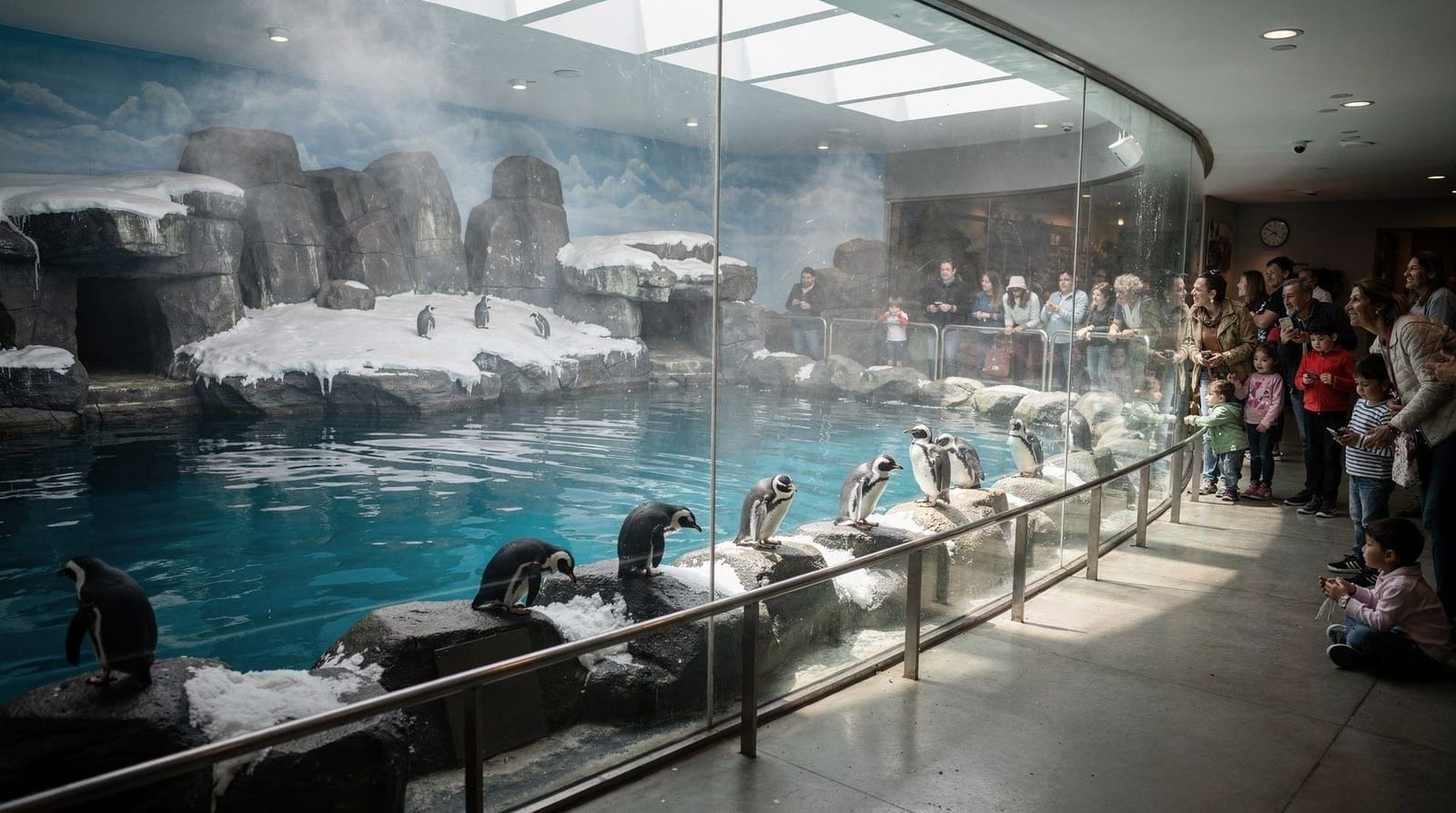
The Zoo Aquarium of Madrid in Casa de Campo is one of Spain’s best zoos, with over 3,000 animals including giant pandas. It is a full-morning-to-afternoon visit for families with young children (3–10). Entry is €19.90 online (€29.50 at the ticket office) for ages 8–64 and €16.90 online (€23.90 at the ticket office) for ages 3–7.
The dolphin show and the bird show are the scheduled highlights; the giant panda enclosure is the popular draw. Arrive by 10:00 am to see feeding times. From central Madrid, take the metro to Batán station (Line 10) — the zoo is signposted from there.
Option B: Faunia ecological theme park
Faunia in the eastern suburbs is Madrid’s nature-themed park — five ecological zones simulating different environments (tropical rainforest, polar, wetland, savannah, Mediterranean) with live animals in natural-looking settings. It is a better option than a traditional zoo for children who respond to environments rather than enclosures. Metro to Valdebernardo (Line 9). Entry from €16.90 online.
Option C: The Prado for older children (10+)
For children aged 10 and above with some art interest, a focused 90-minute Prado visit is genuinely worthwhile. The key is to be selective: Bosch’s Garden of Earthly Delights (Room 56A) is the guaranteed winner — children spend longer looking at it than any other work in the museum, drawn by the bizarre creatures and scenes. Velázquez’s Las Meninas (Room 12) is the other anchor — explain the optical trick (who is the painting a portrait of?) and it becomes a puzzle.
The Prado museum guide has practical advice for first-time visits including the most child-friendly rooms.
Practical notes for families in Madrid
- Strollers. Most Madrid historic streets are cobbled; a lightweight urban stroller or baby carrier is more practical than a large travel pram. The Retiro paths are smooth.
- Children under 12 often enter Madrid museums free or at a significantly reduced rate — check the official website before buying adult tickets.
- Metro + children. The Madrid metro is manageable with children; stroller access is available at most central stations via lift. Download the metro app for lift information.
- Heat. In July–August, plan outdoor activities before 12:00 and after 18:00. Midday is for swimming pools (see summer rooftop pools guide), air-conditioned museums, and long lunches.
- Rainy day alternatives. The rainy day kids guide covers museums and indoor activities that work when the weather breaks.
- Spanish meal timing with children. Most Madrid restaurants tolerate — and many expect — families with children eating at 9 pm. No one will look twice.
Frequently asked questions about Madrid with kids
Is Madrid child-friendly?
Yes. Spanish culture is very welcoming of children in adult spaces; children are not segregated into “family areas” in the way UK and US restaurants often do. Restaurants, cafés, and most attractions welcome children. The main practical challenges are the heat in summer and the late meal times (adjust slowly — let children eat at 8:30 pm for the first night, then 9 pm).
What age is best for Parque Warner?
Ages 4–16 with the best experience for 6–14. Under-4s have limited rides and the heat can be difficult; over-16s will want the serious coasters (Stunt Fall and Batman: La Fuga are the headline thrill rides). Adults enjoy it too in the accompanying role.
How much does a family day cost in Madrid?
A family of two adults and two children (ages 7 and 12) should budget approximately: Madrid Zoo day €130–€160 (tickets + lunch + transport), Parque Warner day €200–€250 (tickets + transport + food), Retiro/Royal Palace day €90–€120 (Royal Palace tickets €54 for the four of you, boat hire, churros lunch + transport). Museum days are cheaper if you use the free windows.
What is the best neighbourhood to stay in for a family visit?
Central Madrid (Sol/Gran Vía/Barrio de las Letras) gives the best access to the main sights by walking. La Latina is a 15-minute walk from Sol and has lower prices with more neighbourhood atmosphere. For families doing Parque Warner, a hotel south of Sol (near Atocha) is slightly more convenient for the Pinto train connection. See the where to stay guide for more detail.
How many days do families really need in Madrid?
Three days covers the highlights well, as this itinerary shows, but families who want to add a day trip (Segovia works particularly well with children) or a second theme-park-style day should budget four to five days — the 4-5 day Madrid itinerary shows how the extra time fits in. Families with very young children often prefer a slower pace with fewer changes of location per day, which stretches this itinerary comfortably to four days without adding sights.
Is public transport manageable with a stroller in Madrid?
Yes, for the most part. Most central metro stations have lift access, though not universally — check the metro app for lift-equipped stations before planning a route. Buses are generally easier than the metro for stroller access. For Parque Warner specifically, the coach transfer is far more stroller-friendly than the train-and-taxi alternative.
Neighbourhood life with children
One of Madrid’s genuinely family-friendly aspects is the cultural expectation that children belong in adult spaces. In many northern European cities, bringing children to a restaurant after 8 pm triggers apologetic glances; in Madrid, a family eating at 9:30 pm is unremarkable. Spanish children grow up at adult tables; the restaurant culture accommodates this.
This means that the evening programme of this family itinerary — La Latina tapas, neighbourhood dinners, the bar circuit — is accessible with children rather than requiring a babysitter. The caveat is pacing: children under 8 tire faster, and a 10:30 pm dinner is unrealistic even in Madrid. The practical adjustment is to let children graze on small snacks through the early evening (bread, cheese, jamón, the omnipresent free tapas that accompany drinks in good bars) and sit down for dinner at 9 pm rather than 10 pm.
Retiro Park is particularly good for families because of its scale and variety. The children’s playground near the west entrance is modest, but the boating lake, the puppet shows that run on weekend afternoons, the street entertainers near the main entrance from Calle de Alcalá, and the sheer space of 125 hectares all provide occupation for children of different ages simultaneously.
Churros for breakfast is a genuine Madrid family activity — not a tourist performance. On Sunday mornings especially, families queue at churrerías throughout the city for the weekly ritual of porras with hot chocolate. San Ginés is the famous address; local alternatives in La Latina, Lavapiés, and Chamberí are cheaper and provide the same experience with a more neighbourhood character.
Age-by-age guide to Madrid with children
Under 5: Retiro Park boat rides and open space, Parque del Oeste, churros ritual. Museum visits are difficult for this age — the Royal Palace exterior and courtyard is more manageable than the interior circuit. Parque Warner’s gentler zones work from about age 3–4.
Ages 5–9: Everything above plus Parque Warner (the best age for the park, when the ride restrictions don’t apply but the threshold for big coasters is still reached by a few), the Zoo (animals are still magic at this age), a destination walk in the Casa de Campo, and the Royal Palace interior with a child-focused guide or audio tour.
Ages 10–14: Parque Warner (now fully in scope for the headline coasters), the Prado (Bosch’s Garden of Earthly Delights and Goya’s Black Paintings are genuinely engaging for this age group), Bernabéu stadium tour (if there is any football interest), and day trips (Toledo is particularly good — the story of three religions is accessible and the Alcázar fortress is visually dramatic).
Ages 14+: The full adult itinerary works. Teenagers with art interest will get more from the Prado than many adults; teenagers with football interest will rate the Bernabéu tour very highly.
Day trip options for families
Segovia works well for families with children aged 8 and above — the Roman aqueduct is immediately impressive and requires no museum-going, the Alcázar (fairy-tale castle profile) is universally photogenic, and the cochinillo lunch (roast suckling pig sliced with a dinner plate) is a theatrical meal that children find entertaining.
Toledo is better for older children and teenagers (12+) who can engage with the historical layers. The city’s cobbled hills and dense monument concentration make it tiring for young children.
Parque de Atracciones (Madrid’s own fairground in Casa de Campo) is an alternative to Parque Warner for families with younger children — it is closer to central Madrid (metro to Batán, Line 10), cheaper, and has a wider range of gentle rides for small children. The parque de atracciones guide compares it to Parque Warner honestly.
Top experiences
Bookable activities with verified prices and instant confirmation on GetYourGuide.