Madrid Zoo Aquarium: what to expect, tickets, and honest family verdict
Madrid: Warner Park Entry Ticket
Is Madrid Zoo Aquarium worth visiting?
Yes for families with children aged 3–12. The zoo has giant pandas (on loan from China), a large aquarium with sharks and rays, dolphin shows, and sufficient variety to fill a full day. The honest caveat: some enclosures are dated by modern zoo standards, and the park is very busy in summer. Best visited on a weekday in spring or autumn.
In brief: The Madrid Zoo Aquarium is a solid family day out — particularly strong on the aquarium section and the pandas. Not the most modern zoo by European standards, but well-located (15 minutes from the city centre), reasonably priced, and easy to combine with Parque de Atracciones on the same day.
| Where | Casa de Campo, Metro Line 10 or 5 |
| Cost | €19.90 online (€29.50 at the ticket office) ages 8–64, €16.90 online (€23.90 at the ticket office) ages 3–7 |
| Time needed | 3–4 hours focused, 5–6 hours thorough |
| Best for | Children aged 3–12 |
| Best time | Weekday mornings, spring or autumn |
Location and access
The Zoo Aquarium is in Casa de Campo, Madrid’s large western park. Metro access via Line 10 (Casa de Campo station) or Line 5 (Casa de Campo). Journey from Sol: approximately 15 minutes. No car required, no suburban train connections, no shuttle buses — this is one of the most logistics-free family attractions in the city.
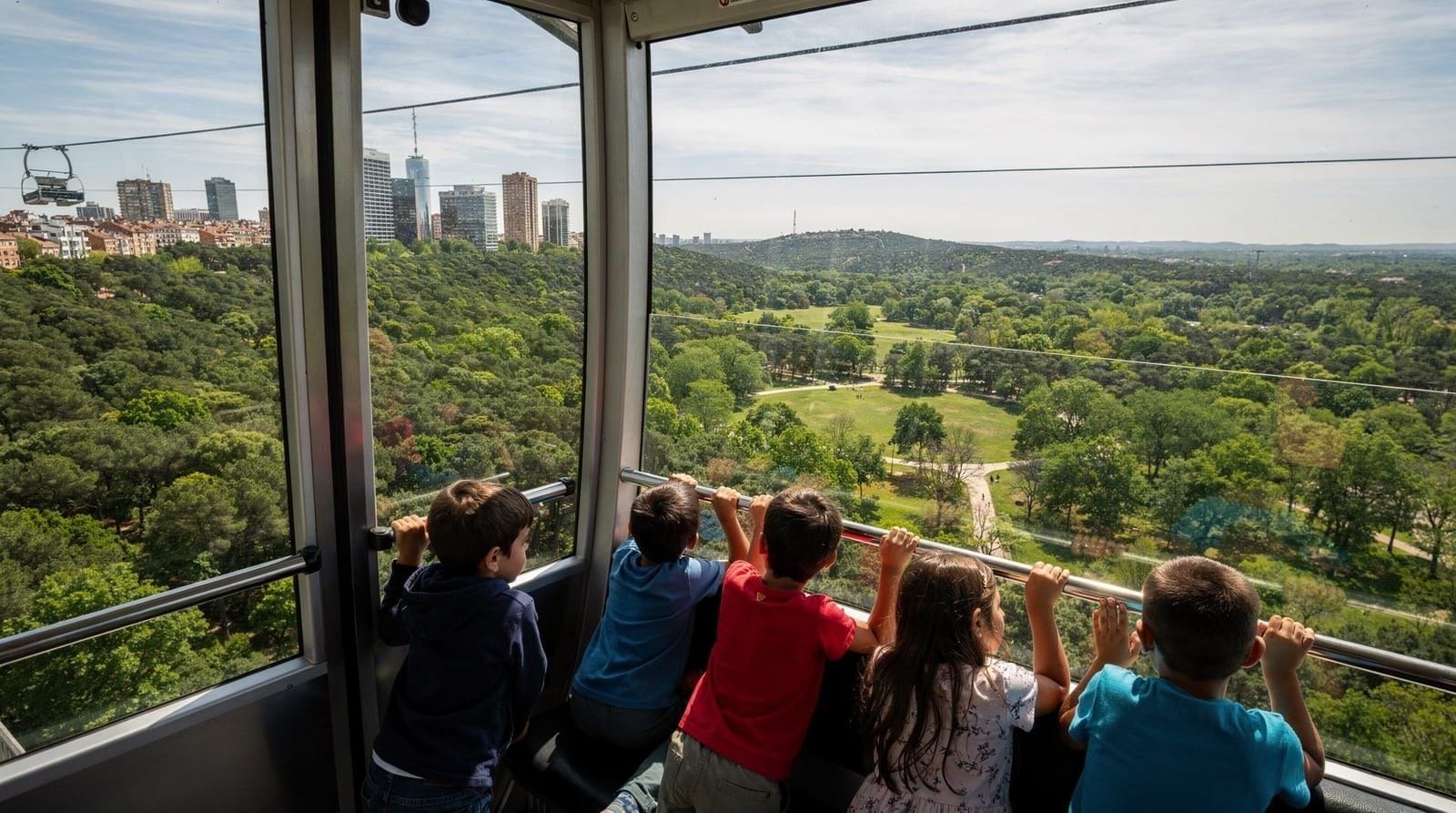
The zoo entrance is a 10-minute walk from the metro station through the Casa de Campo park itself. The path is paved and clearly marked. Taxis and ride-share services drop off at the entrance directly. The Teleférico cable car from Parque del Oeste used to drop you in Casa de Campo, but it is closed for a full refurbishment, with reopening planned for the first quarter of 2027 (EMT Madrid); check before planning around it. Until then, the metro is the simple way in.
See the Casa de Campo guide for the full context of the park and what else it contains.
A brief history
Madrid’s zoo has existed in various forms since 1774, when the original Royal House of Animals (Casa de Fieras) was established in the Buen Retiro gardens by Charles III as a private royal collection. It moved to Casa de Campo in 1972, when the current purpose-built zoo was constructed. The aquarium section was added in the 1990s and is the most recently modernised part of the park.
The connection with China’s panda loan programme started in the 1970s — unusual for the era, and a sign of Spain’s diplomatic positioning at the time. The zoo has maintained one of the most prominent European panda collections outside of the major national zoos. The current family group includes cubs born in the zoo itself, which is considered a significant conservation success.
What’s inside: the honest tour
Giant Pandas
The standout attraction. Madrid Zoo currently has a pair of giant pandas plus their offspring — a multi-generational family group that makes this one of the more substantive panda exhibits in Europe. The enclosure has both indoor and outdoor sections. The viewing terrace gives good sightlines but fills quickly during feeding times.
Pandas are most active in the morning — feeding times are posted at the enclosure entrance and change seasonally. Arriving at the zoo at opening (10:30) and heading directly to the pandas gives you the best chance of seeing active behaviour. By 11:30, a queue can form.
Panda cubs are not always on public display — check the zoo’s social media or website before planning your visit specifically around the cubs, as young animals have restricted public access during certain developmental phases.
Aquarium
The aquarium section is the best argument for the zoo beyond the pandas. One of the larger aquariums in Spain, it runs across several connected rooms and includes:
- Shark tunnel: The signature experience — a walk-through transparent tunnel with sharks, rays, and large pelagic fish circling overhead. The visual effect is genuinely impressive. Children stand in the tunnel and refuse to move. Adults also tend to stay longer than expected.
- Tropical reef tanks: Coral reef fish, anemones, clownfish, and the vivid colour palette of Indo-Pacific reef species.
- Mediterranean section: Local Spanish marine species — grouper, moray eels, sea bream — contextualising the aquarium within the marine environment familiar to Spanish visitors.
- Deep sea section: Larger tanks for species from deeper water, including octopus (one of the most attentive enclosures in the building) and various shark species.
- Ray pool: An open-top pool where visitors can observe rays from above. The rays sometimes surface and approach the edge. Popular with all ages.
The aquarium is entirely indoor and air-conditioned — a significant practical advantage in Madrid’s summer heat. It functions as a 45–60 minute self-contained attraction within the wider zoo visit.
Dolphin show
Multiple shows daily in the main amphitheatre, duration approximately 25 minutes. The ethical positioning of dolphin shows has evolved considerably in recent years — some visitors are entirely happy with the format, others have reservations. Madrid Zoo has maintained the shows while emphasising the educational components. Check the schedule at the entrance.
Practically: the amphitheatre fills 15–20 minutes before the show. Arrive early in summer — the seats have shade cover but the standing areas do not.
Sea lion show
Similar amphitheatre format to the dolphin show. Sea lion performances are generally less controversial in terms of animal welfare optics. Duration 20 minutes, multiple shows daily. Popular with children under 10 who find the trainers’ interaction with the animals engaging.
African savanna area
One of the better sections of the outdoor zoo. Giraffes (usually 4–6 individuals), zebras, rhinoceroses, and antelope in a landscape-designed enclosure that suggests open savanna rather than a bare paddock. The giraffe feeding platform (usually at 11:00 and 15:00) is popular — ask at the entrance for current times. Feeding a giraffe from a raised platform is a reliable highlight for children aged 3–12.
The rhinoceros pair occupy a separate but adjacent enclosure. Viewing distance is close enough to make the scale of the animals immediately apparent to children — often more impactful than the larger predators.
Big cats and large predators
The lion, tiger, and leopard enclosures are the section most likely to disappoint compared to modern European zoo standards. The enclosures are functional but not large by 2020s design standards. Animals are visible but may be resting or sheltering at any given time. The cheetah enclosure is more dynamically designed and usually shows more active animals.
Primate section
Gorillas, chimpanzees, orangutans, and a variety of smaller primates. The gorilla group is the most impressive — currently three adults and usually one or two young animals. The outdoor section of the gorilla enclosure allows reasonable viewing, though the indoor section (visible through glass) shows more social interaction.
Bird aviaries
Multiple walk-through aviaries with tropical species — macaws, parrots, toucans, hornbills. The largest aviary allows free flight within the enclosed space, meaning birds may land on visitors. Children who enjoy this tend to love it; children who do not want contact with flying birds should walk through quickly. The temperature inside the tropical aviary is notably warm.
Children’s farm (granja)
A dedicated section with small domestic animals that children can approach and sometimes feed. Goats, rabbits, donkeys, pigs, and chickens. Best for ages 2–6 who want direct animal contact. The farm is one of the more relaxed areas of the zoo — less crowded than the pandas or the aquarium, and well-suited to young children who need a break from the more intense sections.
Reptile house
Snakes, lizards, crocodiles, iguanas, and monitor lizards in humidity-controlled indoor tanks. The lighting is dimmer than other sections. Popular with children aged 7–12 and teenagers who are genuinely interested in reptiles; less engaging for young children. The Komodo dragon (if currently displayed — check the website, as they are occasionally off-display for maintenance) is the most impressive specimen.
Children’s rides
A small fairground section with basic rides — carousel, small train, gentle spinning rides — for children under 6 who are too small for the larger parks. Entry is included with zoo admission.
The honest limitations
Dated enclosures: This is the main honest criticism. Madrid Zoo’s design dates largely from the 1970s and 1980s. Some exhibits — particularly the big cats and certain primates — have enclosures that do not meet the space and enrichment standards of the most modern European zoos. The zoo is a good family attraction; it is not a benchmark zoo.
Summer crowding: July and August bring large Spanish family groups, particularly on weekends and school holidays. The queues for the dolphin show amphitheatre and the pandas can reach 30–45 minutes at peak times. The solution: arrive at opening, visit pandas and aquarium first, do the outdoor zoo after 16:00 when some families are leaving.
Heat in summer: The outdoor sections of the zoo in July–August require the same strategies as any outdoor Madrid activity — arrive early, bring hats and sun cream, carry water. Some enclosures have minimal shade. The aquarium (air-conditioned) and covered walkways are natural midday refuges.
Animal activity: As with all zoos, animals are not always active or visible. The pandas are most active at feeding time; the big cats often rest during the day; the sea lions are predictably active only during shows. Managing children’s expectations about “seeing” animals versus “seeing enclosures” is a realistic planning consideration.
Practical information
Opening hours: They vary by day and season. Check the calendar on the official Zoo Aquarium de Madrid website before visiting.
Getting there: Metro Line 10 (Casa de Campo station) or bus lines 33, 36, 39, 65. Journey from Sol: approximately 15 minutes. No pre-booking of transport required.
Tickets: Ages 8–64 €19.90 online or €29.50 at the ticket office; ages 3–7 €16.90 online or €23.90 at the ticket office; over 65, large families and people with disabilities €16.90 online or €23.90 at the ticket office; under 3 free. Buying online saves about €10 per ticket. No skip-the-line feature for online tickets, the benefit is only the price reduction and guaranteed entry.
Duration: A thorough visit with shows takes 5–6 hours. A focused visit hitting the aquarium, pandas, and one show takes 3–4 hours. If combining with Parque de Atracciones in the afternoon, plan 3 hours for the zoo.
Food: Three on-site cafeterías, a restaurant, and several kiosk stands. Quality is standard park food at above-market prices. Bringing snacks and a packed lunch is allowed and saves money.
Pushchairs: Fully accessible throughout. Paved paths, ramps at level changes, and pushchair hire available at the entrance (€8–10 for a single pushchair).
Facilities: Multiple toilets throughout, including baby-change facilities. Lockers near the entrance for bags. First aid station near the main entrance.
Combining with Parque de Atracciones
The Zoo Aquarium and Parque de Atracciones are both in Casa de Campo and accessible from the same metro station (Line 10). They are separate parks with separate admission tickets, but physically adjacent — a 10-minute walk connects them.
The standard combination day for families with children aged 5–10: zoo in the morning (10:30–13:30), lunch at the zoo or a nearby cafetería, Parque de Atracciones in the afternoon (15:00–20:00). The zoo is lower-energy (walking, looking, shows) and works better in the morning before children become tired; the rides at Parque de Atracciones provide an active afternoon that complements the morning well.
See the Parque de Atracciones guide for the rides and timing details.
Comparing with Faunia
Faunia (Madrid’s ecological theme park, in the eastern suburbs) offers a different kind of animal experience — immersive habitats rather than traditional enclosures. The honest comparison:
- Choose Zoo Aquarium if: The aquarium section is a priority, you want maximum variety in one visit, your children are under 7, or you want the most accessible location.
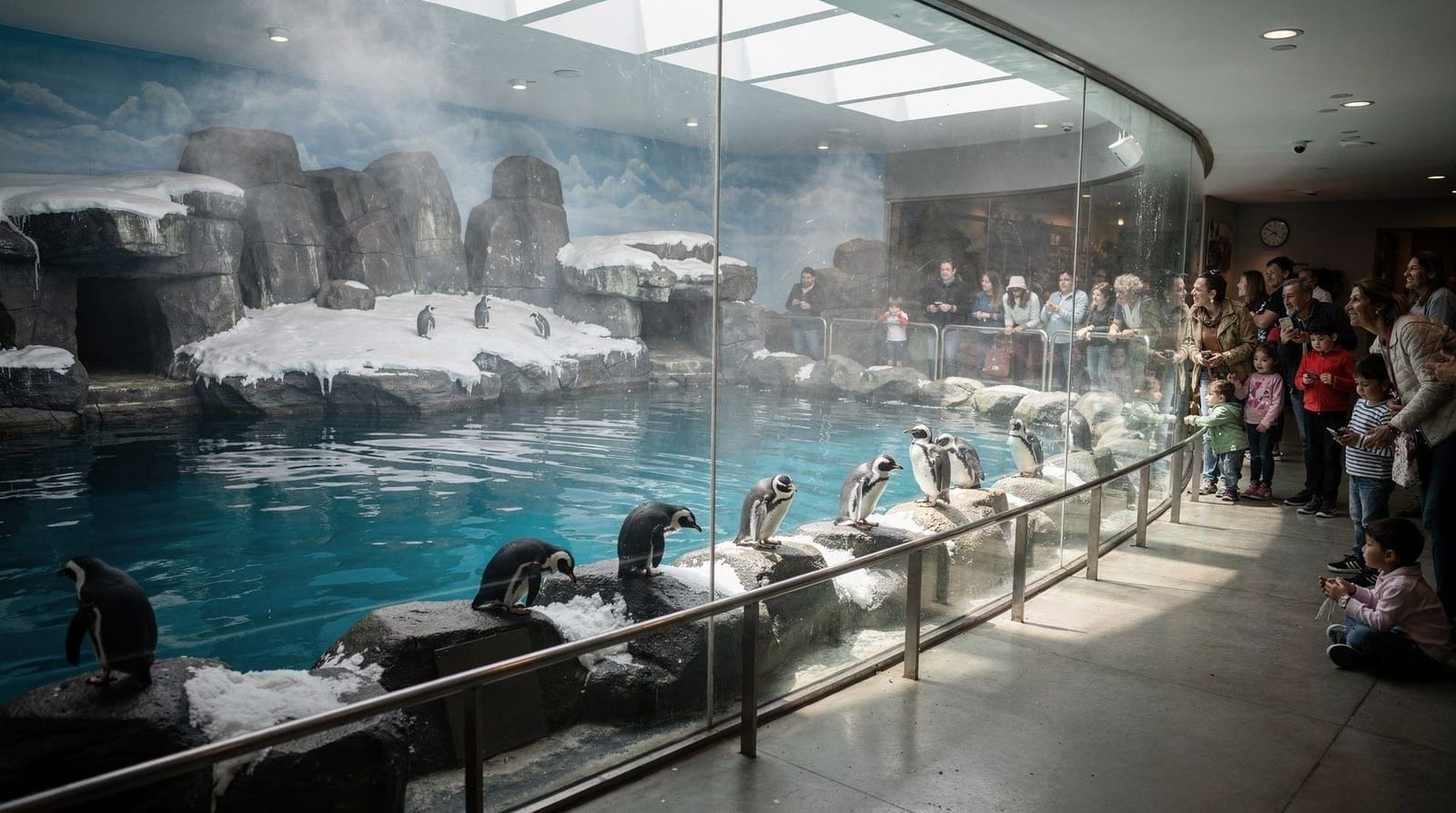
- Choose Faunia if: You want a more immersive ecological experience, you have already visited the Zoo, or the penguin exhibit is a specific priority.
For families with 3+ days in Madrid, both are worth visiting — the experiences are sufficiently different. See the Faunia guide.
Age-by-age guide
Ages 2–4: The children’s farm, aquarium tunnel, and large animals (giraffes in particular — the scale is immediate and impressive for this age) are the highlights. Avoid the dolphin show for very young children (loud, crowded amphitheatre). Duration recommendation: 2–3 hours maximum.
Ages 5–8: The full zoo experience at this age range is excellent. Children are old enough to engage with the guides, read the information panels, and form preferences. The shark tunnel and the giraffe feeding are standout moments.
Ages 9–12: The aquarium and reptile house hold the most interest. Some children find the outdoor zoo sections less engaging as they get older — the Parque Warner rollercoasters may be a stronger draw. Consider this age group for a combined morning zoo visit and afternoon Parque de Atracciones.
Teenagers: Generally limited intrinsic appeal versus Parque Warner’s rides. The aquarium may still interest nature or marine biology-oriented teenagers. For most teenagers, the zoo is better positioned as an addition to another activity rather than a standalone full day.
The honest summary
Madrid Zoo Aquarium is worth visiting for families with children aged 3–12. The aquarium is genuinely good. The pandas are a reliable highlight. The combination of accessible location (no complex transport), full-day variety, and child-appropriate pace makes it one of the better urban zoo visits in Spain.
The limitations (dated enclosures, summer heat, animal unpredictability) are real but manageable with advance planning: weekday visits, morning arrival, aquarium as the midday refuge.
For the full family planning picture, see the Madrid with kids guide and the family itinerary.
Getting the most from the Zoo: specific tips
The panda feeding times: Posted at the panda enclosure entrance each morning. Usually 10:00–11:00 for morning feeding and 14:00–15:00 for afternoon. The pandas are most visible and active during these windows. Outside feeding times, they may be resting in the indoor section (not visible).
The giraffe feeding platform: The zoo offers a paid giraffe feeding experience (price and times: check at the entrance). Standing on the platform with a giraffe eating from your hand at eye level is consistently described as the family highlight of the zoo visit. Worth the add-on cost for the right age group (5–12).
The butterfly garden: Less prominent than the main habitats but a peaceful 15-minute addition — a small greenhouse with free-flying tropical butterflies. Easy to miss; look for the signage near the birdhouse. Best for parents as much as children.
Skip-the-line for summer: During July–August school holiday weeks, the zoo entrance queue can be 20–30 minutes. Buy tickets online in advance to use the priority entry gate.
Food strategy: The zoo’s cafeterías are adequate but expensive (€12–18 for a main dish). The most economical approach for families: a packed picnic for lunch (there are picnic tables near the main cafetería), with one treat purchase from the kiosk stands. Full packed lunches are permitted at the picnic tables.
The Zoo Aquarium in the family day-trip landscape
The Zoo Aquarium’s specific advantage in Madrid’s family attraction landscape is its combination of accessibility and breadth. No other Madrid family attraction can be reached in 15 minutes from the city centre, includes both a significant aquarium and a full zoo, and accommodates children from age 2 through 14 in a single visit.
Warner has better rides. Faunia has better ecological immersion. But neither of them can be reached in 15 minutes from Sol without complex transport logistics. For a family with a limited schedule, or a family whose children span a wide age range, the Zoo Aquarium’s accessibility and variety often makes it the right first choice.
For planning the rest of your Madrid visit, see the family itinerary guide and the Madrid with kids guide.
Fitting the zoo into a longer family trip
The zoo works best as one anchor day among several, not as the whole plan. A family with three or four days can alternate high-energy days with calmer ones: the zoo and Casa de Campo on one day, a slower day in the centre on the next. The how many days in Madrid guide helps you decide how much room a zoo day deserves, and the Madrid in 3 days itinerary and Madrid with family itinerary show where it can sit without exhausting anyone.
If your older children or teenagers want something with more adrenaline than animals, a separate day at the theme park is the natural counterweight. Families who go that way often book entry to Parque Warner for the same trip and keep the zoo for the younger ones. The Parque Warner verdict explains who it suits and who should skip it.
On a day when the weather turns, or when the zoo has been done and the children are ready for something different, the city’s big museums are a reasonable change of pace for school-age children. A guided visit with a skip-the-line entry keeps things moving, such as a guided visit to the Prado and the Reina Sofía, though it suits older children better than toddlers. Read the Prado Museum guide and the Reina Sofía guide before deciding, and free things to do for lower-cost options between paid days.
Getting around is easy with small children if you plan the metro ahead: the Madrid metro guide and the tourist travel pass guide cover the practicalities. For seasonal timing, the best time to visit Madrid and Madrid in summer guides explain why spring and autumn suit the zoo best. The Teleférico guide describes the cable car approach into Casa de Campo (currently closed for refurbishment, reopening planned for the first quarter of 2027), and the Madrid summer survival blog post has practical heat advice if you are visiting in July or August.
Frequently asked questions about Madrid Zoo Aquarium
Is Madrid Zoo Aquarium good for a rainy day?
Partially. The aquarium, reptile house, and bird aviaries are all indoor or covered, which makes for a genuine 90-minute to 2-hour rainy-day option. The outdoor savanna, primate viewing, and shows are weather-dependent, so a fully rainy day is better spent at an indoor-only attraction — see the rainy day with kids guide for alternatives.
How does the Zoo Aquarium compare to Parque Warner for a one-day visit?
They serve different purposes and don’t overlap well as a single day. The Zoo Aquarium is lower-energy and works for a wide age range (2–14), while Parque Warner is a full rollercoaster theme park best suited to children 8 and up with the stamina for a full day of rides. Families with young children and older ones sometimes split the trip across two days rather than combining both in one.
Top experiences
Bookable activities with verified prices and instant confirmation on GetYourGuide.