Casa de Campo: Madrid's vast royal forest and park
Madrid: Riverside Casa de Campo e-bike
What is Casa de Campo and is it worth visiting?
Casa de Campo is the largest urban park in Madrid — 1,700 hectares of former royal hunting ground on the western edge of the city, opened to the public in 1931. It contains the Madrid Zoo-Aquarium, the cable car to the Parque del Oeste (closed for refurbishment, reopening expected in the first quarter of 2027 per EMT Madrid), an artificial lake with water sports, open-air pools (Lago swimming area), mountain biking trails, and vast areas of Mediterranean scrubland and pine forest. Free to enter (the zoo is charged separately). Best for families, cyclists, and anyone wanting genuinely wild-feeling outdoor space close to the centre.
A former royal hunting ground the size of a small city
| Where | Western Madrid, across the Manzanares from the centre |
| Cost | Free to enter; zoo €19.90 online or €29.50 at the ticket office (adults); cable car closed for refurbishment |
| Time needed | 2–3 hours for the lake; a full day with the zoo |
| Getting there | Metro Line 10 (Lago/Batán); the Teleférico cable car is closed for refurbishment |
| Best time | Morning or after 18:00 in summer; any time spring/autumn |
Casa de Campo was the personal hunting ground of the Spanish royal family from the reign of Philip II (who enclosed it in the 1560s) until the Second Spanish Republic opened it to the public in 1931. At 1,700 hectares, it is roughly fourteen times the size of the Retiro Park and significantly larger than Central Park in New York. Its position directly west of the city centre, across the Manzanares river, means it is accessible from the historic centre in 20–30 minutes by Metro or cable car.
The park is not manicured in the Retiro tradition. Much of it is Mediterranean scrubland — holm oak, stone pine, rosemary, thyme — with the character of the Castilian countryside rather than a formal English or French garden. This is either the appeal or the reason to go to the Retiro instead, depending on what you are looking for.
How to get there
Metro: Line 10 (Lago station for the lake and zoo area; Batán station for the southern section and the Zoo’s alternative entrance). Journey time from Sol: 20–25 minutes.
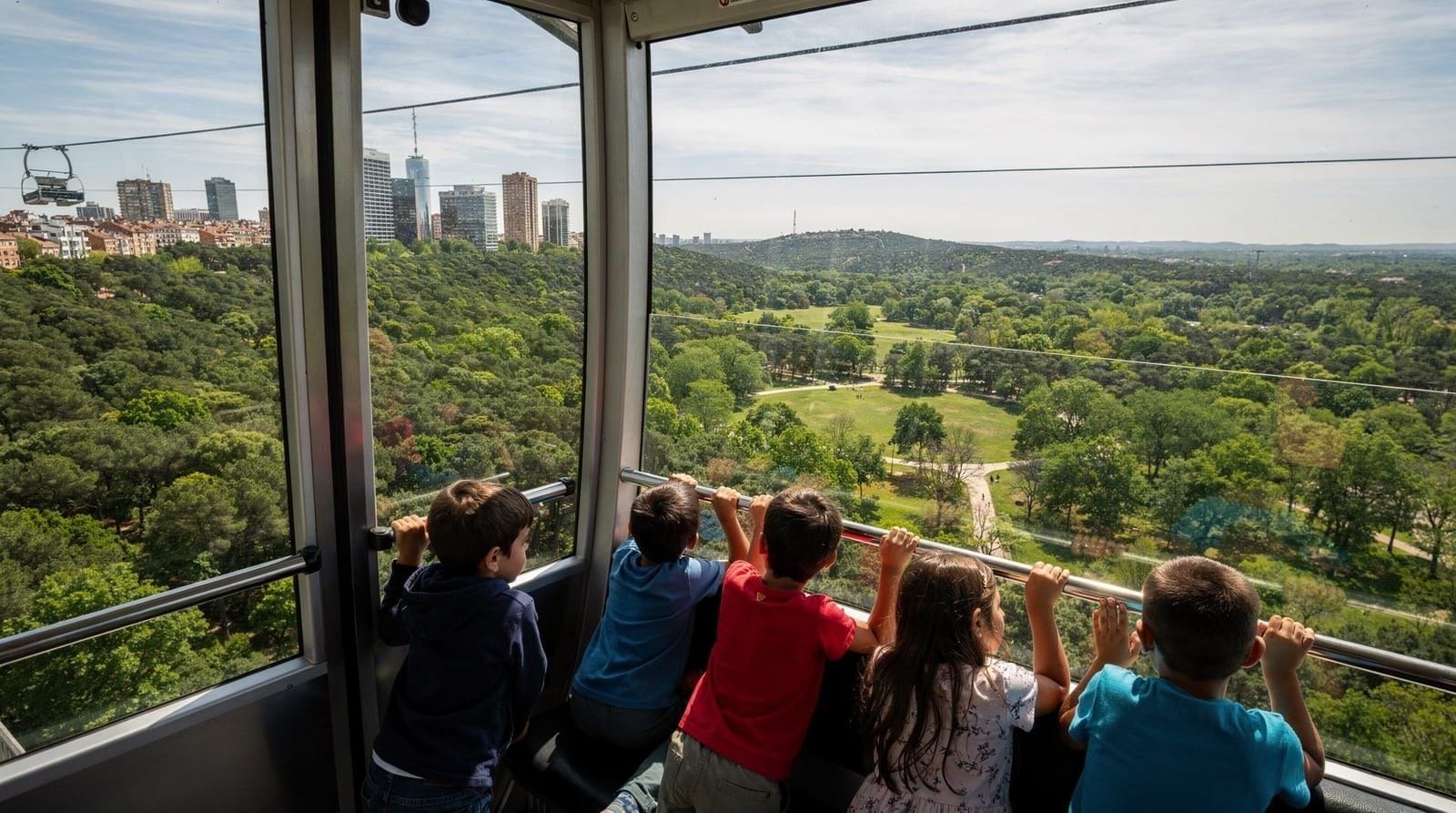
Teleférico (cable car): The Teleférico de Madrid is closed for a complete refurbishment, with reopening expected in the first quarter of 2027 (source: EMT Madrid, the operator); check before you plan around it. Once reopened, it runs from the Parque del Oeste (Metro: El Lago, Line 6, or Argüelles, Lines 3, 4, 6) across the Manzanares valley to a station in the north of Casa de Campo. 11 minutes, spectacular views of the western skyline including the Royal Palace. The cable car drops you in the northern forest section of the park — good for a scenic arrival but means you are far from the lake and zoo. See the Teleférico guide.
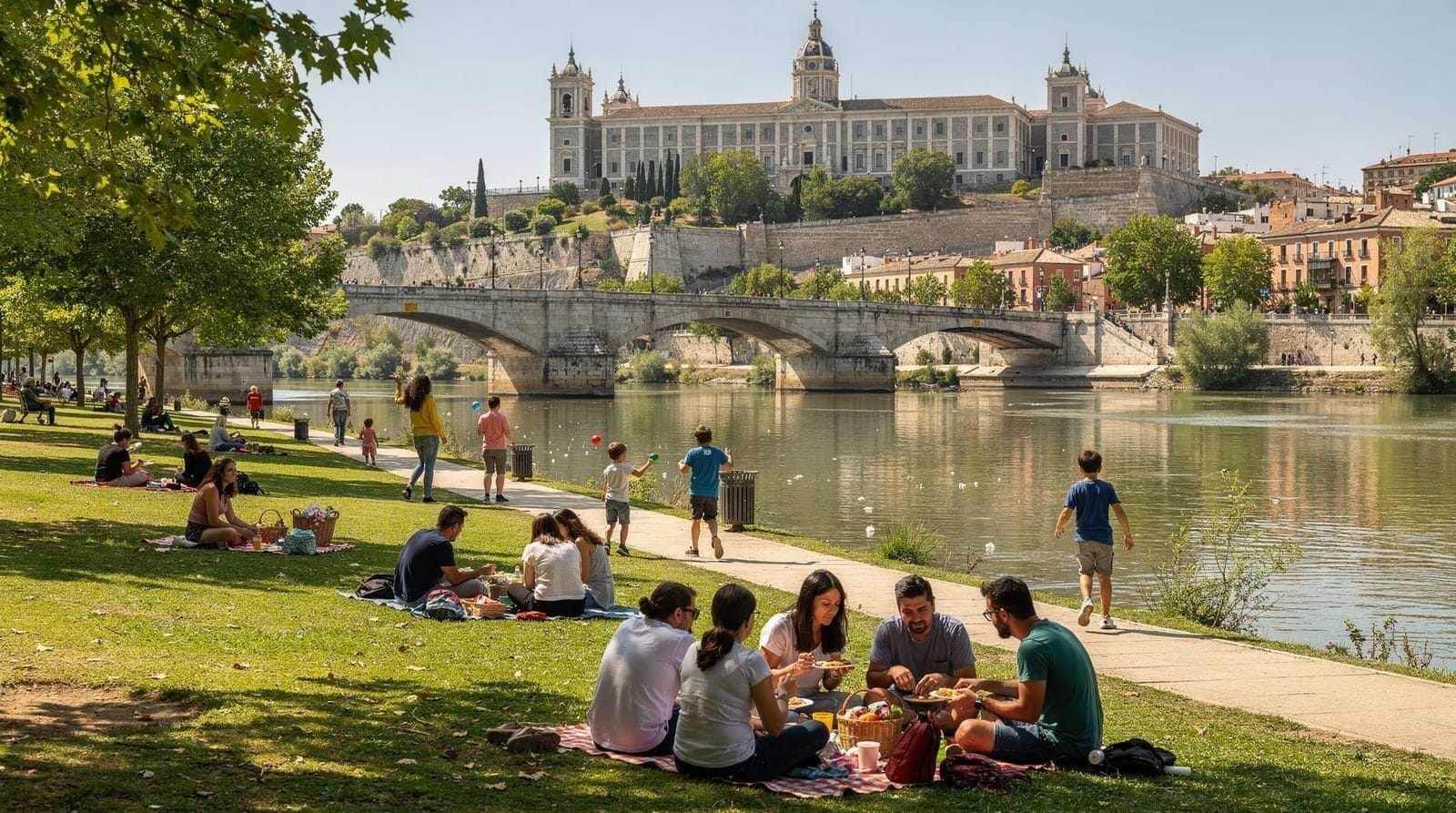
On foot from Madrid Río: The Madrid Río park (Manzanares riverbank development) connects to Casa de Campo via pedestrian bridges. Walking from the Arganzuela riverfront into Casa de Campo is a pleasant approach in cooler weather.
By bicycle: Casa de Campo has well-maintained cycling paths (both on-road and off-road MTB trails). Bicycle hire from Madrid Río or BiciMAD docking stations near the river.
The lake: rowing, swimming, and the reservoir area
The Lago de la Casa de Campo is an artificial lake in the eastern section of the park. It has two distinct functions depending on the season:
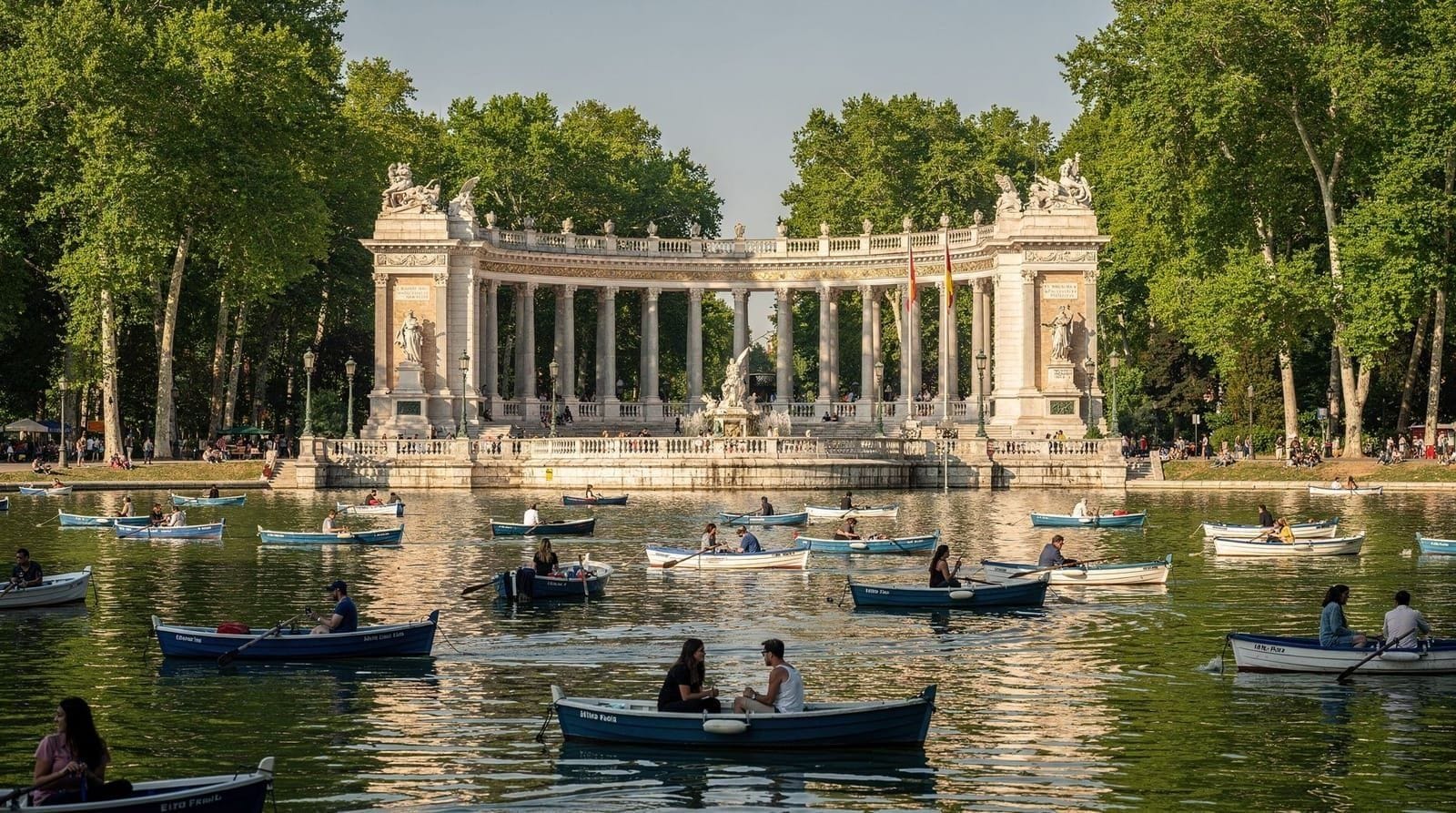
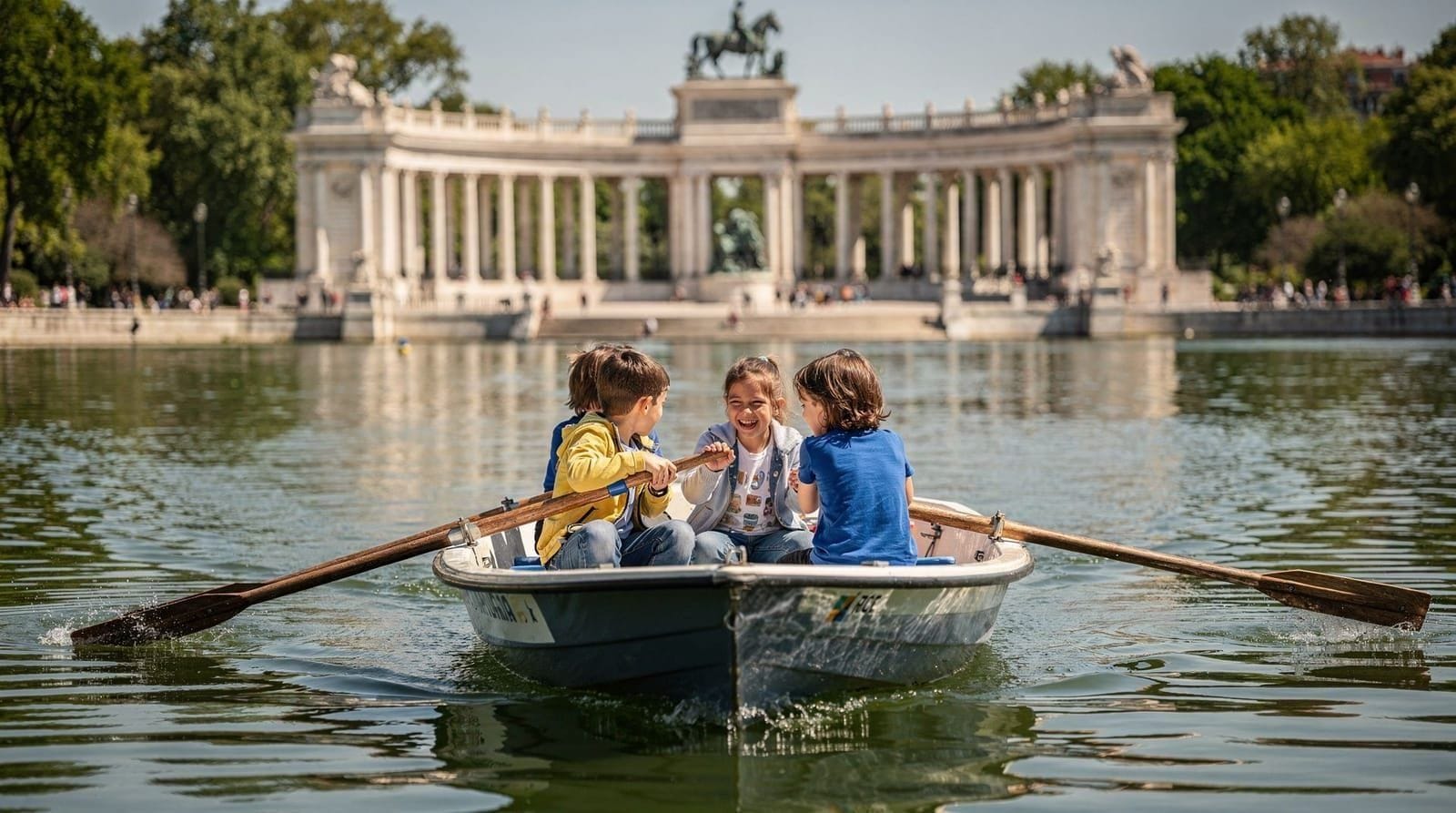
Year-round: Rowing boat and pedalo rental at the lake’s eastern edge. Bars and restaurants along the lakeside (terraces, relatively good value compared to the centre). A pleasant walk around the lake perimeter (approximately 2.5 km).
Summer: The Lago area transforms into the primary outdoor swimming destination for Madrileños who are not leaving the city. The municipal swimming pools (Piscinas del Lago, operated by Madrid city council) open mid-May to early September, with two outdoor pools, changing facilities, and lawn areas. Entry (2026 municipal rates) is €2.25 for adults per half-day session or €4.50 for the full day, and €1.35 or €2.70 for children aged 5–14; under-5s are free. In late July and August, these are intensely crowded — arrive before 11:00.
The lake itself is not for swimming (water quality monitoring, no lifeguard), only the designated pool complex.
Madrid Zoo-Aquarium
The Madrid Zoo-Aquarium — officially Zoo Aquarium de Madrid — is one of Spain’s largest zoos, with approximately 500 animal species. It occupies the southern section of Casa de Campo, has its own entrance (Metro: Casa de Campo, Line 10), and is a self-contained experience separate from the rest of the park.
Entry (official zoo prices): adults (8–64) €19.90 online or €29.50 at the ticket office; children 3–7 and reduced rates €16.90 online or €23.90 at the ticket office; under-3 free. The price positions it as a day-out expense rather than a casual addition to a park visit.
The zoo’s collection is strongest in large mammals (gorillas, polar bears, pandas — the zoo has historically had success with giant panda reproduction), the aquarium section (sharks, rays, tropical fish), and the dolphin shows (scheduled throughout the day).
For families: The zoo works well for children 3–12. It is large enough for a full day. Bring food and water — the on-site catering is expensive. Combined with a walk by the lake, the zoo makes a satisfying family day without adding any other museums or city sites.
See the Madrid with kids guide for the full family day-trip planning advice. The dedicated Zoo Aquarium guide goes deeper on the animals and the show schedule, and rainy-day ideas for kids is a useful fallback if the weather turns on the day you planned for the park.
Cycling and mountain biking
Casa de Campo’s size and terrain make it the best mountain biking location in Madrid proper. The park has:
- Approximately 35 km of marked cycling routes (both sealed road and dirt trail)
- Multiple technical single-track sections in the southern and central sections that attract serious mountain bikers
- A skills area near the Batán Metro station with jumps and technical features (check current status as these informal infrastructure elements come and go)
Road cyclists use the perimeter roads and the wider sealed paths for training loops. The park’s elevation variation — modest by Spanish standards but significant for flat Madrid — provides a moderate workout.
Bicycle hire: no hire service inside the park itself (2026 status). The nearest hire stations are at Madrid Río (BiciMAD or private hire near Arganzuela Bridge) or in the Moncloa/Argüelles neighbourhood.
If you would rather not sort out hire logistics on the day, a guided option such as an e-bike ride along the river and into Casa de Campo takes care of the bike and the route in one go. Our e-bike tours guide compares the formats, and Madrid by bike covers cycling in the rest of the city, including the riverside paths of Madrid Río cycling.
Warning: In August, sections of the park’s scrubland can be extremely dry and fire risk is high. Barbecue areas (designated zones exist in the northern section) are the only places where open fires are permitted. Smoking restrictions are enforced in dry conditions.
The park in summer
Casa de Campo serves a very specific function for Madrileños in July and August: it is where you go when the city is at 38°C and you need shade, air, and the option of water. The park’s holm oak woodland provides genuine shade (unlike the Retiro’s more ornamental planting in some areas), and the Lago pools allow actual cooling off.
Early morning in summer: The park is used for running from 07:00; the temperatures are still tolerable (24–26°C) and the scrubland is quiet. A 10 km circuit through the central section and back to the lake takes about 90 minutes at an easy pace.
Late afternoon: From 18:00, temperatures drop toward tolerable. The lake terraces fill with people who have finished work or finished waiting out the midday heat. This is the most sociable time to visit in summer — the park has a holiday-camp atmosphere in late July and August that is distinctly Madrileño.
History: the Civil War in Casa de Campo
During the Spanish Civil War (1936–1939), Casa de Campo was the site of intense fighting from November 1936 onward, as Franco’s forces attempted to take Madrid by crossing the Manzanares river and attacking through the park. The Battle of Madrid resulted in the front line running directly through the park for much of the war — the Republican defence held the eastern edge of the park and the Manzanares river line, preventing the city’s fall.
Evidence of this history is still occasionally visible in the park: trench systems and shell holes preserved in some of the more remote sections, though most have been reclaimed by vegetation. The Casa de Campo’s western section (the area furthest from the city) was in Nationalist hands during much of the war; the eastern section (lake area) was Republican territory.
For the historical context of the Civil War in Madrid, the Reina Sofía’s permanent collection is the primary reference — Guernica and the Civil War documentary photography rooms directly relate to this period. Our Reina Sofía guide explains what to look for, and the Habsburg and Bourbon history guide gives the royal background that explains why this land was enclosed in the first place.
The royal side of the story is easier to grasp from the inside: after a day in the park, a visit to the palace the hunting ground once served makes a good contrast. entry to the Royal Palace next to the Almudena cathedral pairs naturally with the Royal Palace guide if you want to plan it.
Practical information
Entry: Free to the park. The zoo and the pools are charged separately.
Facilities: Several bar-restaurant complexes near the lake (open daily in summer, more restricted in winter). Toilets near the lake and in the park’s service areas. No general shops or cafes in the forest sections — bring water and food.
Seasons: The park is usable year-round but has a clear summer-season peak. Winter visits can be beautiful on clear cold days — the Mediterranean scrubland in low winter light is its own experience. Rain makes the dirt tracks extremely muddy.
Dogs: Allowed throughout the park (on lead in designated areas, off-lead in sections of the forest). The park is popular with dog walkers from the surrounding Carabanchel, Latina, and Moncloa districts.
For a gentler green space nearer the centre, the Parque del Oeste guide covers the other end of the cable car, and the Madrid in summer guide puts the park in the context of surviving the hottest months. For the connected parks that form Madrid’s western green belt — Parque del Oeste, Madrid Río, and Dehesa de la Villa — see the respective guides.
The lakeside area: bars and restaurants
The bar-restaurant complex around the Lago de la Casa de Campo is one of Madrid’s more unusual dining environments: a cluster of outdoor terraces, casual restaurants, and lakeside bars that cater primarily to Madrileños spending a weekend afternoon by the water. The food is not remarkable but the prices are lower than central Madrid and the atmosphere — families, locals, not tourists — is a different register from the terraces of Puerta del Sol.
Specific venues come and go; the lake area maintains a consistent set of 5–8 bar-restaurants with outdoor seating from spring through autumn. Arrive around 14:00 for the Spanish lunch hour and you will find the terraces full of local families doing exactly what they always do on Sunday afternoons near the water.
Picnicking, barbecuing, and park rules
Casa de Campo is one of the more permissive Madrid parks for informal outdoor use, but there are specific rules worth knowing before you plan a group outing:
Picnicking: Allowed throughout the park, including on the grass areas near the lake. Bring your own supplies — there is no general grocery shop inside the park itself, so stock up before arriving at Lago Metro station or bring food from central Madrid.
Barbecuing: Only permitted in designated barbecue zones in the northern section of the park; open fires elsewhere are prohibited, and enforcement tightens considerably in the dry summer months when fire risk is high (see the cycling section above for the August fire-risk warning). Check current designated areas with Madrid city council’s park signage, as these are periodically reviewed.
Alcohol: Permitted in moderation at the lakeside terraces and picnic areas; public drunkenness or large unlicensed gatherings are not tolerated in the same way they might be overlooked in less-monitored green spaces.
Litter and rubbish: Bins are provided near the lake and main paths but are sparse in the deeper forest sections — pack out what you bring in if you venture beyond the lake circuit.
Group sizes: Casual family or friend picnics need no permit. Larger organised events (birthday parties, corporate outings) in the designated zones may require advance notice to Madrid city council; check with the park’s administration office near the Lago entrance if planning anything beyond a standard group outing.
Walking routes in the park
Three recommended routes:
The lake circuit (easy, 3 km, 45–60 min): A complete circuit of the Lago de la Casa de Campo on the established paths. Flat, well-maintained, family-friendly. Start at the Lago Metro station, follow the lakeside path in either direction, complete the circuit, return to the metro.
The northern forest walk (moderate, 6–8 km, 2 hours): Starting from the northern Teleférico arrival station once the cable car reopens (it is closed for refurbishment), walking southwest through the park’s forest sections toward the lake. Mostly on dirt tracks through holm oak and pine scrubland. Wildlife is best in early morning.
The full perimeter (challenging, 14–16 km, 4+ hours): A circuit of the park’s outer edge, following the boundary fence and the main internal roads. Takes in the full range of the park’s terrain — forests, open scrubland, the lake zone, the zoo perimeter. Suitable for trail runners or experienced walkers.
A practical family visit plan
Best scenario for families with children (ages 4–12):
Morning: Arrive at Lago Metro station at 09:30. Spend 30 minutes at the lake (boat rental optional, €6–8). Walk 20 minutes to the Zoo entrance.
Zoo: 3–4 hours (arrive by 10:30 to see the first dolphin show). Budget the entry (€19.90 online per adult) plus food inside (zoo catering is expensive; bring snacks).
Afternoon: Return to the lakeside area for lunch at one of the terraces (€15–25 per person). The Teleférico cable car to Parque del Oeste is closed for refurbishment (reopening expected in the first quarter of 2027, per EMT Madrid); take Metro Line 10 back instead.
Total spend for a family of four: the zoo alone costs €73.60 online (two adults at €19.90 plus two children aged 3–7 at €16.90), plus food (variable). Free alternatives exist (lake walk, cycling, swimming pools) at significantly lower cost.
Where to eat near Casa de Campo
The lakeside restaurants are the most convenient option but not the best value in Madrid. For better food at similar prices, the surrounding residential districts are preferable:
Carabanchel and Latina (south of the park, Metro Line 5 or 6): Working-class districts with traditional tapas bars and Castilian restaurants. Significantly cheaper than central Madrid.
Puente de Toledo area (southeast): The neighbourhood around the historic Puente de Toledo (Toledo Bridge, 18th century) has traditional madrileño restaurants and bars that cater to local residents.
El Rastro area (southeast, La Latina): If you’re visiting Casa de Campo on a Sunday, combining it with El Rastro (open until 15:00) in the morning allows you to end the day here with a late lunch in La Latina.
See Madrid with kids for the complete family day-planning guide, and Madrid on a budget for keeping costs down at the park.
Frequently asked questions about Casa de Campo
Is Casa de Campo safe to visit, including in the evening?
The main areas — the lake, the zoo, and the marked cycling routes — are safe and well-used by local families throughout the day. Some remote forest sections have historically attracted informal activity after dark; stick to the lit, populated lake area if visiting in the evening, and treat it like any large city park at night.How much time should I budget for Casa de Campo?
A lake visit takes 2–3 hours; adding the zoo makes it a full day. If cycling the trails, budget half a day for a meaningful loop. It is large enough that trying to see the whole park in one visit is unrealistic — pick the lake, the zoo, or the cycling trails as your focus rather than attempting everything.