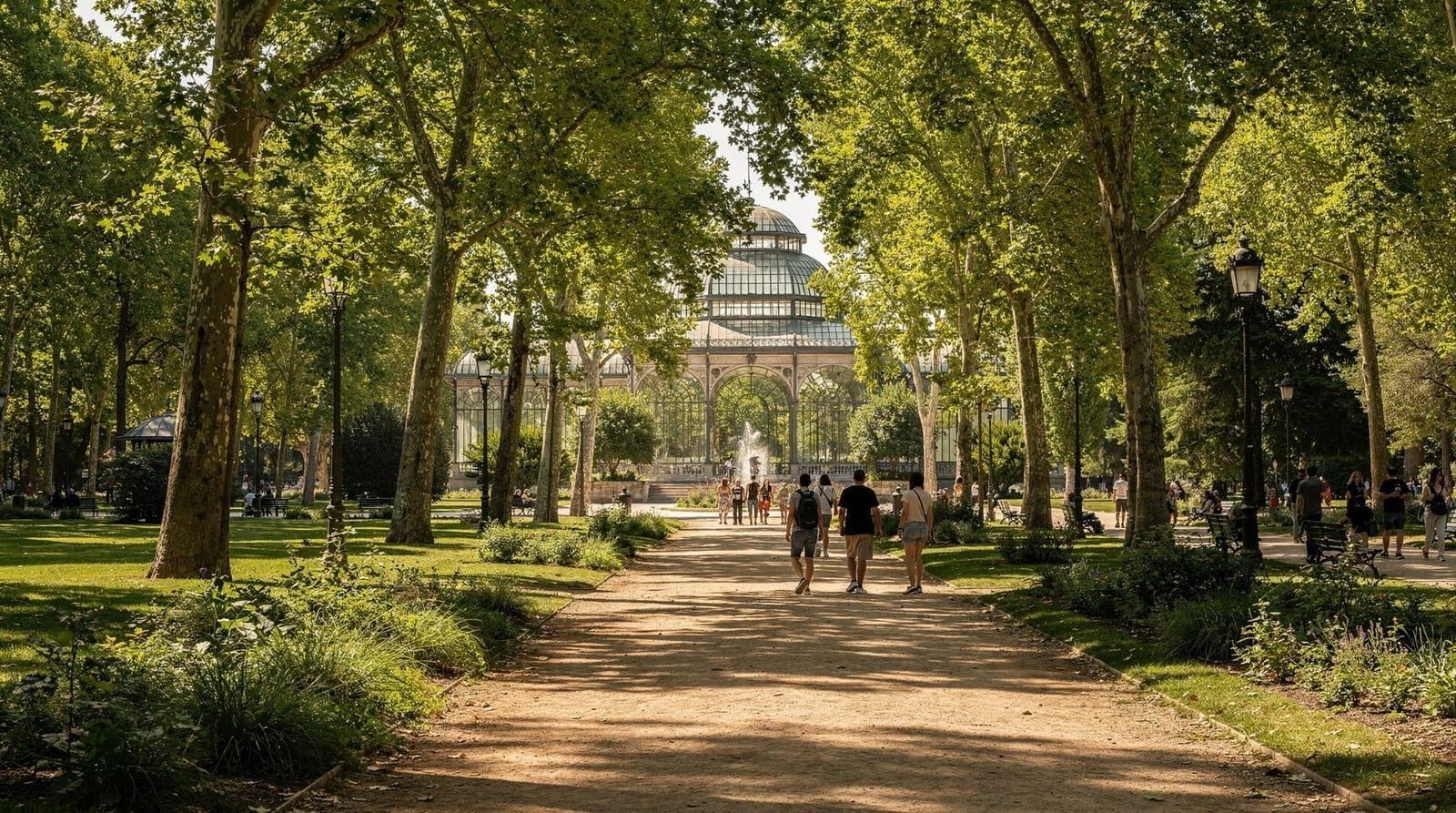
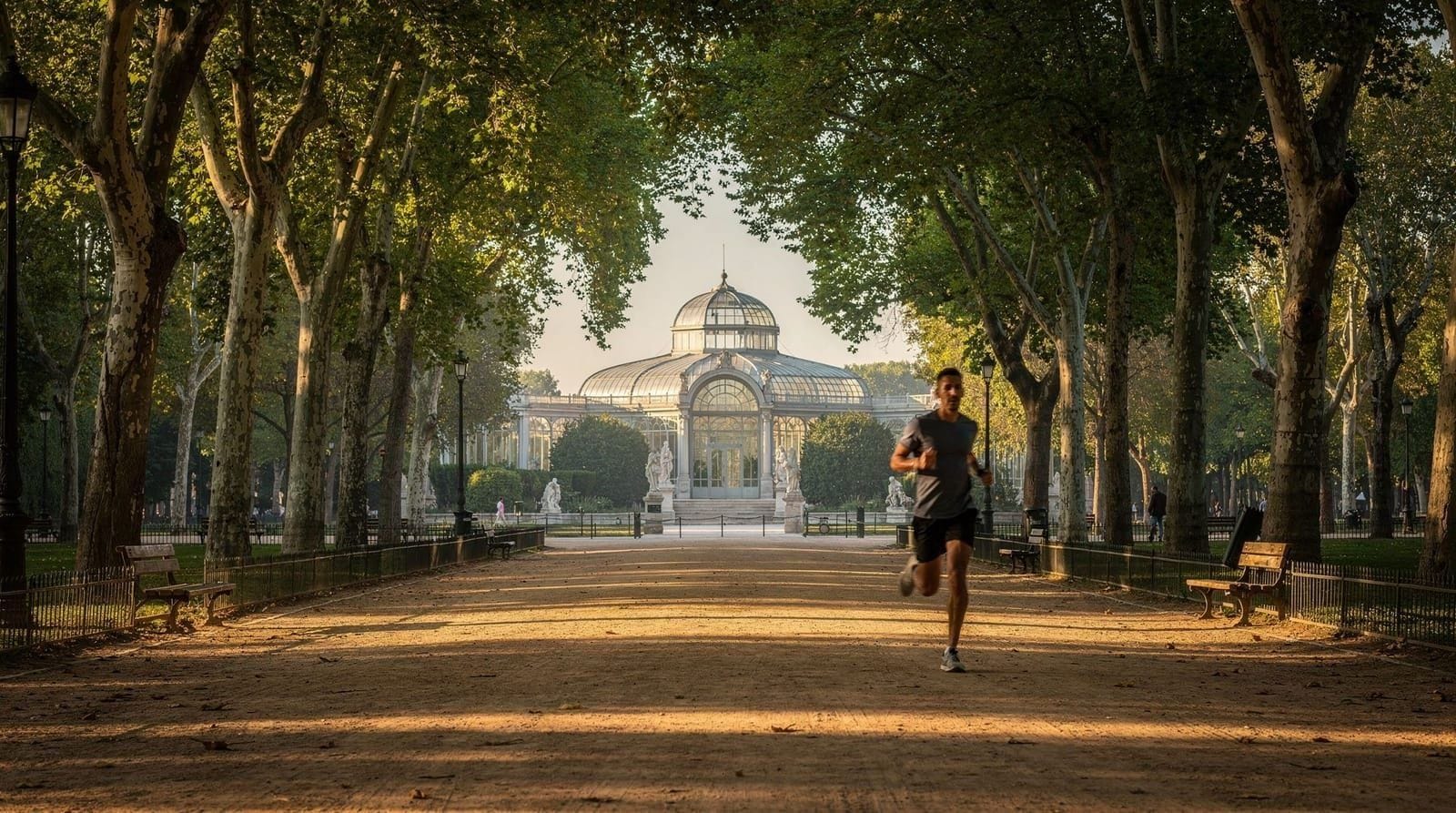
Dehesa de la Villa: Madrid's pine forest park for running and escaping the city
Madrid: Retiro Park Segway Iconic
What is Dehesa de la Villa and who is it for?
Dehesa de la Villa is a 70-hectare municipal park in the Moncloa-Aravaca and Ciudad Universitaria area of northwest Madrid, consisting primarily of stone pine and holm oak woodland. Unlike the manicured Retiro or the vast Casa de Campo, it has the character of a semi-wild Mediterranean forest — informal paths, little formal infrastructure, and almost no tourists. It is the preferred park for runners (the main circuit is about 5 km), dog walkers, families wanting genuine nature rather than a city park, and anyone who wants to feel outside the city without leaving it. Free, open all hours.
| Where | Moncloa-Aravaca, northwest Madrid |
| Cost | Free, no tickets |
| Time needed | Around 1–1.5 hours for the main circuit |
| Getting there | Metro Francos Rodríguez or Valdezarza (Line 7) |
| Best time | Early morning or late afternoon, spring/autumn |
A real forest in the city
Most Madrid parks are either formally designed (Retiro, Real Jardín Botánico) or vast and accessible by car but remote on foot (Casa de Campo). Dehesa de la Villa occupies a useful middle position: close enough to walk or Metro to from the northwest of the city, large enough (70 hectares) to get genuinely lost in for an hour, and sufficiently wild in character to feel unlike a city park.
The name is historic: dehesa means a type of managed woodland or pasture, and de la Villa means belonging to the town — this land was municipal grazing ground for Madrid’s cattle in the medieval period, later managed as pine forest for timber. The stone pines (Pinus pinea) that characterize the park are not ancient — the current planting dates primarily from the late 19th and early 20th centuries — but they are mature enough to create genuine forest canopy and the distinctive scent of sun-warmed pine resin.
For visitors, the park is primarily interesting as an experience rather than as a collection of sights. There is no Crystal Palace, no lake with boats, no Egyptian temple. There are pine trees, holm oaks, informal paths, occasional benches, rabbits (genuinely abundant), and silence.
Why it matters: the shade in summer
Madrid’s summers (July–August) reach 35–38°C+ regularly. The Retiro provides shade but is crowded on hot days; Casa de Campo is vast and can feel overwhelming to navigate for a simple outdoor fix. Dehesa de la Villa provides dense pine shade over most of its 70 hectares — the canopy is thick enough that the felt temperature under the trees is 6–8°C lower than in direct sun, and the park is rarely crowded enough to feel claustrophobic.
The running community uses the park specifically because the shaded paths make morning and evening runs tolerable in summer heat that would be punishing on exposed city streets. The main running circuit (roughly 5 km on the established path network) is used by hundreds of people daily.
Layout and paths
The park is roughly oval in shape, with the main entrance on the southeastern side near the intersection of Calle del Doctor Severo Ochoa and the Avenida de la Victoria. Secondary entrances on the northern and western sides.
The main circuit (approximately 5 km): A well-used running path that follows the park’s perimeter, mostly through pine forest. Loose gravel surface, minimal elevation change (the park is on a plateau, though the southern edge drops to the City University campus).
Internal paths: A network of dirt paths through the pine and oak forest provides multiple shorter options. The paths are marked on the park maps at the main entrance but not consistently on the ground — the park is small enough that getting lost is not a problem, but navigation is by feel rather than by signage.
The dog run areas: Designated off-leash dog areas in the northeastern section of the park. Dehesa de la Villa is one of the more dog-friendly parks in Madrid; this is not accidental — the residential neighbourhoods immediately surrounding it have a high dog-ownership rate.
Central lawn area: Near the main entrance, a formal lawn area with benches is used for informal sports (frisbee, ball games) and picnics. More formal in character than the forest paths, with park furniture and maintained grass.
Running in Dehesa de la Villa
The park’s primary identity for regular users is as a running destination. The combination of:
- Dense pine shade
- Soft gravel/packed earth surface (lower impact than city pavements)
- A main circuit of approximately 5 km with predictable distance for training
- Genuine forest atmosphere
- Almost no cars inside the park boundaries
…makes it the best running park in northwest Madrid. The route can be extended by running the full perimeter circuit twice (10 km) or by exploring the internal path network to add distance.
Running community: In early morning (before 09:00) and evening (after 19:00), the park’s paths are shared by a regular community of runners who know each other on sight. This is neither a formal running club nor organised in any way — it is simply a neighbourhood park with enough regular users to create a community.
For organised running in Madrid, including the Retiro park running circuit and the Madrid Río path, see the bike and active section guides.
Wildlife and natural character
The pine forest supports a reasonable biodiversity:
- Rabbits: The most abundant and visible wildlife — European rabbits live throughout the park in large numbers, visible especially in early morning and evening
- Hoopoes: Distinctive birds (Upupa epops) with elaborate crests, regular in the park from April–September
- Red kites: Visible overhead, using the thermal updrafts above the park
- Green woodpeckers: Common in the holm oak sections, heard before seen (distinctive laughing call)
- Various finches and tits: Year-round woodland species
The park is not a wildlife reserve and the biodiversity is typical of semi-urban Mediterranean woodland, but for a city park within the urban boundary it offers a naturalistic character that more manicured parks lack.
Getting to Dehesa de la Villa
Metro: Francos Rodríguez (Line 7) — the main southeast entrance is approximately 10 minutes walk. Alternatively, Valdezarza (Line 7) for the northern section.
Bus: Several EMT lines serve the surrounding streets; the park is a 5-10 minute walk from the nearest stops on Avenida de Valdemarín.
From Ciudad Universitaria (University campus): The university campus borders the park’s southern edge. If you are visiting the campus (Complutense University, with its modernist buildings), the park is a direct continuation.
By bicycle: The park does not have dedicated cycling infrastructure (the paths are shared-use). Cycling is tolerated but not the primary use — at busy times the narrow paths can feel crowded with runners and walkers.
Combining with the Universidad Complutense
The Complutense University campus (Ciudad Universitaria) borders the park to the south. The campus has significant architectural interest — particularly the Republican-era modernist buildings that were heavily damaged in the Civil War and rebuilt in the 1940s. The Faculty of Law (Facultad de Derecho) building and the University Library are the most architecturally noteworthy.
The campus is also historical for the Battle of Madrid — the university district was a front-line zone from November 1936 onward, and some of the most extensively documented urban fighting of the Civil War took place in its buildings. The campus museum (Museo de la Complutense) occasionally has exhibitions covering this history.
A half-day combining a walk through Dehesa de la Villa, a short campus tour, and lunch in the surrounding Moncloa-Argüelles neighbourhood covers northwest Madrid in a way that most tourists skip entirely.
Practical information
Entry: Free, open 24 hours (no gates)
Facilities: Basic — benches, rubbish bins, dog waste stations. No cafes, no toilets inside the park. Nearest facilities in the residential streets surrounding the park.
Best times: Early morning (07:00–09:00) for wildlife and cool temperatures; late afternoon (17:00–20:00) for pleasant walking. Midday in summer is hot even in the shade; winter mornings are cold.
Picnics: Permitted throughout the park; no designated BBQ areas (fire risk — the dry pine forest is a fire hazard in summer). Spread rugs and bring your own food.
For the wider picture of Madrid’s parks and outdoor spaces, see free things to do in Madrid and the Madrid on a budget guide.
The neighbourhood context: Moncloa-Aravaca
Dehesa de la Villa sits in the Moncloa-Aravaca district — the northwestern sector of Madrid bounded by the university campus to the south, the A-6 motorway to the west, and the residential Aravaca-Pozuelo area beyond. The district has a mixture of upper-middle-class residential areas (particularly toward Aravaca), the large university campus, and the more working-class areas around Valdezarza and Francos Rodríguez.
For visitors using the park, the immediately surrounding streets have:
Cafes and bars: Calle de Francos Rodríguez and the surrounding residential streets have traditional neighbourhood cafes that open from 07:00 — useful for pre-run coffee or post-walk breakfast. No tourist mark-up; standard Madrid neighbourhood pricing (coffee €1.50–2.00, croissant €1.50).
Supermarkets: Several Mercadona and smaller supermarkets within 5 minutes of the park entrances for picnic supplies.
Restaurants: The Aravaca neighbourhood (accessible from the park’s western edge) has several upscale restaurants; the immediate park neighbourhood has more modest options.
Running routes in detail
Main circuit (5 km, 35–40 min): Start at the southeastern entrance (Calle del Doctor Severo Ochoa). Follow the broad main path clockwise around the park’s inner perimeter. The path is surfaced with compacted gravel and is runnable in most weather conditions. Elevation change is minimal — the park is on the plateau. Markers at 1 km intervals are useful for pace tracking.
Extended circuit with forest sections (7–8 km, 50–65 min): At the northern end of the main circuit, take the internal dirt paths west through the pine forest section. The surface here is packed earth — good in dry conditions, muddy after rain. These paths meander through the densest part of the forest; navigate by keeping the park boundary visible.
Long run for serious training (10+ km): Exit the park at the northern boundary, continue west through the forest sections of the Parque de la Dehesa de la Villa that extend beyond the formal park boundaries (the green space continues into a less-maintained zone toward the El Plantío area). Add the Parque Juan Carlos I (connected via the Pinar del Rey area) for an extended green-corridor run of up to 15 km without entering city streets.
Plant life: what to look for
The park’s vegetation is dominated by three species:
Stone pine (Pinus pinea): The umbrella-shaped pines whose canopy provides the main shade. The pine cones (piñas) fall from September through November and litter the paths with their woody segments. The smell of resin on hot days (July–August, 09:00–11:00) is the defining sensory memory of the park.
Holm oak (Quercus ilex): The evergreen oak that dominated the original Mediterranean vegetation of the Madrid plateau before it was cleared for agriculture. Dark green, leathery leaves, small acorns in autumn (October–November), food source for the park’s wildlife.
Rockrose (Cistus ladanifer): The flowering shrub (white petals, red spots) that covers many of the under-canopy areas. Flowers in May–June, strongly aromatic. Native to the Iberian Peninsula’s Mediterranean scrubland; its presence gives the park a more naturalistic character than the ornamental plantings of the Retiro or Parque del Oeste.
Comparing Madrid’s parks for different needs
| Park | Best for | Size | Distance from centre |
|---|---|---|---|
| Retiro | Sightseeing, families, atmosphere | 125 ha | 20 min walk |
| Casa de Campo | Cycling, zoo, swimming pools | 1700 ha | 20 min Metro |
| Madrid Río | Cycling routes, urban views | 10 km linear | 20 min walk/Metro |
| Parque del Oeste | Roses, views | 100 ha | 25 min Metro |
| Cerro Tío Pío | Sunset panorama, swings | 10 ha | 20 min Metro |
| Dehesa de la Villa | Running, nature, quiet | 70 ha | 25 min Metro |
For visitors primarily interested in running, wildlife, or simply feeling outside the city, Dehesa de la Villa offers the most genuine forest experience of any park within the city limits. For family outings, sightseeing, or the full urban-park experience, the Retiro and Casa de Campo serve those needs better.
See free things to do in Madrid and Madrid on a budget for the full context of free outdoor activities across the city.
Seasonal character: what changes through the year
Spring (March–May): The rockrose blooms in May, wildflowers appear along the internal paths, and mornings are cool enough for a long run without early starts. This is the most pleasant season to visit.
Summer (June–August): The pine canopy is the whole point — expect a 6–8°C difference between the shaded paths and open Madrid streets. Even so, avoid midday (13:00–17:00); early morning or evening runs are far more comfortable, and the resin smell is strongest in the mid-morning heat.
Autumn (September–November): Pine cones fall from September, acorns from the holm oaks in October–November, and hoopoes are still present into September. Cooler, golden light makes this a good season for slower walks rather than just running.
Winter (December–February): Cold mornings, especially before 09:00, but the park rarely feels bleak — the evergreen pine and holm oak canopy means it never goes fully bare, unlike Retiro or Parque del Oeste. Fewer runners, more solitude.
Pairing the forest with the rest of your Madrid days
Because Dehesa de la Villa has no sights, it works best as a counterweight to a busy itinerary. After a morning among the pines, the city’s headline attractions feel easier to enjoy, and the park slots naturally into a longer stay planned with the how many days in Madrid guide or the 3-day itinerary. Visitors with a slower pace may prefer the 4-5 day itinerary, which leaves room for a quiet green morning.
If the forest leaves you wanting more outdoor time on wheels, the paths here are better walked or run, but central Madrid offers a more playful alternative: a guided ride through the Retiro, such as a segway ride through the Retiro, covers the formal park without the effort of crossing it on foot. Our Segway in the Retiro guide explains what to expect, and the Madrid by bike and e-bike tours pages cover other ways to move through the city’s green spaces.
For a very different kind of day, the park pairs well with indoor culture once the weather turns. The Prado Museum guide and the Golden Triangle art walk are the obvious next stops, and for first-timers who want context, a guided Prado visit with skip-the-line entry makes the museum far easier to approach. Travelling with children? The Madrid with kids guide and the Madrid Río riverside path suggest more open-air options, while the Madrid in summer guide helps you plan around the heat that makes this park’s shade so valuable. The Moncloa lighthouse and the Temple of Debod are both on the same side of the city if you want a short sightseeing add-on after your walk.
Who should visit, and who should go elsewhere
Dehesa de la Villa rewards a specific kind of visitor: runners wanting genuine shade and low-impact surfaces, residents or longer-stay visitors wanting a real neighbourhood park rather than a tourist sight, and anyone who has already done Retiro and Casa de Campo and wants something quieter. First-time visitors with only two or three days in Madrid, or anyone prioritising monuments and museums, will get more out of Retiro or a walk along Madrid Río — Dehesa de la Villa has essentially no sights, and its appeal is entirely atmospheric.