Real Jardín Botánico: Madrid's Royal Botanic Garden
Madrid: Prado Guided Skip the Line
Is the Real Jardín Botánico worth visiting and what is the entry price?
Yes, particularly in spring (April–May) and autumn (September–October). The Royal Botanic Garden has 30,000 plant specimens across 8 hectares in a formal terraced layout on the Paseo del Prado. Entry is €4 adults (€1 reduced for students aged 18–25, over-65s and large families; free for under-18s; free on Tuesdays 10:00–13:30). The garden's position next to the Prado makes it a natural complement to a museum visit — 45–90 minutes is enough for most visitors. The best single feature is the glasshouse complex (Invernadero), open year-round and one of the finest 19th-century greenhouse collections in Spain.
| Where | Paseo del Prado 2, Jerónimos, directly south of the Prado |
| Cost | €4 adults, €1 reduced, free under-18s |
| Time needed | 45–90 minutes |
| Getting there | Metro Atocha (Line 1) or Banco de España (Lines 2/4) |
| Best time | Spring (April–May) or autumn (September–October); opening time for fewest visitors |
A formal garden from the Enlightenment
The Real Jardín Botánico (Royal Botanic Garden) was founded in 1755 during the reign of Ferdinand VI and moved to its current site on the Paseo del Prado in 1781, during the great urban remodelling of Madrid under Charles III. Architect Juan de Villanueva (who also designed the Prado building) laid out the neoclassical entrance gates and the formal structure of the garden’s three terraced levels.
The garden’s original purpose was scientific — to support the systematic study and classification of plant species from Spain’s empire, particularly from the Americas and the Philippines. The botanical collections developed in parallel with the Prado’s art collections during the same Bourbon Enlightenment period, both expressions of the same intellectual programme: systematic understanding and classification of the natural and cultural world.
Today the garden contains approximately 30,000 specimens across 5,000 species, maintained for both scientific research (the garden is affiliated with Spain’s National Research Council, CSIC) and public education and enjoyment.
Layout and what to see
The garden is organized on three terraced levels descending from the Calle de Claudio Moyano (upper) to the Paseo del Prado (lower). The main entrance is on the Paseo del Prado, directly south of the Prado museum’s main facade.
Lower terrace (Terraza de los Cuadros): The most formal section, with geometric plant beds organized by plant family (Linnaean taxonomy). Medicinal plants, aromatic herbs, and ornamental sections are here. This is the architectural centrepiece — the iron-and-glass greenhouse complex (Pabellones de Exposiciones/Invernadero) sits at the lower terrace level.
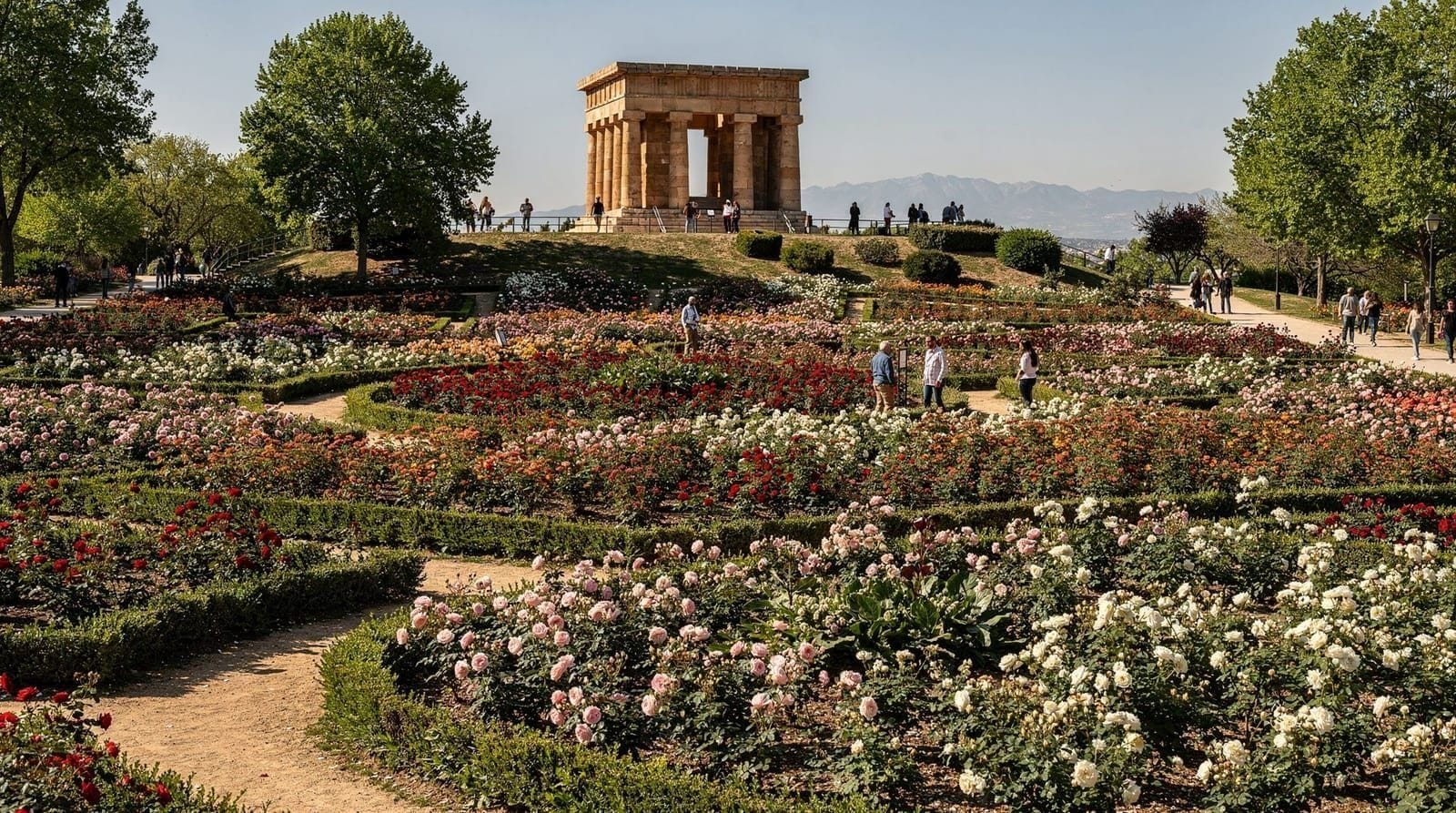
Middle terrace (Terraza de las Escuelas): Mixed plantings including the Rose Garden (smaller than Retiro’s Rosaleda but charming), tree collections, and teaching beds. More informal in character than the lower terrace.
Upper terrace (Terraza del Plano de la Flor): The collection of trees — including specimens over 200 years old — and more informal woodland planting. The most atmospheric section in autumn when the trees change colour.
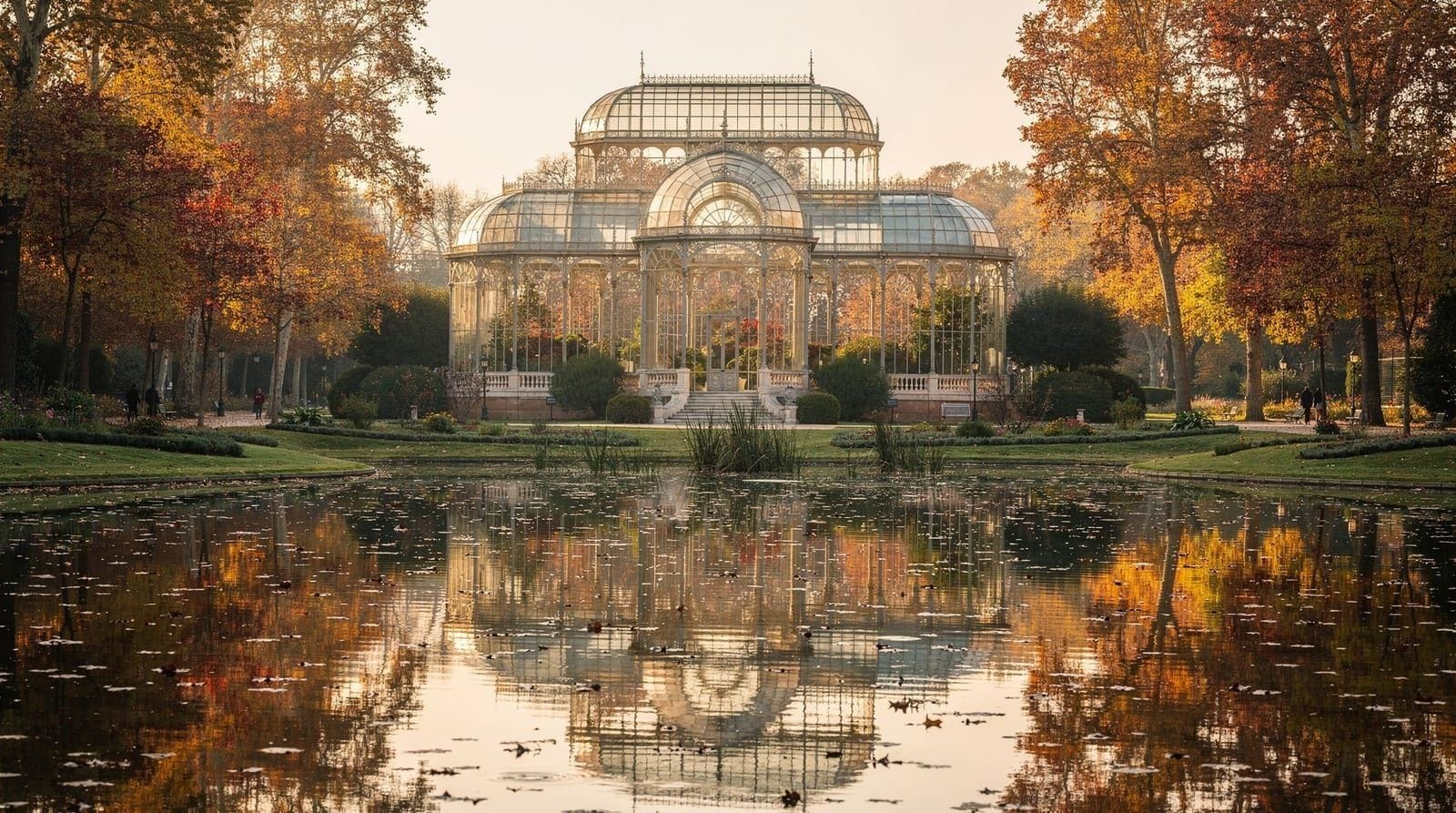
The Greenhouse complex (Invernadero): The Victorian-era glasshouses contain tropical and subtropical collections — banana plants, cacti and succulents, aquatic plants, Mediterranean species. Open year-round; the best time to visit on cold or grey days when the outdoor sections are less rewarding. No additional charge beyond garden entry.
Seasonal highlights
Spring (April–May): The peak season. Wisteria, tree peonies, roses, and hundreds of flowering bulb species. The lower terrace is at its most colourful in mid-April to mid-May. The magnolia trees (near the middle terrace) bloom in late March to early April.
Early summer (June): Roses peak in early June; the garden starts showing its summer character with Mediterranean drought-tolerant species in better form than the more temperate ones.
Autumn (September–October): The tree collections colour in October. The garden has several mature specimen trees — hornbeams, maples, liquidambars — that provide genuine autumn colour in a city that otherwise has little. The greenhouse is at its best in autumn when tropical species are fully developed from the summer growth.
Winter (November–February): The outdoor garden is structurally interesting in winter (bare trees reveal the architecture of the formal terraces) but the dominant interest shifts to the greenhouse. Hours are reduced in winter.
Practical information
Address: Paseo del Prado 2, Jerónimos district Hours: Daily except 25 December and 1 January, hours vary by season:
- January–February: 10:00–18:00
- March and October: 10:00–19:00
- April and September: 10:00–20:00
- May–August: 10:00–21:00
- November–December: 10:00–18:00
Entry: €4 adults, €1 reduced (students aged 18–25, over-65s, large families), free for under-18s. Free for people with a disability. The CSIC employees and affiliated researchers have separate access.
Free access: Tuesdays from 10:00 to 13:30.
Metro: Atocha (Line 1) — the main Prado entrance on Paseo del Prado is 100m north; the Botanical Garden entrance is 100m further south on the same boulevard. Alternatively, Banco de España (Lines 2 and 4) for the northern end of the Paseo del Prado.
Duration: 45–90 minutes for a thorough visit. The garden is compact enough that you can see everything in 90 minutes at a relaxed pace.
The botanical garden as a rest stop
The garden’s position — immediately south of the Prado, adjacent to the Reina Sofía (10 minutes south on the Paseo del Prado) — makes it one of Madrid’s best rest stops during a museum-heavy day.
Between the Prado and the Reina Sofía: The walk from Prado south to Reina Sofía along the Paseo del Prado takes 10 minutes without stopping. Entering the Botanical Garden (entry €4), spending 45 minutes, and then continuing south adds time and cost but transforms a museum-corridor walk into a proper afternoon.
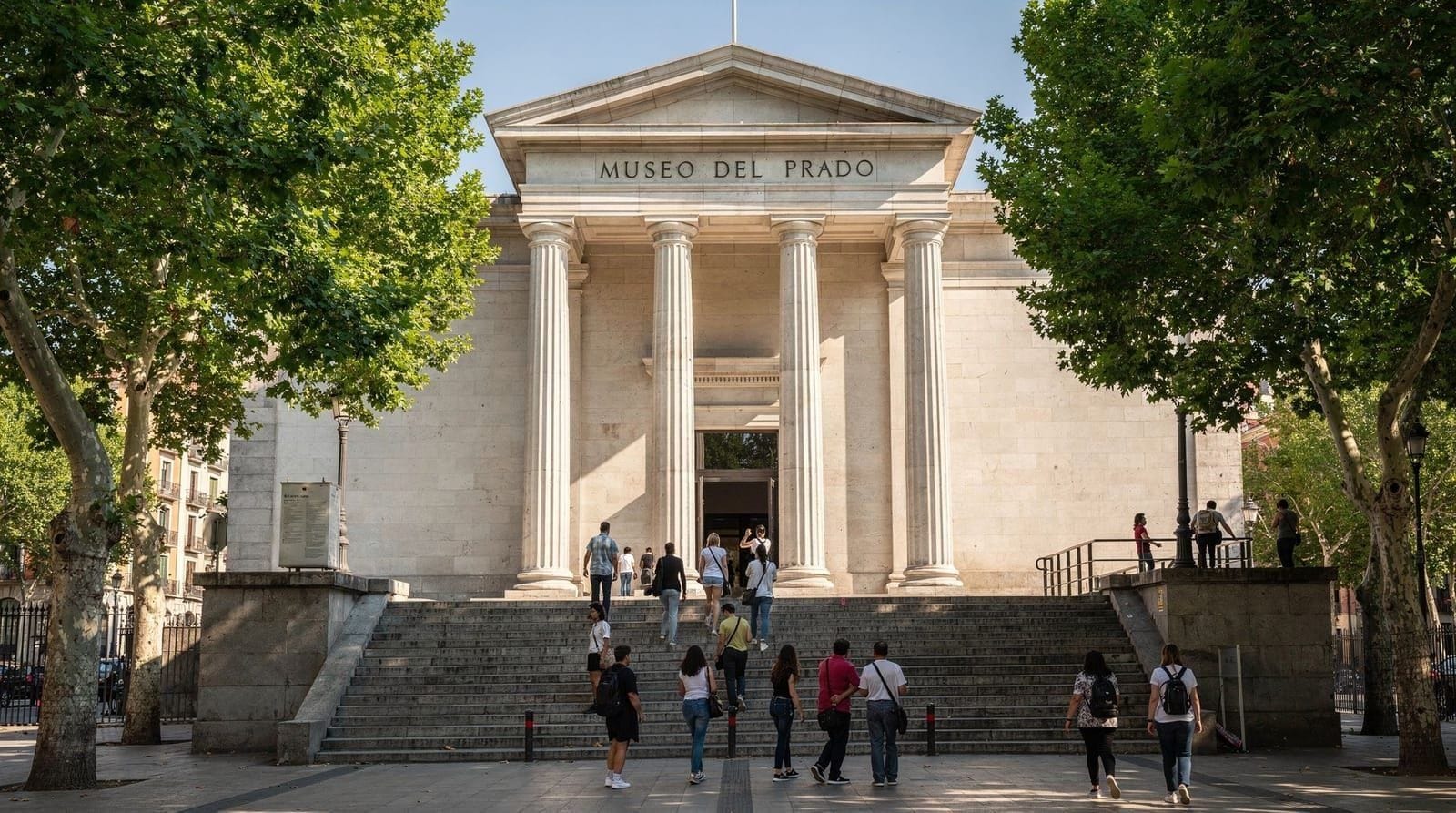
After the Prado: Exit the Prado through the Puerta de Murillo (south entrance, facing the Botanical Garden) and enter directly — the two buildings share a wall on the Paseo del Prado. The garden’s tranquility after 2–3 hours in the Prado is genuinely restoring.
If you would rather not queue for the museum before you reach the garden, a guided Prado visit with skip-the-line entry lets you cover the key paintings with a guide and leave with energy to spare for a slow walk among the plants.
Special collections
Bonsai collection: The garden maintains a small but significant bonsai collection (in the middle terrace). Some specimens are over 150 years old, donated from the Spanish bonsai tradition.
Herbarium: The garden’s scientific herbarium (not publicly accessible) contains millions of dried plant specimens, one of the largest in the Iberian Peninsula. Public education events occasionally provide access to the herbarium or presentations about botanical classification.
Historic plant collection: Several trees in the upper terrace are documented to the original 18th-century planting — specimen trees over 200 years old in a city park setting. The garden maintains records of these historic specimens.
Photography in the Botanical Garden
The garden is photogenic throughout the year, with specific highlights:
- Lower terrace at opening (10:00): Before the day’s visitors arrive, the formal geometric beds in morning light are excellent for architectural garden photography
- The greenhouse interior: High-contrast photography opportunities with the glass roof diffusing light
- Middle terrace in May: Close-up rose photography alongside the older tree specimens
- Upper terrace in October: Autumn foliage against the neoclassical stonework
Photography is permitted throughout the garden for personal use; commercial photography requires permits.
Temporary exhibitions and events
The Botanical Garden runs an annual temporary exhibition programme in its exhibition pavilions (the Pabellones de Exposiciones in the lower terrace). These typically run 2–4 times per year, covering themes from botanical illustration and natural history photography to contemporary art responding to plant life. Entry is included in the general garden ticket.
The garden also hosts:
Orchid exhibitions (usually January–February): The greenhouses are restocked with tropical orchid displays during the post-Christmas low season, when the outdoor garden is at its least interesting. Entry included in the standard garden ticket.
Night visits: On selected summer nights (typically July–August), the garden opens for evening visits with specific lighting installations. Limited places; book through the garden website.
Science workshops and educational tours: The garden’s scientific programmes occasionally include public events — botanical drawing workshops, guided tours themed around specific plant families, talks on ethnobotany. Primarily in Spanish; details on rjb.csic.es.
The Botanical Garden and the Paseo del Prado UNESCO designation
In 2021, the Paseo del Prado and the Buen Retiro — the boulevard and the park — were jointly inscribed as a UNESCO World Heritage Site under the designation “Paseo del Prado and Buen Retiro, a Landscape of Light and the Arts.” The Real Jardín Botánico is within this UNESCO zone.
The inscription recognises the ensemble of neoclassical buildings, formal gardens, fountains, and cultural institutions along the Paseo del Prado as an outstanding example of Enlightenment urban design — planned to combine natural science (the Botanical Garden), art (the Prado, originally a natural history museum before its current use), public promenade (the boulevard), and urban order. The Botanical Garden is literally one of the founding elements of this 18th-century project.
This context — walking from the Thyssen past the Neptune Fountain, past the Prado, into the Botanical Garden — is a walk through one of the most ambitious pieces of 18th-century urban planning in Europe, now UNESCO-protected as a single landscape.
What’s near the Botanical Garden: a half-day itinerary
Morning (09:30–12:30):
- Botanical Garden opens at 10:00 — arrive when it opens for the fewest visitors
- Allow 90 minutes for the full garden, with focus on the greenhouse complex
- Exit onto the Paseo del Prado
Mid-morning to afternoon:
- Cuesta de Moyano book market — the secondhand book stalls bordering the garden’s upper terrace (open daily)
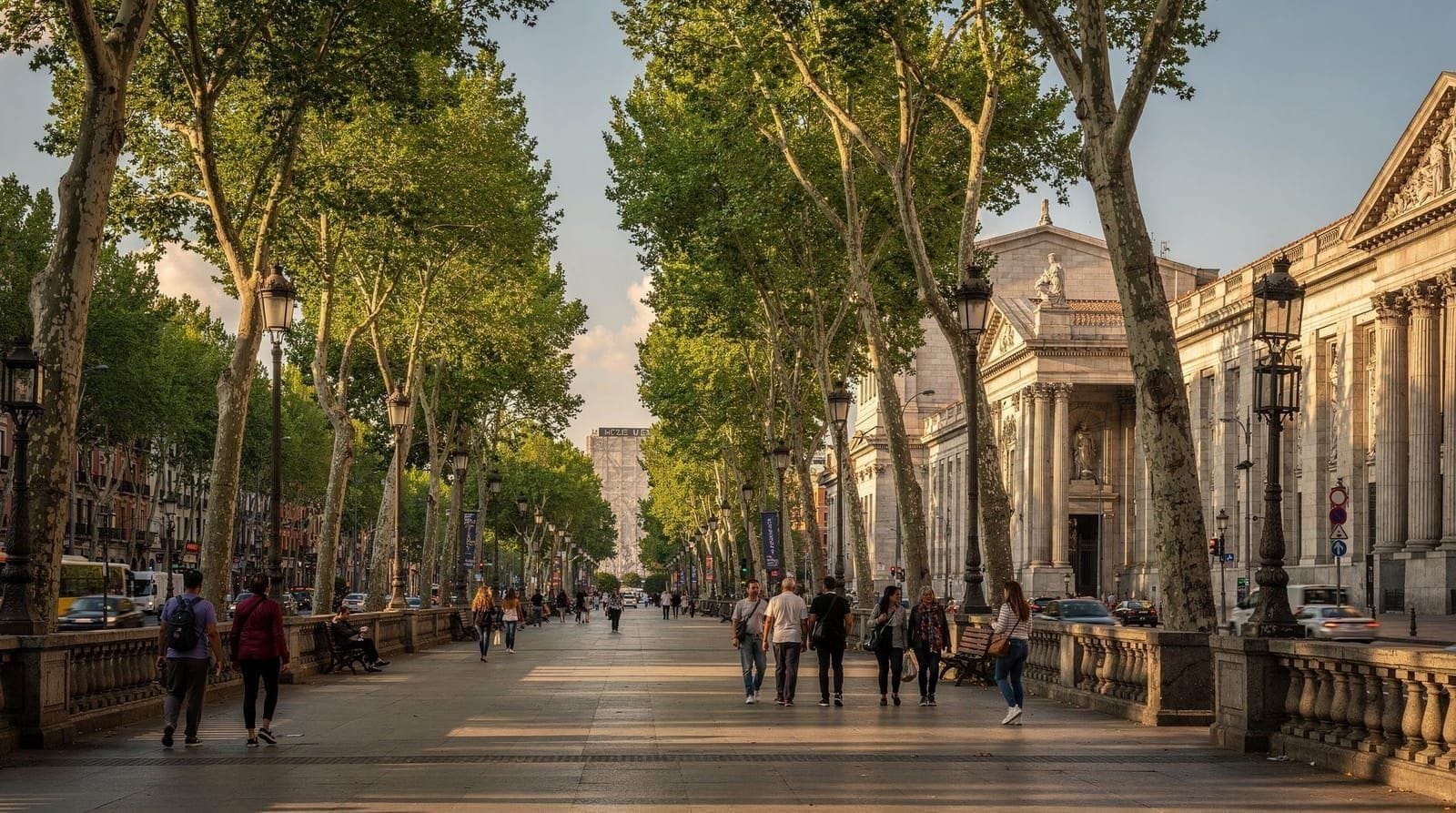
- Walk north on the Paseo del Prado — the UNESCO boulevard with the Cibeles and Neptune fountains
- Prado for a focused 2-hour visit (or use the free window from 18:00)
Afternoon:
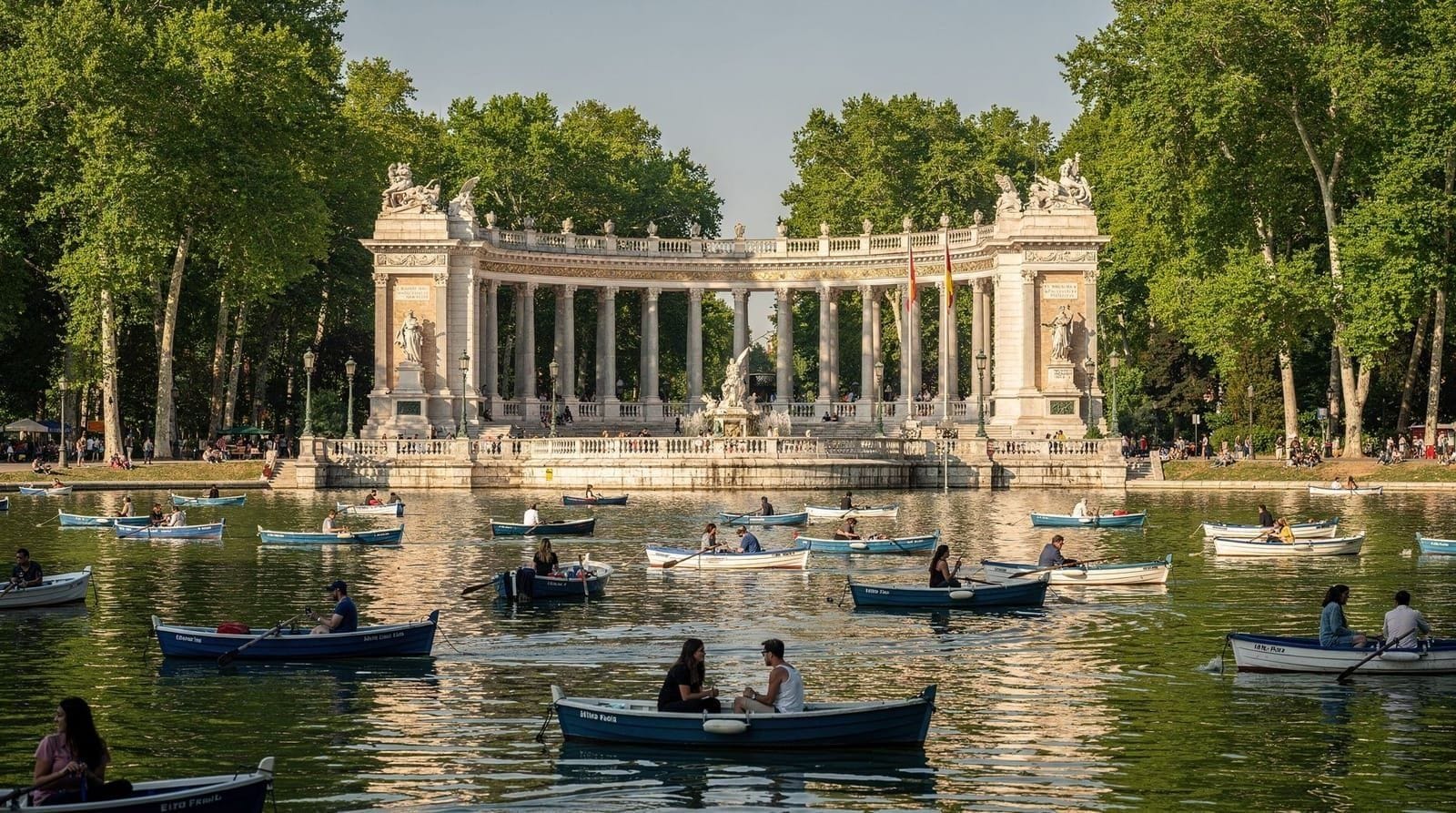
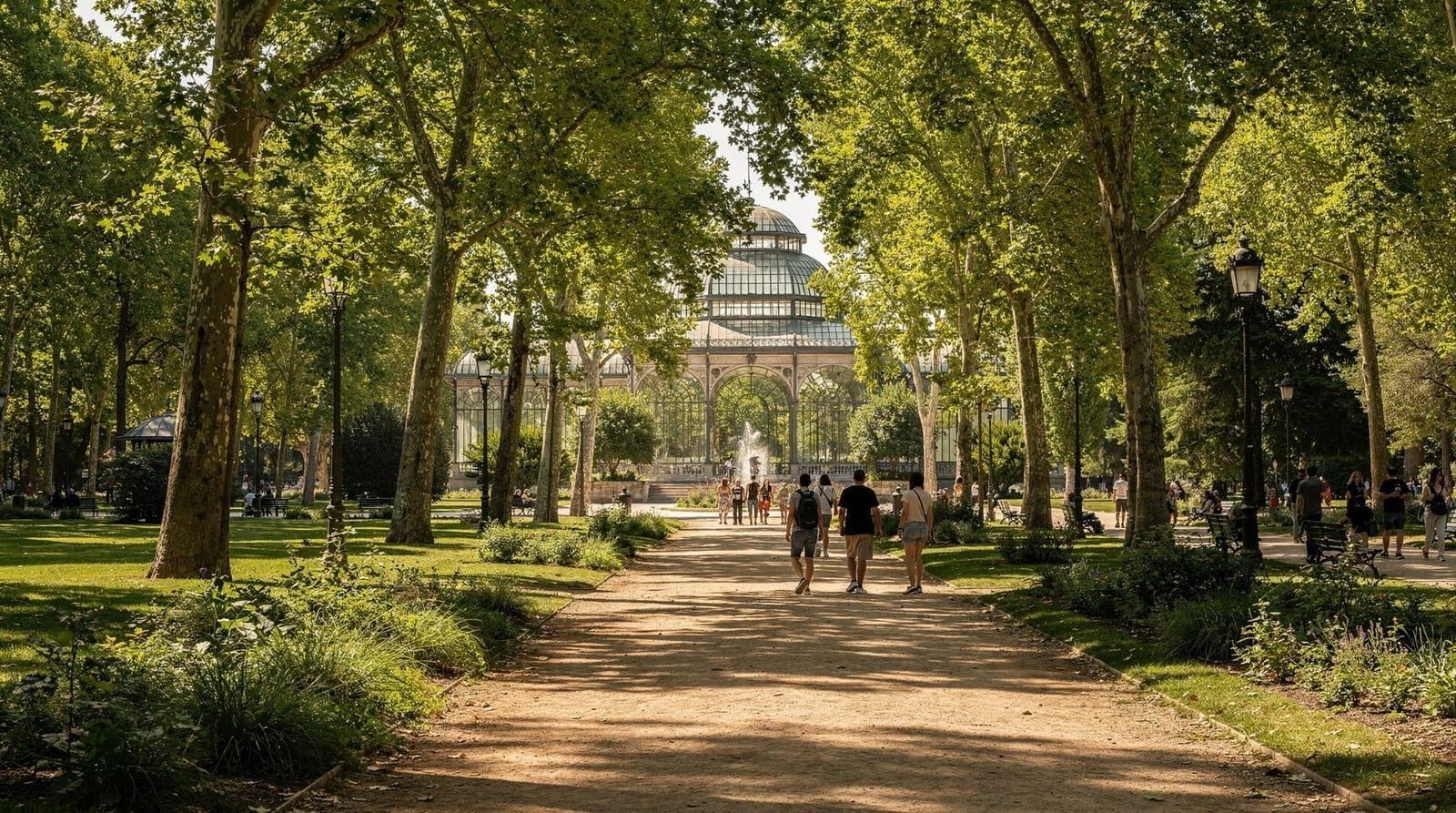
- Retiro Park — the Crystal Palace and the Rosaleda (10 minutes walk from the Botanical Garden entrance)
- The rowing lake for late afternoon light
If your plan pairs the garden with the capital’s royal and artistic highlights, a combined Royal Palace and Prado visit with skip-the-line access is one way to cover both on a single day, keeping the garden for a calmer slot before or after. For the palace on its own, see the Royal Palace guide, and for the royal story behind the garden, the Habsburg and Bourbon history guide gives useful context.
Connecting the Botanical Garden to nearby sites
Real Academia de Bellas Artes de San Fernando (15 minutes north on Calle de Alcalá): The fine arts academy with a significant Goya collection, free on Wednesday and Sunday afternoons.
The Retiro park (5 minutes east via the Calle de Claudio Moyano book market): The Retiro’s Rosaleda rose garden and Crystal Palace are the natural continuation of an afternoon that begins in the Botanical Garden.
The Cuesta de Moyano book market: On the street bordering the garden’s upper terrace, the Sunday (and daily on working days) secondhand book market has approximately 30 permanent stalls selling old books, prints, maps, and periodicals. A good place to find vintage Madrid photography and illustrated natural history books at this particular location.
Reina Sofía (10 minutes south): The museum’s permanent collection and Guernica are a natural complement to a morning in the garden — nature and art, both organised according to 20th-century and 18th-century sensibilities respectively.
For a full day centred on this part of Madrid — the Paseo del Prado boulevard, the Botanical Garden, and the Retiro — see the 3-day Madrid itinerary for the specific routing. For the wider free-entry picture including the garden’s senior discounts, see free things to do in Madrid.
Practical FAQ for the Botanical Garden
Is the Botanical Garden worth €4? For plant enthusiasts and garden visitors, yes unambiguously. For general sightseers who wouldn’t normally visit a botanical garden, it’s worth considering as a 45-minute add-on to a Prado visit rather than a standalone destination. The spring and autumn seasons make it more compelling; winter and midsummer less so.
Can you bring food? Yes. Picnics are permitted on the lawn areas. No dedicated picnic facilities, but benches are scattered throughout the garden.
Is it accessible for wheelchairs? The lower and middle terraces are fully accessible via paved paths. The upper terrace has some steeper sections that may require a companion for wheelchair users. The greenhouse complex is accessible. The main entrance on the Paseo del Prado has step-free access.
The scientific work: behind the public garden
The Real Jardín Botánico is not primarily a decorative garden — it is a scientific institution affiliated with Spain’s National Research Council (CSIC), with research programmes in plant taxonomy, conservation biology, and ethnobotany.
The herbarium: The garden maintains one of Spain’s largest plant herbaria — collections of dried, pressed specimens used for taxonomic research. The collection dates to the 18th century and includes specimens collected during the great Spanish scientific expeditions of the late 18th century (the Malaspina expedition to the Americas and Pacific, 1789–1794, which collected extensively). Not publicly accessible, but knowledge that it exists gives context to the garden’s scientific weight.
Conservation programmes: The garden participates in ex-situ conservation of endangered Iberian and Macaronesian plant species — growing plants that are threatened in their natural habitats, maintaining seed banks, and contributing to habitat restoration projects. Several of the plants visible in the garden are species that exist in very limited wild populations.
The library and archive: The garden’s scientific library holds historical botanical texts and illustrations dating to the 16th century. Selected exhibitions draw on this archive; the illustrated natural history books in the garden’s shop reflect the tradition of botanical illustration that the library contains.
Plant-focused Madrid: beyond the Botanical Garden
For visitors with a specific interest in plants and natural history, Madrid offers several other plant-related experiences:
Real Jardín Botánico de Madrid nursery: The garden sells plants propagated from its collections. The shop (near the main entrance) sells seeds, books, and botanical-themed merchandise. The plant sales are less accessible for international visitors who cannot take plants across borders, but the books and prints are excellent souvenirs.
Parque del Retiro Rosaleda: The Retiro’s rose garden (4,000 plants, peak May) is a free alternative to the Botanical Garden’s formal rose section and worth visiting in combination.
Parque del Oeste Rosaleda: The Parque del Oeste rose garden (20,000+ plants, International Competition) is the larger and arguably more significant rose garden in Madrid — a 25-minute Metro ride northwest of the Botanical Garden.
Jardín del Príncipe (Aranjuez): The gardens of the Royal Palace at Aranjuez (45 minutes south by Cercanías train) are the most elaborate royal gardens in the Madrid orbit — formal French-style gardens along the Tagus river, with the Jardin de la Isla (Garden of the Island) as the centrepiece. Spring is the best season. See Aranjuez from Madrid for logistics.
For a trip oriented around gardens and outdoor spaces, the sequence Botanical Garden → Retiro Rosaleda → Parque del Oeste → Aranjuez (day trip) covers all four of Madrid’s major formal garden experiences.
Seasonality at a glance
For visitors weighing when to fit the garden into a trip, the seasonal comparison below is the practical summary of the detail above.
| Season | What’s blooming | Crowd level | Recommendation |
|---|---|---|---|
| Spring (Apr–May) | Wisteria, tree peonies, roses, magnolias | Moderate to busy | Best overall season — plan a dedicated visit |
| Early summer (Jun) | Roses peak, Mediterranean species | Moderate | Good, warmer — combine with the greenhouse for shade |
| Autumn (Sep–Oct) | Tree colour (hornbeam, maple, liquidambar) | Quiet | Excellent — the greenhouse tropical species are at their fullest too |
| Winter (Nov–Feb) | Structural interest only; orchid exhibitions | Quiet | Focus on the greenhouse and reduced-hours visit |
Is the Botanical Garden worth a special trip?
For general sightseers who wouldn’t normally choose a botanical garden, the honest answer is: not on its own, but as an add-on to the Prado it is close to a no-brainer. The €4 entry and 45-minute commitment are low, the garden shares a wall with the Prado’s south entrance, and the change of pace after two or three hours indoors is genuinely restorative. Plant enthusiasts and garden visitors should treat it as a standalone destination worth 90 minutes.