Teatro Real and zarzuela: Madrid's opera and lyric theatre guide
Madrid: Food Tour Tapas Spanish Wine
What is the Teatro Real in Madrid and how do you get tickets?
The Teatro Real (Royal Theatre) is Spain's principal opera house and the city's most important lyric venue, on Plaza de Oriente opposite the Royal Palace. Productions run September–July with a programme of opera, ballet, and orchestral concerts. Prices vary by production and seat (under-26s have a youth area at €20, ages 26–35 at €30; see the theatre's website for the full price list). The Teatro de la Zarzuela nearby stages zarzuela — Spain's distinctively Spanish hybrid of opera and musical theatre; its prices are on the theatre's website.
Spain’s national opera house sits on one of Madrid’s grandest squares, opposite the Royal Palace, and pairs naturally with a daytime Palace visit for an evening of Bourbon-era culture.
| Where | Plaza de Oriente (Teatro Real) / Calle Jovellanos 4 (Zarzuela) |
| Cost | Varies by production and seat; youth area €20 (under 26) or €30 (26–35); see the official sites |
| Season | September–July |
| Booking | 6–8 weeks ahead for headline productions; 2–3 weeks otherwise |
| Dress | Smart casual; no strict dress code |
Opera on Plaza de Oriente
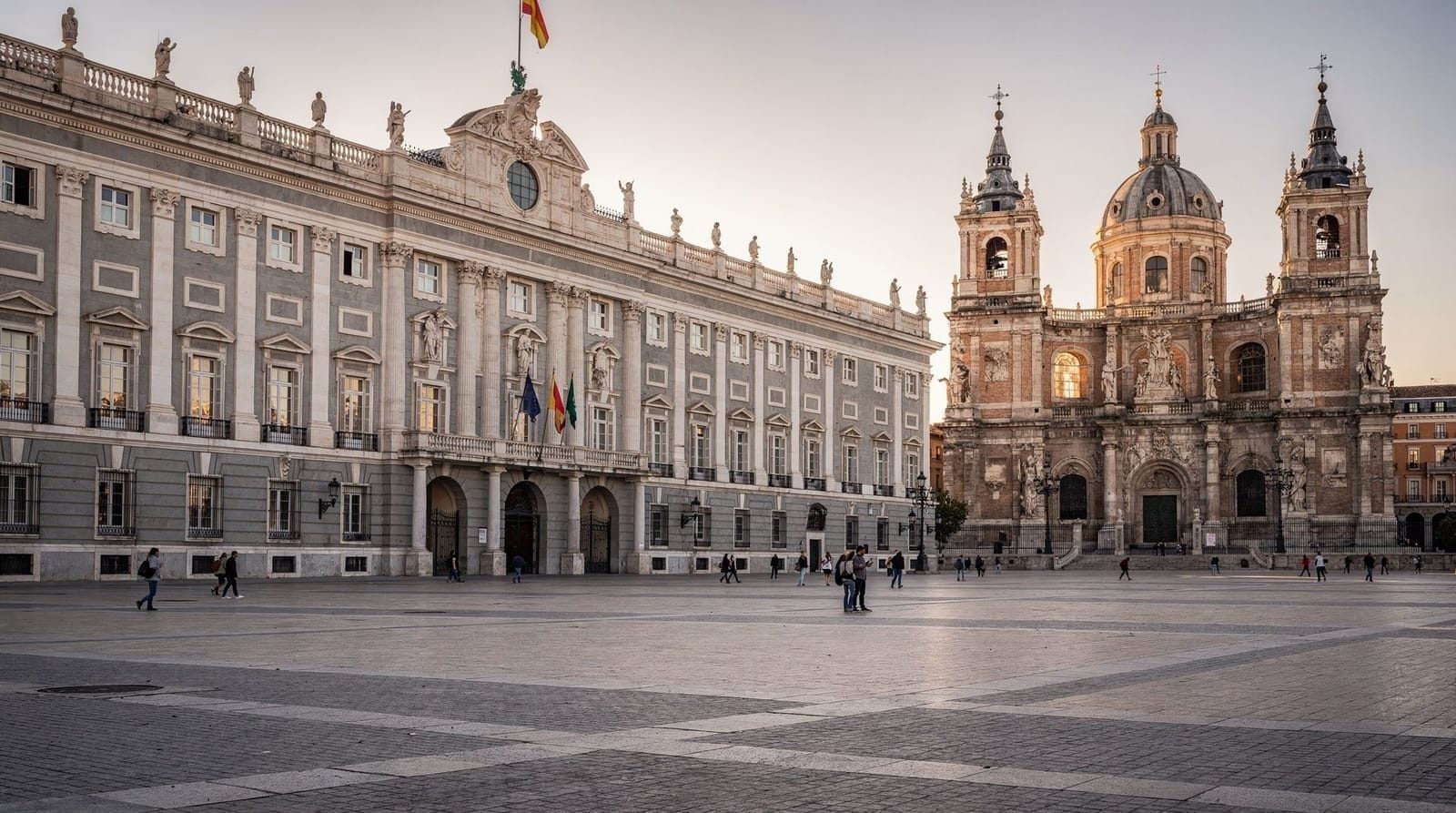
The Plaza de Oriente — the formal square in front of the Royal Palace’s eastern facade — is one of Madrid’s most impressive urban spaces, and the Teatro Real (Royal Theatre) anchors its northern side. Built in the 1850s under Isabel II, rebuilt after structural problems closed it for nearly 75 years, and fully reopened in 1997 after a decade of renovation, the Teatro Real is now Spain’s leading opera house and one of the most technically advanced performance spaces in Europe.
The programme runs September through July, with a summer season sometimes extending into August. Productions typically include 10–15 opera titles per season, several ballet seasons, and a series of orchestral and recital concerts. The artistic quality has been high since the 1990s reopening, consistently attracting major international singers, conductors, and directors.
The programme and what to expect
The Teatro Real programmes mainstream Italian and German opera (Verdi, Puccini, Strauss, Wagner, Mozart) alongside Spanish and contemporary work. Each production receives multiple performances — typically 15–25 over 3–4 weeks.
For international visitors: The website (teatroreal.es) publishes the season programme in Spanish and English. Supertitles are provided in Spanish and English for all productions. Productions are sung in their original language (Italian, German, Russian, French, or Spanish depending on the work).
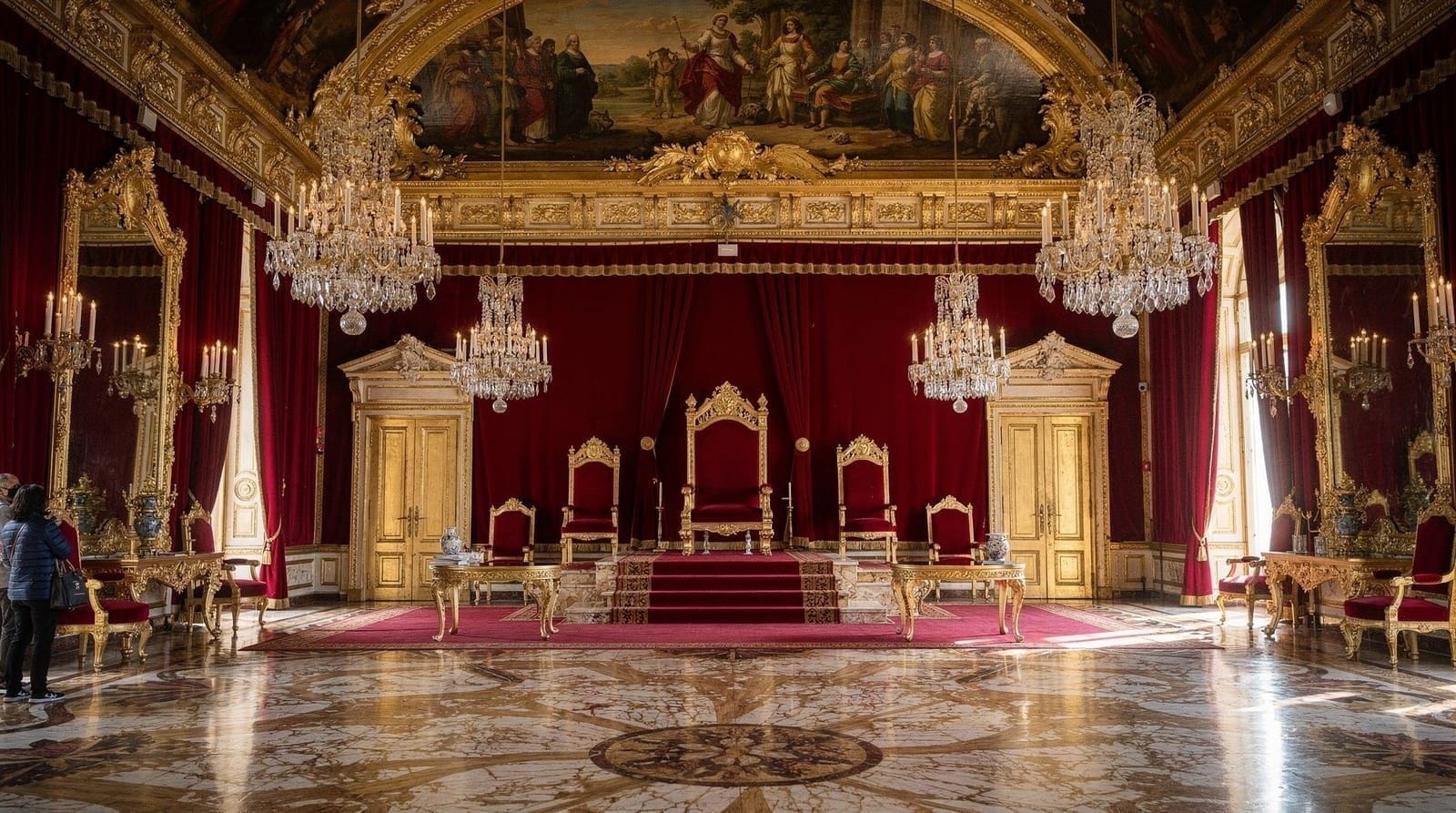
Production quality: Post-1997 reopening, the Teatro Real has invested substantially in production values. Stage mechanics are sophisticated, sets elaborate. The interior design — gilded horseshoe auditorium, five tiers of boxes and galleries — is traditional but not faded. Acoustic renovations have been extensive.
Visiting for the building without a performance: The Teatro Real offers guided tours most mornings (check teatroreal.es for times). The general tour (€13, €11 reduced; about 1 hour 15 minutes, in English on Monday and Wednesday to Sunday at 10:15) covers the main auditorium and the building’s public spaces. The Royal Box (Palco Real) is included when not reserved. Worth doing even if you cannot attend a performance.
Tickets: prices and strategy
Ticket prices vary enormously by production and seat. The seat areas, from cheapest to most expensive, are broadly:
- Paraíso (highest gallery, restricted view)
- Anfiteatro (upper galleries)
- Principal (main floor boxes)
- Platea (orchestra stalls)
- Palco (side boxes)
The Teatro Real publishes the price list for each production, plus a youth area (€20 for under-26s, €30 for ages 26–35) and last-minute youth tickets.
Early booking: The best seats for headline productions (major Verdi titles, productions with famous singers) sell out weeks or months ahead. For less-prominent programming in the shoulder season (October–November, February–March), good seats are available closer to the date.
The cheapest route: Paraíso seats (top gallery) have restricted sightlines — you may not see the full stage — but the acoustic experience is often excellent. For a world-class opera production, the value can be extraordinary. Bring binoculars.
Dress code: No strict dress code, but audiences dress smartly for opening nights and premium weekend performances. Business casual is the safe choice; jeans and trainers are accepted at midweek and Sunday matinee performances.
Zarzuela: the uniquely Spanish form
While international visitors focus on the Teatro Real, a more distinctive cultural experience is available 10 minutes walk east at the Teatro de la Zarzuela (Calle Jovellanos 4, near the Paseo del Prado).
Zarzuela is a Spanish form of musical theatre — part opera, part operetta, part spoken drama — that developed in Madrid from the 17th century and reached its popular peak in the 19th century. Named for the La Zarzuela palace (where early performances were given before the royal court), zarzuela combines sung arias, spoken dialogue, dance, and comedy in a distinctly Spanish idiom.
What it sounds like: Imagine a combination of Italian opera’s melodic intensity, operetta’s lightness and comedy, and specifically Spanish musical influences — bolero, seguidilla, flamenco elements — all in Spanish (or occasionally regional languages), dealing with subject matter from working-class Madrid life, historical Spain, or romantic drama.
Why it matters: Zarzuela was genuinely popular entertainment in 19th and early 20th-century Spain, the equivalent of what musical theatre has been in English-speaking culture. The género chico (short-form zarzuela, typically one act, 45–90 minutes) was Madrid’s answer to the music hall. The género grande (full-length, 2–3 hours) dealt with more serious dramatic material.
Key works: The Three-Cornered Hat (El sombrero de tres picos — also a famous Falla ballet), La verbena de la Paloma (1894, set during the August festival), La Revoltosa, Luisa Fernanda. The best-known title to international audiences is possibly El amor brujo (Love the Magician) by Manuel de Falla, though this is technically a ballet with voice rather than a zarzuela.
The Teatro de la Zarzuela
Address: Calle Jovellanos 4, near the Paseo del Prado Built: 1856 Tickets: Prices vary by production; see the theatre’s official website
The Teatro de la Zarzuela is the dedicated home of the art form and the institutional guardian of the repertoire. The programme mixes classic zarzuela works with contemporary productions, concert performances, and occasionally opera and musical theatre in the broader sense.
The theatre also programmes the Ballet Nacional de España (the national Spanish dance company, specialising in flamenco and Spanish classical dance) and the Compañía Nacional de Danza (the more contemporary national dance company). Performance calendars and tickets at teatrodelazarzuela.mcu.es.
For international visitors: Most productions are sung in Spanish without supertitles in other languages — this is genuinely a disadvantage for non-Spanish speakers for drama-heavy works. However, the music, production design, and atmosphere are often enjoyable even without understanding the dialogue. Some concert-format zarzuela performances are entirely accessible as music regardless of language.
Plaza de Oriente and the surroundings
The Teatro Real sits on the Plaza de Oriente, one of Madrid’s most satisfying public spaces. The square was redesigned by Joseph Bonaparte (Napoleon’s brother, briefly King of Spain 1808–1813) to create a formal vista in front of the Royal Palace. The equestrian statue of Philip IV at the centre, cast in bronze by Pietro Tacca in 1640 from designs approved by Velázquez (who wrote a treatise on the physics of horse posture), is technically noteworthy — the horse is rearing on two hind legs, balanced entirely on the rear legs and tail.
Café de Oriente — The cafe on the south side of the plaza, directly opposite the Teatro Real, has been a pre- and post-theatre meeting point since the 19th century. The food is expensive and the service has a reputation for slowness; the terrace is beautiful and the people-watching is excellent.
From the Plaza de Oriente, the Royal Palace is immediately west (50m), and the Madrid de los Austrias district begins 100m south. The combination of a Palace visit in the morning and a Teatro Real performance in the evening makes for a coherent cultural day in this part of the city.
Other Madrid performance venues
Auditorio Nacional de Música (Calle del Príncipe de Vergara 146) — Madrid’s main concert hall, home of the Orquesta Nacional de España and the Orquesta y Coro Nacionales de España. Classical music season October–June. Tickets €10–60 for most concerts. In the Salamanca district, easily reached by Metro (Cruz del Rayo, Line 9).
Matadero Madrid (Paseo de la Chopera 14, Madrid Río area) — The converted slaughterhouse near the Manzanares river hosts contemporary performance, visual art, and cultural events. Frequently free. A genuinely interesting space architecturally.
Teatro Español (Plaza de Santa Ana) — The theatre on the square in the Barrio de las Letras, operating on the site of the Golden Age Corral del Príncipe. Stages classical Spanish theatre (Lope de Vega, Calderón) alongside contemporary Spanish-language productions. Tickets from €10.
Centro Cultural Conde Duque (Calle del Conde Duque 9–11, Malasaña) — Former military barracks now a major cultural centre with a varied programme of concerts, exhibitions, and performances. Many events free or €5–15.
Planning your Teatro Real visit
Season: September–July. The opening nights of major productions in October and February–March attract the most dressed-up audiences and highest prices.
How far ahead to book: For headline productions (typically those with famous conductors or singers), book 6–8 weeks ahead for premium seats. For standard programming, 2–3 weeks is usually sufficient. The website allows filtering by date and seat category.
Before or after the opera: Dinner in Madrid operates late — restaurants near the Teatro Real (the Austrias quarter and the Palacio Real area) are all within walking distance. A pre-opera dinner at 20:30, performance at 20:00 or 22:00 (check carefully — start times vary by production), followed by a late drink at Café de Oriente, is the natural evening structure.
If you want the meal to be part of the experience rather than an afterthought, an afternoon sampling local bites beforehand, for example a guided tapas and Spanish wine tasting walk, makes a lighter pre-theatre option than a full sit-down dinner. The best tapas bars guide, the Madrid tapas guide and the La Latina neighbourhood guide all help you choose where to eat. For a quieter pairing with your evening, wine bars and vermut culture are good ways to start or end the night, and the Madrid at night guide covers what stays open once the final curtain falls. Getting home late is straightforward with the metro guide, and the taxi versus Uber comparison helps if the performance runs long.
For a romantic Madrid evening combining culture and the city’s beautiful public spaces, see Madrid for couples.
The Teatro Real’s history: from royal theatre to national opera house
The Teatro Real opened in 1850 under Queen Isabella II, the first Spanish monarch since Ferdinand VII to take a serious interest in opera. The original building hosted notable premieres and attracted major European performers, but structural problems — the building was constructed on a filled-in reservoir, and its foundations were never fully stable — caused repeated closures.
The most significant closure lasted from 1925 to 1997: the building was used as a concert hall, then as a warehouse during the Civil War, then as military storage, then as a concert venue again. By the time the restoration project began in 1988, the building had accumulated decades of deferred maintenance. The €100+ million renovation and structural reinforcement completed in 1997 essentially rebuilt the interior from scratch while preserving the 19th-century exterior.
The 1997 reopening under director Tomas Marco inaugurated what is now considered the Teatro Real’s second golden age — the programming has consistently placed it among Europe’s top five opera houses in annual rankings.
Classical music beyond the Teatro Real
Opera is the obvious destination but Madrid’s classical music infrastructure extends considerably beyond the Teatro Real:
Orquesta Nacional de España (ONE): The national orchestra, founded in 1940, performs at the Auditorio Nacional de Música (Calle del Príncipe de Vergara 146, Salamanca district). A season of 20–25 subscription concerts (October–June) plus one-off events. Tickets €10–60 for most concerts; cheaper than comparable orchestras in northern European capitals.
Orquesta y Coro Nacionales de España (OCNE): The combined orchestra and chorus of the national organisations, with overlapping programming at the Auditorio Nacional.
Orquesta Sinfónica de Madrid (OSM): The city orchestra (founded 1903), performing at the Teatro Monumental (Calle Atocha 65), a mid-sized classical venue near the Reina Sofía.
Residencias: Several foreign cultural institutes (the French Institut, the Goethe Institut, the Círculo de Bellas Artes) programme chamber music and recitals at lower prices than the main venues. The Círculo de Bellas Artes rooftop is one of the best views in the city and the building’s concert hall hosts chamber music.
Flamenco vs opera: the parallel night-time culture
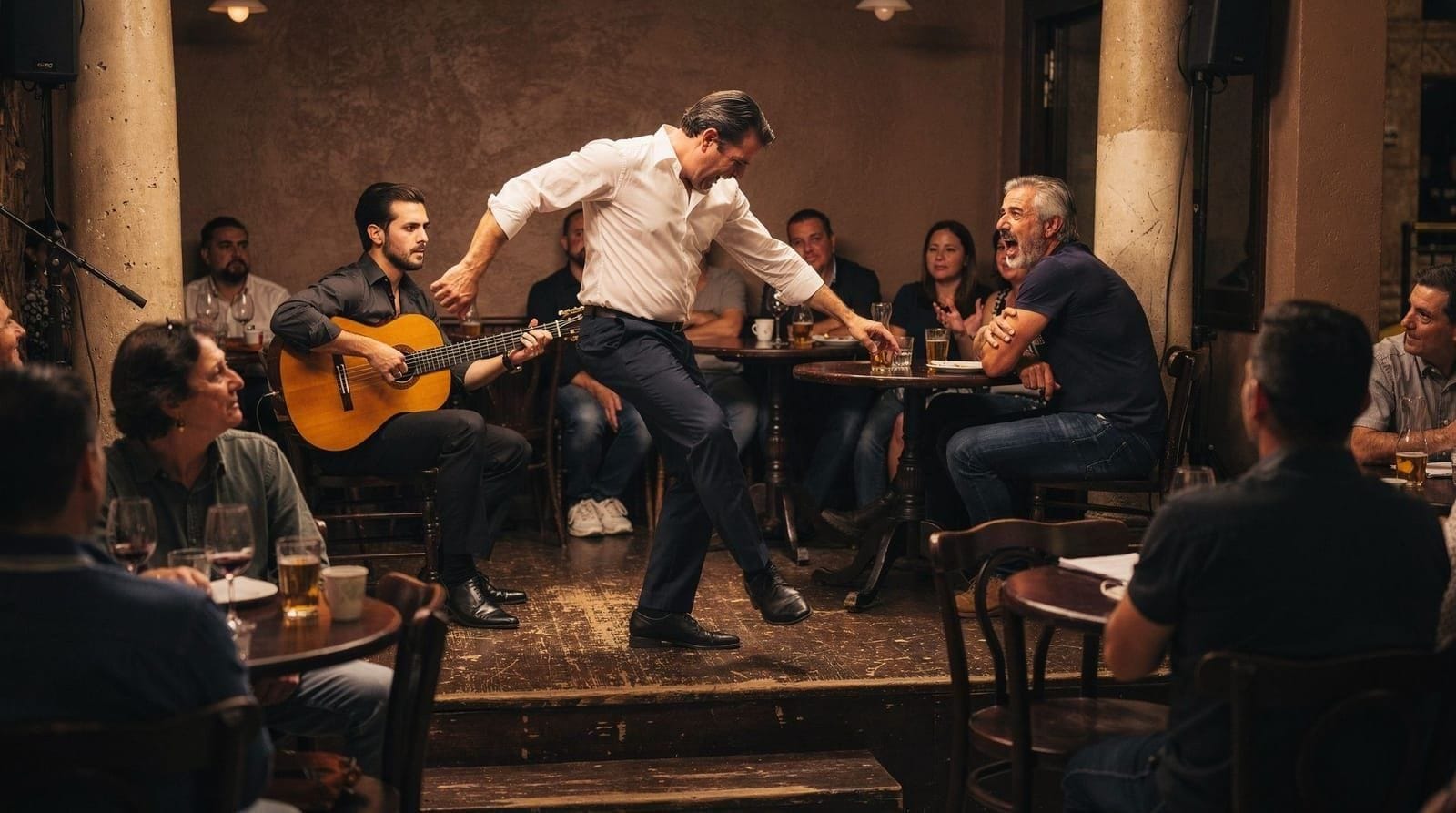
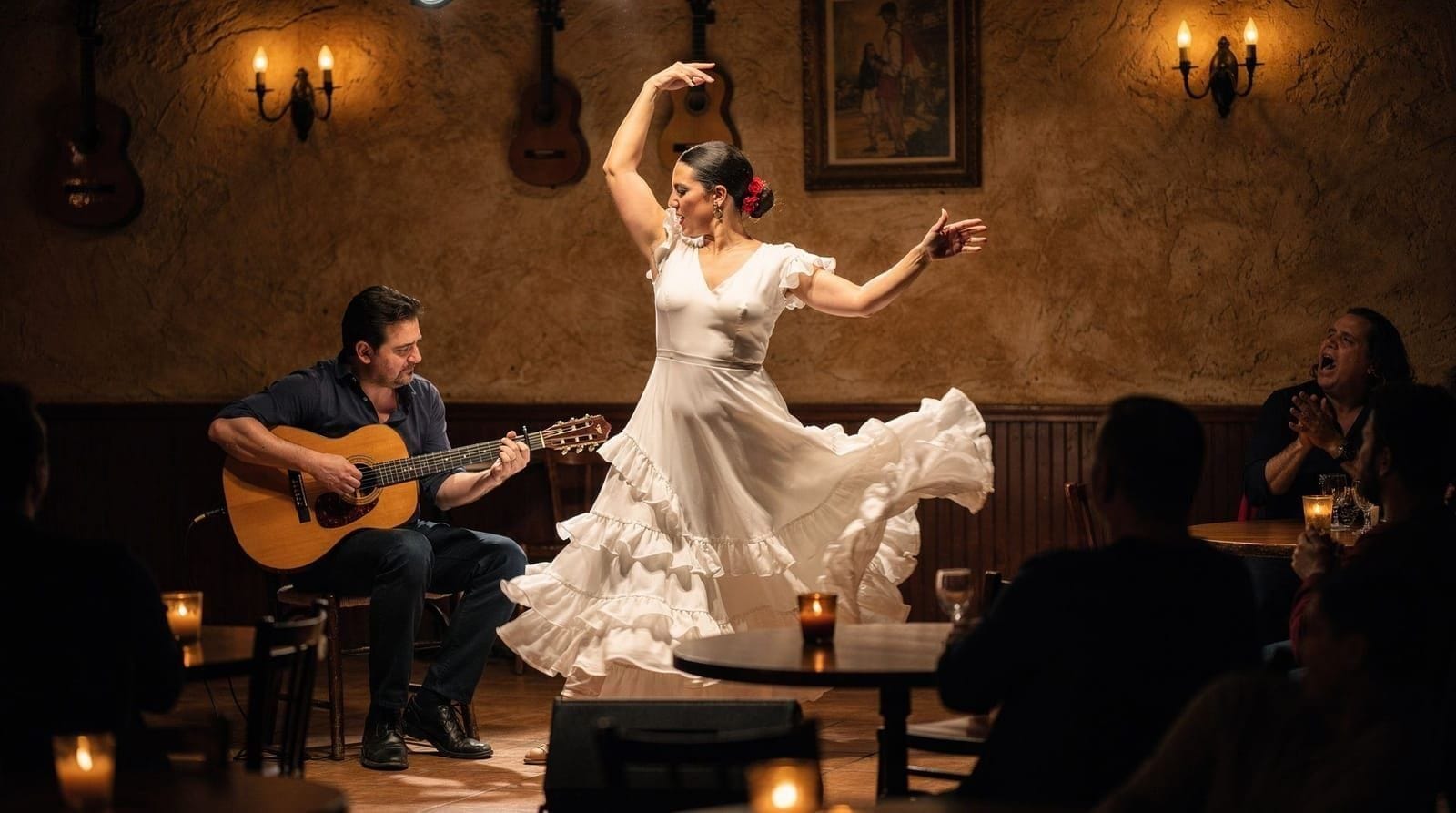
Madrid’s performing arts evening divides between two parallel traditions that rarely overlap in the same audiences: the opera/classical music circuit centred on the Teatro Real and Teatro de la Zarzuela, and the flamenco tablao circuit centred on venues like Torres Bermejas and Corral de la Morería.
Both are legitimate expressions of Madrid’s performing arts culture. They attract different audiences, occupy different price points (flamenco shows start from about €35 per person; opera prices vary widely by seat and production), and have entirely different aesthetics.
For visitors choosing between the two: flamenco offers a more immediate, visceral experience in an informal setting; opera offers a more structured, technically demanding experience in a formal setting. Both are worth experiencing if Madrid is a city you plan to return to. For a first visit where choices are forced, the flamenco guide and best tablaos guide provide the framework for the tablao decision; this guide covers the opera and zarzuela option.
Special events and summer programming
The Teatro Real’s main season closes in July. The summer months in Madrid are covered by:
Veranos de la Villa: The city’s summer cultural programme (July–August) includes classical concerts, zarzuela performances, and theatrical productions at outdoor venues — the Jardines de Sabatini (gardens beside the Royal Palace), various park stages, and the Matadero Madrid. Many events free or low-cost. Programme published in June at esmadrid.com.
Festival Internacional de Danza: The annual dance festival (typically May–June) takes over the Teatro Real and the Teatro de la Zarzuela for international dance companies. Programme varies by year.
Sala de Las Descalzas: Chamber concerts in the Convento de las Descalzas Reales (the royal convent near Plaza Mayor) — an unusual intimate venue with significant historical resonance. Occasional programming; check the convent’s events listings.
Combining the Teatro Real with the Royal Palace area
The Plaza de Oriente and the Royal Palace district form a coherent half-day or evening destination that pairs naturally with a Teatro Real performance:
Morning: Royal Palace visit (10:00–13:00) — the state rooms and the Pantheon of Infantas. Lunch: The Austrias quarter restaurants around Calle Mayor — traditional Spanish cooking, reasonable prices, 10-minute walk. Afternoon: Madrid de los Austrias district walk — Plaza Mayor, Descalzas Reales convent, the historic street grid. Evening: Teatro Real performance (20:00 or 22:00 depending on production). Post-show drink at Café de Oriente.
If you would rather not queue on your own, a guided visit that covers the state rooms and the big museum collections in one outing, such as a day tour combining the Prado and the Royal Palace, frees your evening for the theatre. Art-minded visitors can read the Prado museum guide and the Golden Triangle art walk to decide how much of the day to give to painting before the curtain goes up. The Madrid royal sites itinerary strings the palace, cathedral and surrounding squares into a longer route.
This creates a day where the Habsburg royal heritage (Palace) and the Bourbon cultural investment (Teatro Real) are both represented — the two dynasties whose impact on Madrid is covered in the Habsburg and Bourbon history guide.
First-timer’s guide to an opera evening in Madrid
If you have never attended opera and are wondering whether the Teatro Real is approachable, a few practical notes help set expectations:
Arrival timing: Doors typically open 45–60 minutes before curtain. Arrive with at least 30 minutes to spare — the auditorium’s tiered layout means finding your seat takes longer than a cinema, and the pre-show atmosphere on the main staircase is part of the experience.
Supertitles: Spanish and English supertitles run above (or beside) the stage for every production, so understanding the plot in real time is not a barrier even for a first opera visit.
What to wear if unsure: Business casual covers virtually every performance and price tier. Opening nights and premium weekend performances see more formal dressing among a portion of the audience, but no one will be turned away for smart-casual attire, and jeans paired with a collared shirt or a simple dress are entirely normal at midweek and Sunday matinee shows.
Length and intervals: Most productions run 2.5–3.5 hours including one or two intervals of 20–25 minutes. The intervals are a chance to visit the theatre’s bars (moderate prices, better than expected) or simply walk the gilded foyers.
What to expect if you’ve never seen opera: The volume and intensity of unamplified operatic voices in a live room is different from any recording — even skeptics often describe the first live aria as genuinely startling. Choosing a well-known, accessible title (Verdi’s La traviata, Puccini’s La bohème) for a first visit is a reasonable strategy over more demanding contemporary or Wagnerian programming.
Booking strategy by budget
| Budget | Seat category | What to expect |
|---|---|---|
| Lowest | Paraíso (top gallery) | Restricted view, excellent sound, best value |
| Low–mid | Anfiteatro | Good sound, partial stage view depending on row |
| Mid–high | Principal boxes | Full view, shared box seating |
| Highest | Platea (stalls) | Best sightlines, premium pricing for headline runs |
Anyone building a wider trip around an opera night can start from the three-day Madrid itinerary or the guide to how many days Madrid deserves, and visitors on a tighter purse will find ideas in the Madrid on a budget guide and the free things to do. For an evening drink with a view after the show, see the rooftop bars guide. A relaxed tasting at a tasting of four Spanish wines is a gentle way to spend the hours before a late curtain.
For a comparably priced but very different Madrid evening, the flamenco tablao circuit starts from about €35 per person — see the flamenco shows guide for how the two traditions compare. The Barrio de las Letras, a 10-minute walk from the Teatro de la Zarzuela, has pre-theatre dinner options at a wide range of price points.