Manzanares el Real castle: day trip from Madrid guide
Segovia: Segovia Toledo Guided Day Trip
How do I get from Madrid to Manzanares el Real castle?
Bus 724 from Madrid Plaza de Castilla bus station (Metro: Plaza de Castilla, Lines 1, 9, 10) to Manzanares el Real takes approximately 1 hour 15 minutes. Buses run every 1–2 hours; check the Alsa or regional bus schedules. The castle is a 10-minute walk from the bus stop. Alternatively, Cercanías C-4 to Colmenar Viejo (35 min) then local bus to Manzanares el Real (20 min). A car is more flexible but not required.
| Where | Sierra de Guadarrama, around 55 km north of Madrid |
| Cost | Bus fare varies by zone; castle currently closed to visits |
| Time needed | Half-day for castle and promenade, full day with La Pedriza |
| Getting there | Bus 724 from Plaza de Castilla, around 1h15 |
| Best time | Spring or autumn for light and temperature |
Why Manzanares el Real is worth adding to your itinerary
Most Madrid day-trip guides focus on the UNESCO walled cities — Toledo, Segovia, Cuenca. Manzanares el Real offers something different: a combination of medieval castle, mountain reservoir, and National Park landscape within 55 km of Madrid.
The castle is one of the best-preserved 15th-century fortresses in Spain — not a romantic ruin but a fully standing structure with battlements, towers, and a Gothic gallery façade. Behind it, La Pedriza’s granite boulder landscape is some of the most dramatic geology in central Spain, used by rock climbers from across Europe and by walkers who want something wilder than the pine forests of Cercedilla.
The combination — castle + reservoir + granite wilderness — makes Manzanares a more visually varied day than most Castilian towns. And it’s an hour from Madrid.
Getting to Manzanares el Real from Madrid
By bus 724 from Plaza de Castilla (recommended)
Bus 724 departs from Madrid Plaza de Castilla bus terminal (Metro: Plaza de Castilla, Lines 1, 9, 10) to Manzanares el Real.
- Journey time: ~1 hour 15 minutes
- Fare: varies by zone (see the Consorcio Regional de Transportes de Madrid)
- Frequency: Every 1–2 hours; check current schedule at ALSA or Madrid regional bus authority (CRTM)
- Arrival: Manzanares el Real bus stop, 10-minute walk to the castle
Return planning: Note the last bus of the day and build in buffer time. The bus schedule is less frequent than urban services.
By Cercanías + bus combination
Cercanías C-4 from Chamartín or Nuevos Ministerios to Colmenar Viejo (~35 min), then local bus 724 from Colmenar to Manzanares el Real (~20 min). Slightly faster than the direct bus but requires a transfer.
By car (most practical for combining sites)
55 km from central Madrid via A-1 (direction Burgos) and M-607. 45–60 minutes drive. Free parking near the castle. A car allows you to continue to Rascafría (25 km) or Patones de Arriba (30 km) for a fuller mountain day.
The castle
The exterior
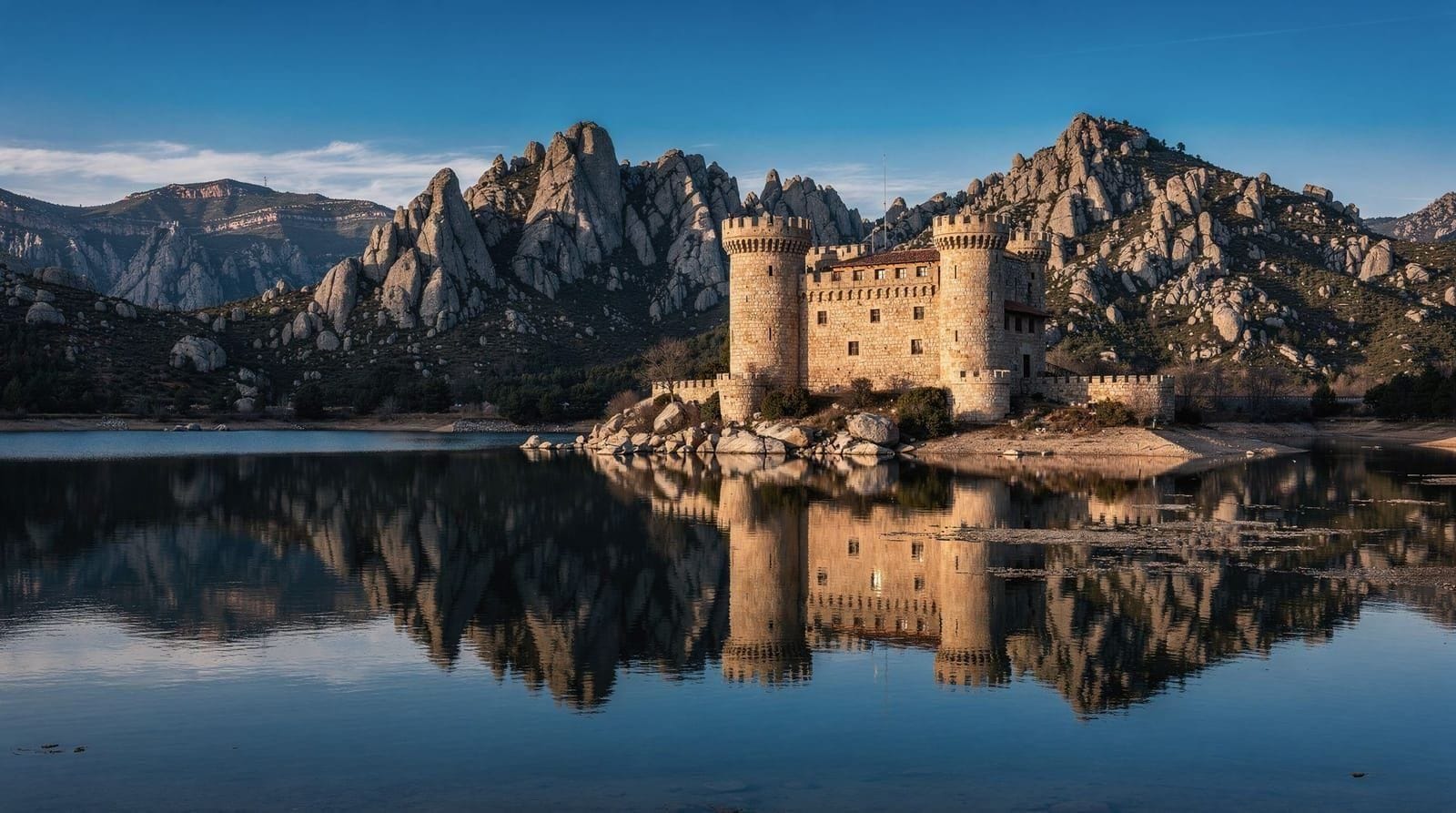
Approach from the village: the castle rises above the Santillana reservoir on a small promontory, its crenellated towers reflected in the water. The south-facing façade has an unusual Renaissance gallery of paired arches — an aesthetic concession on a military building that reflects the 1475 date (late enough to feel the influence of Italian Renaissance style entering Castile).
The stone is the local granite of the Guadarrama, which gives the castle its silvery-grey character.
Visits
The castle is currently closed to visits (the Comunidad de Madrid ended public opening on 5 January 2025); check the Comunidad de Madrid website for any reopening.
La Pedriza: the boulder landscape
What it is
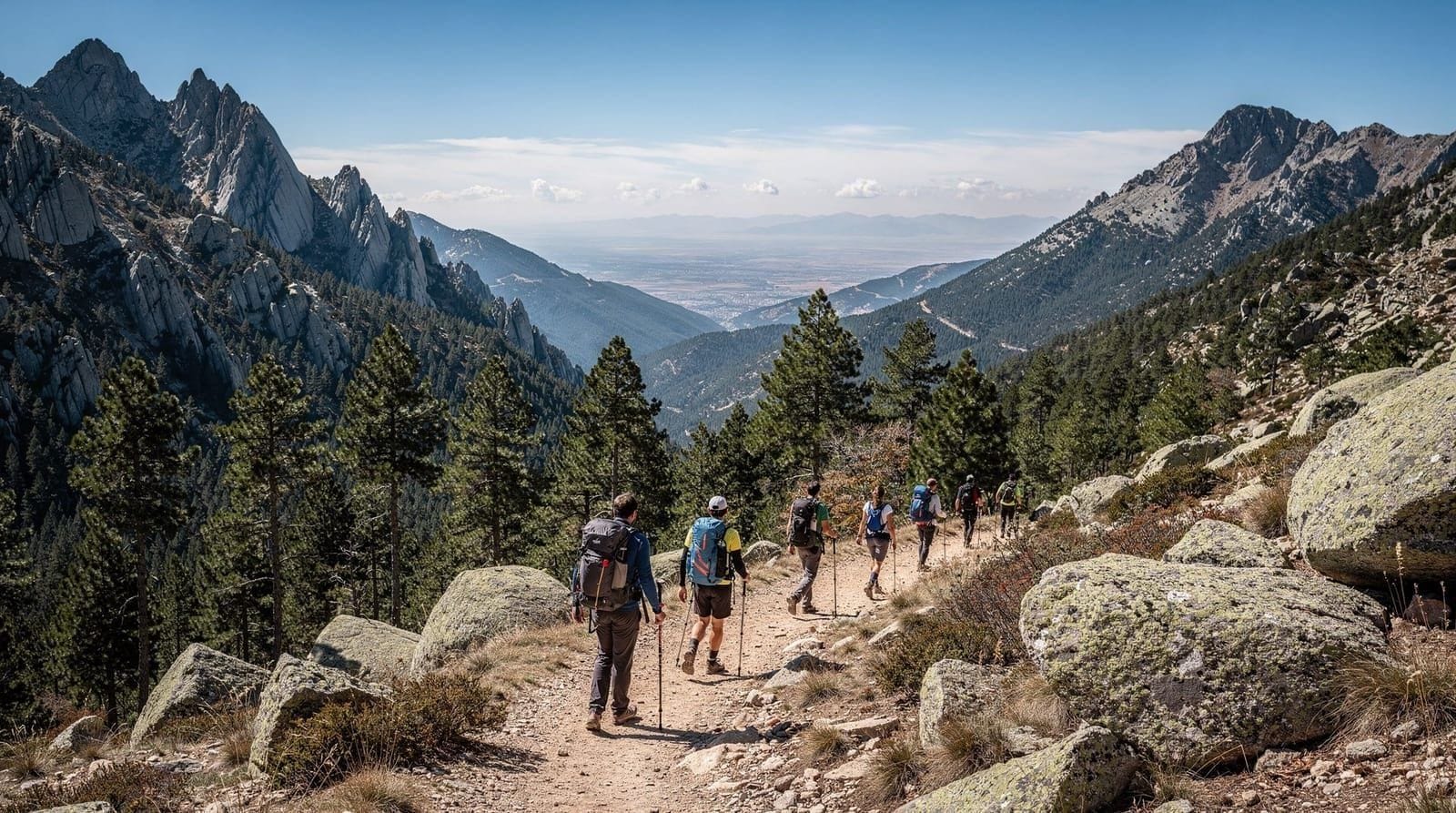
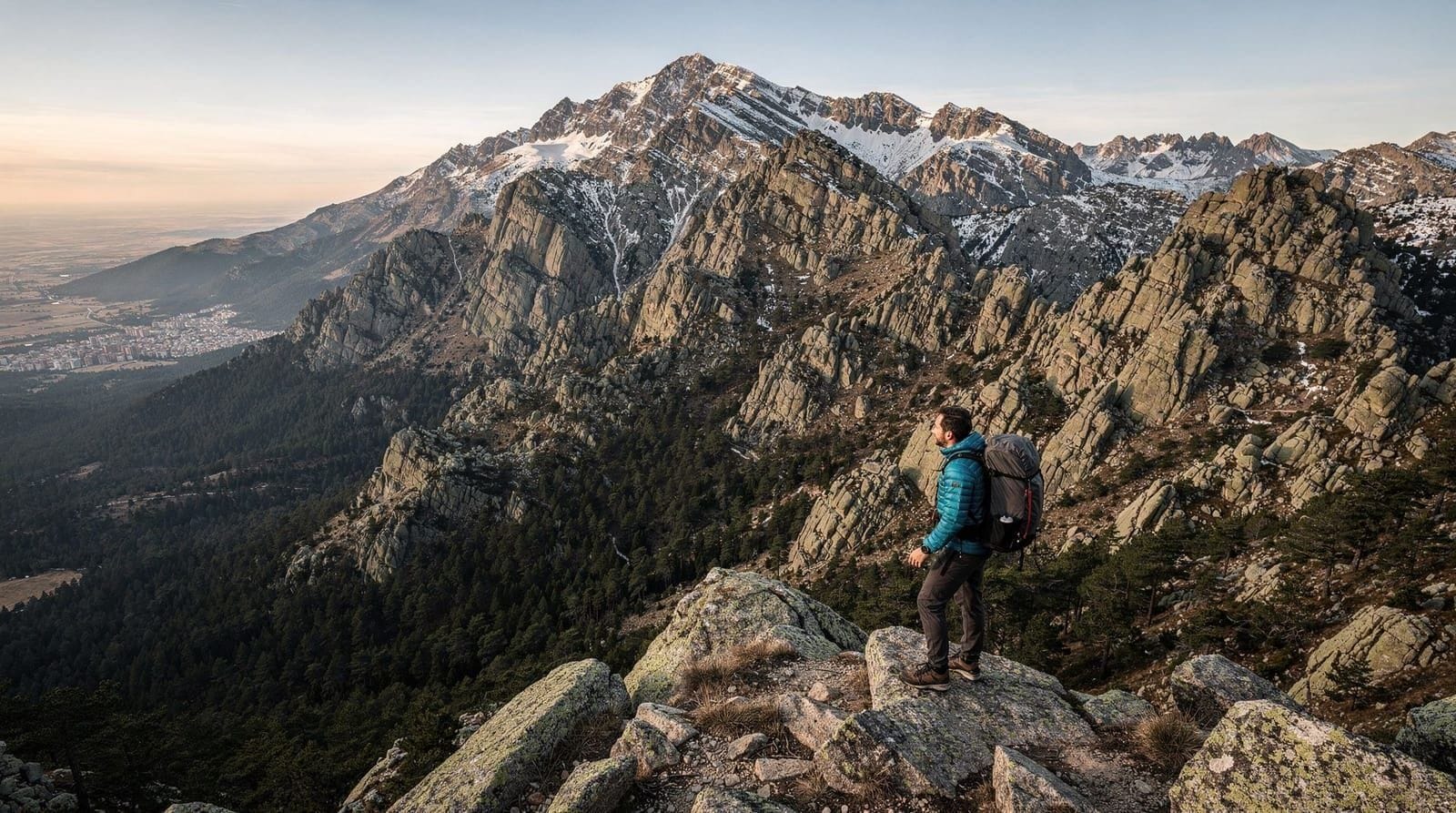
La Pedriza is the southern massif of the Sierra de Guadarrama — a granite dome eroded over millions of years into rounded boulders, pillars, and balanced rocks on an extraordinary scale. The Canto Cochino (the biggest boulder formation) is visible from the castle grounds and looms over the valley.
The National Park designation protects the area — no development within the Pedriza boundary. Entry to the main area is controlled at busy weekends: cars must park at the reservoir and take shuttle buses in peak season.
Walks from the village
Canto Cochino circuit (easy–moderate): From Manzanares el Real village, walk north along the Manzanares river path to the Canto Cochino boulder zone. Round trip approximately 8–10 km, 3–4 hours, altitude gain ~300 m. Excellent views of the castle from the slopes above.
Quebrantaherraduras circuit (moderate): A higher loop through the granite formations with views across La Pedriza and down to the reservoir. 12–14 km, 5–6 hours. Requires good footwear.
Rock climbing: La Pedriza is one of Spain’s top trad climbing destinations — over 1,500 routes on granite slabs and boulders. No guided climbing services available on a day-visit basis; experienced climbers with their own gear are self-guided.
The reservoir promenade
The Embalse de Santillana (Santillana reservoir) provides an easy lakeside walk from the castle along the water’s edge. The combination of the castle reflected in the reservoir, La Pedriza’s boulders behind, and the Sierra skyline is the classic Manzanares image. The lakeside path is flat, accessible, and takes 30–45 minutes for a round trip.
Canoe and kayak rental is sometimes available at the reservoir edge in summer — check local operators near the castle car park.
Where to eat in Manzanares el Real
Restaurante El Canto del Chivo (Calle Real): Traditional Castilian mountain cooking — chuletillas de cabrito (kid goat cutlets), lechazo (roast lamb), and seasonal mushroom dishes in autumn. Budget €25–35 per person. Reserve for Sunday lunch.
Mesón de la Paloma: Simpler, slightly cheaper, similar menu. Good menú del día (€14) on weekdays. Popular with hikers and climbers.
Bar-cafés near the castle: Light options (bocadillos, breakfast pastries) for a pre-hike start or post-castle break.
Manzanares el Real in your Madrid itinerary
Manzanares works best on a day when you want nature and castle culture combined, rather than a pure historic city. It’s a good choice on Day 4 or 5 of a Madrid stay after covering Toledo, Segovia, and perhaps El Escorial. The Madrid week with day trips itinerary includes a Guadarrama day that can be based at Manzanares or Cercedilla depending on preference.
For the wider Sierra Guadarrama context and hiking routes, see the Sierra de Guadarrama day trip guide. For all car-free options, see day trips from Madrid without a car.
Practical tips for Manzanares el Real
Peak season (summer weekends): La Pedriza access is managed to protect the National Park — cars are stopped at the reservoir gate and shuttle buses operate into the park. Arrive early (before 09:00) or take the bus from Madrid to avoid car access restrictions.
Best season: Spring (April–June) when the Manzanares river flows strongly and the granite boulders contrast with green meadows. Autumn (September–October) for golden light on the castle. Winter for snow on La Pedriza with the castle in the foreground — striking but cold.
What to bring: Walking shoes (essential for La Pedriza), sunscreen (high reflection off granite at altitude), layers (temperature 8–10°C cooler than Madrid in the mountains), water (2 litres for a full hiking day).
The castle vs the walk: If you’re choosing between focusing on the castle (seen from the outside) or La Pedriza (3–5 hours walking), consider your group’s interests. The castle is the cultural drawcard; La Pedriza is the natural spectacle. A half-day comfortably covers both at a relaxed pace.
A relaxed day plan without a car
The simplest way to enjoy Manzanares is to treat it as a slow day rather than a checklist. Take an early bus from Plaza de Castilla so that the village is still quiet when you arrive, and walk straight to the castle before any tour groups or weekend visitors arrive. The light on the granite is softest in the morning, and the reservoir is often calm enough to give a clean reflection of the towers.
After the castle, wander the village streets before choosing lunch. Manzanares is small enough that you do not need a plan: the main street, the church and the bars around the square reward a slow loop. If you are travelling with a mixed group, this is the moment to split — those who want a longer walk head toward the boulders, the others take the lakeside path and meet everyone again at a restaurant table. Agree a meeting time and the return bus in advance, because the mountain bus timetable is less forgiving than the city one.
Finish the afternoon on the reservoir promenade, when the heat has eased and the Sierra skyline is at its best. Then head back to the stop in good time for the return bus. For ideas on what to do with your evening once you are back in the capital, the Madrid at night guide and the tapas guide are good places to start; a mountain day makes a simple tapas dinner feel well earned.
Who should choose Manzanares, and who should not
Manzanares suits travellers who have already seen the main museums and want a change of pace. If you have just finished the Golden Triangle art walk or a long day in the Prado Museum, a day among boulders and pine air is a welcome contrast. It also suits families, since the castle gives children a real fortress to look at while the reservoir path is easy going. The Madrid with kids guide lists other child-friendly ideas for the rest of your stay.
It suits less well a traveller with only a single day to spare who wants the most famous sights. In that case, a guided trip to the historic cities covers more ground with no logistics to manage. A tour such as a guided day trip combining Segovia and Toledo takes care of transport and commentary, while Manzanares rewards those who like to set their own pace. Read the best day trips from Madrid comparison if you are still deciding between options, and the Toledo vs Segovia guide if the historic cities are tempting you instead.
Choosing the right season for the castle and the boulders
The character of the day changes with the calendar. In spring the valley is green and the walking is at its most pleasant. In summer the mountain air offers relief from the city, but the sun on bare granite is strong, so start early and carry plenty of water; the Madrid in summer guide explains how to plan around the heat. Autumn brings softer light and fewer visitors, and the Madrid in autumn guide covers what else the season offers. In winter the castle is quiet and the mountains can look striking, though you should dress warmly and check conditions before setting out. The best time to visit Madrid page gives the wider picture if you are still choosing your travel dates.
If you want a historic city instead
Some travellers arrive at Manzanares only to realise they would have preferred stone streets and cathedrals. If that sounds like you, the fortified city of Ávila and the university city of Salamanca are worth a look, and a ready-made option such as a day trip taking in Ávila and Salamanca removes the need to organise trains yourself. Whichever you choose, the ave train day trips guide explains how rail fits into a Madrid base.
Comparing Manzanares el Real to other Guadarrama day trips
Manzanares isn’t the only mountain option within reach of Madrid, and it’s worth knowing how it stacks up against the alternatives before committing a full day.
| Destination | Character | Best for |
|---|---|---|
| Manzanares el Real | Castle + reservoir + gentle Pedriza walks | Mixed groups, families, castle lovers |
| Cercedilla / Siete Picos | Serious pine-forest hiking, higher altitude | Committed hikers wanting a proper trek |
| Rascafría | Monastery, river valley, waterfall walks | A quieter, greener alternative with less crowding |
| Sierra de Guadarrama National Park (Peñalara) | High-mountain hiking, glacial lake | Experienced walkers seeking the park’s highest terrain |
Manzanares sits at the accessible end of this spectrum — the only one where a non-hiker in the group can have a full, satisfying day (castle, easy lakeside walk) while more active companions head into La Pedriza. See the Sierra de Guadarrama day trip guide for the fuller comparison across all these options.
Combining Manzanares with a second stop
If you have a car and want to make the most of a day in this direction, Manzanares pairs naturally with either Rascafría (about 25 km further, a quieter monastery-and-river valley) or Cercedilla-Navacerrada (a higher-altitude pine forest area, better for a proper hike). Both add roughly 45 minutes to an hour of extra driving each way, so treat this as an option for a full, unhurried day rather than an add-on to an already packed itinerary. Without a car, stick to Manzanares alone — the bus connections between these villages are not practical for a same-day combination.
Frequently asked questions about Manzanares el Real castle
What is the castle of Manzanares el Real?
The Castillo de Manzanares el Real is a 15th-century castle built between 1475 and 1480 for the Duke of Infantado, one of the most powerful noblemen in Castile. It is one of the best-preserved castles of the period in Spain — the original towers and battlements are largely intact. Unlike many Spanish castles (which are ruins), it stands complete. It is currently closed to visits.What is La Pedriza?
La Pedriza is the dramatic granite boulder landscape surrounding Manzanares el Real — part of the Sierra de Guadarrama National Park. Huge rounded granite formations, some the size of buildings, are piled in extraordinary configurations above the Manzanares river valley. It is one of Spain's premier rock climbing destinations and has excellent walking trails through the boulders. The combination of castle, reservoir, and Pedriza granite in one view is genuinely spectacular.Can I visit the castle interior?
Not at the moment. The Comunidad de Madrid ended public opening of the castle on 5 January 2025; check the Comunidad de Madrid website for any reopening. In the meantime the castle can be seen from the outside, from the village and from the reservoir promenade.Can I swim in the reservoir near Manzanares el Real?
Embalse de Santillana reservoir: swimming is generally not permitted in reservoirs that supply drinking water. However, the nearby Embalse del Atazar and some spots along the Manzanares river outside the reservoir zone are used by locals in summer. The best swimming option in the area is in the designated natural swimming spots further into the Guadarrama mountains — check with the local tourist office for current permitted areas.How is Manzanares el Real different from the Sierra Guadarrama hikes?
Manzanares el Real is more accessible and cultural — the castle, the reservoir promenade, and a gentle stroll into La Pedriza are all manageable for non-hikers. It pairs culture (the castle) with nature (La Pedriza boulders) in one location. The more serious Sierra Guadarrama hikes (Peñalara, Siete Picos) are for committed walkers. Manzanares suits a mixed-group day: some visit the castle while others walk into the boulders.What should I eat in Manzanares el Real?
The village has several restaurants serving traditional Castilian mountain cooking: lamb chops (chuletillas) grilled over charcoal, kid (cabrito), trout from the mountain streams, and bean stews. Restaurante La Pedriza (near the castle) is the main tourist option; several bars in the village offer simpler menú del día (€12–15). Prices are slightly higher than in Madrid city for equivalent quality — factor in the tourist premium.Is Manzanares el Real doable without a car if I only have one day?
Yes. Bus 724 from Plaza de Castilla gets you there and back in a single day with several hours on-site, and the castle plus the reservoir promenade need no vehicle at all. Reaching the deeper Pedriza trails or continuing on to Rascafría afterward is where a car adds real flexibility; for a castle-and-easy-walk day, the bus is entirely sufficient.Is Manzanares el Real suitable for families with children?
Yes. The castle seen from the outside is engaging for children, the reservoir promenade is flat and easy with a pushchair, and the Canto Cochino boulder area (the lower stretch) gives older children genuine rock-scrambling fun without technical climbing. The longer Quebrantaherraduras circuit is better suited to older, fitter children.