Rascafría
Rascafría in the Lozoya valley (1,163 m): best for autumn foliage, Peñalara hikes, and the 14th-century El Paular monastery. Madrid's finest mountain
El Escorial: Escorial Valley Half Day
Quick facts
- Distance from Madrid
- ~70 km north (1 h by car)
- Bus from Madrid (Plaza de Castilla)
- ~1 h 30 min (Line 194)
- Population
- ~1,800
- Altitude
- 1,163 m
- Main feature
- Lozoya valley, El Paular monastery, Laguna de Peñalara access
- Best season
- Autumn (October) for foliage; spring for wildflowers; winter for snow
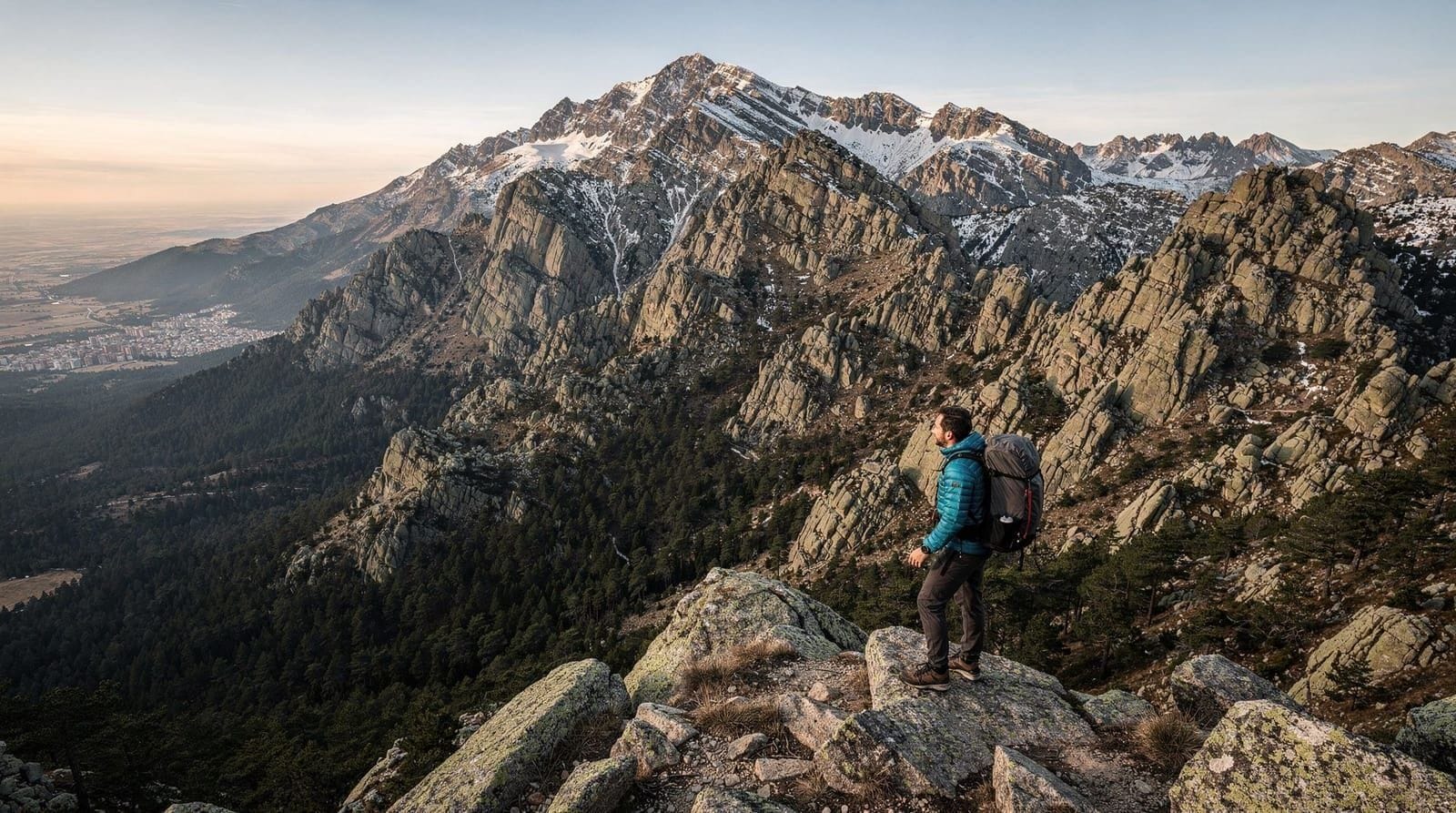
Rascafría occupies the head of the Lozoya valley — a glacially carved valley running east-west through the northern Sierra de Guadarrama, bounded by the central ridge to the south and the Somosierra foothills to the north. The valley is significant in the Sierra de Guadarrama’s hydrology (the Lozoya river supplies a substantial fraction of Madrid’s drinking water), its ecology (one of the best-preserved Scots pine forests in central Spain), and its aesthetics — in October, the deciduous oaks and birches on the valley floor turn gold and amber while the pine forests remain dark green on the slopes above, producing an autumn landscape that Madrilenos photograph obsessively.
At 1,163 m the village is cool even in summer, significantly cooler than the capital 70 km to the south. A mid-July day when Madrid hits 37°C sees Rascafría at perhaps 25°C with a breeze coming down from the Peñalara massif. This thermal differential is half the reason to come; the hikes, the monastery, and the valley’s quieter character compared to the more accessible western Sierra are the other half.
| Where | Lozoya valley, northern Sierra de Guadarrama, ~70 km north of Madrid |
| Cost | bus fare by zone; hikes free; cloister visit: see the Parador website |
| Time needed | Day trip (6–8 hours) or overnight |
| Getting there | Bus 194 from Plaza de Castilla (~1h30) or A-1/M-604 by car (~1h) |
| Best time | October for foliage; May–June for wildflowers |
Getting to Rascafría from Madrid
By bus: Line 194 from Plaza de Castilla metro station runs to Rascafría in approximately 1 hour 30 minutes, stopping at Miraflores de la Sierra and other valley villages en route. Departures vary; check the Comunidad de Madrid bus website (ctm-madrid.es) for current times. Fare depends on the zone (see the CRTM fare finder). The bus stops in the village square, a short walk from the main trailheads and the monastery.
By car: the most practical approach for hikers with equipment. Take the A-1 motorway north to Lozoya junction, then the M-604 to Rascafría, approximately 1 hour from Madrid. Parking is available in the village (free on weekdays, usually sufficient) and at designated trailhead car parks.
Why Rascafría works as a change of pace
Most visitors to the capital spend their days among museums, plazas and tapas bars, and that rhythm is wonderful until it isn’t. Rascafría is the counterweight. Nothing here asks you to queue, follow a timed ticket or keep an eye on your bag. The day is shaped by light, weather and how far you feel like walking. If your itinerary is already heavy on the Golden Triangle of art and the Royal Palace, a day among pines and meadows resets you for the days that follow.
It also pairs well with the city’s own green spaces, but on a different scale. The Retiro Park gives you a taste of calm inside Madrid; the Lozoya valley gives you the real mountain version, with silence, cold streams and a horizon of ridgelines rather than rooftops.
El Paular — the Carthusian monastery
The Real Monasterio de Santa María de El Paular was founded in 1390 by John I of Castile as the first Carthusian monastery on the Castilian Meseta. It sits on the valley floor 2 km west of Rascafría, surrounded by meadows and backed by the Sierra ridge. The monastery was seized during the 1835 Ecclesiastical Confiscation that dissolved religious houses across Spain, and substantially damaged. It was partially restored in the 20th century; the current arrangement has the monastery divided between the Benedictine monks who inhabit part of it and the Parador de Rascafría, a state-run hotel occupying the monastic buildings open to the public.
The church (open for visits) retains the original Gothic vaulting, an extraordinary gilded altarpiece by Flemish master Callet (completed 1505), and Baroque additions from the 17th–18th centuries. The alabaster cloister, accessible on guided tours (prices and times vary — check the Parador website), is the best surviving monastic cloister in the Sierra. Gregorian chant services are sung by the monks in the church; the schedule is posted at the church entrance.
The experience of the monastery is as much about atmosphere as about individual artworks. Allow yourself to slow down in the church, look up at the vaulting, and let the quiet of the meadows outside settle before you head to the trails. If this kind of religious and royal heritage appeals, the same thread runs through El Escorial, and the Habsburg and Bourbon history guide gives helpful context for how Spain’s monarchs related to monastic houses like this one. Travellers who want a guided, transport-included version of that side of the region can look at a half-day guided visit to the royal monastery and the valley around it, which fits neatly on a different day from your Rascafría outing.
Staying at the Parador is a serious option for those who want the Sierra experience with comfort — double rooms from €90–€130 in low season, significantly more on summer weekends. Dinner at the Parador restaurant features Castilian mountain cuisine (venison, wild boar, mountain trout).
Hiking from Rascafría
Rascafría is one of the best hiking bases in the Sierra de Guadarrama, with marked trails covering a range of difficulties:
Laguna Grande de Peñalara (6 km, 3–4 hours return from the Cotos pass): the most popular hike in the area, reached by driving or taking a taxi to Puerto de Cotos (1,830 m, 12 km from Rascafría), then ascending through pine forest to the main glacial lake at 1,940 m. A free permit is required for the Lagunas zone (available at the Cotos visitor centre). This is also the starting point for the Peñalara summit (2,428 m) if you want the full ascent.
Valle del Paular circuit (12 km, 4–5 hours, starting from the monastery): a loop through the Scots pine forest south of the valley, with views of the central ridge and several stream crossings. Requires basic navigation. No special permits needed.
Cañada de los Agramonteses (8 km, 3–4 hours): a less-crowded trail east of the village through the oak and birch forest, excellent for autumn colour in October.
Arroyo de Aguilón (10 km, 4–5 hours): ascending through the valley of the Aguilón stream to the Puerto de Malagosto pass (1,811 m), with views north into the province of Guadalajara. A good route for seeing ibex on the upper slopes.
Choosing your route. If it is your first time in the valley, the monastery circuit is the gentlest introduction and needs no special planning beyond sturdy shoes. The Peñalara lake hike is the one to pick when you want a proper mountain feel and you have the permit sorted. The quieter oak-and-birch trail is the best choice for photographers in October, while the Aguilón route suits walkers who already have some mountain experience. Carry water, layers and a charged phone, and tell someone your route: weather in the Sierra can change quickly even when Madrid is bright and warm. For a broader picture of walking in the range, see the Sierra de Guadarrama day guide.
Autumn foliage and seasons
October is Rascafría’s signature month. The deciduous forest on the valley floor — white oak (roble), birch (abedul), and the planted black poplars (álamo negro) along the river — turns gold, yellow, and rust against the evergreen Scots pines. The contrast, in the angled October light, is sharp. Spanish photography websites reliably name Rascafría as one of the top autumn foliage locations in central Spain.
The timing: foliage typically peaks in the second and third weeks of October, depending on the year’s rainfall and temperature pattern. The 2025 season peaked around 12–18 October.
Spring (May–June) brings wildflowers on the meadows and the rhododendrons (Rhododendron ferrugineum) on the upper slopes. Winter visits after snowfall are worthwhile if you have a car — the monastery in snow is atmospheric and trails are skiable with poles.
A practical tip for autumn: the best light comes early and late in the day, so a visit that includes a morning walk and a late-afternoon stroll along the meadows near the monastery gives you far better photographs than a midday arrival. If you are travelling in autumn more widely, the Madrid in autumn guide and the blog post on autumn in Madrid help you fit this trip around the city’s own seasonal highlights.
Where to eat in Rascafría
Rascafría has a small selection of restaurants oriented towards the weekend hiking and skiing market.
Bar La Trucha (Calle Doctor Tiburcio 14): the village’s most reliable lunch option, specialising in fresh mountain trout (trucha del Lozoya) and mountain lamb. Mains €12–€18. Fills up on weekends; arrive at 13:30 or book ahead.
Mesón El Álamo (Plaza de la Constitución 4): a standard Castilian menu with the usual cocido and roast meats, friendly service, tables on the square in summer. Mains €14–€20.
Parador de Rascafría restaurant: the most ambitious kitchen in the area, with local game dishes and a wine cellar focused on Ribera del Duero. Mains €20–€35. Worth the investment if you are overnight.
Practical note: Rascafría’s restaurants are severely stretched on summer holiday weekends (mid-July to mid-August, Spanish national holidays). Either book in advance or time your visit for a weekday.
Practical information
Combining with Segovia: Rascafría is on the north side of the Sierra de Guadarrama; Segovia is 30 km further north on the other side of the mountains. Driving over the Puerto de Navacerrada or through the tunnel brings you into the Segovia province — a possible combining of mountain and city if you have a car and a full day.
Without a car: the bus works, but it asks for discipline. Plan your return before you set off on a long hike, and leave a margin so you are not racing the last departure. Travellers who would rather skip the logistics entirely often prefer other mountain-and-heritage days from the capital, such as a guided day that links the Escorial valley with Segovia. For more ideas on reaching the Sierra and beyond without driving, see day trips without a car and the best day trips from Madrid.
What to pack: comfortable hiking shoes, a warm layer even in summer, a rain shell, sun protection, snacks and plenty of water. Mountain weather is less forgiving than city weather, and the village has limited services compared with Madrid. If you are travelling with children, the Madrid with kids guide has broader planning advice, though shorter valley strolls are better suited to young walkers than the high lake routes.
Wildlife note: the Lozoya valley has one of the most important breeding populations of black stork (cigüeña negra) in the Comunidad de Madrid. Sightings are possible at the river bends and near the monastery meadows from April to August. The birds are shy; binoculars and patience are needed.
For a Madrid week with day trips: Rascafría is the right choice when you want a nature day rather than a city day, particularly paired with an autumn or spring visit. It is less convenient than Manzanares el Real without a car but more rewarding for serious hikers. Hikers based nearer the western Sierra might prefer Cercedilla-Navacerrada, which is easier to reach by train.
Frequently asked questions about Rascafría
When is the best time to see autumn foliage in Rascafría?
Typically the second and third weeks of October, though the exact timing shifts with the year’s rainfall and temperature. The deciduous oaks, birches and poplars on the valley floor turn gold and rust against the dark Scots pine forest — check recent local reports before planning a trip specifically for the colours.
Do I need a permit to hike to Laguna Grande de Peñalara?
Yes, a free permit for the Lagunas zone is required and available at the Cotos visitor centre near the Puerto de Cotos trailhead. The hike itself is about 6 km return (3–4 hours) from Cotos, reaching the glacial lake at 1,940 m.