
Flamenco in Madrid: tourist show vs authentic experience (the honest guide)
Flamenco is not from Madrid. It’s worth saying this upfront, because a lot of the marketing around Madrid’s tablao scene implies otherwise. Flamenco emerged in Andalusia — primarily in Seville, Jerez de la Frontera, and Cádiz — from a fusion of Romani, Moorish, Sephardic Jewish, and indigenous Andalusian cultures over several centuries. Madrid is not its home.
What Madrid does have is a serious and long-standing flamenco culture built on Andalusian migration. From the late 19th century onwards, flamenco artists came to Madrid to find larger audiences, better pay, and performance venues. The city developed its own critical infrastructure — clubs, peñas (flamenco societies), venues where serious artists performed. Some of the most important moments in flamenco history happened in Madrid.
This means the honest answer to “is flamenco in Madrid authentic?” is: it depends entirely on where you go and what you mean by authentic.
| Price range | From €35 (show + drink) to €95.90 (show ticket at Corral de la Morería, dinner extra) |
| Show length | 60-90 minutes |
| Best for authenticity | Torres Bermejas, Las Carboneras |
| Free option | Suma Flamenca festival, every autumn |
| Booking | Book directly with the venue, not aggregator sites |
What a tablao actually is
A tablao is a venue designed specifically for flamenco performance — not a bar where flamenco occasionally happens, not a theatre hosting a dance recital, but a purpose-built stage where professional flamenco artists perform nightly. Most tablaos serve dinner before the show or drinks throughout.
The format is consistent: a company of dancers, a guitarist or two, a singer (the cantaor or cantaora), and sometimes a percussionist with a cajón. The show runs 60 to 90 minutes. The best performances are intense, technically extraordinary, and emotionally affecting even if you don’t understand the language or the form. The worst are polished but mechanical — professional athletes going through a routine they’ve done five hundred times.
The tablao circuit in Madrid employs real flamenco professionals. These are not actors pretending to be flamenco dancers — they are trained, often deeply serious artists who happen to be performing for an audience that mostly knows nothing about what they’re watching. That is a different thing from being inauthentic. A concert pianist performing Chopin for an audience of non-pianists is not fake Chopin.
What distinguishes the better tablaos from the worse ones is the quality of the company, the size of the venue, and how much they have optimised for maximum tourist throughput versus genuine artistry.
The main tablaos: an honest assessment
Corral de la Morería is consistently cited as Madrid’s most prestigious tablao. It has been operating since 1956, it holds a Michelin star for its restaurant, and it attracts flamenco artists of genuine stature. It is expensive — the show ticket is €95.90 per person, with dinner menus adding €49.95–79.95 — and it is unapologetically aimed at visitors who are willing to pay for a curated, high-end experience. The quality is real.
Torres Bermejas has an extraordinary Moorish-influenced interior (designed by the same person who did the Generalife gardens in Granada) and a long history — open since 1960. The shows are professional and technically strong. Prices are lower than Corral de la Morería, €35 for show plus drink. A reliable choice if Corral de la Morería is outside your budget.
Cardamomo is popular with younger visitors and runs a livelier show with more energy and some audience interaction. The artistic quality is uneven but can be excellent. Tickets with a drink run from €39 to €55.
Las Carboneras is smaller and more intimate than the major tablaos, with a reputation among flamenco enthusiasts as one of the more artistically serious venues. Less famous, which means smaller crowds and a closer relationship between audience and performers. Worth considering if you want less spectacle and more concentration.
Casa Patas, for decades a meeting point for professional flamenco artists, closed permanently in 2020 and no longer stages public shows; its foundation continues as a non-profit.
The authentic alternative: candela and the peñas
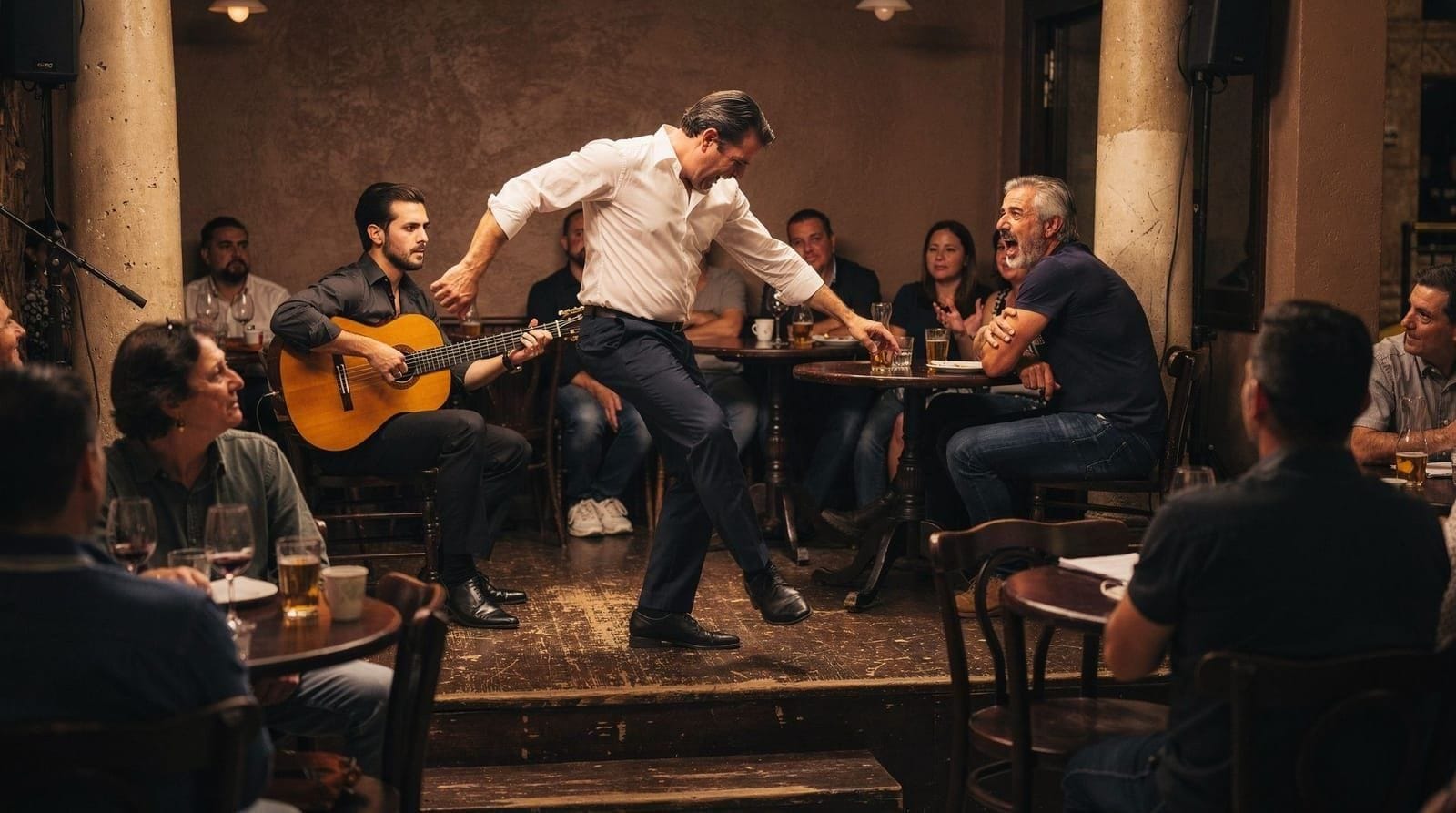
The term “authentic flamenco” most often invoked in travel writing refers to juerga — informal, spontaneous performances where flamenco artists perform for each other, not for an audience. These happen at private gatherings, at specific bars where flamenco people socialise, and occasionally in the back rooms of venues that have nothing on their website about flamenco.
Bar Candela near Antón Martín is the most cited example in Madrid — a small bar where flamenco artists have historically gathered and where impromptu performances sometimes break out. The key word is “sometimes.” You can go to Candela on a random Thursday and find it to be a perfectly nice bar with no flamenco whatsoever. Or you can go and find yourself sitting two metres from an artist doing something extraordinary. There is no schedule.
The flamenco peñas — clubs where aficionados gather, often with membership fees, to watch and discuss performances — are harder for visitors to access but more reliably artistic. Peña Flamenca de Madrid and similar organisations host events throughout the year.
Free flamenco: Suma Flamenca
The Comunidad de Madrid runs the Suma Flamenca festival every autumn, with free and low-cost performances at multiple venues across the city, including the Teatro Albéniz, the Real Teatro de Retiro, and outdoor stages. The lineup is typically serious — established artists, not a tourist-friendly showcase. If you’re in Madrid in June, this is the single best flamenco opportunity in the city and it costs nothing or next to nothing.
Information is available on the Comunidad de Madrid’s culture website in the weeks before the festival. Programme drops usually in late April or May.
What to expect at a tablao show
Before you go: Most tablaos ask you to arrive 15-30 minutes before the show. There is usually a seating arrangement based on reservation type — dinner guests get priority seats. If you’re going drinks-only, you may be seated further from the stage or at the sides.
During the show: There will be a company of four to eight performers typically — one or two dancers, a vocalist, and a guitarist as the minimum. The programme moves through different flamenco palos (styles) — you might see soleá, bulerías, farruca, tangos, and others in succession. These are structurally different and you’ll notice the tempo and mood shift dramatically.
The moment people most remember is duende — an untranslatable word that flamenco uses for the state when performance transcends technical execution and becomes genuinely moving. You’ll know it if it happens. Not every show produces it.
Dress code: Smart casual. Not formal, but not beach clothes either.
Photography: Policies vary. Most tablaos now prohibit flash photography and some prohibit phones entirely during the performance. Check before you book.
Getting value
The difference between a good tablao night and an overpriced disappointment usually comes down to seat position and company quality, neither of which you can fully control from a booking page. Practical tips:
Book directly with the venue rather than through aggregator sites — you’ll pay less and have a better chance of getting information about that evening’s specific cast. Many tablaos rotate their company, and certain nights feature stronger performers.
The show-plus-drink option is nearly always better value than dinner at a tablao. The food at most tablaos is fine but overpriced — you’re paying for the experience, not the kitchen. Eat beforehand in La Latina or Barrio de las Letras, then go for the show.
Don’t skip the post-show period. Some tablaos allow you to stay at the bar after the performance, and occasionally artists mingle with the audience. That informal conversation about what you just watched can be as memorable as the show.
 Essential Flamenco Drink Artist TalkCheck availability
What flamenco actually is
Understanding the form helps you watch it better. Flamenco is not a single thing — it’s a family of related musical and dance styles called palos. Each palo has a different emotional register, different musical structure, and different history. Soleá is considered the deepest and most serious — slow, mournful, technically demanding. Bulerías is fast, joyful, percussive. Seguiriyas carries a weight of lament connected to its Romani origins. Tangos (not to be confused with Argentine tango) are rhythmically lively and often festive.
A tablao show will move through several of these palos in succession. You’ll notice the energy in the room change as the mood shifts. The flamenco vocabulary for the moment when a performance transcends technical execution is “duende” — an untranslatable word that refers to a kind of spirit or dark inspiration. Audiences who understand what they’re watching will react physically to duende with a sharp intake of breath, an “olé” called out, an almost involuntary response to something unexpected happening on stage. If you notice this happening around you and you don’t know why, watch the performer more closely.
Where to watch flamenco in Madrid’s wider scene
Beyond the tablaos, flamenco appears in Madrid’s cultural calendar more broadly. The Centro Cultural Conde Duque in Malasaña programmes flamenco concerts throughout the year, typically at lower prices than the commercial tablaos. The Teatro de la Zarzuela occasionally hosts major flamenco productions. The Teatro Real, Madrid’s opera house, has presented flamenco crossover productions in recent years.
These venues attract a different audience from the tablaos — more Spanish, more knowledgeable, less tourist-heavy. The experience is closer to a concert than a dinner show. For anyone seriously interested in the art form, these should be on the list alongside or instead of the standard tablao circuit.
Reading the flamenco guides before you go
The flamenco shows in Madrid guide covers specific tablaos with current pricing. The best tablaos guide ranks venues by category — best for first-timers, best for small budgets, best for aficionados. If you’re concerned about overpaying or choosing a poor-quality venue, the tourist traps guide addresses some of the most common flamenco-related pitfalls. And if you’re eating before or after, the eat like a local guide covers how to find decent neighbourhood restaurants that aren’t designed around tourist-level pricing.
Combining flamenco with the rest of your evening
A flamenco night works well as the anchor of a longer evening rather than the whole plan. Most tablaos are centrally located, close to good pre-show dinner options in La Latina or Barrio de las Letras. If your evening continues afterwards, the late-night Madrid guide covers where the city goes once a show lets out around 11pm-midnight, and for those who want to keep the Latin rhythm going in a different register, the Latin and salsa clubs guide is a natural next stop. The broader Madrid nightlife guide puts flamenco in context alongside the rest of the city’s evening options if this is one stop on a longer night out.
Booking a tablao night if you’d rather not choose alone
Given how much the experience depends on company quality and seat position — details a booking page rarely makes clear — a curated package that includes a well-regarded tablao alongside a drink and some artist context removes most of the guesswork:
Madrid flamenco show with drink at La Cueva de LolaFlamenco in Madrid is worth doing. The question is just choosing your version of it deliberately, rather than picking the first tablao that appears in a hotel concierge leaflet.