Madrid for football fans: Bernabéu, Metropolitano and the derby in 2 days
Madrid: Bernabéu Entry Ticket
Quick answer: Two days is enough for the full football Madrid experience: Bernabéu stadium tour (with the real trophy room and the new retractable roof), Metropolitano tour for Atlético de Madrid fans, and a plan for attending a live match if timing aligns. Madrid is one of the best cities in Europe to watch live football — both clubs play in the top division, tickets are more accessible than in England, and the stadium experiences are world-class.
Madrid is the only city in the world where two clubs in the top tier of European football share a city: Real Madrid (the most decorated club in football history by European Cup/Champions League wins) and Atlético de Madrid (perpetual rivals with the very different working-class identity of their Wanda Metropolitano ground in the east of the city). The rivalry — El Derbi madrileño — is one of European football’s great fixtures.
Both stadiums are open for tours year-round, independent of the match calendar. A live match is the upgrade; this itinerary covers both.
| Duration | 2 days (1 per stadium; add a 3rd if a match falls in your dates) |
| Cost | Around €25–€35 for the Bernabéu tour, €15–€20 for the Metropolitano |
| Getting around | Metro — Line 10 for Bernabéu, Line 7 for Metropolitano and Las Ventas |
| Match tickets | €40–€90 for a standard La Liga game; derby/Clásico much higher |
| Best time | August–May (La Liga season); avoid the July–August close season for live football |
Day 1: Santiago Bernabéu
Morning: Bernabéu stadium tour
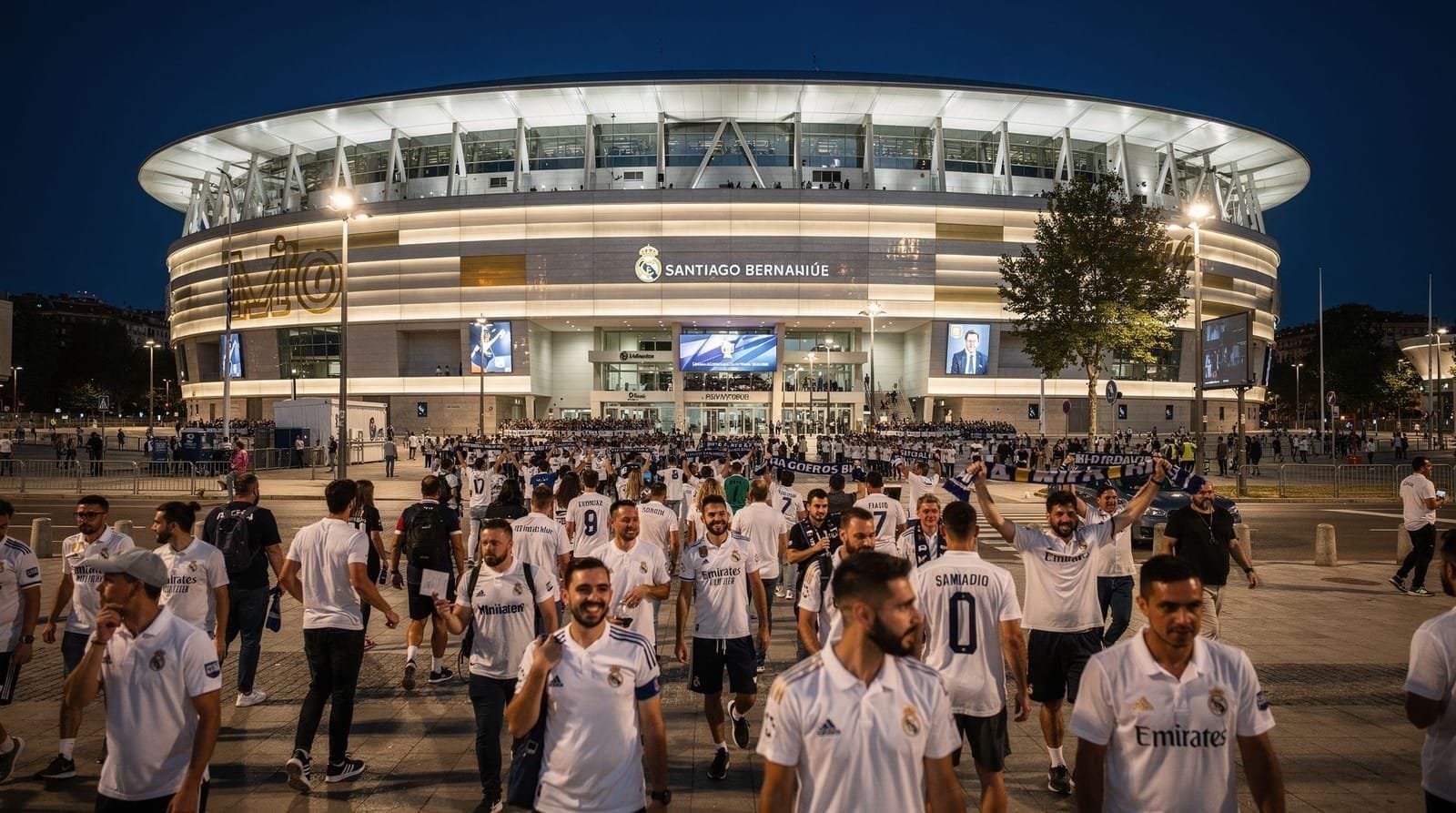
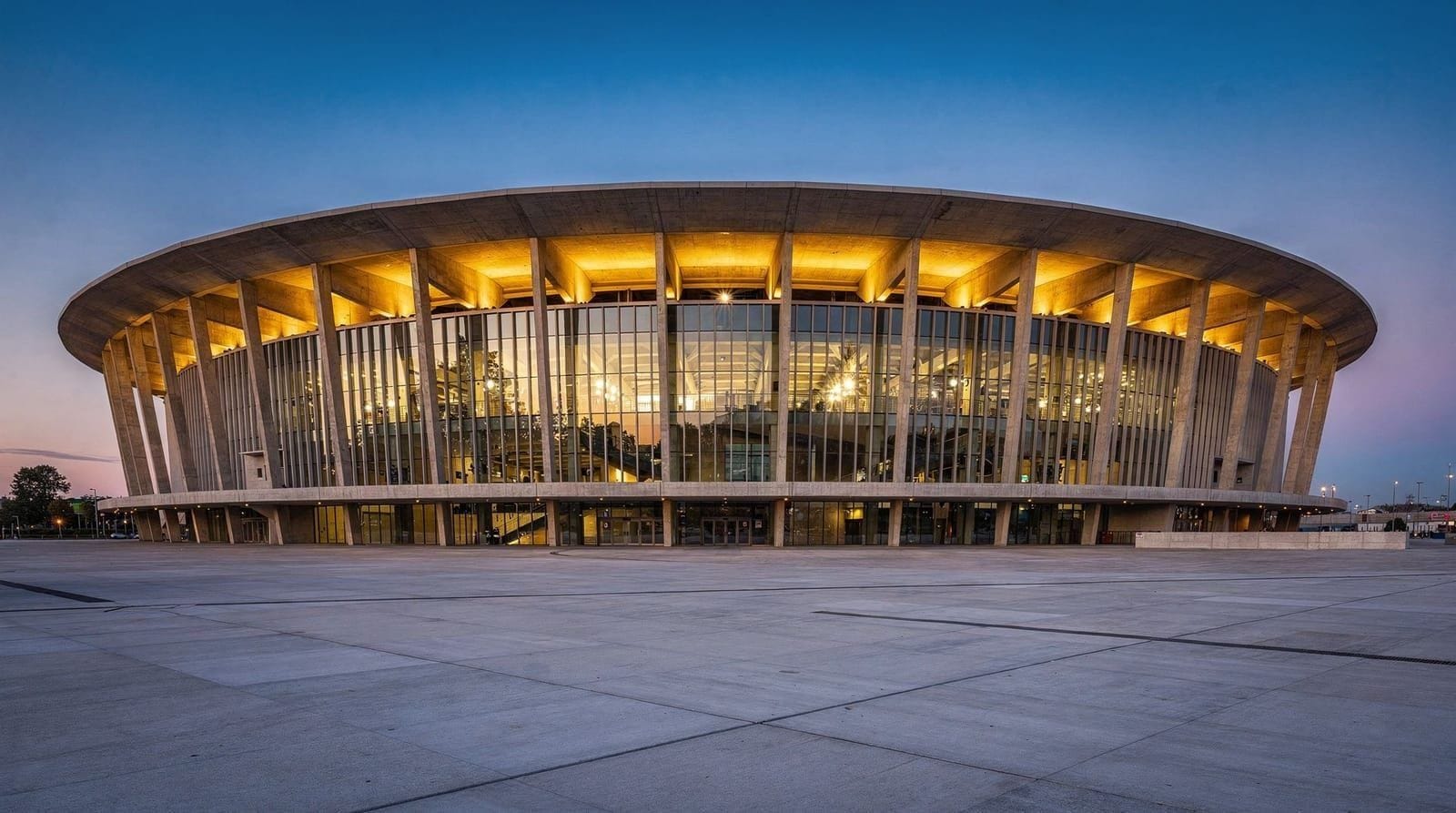
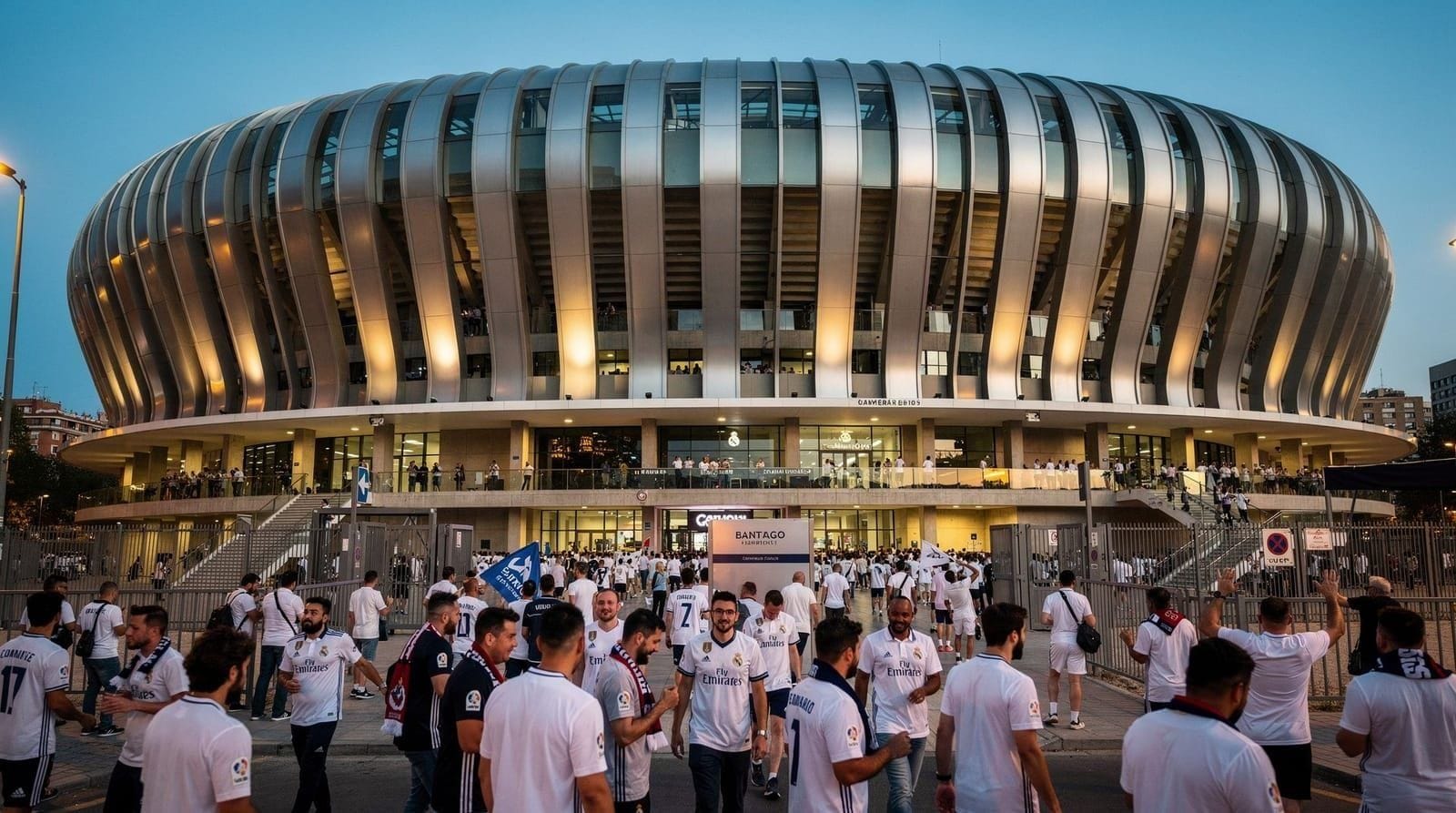
Take the metro to Bernabéu station (Line 10, or Line 7 to Concha Espina). The Santiago Bernabéu is visible from the metro exit — the recently renovated stadium with its 360° LED exterior facade and retractable roof is an architectural statement as much as a sports venue.
Pre-book the Bernabéu entry ticket in advance — walk-in tickets are sometimes available but the queue in high season can be significant. The self-guided tour circuit takes 90 minutes and includes: the trophy room (15 Champions League trophies, the most in the competition’s history), the pitch-side tunnel (you walk through the players’ entrance to the touchline), the VIP boxes and presidential suite, the changing rooms, and the new multimedia areas covering Real Madrid’s history from 1902.
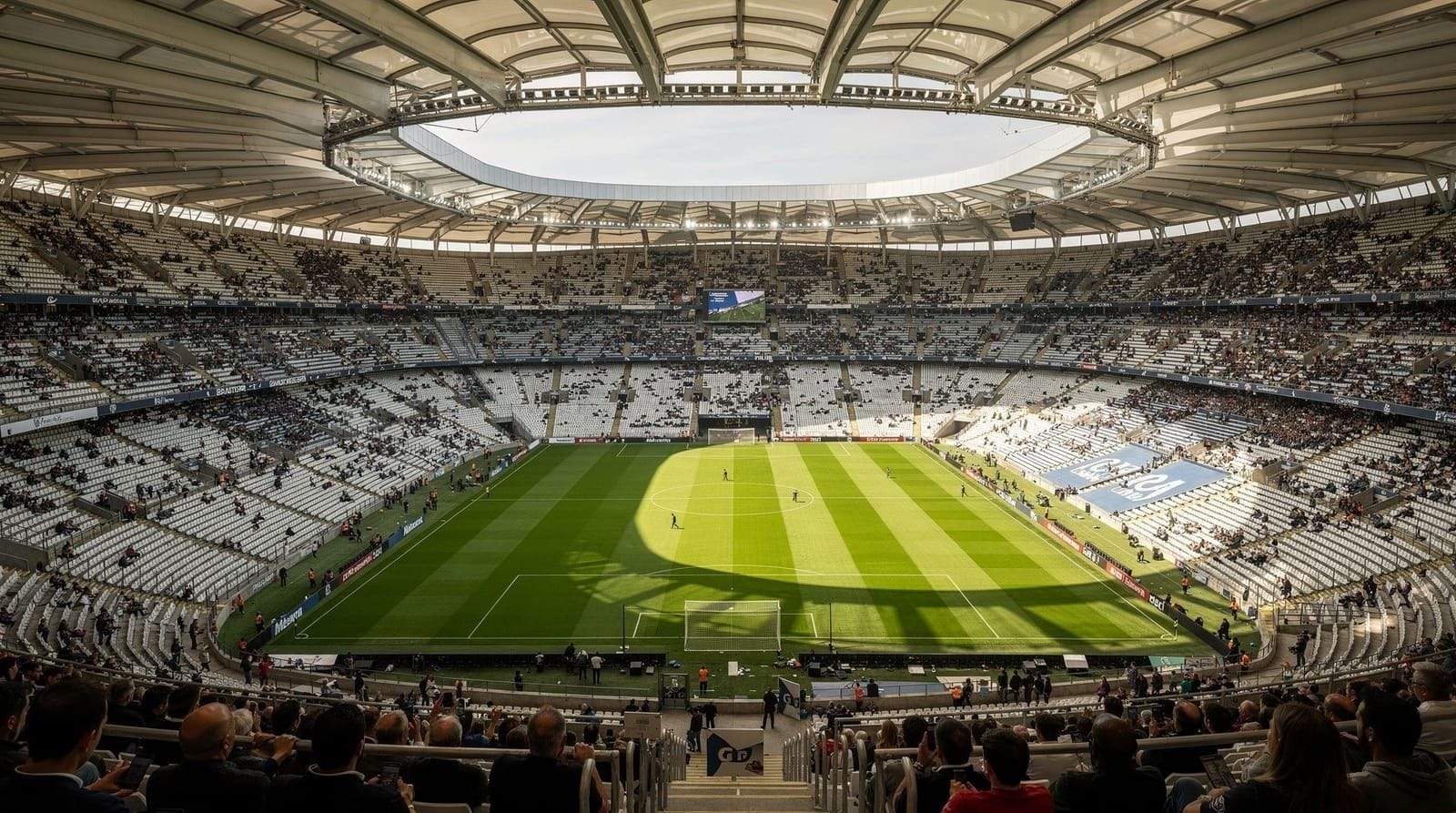
The stadium renovation completed in 2023 transformed the upper tier with a retractable roof and a retractable pitch (the pitch slides out to reveal an indoor entertainment floor) — the Bernabéu is now a multi-use arena that hosts concerts and events when football is not playing. The tour shows both configurations.
If you want a guide rather than the self-guided circuit, the Bernabéu Real Madrid guided tour provides a local guide and better context for the club’s history and the renovation.
For serious fans with the budget: the Bernabéu VIP private tour includes access to areas not open on the standard circuit.
Midday: Lunch in Chamartín or Salamanca district
The area around the Bernabéu — the Chamartín/Castellana district and the adjacent Barrio de Salamanca — is Madrid’s most affluent zone. The football stadium sits at the top of Paseo de la Castellana; the side streets of Salamanca immediately east have excellent restaurants.
The neighbourhood around Calle de Serrano and Calle de Juan Bravo has the highest concentration of good mid-range and upscale restaurants in the area. An alternative is the Bernabéu stadium’s own restaurants, which are open on non-match days — pricier than the street alternatives but conveniently on-site.
Afternoon: Real Madrid store and football culture
The Real Madrid Club official store at the stadium has three floors of merchandise; this is the most complete Real Madrid retail experience in the world. For jerseys, the recommendation is to avoid the tourist-facing stores around Sol and Gran Vía (higher prices, less selection) and buy direct from the stadium store.
For football culture beyond the Bernabéu: the sports fan guide and the Real Madrid tickets guide cover how to buy tickets for live matches, which games are realistic to get into, and the price range to expect.
Evening: The football fan bar circuit
Madrid has an excellent sports-bar scene that largely concentrates around the Chamartín neighbourhood and also in Malasaña and Chueca for the more mixed crowd. On match evenings, bars near the Bernabéu fill with fans; on non-match evenings, the atmosphere is more mixed but the footballing conversation is constant.
The Madrid Derby guide and sports fan guide identify the best bars for watching games when you cannot get a ticket — many bars show La Liga and Champions League via subscription, usually without a cover charge.
Day 2: Metropolitano and Las Ventas
Morning: Wanda Metropolitano — Atlético de Madrid
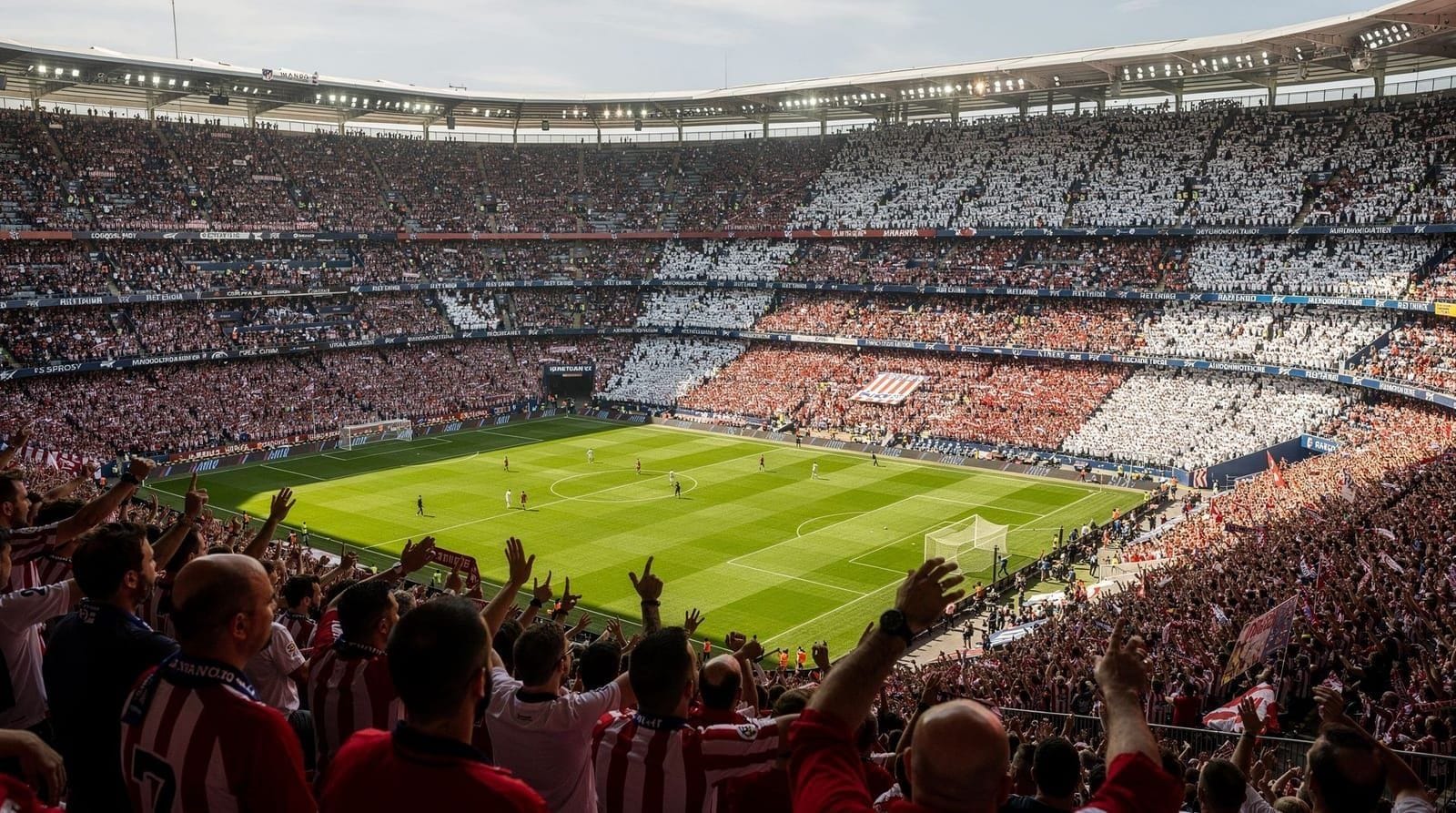
Metro to Estadio Olímpico de la Peineta / Civitas Metropolitano station (Line 7). The Metropolitano, opened in 2017, is Atlético de Madrid’s home: a 68,456-seat stadium in the eastern suburbs that was designed as a pure football stadium — steeply raked, very close to the pitch, with an atmosphere that the clubs in the north of the city (Real Madrid and Getafe) consistently rate as one of the loudest in Spain.
The Metropolitano stadium tour is smaller-scale and less famous than the Bernabéu tour — which makes it, paradoxically, better for the genuine football experience. The trophy room covers Atlético’s two La Liga titles, the Europa League wins, and the consistent Champions League finalist record. The tour is self-guided and takes around 60–75 minutes.
For Atlético de Madrid fans, this is the essential stop; for neutral football fans, the comparison between the two clubs’ identities (Real Madrid’s aristocratic self-image versus Atlético’s working-class pride and the famous colchonero red-and-white stripes) is one of the most interesting dynamics in European football. The Madrid derby guide traces this history.
Afternoon: Las Ventas bullring
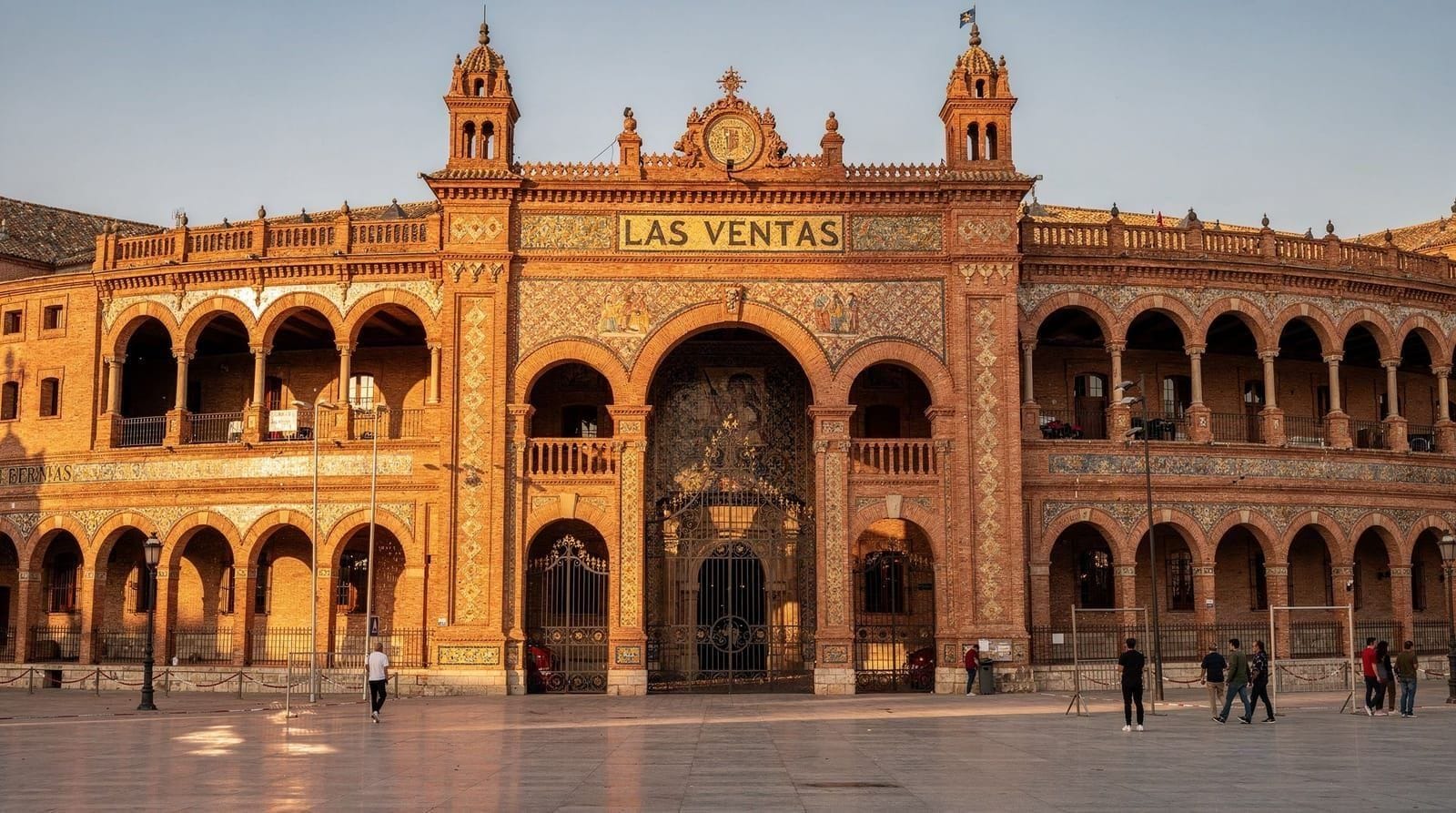
Las Ventas — the Plaza de Toros de Las Ventas — is one of the world’s most important bullfighting arenas and, regardless of personal views on the sport, is one of Madrid’s great pieces of neo-Mudéjar architecture. The 1929 building seats 23,798 and hosts the main bullfighting season in May (San Isidro Festival, the most prestigious corridas of the year).
The Las Ventas audio guide covers the history of the ring, the architecture, and the corrida tradition. Entry to the arena without a show is possible; you can stand in the ring, sit in the sol and sombra sections, and understand the geometry and logistics of the spectacle even without attending one.
The Las Ventas guide covers both the cultural context and the practical information about attending a corrida during the season. For football fans who have no interest in bullfighting, Las Ventas works as an architectural and cultural visit.
Las Ventas is on Metro Line 2 (Ventas station).
Evening: The Madrid derby
If your visit coincides with an El Derbi Madrileño, almost everything in this itinerary becomes secondary. The Madrid Derby guide covers ticket-buying strategy, which sections to target, the pre-match and post-match atmosphere, and the history of the rivalry.
Both clubs operate official ticket resale platforms (Real Madrid’s Ticketgold, Atlético’s official site) that offer legitimate routes to tickets when the primary sale is exhausted. Prices for the derby range from €50–€300+ depending on section and demand; Champions League knockout matches run higher.
If no match coincides, the football fan evening is about sports bars and the ambient conversation that surrounds a city with two of the world’s best-known clubs in it.
Real Madrid and Atlético: the derby in context
The El Derbi Madrileño is different from most European city derbies because the two clubs genuinely represent different sociological identities rather than just different postcodes.
Real Madrid was founded in 1902 and has been the most successful club in the history of the Champions League / European Cup, with 15 titles. The club’s history is entangled with the Franco dictatorship (Franco used Real Madrid’s success as an instrument of national pride and international prestige; the extent of his involvement is debated) and with the globalisation of football — the Galácticos era of Zidane, Figo, Ronaldo, Beckham, and Roberto Carlos in the early 2000s established the model of the superclub that buys the best players in the world.
The Bernabéu’s identity: European glamour, corporate polish, 85,000 seats, a stadium that could host a concert, a Champions League final, or the visit of a head of state with equal ease. The fan base is middle class and upper middle class; the match-day atmosphere is sophisticated rather than visceral.
Atlético de Madrid was founded in 1903 as a branch of the Basque club Athletic Bilbao and developed a distinct identity as the working-class alternative to the wealthy Merengues next door. The club spent decades as Real Madrid’s perennial second-best before Diego Simeone arrived as coach in 2011 and transformed them into genuine La Liga and Champions League contenders.
The Metropolitano (opened 2017, replacing the ageing Vicente Calderón ground on the Manzanares river) seats 68,456 and has a steeply raked design that creates exceptional atmosphere — the lower tier is among the loudest in Spanish football. Atlético’s fan identity (colchoneros — mattress-makers, from the red-and-white striped historical connection to mattress fabric) is fiercely local and working-class in its self-image, even if the club’s economic reality and fan base have diversified considerably since Simeone’s success.
The derby result is genuinely uncertain in a way that El Clásico (Real Madrid vs Barcelona) has not been for most of the past decade — Atlético have won as many Madrid derbies as Real Madrid in the Simeone era, and the games consistently produce drama.
How to buy match tickets as a visitor
Getting tickets as a non-member visitor requires planning. Both clubs sell tickets through their official websites, but the popular games (the derby, Champions League matches, Real Madrid vs Barcelona) sell out in the member pre-sale before reaching general sale.
Official channels: Real Madrid has the Ticketgold resale platform integrated into their official website; Atlético de Madrid has a similar official resale system. These are legitimate and price-guaranteed.
Ticket agents: Several licensed ticket agents in Madrid (and online) sell matchday tickets at a premium above face value. The premium for a regular La Liga match is typically 20–50%; for the derby or Champions League knockouts it can be 2–3x face value. Avoid street sellers and unlicensed online platforms — counterfeit tickets exist and the loss if a ticket is rejected at the gate is unrecoverable.
The real madrid tickets guide gives the full strategy including which sections to target, how far in advance to look, and the price bands to expect.
A realistic target for a single La Liga match as a walk-in visitor (non-popular opponent): €50–€90 in the upper tier, €80–€140 in the lower tier. The Bernabéu’s new premium sections (the enhanced sideline areas of the renovation) cost more.
The Atlético Metropolitano tour versus the Bernabéu
The two stadium tours reward different types of visitor.
The Bernabéu tour is the globally famous experience — the trophies, the scale, the renovation technology. It is slicker, more expensive (around €25–€35), and delivers the polished experience of a club that has positioned itself as a global brand.
The Metropolitano tour is quieter, cheaper (around €15–€20), and has a more genuine football feel — you are not surrounded by the corporate machinery of a superclub but by the history of a club that has achieved its Champions League final record on organisation and defensive intensity rather than financial dominance. For visitors who find the Bernabéu overwhelming, the Metropolitano is often a more enjoyable afternoon.
Doing both is the honest football fan’s tour of Madrid — the contrast between the two clubs’ identities is the story.
Building a trip around the fixture calendar
If a live match matters more to you than a fixed two-day plan, work backwards from the fixture list rather than forwards from a set itinerary. La Liga confirms match dates and kick-off times 4–6 weeks ahead, and Champions League group/knockout dates are set slightly earlier by UEFA. Once you know your match date, book the stadium tour for the other club on a different day — visiting the Bernabéu on a Real Madrid match day is not possible, and tours generally pause the day before and the day of a fixture. A three or four-day trip built around one confirmed match gives you room for both tours plus the game itself without the schedule collapsing if a tour date needs to shift.
What a matchday actually feels like
Arrive at the stadium at least 90 minutes before kick-off — security checks, bag restrictions (small bags only, no professional cameras without accreditation), and the walk from the metro all take longer than expected on a big match night. Away and neutral fans should stick to sections sold as such; Spanish clubs are generally relaxed about away colours in general-sale areas, but avoid wearing rival colours in a section explicitly reserved for home ultras. Half-time is short (15 minutes) and concession queues are long, so eat beforehand rather than planning on a stadium meal. After the final whistle, the surrounding metro station is at capacity for 20–30 minutes; walking one stop before boarding, as noted below for the Bernabéu, applies equally at the Metropolitano.
Frequently asked questions about football in Madrid
When is the Madrid derby played?
La Liga schedules approximately two derbies per season — one at the Bernabéu and one at the Metropolitano. Dates are confirmed by La Liga 4–6 weeks ahead of the match. The clubs’ official fixture lists (published on their websites) and the La Liga app are the best sources.
Is it safe to attend a derby as a neutral?
Yes, provided you follow standard football safety practices: don’t wear the wrong club’s colours in the wrong section, don’t engage with hostile groups, and follow stadium security instructions. Spanish football has significantly less hooligan violence than historical English or Dutch football; the risk is low for a tourist attending either stadium.
Can I visit the Bernabéu if Real Madrid are playing away?
Yes — stadium tours run on most days regardless of the match calendar, pausing only on match days and the day before. Check the official Real Madrid website for the current tour schedule.
Is there good football to watch in Madrid beyond the two main clubs?
Getafe CF (south of Madrid), Rayo Vallecano (Vallecas neighbourhood), and Leganés also play in the La Liga / Segunda División system. Rayo Vallecano in particular has a strong neighbourhood identity and atmosphere at their compact Estadio de Vallecas ground; tickets are easily available and the experience is more intimate than the two main clubs.
Do I need to book both stadium tours in advance, or can I turn up?
Book both in advance if your dates are fixed. The Bernabéu tour routinely sells out days ahead in peak season and around Champions League fixtures; the Metropolitano is more forgiving but still worth booking the day before to avoid a wasted trip if it happens to sell out around a big match.
Two-day summary
| Day | Focus | Notes |
|---|---|---|
| Day 1 | Bernabéu tour, Chamartín/Salamanca lunch, sports bars | Book tour + optional match ticket ahead |
| Day 2 | Metropolitano tour, Las Ventas | Add a live match if the fixture aligns |
Practical notes for football fans
- Book stadium tours in advance. The Bernabéu tour in particular sells out in peak season and during Champions League season.
- Match tickets. The real madrid tickets guide is the essential reference. Summary: league games against lesser opposition are accessible at €40–€80 in most sections; El Clásico (Real Madrid vs Barcelona), Champions League knockouts, and the Madrid Derby are much harder to get and significantly more expensive.
- Getting to the stadiums. Bernabéu is on Metro Line 10 (Bernabéu station). Metropolitano is on Metro Line 7 (Estadio Olímpico). Both are direct from central Madrid; the journey to Metropolitano takes about 25 minutes from Sol.
- Match day transport. After a Bernabéu match, the metro system adds extra services but is extremely crowded; walking to Nuevos Ministerios (two stops, 15 minutes on foot) is a viable alternative to the scrum on the platform.
- Season. La Liga runs August to May; Champions League September to May. July and most of August are the pre-season gap. Plan your visit around the fixture calendar — the clubs’ official websites publish fixtures 6–8 weeks ahead.
Top experiences
Bookable activities with verified prices and instant confirmation on GetYourGuide.