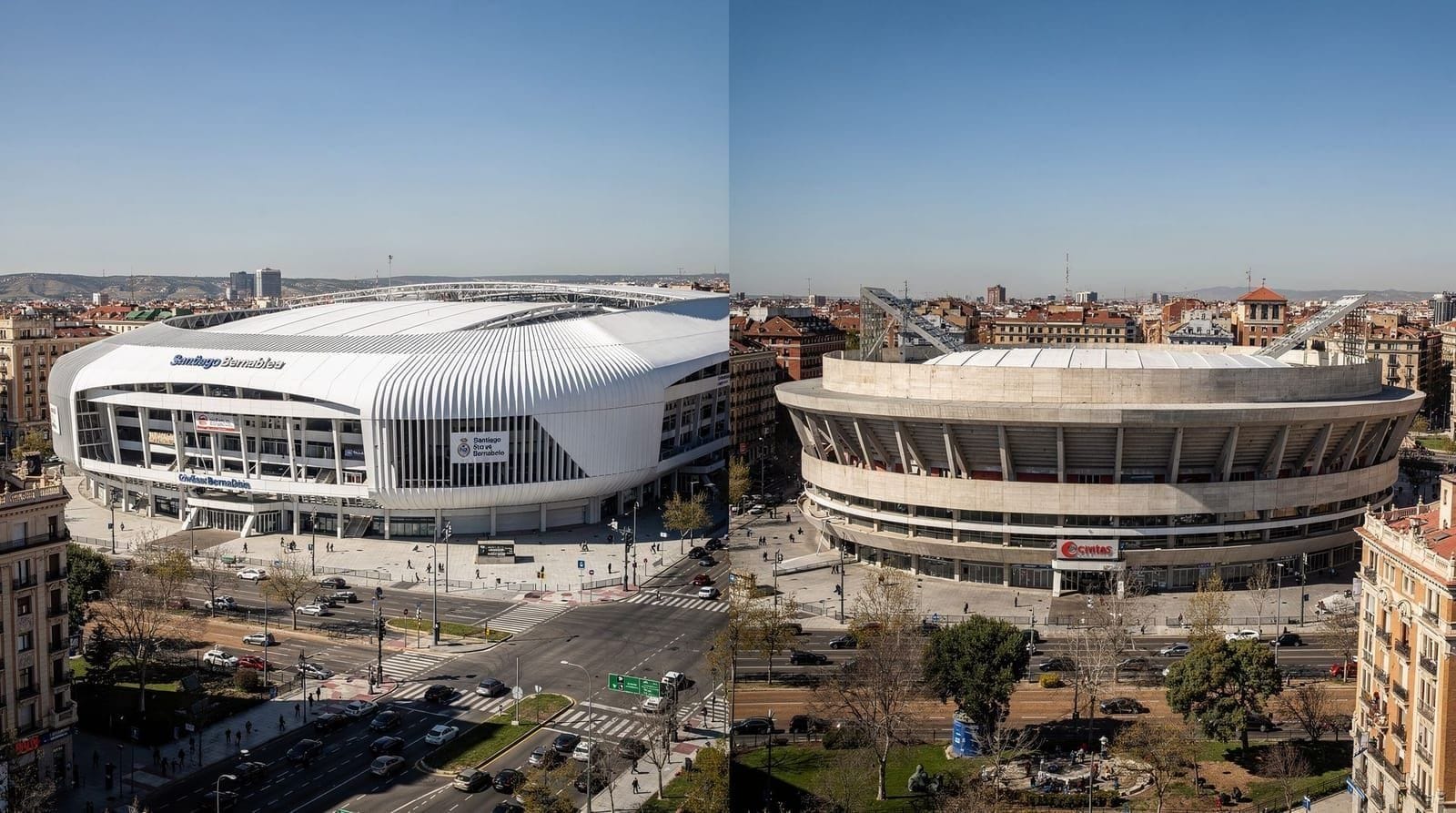
Atlético de Madrid Metropolitano stadium tour guide
Madrid: Royal Palace Fast Access Ticket
Is the Metropolitano stadium tour worth visiting in Madrid?
Yes — the Civitas Metropolitano is one of Europe's most modern stadiums (opened 2017, Champions League final venue 2019), and the tour experience is well-run and less crowded than the Bernabéu. The tour and museum ticket costs €25 for adults and €18 for children. Allow about 2 hours. Atlético fans consider it a pilgrimage; even neutral visitors find the architecture impressive.
In brief: The Civitas Metropolitano is architecturally striking and genuinely modern — Atlético de Madrid’s home since 2017 replaces the old Vicente Calderón with a 68,000-seat venue in the Coslada corridor east of the city. The tour is well-organised, less overwhelmed than the Bernabéu’s queues, and offers a different perspective on Madrid’s football identity.
| Where | San Blas–Canillejas, around 8 km east of Puerta del Sol |
| Cost | Tour and museum ticket: €25 adult, €18 child (ages 0–3 free) |
| Time needed | About 2 hours (1 hour tour + 1 hour museum) |
| Getting there | Metro Line 7 to Estadio Metropolitano, around 35–40 min |
| Best for | Atlético fans, or football fans doing both Madrid stadiums |
Atlético Madrid and the Metropolitano
Atlético de Madrid is Spain’s third football superpower and Real Madrid’s crosstown rival. The club’s identity is consciously working-class and combative — the antithesis of Real Madrid’s galáctico image. This historical positioning makes visiting both stadiums a contrast in football culture as much as architecture.
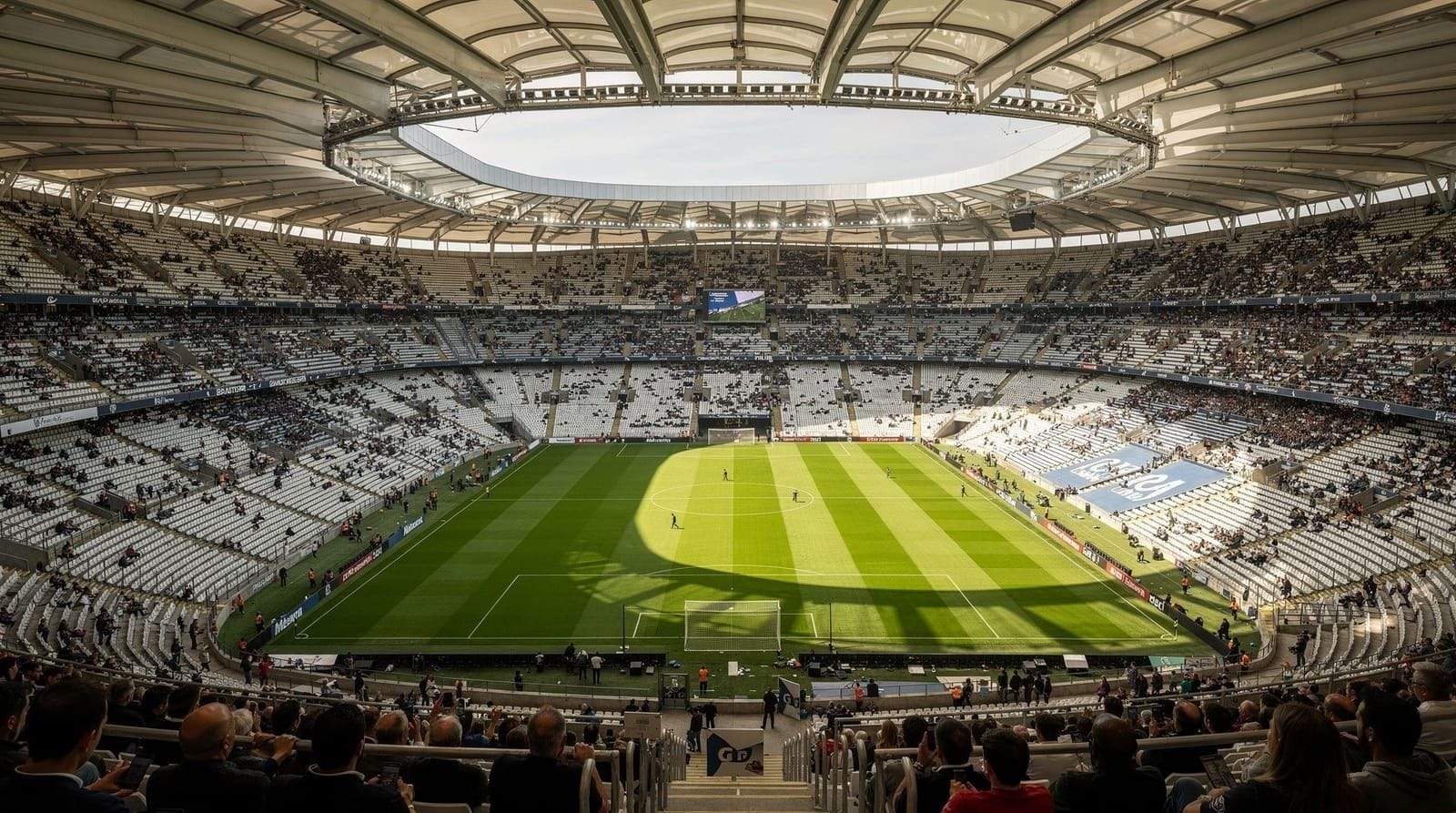
The Civitas Metropolitano opened in September 2017, replacing the beloved old Vicente Calderón on the south bank of the Manzanares (now demolished; the site became part of the Madrid Río linear park). The new stadium seats 68,456 spectators and was the venue for the 2019 Champions League final between Liverpool and Tottenham Hotspur.
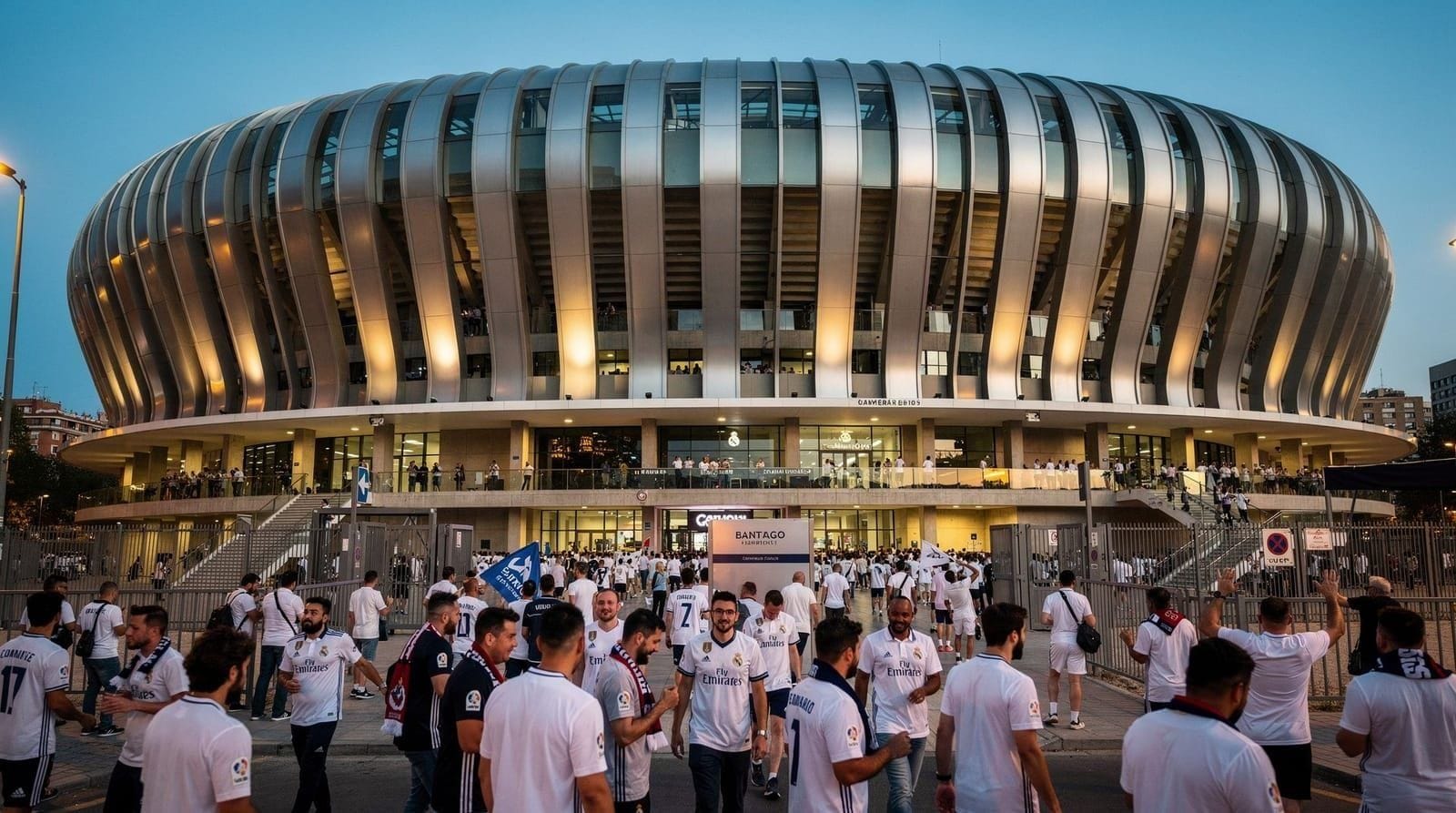
The location — in the San Blas/Canillejas corridor east of the city center — is more industrial than the Bernabéu’s Castellana address, but the architecture compensates. The stadium’s elliptical form, clad in undulating aluminium panels and a dramatic roof structure, looks genuinely distinctive from a distance.
What the tour covers
The Metropolitano tour is called the Wanda Metropolitano Tour (the former naming rights sponsor) and is run directly by the club. It covers:
The museum: A chronological exhibition of Atlético Madrid history from the club’s founding in 1903. The trophy display includes La Liga titles, Copa del Rey wins, two Champions League final appearances (2014 and 2016), and the distinctive Europa League victories. The focus on hardship and perseverance is very Atlético.
The players’ dressing room: Unlike some stadium tours, the Metropolitano regularly includes the home dressing room on the standard tour — high-spec with individual bays for each player, the club crest on every surface.
The tunnel and dugout: Same format as other stadium tours — walk through the tunnel, stand in the technical area. The pitch view from dugout level is impressive in a 68,000-seat stadium.
The press room: The official post-match interview backdrop.
The stands: Views from different seating categories, including the executive boxes.
The pitch perimeter walk: A circuit around the touchline giving a full 360-degree view of the interior.
Honest assessment: Metropolitano vs Bernabéu
For neutral visitors, this comparison matters:
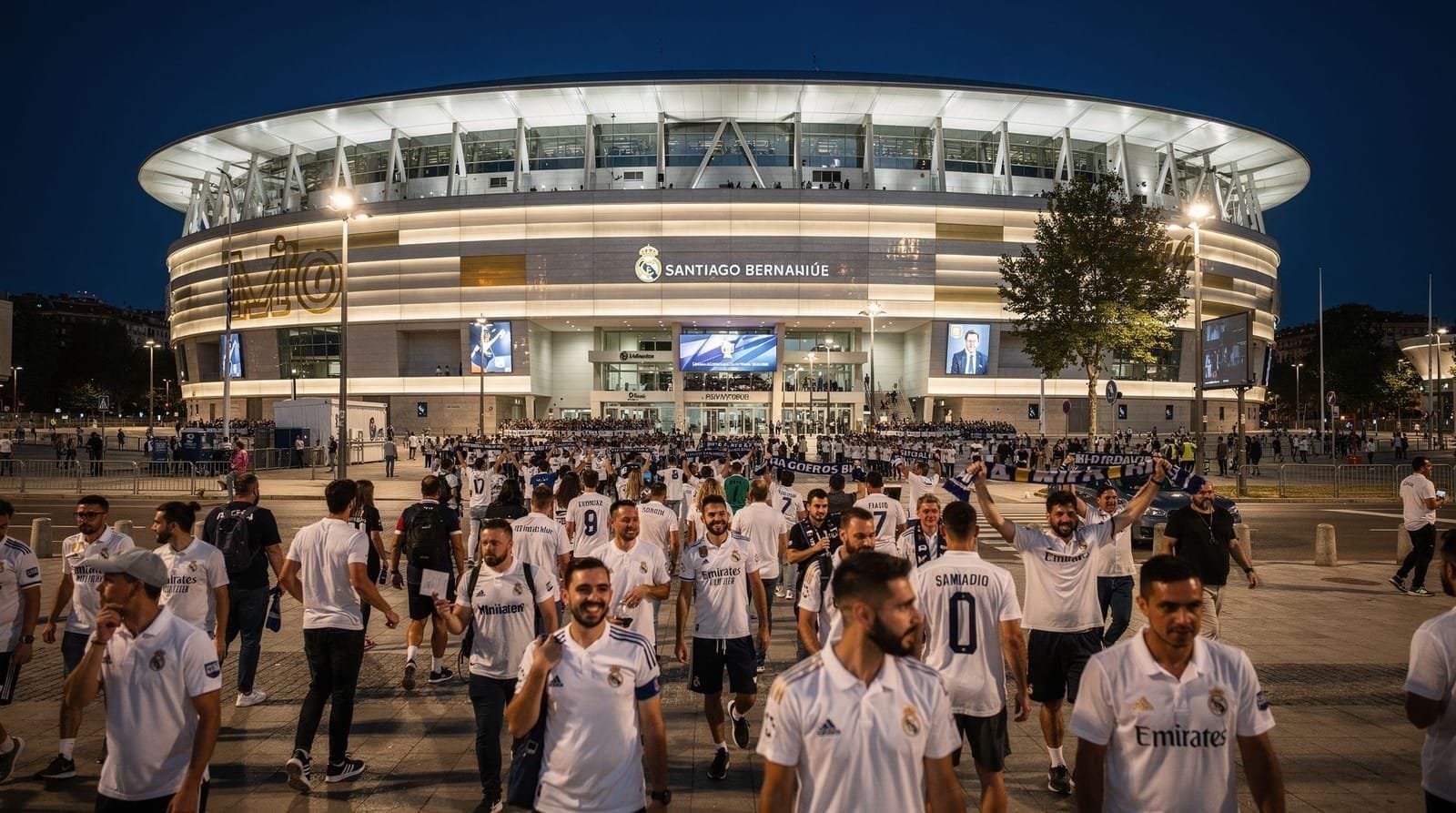
Bernabéu advantages: More famous globally, renovated rooftop circuit is spectacular, museum has more historical weight (15 European Cups), longer history.
Metropolitano advantages: Less crowded tour experience (shorter queues), architecture is more striking as a single building, dressing rooms regularly included on standard tour, ticket prices typically lower (€25 adult vs from €37 at the Bernabéu), located in a more interesting eastern residential area.
If you are a Real Madrid fan: Bernabéu. If you are an Atlético fan: Metropolitano. If you are neutral with one stadium visit available and already intend to visit the Bernabéu: consider adding the Metropolitano anyway — the club cultures are genuinely different and the contrast is worth experiencing.
If you are neutral with time for only one stadium visit: the Bernabéu wins on historical prestige and the post-renovation experience, but the Metropolitano is a legitimate alternative.
Practical details
Address: Avenida de Luis Aragonés 4, 28022 Madrid.
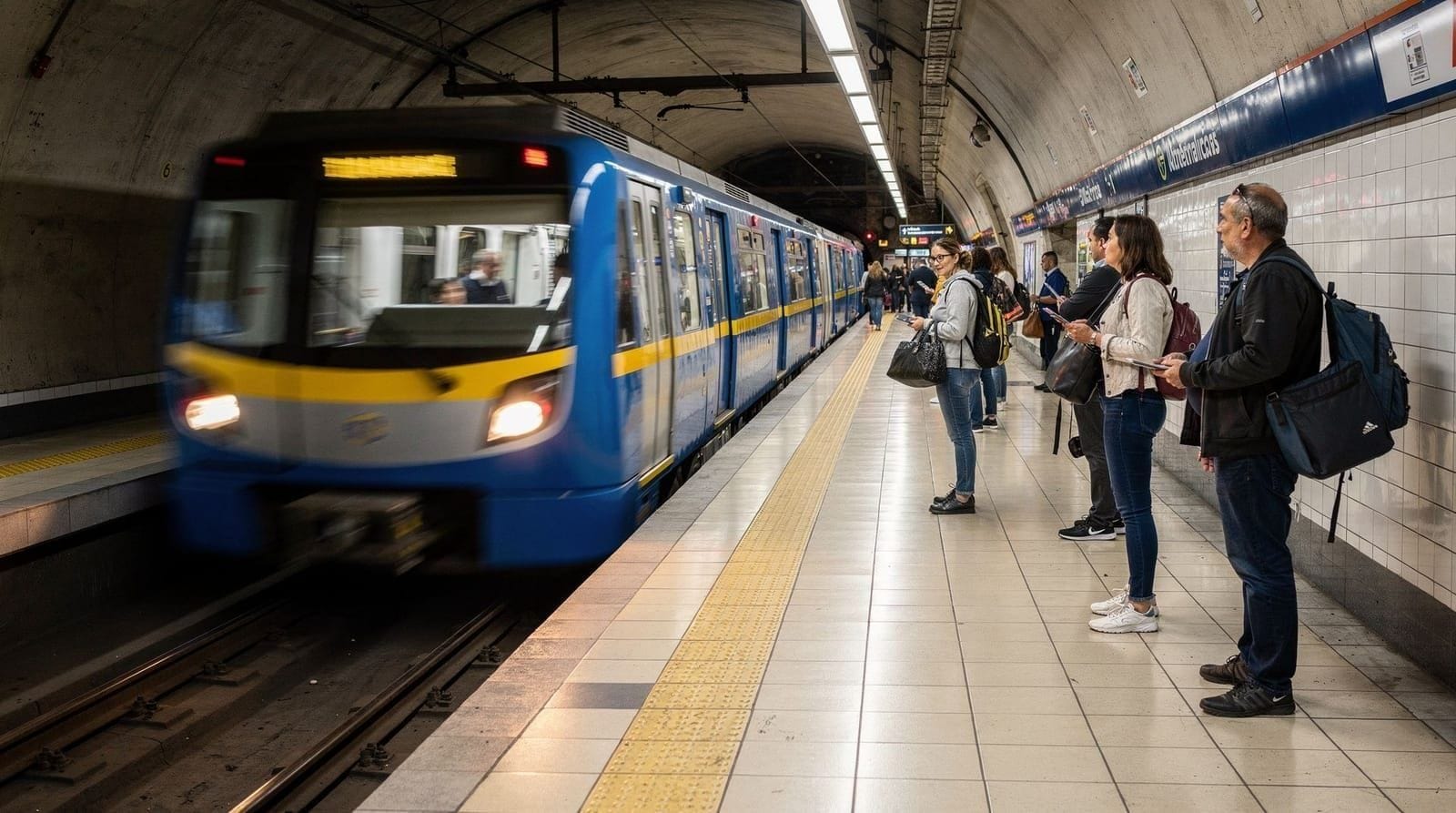
Metro: Line 7 to Estadio Metropolitano (direct, purpose-built stop added when the stadium opened). From Atocha, take Line 1 north to Goya, change to Line 9, then to Line 7. Total approximately 35 minutes from the city center. See the getting around by Metro guide if this is your first time navigating the network with a transfer.
Alternatively: Cercanías Line C-2 to the nearby station; check current timetables.
Tour hours: Monday to Sunday 11:00–19:00. Bookings on match weekends can be changed because of the match schedule or first-team training. The official Atlético de Madrid website shows exact schedules and closure dates.
Matchday closures: Like the Bernabéu, the tour is suspended on matchdays and the day before major European fixtures.
Ticket prices: The tour and museum ticket costs €25 for adults and €18 for children; children aged 0–3 enter free. Rescheduling a booking costs €5 per ticket. Book online through the Atlético website — queuing on the day is possible but not recommended during peak season.
Getting to the Metropolitano from central Madrid
The Metropolitano is further from the city center than the Bernabéu — approximately 8 km east, compared to 5 km north for the Bernabéu.
From Puerta del Sol: Metro Line 1 north to Goya (5 stops), change to Line 2 east to Ventas, then Line 7 east to Estadio Metropolitano. Total approximately 35–40 minutes.
From Atocha: Take Line 1 north then same route. About 40 minutes.
Important: The journey requires two changes. On a matchday, the Metro to the Metropolitano is extremely crowded — the club website recommends arriving 90–120 minutes before kick-off.
Taxi from city center: 20–30 minutes depending on traffic, costing €18–25.
Attending a match at the Metropolitano
Atlético match tickets are available through the official website (atleticodemadrid.com). Unlike Real Madrid, Atlético is more accessible as a one-off purchase — demand is slightly lower, and the club makes more tickets available to non-members through official channels.
La Liga home matches: Typically available through the website several weeks in advance. Prices range from €35 (upper tier) to €120+ (premium categories).
Champions League matches: Harder to get; most allocated to club members.
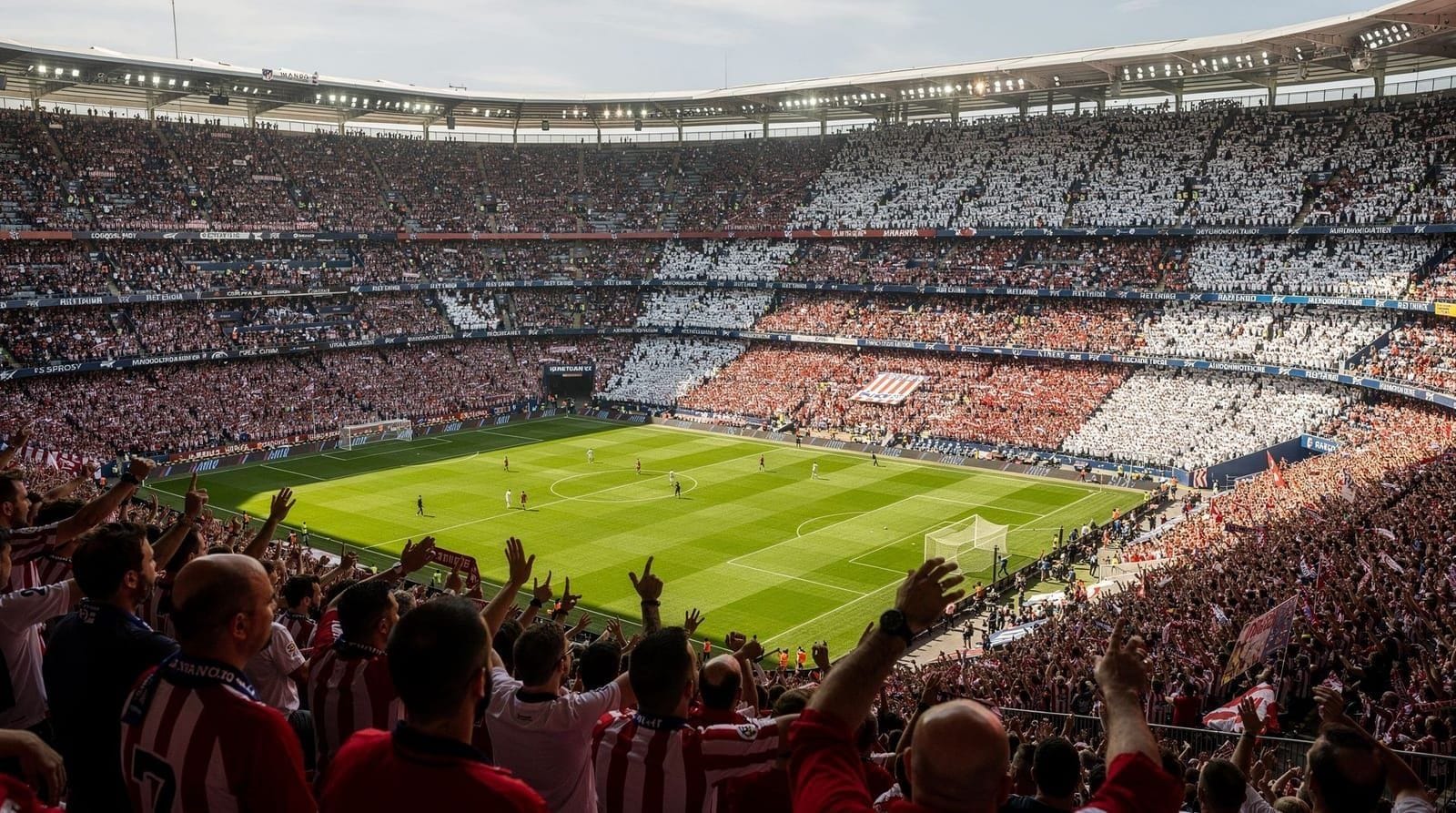
The atmosphere: Atlético’s home support is famously intense. The south stand (Fondo Sur) is the ultras section — not for families but spectacular from a distance. The general atmosphere in the stadium during a competitive match is among the best in European club football.
See the Madrid derby guide for information on attending a Bernabéu vs Metropolitano showdown.
Combining with the surrounding area
The Metropolitano’s location is less tourist-dense than the Bernabéu’s, which has a practical upside: the neighborhood restaurants nearby are local-price rather than tourist-price.
San Blas–Canillejas: The surrounding residential district is working-class Madrid — far from the tourist circuit. Good for a pre-match meal at local prices if you are attending a game. The shopping center Xanadú is 15 km southwest, but less relevant.
Old Vicente Calderón site: The original Atlético stadium on the south bank of the Manzanares has been entirely demolished. The site is being integrated into the Madrid Río park. If you are a football history devotee, the location of the old ground is visible from the Arganzuela area of Madrid Río, though there is nothing structural remaining. See the Madrid Río cycling guide for the riverside route that now passes the former stadium footprint.
How to fit this into a Madrid itinerary
The Metropolitano is most naturally combined with a visit to the Bernabéu on the same trip — a football-focused half-day visiting both, or spreading them across consecutive days.
For the Madrid football fan itinerary, the standard logic is: Bernabéu tour in the morning (Chamartín, north), Metropolitano tour in the afternoon (east) — though the Metro connections between the two require passing through the city center, so factor in 45–60 minutes transfer time.
For a 3-day Madrid visit that is not football-centric, the Metropolitano may be one tour too many. The Bernabéu is the priority; the Metropolitano is for dedicated fans or those with a specific interest in Atlético.
Pairing the stadium with the rest of your Madrid trip
Because the stadium sits well outside the centre, it works best as one anchor of a day rather than the whole day. Plan the rest of the day around the part of the city you pass through on the way back.
- Football weekend: if the stadiums are the point of the trip, the Madrid football fan itinerary and the sports fan guide lay out how to string tours, matches and bars together. For tickets to the other club, see the Real Madrid tickets guide.
- A short city break: if you only have a long weekend, start with the Madrid first weekend itinerary and decide afterwards whether a trip east is worth the time. The how many days in Madrid guide helps with that call.
- Royal Madrid in the afternoon: after the tour, the Royal Palace makes a good contrast with a modern stadium, and a fast-access ticket for the Royal Palace is easier to arrange before you leave for the east side. If you want the pass in hand, you can book fast-access entry to the Royal Palace in advance.
- Art and walking: pair a morning at the stadium with an afternoon in the Golden Triangle art walk so the day mixes sport and culture.
- Where to base yourself: the best area for first-time visitors guide explains which neighbourhoods keep the Metro journey to the stadium simple.
None of these pairings changes how the tour itself runs; they simply help you decide whether the east-side trip earns its place in your plan.
The Metropolitano as a Champions League venue
The 2019 Champions League final between Liverpool and Tottenham was the Metropolitano’s defining international moment. Liverpool won 2–0 (Mohamed Salah, Divock Origi). The match was watched by a global audience of around 380 million and put the stadium’s name on the international map.
For a stadium that had been open less than two years at the time, hosting the most-watched club football match in the world was an extraordinary confirmation of the venue’s status. The tour materials reference the final prominently.
A second European final appearance came when Atlético hosted Europa League matches before the stadium was complete — the club’s European identity is inseparable from the venue.
Frequently asked questions about the Metropolitano
Is the Metropolitano in the city center?
No — it is approximately 8 km east of Puerta del Sol, in the San Blas–Canillejas district. The dedicated Metro Line 7 stop makes it accessible without a car, but it is a longer journey than the Bernabéu.
Can I buy tour tickets on the day?
Yes, at the ticket window, but online purchase is recommended during peak season (June–August) to avoid waiting. The Metropolitano is less queued than the Bernabéu, making same-day visits more feasible.
How long does the Metropolitano tour take?
The visit lasts about 2 hours: roughly 1 hour for the stadium tour and 1 hour for the museum.
Are there English-language guided tours?
Yes — English-language guided tours are available on a fixed schedule. Check the Atlético website for current English tour times, which are more limited than Spanish-language options.
What should I wear to the Metropolitano?
No dress code. Atlético Madrid jerseys are obviously welcome; Real Madrid jerseys would be provocative and are not recommended — the club staff are professional but the fan culture is very strong.
Is the Metropolitano tour worth it if I’m not an Atlético fan?
It can be, particularly if you’re already doing the Bernabéu and want the contrast — the Metropolitano’s modern single-block architecture and shorter queues make it a genuinely different experience from the Bernabéu’s scale and history. For a visitor with only one football stop on the itinerary and no particular Atlético connection, the Bernabéu’s prestige and post-renovation rooftop circuit generally give more return for the time.
Can I combine the Metropolitano tour with a match on the same visit?
No — the tour is suspended on matchdays and typically the day before major European fixtures, so plan the tour and a match as separate visits if you want both. Check the club’s published schedule before booking either, since tour hours shift around the fixture calendar.
Food and drink near the stadium
The San Blas–Canillejas area around the Metropolitano is genuinely local rather than tourist-oriented, which cuts both ways: prices are honest neighbourhood rates, but the density of good options is lower than in the historic centre. On a non-matchday, the safest plan is eating before you travel out or after you’re back in the centre. On a matchday, the streets immediately around the stadium fill with bars and improvised food stalls serving bocadillos and beer — functional rather than memorable, but part of the pre-match atmosphere. If a Bernabéu visit is also on your list, a stadium tour ticket booked ahead avoids the same-day queue that can build during peak season:
Santiago Bernabéu stadium entry ticket