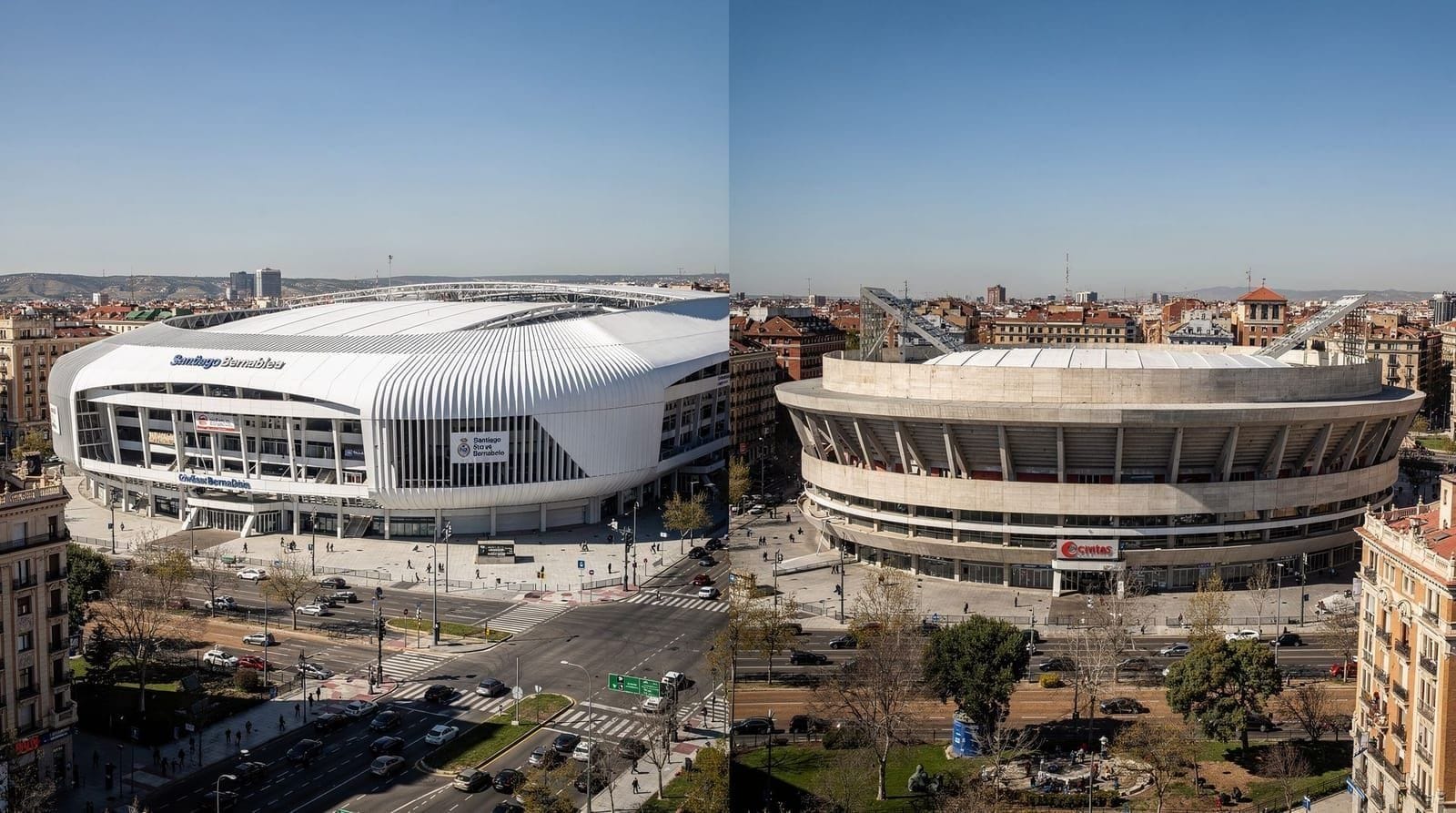
Madrid derby guide: Real Madrid vs Atlético de Madrid
Madrid: Bernabéu Real Madrid Guided
How can I attend the Madrid derby as a tourist?
The Real Madrid vs Atlético de Madrid derby (el derbi madrileño) is played twice per La Liga season — once at the Bernabéu, once at the Metropolitano. Both legs are among the hardest tickets in Spanish football. Official channels are largely exhausted by members; secondary market prices start at €150 and reach €600+ for premium seats. Plan at least 2–3 months ahead.
In brief: El derbi madrileño between Real Madrid and Atlético de Madrid is one of the most intense derby matches in world football. The two clubs’ contrasting identities — galáctico royalty versus working-class fighters — make the fixture culturally significant beyond pure sport. This guide covers the history, the ticket reality, the stadium logistics, and what makes this particular derby different.
| Where | Bernabéu (Real Madrid) or Metropolitano (Atlético) |
| Cost | Secondary market from around €150, up to €600+ |
| Frequency | At least twice a season (La Liga) |
| Planning horizon | 2–3 months ahead minimum |
| No ticket? | Watch in a Malasaña or La Latina bar instead |
Understanding the Madrid derby’s identity
Real Madrid is the most-decorated club in Champions League history, historically associated with Spain’s establishment, royal patronage (the “Real” means Royal, granted by King Alfonso XIII in 1920), and the pursuit of world-class talent regardless of origin or cost. The Bernabéu crowd tends toward expectation and entitlement — results matter enormously; neutral appreciation of good play exists but is secondary.
Atlético de Madrid was founded in 1903 as a branch of Athletic Club de Bilbao (which is why they share similar red-and-white stripes). Over the 20th century, Atlético became Madrid’s alternative — associated with the working class, the southside, the underdog. Under Diego Simeone (who took over in 2011), they became Spanish and European contenders while maintaining the combative, suffering-together ethos that separates their culture from Real Madrid’s.
The derby’s character flows from this contrast. Real Madrid–Atlético is not a geographic rivalry (both clubs are in the same city); it is a class and identity rivalry. Atlético fans genuinely believe Real Madrid benefits from institutional favoritism in Spain; Real Madrid fans tend to view Atlético as permanently in second place regardless of results.
| Real Madrid | Atlético de Madrid | |
|---|---|---|
| Stadium | Santiago Bernabéu (north) | Metropolitano (east) |
| Traditional base | Affluent north (Chamartín, Salamanca) | Working-class south/east (Vallecas, Carabanchel) |
| Identity | Galáctico, establishment, star-driven | Combative, underdog, collective |
| European Cups | Most decorated club in history | Two Champions League final appearances (2014, 2016) |
| Colours | White | Red and white stripes |
The best Atlético performances against Real Madrid — the 2013–14 La Liga title, the Champions League final appearances in 2014 and 2016 — are perceived by both sets of fans as Atlético punching above its weight, which is simultaneously Atlético’s greatest source of pride and Real Madrid’s most uncomfortable recent memory.
Derby history: key moments
1903–1939: Early years of relative equality; both clubs competed for Madrid’s football identity.
1940–1990s: Real Madrid dominant. The Franco era coincided with Real Madrid’s European supremacy (six European Cups between 1956–1966). Atlético won La Liga titles but rarely matched Real Madrid’s continental profile.
2004–2011: A period of Atlético dysfunction, with financial problems and relegation to Segunda División in 2000 — the nadir of the club’s history. Real Madrid’s superiority in this period was unambiguous.
2011–present: The Simeone era transformed Atlético. Since 2011: two La Liga titles (2014, 2021), three Copa del Rey wins, two Champions League finals. The derby is now genuinely contested — Atlético have beaten Real Madrid in high-stakes matches that changed La Liga and Champions League outcomes.
2013–14: Atlético won La Liga on the final day, edging Real Madrid who won the Champions League the same season. Considered the greatest Atlético season.
2016 Champions League final (Milan): Atlético vs Real Madrid. Real Madrid won on penalties after a 1–1 draw. One of the most emotionally wrenching finals in the competition’s history.
Getting tickets: the realistic picture
The Madrid derby is categorized as a premium match by both clubs. The ticket reality:
Real Madrid home leg (Bernabéu):
- Non-member official allocation: minimal, typically sold out within hours when released
- Official resale (Ticketmaster via realmadrid.com): some availability but not reliable
- Secondary market: Viagogo, StubHub prices start at €150 (upper tier) and reach €500–600+ for lower tier
- Street touts outside the Bernabéu: operate with risk of forgeries; avoid
- Realistic planning horizon: Begin looking 2–3 months in advance; set alerts on secondary platforms the moment the fixture is announced
Atlético home leg (Metropolitano):
- Slightly more accessible than the Bernabéu leg, as Atlético’s member base is smaller
- Official channel: atleticodemadrid.com — check the specific match sale date
- Secondary market: similar price range to Bernabéu, perhaps 10–15% lower
- The Metropolitano atmosphere during the derby is widely considered more intense than the Bernabéu leg
If you cannot attend: Consider attending any high-quality La Liga match. The atmosphere at either stadium during a top-six opponent match is still exceptional and significantly easier to access.
A realistic fallback if derby tickets don’t materialise: book a stadium tour instead. It won’t replicate matchday atmosphere, but the Bernabéu tour in particular is a genuinely impressive attraction on its own terms, and it’s bookable with no scarcity problem.
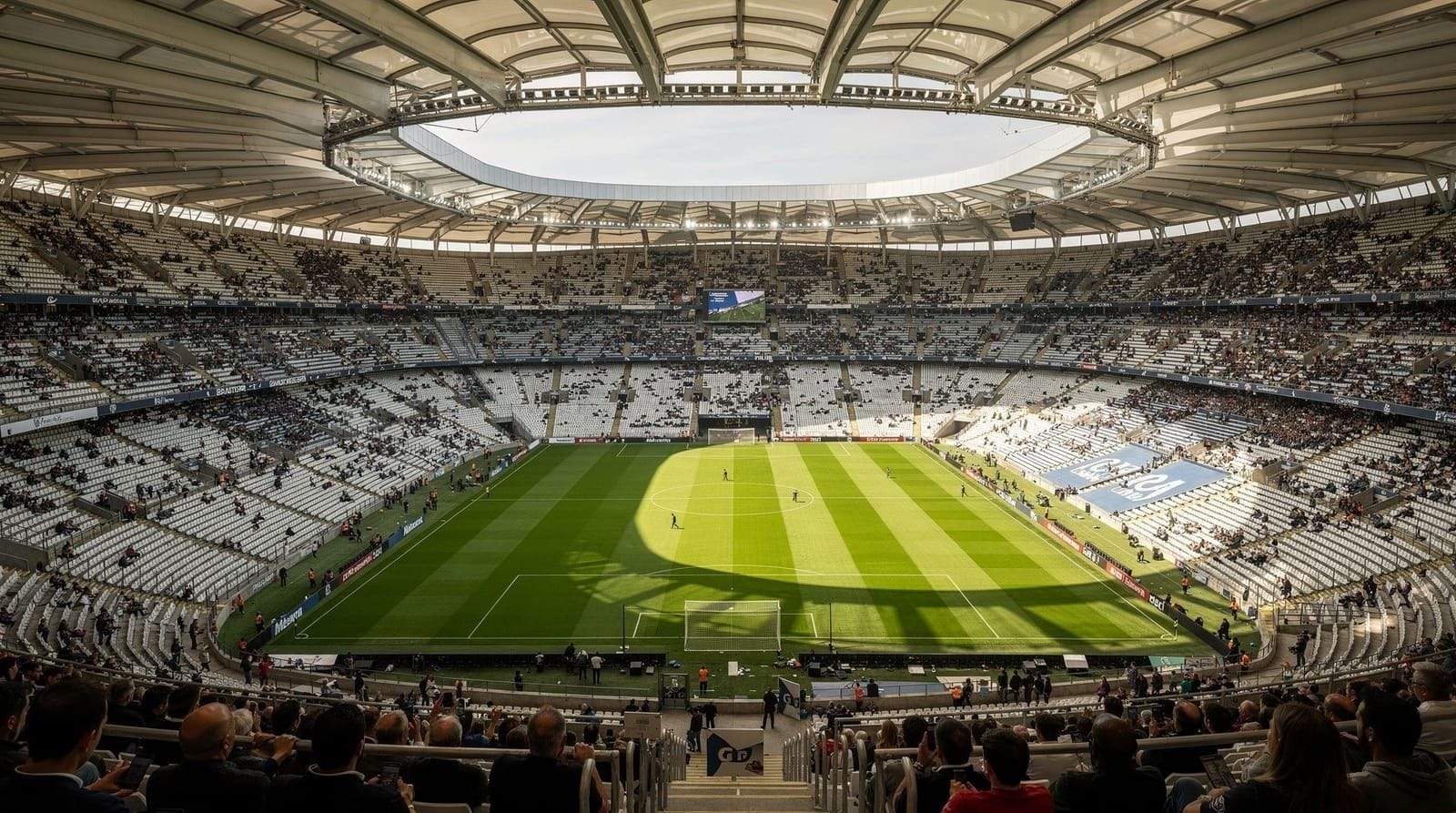
Bernabéu Stadium guided tourIf you would rather have the stadium to your own group, a private visit is also an option, and the Real Madrid tickets guide explains how ordinary league matches are sold, which is useful to know before you decide how much effort to put into the derby itself. On the other side of the city, the Metropolitano tour guide covers Atlético’s home for visitors who want to see both grounds.
Derby day atmosphere and logistics
Build-up: Derby days in Madrid carry a different energy throughout the city. Flags, conversations in bars, heightened tension. The weeks before a particularly high-stakes derby (title-deciding, cup tie, European match) are perceptible in the city.
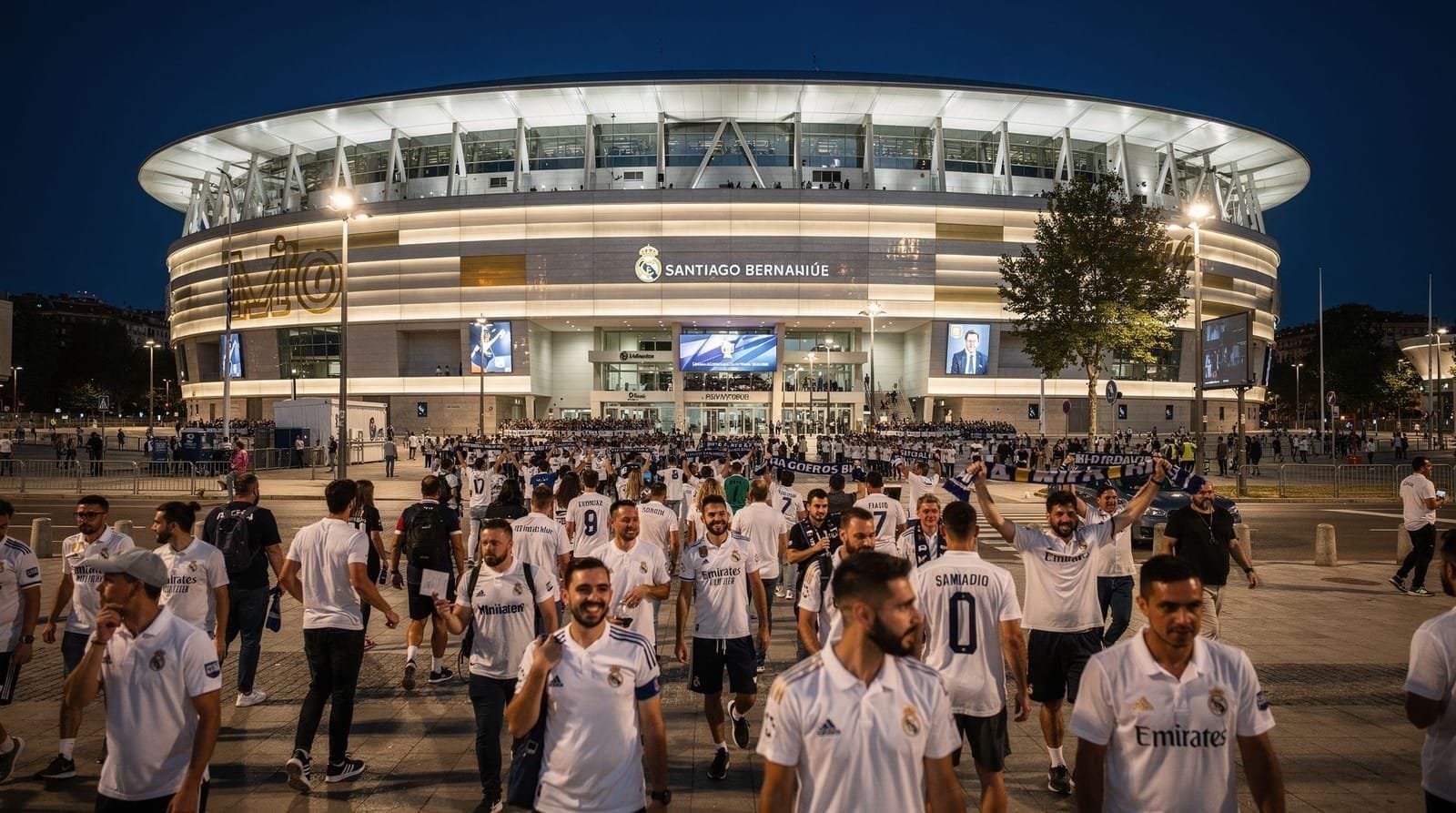
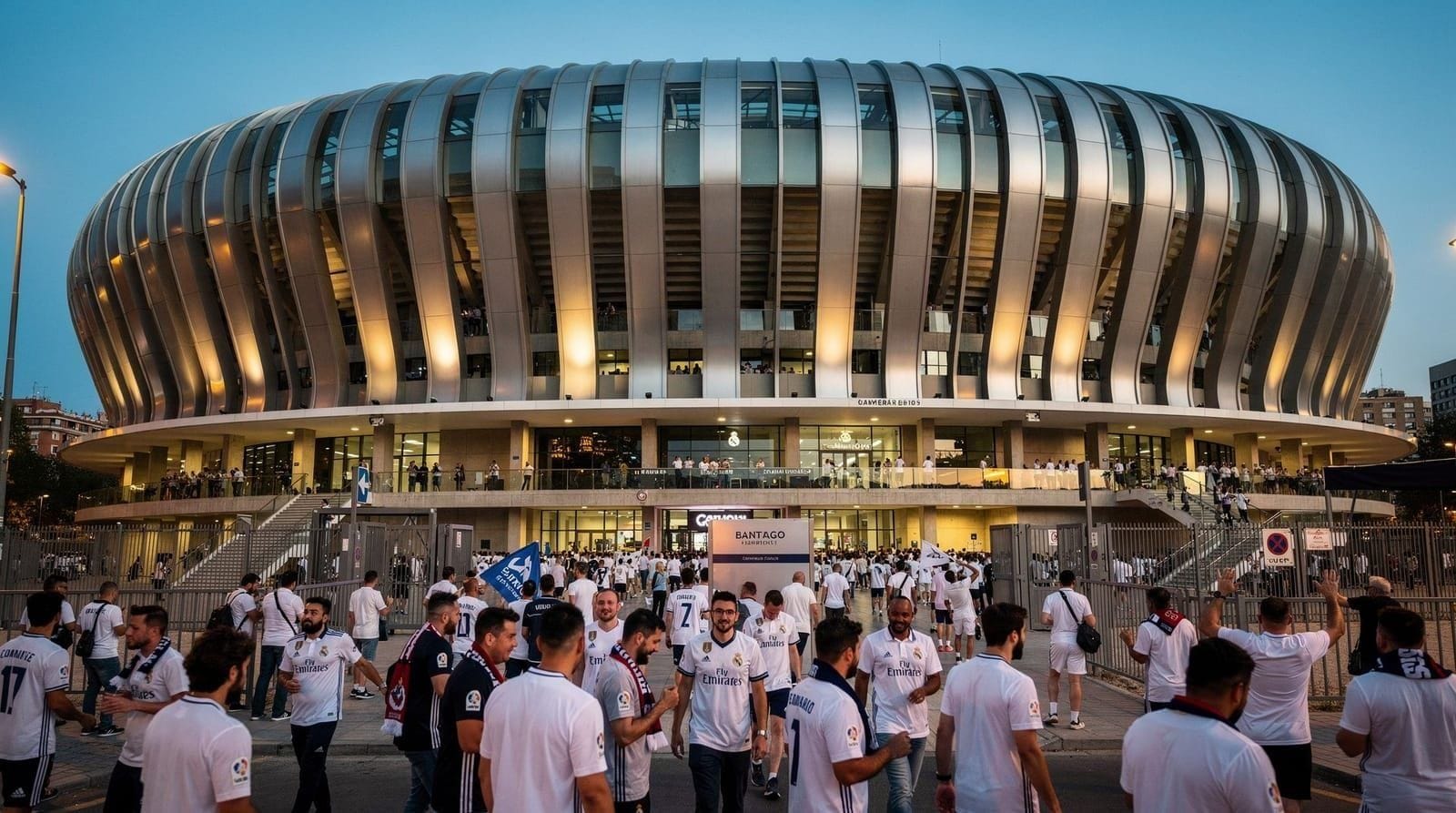
Security: Derby matches have enhanced security protocols. Both stadiums operate separate entry zones for home and away fans. The away allocation is approximately 3,000–5,000 seats (5–7% of capacity). Away fans are typically routed separately from home fans on public transport.
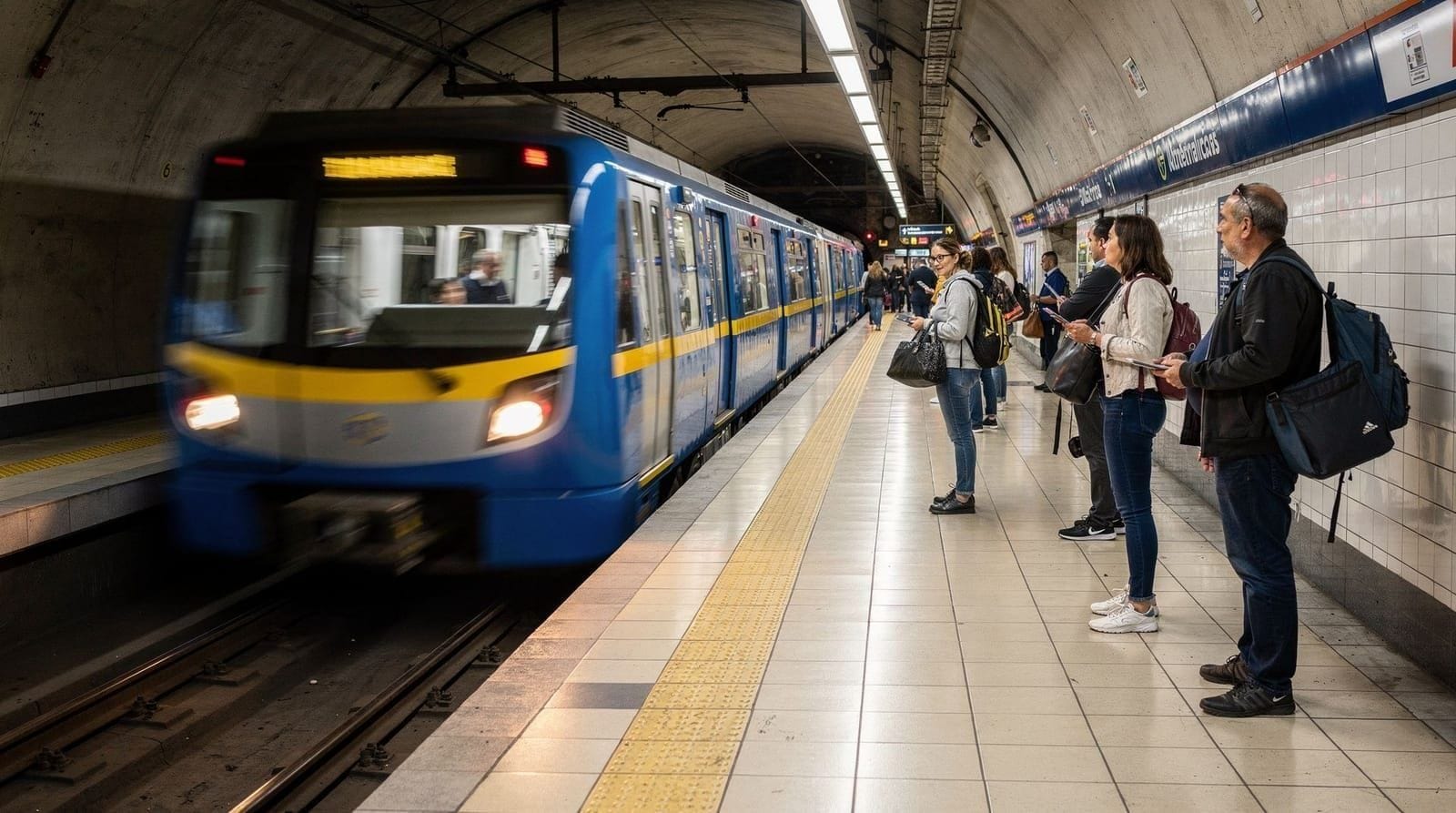
Metro logistics for the Bernabéu leg: Same as any Bernabéu match but more compressed. Allow 90 minutes before kick-off when arriving. Post-match, the Bernabéu Metro is extremely crowded — walk north to Nuevos Ministerios (Line 10, Line 6, Line 8 interchange) or south toward the city center to distribute the crowd.
Metro logistics for the Metropolitano leg: Line 7 to Estadio Metropolitano. Even more compressed than the Bernabéu given the smaller station. Arrive 90 minutes early.
Near the stadiums on derby day: The restaurant and bar areas near both stadiums fill with fans before the match. Prices for beer and food are inflated; service is slow. If you want a decent pre-match meal, eat away from the stadium perimeter (a 10-minute walk reduces prices by 30–40%).
Watching the derby without tickets
If you cannot secure a ticket, watching a Real Madrid–Atlético match in a Madrid bar is a genuinely good alternative. A few notes:
Find the right bar: Look for bars with multiple screens that are clearly football-oriented. The bars around Malasaña and La Latina tend to be mixed and lively. Bars specifically associated with Atlético fans cluster in the southern working-class areas; bars near Chamartín and in the Salamanca district lean more Real Madrid.
Match timing: Spanish La Liga derbies are typically scheduled at 16:15, 18:30, or 21:00 on a weekend. The bar atmosphere from approximately one hour before kick-off is worth the visit alone.
Cost: Beer €3–5, tapas available. No ticket cost. Authentic Madrid experience.
Make an evening of it: a match watched in a bar pairs naturally with food. The best tapas bars and the Madrid tapas guide will help you pick somewhere that is more than a screen and a beer, and the La Latina guide and Malasaña guide describe the two neighbourhoods best suited to a lively match-day crowd. If you would like context on what you are eating, a guided tapas and historic taverns walk on a non-match day is a good complement to the bar-crawl approach.
Arrive early if you want a seat with a clear view of a screen; the best tables go well before kick-off. Ordering a few small plates as the match builds is the usual way to hold a spot without feeling rushed.
The Copa del Rey and Champions League dimensions
The Madrid derby also occurs in cup competitions:
Copa del Rey: Two-leg ties (home and away) can be scheduled. Copa del Rey tickets are typically more accessible than La Liga — the clubs use their second-tier seating allocation more generously, and the matches are often midweek.
Champions League: Real Madrid and Atlético have met in Champions League semi-finals and finals. These matches are among the most significant in European football history. If a Champions League knockout tie between the two falls during your visit, this is the premier version of the rivalry.
Cultural context beyond football
The Madrid derby reflects something real about the city’s social geography. Real Madrid’s fanbase is more concentrated in the affluent north (Chamartín, Salamanca, Chamberí); Atlético’s traditional base is in the working-class south and east (Carabanchel, Vallecas, Ventas).
In the Lavapiés, Carabanchel, or Vallekas neighborhoods — see the Lavapiés guide — Atlético support is strong and personal. In the Salamanca district, Real Madrid is the default. For a visitor interested in Madrid beyond the tourist circuit, understanding which half of the city you are in gives context to the conversations around you.
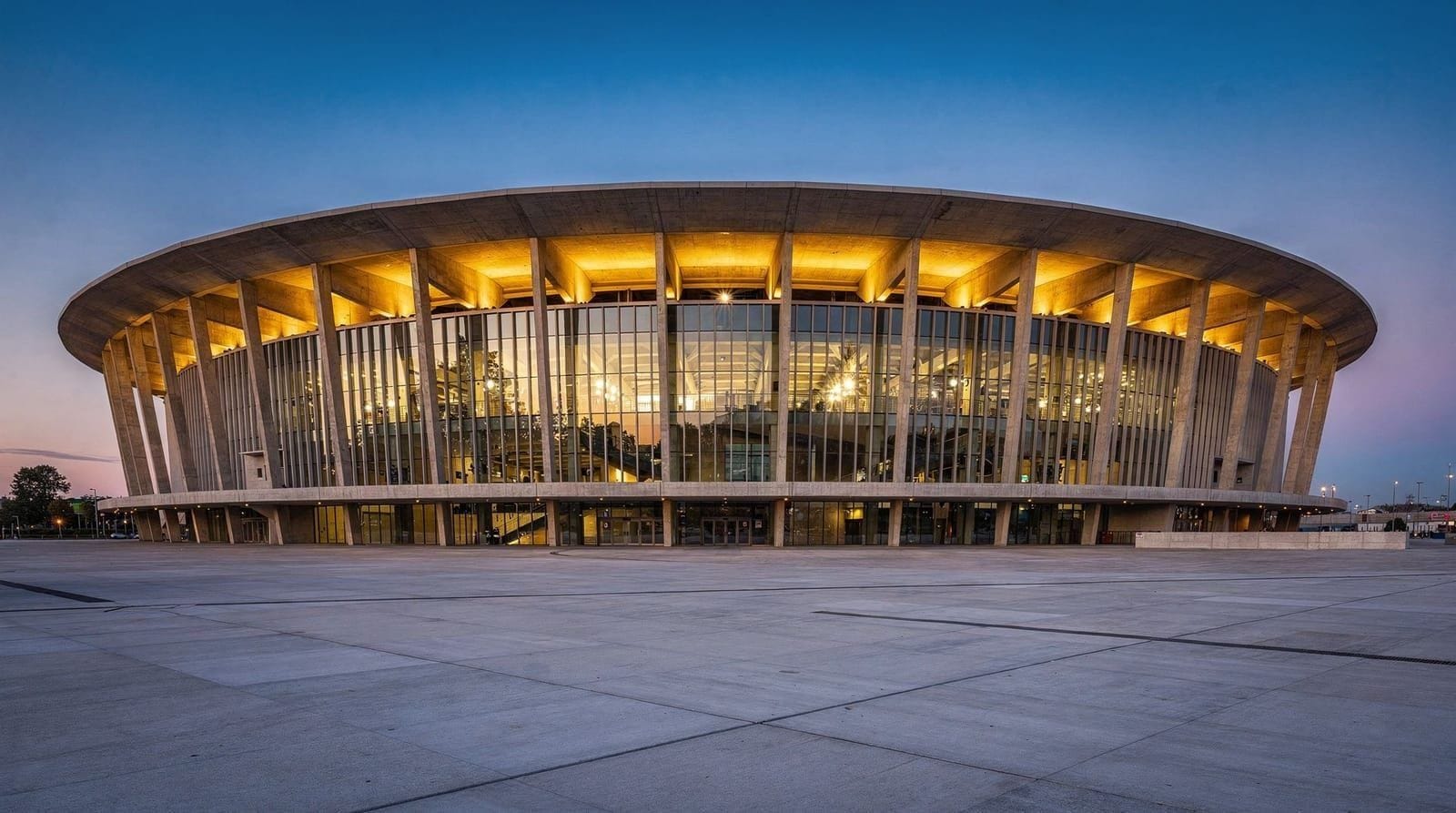
The Bernabéu is in the north: see the Chamartín and Castellana guide for the surrounding area. The Metropolitano is in the east: the San Blas–Canillejas corridor is less covered by standard guides.
Planning your trip around the derby
The La Liga fixture calendar is released in June before the season starts (for the season beginning in August). Dates for the Madrid derby (both legs) are announced at this point.
The calendar is subject to revision when matches are moved for broadcast reasons — the final date may shift by 1–2 weeks from the original. Check nearer the time.
For trip planning: if you have flexibility in your travel dates and attending the derby is a priority, identify the derby dates first, then build your Madrid visit around them. The Madrid football fan itinerary is structured around this approach.
How the derby fits into a broader Madrid visit
For non-football visitors: the derby is context, not obligation. Understanding that there are two major clubs in Madrid with contrasting identities enriches your experience of the city even without attending a match.
For football visitors: the derby is the priority experience, followed by a match at whichever stadium you can access more easily, followed by stadium tours. The sports fan guide covers how to structure a football-focused visit across several days.
For context on both stadiums, see the Bernabéu tour guide and the Metropolitano tour guide.
Getting around on match day is easier if you already understand the network, so read the Madrid Metro guide before you go, and the tourist travel pass guide if you expect to make many trips. If you are deciding where to stay, the where to stay in Madrid guide helps you choose a base with straightforward access to both stadiums.
Football is only part of the city. On the days around a match, the Prado Museum guide, the Royal Palace guide and the Retiro Park guide make easy, relaxed companions to the intensity of a derby, and the three-day itinerary shows how to fit a match into a short stay. Visitors with more time can add a day trip, such as Toledo or Segovia, on the morning after.
Frequently asked questions about the Madrid derby
How many times do Real Madrid and Atlético play per season?
At minimum twice — one home leg for each club in La Liga. Additional meetings can occur in the Copa del Rey (typically a two-leg tie) and the Champions League (if drawn together in the knockout stages).
Who has the better La Liga record in the derby?
Historically Real Madrid have the better overall record. However, since 2011 the two clubs are more evenly matched. Atlético won the La Liga title in 2013–14 and 2020–21; in both seasons they went unbeaten against Real Madrid in the league.
Is the Madrid derby dangerous for tourists?
The derby is a high-security match but not inherently dangerous for tourists. The main risk is crowd crush around the Metro stations. Stay in designated fan zones, follow security instructions, and avoid wearing a neutral kit that could be misread as either club’s colors.
What language do Atlético fans use to describe Real Madrid?
The specific vocabulary is colorful and untranslatable. Atlético fans’ relationship with Real Madrid involves 100 years of perceived institutional favoritism. The language reflects this — political, class-conscious, and deeply felt. You do not need to understand the details; the intensity of feeling is self-evident.
When is the next Madrid derby?
The 2026–27 La Liga calendar will be published in June 2026. Check realmadrid.com or atleticodemadrid.com for the confirmed dates. This page is reviewed and updated each season.
Is it worth flying to Madrid specifically for the derby?
Only if you already have a realistic ticket plan or a healthy secondary-market budget — building a whole trip around a match that may not have tickets available is risky. A safer approach is to plan a Madrid trip for other reasons, check the fixture calendar once dates are confirmed, and treat derby tickets as a bonus rather than the trip’s foundation. See the Madrid football fan itinerary for how to structure a football-focused trip with backup plans built in.
Can I buy Madrid derby tickets on official club apps as a foreign visitor?
Yes in principle — both clubs sell to the general public when member demand doesn’t exhaust the allocation — but derby matches specifically are the least likely fixture to have general-sale availability. Create an account on realmadrid.com or atleticodemadrid.com well before the season starts so you’re ready to buy the moment tickets go on general sale for any fixture, derby or otherwise.