Chamartín and Castellana
Chamartín and Paseo de la Castellana — the Santiago Bernabéu, modern Madrid skyscrapers, IFEMA, and the northern rail hub. Honest 2026 guide.
Madrid: Bernabéu Entry Ticket
Quick facts
- Metro
- Santiago Bernabéu (L10), Chamartín (L1/10), Nuevos Ministerios (L8/10)
- Santiago Bernabéu capacity
- ~81,000, fully renovated 2023
- Chamartín station
- High-speed trains north — Segovia, Valladolid, Bilbao
- Castellana length
- ~7 km from Cibeles to Plaza de Castilla
- Bernabéu stadium tour
- from €37, daily except 25 December and 1 January
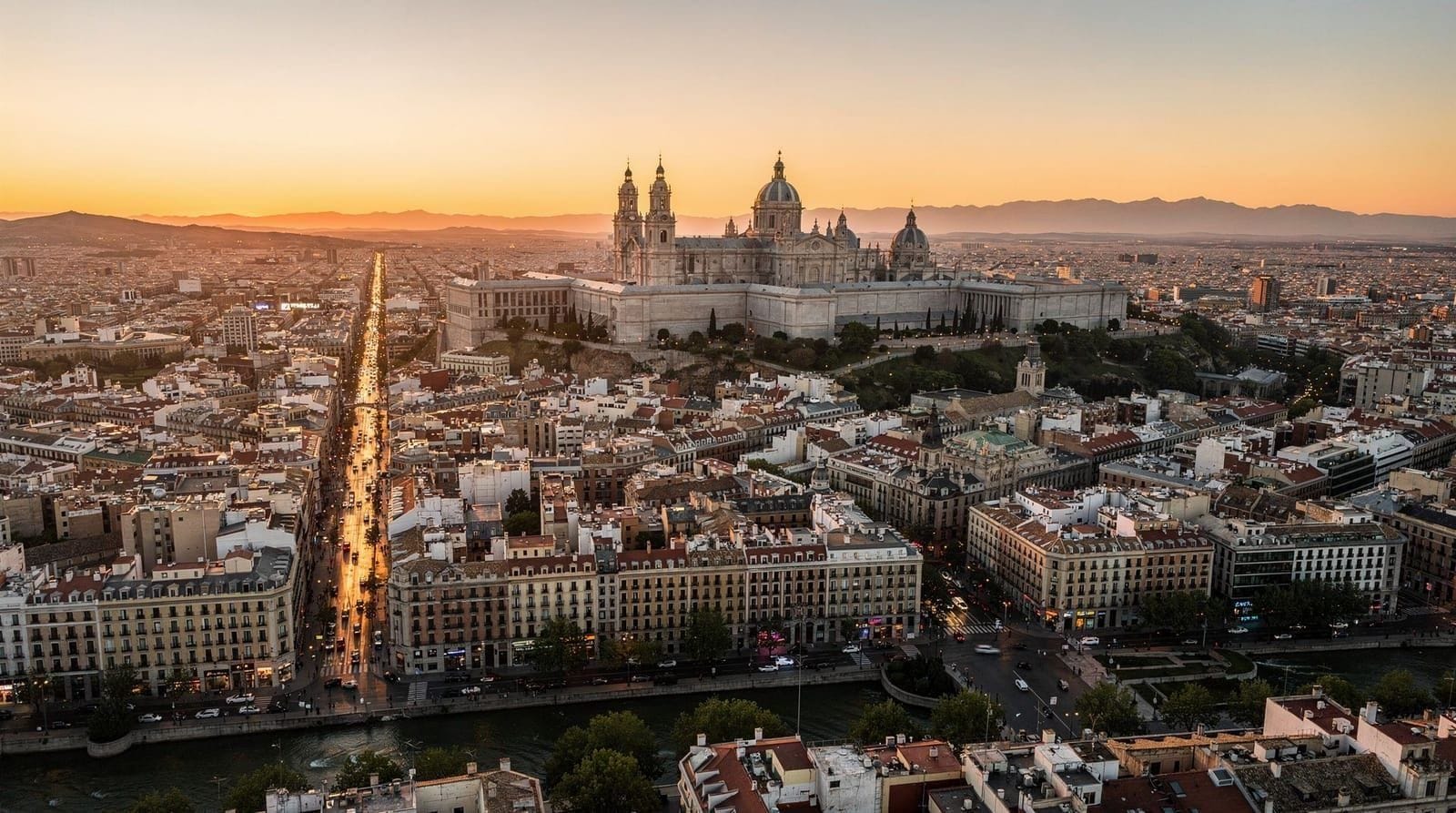
The Paseo de la Castellana runs 7 km from the Cibeles fountain in the south to the Plaza de Castilla in the north, bisecting Madrid along its major north-south axis. The southern half — around Cibeles, the Retiro, and Barrio de Salamanca — is 19th-century institutional and residential Madrid. The northern half, from around Nuevos Ministerios onward, is the 20th and 21st centuries: corporate towers, the financial district, the Santiago Bernabéu stadium, and the Four Towers that define Madrid’s modern skyline.
| Where | Northern Madrid, along Paseo de la Castellana |
| Getting there | Metro Santiago Bernabéu or Chamartín (L10) |
| Stadium tour | from €37, daily except 25 December and 1 January |
| Time needed | Half a day for the tour; pass-through for transport |
| Best for | Football fans, northbound train connections |
This is working Madrid rather than touring Madrid — it serves specific purposes (business travel, major sporting events, northern rail connections) rather than the cultural and gastronomic purposes that bring most visitors to the city. But for football fans, it is the most important part of the city, and for day-trippers to Segovia, Chamartín station is the departure point.
Santiago Bernabéu stadium
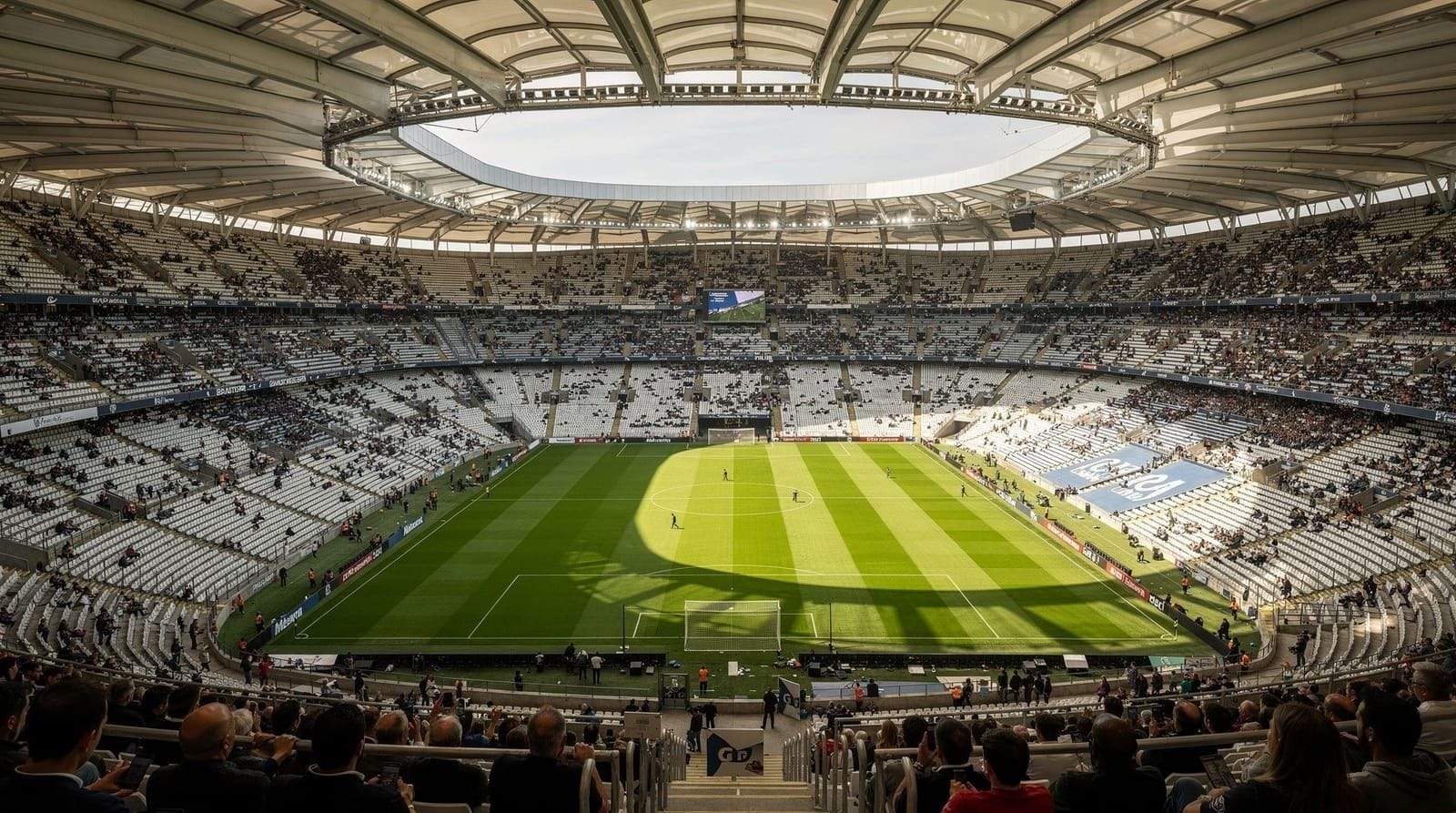
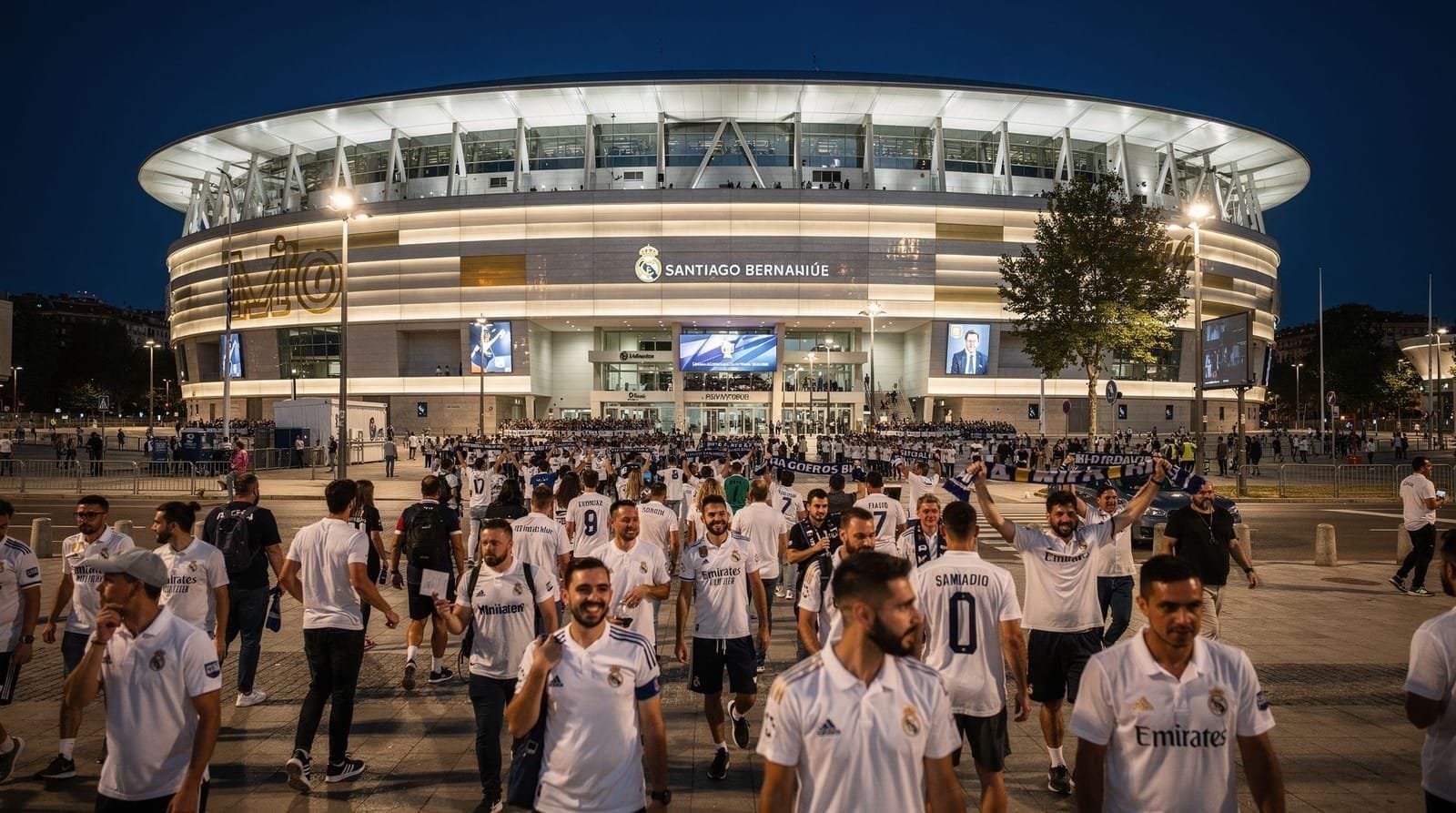
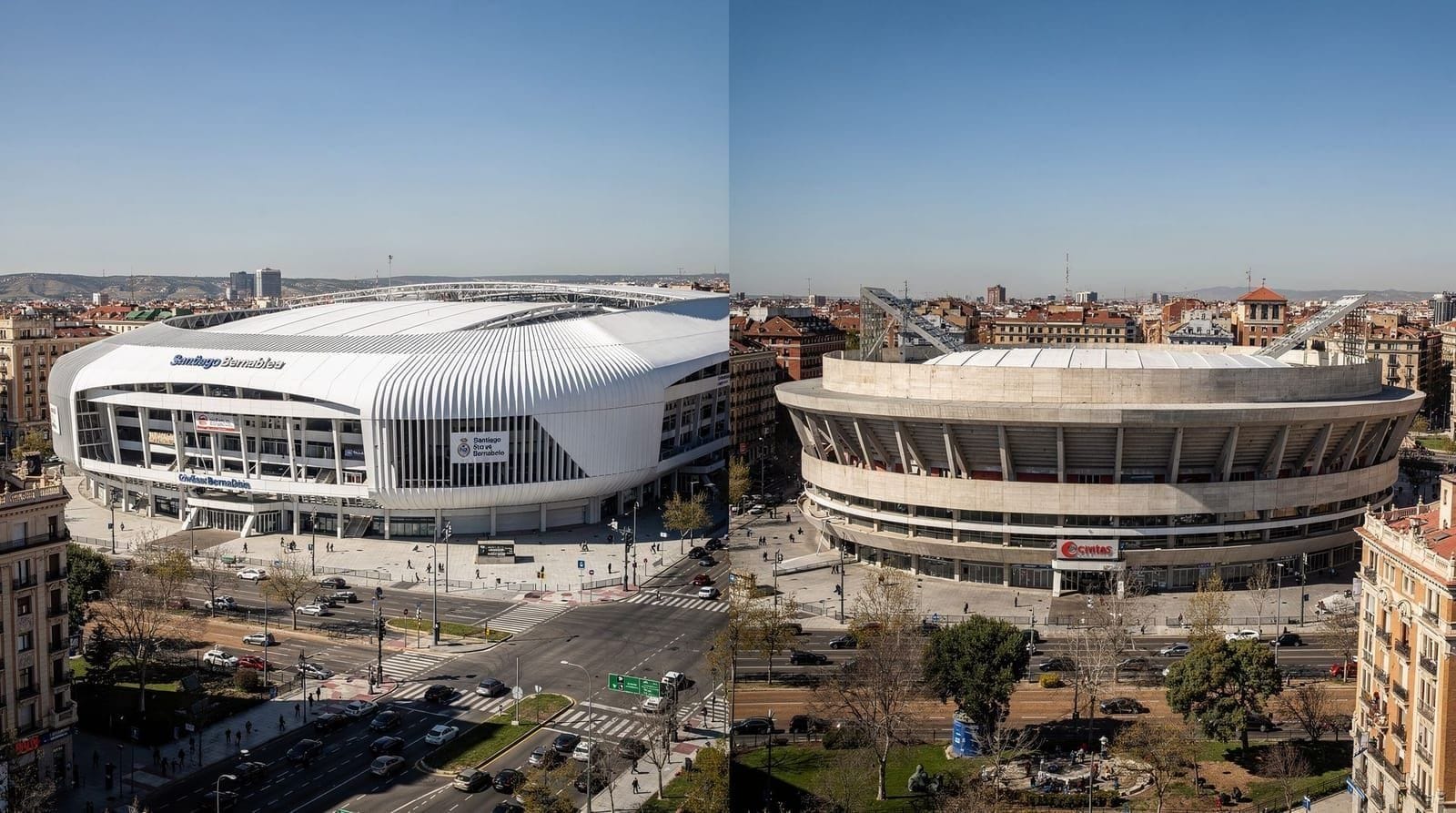
The home of Real Madrid is one of the most visited sports venues in Europe. The stadium has undergone a complete transformation: the 2023 renovation (€1 billion+) added a retractable roof that allows concerts and other events in wet weather, a retractable pitch system (the grass surface can be moved outside on rails to receive natural light), and a wraparound LED exterior facade that makes the building visible from kilometres away at night.
The stadium’s capacity is approximately 81,000 — the largest in Spain and among the largest club football grounds in Europe. For context, the 14 European Cups (Champions League trophies) that Real Madrid has won are displayed in the Trophy Room of the museum, which forms the centrepiece of the stadium tour. There is no other club in the history of football with anything approaching this record in the European competition.
Stadium tour: open every day except 25 December and 1 January; on match days the tour stops 5½ hours before kick-off. The tour route covers the dressing rooms (when not in use for training or matches), the tunnel, pitch-side access from the field level, the presidential box, and the full museum including the Trophy Room. Duration approximately 75 minutes; the route is self-guided with an audio device, but guided options with an expert football history guide are also available. Ticket: from €37 online (€40 at the box office); online booking is strongly recommended, especially in summer when queues at the door can be very long.
Matchday: attending a Real Madrid home match is a completely different experience from the stadium tour — the building filled to 81,000, the crowd noise on a Champions League night particularly, the specific atmosphere of one of the most successful clubs in football history. Matchday tickets range from approximately €40 (upper tier, less prestigious domestic fixtures) to €150+ (prime seats, major matches, Champions League knockouts). Champions League semi-finals and finals sell out within hours of release, often months in advance. The Real Madrid tickets guide covers the official ticketing process, secondary market options, and what to expect at the ground.
The stadium is on Metro Line 10 (Santiago Bernabéu station), making it about 20–25 minutes from Sol by metro — entirely practical for a day-trip objective.
Santiago Bernabéu official stadium tour and museumReal Madrid history in brief
Understanding what you are looking at in the Trophy Room requires some context. Real Madrid was founded in 1902 and became Spain’s most successful club across the 20th century, with particular dominance in the 1950s–1960s (five consecutive European Cups, 1956–1960, a feat still unmatched) and a second dominant era in the 2010s (three consecutive Champions League titles, 2016–2018). The club’s roster of players across both eras — Alfredo Di Stéfano, Ferenc Puskás, Zinedine Zidane, Cristiano Ronaldo — represents some of the most consequential figures in the history of the sport.
The club’s relationship with the Franco dictatorship has been discussed by historians for decades — the Spanish civil and political context of the 1940s–50s makes Real Madrid’s ascendancy in that period politically complicated in ways that the club’s official history tends to minimise. The sports fan guide covers the rivalry between Real Madrid and FC Barcelona in this context, as the match between the two clubs (El Clásico) has always carried political as well as sporting weight.
Atlético de Madrid and the Metropolitano
Madrid’s second club, Atlético de Madrid, plays at the Estadio Metropolitano (opened 2017, capacity 68,000) in the east of the city, east of the Manzanares river. The Metropolitano is architecturally more modern than the Bernabéu and has excellent facilities; it hosted the 2019 Champions League Final. Stadium tours available; accessible by Metro Line 7 (Estadio Metropolitano).
The Atlético-Real Madrid rivalry (the Derbi Madrileño) is one of the most intense in Spanish football, partly because it reflects a genuine social and class identification — Atlético historically associated with working-class Madrid, Real Madrid with the establishment.
Santiago Bernabéu guided tour with expert Real Madrid history commentaryChamartín station
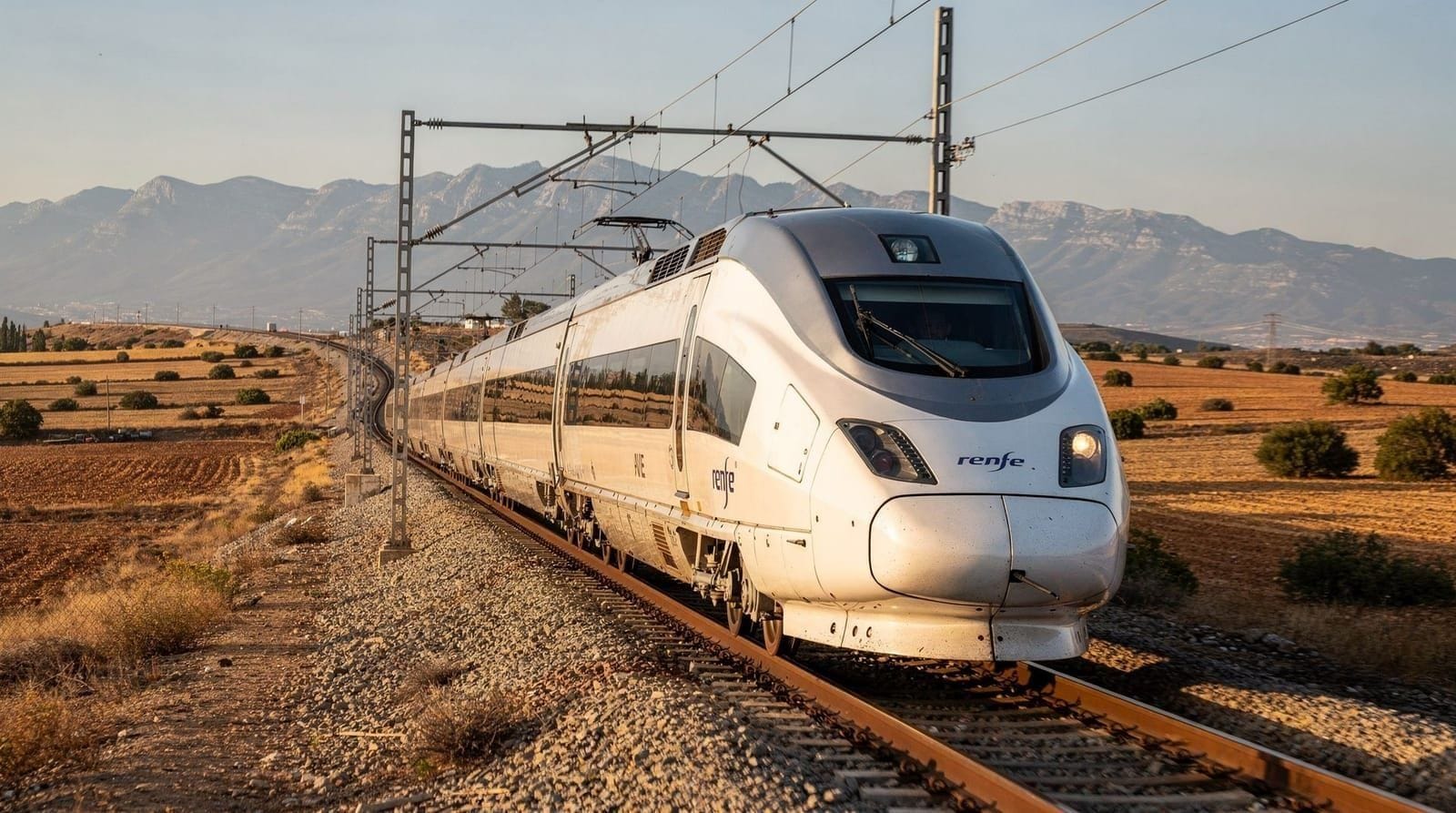
Estación de Madrid Chamartín-Clara Campoamor (the full post-2021 name) is Madrid’s northern rail hub. The station serves:
- Segovia: 28–30 minutes (AVE/Avant, ~€15 each way). The fastest route to the Roman aqueduct. Note: some Segovia services also call at Atocha — verify your specific train.
- Valladolid: ~55 minutes (AVE).
- Bilbao: ~5 hours (traditional rail, no AVE direct).
- San Sebastián/Donostia: ~5 hours.
- Barcelona: some services start from Chamartín (from 2h45 by AVE).
For day trips to Segovia specifically, Chamartín is the primary departure point. The Segovia day trip guide and the AVE guide have platform-level booking details.
The Madrid Nuevo Norte urban regeneration project (formerly known as Operación Chamartín) is the largest urban project in Europe currently in planning/early execution stages — a proposal to develop the underused rail land north of the station into a new urban district. The project has been debated for decades; some preparatory work is visible around the station in 2026, but the main development is years from completion.
The Castellana corridor: architecture and urban history
Walking or cycling the full length of the Paseo de la Castellana from Cibeles to Plaza de Castilla gives a compressed history of Madrid’s 20th-century urbanism.
Cibeles to Nuevos Ministerios: the institutional and residential Castellana. The Ministerio de Agricultura (1893), the Banco de España (1891), the Palacio de Linares (1877, now Casa de América), and the Real Academia de Bellas Artes de San Fernando (Alcalá 13 — a short walk east, free Wednesdays) are all in this southern stretch.
AZCA financial district (around Nuevos Ministerios): Madrid’s primary 1970s–1990s business district. The Torre Picasso (157 m, 1988) and the Torre Europa (121 m, 1985) are the signature buildings of this era. The district has been partially superseded by the Four Towers to the north but remains the address of major law firms, banks, and insurers.
Four Towers (at the northern end of the Castellana): the four skyscrapers built between 2004 and 2009 on the site of the old Ciudad Deportiva del Real Madrid (the club’s previous training ground). The towers — Torre Cepsa (248 m, formerly Torre Foster, designed by Norman Foster), Torre de Cristal (249 m), Torre PwC (224 m), and Torre Bankia (215 m) — define Madrid’s modern skyline and are visible from most high points in the city. Not tourist destinations in themselves but a useful anchor point when orienting in northern Madrid.
Santiago Bernabéu area (between AZCA and the Four Towers): several mid-range restaurants in the streets adjacent to the stadium serve the post-tour and pre-match visitor traffic. The Bernabéu museum shop also sells official Real Madrid merchandise — the broadest official stock outside the stadium merchandise outlets.
The Bernabéu renovation in detail
The 2023 renovation of the Santiago Bernabéu was the most complete reconstruction of a major football stadium in the history of the sport while keeping the venue in use. The key engineering challenges:
The retractable roof (electrically driven, covers the full pitch): allows concerts, boxing events, and other events in wet or extreme-heat conditions. The stadium now operates as a year-round entertainment venue rather than a seasonal football ground. Real Madrid has hosted major concerts (Taylor Swift, Beyoncé) in the post-renovation period.
The retractable pitch system: the grass surface can be moved outside on a system of hydraulic rails to receive natural light and be protected from heavy use during non-football events. This was one of the most technically complex elements of the renovation.
The exterior LED facade: the entire exterior shell is covered in an LED display system that can be used for advertising, artistic displays, and event promotion. Visible from several kilometres at night.
The lower tier: the renovation brought the first tier of seating significantly closer to the pitch by removing the running track that previously separated the stands from the field. This dramatically improves the atmosphere for football matches.
The museum expansion: the trophy room has been expanded and now displays all 14 Champions League/European Cup trophies in a more impressive setting, alongside memorabilia from key historical moments.
The renovation cost is estimated at over €1 billion, funded largely by a bond issue backed by future commercial revenues from the enhanced venue capacity.
Real Madrid foundation and history
Founded: 6 March 1902 as Madrid Football Club by students and young professionals who had learned the game from English residents.
First European Cup: 1956. The team built by Santiago Bernabéu (the club president after whom the stadium is named, who served from 1943 to 1978) dominated the new European Cup competition, winning the first five editions consecutively (1956–1960). The core of this team — Alfredo Di Stéfano (Argentine-Spanish), Ferenc Puskás (Hungarian), and a group of Spanish players — is widely considered the greatest club football team ever assembled.
The 1960 European Cup Final (at Hampden Park, Glasgow): Real Madrid 7–3 Eintracht Frankfurt, in front of 127,621 spectators. Still considered the greatest match in the tournament’s history. Di Stéfano scored three, Puskás scored four.
The Galácticos era (2000–2006): President Florentino Pérez’s policy of signing the world’s best-paid players — Figo, Zidane, Ronaldo (Brazilian), Beckham, Owen — simultaneously. Won one La Liga and one Champions League in this period; the commercial strategy transformed the club’s global marketing power regardless of the sporting results.
The Ancelotti/Mourinho/Zidane era (2010–2022): three consecutive Champions Leagues under Zidane (2016–2018) brought the total to 13 by 2018 and eventually 14 by 2022 under Ancelotti. Cristiano Ronaldo scored 450 goals in 438 appearances for the club during this period.
Eating and drinking in Chamartín and Castellana
The area is primarily a business and sports district, and the restaurant scene reflects this — more oriented toward corporate lunch than neighbourhood eating. The best options are in the streets between the AZCA towers and the Bernabéu, and the residential streets east of the Castellana in the Chamartín neighbourhood proper (distinct from the station of the same name).
For pre/post-Bernabéu eating: several informal sports bars and restaurants immediately around the Santiago Bernabéu metro and stadium entrance. Bocadillo bars, standard Spanish food, beer. Prices are higher near the stadium gates (the standard markup for captive tourist/stadium audiences); moving one block east or west reduces costs significantly.
Mesón Cinco Jotas (Calle Serrano or Calle Velázquez branches, accessible from the Bernabéu area): the highest-quality jamón ibérico de bellota chain in Spain — if you want to taste genuinely excellent Iberian ham in a controlled setting with a glass of fino sherry, this is consistently reliable. Mid-range prices for a tapa or a racion; expensive for a full meal.
For a proper lunch in the area: the streets of the Chamartín residential neighbourhood (east of the Castellana, around Calle Alberto Alcocer) have traditional neighbourhood restaurants serving the local professional community — less tourist-facing, better value. Ask locally for current recommendations.
Combining the Castellana with the rest of Madrid
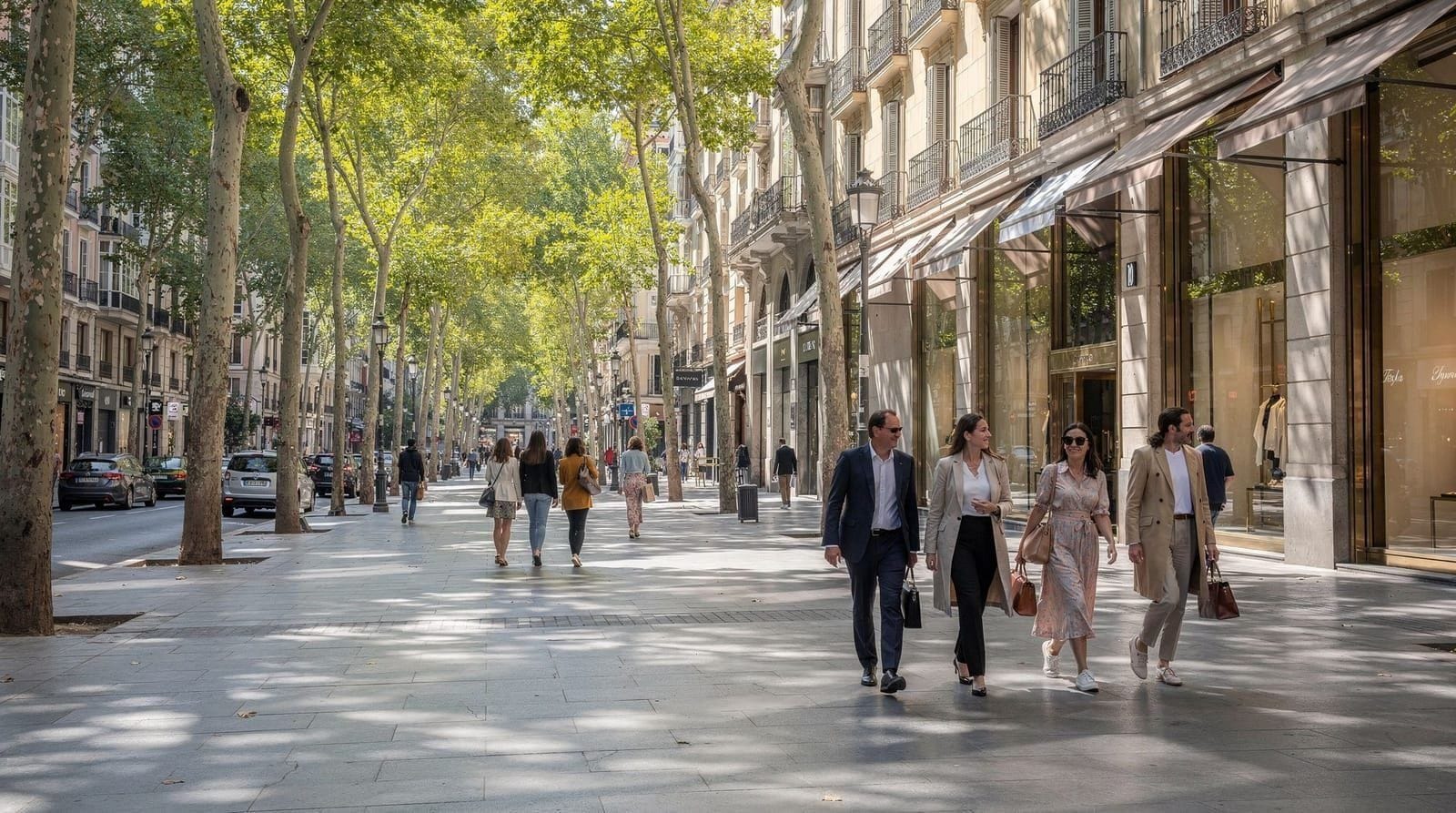
Because this is a working district rather than a sightseeing one, it pairs best with a neighbourhood that offers what it lacks. The southern end of the same avenue leads into Barrio de Salamanca, where the shopping streets and café terraces are far more suited to a relaxed afternoon; the Salamanca district guide explains how to link the two on one day. If the stadium is your morning, an afternoon in the Retiro and Jerónimos area makes a gentler counterweight.
Football fans building a longer stay can fold the Bernabéu into a wider plan using the Madrid football fan itinerary, and those who want the Atlético side of the story can read the Metropolitano tour guide. For the matchday-versus-derby question specifically, the Madrid derby guide puts the two clubs in context.
Getting to Chamartín and the Castellana
Metro: Santiago Bernabéu (Line 10) for the stadium. Chamartín (Lines 1 and 10) for the rail station. Nuevos Ministerios (Lines 8/10) — the junction for Metro Line 8 to the airport (change at Nuevos Ministerios) or direct by Line 10. The Four Towers and northern business district: Metro Cuzco (Lines 10) or Begoña/Chamartín.
From the city centre: Santiago Bernabéu is 20–25 minutes from Sol by metro.
For metro fares, passes and how the lines connect, the Madrid metro guide is the practical reference, and the airport to city guide covers the Nuevos Ministerios link for arrivals and departures.
Bernabéu tour versus matchday: which to choose
Visitors often assume the stadium tour is a substitute for attending a match, or vice versa — they’re genuinely different experiences and the right choice depends on priorities:
| Stadium tour | Attending a match | |
|---|---|---|
| Cost | From €37 | ~€40–€150+ (much more for finals) |
| Duration | ~75 minutes | Half a day including arrival and departure |
| Availability | Daily except 25 December and 1 January | Only on scheduled fixture dates |
| What you get | Trophy Room, pitch access, dressing rooms | 81,000-strong crowd atmosphere, live football |
| Booking lead time | Days | Weeks to months for popular fixtures |
If your dates don’t align with a home fixture, the tour is a genuinely worthwhile substitute rather than a consolation prize — the Trophy Room and pitch-level access are highlights regardless of whether a match is on. If you can align your trip with a fixture, prioritise a ticket: nothing replicates the live atmosphere. The Real Madrid tickets guide and Madrid football fan itinerary go deeper on planning around the fixture calendar.
Frequently asked questions about Chamartín and Castellana
Do I need to visit Chamartín if I am not interested in football?
Mainly only if you are taking a train north from Chamartín station (for Segovia, particularly). The area lacks tourist attractions beyond the Bernabéu — modern architecture along the Castellana is interesting for a cycling route but not specifically for walking tourism.
What is the best way to get a Real Madrid match ticket?
The official Real Madrid website (realmadrid.com) is the primary channel. Secondary market (GetYourGuide, StubHub, Viagogo) offers wider availability at a markup for sold-out matches. The Real Madrid tickets guide has the full process including which ticket categories to target for different matches.
Can I visit the Bernabéu on a match day?
The stadium tour is closed on match days (typically 24 hours before kick-off). Arrive on a non-match day for the tour. To experience the matchday atmosphere — which is genuinely very different from the tour — you need a match ticket.
Which train station do I use for Segovia?
Chamartín is the primary departure point for Segovia AVE/Avant services. Some services also stop at Atocha. Check your specific train on the Renfe website (renfe.com) before travelling. The Atocha vs Chamartín guide clarifies which routes use which station — this is a common source of confusion for day-trippers.
Is the Four Towers area worth visiting?
As architecture, the Four Towers are interesting as a statement of Madrid’s 21st-century ambition — particularly the Norman Foster Torre Cepsa. The area has minimal tourist infrastructure (no observation decks open to the public as of 2026; verify current access). Worth seeing in passing but not a dedicated destination.
Should football fans visit the Metropolitano instead of the Bernabéu?
Not instead — ideally both, if time allows. The Bernabéu carries more history and the larger trophy collection; the Metropolitano is architecturally more modern and hosted the 2019 Champions League Final. Fans with a single afternoon should prioritise whichever club they follow; neutral visitors get more from the Bernabéu given Real Madrid’s larger global profile.
Is a Bernabéu tour worth it if I’m not a football fan?
Marginally — the scale of the stadium, the renovation engineering (retractable roof and pitch), and the museum’s broader sporting-history context have some appeal even without club loyalty, but the Trophy Room and memorabilia will mean much less. Non-fans with limited time are usually better served by a Madrid city sight instead.
Top experiences
Bookable activities with verified prices and instant confirmation on GetYourGuide.