Salamanca from Madrid: university city day-trip guide
Salamanca: Ávila Salamanca Day Trip
How do I get from Madrid to Salamanca and how long does it take?
MD/Alvia trains from Madrid Chamartín to Salamanca take 1h40–2h45. Buses from Madrid Estación Sur: journey times on the Alsa website. The distance (212 km) means Salamanca is a long but rewarding day trip — early morning departure is essential. Full-day visit: arrive by 10:00, depart by 19:00. Alternatively, consider overnight to avoid the return rush and see the golden sandstone illuminated at night.
Salamanca: Spain’s golden university city
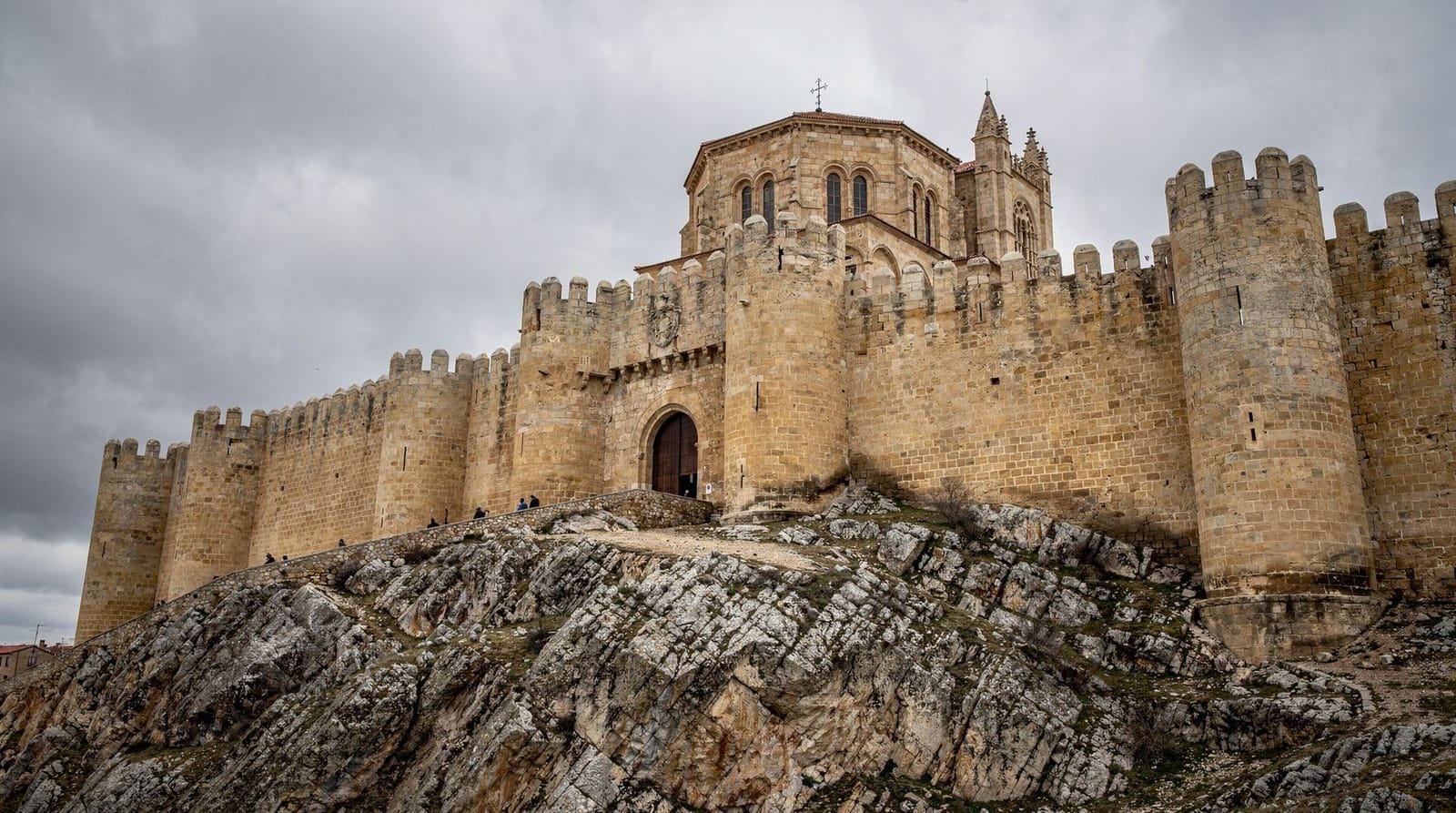
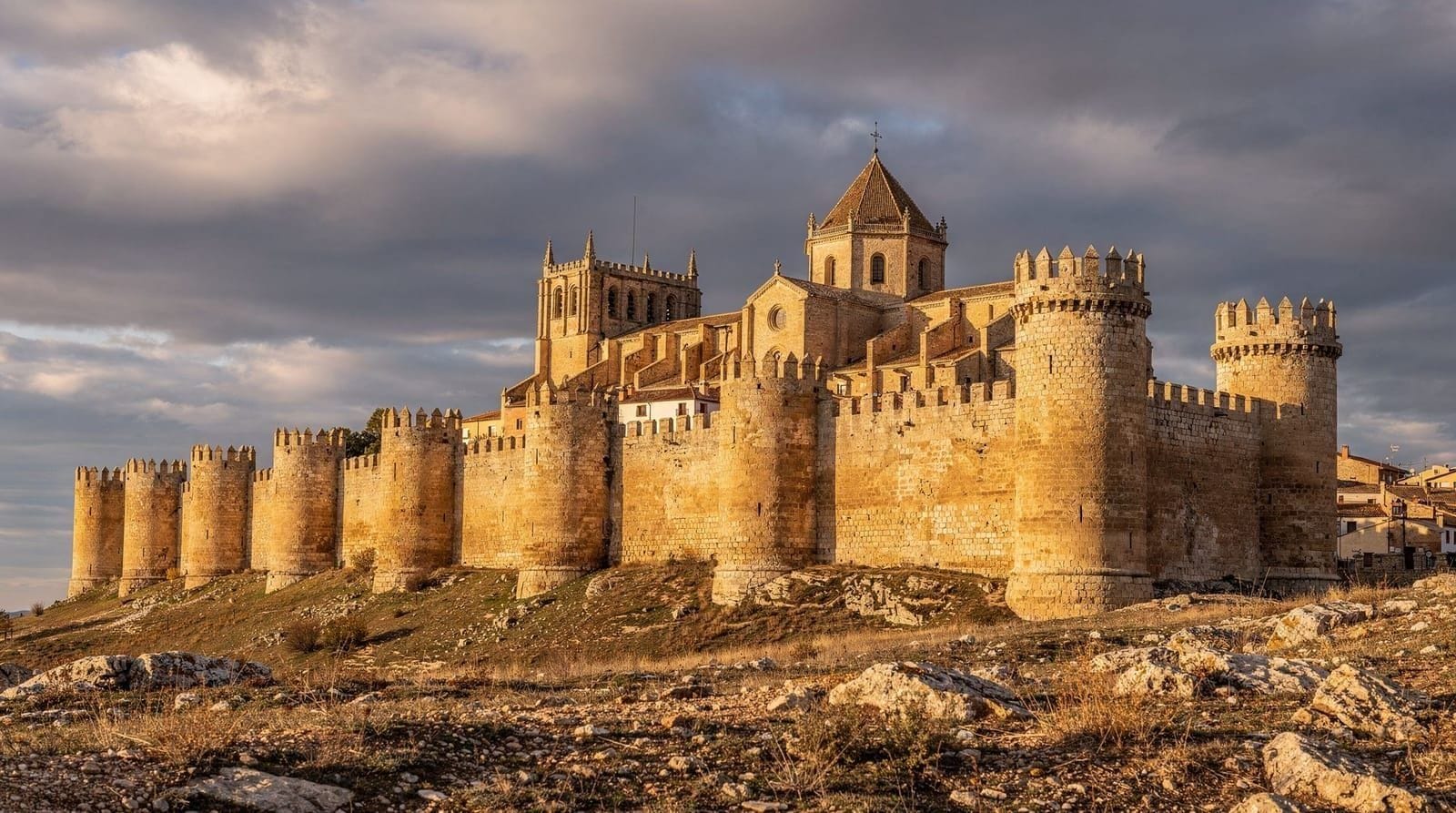
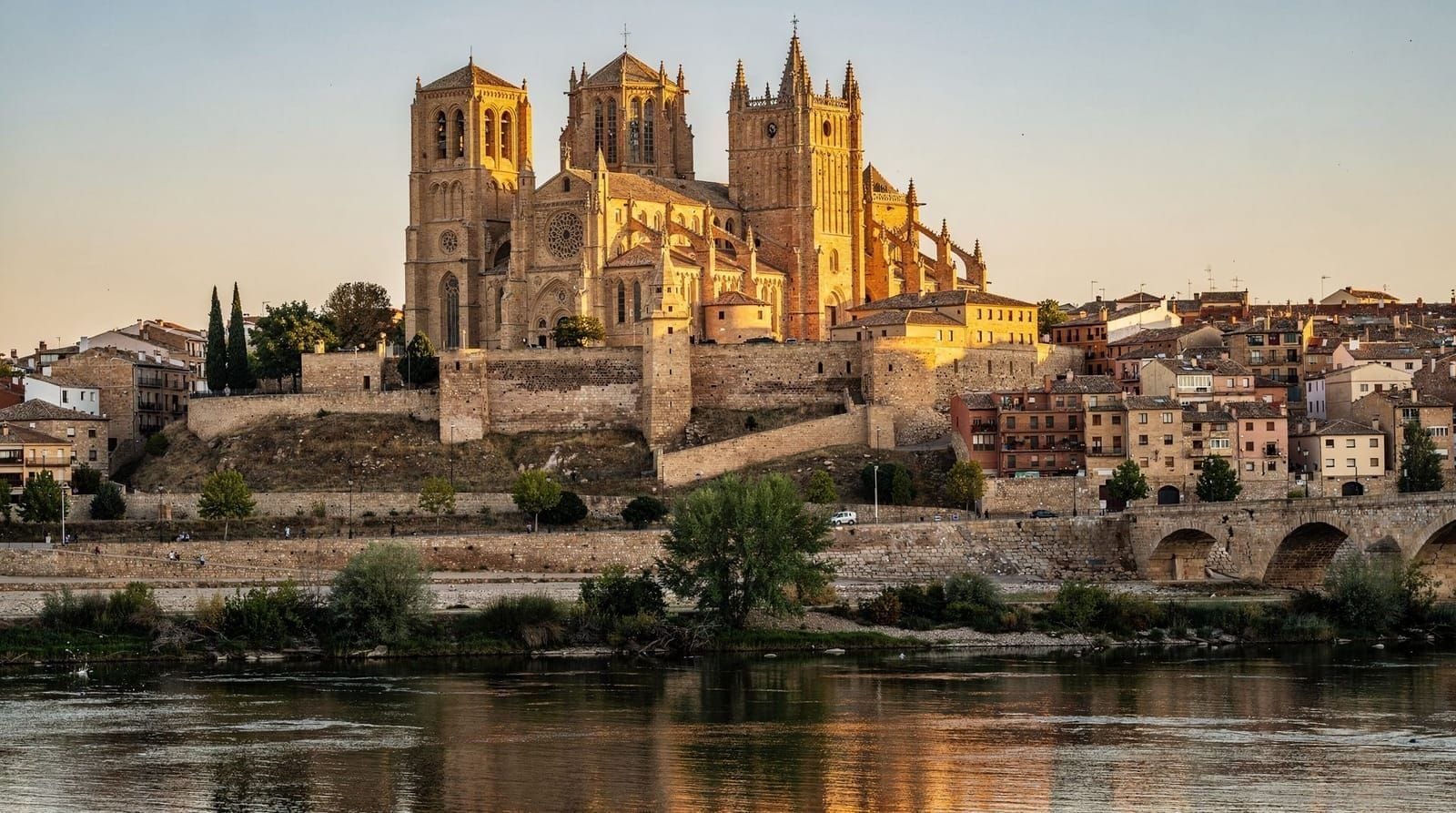
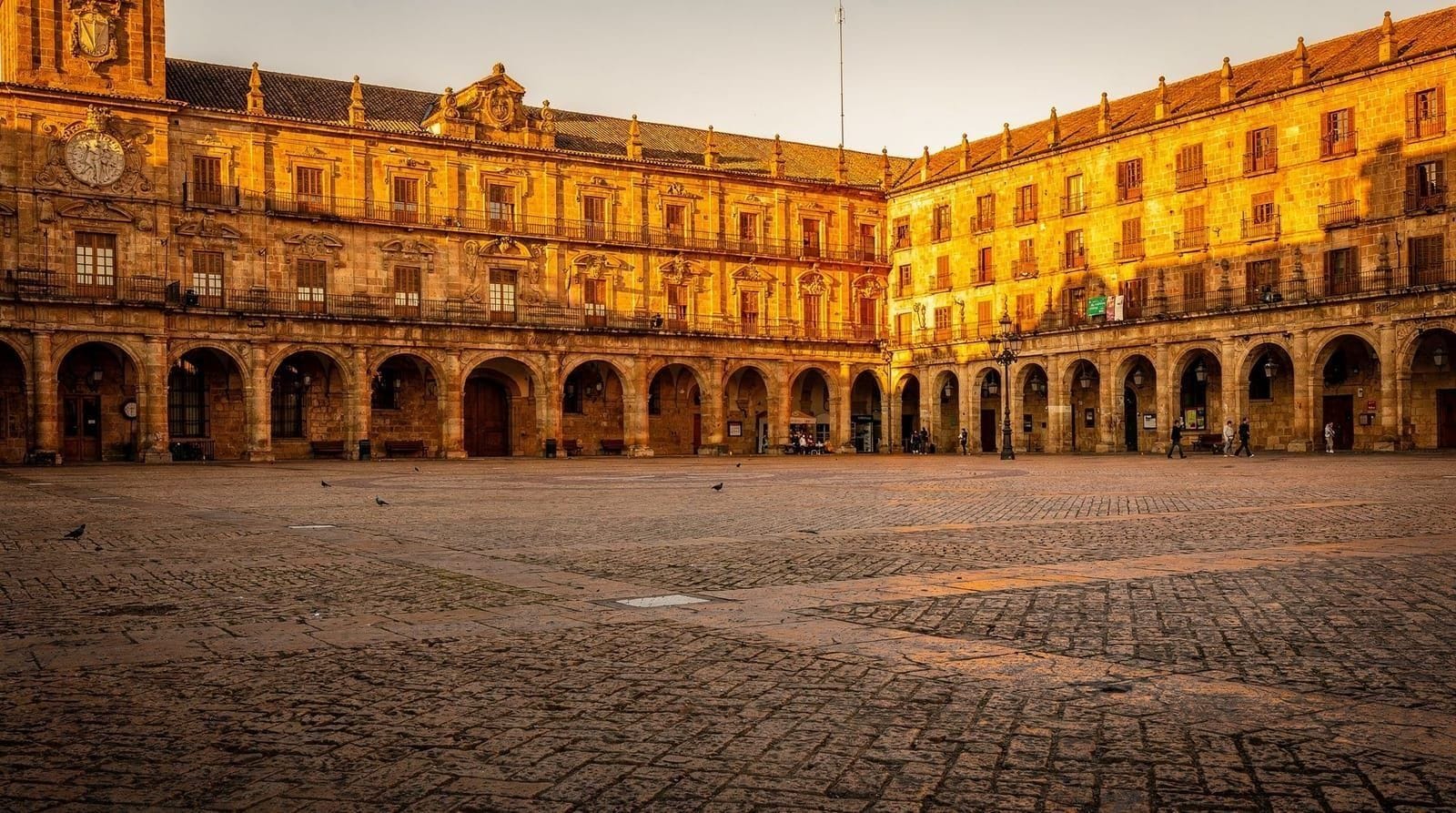
No other Spanish city glows like Salamanca at dusk. The sandstone — Villamayor stone, quarried from a local outcrop — turns from gold to amber to deep orange as the sun descends. The Plaza Mayor catches this light on all four sides simultaneously. The University façade, the twin cathedrals, the Baroque churches: all the same warm gold.
Salamanca’s history is intellectual. The university, founded in 1218, is one of the four oldest in Europe (alongside Bologna, Oxford, and Paris). For three centuries, it was the pre-eminent institution of the Spanish empire — theologians who justified the conquista, jurists who drafted colonial law, linguists who standardised the Spanish language, all studied here. Francisco de Vitoria invented the concept of international law in Salamanca’s lecture halls.
The city is 212 km from Madrid — a train journey of 1h40–2h45 that demands a full-day commitment. Those who make it consistently count Salamanca among the best days of their trip.
| Where | 212 km northwest of Madrid, in Castilla y León |
| Cost | Train fare varies, plus ~€20–25 for main sight admissions |
| Time needed | Full day (9–10 hours in Salamanca); overnight is better if time allows |
| Getting there | MD/Alvia train from Chamartín, 1h40–2h45, or ALSA bus from Estación Sur (journey times on the Alsa website) |
| Best time | Spring and autumn for mild walking weather; year-round for the sights themselves |
Getting to Salamanca from Madrid
By train from Chamartín (recommended)
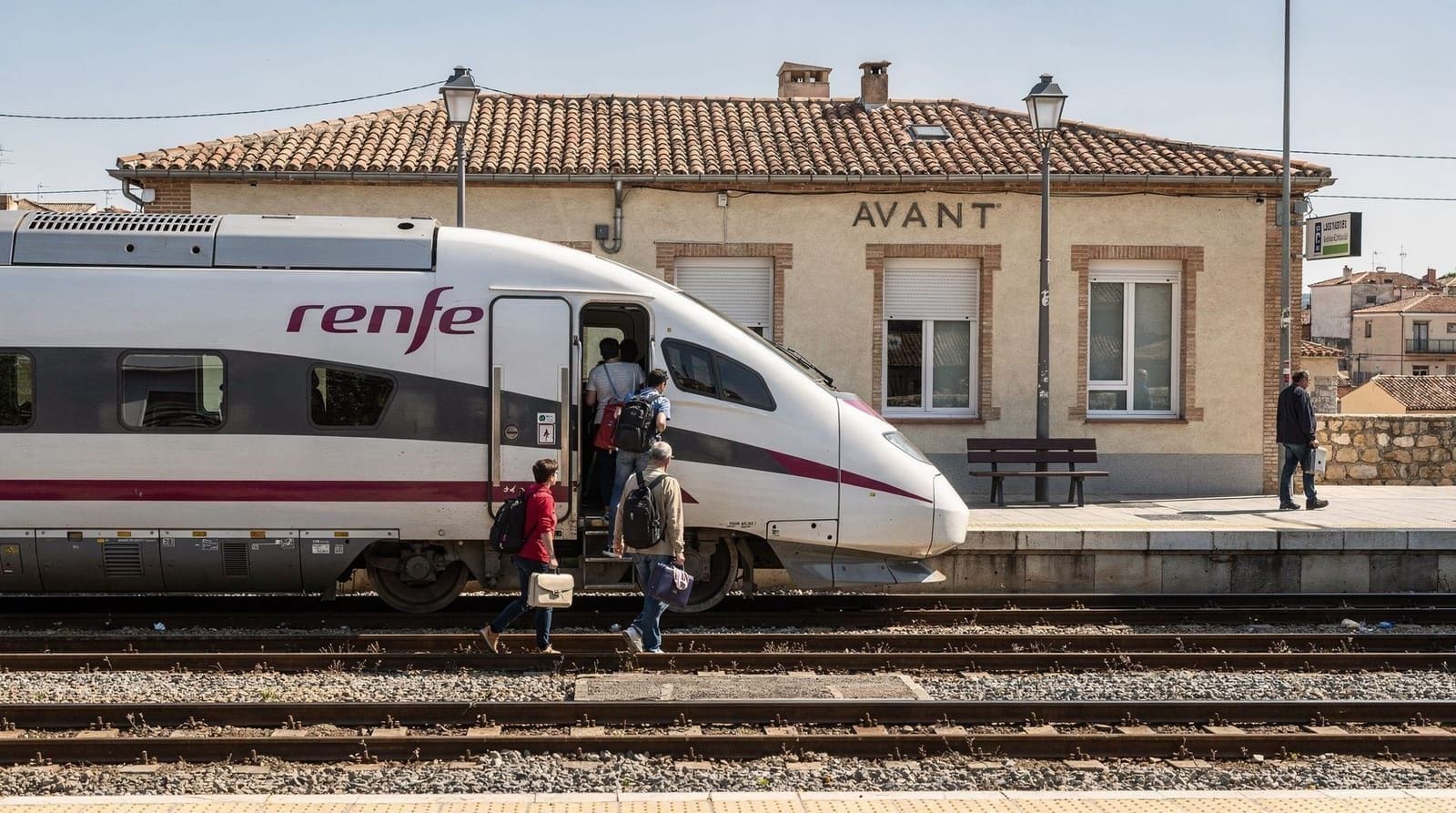
MD and Alvia trains depart from Madrid Chamartín to Salamanca in 1h40–2h45.
- Departure station: Madrid Chamartín-Clara Campoamor (Metro: Chamartín, Lines 1 and 10)
- Arrival station: Salamanca — 15-minute walk from the Plaza Mayor, or short taxi
- Frequency: Several trains daily; check Renfe.com (schedules vary by day)
- Fare: varies by date (see the Renfe website); book in advance for better prices
- Important: Depart Madrid by 07:00–08:30 to arrive by 10:00–11:00 and maximise your time
By bus from Estación Sur
ALSA buses from Madrid Estación Sur to Salamanca: journey times on the Alsa website. Slightly cheaper than the train but slower. The bus station in Salamanca is further from the centre than the train station. For the broader logic of choosing train versus bus versus car for Spanish day trips, the day trips by train guide and day trips without a car guide cover the trade-offs across all of Madrid’s popular excursions.
By guided tour
Madrid–Ávila–Salamanca day trip — the most popular combination, visiting both walled cities in one long day with a guide.
Ávila and Salamanca day trip with cathedral tickets — guided tour with entry to Salamanca’s cathedrals included.
Salamanca private day trip from Madrid — private guide for solo or small-group visits.
Ávila and Salamanca private tour — fully private combined visit.
What to see in Salamanca
Plaza Mayor
Start here and return here. Breakfast, mid-morning coffee, late afternoon hornazo and wine — Salamanca’s rhythm is built around this square. The 88-bay Baroque arcade is best seen at different times of day: the morning light hits the eastern façade; the afternoon sun fills the western side; at night it’s illuminated. Two hours total across morning and evening easily absorbed.
The medallion portraits in the arches are worth noting: Spanish monarchs and historical figures alternate. Francisco Franco’s portrait was installed during the dictatorship and later replaced with King Juan Carlos I after the transition to democracy — one of the small historical markers you learn to notice.
University of Salamanca (façade and interior)
The Plateresque façade (1529) is the symbol of Salamanca — a wall of carved stone with no surface left undecorated. The Salamanca clasp motif (a knot pattern) repeats throughout. Find the frog on the skull before looking it up online.
Inside: the Lecture Hall of Fray Luis de León (the Dominican friar and poet imprisoned by the Inquisition; he returned to his lectures after 5 years in prison with the words “As I was saying yesterday…”), the original library with 16th-century globes, and the student chapel. Admission: ~€10 (includes Rectorate and Patio de las Escuelas).
The two cathedrals
Adjacent buildings sharing a wall: enter the New Cathedral (Catedral Nueva, 1513 onwards) first — the main nave is impressively tall, with good choir stalls. Walk through the connecting door to the Old Cathedral (Catedral Vieja, 1230): the Byzantine lantern tower (Torre del Gallo), the extraordinary altarpiece with 53 painted panels by Nicolás Florentino, and the 12th-century Roman fresco cycle in the Capilla de San Martín. Combined ticket: ~€10.
Clerecía towers (Las Torres Catedralicias)
Climb the tower circuit shared between the Clerecía church and the Cathedral for the best panoramic view. The route crosses between the two buildings at roof level — genuinely unusual and architecturally interesting. Ticket: ~€3.75 for the tower climb.
Casa de las Conchas
A 15th-century mansion covered in 300 scallop shells carved in relief — the symbol of the pilgrimage to Santiago de Compostela. Now the public library. Free to enter the courtyard. The Gothic windows, the shell texture, and the courtyard fountain create a composed image used on most Salamanca tourist material. 15 minutes.
Convento de San Esteban
Dominican monastery with one of the finest Plateresque façades in Spain — arguably better than the university’s for its narrative complexity (the sculptural scenes are more developed, the layering more ambitious). Open for visits. Walk 10 minutes from the Plaza Mayor.
A practical Salamanca day itinerary
Departure timing is critical for Salamanca. Catching the 07:00–08:00 train from Chamartín gives you 9–10 hours in Salamanca before the last comfortable return train.
Suggested schedule:
08:00 — Depart Madrid Chamartín. 10:45 — Arrive Salamanca. Walk or taxi to Plaza Mayor (15 min). 11:00 — Coffee and breakfast in the Plaza Mayor (Café Novelty or similar). 11:45 — Find the frog on the University façade (allow 15 min). 12:00 — University interior tour (1 hour). 13:00 — Old Cathedral (45 min) + New Cathedral (30 min). 14:15 — Lunch. 16:00 — Clerecía tower climb (Las Torres Catedralicias, 1 hour). 17:30 — Casa de las Conchas (15 min). 17:45 — Convento de San Esteban Plateresque façade (15 min walk, 20 min visit). 18:30 — Walk back to Plaza Mayor for a final drink. 19:00 — Walk to station, return train to Madrid. Arrive Madrid ~21:45.
The frog hunt: the tradition and its meaning
The carved frog on the University façade is the most-discussed centimetre in Salamanca. The tradition: students who spot it before sitting an exam will pass. The joke: it’s been visible in photographs and guidebooks since the 19th century, so “finding it” requires only prior knowledge, not perception.
But the hunt is an invitation to look properly at the façade — and the façade rewards that attention. The Plateresque decoration (from platero, silversmith — the style resembles chased metalwork done at architectural scale) covers every horizontal band with a different set of carved motifs: leaves, skulls, coils, faces, and narrative scenes interweaved. The frog (small, upper left section, on a skull) is one of perhaps a thousand individual motifs.
What the frog means symbolically is disputed. Some historians interpret the skull as representing death and the frog as a Toad of Vice — a warning to students about moral corruption. Others see it as pure playfulness, the same spirit that medieval stonemasons used to insert grotesque faces in cathedral choir stalls visible only from the cleaner’s ladder.
The University was founded in 1218, received a royal charter in 1254, and reached peak influence in the 16th century when it had perhaps 6,000–7,000 students — a significant proportion of Spain’s educated class. Francisco de Vitoria taught international law here; Luis de León taught theology here (and was imprisoned by the Inquisition here); Hernán Cortés studied here before the conquest of Mexico.
The two cathedrals: old and new, side by side
The architectural juxtaposition of the Old and New Cathedrals — two completely different periods of Spanish Christianity sharing a wall — is Salamanca’s most structurally interesting sight.
Old Cathedral (Catedral Vieja, 1163–1230): Romaneque construction with a distinctive Byzantine lantern tower (the Torre del Gallo — Rooster Tower — from the weathervane shape) that influences the city’s skyline. The interior is lower, darker, and more intimate than the New Cathedral. The altarpiece painted by Nicolás Florentino in 1445 (53 panels depicting the life of Christ and the Virgin, with the Last Judgment above) is the greatest single artwork in the city. The adjacent Capilla de San Martín has 12th-century fresco cycles in the Byzantine manner.
New Cathedral (Catedral Nueva, 1513–1733): Begun in the last years of Gothic cathedral construction in Spain, completed with heavy Baroque additions in the 18th century. The scale is much larger — the central nave is 37 metres high — and the decorative program is overwhelming rather than intimate. The Late Gothic choir is excellent; the Baroque organ cases flanking the entrance are ostentatious even by Spanish Baroque standards.
Curiosity: During restoration work in 1992, a stonemason added a carving of an astronaut (in a spacesuit) and a dragon eating an ice cream to a doorway of the New Cathedral — modern additions in the tradition of medieval stonemasons. They’re now official tourist attractions in their own right.
Best time of year for a Salamanca day trip
Salamanca’s stone-and-plaza sights work in any season, but comfort and light vary considerably:
| Season | Weather | Notes |
|---|---|---|
| Spring (Mar–May) | Mild, occasional rain | Best balance of comfortable walking and good light on the sandstone |
| Summer (Jun–Aug) | Hot, 30°C+ by midday | Golden light is spectacular at dusk; plan sightseeing for morning and evening |
| Autumn (Sep–Nov) | Mild, clear | Excellent walking weather, fewer crowds than spring |
| Winter (Dec–Feb) | Cold, occasionally near freezing | Quietest crowds, but shorter daylight limits the golden-hour effect on the façades |
For a wider view of how the seasons shape Madrid-area travel generally, see the AVE train day trips guide, which covers timing considerations across the region’s rail-accessible cities.
Where to eat in Salamanca
Hornazo: Buy from any bakery, particularly around Calle Van Dyck or the market. The classic version has jamón serrano, lomo, chorizo, and hard-boiled egg. Best eaten at room temperature.
Restaurante Víctor Gutiérrez (San Pablo 68): The serious restaurant — Michelin-listed, focus on Castilian products with creative preparation. Tasting menu ~€65–80. Reserve well ahead for dinner.
El Pecado (Plaza del Poeta Iglesias): Contemporary tapas with good local wine list; popular with university faculty and students. Budget €20–30 for a full meal. More casual than Víctor Gutiérrez but excellent quality-price.
Café Novelty (Plaza Mayor): The oldest café in Salamanca (1905), still functioning. Unapologetically tourist-adjacent but the atmosphere is genuine. Coffee and croissant for a Plaza Mayor morning without being ripped off.
Practical logistics: luggage, mobility and connectivity
If you’re travelling on to another city rather than back to Madrid, most Salamanca hotels near the Plaza Mayor will store luggage for day-trippers even without a booking, for a small fee — useful if you arrive early and want to walk unencumbered. The old town’s streets are largely pedestrianised and flat around the Plaza Mayor, though some stretches toward the cathedrals have gentle slopes and uneven cobblestones, worth noting for visitors with mobility considerations or pushchairs.
Mobile coverage is reliable throughout the centre on Spanish networks; EU visitors are covered by roam-like-at-home rules, and non-EU visitors should check their connectivity options guide before travelling, since Salamanca’s train has patchy signal in rural stretches — download offline maps of the old town before departing Madrid.
Combining Salamanca with other Castilla y León towns
Travellers with more time sometimes extend beyond the standard Ávila-Salamanca pairing. Segovia, roughly equidistant from Madrid on a separate rail line, is not naturally combined with Salamanca in a single day given the distances involved — see the best day trips from Madrid guide for how Segovia, Toledo, Ávila and Salamanca compare as standalone options, and choose one or two per trip rather than attempting all four. Salamanca and Ávila share both a rail corridor and a historical relationship (both were fortified frontier settlements in the Reconquista era), which is why they pair naturally in a single long day, while Segovia and Toledo pair better with each other or Madrid itself.
Making the most of the days around your Salamanca trip
Because Salamanca takes a whole day, the days either side of it are worth planning with care. A long day on the road is easier to enjoy after a slow morning the day before, so many travellers pair it with a gentler, nearby day in the capital: a stroll through the Retiro Park guide route, or an unhurried visit to the Prado Museum, keeps your legs fresh without adding any logistics.
If you are still deciding which excursion deserves your single free day, the Toledo from Madrid guide and the Segovia from Madrid guide describe closer alternatives, and the Toledo vs Segovia comparison helps if you want to pick between them. Salamanca is the longest of these journeys, so it suits travellers who already know they want a university city rather than a quick change of scenery.
Coming back to Madrid late, you will probably want something simple for the evening. A relaxed tapas night close to your hotel is a good way to close the day, and the Madrid tapas guide can help you choose without having to research anything on the train. For the following morning, keep the schedule light: after a nine-hour day on cobbles, a late start is a kindness to yourself.
Finally, if the sandstone city leaves you wanting more time in the area, the Salamanca destination page gives the wider picture, and the Ávila destination page covers the walled city that pairs with it on a long day.
Salamanca in your Madrid itinerary
Salamanca makes most sense in the Madrid week with day trips itinerary on a day with no other agenda — the journey time demands full commitment. As a standalone day trip from Madrid, it works best with an early (pre-08:00) departure.
If you’re combining Ávila and Salamanca, a guided tour (see above) is more practical than independent transport. The Ávila from Madrid guide covers the Ávila segment.
For the overall day-trip context, see best day trips from Madrid.
DIY by train vs guided tour: the verdict
Guided tour is more competitive for Salamanca than for closer destinations. The 1h40–2h45 journey makes the dead time significant; a combined Ávila + Salamanca guided tour eliminates the planning overhead of two complex train connections and makes the day more efficient.
DIY wins if you want full flexibility on timing, prefer solo discovery, or have already seen Ávila. The Chamartín train is comfortable and frequent enough. If you go DIY, book the return train before leaving Madrid.
Frequently asked questions about Salamanca from Madrid
Is Salamanca worth the 1h40–2h45 train ride from Madrid?
Yes, for travellers with 5+ days in Madrid. The Plaza Mayor, the Plateresque University façade, the twin cathedrals (12th and 16th century side by side), and the city at dusk on golden sandstone are exceptional. But the journey time demands a full-day commitment — half-day is not realistic from Madrid. Consider overnight to see the evening illuminations.What is the famous frog on the University of Salamanca's façade?
The façade of the Salamanca University (1529, Plateresque style) is carved with thousands of intricate figures and ornaments. Hidden among them is a small carved frog sitting on a skull — a tradition holds that students who spot it before exams will pass. The frog is on the left side of the façade, roughly at eye level when you stand back from it. Tourist offices sell frog-shaped souvenirs; don't ask where it is — finding it is the game.What are the two cathedrals in Salamanca?
Salamanca has two adjacent cathedrals sharing a wall: the Old Cathedral (Catedral Vieja, completed 1230) with its Byzantine dome (Torre del Gallo) and early Romanesque character, and the New Cathedral (Catedral Nueva, begun 1513, largely Baroque) which dwarfs its neighbour. You can enter both on a single ticket and walk between them. The Old Cathedral's Byzantine fresco cycle and carved altarpiece are exceptional.What is the Clerecia church in Salamanca?
The Clerecía (Real Clerecía de San Marcos) is a massive Baroque Jesuit college church begun in 1617 and completed over 140 years. It's now operated by the Pontifical University of Salamanca. You can climb the towers (Las Torres Catedralicias circuit) for 360-degree views of the city — the panorama includes the Plaza Mayor, both cathedrals, and the Tormes river plain. Tower ticket: ~€3.75.What is Salamanca's Plaza Mayor and why is it significant?
Salamanca's Plaza Mayor (1729–1755) is consistently ranked the most beautiful main square in Spain — a fully enclosed Baroque rectangle of 88 arched bays in pale sandstone, designed by Alberto Churriguera. Unlike Madrid's or Toledo's plazas, this one is perfectly symmetrical, enclosed on all four sides, and constructed as a unified statement. The Toro de San Marcos (a stone bull) and the City Hall loggia stand out. Still functions as a café-filled social centre — not a tourist set piece.What should I eat in Salamanca?
Hornazo is Salamanca's signature pastry — a meat-filled empanada (pork, chorizo, hard-boiled egg) traditionally eaten on the Monday after Easter but available year-round. Jamón ibérico from Guijuelo (a village 45 km south producing some of Spain's finest cured ham) is sold in delicatessens throughout Salamanca. The Plaza Mayor's cafés are overpriced; walk two streets away for proper menú del día (€12–15).Is Salamanca doable as a day trip or should I stay overnight?
A day trip is entirely doable with an early departure, but staying overnight adds real value that a day trip cannot replicate: the sandstone illuminated after dark and the Plaza Mayor without the daytime crowds. If your schedule allows even one night, it noticeably changes the experience for the better; if not, a well-planned day trip with an early Chamartín departure still delivers the essentials comfortably.
Top experiences
Bookable activities with verified prices and instant confirmation on GetYourGuide.