Is hop-on hop-off worth it in Madrid? An honest verdict
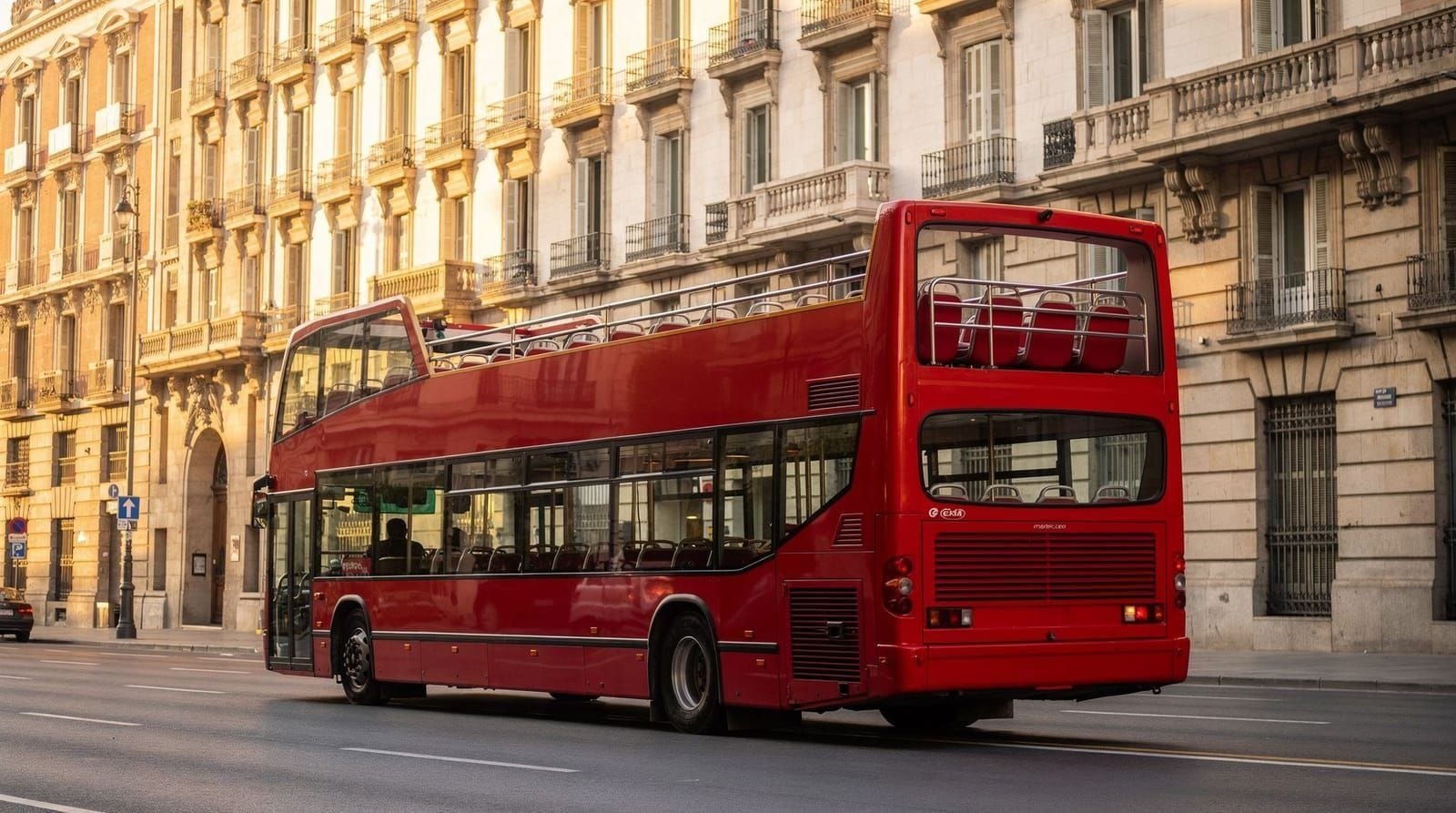
Madrid: Big Bus Hop On Hop Off Live Guide
Is hop-on hop-off worth it in Madrid?
Conditionally yes. The bus makes most sense for: first-time visitors who want an overview before committing to specific attractions, visitors with limited walking ability, families with young children who need rest breaks, and people with only one day who want to see the spread of the city quickly. For physically fit visitors staying 3+ days, the metro and walking are almost always faster and cheaper.
Verdict: The Madrid hop-on hop-off is genuinely useful for orientation on day one, for visitors with limited mobility, and for families who need flexible pacing. It is not the best use of time or money for mobile visitors staying 3+ days — the metro is faster to every major sight except the Bernabéu.
| Cost | around €25–38/adult per day depending on operator |
| Time needed | 75–90 min per full loop, unhurried |
| Best for | orientation day one, limited mobility, families with buggies |
| Skip if | staying 3+ days and comfortable walking/metro |
| Routes | Historic centre route + Bernabéu/Castellana route |
Big Bus vs City Sightseeing vs metro
| Big Bus | City Sightseeing | Metro | |
|---|---|---|---|
| Live guide | Yes, select departures | No, audio only | N/A |
| Price/day | €32–38 | €25–30 | €7.30 (Multi 10, 10 trips) or €10.30 (1-day Zone A tourist pass) |
| Speed | Slow, traffic-dependent | Slow, traffic-dependent | Fastest |
| Accessibility | Ramps, level stops | Ramps, level stops | Mixed on older lines |
| Best for | Orientation + commentary | Budget bus option | Speed and cost |
The case for
Madrid is a large city. The distance from the Royal Palace to the Prado Museum is about 1.8 km — walkable in 20 minutes, but add the Bernabéu stadium (4 km north), and the city’s spread becomes apparent. The hop-on hop-off makes three genuine arguments:
Orientation: Sitting on an open-top bus for a full loop gives you the city’s geography in a way that a metro journey does not. You see which neighbourhoods connect to which, where the major sights cluster, and where you might want to return on foot. Many visitors use it purely as orientation on arrival day — one loop without hopping off, then use the metro for everything else.
Physical accessibility: The metro requires stairs, escalators, and sometimes significant walking between interchanges. The bus goes door-to-stop for most of the major sights. For visitors with limited mobility, or for families with young children and buggies, the bus can genuinely be the practical choice.
Weather: In July and August, Madrid reaches 35–38°C. The open-top bus is not air-conditioned, but moving air feels cooler than standing on a sun-baked plaza. The enclosed lower deck is air-conditioned — a practical refuge if you need one.
The Big Bus Madrid with live guide includes a real guide on board for commentary and questions — worth the small premium over the standard audio version.
The case against
Speed: The bus stops at traffic lights, gets caught in congestion around the Gran Vía and Cibeles, and takes 20–25 minutes to cover distances the metro covers in 6 minutes. If you want to arrive at the Prado for your timed-entry ticket, take the metro — the bus makes you dependent on traffic.
Audio guide quality: The recorded audio on most circuits is generic and sometimes outdated. A live guide is better, but only the Big Bus Live Guide option guarantees that — and only on some departures. Check timetables before booking.
Actual hopping off: Most visitors hop off at 2–3 stops maximum in a full day. The flexibility argument works better in theory than practice.
The metro covers everything except the Bernabéu more efficiently. Line 10 to the stadium, Lines 2 and 4 for the Royal Palace area, Line 2 for Retiro. The tourist travel pass covers the metro and bus from €10.30 (1 day, Zone A) to €17.50 (2 days), though the €7.30 Multi 10 ticket is cheaper if you only ride a few times a day.
What the routes actually cover
Route 1: Historic Madrid
Starting at Puerta del Sol, the Historic Route covers the main tourist corridor: the Royal Palace, Almudena Cathedral, Plaza de España, Gran Vía, Círculo de Bellas Artes, Cibeles fountain, the Prado Museum, Retiro Park, and back. Duration without stops: about 75–80 minutes.
Key stops on this route:
- Royal Palace / Almudena: 45 minutes minimum if entering. Book tickets in advance — queues without booking can be 30–45 minutes. See the royal palace guide.
- Prado Museum: 2–3 hours minimum. Timed-entry booking mandatory. See the Prado museum guide.
- Retiro Park: Free entry. Worth 1–1.5 hours. See the Retiro park guide.
Route 2: Modern Madrid / Bernabéu
The second route extends north along the Paseo de la Castellana — Madrid’s grand north-south axis — to the Santiago Bernabéu stadium, the Cuatro Torres business district, and the contemporary architecture of the financial centre. Duration: about 90 minutes.
This route is primarily interesting for football fans (Bernabéu visit) and architecture enthusiasts. The Bernabéu is 4 km from Sol — comfortably on the metro, but the bus gives you the Castellana boulevard context.
The hop-on hop-off Bernabéu combo ticket bundles both and saves money if you were planning the stadium visit anyway.
The live guide option: is it worth it?
The Big Bus Madrid offers two versions: the standard audio-guide ticket and the “Live Guide” departures. The difference is significant.
The audio guide is a recorded track that plays commentary at GPS-triggered points — it tells you what you are passing without awareness of what is actually happening (traffic, events, weather, your specific questions). The live guide is a person who can respond to questions, skip commentary you do not need, and provide context that is current and specific.
For the extra cost (approximately €5–10), the live guide version is the better choice if you care about the commentary — which is the primary reason to choose a bus tour over independent travel.
Note: live guide departures run on a schedule (typically 2–3 departures daily per route, morning and afternoon). Check availability before booking if this is important to you.
City Sightseeing Madrid offers an alternative with good frequency on both routes and occasional promotional pricing.
Night tours
The Big Bus also runs a panoramic night tour — a single loop rather than hop-on hop-off, designed to see the city lit up after dark. This is covered separately in the Madrid at night guide.
Practical information
Where to board: Main boarding points at Puerta del Sol (Paseo del Prado side), Plaza de España, and near the Prado Museum (Paseo del Prado). You can board at any stop — find the yellow or red stops marked on the route map.
Frequency: Every 15–25 minutes at peak times (10:00–18:00), every 30–40 minutes at shoulders. Check the timetable on the day.
Tickets: Buy online in advance (slightly cheaper, immediate boarding confirmation). Tickets also sold at the stops and at some tourist information offices, but queues can be long in summer.
Duration: A 1-day ticket is valid from first use. Two-day tickets are available and make sense if you plan to use it across two separate mornings.
Children: Under 5 free. Ages 5–15 at reduced rates. Family tickets available.
Accessibility: The bus is accessible with ramps; inform the driver at boarding. Not all stops have level access to the pavement — check individual stop accessibility.
WiFi and charging: Most buses advertise onboard WiFi, but coverage and speed are inconsistent in practice — treat it as a nice-to-have rather than something to rely on for navigation or bookings while riding.
The honest summary
Buy the hop-on hop-off if you want orientation, have limited mobility, are travelling with young children who need rest-break flexibility, or are combining it with a Bernabéu visit. Skip it if you are physically fit, staying more than two days, and comfortable with the metro — which is faster, cheaper, and air-conditioned.
The live guide version is worth the extra few euros over the audio-only version. The Bernabéu combo saves money if you were going to visit the stadium regardless.
For alternatives to the bus tour, see free walking tours, guided vs self-guided tours, or private guide Madrid.
The hop-on hop-off in a full Madrid itinerary
For a typical 3-day visit, the hop-on hop-off bus works best on Day 1 as an orientation loop — do not hop off, just ride the full circuit, then use the metro for everything else. This strategy gives you the spatial overview the bus is best at (understanding how the Royal Palace, Prado, and Bernabéu relate geographically) without the time cost of using it as daily transport.
Day 2 and Day 3 are almost always better served by the metro. The metro covers every major sight, is faster between them, and it is cheap: a €7.30 Multi 10 ticket covers 10 trips, while the tourist travel pass (Zone A: €10.30 for 1 day, €23.10 for 3 days) only pays off if you ride a lot.
See the tourist travel pass guide for the comparison between bus-pass pricing and metro day-pass pricing.
A middle path for shorter trips: If you’re only in Madrid for two days rather than three or more, the maths shifts slightly toward the bus — a one-day hop-on hop-off ticket used for orientation plus a Bernabéu stop can reasonably substitute for buying a multi-day travel pass you won’t otherwise fully use, especially if your second day is dedicated to a single area like the historic centre that’s easily walkable without transit at all.
Accessibility and families: a closer look
The hop-on hop-off’s clearest genuine advantage over the metro is for visitors with restricted mobility.
Madrid’s metro has significant accessibility limitations. Many stations on older lines (1, 2, 4) were built without lifts, and retrofitting has been gradual. The new lines (12, 9 extended) have full lift access, but the older central lines — which serve most of the major tourist sights — have mixed accessibility. A visitor in a wheelchair or with a mobility aid who wants to reach the Royal Palace on Line 2 or the Prado on Line 1 may find the station access complicated.
The hop-on hop-off buses have ramps and designated accessible spaces. The stops have level access in most cases. For visitors for whom this matters, the bus is a genuine practical solution rather than a tourist gimmick.
Similarly for families with pushchairs and young children: pushchairs fold for metro travel, which is manageable but adds overhead. The bus accommodates pushchairs without folding.
Heat and sun exposure: The open-top deck offers no shade, which matters in Madrid’s summer heat (regularly above 35°C from June to August). Sit on the lower, covered deck during the hottest midday hours if travelling with children or anyone heat-sensitive, and save the open-top seats for early morning or evening loops when the sun is lower and less direct.
Pricing across operators and booking channels
In 2026, three operators compete for the Madrid hop-on hop-off market:
Big Bus Madrid: The largest operator globally, with the live guide option as their differentiator. Good frequency, reliable timetables. Premium pricing.
City Sightseeing Madrid: The red bus operator. Slightly lower pricing, competitive frequency, audio-guide format only (no live guide option). A good alternative if the live guide is not a priority.
Various booking platforms: Tickets are available through GetYourGuide, Viator, Klook, and the operators’ own websites. Price comparison across platforms regularly shows differences of €3–8 per ticket for the same product. Booking directly with the operator is sometimes cheapest; sometimes GetYourGuide has promotional pricing. Check both before purchasing.
Refunds and flexibility: Most third-party booking platforms offer free cancellation up to 24 hours before the ticket’s validity date, which is worth using to your advantage — book a specific day’s ticket once your Madrid weather forecast and itinerary firm up, rather than locking in a date weeks ahead and hoping for good conditions on an open-top bus.
Package tips:
- A 1-day ticket on the Big Bus with live guide typically costs €32–38.
- City Sightseeing 1-day is approximately €25–30.
- The Bernabéu combo (hop-on hop-off + stadium tour) can be compared with buying the two tickets separately.
- Two-day tickets are available at both operators and make sense if you want to cover both routes without time pressure.
What passengers commonly miss
Talking to visitors who have done the hop-on hop-off, several stops are consistently underused because people do not know what is there:
Malasaña stop: Many buses have a stop near Plaza del Dos de Mayo. Malasaña is Madrid’s most interesting neighbourhood for casual walking — bars, independent shops, the memory of the 1808 uprising. Few tourists hop off here because it is not on the “monuments” circuit. See the Malasaña guide.
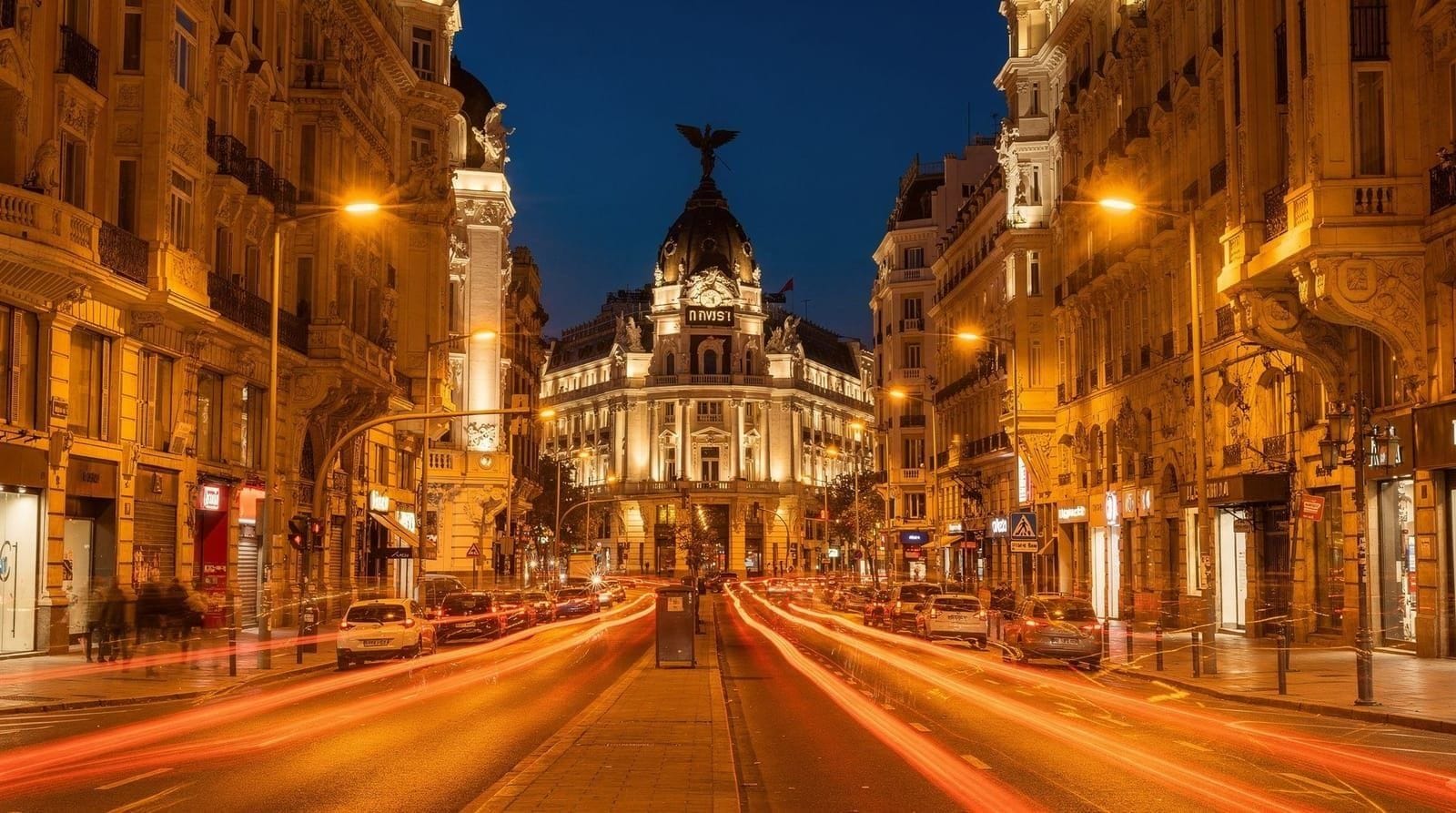
Cibeles and Metropolis area: The bus passes but few people alight. The Cibeles fountain and the adjacent Metropolis building (the domed insurance company at the Gran Vía corner) deserve 20 minutes of walking and looking. CentroCentro (Madrid’s city hall converted arts space) is in the Cibeles building and has free entry.
Parque del Oeste / Templo de Debod stop: The Egyptian temple and the adjacent park are accessible from this stop. The temple is one of Madrid’s most photographed sights; the surrounding park is pleasant for a walking break. See the Temple of Debod guide.
Bernabéu stop on Route 2: Obvious for football fans; ignored by non-fans. Even without a stadium tour, the exterior of the Bernabéu (currently being renovated with a new retractable roof) is architecturally interesting and the walk around the perimeter takes 20 minutes.
After the bus: what to do
The hop-on hop-off gives you the overview. What you do next depends on what grabbed your attention during the ride.
- The Royal Palace exterior was impressive: buy palace tickets for the interior tour.
- The Retiro looked inviting: Retiro park guide for what to do inside.
- You want to eat well in La Latina: best tapas bars guide for specific addresses.
- The Bernabéu caught your attention: Bernabéu stadium tour guide for booking.
- You want to understand what you saw: free walking tours or private guide Madrid for a ground-level narrative.
The bus tour is an orientation tool, not an experience in itself. Use it as the first chapter of your Madrid visit, not as a substitute for engaging with the city on foot.
Weighing it against a walking tour instead
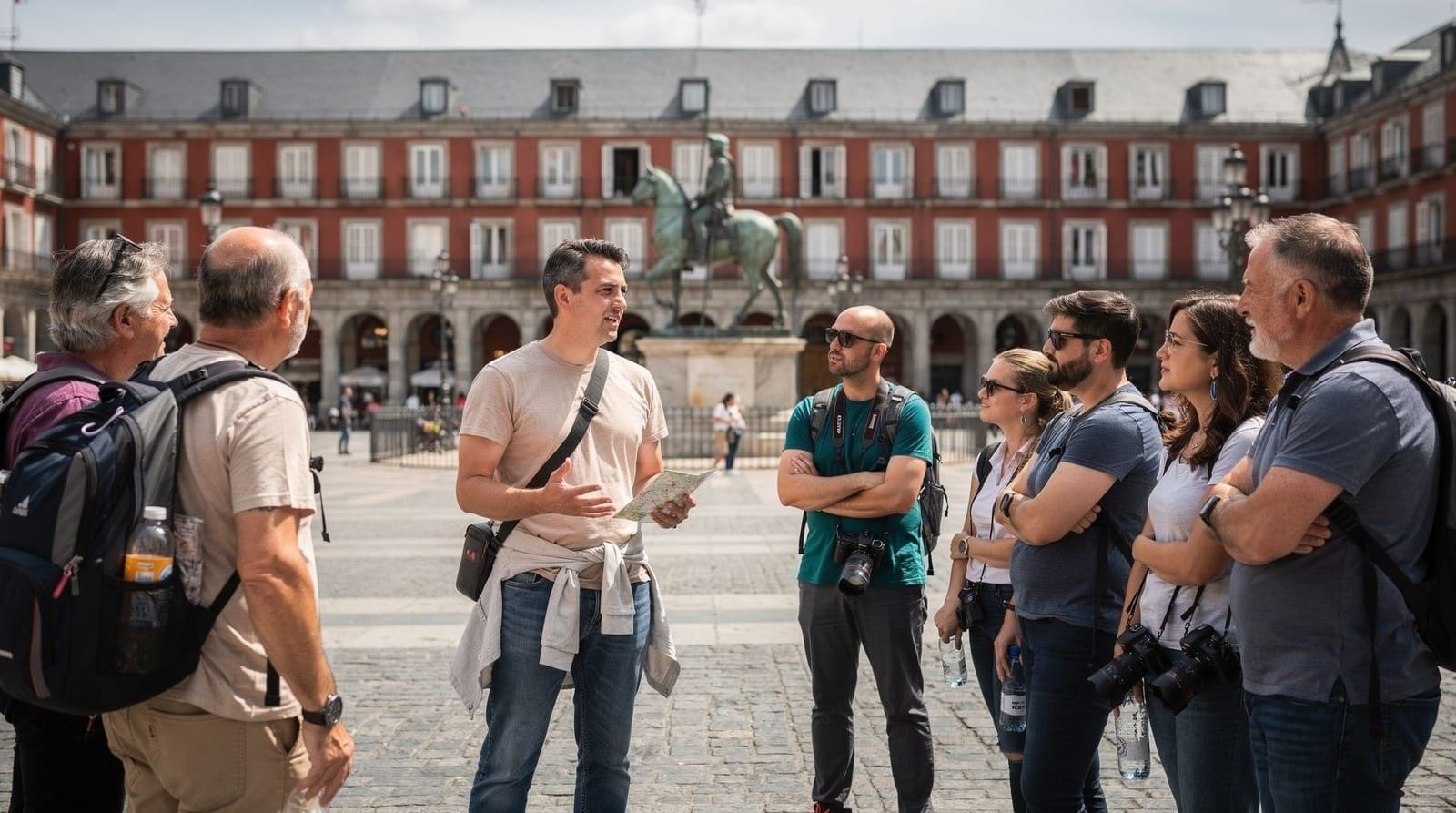
Visitors torn between a hop-on hop-off and a guided walking tour on day one are often comparing the wrong things. The bus gives you geography — how far apart the sights actually are, which neighbourhoods you’d like to return to. A walking tour gives you street-level context and history but covers far less ground in the same time. They are not substitutes: a common and effective pattern is a short bus loop first thing (60–90 minutes, no hopping off) followed by a free walking tour of the historic centre in the afternoon once you know roughly where things are. Doing the walking tour first, before you have any spatial sense of the city, means a lot of the commentary about “what’s five minutes that way” won’t land.
Frequently asked questions about Is hop-on hop-off worth it in Madrid? An honest verdict
How many routes does the Madrid hop-on hop-off have?
The main operators (Big Bus and City Sightseeing) each run 2 routes. The Historic Route covers the centre — Royal Palace, Gran Vía, Prado, Retiro, Cibeles. The Modern Route (sometimes called the Contemporary or North route) extends to the Santiago Bernabéu stadium, Paseo de la Castellana, and Chamartín. A combined ticket covers both routes.How long does the full Madrid hop-on hop-off loop take?
Without hopping off, the full loop takes about 75–90 minutes per route. Frequency is every 15–25 minutes at peak times, every 30–40 minutes in the early morning or late afternoon.How much does the Madrid hop-on hop-off cost?
A 1-day ticket costs approximately €25–32 per adult depending on operator and whether you book online or at the stop. Children under 5 are usually free; 5–15 at half price. The Big Bus 'Live Guide' upgrade (a narrated tour with an actual guide on board) costs €5–10 more than the audio-guide version.Is the live guide version of the Big Bus worth the extra cost?
For most visitors, yes. A live guide can answer questions, point out things not on the recorded script, and adapt commentary to what's actually happening in the city. The difference between a recorded audio track and a real guide is noticeable. The combo ticket with a Bernabéu visit offers significant savings if you were planning both.What is the Bernabéu combo ticket?
The hop-on hop-off Bernabéu combo bundles a bus ticket with the Santiago Bernabéu stadium self-guided experience. If you are planning to visit the stadium anyway, compare its price with buying the two tickets separately.Where does the Madrid hop-on hop-off start?
The main boarding points are at Puerta del Sol, Plaza de España, and near the Prado Museum. You can board at any stop along the route, but the full loop is easiest to follow starting from Sol or the Prado.Can I use the hop-on hop-off to visit Retiro Park?
There is a stop at the Prado Museum (adjacent to the Retiro park entrance). You can alight there and spend time in the park before reboarding. The park itself is free — see the retiro park guide for what's worth seeing inside.Is the Big Bus better than City Sightseeing in Madrid?
Big Bus and City Sightseeing cover similar routes. Big Bus has the live guide option on some departures which most visitors prefer. City Sightseeing sometimes has better frequency on the outer stops. Check current timetables — this changes seasonally.
Top experiences
Bookable activities with verified prices and instant confirmation on GetYourGuide.