Tapas evening tour in Madrid — honest review 2026
Madrid: Non Touristy Tapas 10 Tapas 4 Drinks
Why the tapas circuit rewards a guide
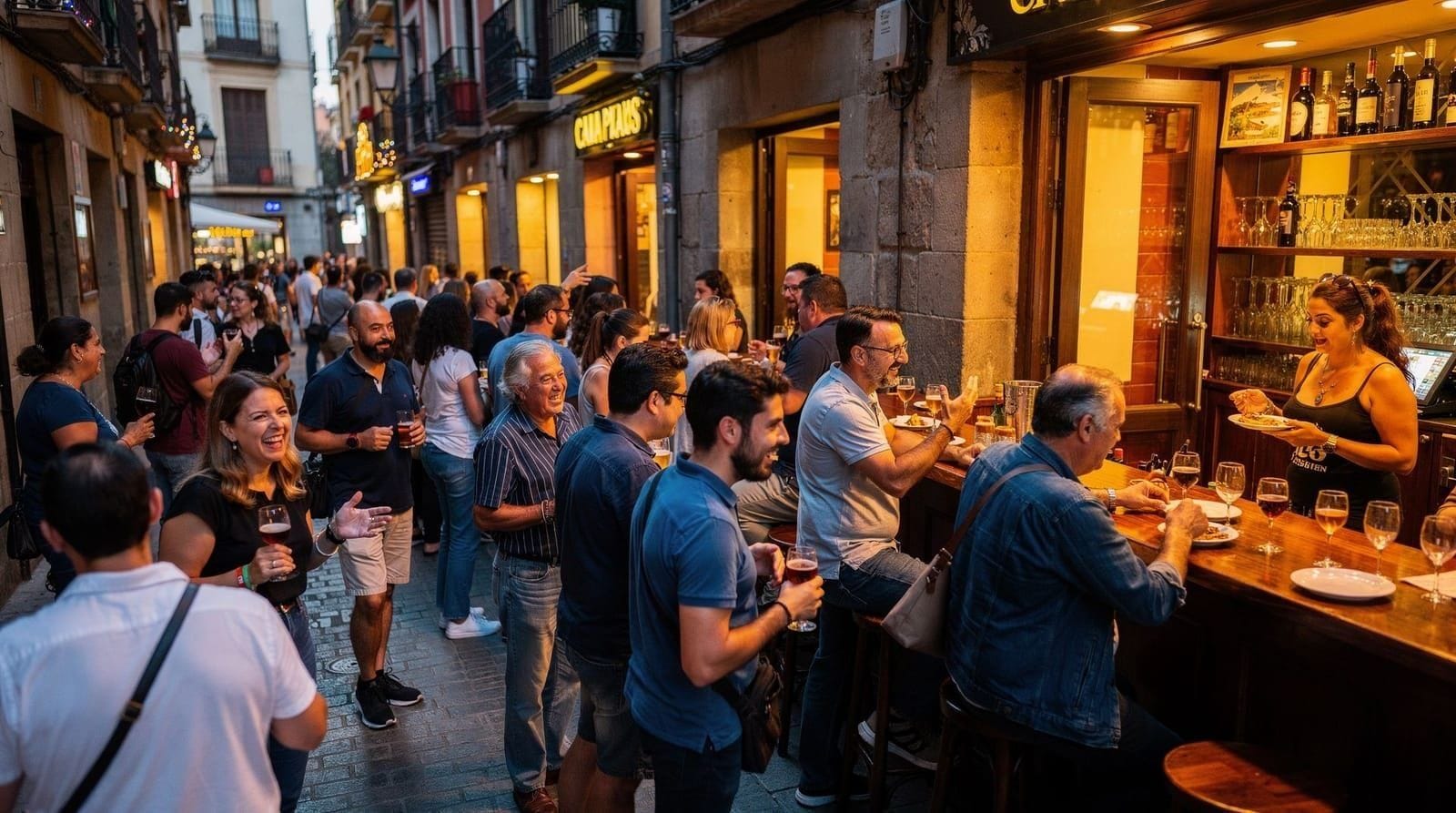
Madrid’s tapas culture operates on unwritten rules that take a few evenings to decode. The best bars in La Latina do not need TripAdvisor reviews — they are full of Madrileños and the menu is usually handwritten or chalked on a board in rapid Spanish. The ordering system at a standing bar (you order at the bar, the tab is settled when you leave, free tapas with drinks in some venues but not others) is different from a restaurant and confusing until you have done it a few times. The concentration of genuinely good bars versus tourist-facing imitations is not legible from the street.
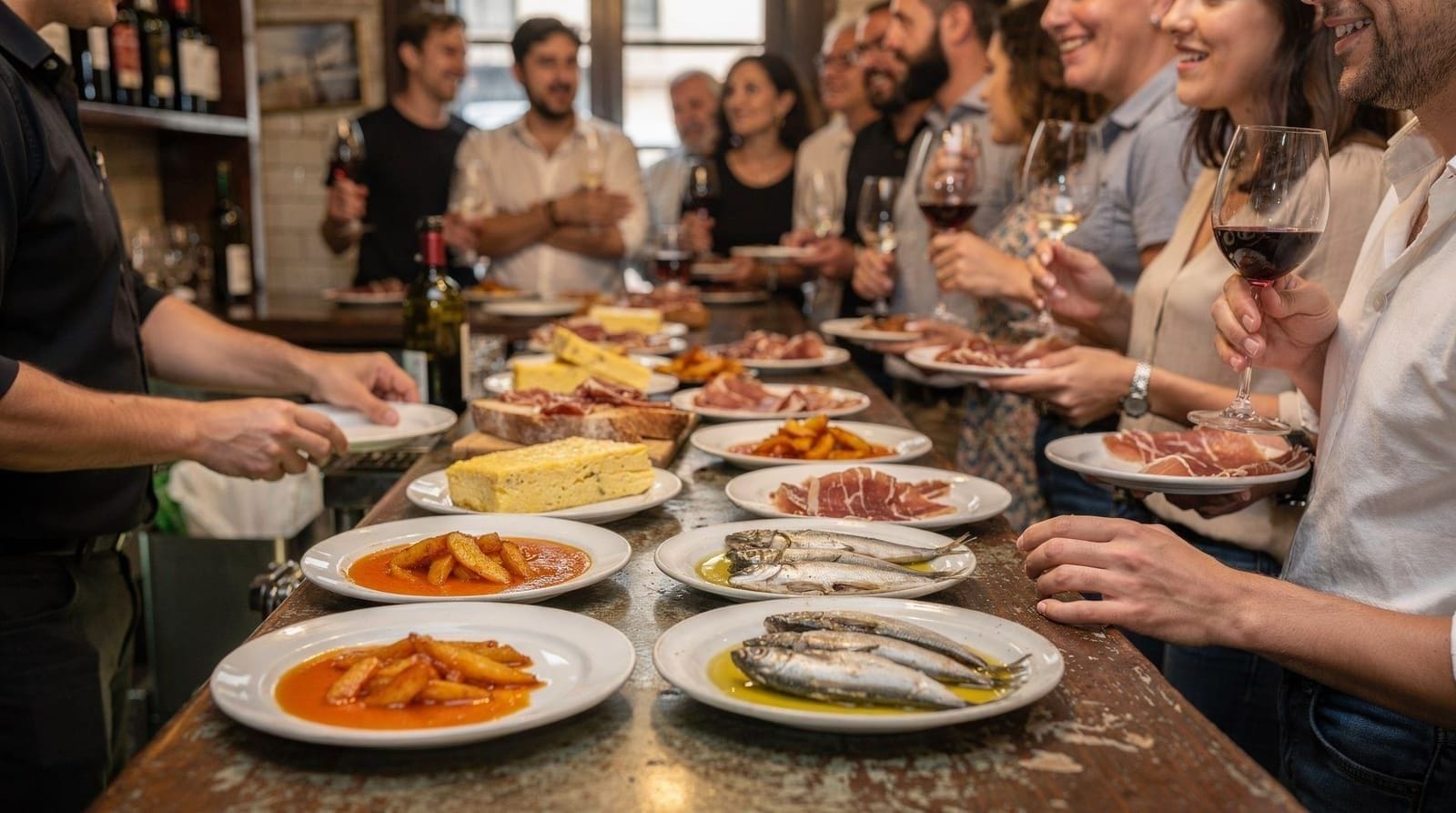
A guided tapas tour shortcuts this learning curve. The guide has pre-selected bars that meet a quality threshold and has a relationship with the bar staff that smooths the ordering and pacing. Over 3 hours and 4–5 stops, you eat well, drink properly, and come away with enough orientation to continue exploring independently on subsequent evenings.
The non-touristy Madrid tapas tour with 10 tapas and 4 drinks is the most explicit about what it delivers and consistently receives reviews noting that the bars visited are genuinely neighbourhood spots rather than tourist-facing operations.
What the tour format looks like
A typical well-structured tapas evening tour works as follows:
Stop 1 (La Latina area, 45 minutes): First drinks — usually a glass of vermouth or house wine — with 2–3 tapas. The guide sets the context: what tapas culture is, the difference between tapas (free snack with drink in some traditions) and pinchos (paid-per-plate), and the geography of Madrid’s food neighbourhoods. The first stop is usually a traditional taberna-style bar with tiled walls and barrels — visually classic Madrid.
Stop 2 (Cava Baja or nearby, 40 minutes): The main food stop. 3–4 tapas that represent the core Madrid classics: tortilla, croquetas, possibly callos or a bocadillo de calamares variation. The guide explains the dishes — what callos a la madrileña actually is (tripe stew, typically served at room temperature, an acquired texture), why tortilla española is deceptively technical to make well, the hierarchy of jamón grades.
Stop 3 (15-minute walk, wine bar or vermutería, 40 minutes): Wine-focused stop with 2–3 more tapas. Spanish wine is where the guide adds the most educational value: the Ribera del Duero vs Rioja comparison, Madrid’s own DO (Vinos de Madrid), and the vermut culture that runs from midday through early evening.
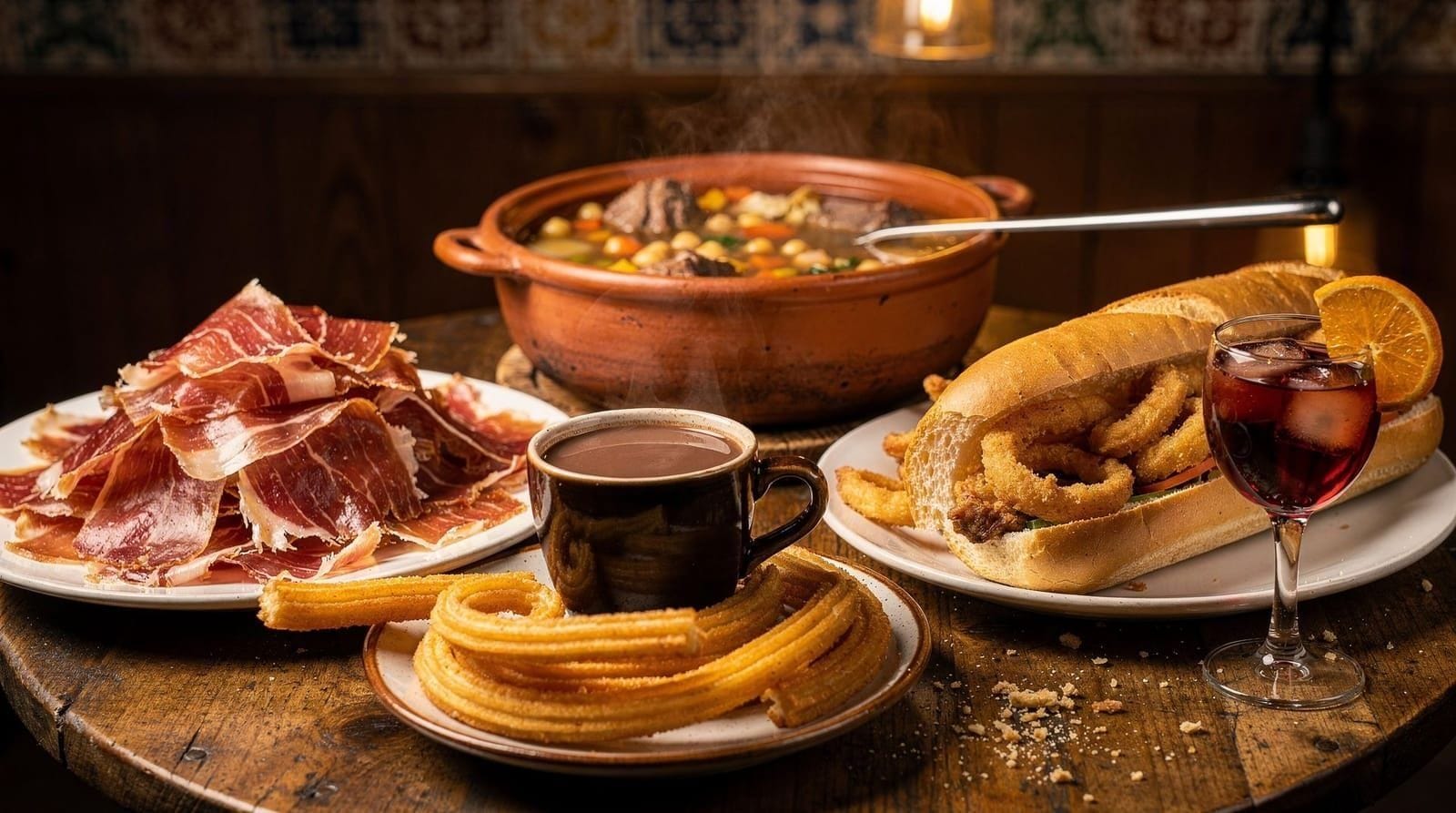
Stop 4 (final stop, 30 minutes): Dessert-adjacent — usually torrijas (Spanish bread pudding, particularly common in spring around Semana Santa), churros with chocolate for dipping, or a Spanish cheese plate. Final drink — sometimes a small glass of brandy or a digestif at a traditional bar.
Which operators deliver: honest assessment
The market for Madrid tapas tours has grown significantly since 2018 and quality varies. The operators worth booking share a few characteristics: they cap groups at 10–12 people (larger groups are unmanageable in small Madrid bars), they specify exact inclusions (number of tapas and drinks) rather than vague descriptions, and their guides speak fluent English with genuine food knowledge rather than tour-script commentary.
The Madrid tapas and wine tasting tour with local guide has a strong record for wine-focused commentary alongside the food stops — the right choice if you want to use the evening as a Spanish wine introduction as much as a food experience.
The Madrid food tour with tapas and Spanish wine covers a slightly broader geographic range (extending into Barrio de las Letras in addition to La Latina) and is better for visitors who have already done La Latina independently and want to compare neighbourhood tapas styles.
What you eat: the real Madrid tapas canon
Understanding what you are eating makes the tour significantly more interesting. The dishes you will encounter:
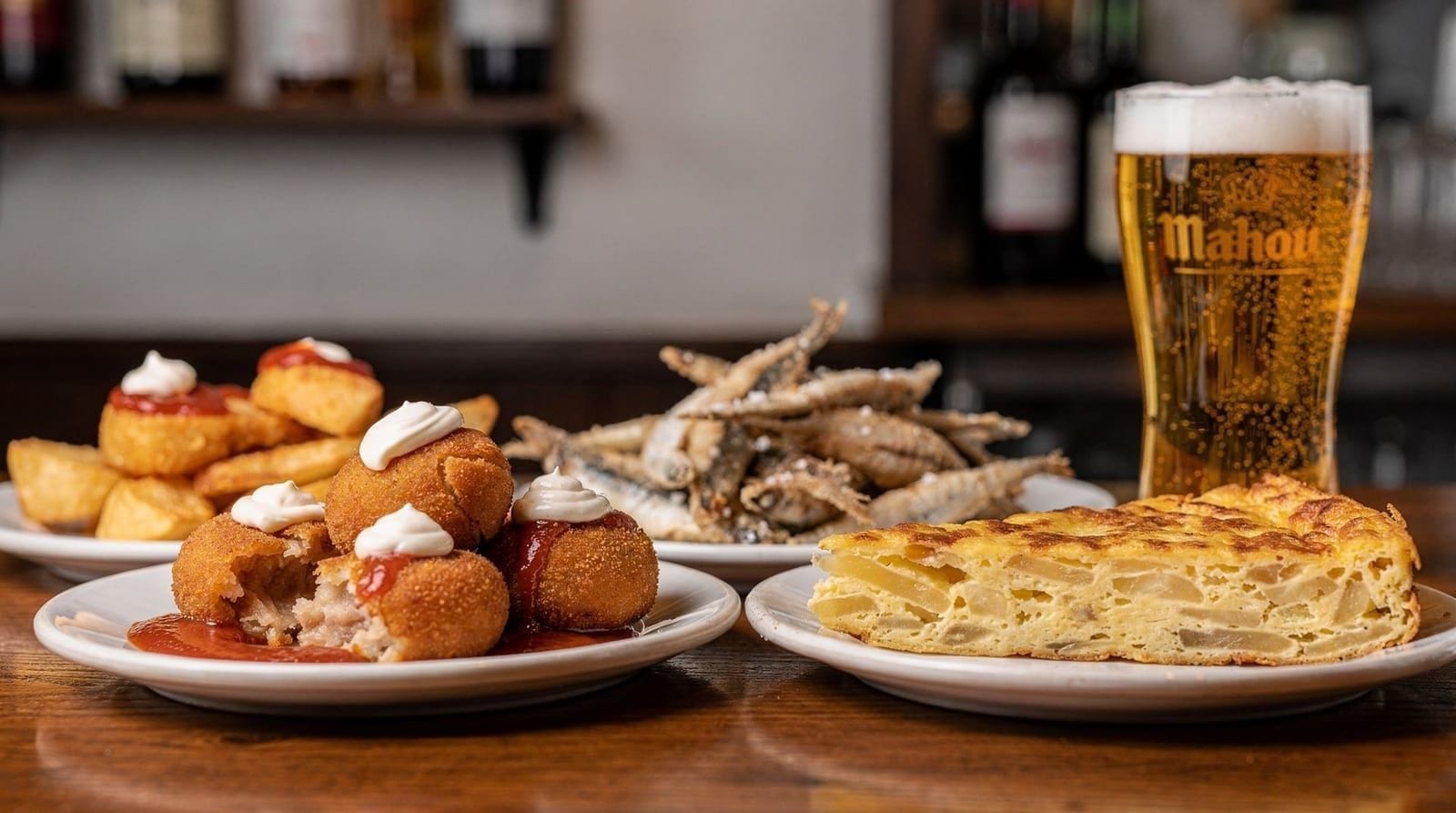
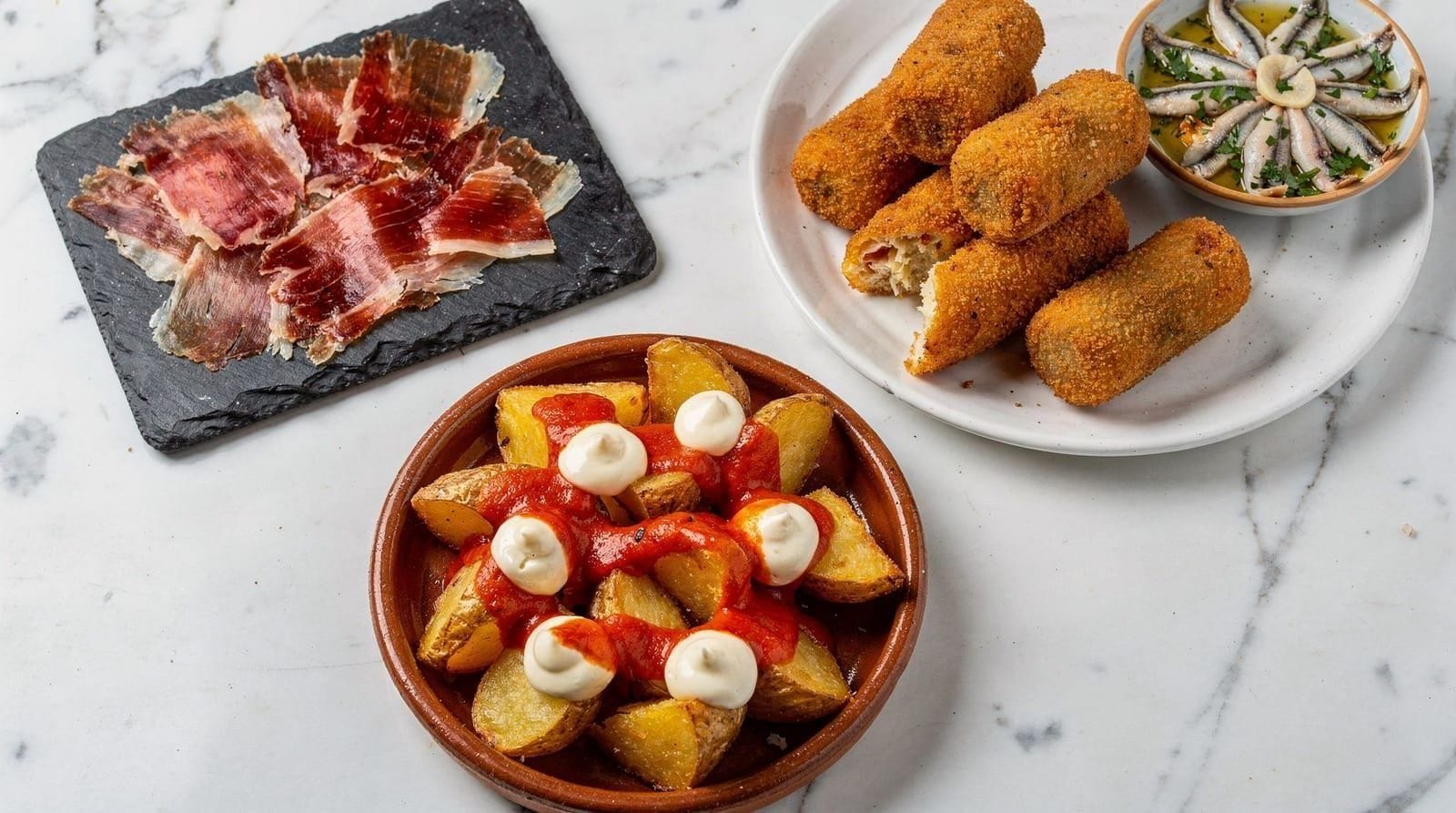
Tortilla española: Potato and egg omelette, cooked in olive oil, served at room temperature in most bars. The debate in Spain about whether it should contain onion or not is entirely genuine and occasionally heated. A well-made tortilla is creamy in the centre; a poorly made one is dry and crumbly. Judge bars by their tortilla.
Croquetas de jamón: Béchamel croquettes with ibérico ham, deep-fried until the exterior is crisp and the interior flows. One of the most technically demanding tapas to execute well — the béchamel has to be thick enough to hold shape when cold but loose enough to be creamy hot. Good croquetas are a genuine art form.
Patatas bravas: Fried potato chunks with a tomato-based spicy sauce and/or alioli. Every bar has a version; Madrid’s “bravas” sauce is typically spicier than the Barcelonan version, which is often mistaken for the original.
Boquerones en vinagre: Fresh anchovies cured in white wine vinegar, dressed with olive oil and garlic. A test of bar quality: they should be translucent-white, tender, and mildly acidic, not grey or rubbery.
Callos a la madrileña: The city’s most characteristically local dish — tripe cooked with chorizo, blood sausage, garlic, and paprika in a thick stew. Strong flavour, gelatinous texture. Not for everyone; essential to try once.
DIY tapas in La Latina: the honest guide
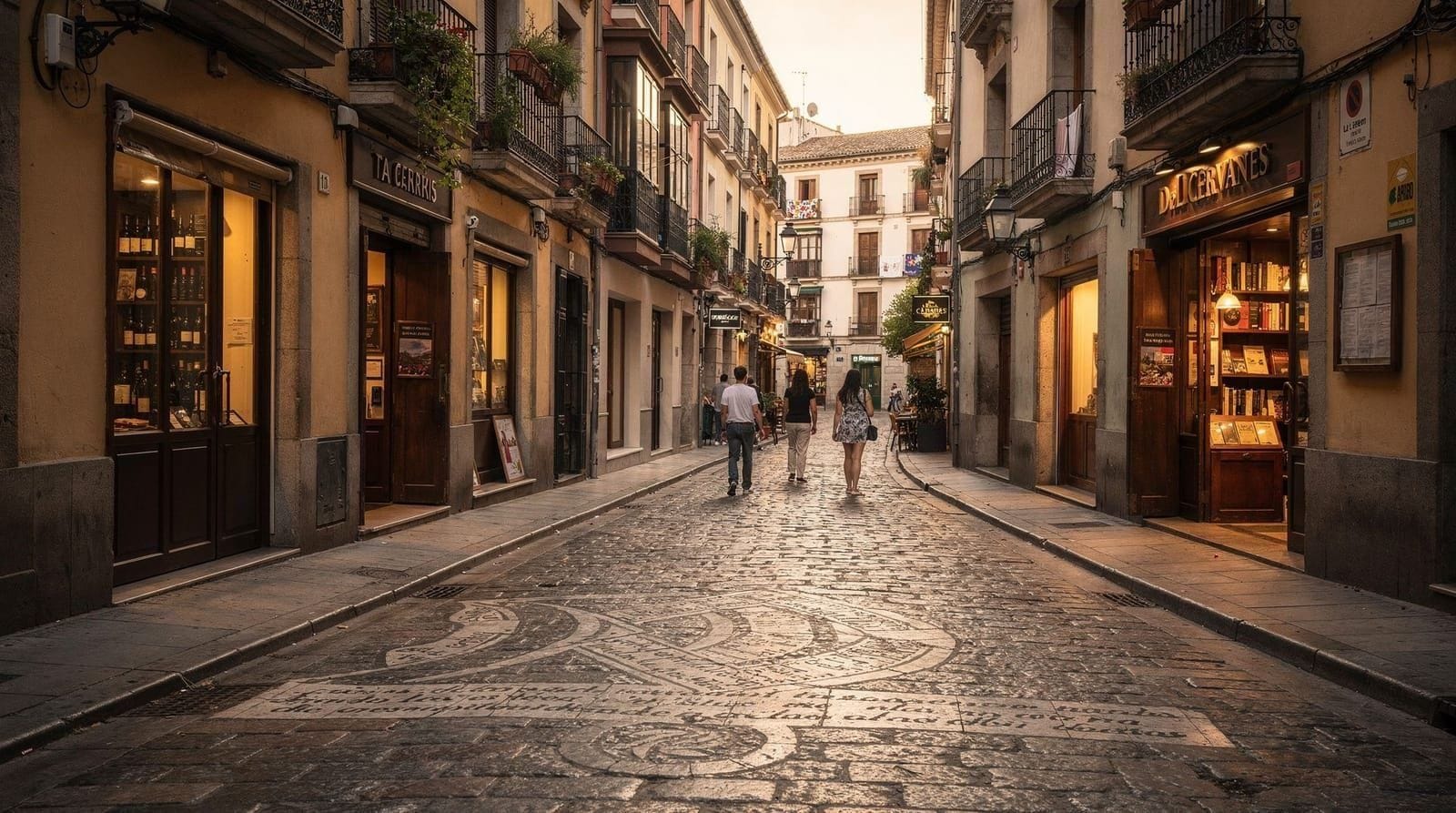
If you have enough evenings in Madrid to explore independently, La Latina on a Thursday–Saturday evening needs no tour. Start on Calle Cava Baja, which runs for about 400 metres and has enough good bars that you can simply enter and exit based on crowd quality. Locals eating standing at the bar is the reliable quality signal. Tourist-facing bars have photographs on the menu, English-first menus, and staff who notice you walking past and try to usher you in — avoid those.
Specific bars with consistent reviews for quality: Txirimiri (pintxos, slightly Basque-influenced but excellent), El Ventorrillo (traditional and unpretentious), La Camarilla (creative tapas, slightly higher price), and the bars around the intersection of Calle Humilladero and Calle Cava Baja on Sunday after El Rastro.
See /guides/best-tapas-bars/ for a full La Latina bar guide, and /guides/madrid-tapas-guide/ for the broader city tapas culture context.
Price comparison
| Format | Price | Food/drink included | Group size |
|---|---|---|---|
| Guided tour (10 tapas, 4 drinks) | €55–€85 pp | Yes, included | 8–12 |
| Semi-private tour (6 max) | €85–€120 pp | Yes, included | Up to 6 |
| DIY in La Latina (4–5 bar stops) | €35–€55 pp | Paid at each bar | 2 |
| Dinner at tourist restaurant near Sol | €30–€50 pp | Paid | – |
The guided tour price premium over a careful DIY evening is €15–€30 per person. Whether that’s worth it is a straightforward calculation: if you have one evening to get the Madrid tapas experience right and limited appetite for research, the tour pays for itself. If you enjoy the discovery of finding your own bars and have 3+ evenings in the city, DIY delivers more authentic results over time.
Verdict
A well-run Madrid tapas tour is a high-quality evening and genuinely one of the more enjoyable ways to spend a first or second evening in the city. The key is choosing a tour that specifies its inclusions clearly, caps group size, and visits non-tourist-facing bars — all of which the better operators do. Book the 19:00–20:00 start time, wear comfortable shoes (you will stand at bars), and come hungry. The food at good tapas bars in La Latina represents some of the best value eating in Western Europe.
Compare top tours
Frequently asked questions about Madrid
Is a guided tapas tour worth it in Madrid?
It depends on your approach to eating. Madrid's tapas scene is not self-explanatory for visitors: the bars where locals actually eat are unmarked from the outside, the ordering system varies (standing at the bar vs sitting, free tapas with drinks vs paying for each plate), and the best value concentrations are in specific parts of La Latina and Barrio de las Letras that first-time visitors don't always find. A guided tour adds local knowledge that takes years to accumulate, delivers 8–12 small plates of food and 4–5 drinks over 3 hours, and covers the cost of food within the ticket price — making it often comparable to what you would spend independently at tourist-facing bars. The honest assessment: DIY is entirely possible and rewarding if you have 4+ days in Madrid to experiment; a tour is efficient if you have 1–2 evenings and want to eat well without research.How much food do you get on a tapas tour?
A standard well-reviewed tapas tour (3 hours, 4–5 bar stops) delivers approximately 8–12 individual tapas portions (each a few bites) plus 4–5 drinks. This is a substantial amount of food — the equivalent of a full evening meal spread over several hours. Operators who advertise '10 tapas' tend to deliver 10 distinct dishes; those advertising '3 bars' may give you 2–3 plates per stop. Read the inclusions carefully. The tours this review covers explicitly state 10 tapas and 4 drinks, which is the honest benchmark.Which Madrid neighbourhood is best for a tapas tour?
La Latina is the neighbourhood most associated with Madrid's traditional tapas culture — specifically the streets around Calle Cava Baja, Calle Cava Alta, and the Sunday El Rastro overflow bars. Barrio de las Letras (the area around Calle Huertas and Calle León) has a strong tapas-and-wine scene with a slightly more literary-bar atmosphere. Malasaña is where the contemporary Madrid food scene lives — natural wine bars, creative small plates, slightly younger clientele. Lavapiés has international food influence (Moroccan, Indian, Peruvian) mixed with Spanish tapas at local prices. Most guided tours combine La Latina and Barrio de las Letras; some extend to Malasaña or Lavapiés.What tapas should I expect to eat on a Madrid tour?
A Madrid tapas tour typically includes a mix of classic Spanish tapas (jamón ibérico, tortilla española, pan con tomate, croquetas de jamón or bacalao, boquerones en vinagre) and Madrid-specific dishes (patatas bravas, callos a la madrileña, berenjenas con miel, chipirones en su tinta). The quality varies by venue: a good tour operator has pre-selected bars where the kitchen takes shortcuts — at a reputable tour the tortilla should be served warm, the croquetas freshly fried, the jamón hand-carved rather than pre-sliced.What time do tapas tours start in Madrid?
Most tours start between 18:30 and 20:00. Starting at 18:30 is slightly early by Madrid standards (locals typically begin eating around 21:00) but allows the tour to finish by 22:00–22:30, which works for visitors with early morning plans. Starting at 20:00 is more typical of Madrid dinner timing but finishes at 23:00, which is where the city is still very much open. The 19:00 start is the most popular and practical compromise. Avoid tours that start before 18:00 — you will be visiting bars before they have hit their rhythm.