Reina Sofía Museum tickets — honest review 2026
Madrid: Reina Sofía Skip the Line Ticket
The Reina Sofía at a glance
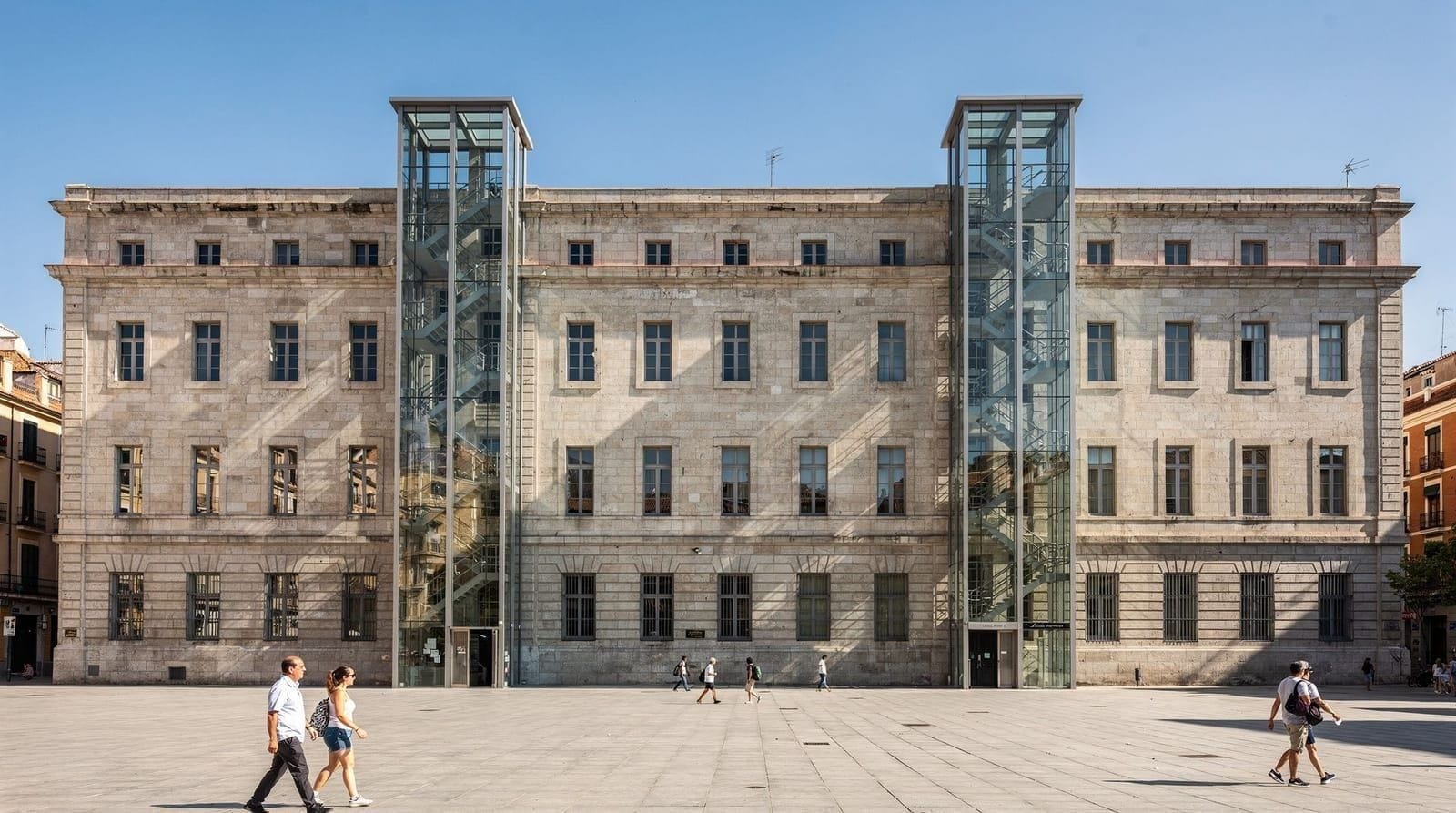
The Museo Nacional Centro de Arte Reina Sofía is Madrid’s museum of 20th-century modern and contemporary art, housed in a converted 18th-century hospital building (the Sabatini building, the original neoclassical structure) with a bold glass extension added by Jean Nouvel in 2005 (the Nouvel building, also called the Edificio Nouvel). The two buildings are connected on several floors and together hold one of the most important collections of modern Spanish art in the world.
Guernica — the 1937 Picasso painting that has become the defining visual statement of the 20th century’s civilian suffering — lives here. That alone is reason enough to visit. But the collection around it is extensive, and approaching it without context means spending your time in the wrong rooms and leaving without understanding what you saw.
The Reina Sofía skip-the-line ticket provides timed entry with priority access, bypassing the box office queue that can run 20–40 minutes in peak months.
The Guernica room: how to see it properly
Room 206 in the Sabatini building’s second floor is where the painting lives, and the museum has designed the approach deliberately. You pass through an anteroom containing documentary material: photographs taken by Dora Maar during the painting’s creation in May 1937, showing Picasso working on successive states of the composition over five weeks; the preliminary studies in pencil and oil showing how individual figures evolved; and explanatory text placing the painting in the context of the Spanish Civil War and the bombing of Guernica on April 26, 1937.
The bombing killed between 150 and 1,650 civilians (estimates vary widely; the lower number is now considered more accurate by historians but the event’s symbolic importance remains the same) and destroyed most of the Basque town. Picasso, living in Paris, responded by producing a large-scale painting in grey, black, and white — refusing colour as a form of mourning — within weeks of the event, for display at the Paris International Exposition.
The finished painting at 3.49 × 7.77 metres is larger than most people expect from reproductions. Stand at the room’s far end first. The composition reads as controlled chaos: the bull in the upper left, the horse collapsing in the centre, the figure with the raised lamp, the screaming mother with the dead child, the fragmented bodies. The painting refuses narrative sequence — you cannot read it left to right — and that refusal is part of its meaning. Approach closer and read individual figures: the soldier’s broken sword, the eye inside the light bulb, the geometrical treatment of the grieving faces.
The preliminary studies hanging on the flanking walls document 45 individual compositional changes. Picasso moved the bull, changed the horse’s expression, repositioned the woman with the dead child across multiple states. These studies are not incidental — they show you how much deliberate thought went into what looks like immediate anguish.
What else to see in the Reina Sofía
The permanent collection is split into two parts: Colección 1: El mundo entero es un extranjero covering roughly 1900–1945, and Colección 2: La utopía y sus fracasos covering the post-war period to the present.
Colección 1 (Sabatini building, floors 2 and 4) is the stronger half and the one most visitors should prioritise. Beyond the Guernica room it contains:
- Dalí’s major works including The Great Masturbator (1929), Girl at the Window (1925), and several dozen works from his surrealist period. The Dalí holdings at the Reina Sofía are the strongest in any museum outside the Dalí Triangle in Catalonia.
- Miró’s large-format pieces from the 1920s–1930s including the series of paintings produced after his move from figurative to abstracted forms.
- Juan Gris and cubist work showing the development of synthetic cubism through Spanish artists working in Paris.
- Spanish Civil War documentation in rooms adjacent to the Guernica space, contextualising the political moment.
Colección 2 (Nouvel building, floors 0 and -1) covers post-war European and American movements — abstract expressionism, Arte Povera, Land Art, conceptual art — with works by Tàpies, Chillida, Richard Serra, and Louise Bourgeois. This collection is uneven: strong in Spanish abstract art of the 1950s–1970s, patchy in international post-conceptual work.
The Reina Sofía small-group guided tour structures the visit around Guernica and the surrounding Civil War context, then moves to the Dalí rooms and one or two of the Colección 2 spaces — a logical 2-hour route for first-time visitors.
Free admission: is it actually worth it?
The Reina Sofía’s free admission windows (evenings Monday and Wednesday–Saturday, Sunday midday) are usable but carry a significant trade-off: the Guernica room in the evening is crowded. Not dangerously so, but the narrow rectangular space fills up quickly and the experience of standing in front of the painting while 40 other people circulate around you is measurably different from a morning visit with 10.
For the evening windows, arrive at the museum entrance 10–15 minutes before the free period opens (19:00 on weekdays) and go directly to Room 206 before the crowd builds. The anteroom studies and the Dalí rooms are manageable in the evening; the Guernica room itself fills fastest.
For a first visit where Guernica is the priority, a morning timed-entry slot is worth the €12 ticket cost. Reserve the free evening window for a second, more relaxed exploration of Colección 2.
Combining the Reina Sofía with other Golden Triangle museums
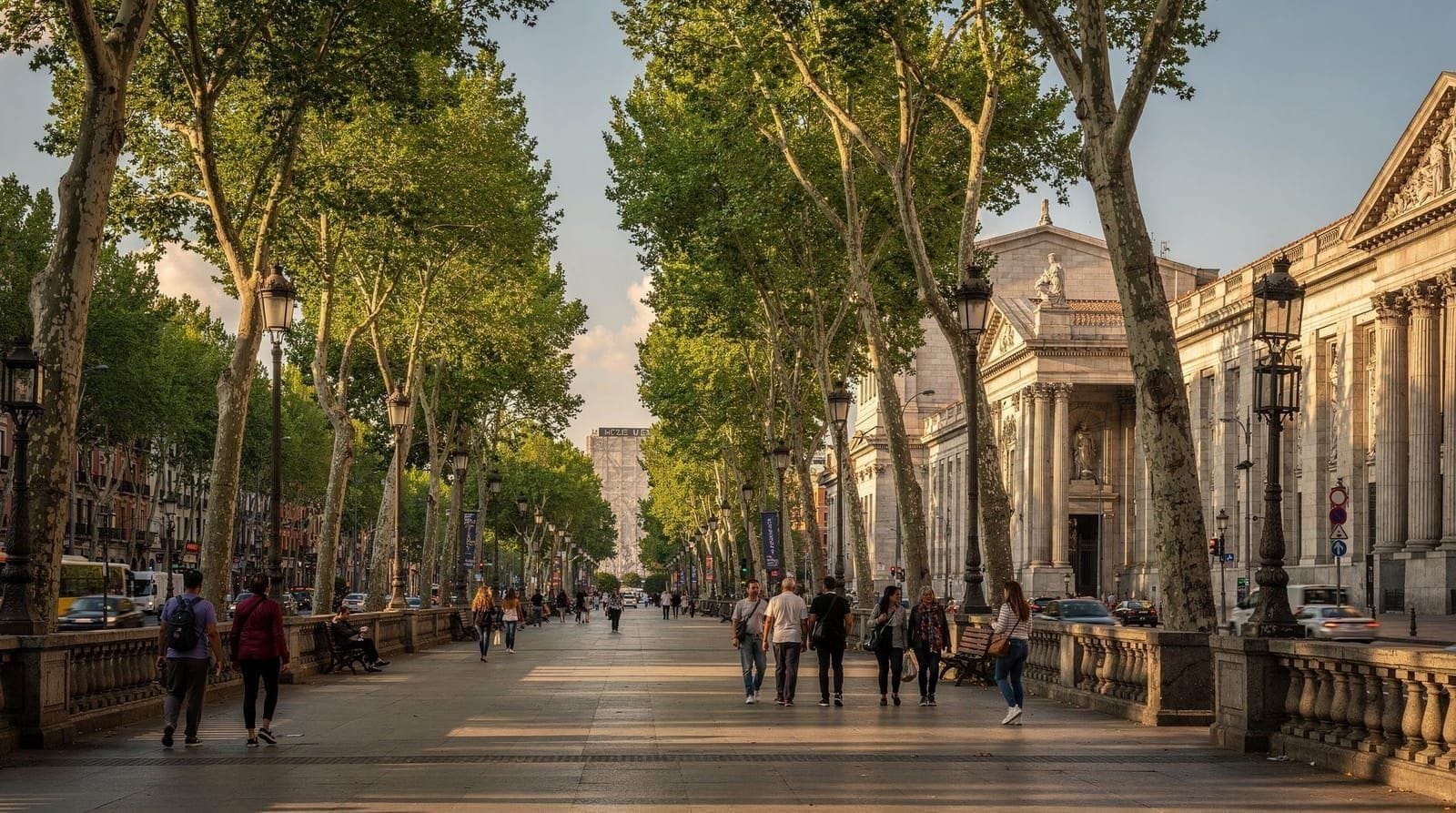
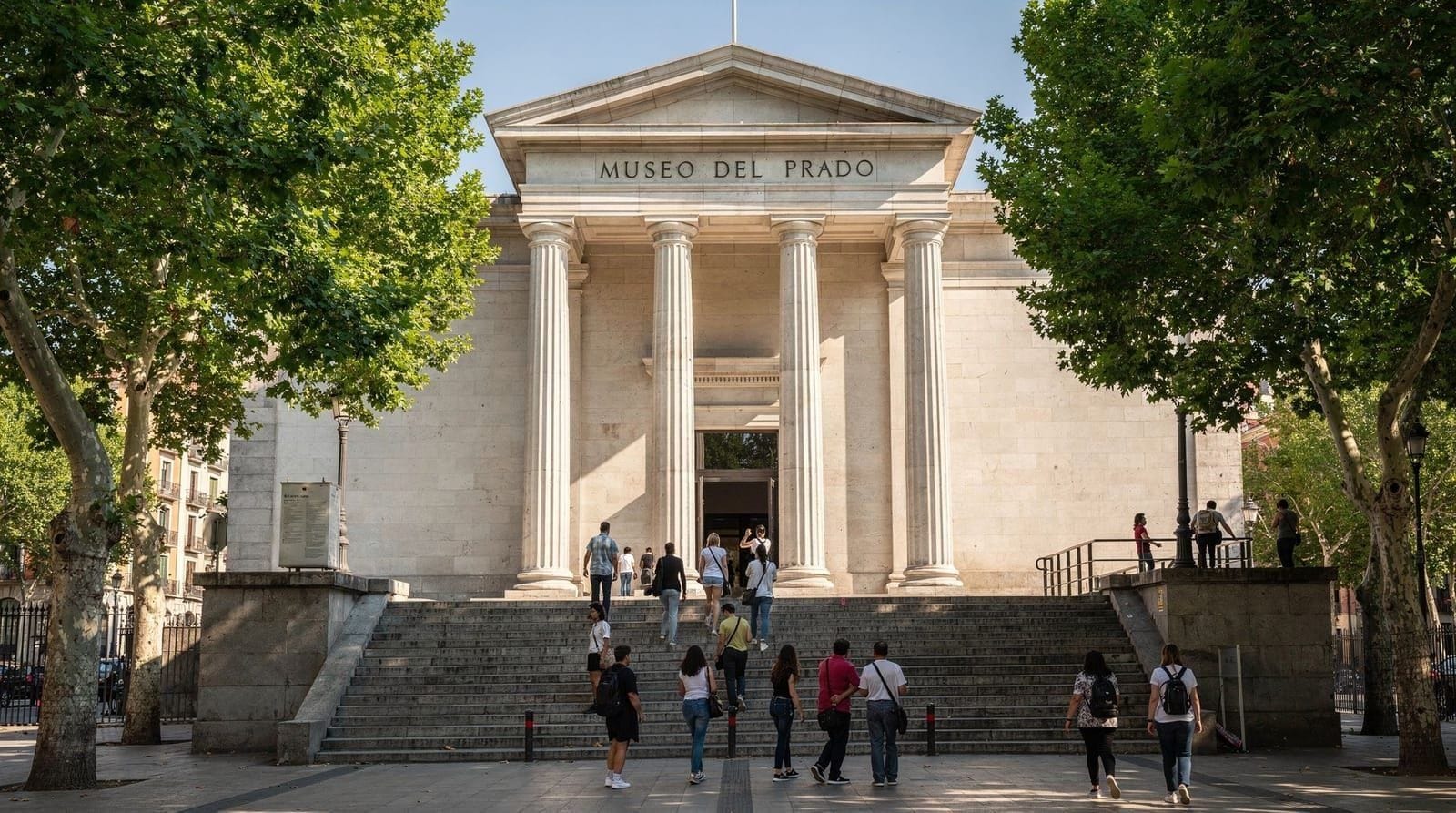
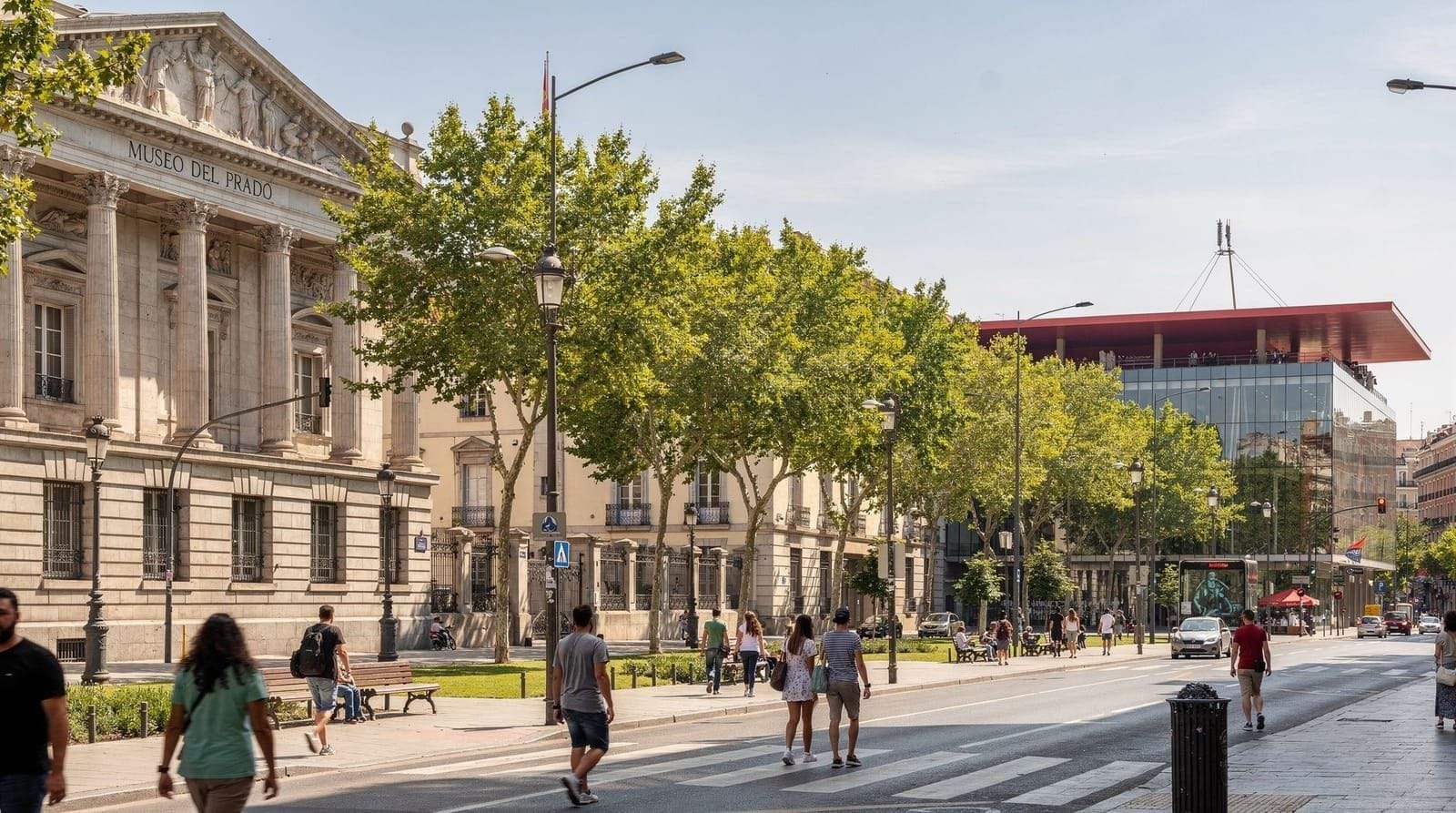
The three museums that form Madrid’s Golden Triangle — Prado, Reina Sofía, and Thyssen-Bornemisza — are within walking distance of each other along the Paseo del Prado. The Reina Sofía is at the southern end (Atocha metro), the Prado in the middle, and the Thyssen at the northern end.
Doing all three in a single day is theoretically possible (combined tickets exist) but practically fatiguing. The Reina Sofía and Thyssen combination tour covers the two 20th-century-focused museums in a structured day, leaving the Prado for a separate visit — a sensible split if your primary interest is modern art.
For a detailed walk-and-visit route covering all three museums across a day and a half, see /guides/golden-triangle-art-walk/.
Practical details
Address: Calle de Santa Isabel, 52, 28012 Madrid. Metro: Atocha (Line 1), exit towards the railway station, then a 5-minute walk south.
Opening hours: Monday, Wednesday–Saturday 10:00–21:00; Sunday 10:00–19:00. Closed Tuesday.
Standard entry: €12 adults. Free for under-18s and students under 25.
Pre-booked timed entry: €14–€18 depending on operator and time slot.
Guided tours: €35–€55 per person small group, private from €130 for two.
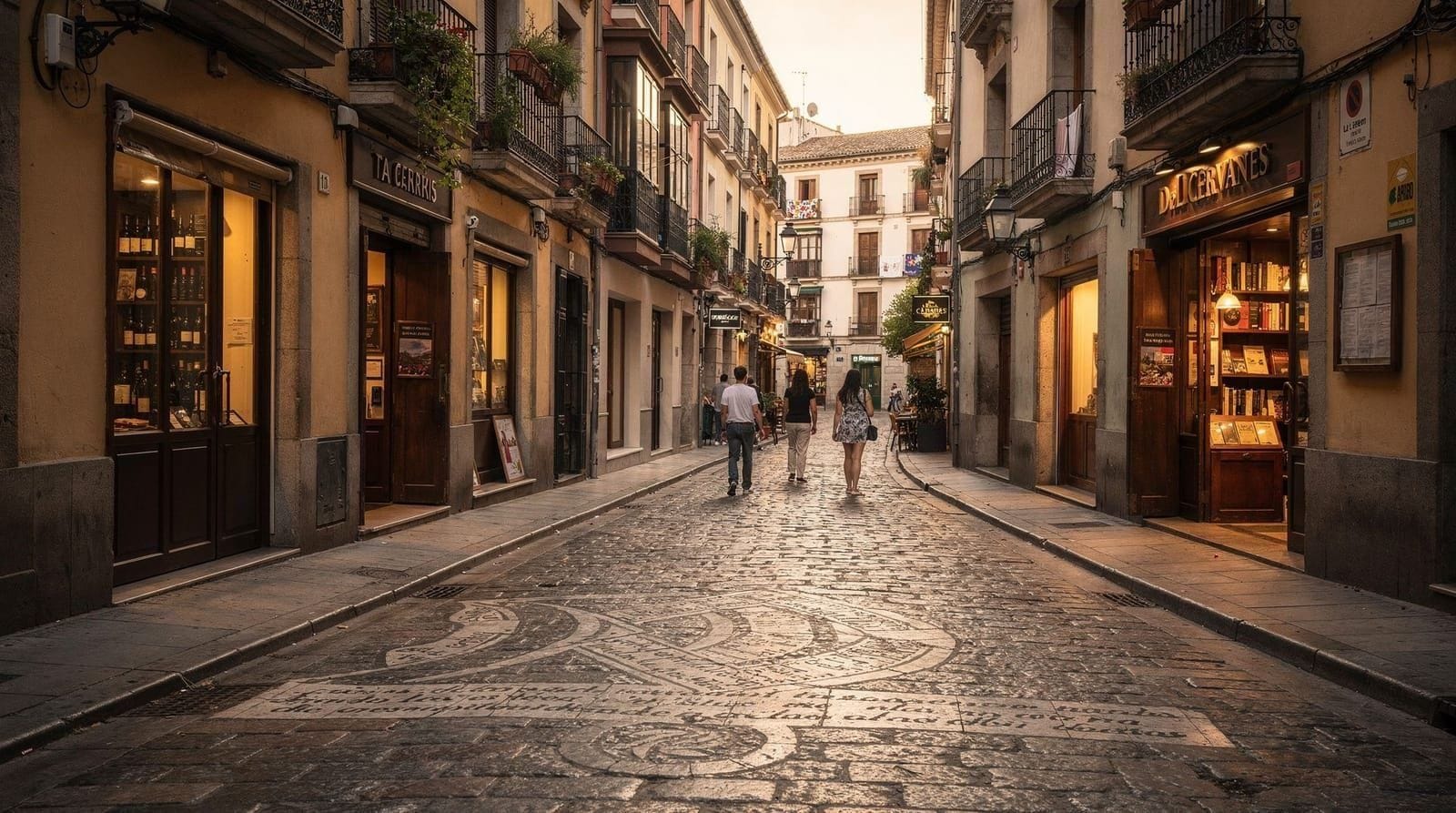
Closest food and drink: The /guides/barrio-letras-guide/ neighbourhood starts one block north of the museum; La Latina is 15 minutes’ walk west. The museum café on the ground floor is acceptable for coffee but not a dining destination.
Verdict
The Reina Sofía is essential on any Madrid art itinerary, not only for Guernica but for the Dalí collection and the broader 20th-century Spanish context that the Prado’s focus on earlier centuries cannot provide. A morning visit with a timed-entry ticket and 2.5–3 hours to spend is the ideal format. The guided tour adds real value for visitors without background in the Spanish Civil War and its artistic responses; experienced modern art visitors can navigate Colección 1 effectively with the museum’s free floor maps and room descriptions. Do not leave without the preliminary Guernica studies — they are the part most visitors miss.
Compare top tours
Frequently asked questions about Madrid
Is the Reina Sofía worth visiting beyond Guernica?
Yes, substantially so. The permanent collection (Colección 1) covers Spanish and European art from 1900 to 1945 and includes not just Guernica but the full surrounding context: other works by Picasso from the Civil War period, Dalí's major canvases including The Great Masturbator and Girl at the Window, Miró's large-format pieces, Juan Gris, and an exceptional collection of Spanish surrealism and abstraction. The post-war and contemporary collection (Colección 2 on the Nouvel building) is uneven but contains significant works. A full visit to Colección 1 alone takes 2–2.5 hours.When is the Reina Sofía free?
Free admission runs Monday and Wednesday–Saturday from 19:00 to 21:00, and Sunday from 12:30 to 14:30. The evening windows are usable and the museum is less crowded than during the day, but you have only 2 hours and the building closes entirely on Tuesdays (the only Madrid major museum closed on that day). The Sunday midday window is popular with locals. For a serious first visit, a morning timed-entry ticket is significantly more productive than the free window.How long does it take to see Guernica properly?
The Guernica room (Room 206 on the second floor of the Sabatini building) is typically entered via a dedicated anteroom explaining the painting's context — its creation for the 1937 Paris International Exposition, its years in New York at MoMA during the Franco dictatorship, and its return to Spain in 1981. The painting itself (3.49 metres high, 7.77 metres wide) is displayed at the end of a rectangular room that is routinely crowded. Spend at least 20–30 minutes: study the painting from the far end first (full composition), then approach to read individual figures. The room also contains the preliminary studies and photographs documenting the painting's creation — these studies are nearly as moving as the finished work.What is the difference between the Reina Sofía and the Prado?
The Prado covers roughly the 15th–19th centuries: Velázquez, Goya, Titian, Rubens, El Greco, and the main tradition of European old master painting. The Reina Sofía picks up from 1900 and covers 20th-century modern art: Picasso, Dalí, Miró, and international modernism. They are complementary rather than competing visits; serious art lovers do both. If you only have time for one, your preference for old masters vs modern art should decide it.Is a guided tour worth it for the Reina Sofía?
For Guernica specifically, yes. The painting's political context — the bombing of the Basque town of Guernica by Nazi Germany's Condor Legion during the Spanish Civil War, Picasso's response from Paris, the symbolism of the bull, the horse, the screaming mother — is not immediately legible without background. A 90-minute guided tour that uses Guernica as its centrepiece and situates it within Picasso's wider work and the Civil War period is the most efficient way to get the full impact. For visitors already familiar with 20th-century European art history, a standalone entry ticket is sufficient.