Flamenco show in Madrid — honest review 2026
Madrid: Essential Flamenco Drink Artist Talk
Why Madrid for flamenco?
Flamenco originated in Andalusia — in the Roma communities of Sevilla, Jerez de la Frontera, and Cádiz — and the art form’s roots are genuinely southern Spanish, not Castilian. But Madrid has been a major centre of professional flamenco performance since the mid-20th century, when the capital’s tablao circuit became the main commercial venue for Andalusian performers to earn a living. Today, Madrid draws the country’s best flamenco artists: the same dancers, guitarists, and cantaores who perform at Sevilla’s Bienal de Flamenco also work Madrid’s year-round tablao circuit.
This means that Madrid, somewhat counterintuitively, often offers higher technical quality in its staged shows than many venues in Andalusia aimed at tourist traffic. The performers are professionals working at the top of their craft, not tourism employees. The challenge for visitors is finding the right venue — because the tourist-facing tablao industry in Madrid contains plenty of mediocre shows alongside the excellent ones.
The essential flamenco show with drink and artist talk is one of the more honest-reviewed formats available: a full performance followed by a brief post-show conversation with one of the performers, which turns what might otherwise be a passive consumption experience into something with actual cultural content.
What a good flamenco performance contains
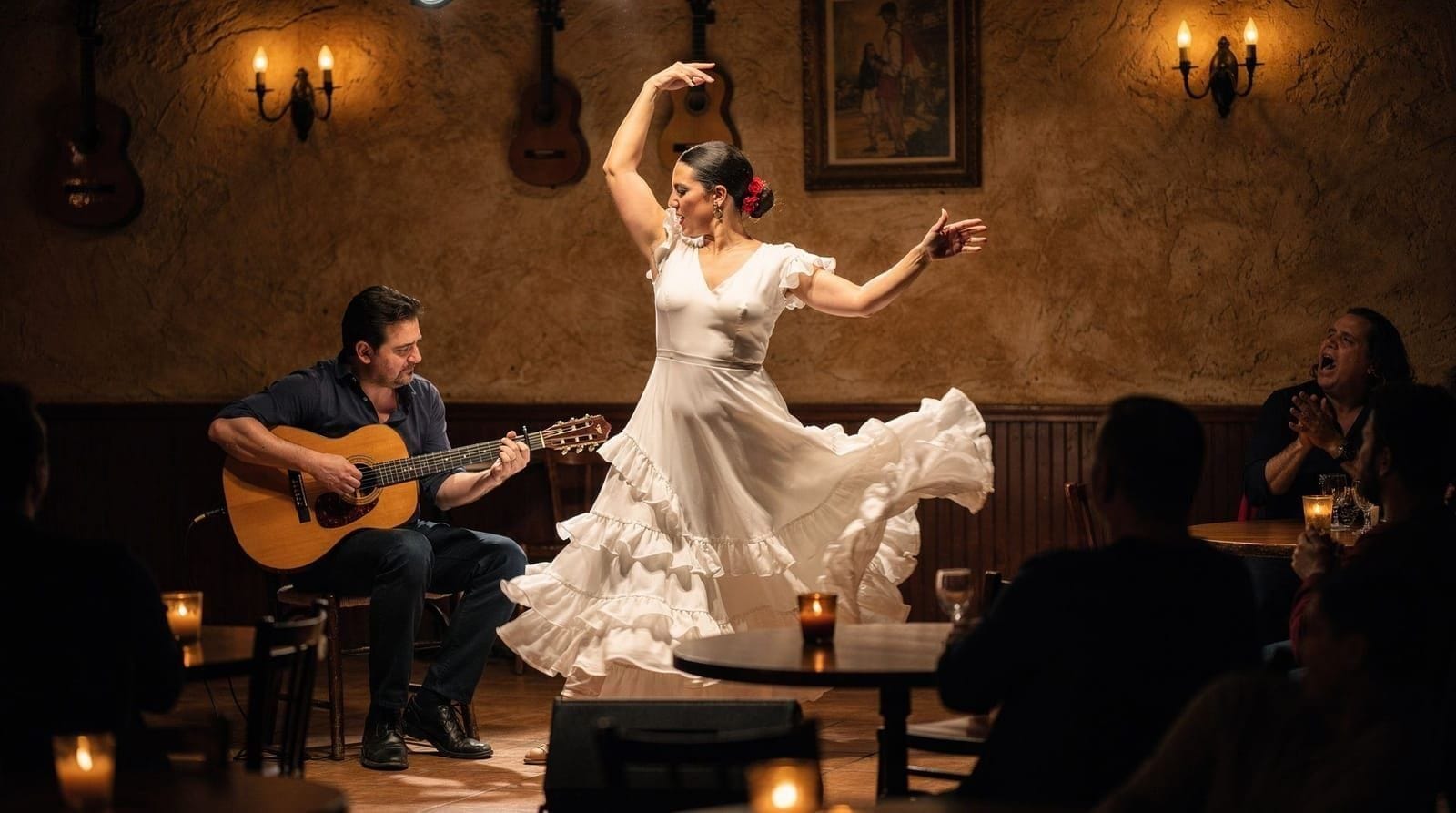
A serious tablao show runs 60–75 minutes and moves through several palos — the distinct styles that are flamenco’s structural foundation, each with its own compás (rhythmic cycle), emotional register, and traditional association.
Soleá is the form most associated with flamenco’s emotional core — slow, solemn, built on a 12-beat cycle, traditionally associated with loneliness and fatalism. A good cantaor performing soleá reaches the quality Andalusians call duende: an involuntary emotional transmission that has nothing to do with technical perfection and everything to do with authenticity.
Bulerías is the opposite — fast, communal, playful, built on the same 12-beat cycle as soleá but taken at high speed. The zapateado (footwork) in a bulerías sequence at full speed is technically demanding enough that the rhythm section typically doubles the handclapping volume to create a wall of sound.
Alegrías originated in Cádiz and has a brighter, more dance-forward character. A good tablao programme uses alegrías to break the emotional intensity of soleá and give the baile full display space.
Seguiriyas is the deepest and most demanding of the core palos — a four-beat cycle with a suspended, melismatic vocal style that is the closest flamenco gets to pure emotional exposure. The term “deep song” (cante jondo) originally referred specifically to seguiriyas. Hearing a serious cantaor in seguiriyas is the most affecting thing a flamenco show can offer.
The best programmes alternate between these palos and include solos for guitarist, dancer, and singer rather than presenting flamenco purely as a dance spectacle.
Venues: the honest breakdown
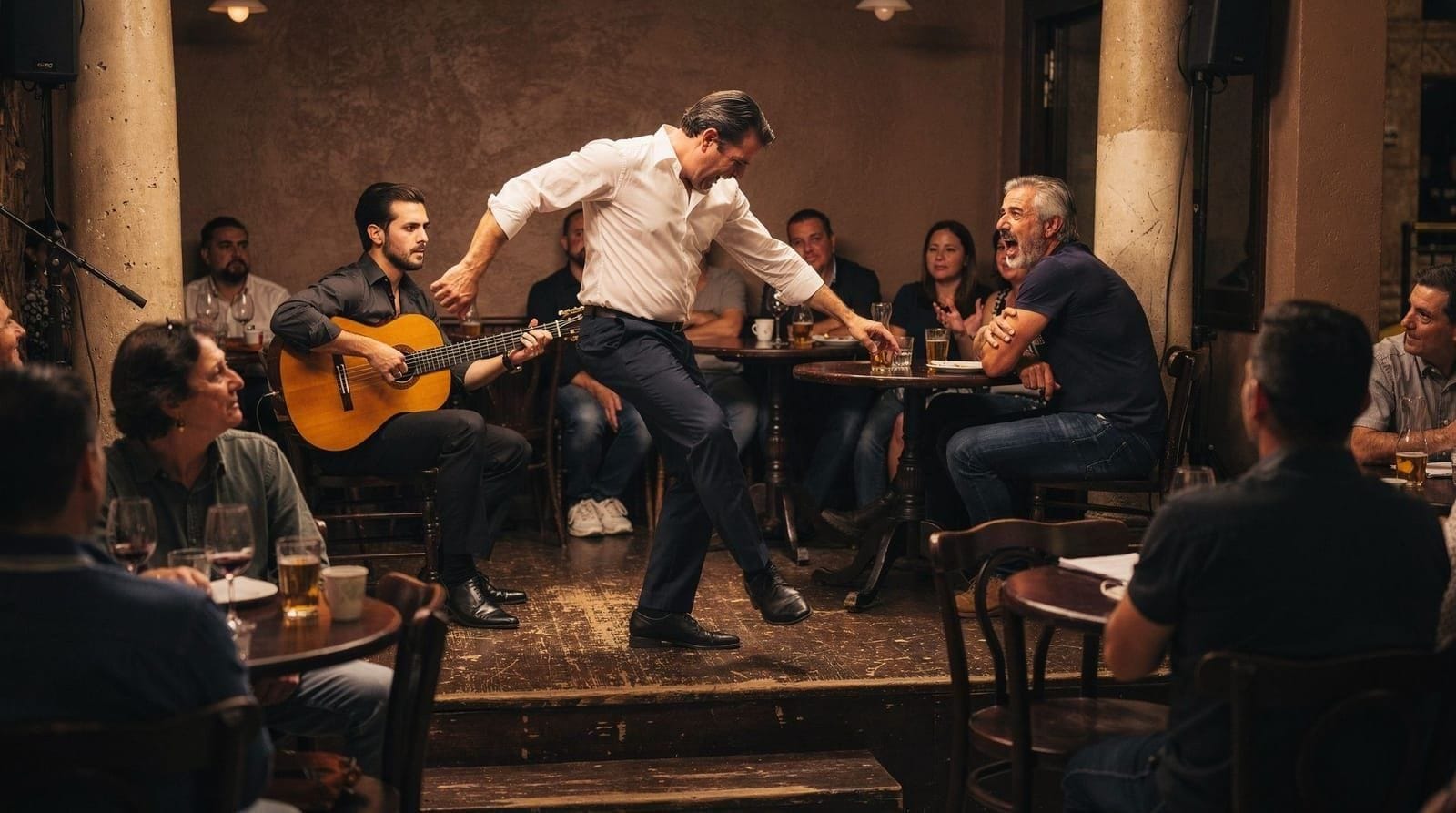
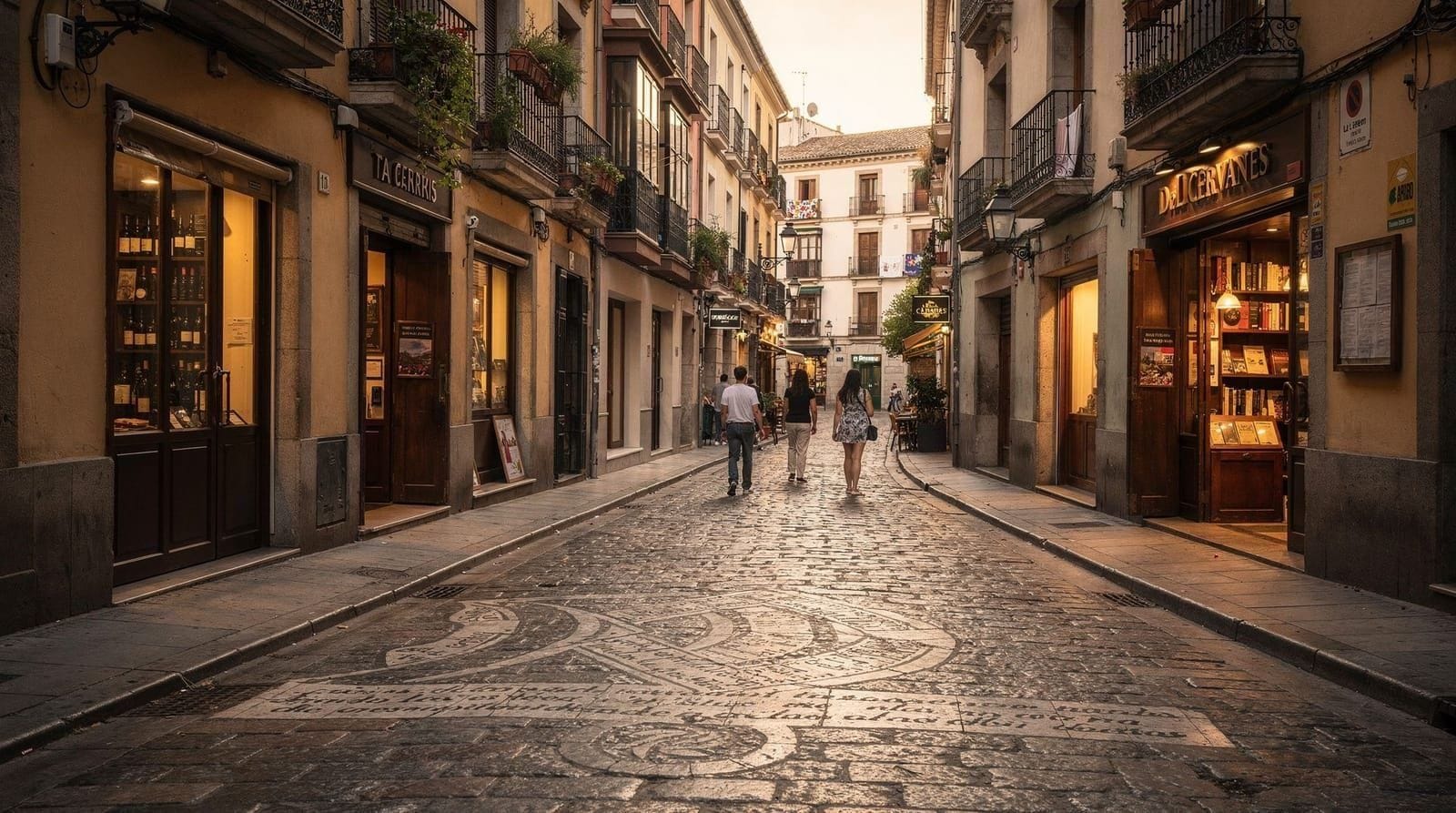
Small intimate tablaos (50–80 seats): These venues in Barrio de las Letras and Lavapiés prioritise performance quality over production values. The stages are small, the sight lines are close, and the performers know that a discerning audience is watching. The La Cueva de Lola flamenco show with drink is one of the consistently well-reviewed smaller venues in this category — intimate setting, professional cast, no dinner package required.
Mid-size tablaos (100–150 seats): These venues offer a more produced show with higher production values — better sound, stage lighting, multiple costume changes — while still employing professional performers. The Emociones live flamenco show falls into this category and is well-suited to visitors who want a full theatrical experience without the dinner-package pricing of the large tablaos.
Large established tablaos (200+ seats): Venues like Torres Bermejas (operating since 1960) and Cardamomo have capacity for large groups and serve full dinner packages. The performers are professional, the shows are polished, and the experience is closer to a theatrical spectacle than an intimate performance. These are legitimate choices for visitors who want a combined dinner-and-show evening; the food is typically adequate Spanish restaurant fare rather than destination-quality cooking.
Show-only vs dinner package: the honest verdict
The dinner-and-show format costs €65–€120 per person for a reason: the meal margin subsidises the venue. At the large tablaos, the food is invariably decent Spanish dishes (jamón, tortilla, gazpacho, meat mains) executed competently for high volume — not a memorable meal in a city that has genuinely excellent restaurants at every price point.
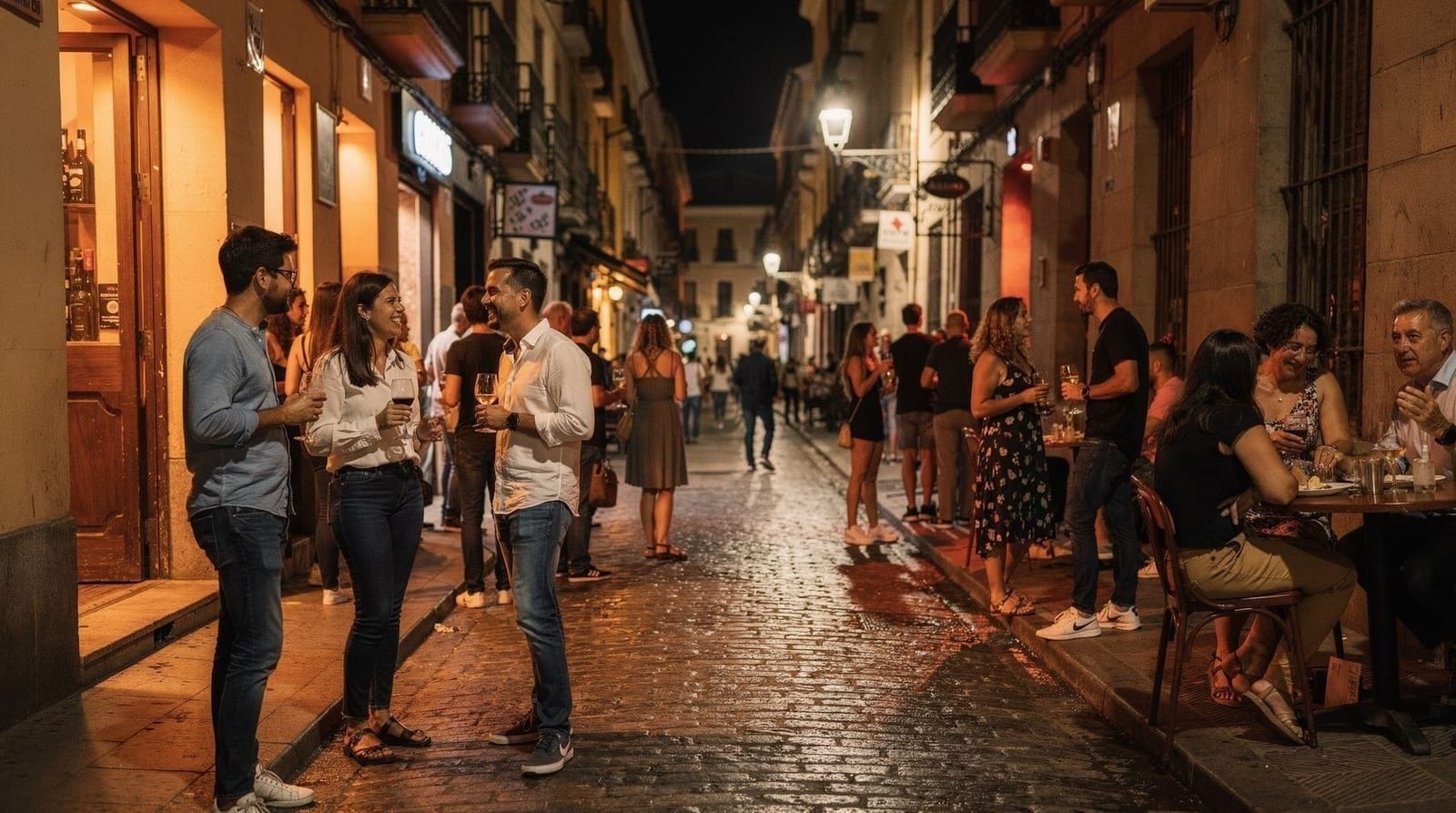
Book the show-plus-drink package and use the saved money (€40–€70 per person) on a proper meal at a tapas bar in La Latina or Barrio de las Letras before or after the show. Madrid at 21:00 is very much open for dinner; combining a 22:00 show with a 20:00 dinner is entirely workable.
The exception: if you are travelling with a group that wants a single-venue evening — arrive, eat, watch, leave — the dinner package at one of the mid-size tablaos is a reasonable convenience even at the higher price.
Timing and booking
The 22:00 show slot attracts a more local-weighted audience at most venues and often produces slightly more energetic performances — artists performing for people who know what they are watching tends to raise the level. The 19:00 and 20:30 shows are more tourist-facing but easier logistically.
Book 48–72 hours ahead in peak season (April–September, Christmas week). January–March is quieter and same-day booking is often possible. The shows do genuinely sell out for the 20:30 slot in high summer — this is not a booking-system fiction.
See /guides/flamenco-shows-madrid/ for a full comparison of Madrid’s tablao circuit with venue-by-venue notes, and /guides/best-tablaos/ for a ranked guide to the best small and mid-size venues currently operating.
Verdict
Madrid has a serious flamenco scene and attending a live performance is one of the city’s most culturally distinctive experiences. The key decisions are: avoid the largest tourist-facing venues unless the convenience of a single-venue dinner-and-show evening is your priority; choose a show-plus-drink package and eat independently; go to the 22:00 show if your schedule allows. The post-show artist talk format offered by some venues adds genuine value and is worth the minimal price premium over a standard show. Arrive knowing the basic vocabulary of palos and duende — see /guides/flamenco-shows-madrid/ — and you will leave having actually understood what you watched.
Compare top tours
Frequently asked questions about Madrid
Is flamenco in Madrid authentic or a tourist show?
Both exist, and the difference matters. Madrid's tablaos — dedicated flamenco performance venues — range from tourist-facing spectacles with choreographed group shows and fixed dinner menus aimed at coach parties, to serious intimate venues where professional dancers, guitarists, and cantaores perform for mixed audiences of tourists and locals. The authentic end of the spectrum is not hard to find if you know where to look: smaller venues in Barrio de las Letras and Lavapiés, venues with post-show artist talks, and venues with a standing reputation among flamenco practitioners rather than just TripAdvisor ratings. Madrid is actually one of the best cities outside Andalusia to see serious flamenco, because it draws top performers from Sevilla, Jerez, and Granada who work the capital's year-round circuit.What is the difference between flamenco cante, baile, and toque?
Flamenco is built on three disciplines practiced separately and together. Cante is the singing — the most technically demanding and emotionally direct form, built on palos (styles such as soleá, bulerías, siguiriyas, and alegrías) each with defined rhythmic and melodic structures. Baile is the dance — the footwork (zapateado), the arm movements (braceo), and the emotional performance quality that determines whether a dancer is merely technically proficient or actually communicating duende. Toque is the guitar — providing harmonic and rhythmic support for the singing and dance while also functioning as a solo art form. A full performance typically integrates all three, sometimes with palmas (rhythmic handclapping) and castañuelas.How much does a flamenco show cost in Madrid?
Prices range widely. Entry-only shows at smaller venues cost €15–€25. Show-plus-drink packages (the most common format) run €25–€45 per person. Dinner-and-show packages at larger tablaos cost €65–€120 per person, with the meal quality varying significantly. Budget-conscious visitors should book a show-plus-drink package at a mid-size venue rather than the full dinner package unless the food is specifically reviewed well — at most large tablaos the dinner is standard tourist-menu fare at tourist-menu prices.When should I arrive for a flamenco show?
Shows typically run at 19:00, 20:30, and 22:00. The 20:30 slot is the most popular and can sell out in advance. Arrive 15–20 minutes before the show starts to secure a good seat — most venues operate general admission within the booked ticket tier rather than assigned seats. The 22:00 show tends to attract a more local-weighted audience and often has slightly more energy, but finishing at midnight is not convenient for visitors with early morning plans.Can I see free flamenco in Madrid?
Yes, in limited form. Some bars in Lavapiés with Andalusian roots host juergas — impromptu flamenco sessions — though these are not predictable enough to plan a visit around. The most reliably free flamenco option is the Sunday El Rastro flea market area in La Latina, where busking musicians and dancers sometimes perform in the afternoon. These are not tablao-quality performances but they give a sense of the art form in a spontaneous setting.