Cycling in Madrid: the complete guide to exploring by bike
Madrid: Highlights 3h Cycling
Is Madrid a good city for cycling as a visitor?
Madrid is better for cycling than its car-heavy reputation suggests — Madrid Río offers 30+ km of flat riverside path, Retiro Park has dedicated lanes, and BiciMAD public e-bikes give point-to-point flexibility. The city center has traffic-heavy roads where cycling is legal but demanding. Guided bike tours are the easiest way for a first visit.
In brief: Madrid is a better cycling city than most visitors expect. The combination of BiciMAD’s docking network, the flat Madrid Río riverside path, and Retiro Park’s car-free interior makes point-to-point cycling practical. For a visitor who wants a half-day cycling experience covering the city’s highlights, a guided tour starting near the center and running through the parks is the right approach.
| Where | Madrid Río, Retiro Park, Castellana cycle lane |
| Cost | BiciMAD from a few euros/hour; rental €10–30/day |
| Time needed | 1.5–3 hours for a good loop |
| Getting a bike | BiciMAD app or a rental shop like Trixi |
| Best time | Early morning or 16:00–19:00 in summer |
Madrid’s cycling infrastructure: the honest picture
Madrid is not Amsterdam or Copenhagen. The city was built around cars and has narrow historic streets in the center that make cycle lane installation difficult. That said, investment in cycling infrastructure has accelerated since 2015, and the result is a network that visitors can actually use.
What works well:
- The Madrid Río linear path is one of the best urban cycling routes in Europe — 30+ km of riverside path with no motor traffic, flat terrain, and access to multiple neighborhoods.
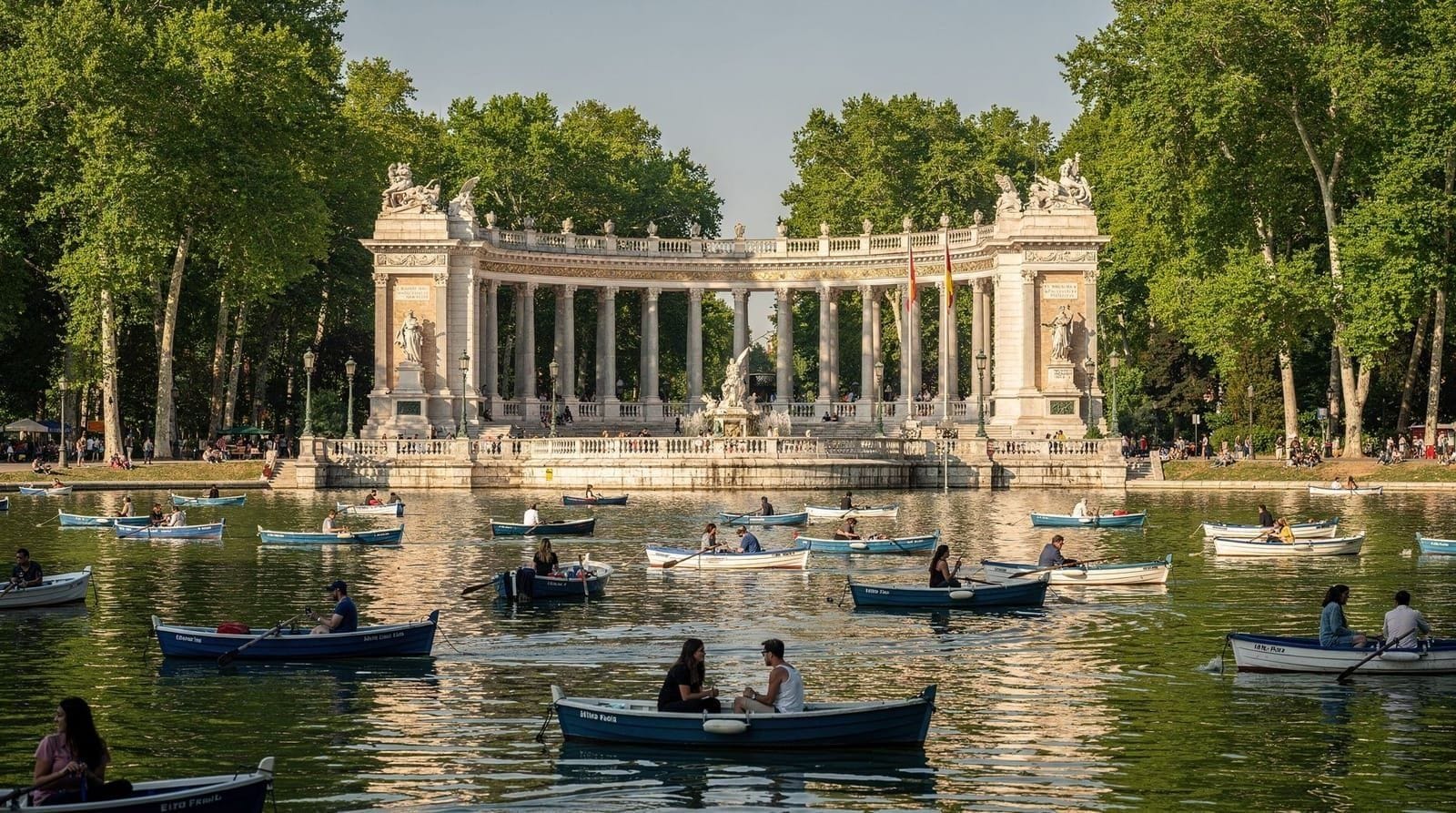
- Retiro Park has dedicated cycling areas and is the most pleasant in-city ride.
- The main Carril Bici network connects the center to the north (Castellana) and several residential areas.
- BiciMAD public e-bikes are available at 680+ stations and are well-maintained.
What is difficult:
- The historic center around Sol, Gran Vía, and Plaza Mayor has no dedicated cycle lanes and high pedestrian and car traffic.
- Cycling on pavements (sidewalks) is illegal and penalized. Use road or dedicated lanes.
- Some of the designated cycle lanes are narrow and shared with pedestrians in practice.
- Madrid’s hills — particularly the rise from Madrid Río up toward the city center — are manageable on an e-bike but challenging on a standard bike.
BiciMAD: practical guide for visitors
BiciMAD is the city’s public electric-assist cycle-share system. As of 2026, it operates 683 stations across most central districts.
Getting started:
- Download the BiciMAD app (available for iOS and Android)
- Create an account and register a payment method
- Choose a pass or the pay-per-ride contract (the official BiciMAD website lists the current options)
- Unlock a bike at any docking station via the app or using the card reader
- Ride; return to any docking station
Usage rates: The first 30 minutes cost €0.50 and the second 30 minutes €0.50; each further 30 minutes costs €3. For a typical city center–to–Retiro trip, you will use 30–45 minutes.
The bikes: All BiciMAD bikes have 250W pedal-assist motors. You still pedal; the motor amplifies your effort. On flat Madrid Río terrain, BiciMAD bikes feel effortless. On the uphill sections into the city center (particularly from Arganzuela north toward Chueca), the assist is essential.
Known limitations:
- Docking stations can be full at popular destinations (Retiro, Sol), meaning you cannot return your bike. Check the app before arriving to confirm availability.
- During peak morning hours, bikes near the center go fast. Start early.
- The app interface is available in English.
Best cycling routes in Madrid
Madrid Río path (flat, car-free, 10–15 km practical section)
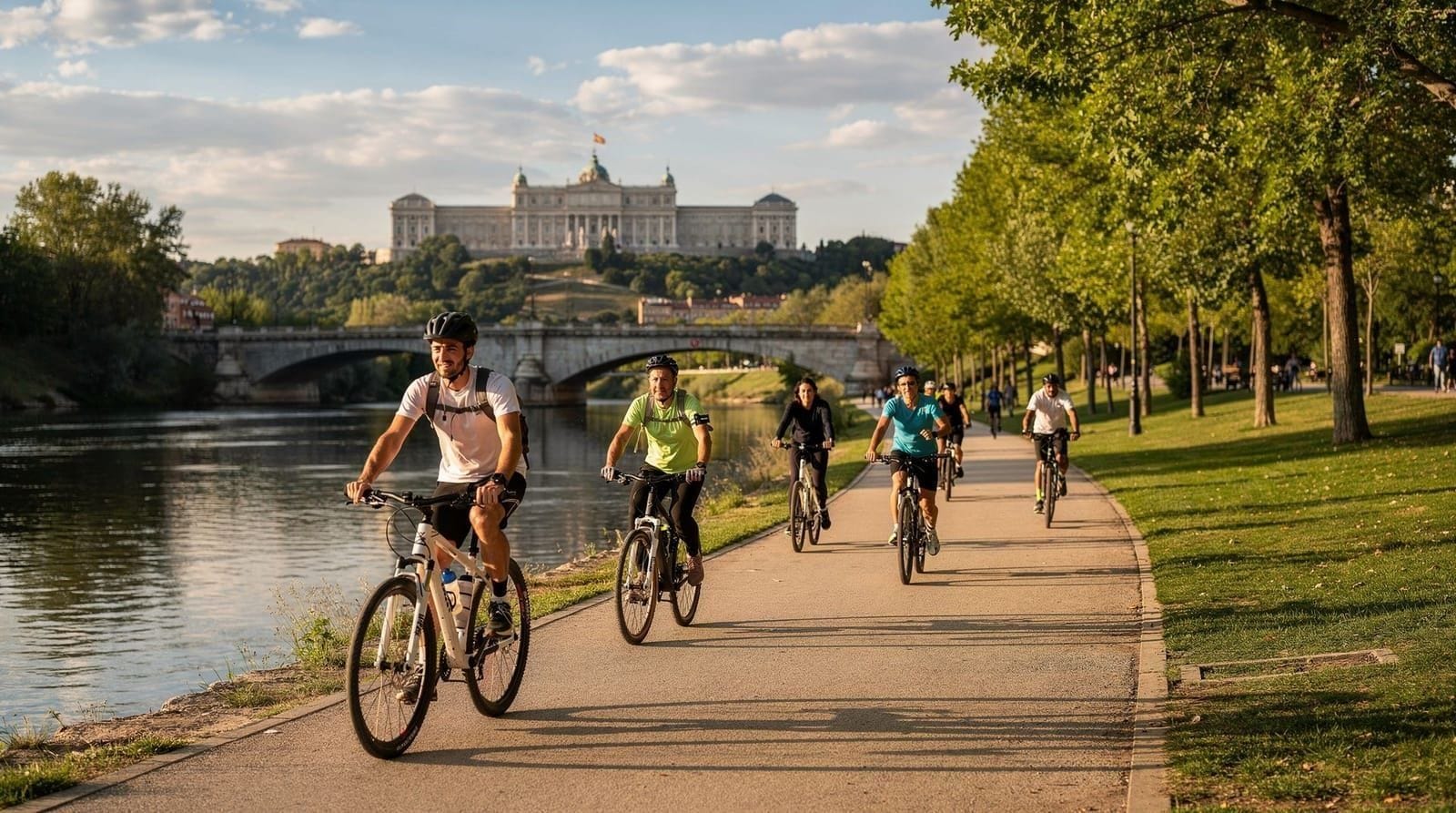
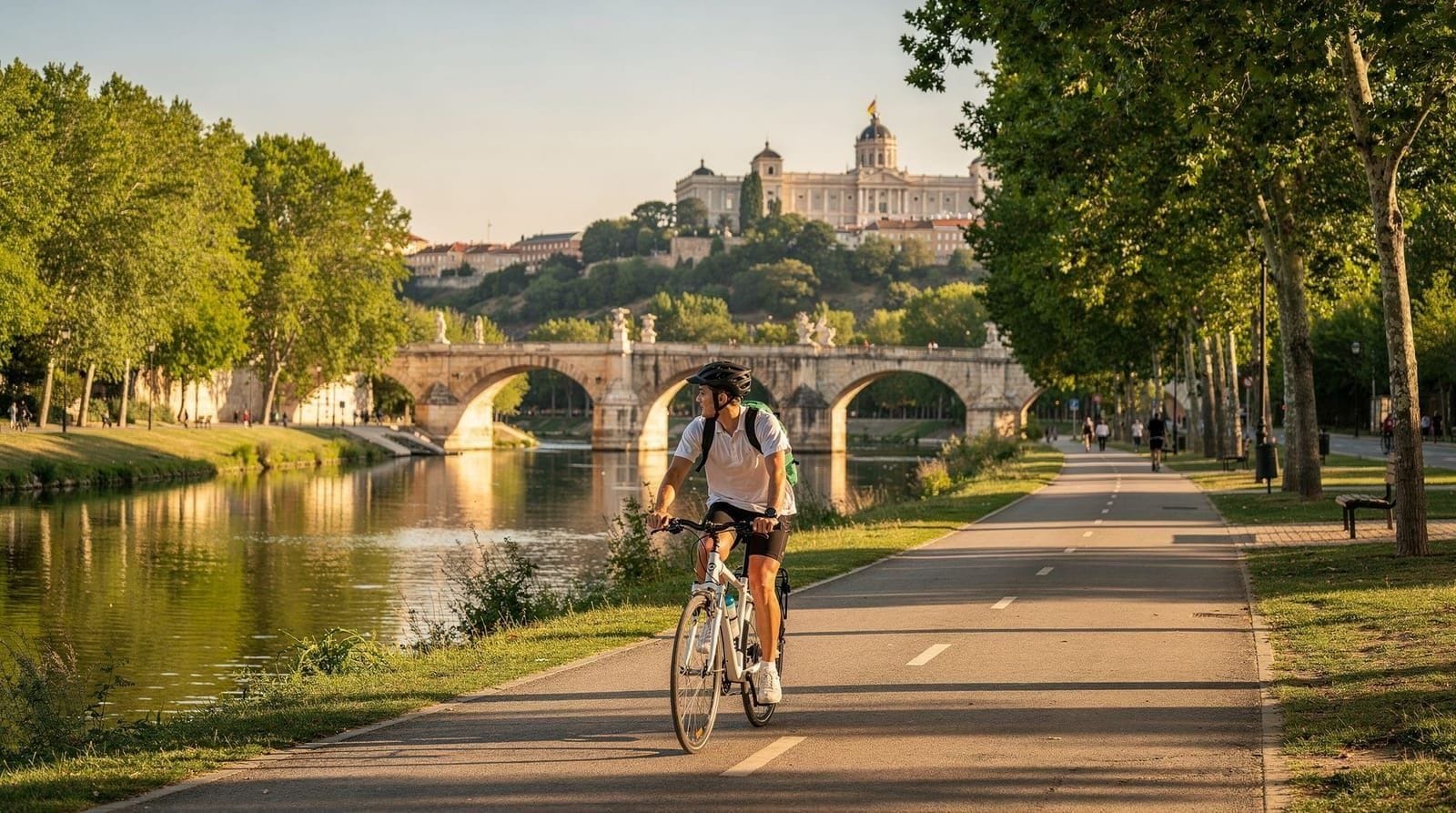
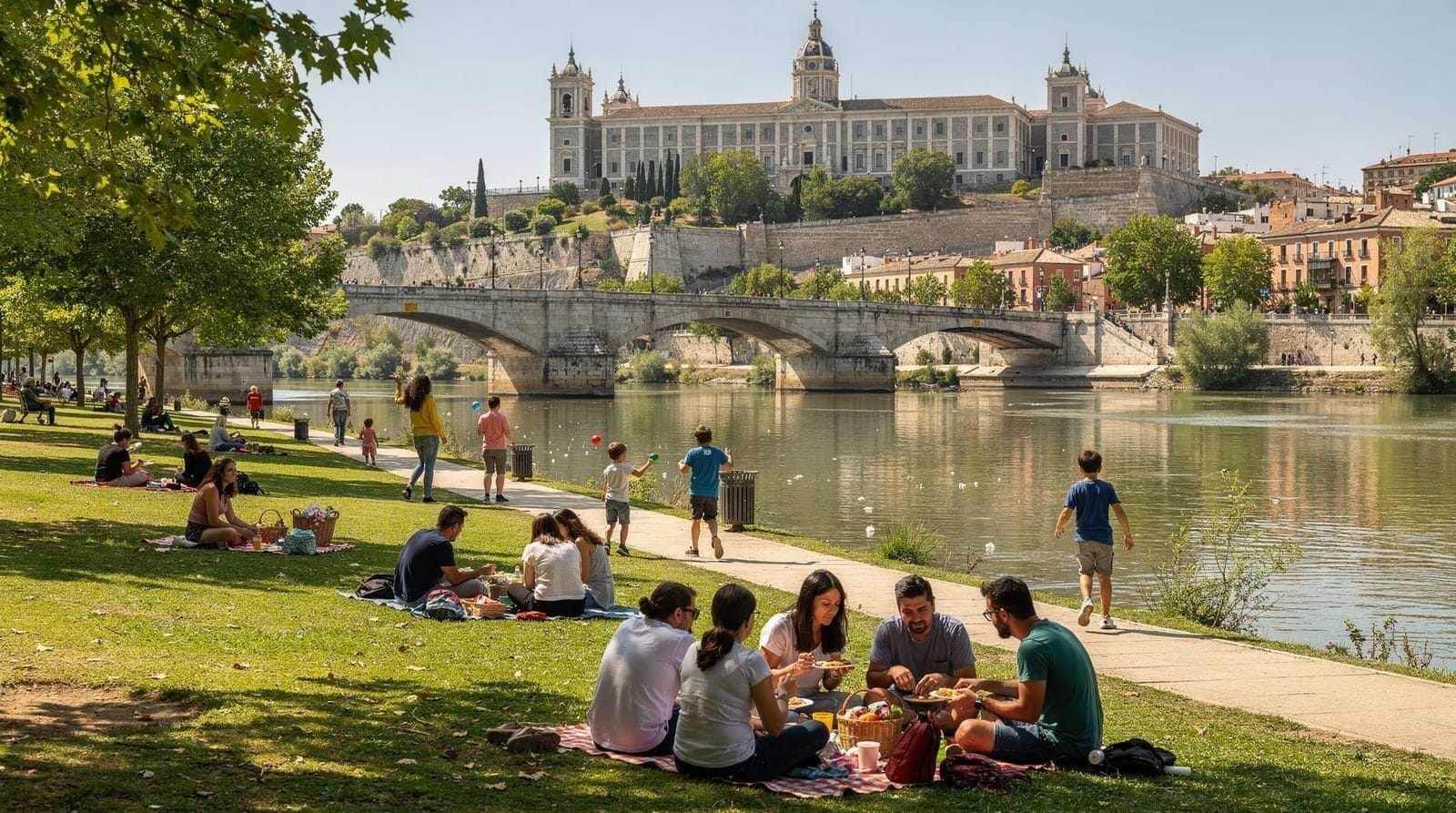
The best cycling in Madrid. The Manzanares riverside park runs approximately 50 km in total, with the most visited section covering from the Puente de Toledo in the south through Arganzuela, past the old Vicente Calderón site, to Casa de Campo in the northwest.
This section is almost entirely flat, paved, and separated from motor traffic. On weekends, it fills with cyclists, runners, families, and dog walkers. The bridges over the Manzanares (particularly the Puente del Rey and Puente de Arganzuela — the latter a dramatic spiral pedestrian bridge) are landmarks in themselves.
Practical distance: Puente de Toledo to Puente del Rey is approximately 5 km. A comfortable return loop takes 60–90 minutes on a casual pace.
See the Madrid Río cycling guide for the full route detail.
Retiro Park circuit
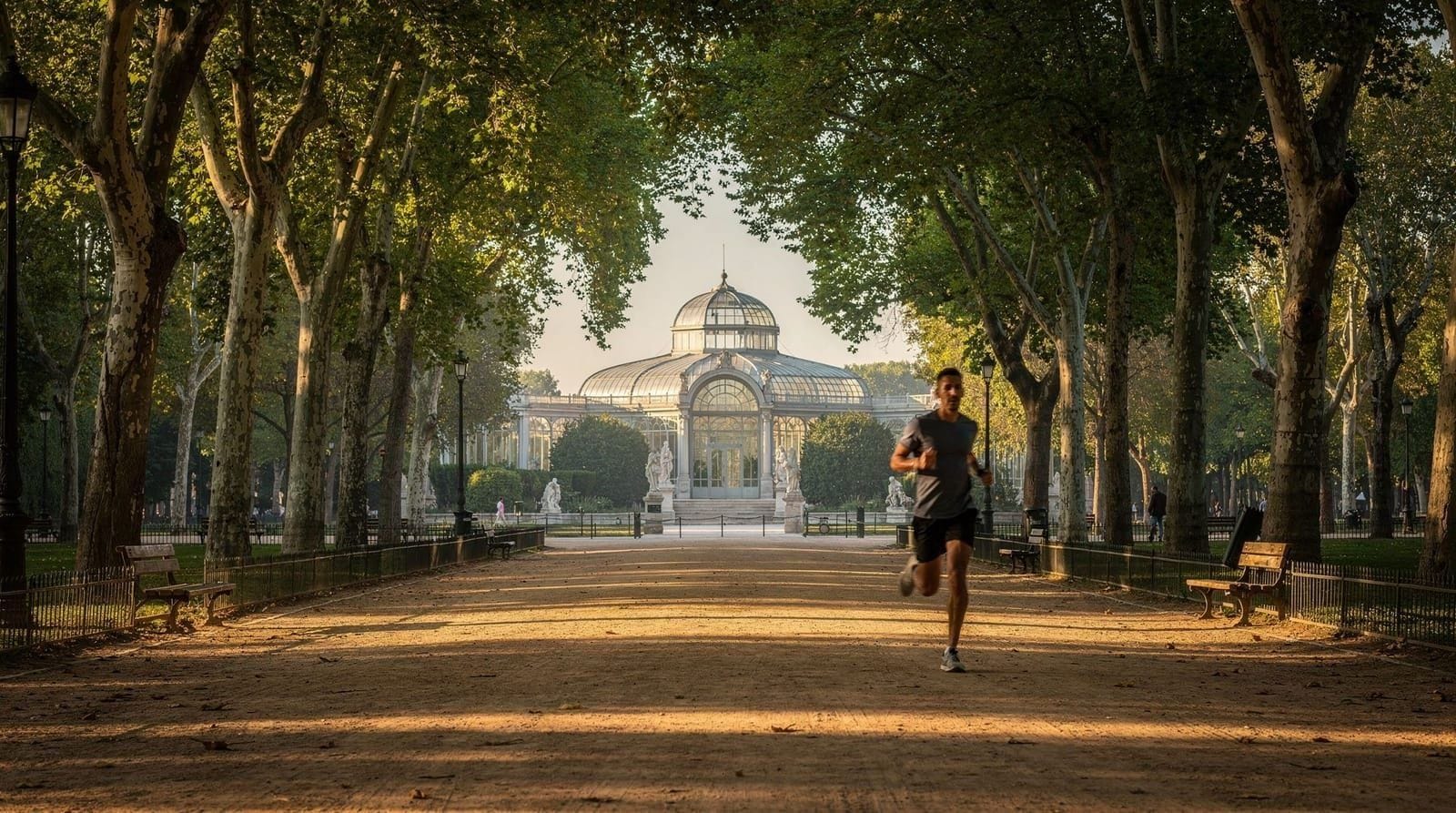
Retiro’s car-free interior has a natural cycling circuit. The main lake loop (Estanque Grande) is approximately 2.5 km; extending through the park to the Palacio de Cristal and back to the Paseo del Prado entry covers about 4–5 km.
This is not a cycling route for speed — the park is densely pedestrian on weekends and holidays. Early morning (before 09:00) is the best time for a fast circuit. Midday and afternoons, treat it as a slow scenic ride.
Castellana cycle lane (city center to Chamartín, 8–10 km)
The Paseo de la Castellana has a dedicated cycle lane running most of its length. This is a practical commuter route but also offers sightseeing value: the Paseo del Prado section passes the museum triangle, the Cibeles fountain, and the Paseo de Recoletos before joining the Castellana proper.
From Atocha north to Chamartín is approximately 10 km — flat, with good lane quality for most of the route. Start at Atocha, ride north past the Prado, through Cibeles, up the Castellana to the Bernabéu, continuing to Chamartín if desired.
Casa de Campo (off-road and mountain biking)
Madrid’s largest park (17 km²) west of the center has extensive off-road trails suitable for mountain bikes. The terrain is varied — flat sections near the lake, steeper wooded hills toward the interior. The park’s mountain bike trails are not marked to international MTB trail standards but are accessible and well-used by local cyclists.
BiciMAD bikes are not suitable for Casa de Campo’s off-road sections; rent a proper mountain bike if you want to explore the park properly.
Guided bike tours: the best options
For a first-time visitor, a guided cycling tour is the most efficient way to see the city by bike. The guides handle the route planning, negotiate the traffic, and provide context that transforms a ride through the city into a genuine experience.
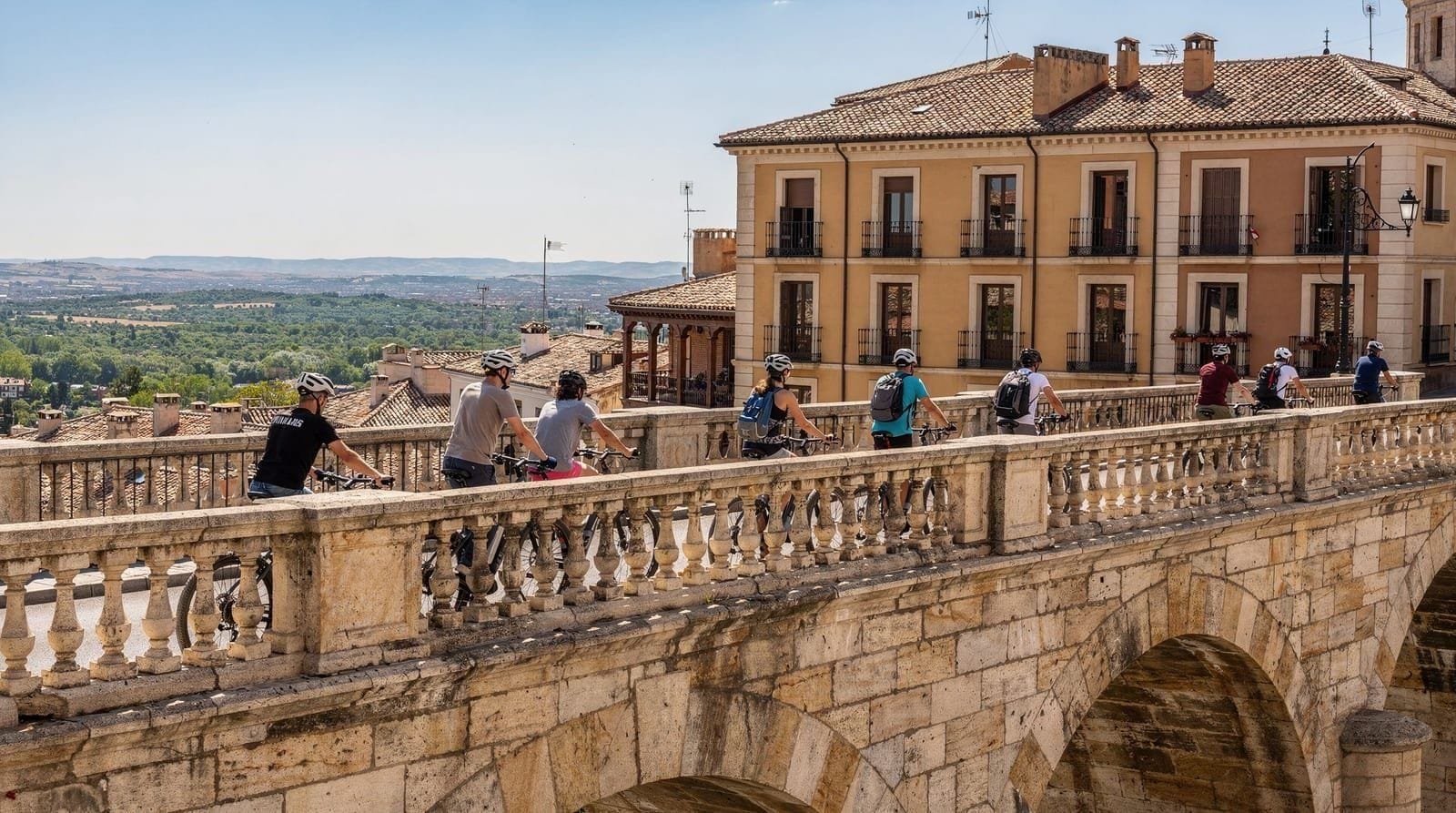
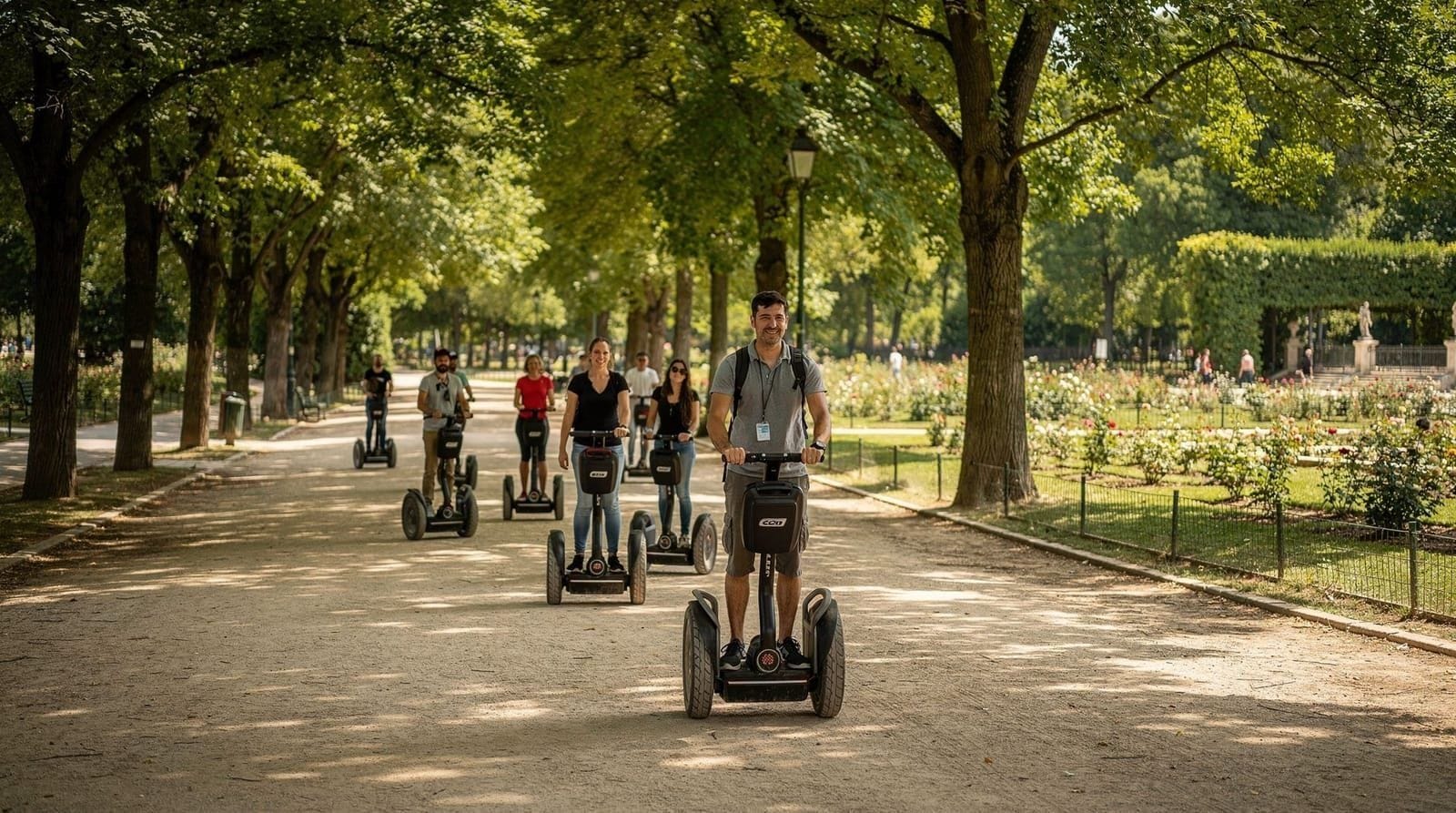
A 3-hour cycling tour of Madrid’s highlights covers the main neighborhoods — Sol, La Latina, Lavapiés, the Palacio Real area — on a route designed for visitors with a local guide.
A cycling tour with optional tapas stop combines the cycling route with a food pause in the Chamberí or La Latina area — practical if you want to combine activity with eating.
For e-bike specific tours, see the dedicated e-bike tours guide.
Cycling and tapas: a note on timing
Madrid’s Spanish eating schedule matters if you plan to cycle and eat:
- Lunch (La Comida): 14:00–16:00. This is the primary meal of the day in Spain. If you want a proper lunch, plan to finish your morning cycling by 14:00.
- Afternoon: 16:00–19:00 is less active for food (most restaurants between lunch and dinner); this is the best cycling window in summer (slightly cooler than midday).
- Dinner: 21:00+ (locals eat late). Evening cycling (Madrid Río is pleasant after 20:00 in summer) can precede dinner rather than follow it.
A dedicated Retiro Park bike tour covers the park’s main areas and sculptures with a guide — practical for those who want a contained, low-traffic cycling experience.
Safety and legal requirements
Helmet: Not legally required for adults on city streets (as of 2026), but strongly recommended. Rental companies typically include helmets; BiciMAD does not provide helmets. Buy or bring a folding helmet if you plan to use BiciMAD extensively.
Traffic rules: Cyclists must obey traffic lights and signals. Cycling on pavements is prohibited in the city center (fine: €90). Cycling in pedestrianized zones is prohibited.
Lights: Legally required after dark. Most rental bikes include front and rear lights. BiciMAD bikes have integrated lights that activate automatically.
Insurance: Rental bikes typically include basic liability insurance. Check the rental company’s terms. BiciMAD’s terms include basic coverage but not comprehensive personal accident insurance.
Cycling with children
Madrid is manageable for family cycling if you stay on the dedicated infrastructure:
- Madrid Río is excellent for families — flat, long, car-free.
- Retiro Park has rentable tandems and children’s bikes near the lake entrance (Puerta de Alcalá side and Puerta del Retiro side).
- Casa de Campo has wide flat paths near the lake suitable for children.
Cycling in city center traffic is not recommended for children. Plan routes that stay on the dedicated infrastructure.
Combining cycling with the city’s sights
The most practical cycling circuit for sightseers covers: Puerta del Sol → La Latina (via Calle de Toledo cycle route) → Madrid Río riverside path → Arganzuela/Legazpi → return via Retiro Park (from west entrance) → back to Sol via the Prado.
This loop is approximately 15–18 km and takes 2.5–3 hours at a comfortable pace. It covers four of Madrid’s most distinctive areas on a predominantly car-free or low-traffic route.
For deeper coverage, the guided bike tour with highlights and tapas adds editorial context to what you are riding past.
A private e-bike tour through Madrid’s parks is a good option for visitors who want the assisted comfort of an e-bike combined with a private, unhurried pace rather than a fixed-group schedule.
Pairing a ride with a museum, a park or a market
A bike works best in Madrid when it links a few stops rather than trying to be the whole day. A morning ride along the river can end at the doors of a museum, where you lock up or dock the bike and switch to walking. The Prado Museum guide and the Golden Triangle art walk are natural partners for the Castellana and Paseo del Prado section, because the cycle lane drops you right at the edge of the museum district.
If you prefer green space to galleries, the Retiro Park guide explains the gates, the lake and the quieter corners, which helps you plan where to ride and where to simply push the bike. The Casa de Campo guide covers the larger park to the west, useful if the river path leaves you wanting more distance. For a slower afternoon on foot afterwards, the La Latina neighborhood is a short hop from the river and suits a late tapas crawl once the bike is back.
Reading the city from the saddle
Cycling shows you how Madrid is put together in a way the metro never does. You feel the long slope from the river up to the old center, you notice how the wide avenues of the nineteenth-century districts give way to tight lanes around the oldest quarters, and you pass from the calm of the riverside into busy squares within a few minutes. Treat the ride as a way to understand the geography: pick a landmark, aim for it by the quietest route, and stop whenever something catches your eye.
Pacing matters more than distance. The city rewards a relaxed rhythm with frequent pauses for water, shade and a coffee, and a short loop done unhurriedly is usually more enjoyable than a long one done under pressure. On hot days, plan the exposed stretches for the cooler ends of the day and keep the middle for indoor stops.
When the bike is not the right tool
Some days are better spent without one. After heavy rain the paved paths can be slick, and in very hot afternoons the shade on the riverside is limited. If you are travelling with a large group, mixed abilities or young children, a guided format or a walking day may suit you better. The getting around by metro guide shows how to cover the same ground by train and bus, and the Madrid with kids guide has family-friendly options that do not depend on cycling at all. For a fuller sense of how a ride fits among other plans, the Madrid in one day itinerary shows what else can share the same day.
Renting vs BiciMAD vs a guided tour
| BiciMAD | Rental shop | Guided tour | |
|---|---|---|---|
| Best for | Short point-to-point hops | One long continuous ride | First-time visitors, no route planning |
| Typical cost | A few euros for a couple of hours | €10–30/day | €25–35 for ~3 hours |
| Route knowledge needed | Some | Some | None — guide handles it |
| Flexibility | High (dock anywhere) | High (yours all day) | Fixed schedule and route |
Practicalities beyond the bike
Bring water — Madrid summers push past 35°C and there are fewer fountains along Madrid Río than in the parks. Sunscreen matters even on an overcast day given the altitude. If cycling Madrid Río end to end, note that services (cafés, toilets) cluster near Puente de Toledo and Matadero Madrid; the northern and southern extremes of the path are quieter and less serviced. For a wider view of how a day of cycling fits into a broader trip, see the how many days in Madrid guide and the Madrid 3 days itinerary.
Frequently asked questions about Cycling in Madrid
What is BiciMAD and how does it work?
BiciMAD is Madrid's public electric-assist bicycle docking system. Over 680 stations across the city, with e-bikes that have 250W pedal-assist motors. Tariff: €0.50 for the first 30 minutes, €0.50 for the second 30 minutes, then €3 for each further 30 minutes; the official BiciMAD website lists the passes and the monthly flat rate. Bikes must be returned to a docking station. The system is designed for urban point-to-point trips, not extended tours.What are the best cycling routes in Madrid?
Madrid Río path (30+ km along the Manzanares, flat and car-free), the Retiro park circuit (2.5 km loop, pedestrian-shared), the Castellana cycle lane (north-south spine from Prado to Chamartín), the Carril Bici on Calle de Alberto Aguilera/Calle de Bravo Murillo, and the Casa de Campo off-road trails for mountain bikers.Are guided bike tours in Madrid worth it?
For first-time visitors, yes. Madrid's traffic can be confusing without local knowledge, and the best routes are not obvious from a map. Guided tours (3 hours, €25–35 typically) cover the main neighborhoods and monuments with a guide who handles the routing. E-bike tours are particularly recommended for visitors unfamiliar with urban cycling.Can I rent a bike without BiciMAD?
Yes — several rental shops offer traditional and electric bikes by the hour or day. Options include Trixi in La Latina (Calle del Humilladero, one of the most established), and various other operators near Retiro and the city center. Day rates for standard bikes: €10–15; e-bikes €20–30. Helmets are typically included.Is cycling safe in central Madrid?
The dedicated cycle lanes are safe. The general road network is manageable for confident urban cyclists but not suitable for beginners or families with young children. The safest Madrid cycling is on dedicated infrastructure: Madrid Río, Retiro Park, and the main Carril Bici network. The busy streets around Sol, Gran Vía, and Atocha are best avoided on a rental bike.How much does a day of cycling in Madrid cost?
A BiciMAD day pass plus usage runs a few euros for a few hours of point-to-point riding; a full-day rental bike is typically €10–15 for a standard bike or €20–30 for an e-bike. A guided 3-hour cycling tour runs around €25–35 per person. Combined with a picnic lunch on Madrid Río or in Retiro, a full day of cycling can cost under €40 including a rental bike.Is BiciMAD or a rental shop better for a one-day visit?
BiciMAD suits point-to-point trips where you dock the bike between rides — practical if you're combining cycling with museums or walking. A day-rental from a shop like Trixi makes more sense if you want one continuous ride (Madrid Río and back, for example) without worrying about docking-station availability. For a single long loop, a rental bike is usually simpler; for hopping between a few short rides, BiciMAD wins.
Top experiences
Bookable activities with verified prices and instant confirmation on GetYourGuide.