Cuenca from Madrid: hanging houses, gorge & day-trip guide
Cuenca: Cuenca Hanging Houses Cathedral
How do I get from Madrid to Cuenca, and how long does it take?
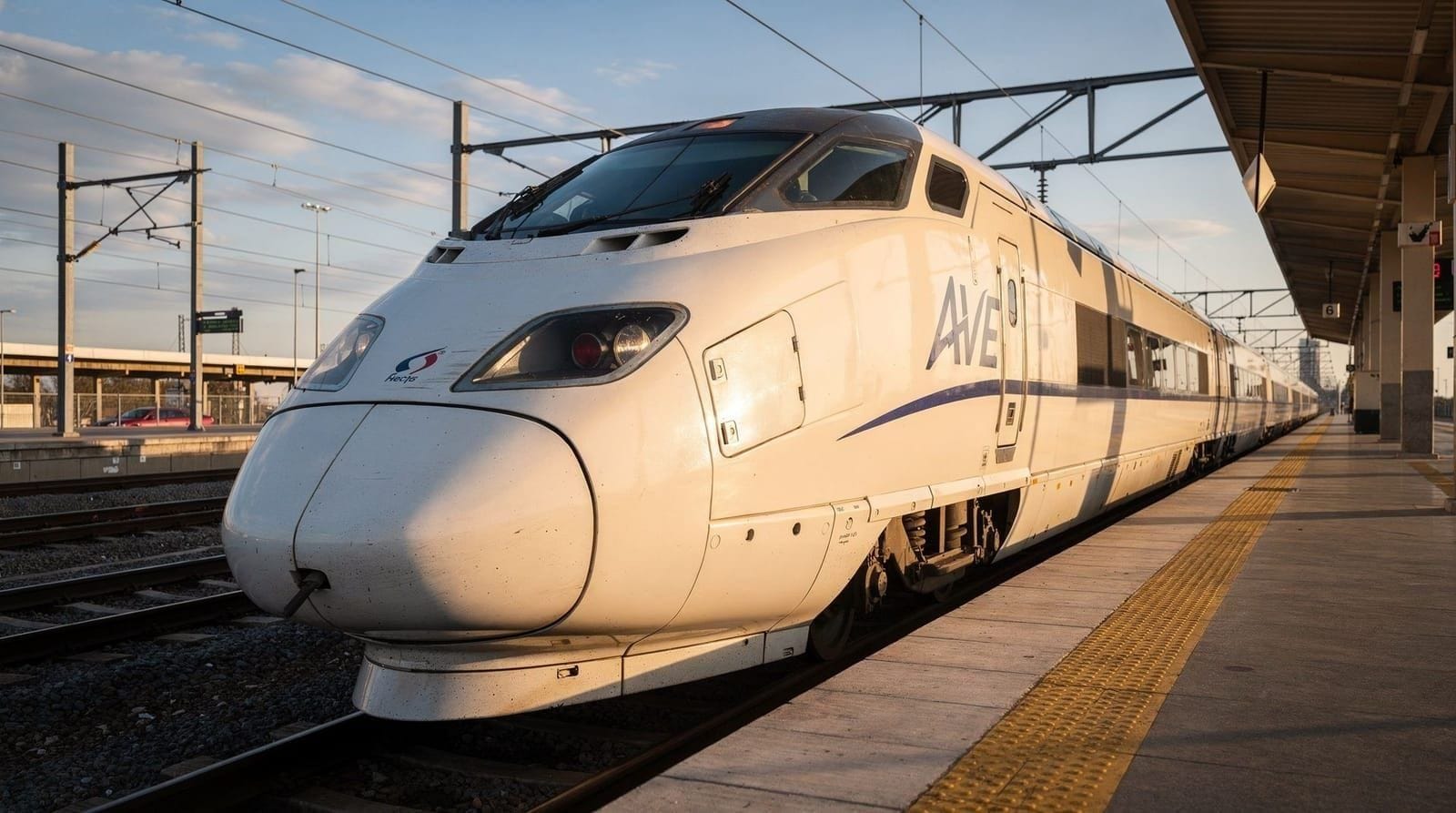
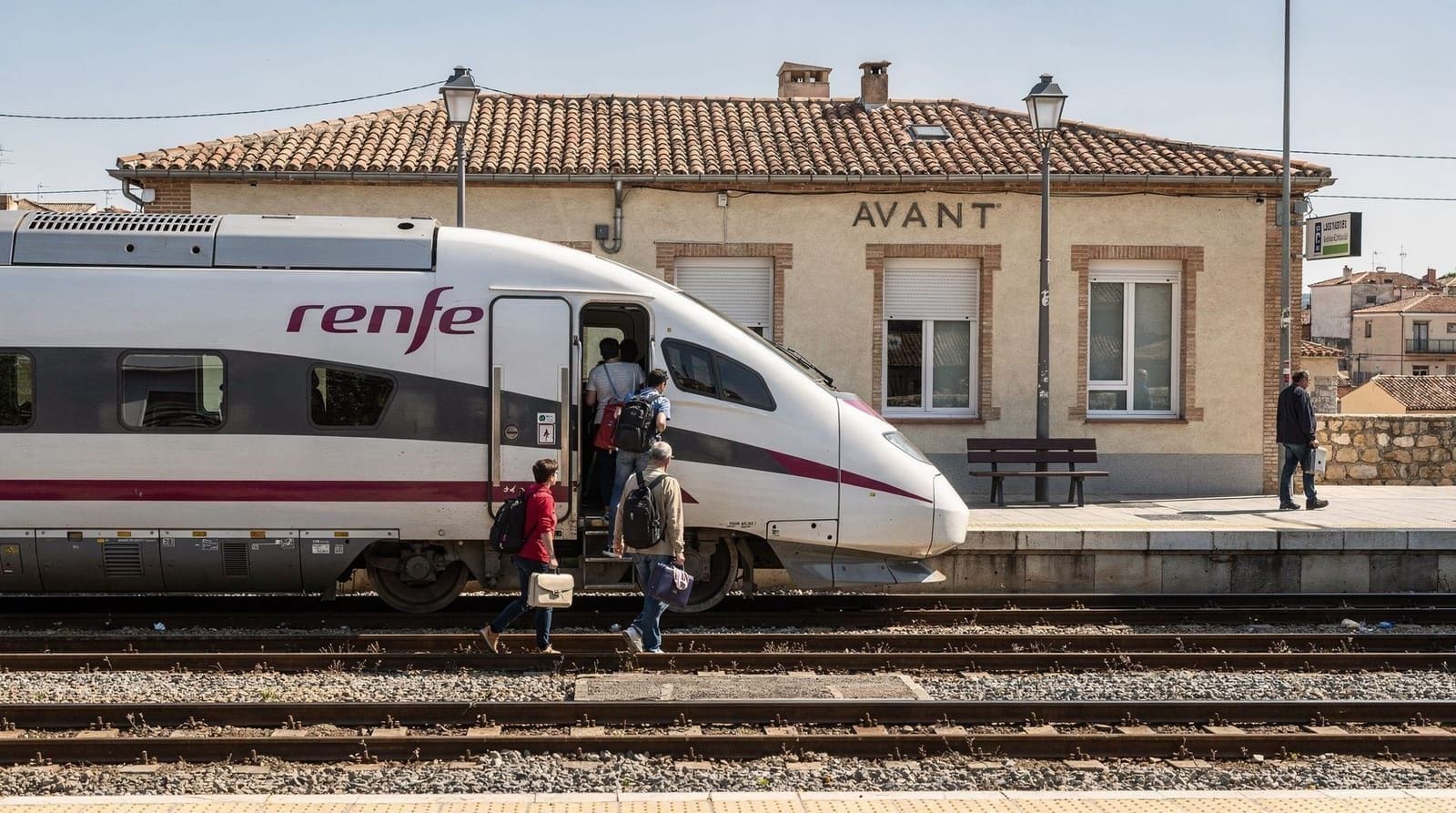
AVE high-speed train from Madrid Puerta de Atocha to Cuenca-Fernando Zóbel station takes approximately 55 minutes. Fares start at about €13 each way, depending on the booking date. From the station (4 km from the old town), a shuttle bus links to the bus station, where city buses serve the old town. Cuenca requires a full day — the walk up to the hanging houses, the gorge circuit, and the UNESCO old town take 4–5 hours of active sightseeing.
| Where | Cuenca, Castile-La Mancha, ~165 km southeast of Madrid |
| Cost | From about €13 each way by AVE |
| Time needed | Full day; around 55 min travel each way |
| Getting there | AVE from Atocha, then shuttle and city bus to the old town |
| Best time | Morning or late afternoon light for the hanging houses |
Why Cuenca is the day trip that surprises people
Most visitors to Madrid prioritise Toledo and Segovia, and that’s correct. But those who add Cuenca to their list tend to come back with the best photographs.
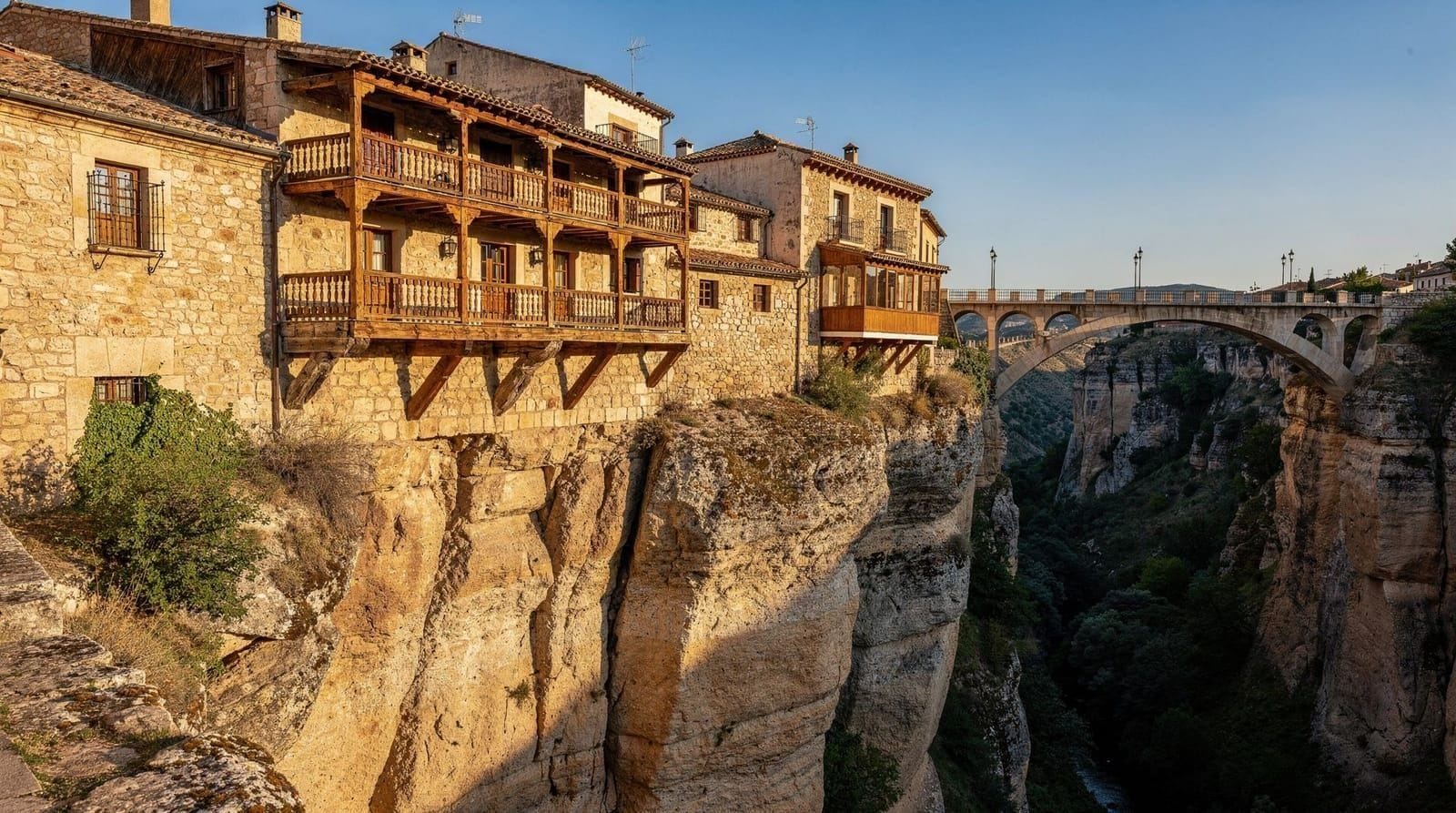
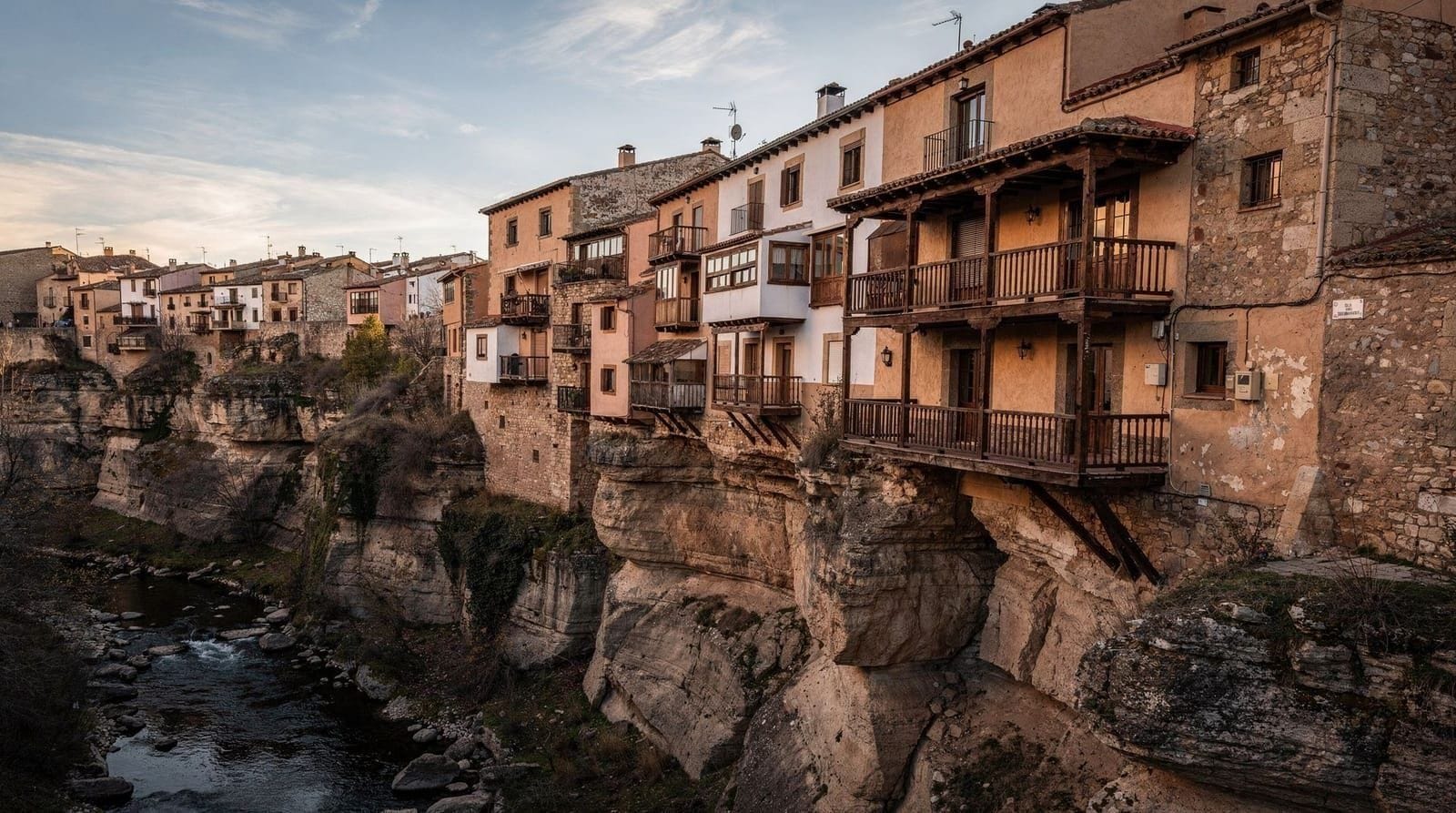
The casas colgadas (hanging houses) projecting over the Huécar gorge are not a metaphor — these 15th-century buildings are physically attached to a cliff, 70 metres above the river, with wooden balconies that hang over nothing. The view from the San Pablo footbridge, looking across the gorge to the hanging houses above, is genuinely unlike anything else in Spain.
Cuenca’s UNESCO listing is for the whole hanging city — the medieval walls, the cathedral, the gorge-edge streets — but the city has a second layer that makes it more interesting than a preserved relic: in the 1960s, a group of abstract artists used the hanging houses and their remarkable setting as a catalyst for a Spanish avant-garde. The Museum of Abstract Art, installed in a medieval cliff-edge building, shows how an ancient place remade itself as a modern artistic statement.
All of this is 55 minutes from Madrid by AVE.
Getting to Cuenca from Madrid
By AVE high-speed train (only practical option)
AVE trains depart from Madrid Puerta de Atocha and arrive at Cuenca-Fernando Zóbel station in approximately 55 minutes.
- Departure station: Madrid Puerta de Atocha (Metro: Atocha Renfe, Line 1)
- Arrival station: Cuenca-Fernando Zóbel — modern station, 4 km from the old town
- Frequency: Several trains daily; check Renfe.com for current schedule
- Fare: from about €13 each way, depending on the booking date; Tourist Travel Pass NOT valid
- From the station: Shuttle bus to the bus station (Intercambiador), then city bus line 1 to the old town; current times and fares on the Cuenca city council website
Note: There is also a slower conventional rail service (Cuenca-Fernando Zóbel via Tarancón) that takes much longer — avoid this in favour of the AVE.
By guided tour
Cuenca hanging houses and cathedral day trip from Madrid — guided bus tour, full day.
Cuenca and the Enchanted City day trip from Madrid — combines the old town with the Ciudad Encantada geological park.
Private Cuenca hanging houses tour — private guide in Cuenca, you arrange transport.
What to see in Cuenca: the essential circuit
The San Pablo footbridge and hanging houses view
Start here. The Puente de San Pablo — a metal footbridge crossing the Huécar gorge at its narrowest point — provides the classic angle on the Casas Colgadas. Stand on the bridge and look left: three medieval houses projecting over the cliff, their balconies cantilevered above the gorge, the limestone walls rising behind them. This is the image that defines Cuenca. Morning light (before 11:00) or late afternoon (after 17:00) are best; midday is harsh.
The Casas Colgadas up close
Cross back to the old town and walk to the houses from above — Calle de los Canónigos. From this angle you see the wooden gallery structures that project over the edge, and you can peer down 70 metres to the river. The Mesón Casas Colgadas restaurant occupies two of the three surviving houses — if you can afford lunch here (€40–60 per person), the setting is extraordinary. The Museum of Abstract Art occupies the third.
Museum of Spanish Abstract Art (MAAE)
Inside one of the hanging houses — the combination of medieval shell and 20th-century abstract art is deliberately incongruous and works. The collection focuses on the Cuenca Group: Antonio Saura’s large black-and-white figures, Eduardo Chillida’s iron sculptures, Gustavo Torner’s meditative canvases. Allow 45–60 minutes. Admission is free.
Cuenca Cathedral
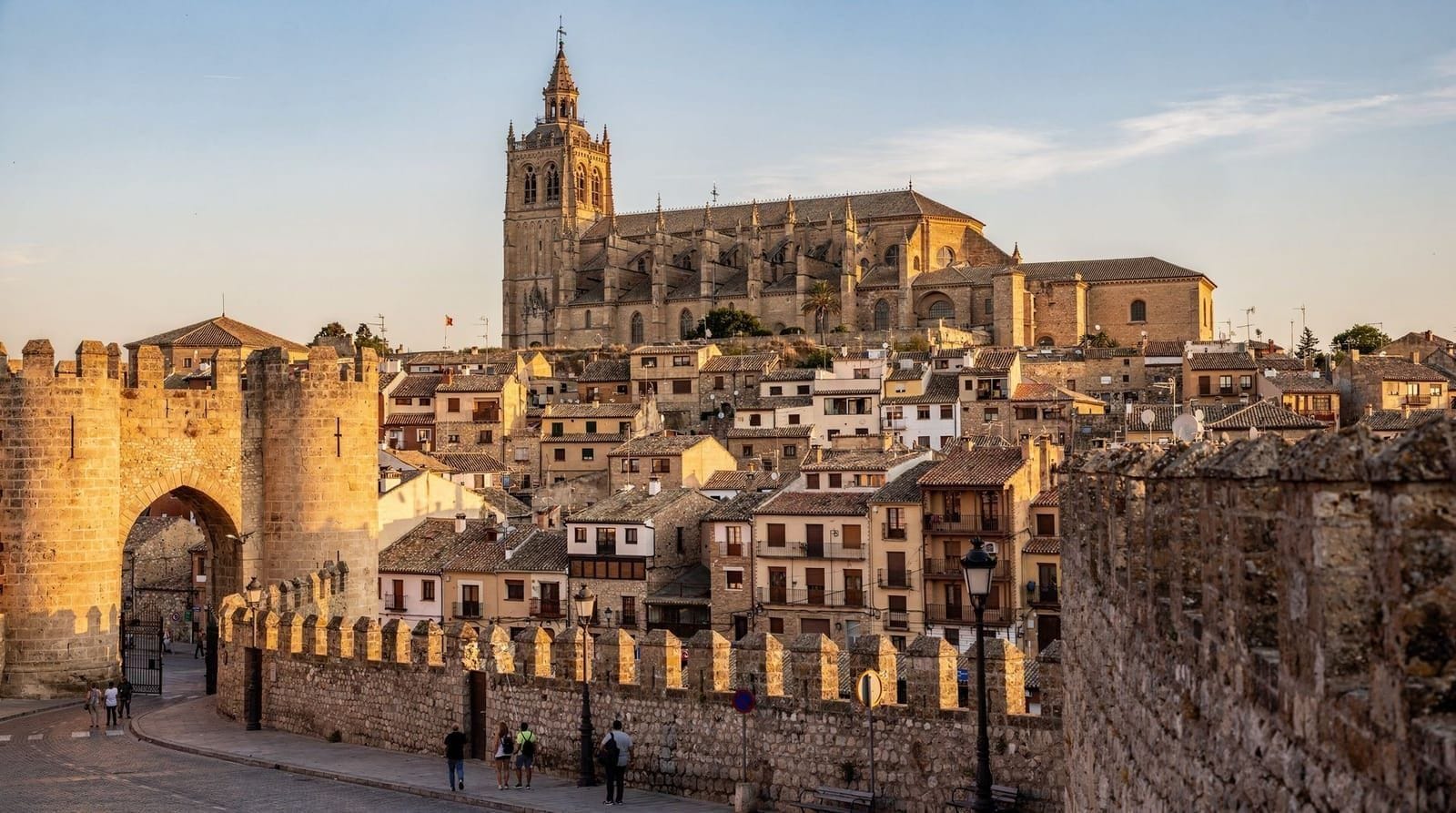
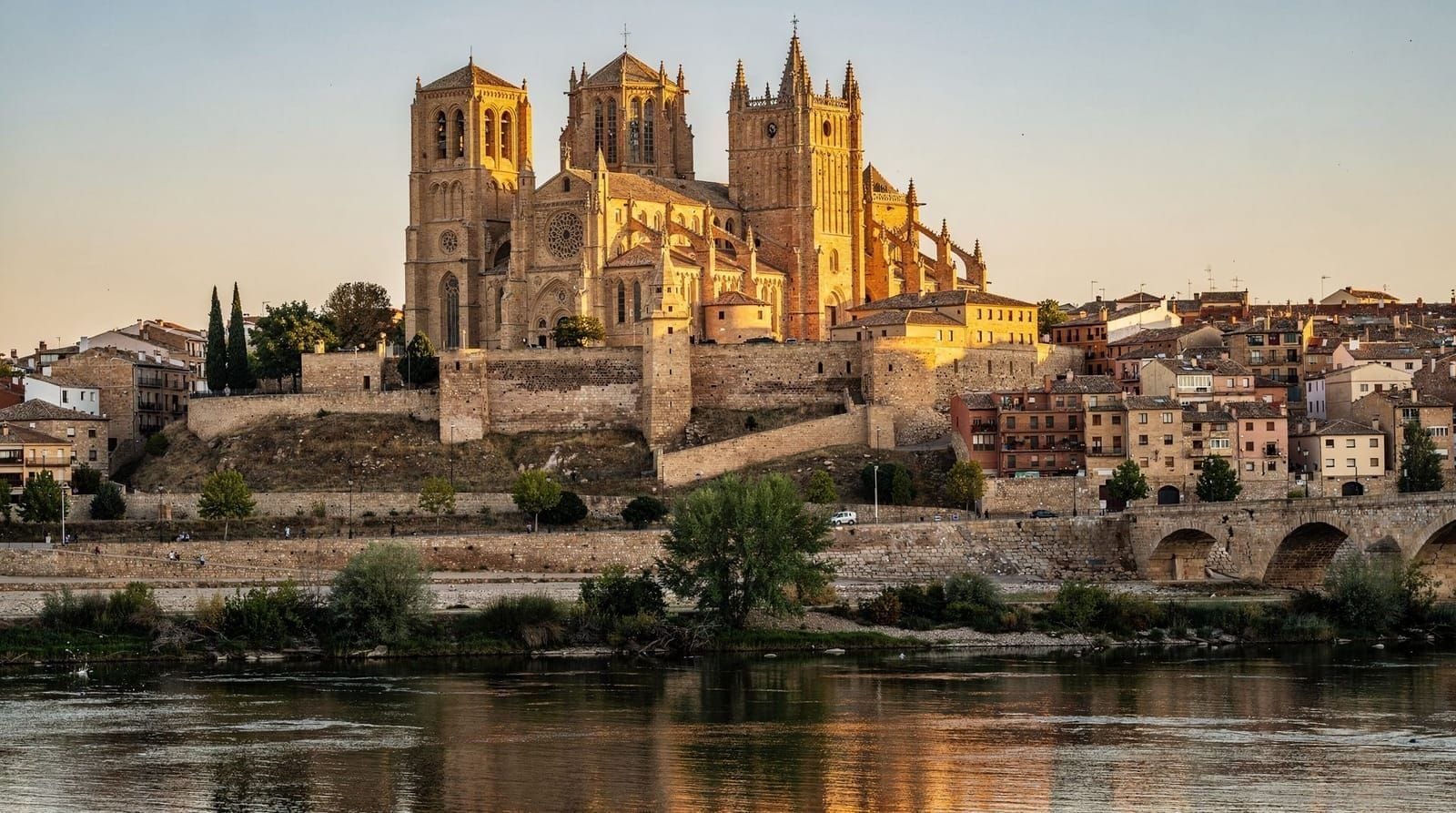
Spain’s first Gothic cathedral (12th–13th century, though the current construction is largely from later restoration). The façade — damaged and rebuilt in the 20th century — is not the cathedral’s strength; the interior has genuine medieval character, Norman arches, and Byzantine details unusual in Spanish Gothic. The Treasury Museum (separate ticket; prices on the cathedral’s official website) contains El Greco’s “The Prayer in the Garden” — a late work, different in character from his Toledo paintings.
The gorge circuit walk
Cross the San Pablo footbridge, descend on the far side to river level, and walk the narrow path along the Huécar gorge back to the old town via Calle Bajada de San Pedro. The path is not always obvious — ask at the tourist office for the current route. The gorge view from below, looking up at the cliff-edge buildings, gives you the scale of what you’re standing under. Allow 1.5 hours for the full circuit.
Ciudad Encantada (optional half-day addition)
32 km north of Cuenca: a geological park of limestone formations eroded into fantastical shapes — arches, mushrooms, bridges, sea shapes in stone. Requires a car or the organised tour (see above). If you’re visiting on a guided tour that includes it, worthwhile; not practical independently.
A practical Cuenca itinerary
Full day in Cuenca (the only practical approach)
Depart Madrid by 08:30–09:00 (check Renfe.com for the first AVE). 09:30–10:00 — Arrive at Cuenca-Fernando Zóbel station, take the shuttle bus and a city bus to the old town. 10:15 — Walk up through the lower new town (20 min, steep) to the old town entrance. 10:45 — San Pablo bridge — first view of the hanging houses (allow 30 min). 11:15 — Museum of Spanish Abstract Art (1 hour, inside the hanging house). 12:30 — Cathedral (45 min, including Treasury museum). 13:30 — Lunch at Mesón Casas Colgadas (reserve in advance) or a nearby restaurant. 15:30 — Gorge circuit walk: cross the San Pablo bridge, descend to river level, walk back via the lower gorge path (1.5 hours). 17:00 — Return to the old town, explore the Plaza Mayor. 18:00 — Take the city bus and shuttle back to Cuenca-Fernando Zóbel, return AVE to Madrid. 19:00–19:30 — Back in Madrid.
The hanging houses: engineering and accident
The casas colgadas are not an intentional architectural statement. They are the result of medieval pragmatism: the narrow ridge on which the old town sits left almost no flat buildable land on the gorge side. Medieval builders extended structures over the cliff edge using timber joists anchored into the rock, creating the overhanging galleries and lower floors that now define Cuenca’s image.
The three surviving houses that most dramatically project over the Huécar gorge date from the 15th century. The buildings have been continuously occupied, repaired, and rebuilt — the structures you see are partially reconstructions (particularly the balconies and wooden elements) from 20th-century restoration. What is original: the stone walls, the cliff anchorage, the vertical face of the gorge below.
The Fundación Juan March acquired two of the three houses in 1966 and created the Museum of Abstract Art as a deliberate artistic provocation: abstract canvases in a medieval building, the oldest and newest Spanish art in the same physical space. The foundation’s thesis was that the Cuenca hanging houses — irrational, impossible, hanging over nothing — embodied the same kind of defiance of expected logic that abstract art represented.
Cuenca’s abstract art connection
In the 1950s–1960s, a group of Spanish artists coalesced around Cuenca partly because of the city’s remoteness and partly because the hanging houses themselves seemed to embody artistic possibility. The Cuenca Group or Generación Abstracta included Antonio Saura, Eduardo Chillida, Luis Feito, Manuel Millares, and Gustavo Torner.
Working under Franco’s dictatorship, when socialist realism was the approved aesthetic, these artists’ abstract work was simultaneously an aesthetic statement and a coded political one: form without explicit content, emotion without didactic message, freedom within the art space that was not available in public life.
The Museum of Abstract Art is their legacy — not just a gallery but a statement about what art and architecture can do together in an unlikely place. Seeing a Chillida iron piece in a room with a 15th-century Gothic window and a 70-metre drop to the gorge below is an experience that doesn’t occur in any conventional museum.
Where to eat in Cuenca
Mesón Casas Colgadas: The hanging house restaurant. Reserve well in advance for weekend lunch; the setting justifies the price (€40–60 per person). Castilian cuisine: morteruelo (a Cuenca-specific game and liver pâté), suckling lamb, and the local ajoarriero (salt cod with garlic and oil).
Restaurante El Figón de Pedro (Cervantes 15): The historic Cuenca restaurant, founded by Pedro Torres Pacheco and renowned across Castile-La Mancha. Excellent morteruelo and entrecot de Cuenca. Budget €25–40 per person. Lower town location (not in the UNESCO zone) — taxi from the old town.
Menú del día in the lower town: Several ordinary restaurants near the bus station serve the standard €12–15 set menu. Unremarkable but functional if you’re watching the budget.
Ajoarriero: The quintessential Cuenca dish — salt cod with garlic, egg, and oil, a poor man’s dish that became a regional pride. Try it as a starter in any traditional restaurant.
Cuenca in your Madrid itinerary
Cuenca is a natural addition to the Madrid week with day trips on Day 4 or 5, after the closer destinations have been covered. For context on all the train-accessible day trips, see day trips from Madrid by train. The best day trips from Madrid overview ranks Cuenca sixth overall, noting the longer journey but high visual impact.
DIY vs guided tour: the verdict
DIY by AVE is the better choice for independent travellers. The train is 55 minutes, affordable, and frequent. Bus from the station to the old town handles the last 4 km. Cuenca’s sights are compact and self-explanatory. The abstract art museum has English labels; the gorge circuit requires only decent shoes and a sense of direction.
Guided tour makes sense if you want to add the Ciudad Encantada (requires transport the tour provides) or if you prefer having everything arranged for a longer journey day.
Cuenca compared to Toledo and Salamanca
Of Madrid’s UNESCO-listed day trips, Cuenca is the least crowded and the most visually distinct — nothing else nearby has a gorge-edge silhouette like the hanging houses. Toledo has more monuments packed into a smaller old town and is easier to combine with a half-day if time is tight. Salamanca is further (over an hour by AVE) but has a grander, more unified plateresque old town centred on its famous Plaza Mayor. If you only have time for one gorge-and-cliff city, Cuenca’s abstract art layer gives it something the others don’t.
Practical notes for travellers without a car
Cuenca is one of the easiest UNESCO day trips to do without a car, since the AVE handles the distance in under an hour and a shuttle and a city bus cover the last stretch to the old town. If you’re weighing which day trips are realistic without renting a car, the day trips without a car guide ranks Cuenca among the more comfortable options precisely because of this train-plus-bus combination.
Before you leave Madrid: starting from Atocha
The day starts at Puerta de Atocha, so it helps to know the station before the morning of the trip. If you are unsure which of Madrid’s two big stations serves which routes, the Atocha vs Chamartín guide explains the difference, and the AVE day trips overview covers how high-speed booking works for the other excursions too. Arrive with a little time in hand: an early train is the whole point of the plan, and a rushed start eats into the best light at the hanging houses.
If the abstract art museum hooks you
Cuenca’s museum tends to leave visitors wanting more Spanish modern art. Back in the capital, the Reina Sofía museum guide is the natural follow-up, since it carries the story of twentieth-century Spanish art far beyond Cuenca. For a wider art-first plan, the Golden Triangle art walk links the Prado with the other major collections, and the Madrid for art lovers itinerary shows how to fit them around a day trip like this one.
Which other city to pair Cuenca with
Cuenca works best as one chapter in a wider plan, not the only excursion. Many travellers do the classic pair first: the Toledo day trip guide and the Segovia day trip guide cover the two big names, and Toledo vs Segovia helps you pick if you only have one day. Walls and granite fans may also like Ávila from Madrid, while literature lovers can look at Alcalá de Henares. For the destination overview of the city itself, see the Cuenca destination page, and for a ready-made plan around the most famous neighbour, the Madrid and Toledo itinerary.
Choosing the season
The gorge walk and the long staircase-like streets are far more pleasant in mild weather than in the heat or cold. The best time to visit Madrid guide gives the seasonal picture for the region, and the same logic applies here: pick a day when you will happily spend hours outdoors on uneven paths.
Frequently asked questions about Cuenca from Madrid
What are the hanging houses of Cuenca?
The Casas Colgadas (hanging houses) are medieval 15th-century buildings constructed literally on the edge of the Huécar gorge cliff — their wooden balconies project over a 70-metre drop into the river canyon below. Three main houses survive; two are now one of Spain's most dramatic restaurant settings (Mesón Casas Colgadas) and one houses the Spanish Museum of Abstract Art. The visual impact — looking across the gorge from the San Pablo bridge — is one of the most striking images in Spain.Is Cuenca a UNESCO World Heritage Site?
Yes. Cuenca's medieval walled old town was inscribed by UNESCO in 1996 as a 'hanging city' — recognised for the unique combination of its dramatic gorge setting, medieval fortification, and Gothic cathedral. Cuenca is particularly noted for its later re-invention as a centre of Spanish abstract art in the 1960s, which gives it a cultural layer absent from other Castilian heritage cities.What is the Museum of Spanish Abstract Art in Cuenca?
The Museo de Arte Abstracto Español (MAAE) is housed in one of the hanging houses and contains a remarkable collection of Spanish abstract art from the 1950s–1970s — works by Antonio Saura, Eduardo Chillida, Gustavo Torner, Manuel Millares, and Luis Feito. The combination of the medieval building and the abstract canvases is deliberately striking. Admission is free. Open Tuesday–Friday and holidays 10:00–14:00 and 16:00–18:00, Saturday 10:00–14:00 and 16:00–20:00, Sunday 10:00–14:30; closed Monday.How do I walk around the Cuenca gorge?
The classic circuit: from the old town, cross the San Pablo footbridge (above the Huécar gorge) to the Barrio de San Miguel on the opposite bank, walk down to the river level, and return via the lower path. The full loop takes about 1.5 hours and gives you views of the hanging houses from below, the gorge walls, and the medieval city above. Some paths are steep and uneven — wear proper shoes.Is Cuenca worth a full day from Madrid?
Yes, if you commit to it. The AVE makes it a 55-minute journey but Cuenca's topography (it's a cliffside medieval city) means there is substantial uphill walking from the lower town. Factor the journey time (2 hours total travel) and the walking into your plan. Leave Madrid by 08:30–09:00 to have a full afternoon in the old town.What else is there to do in Cuenca beyond the hanging houses?
The Gothic cathedral (14th century, partly destroyed by Napoleonic troops, restored in the 20th century) has interesting architectural quirks. The Plaza Mayor is an unusually elongated baroque space. The Fundación Antonio Pérez (surrealist and pop art collection) and the Tesoro de la Catedral museum add further cultural content. The lower town (outside the UNESCO zone) is a normal Castilian city with good food.
Top experiences
Bookable activities with verified prices and instant confirmation on GetYourGuide.