Cuenca
Cuenca is 55 min by AVE from Madrid. UNESCO city: casas colgadas over a gorge, Spain's best abstract art museum in a hanging house, and almost no crowds.
Cuenca: Cuenca Hanging Houses Cathedral
Quick facts
- Train from Madrid (Atocha)
- ~55 min (AVE)
- Train fare
- From about €13 each way, depending on the booking date
- UNESCO status
- Historic walled town since 1996
- Population
- ~55,000
- Most famous sight
- Casas Colgadas (hanging houses) over the Huécar gorge
- Surprise highlight
- Museum of Spanish Abstract Art in a hanging house
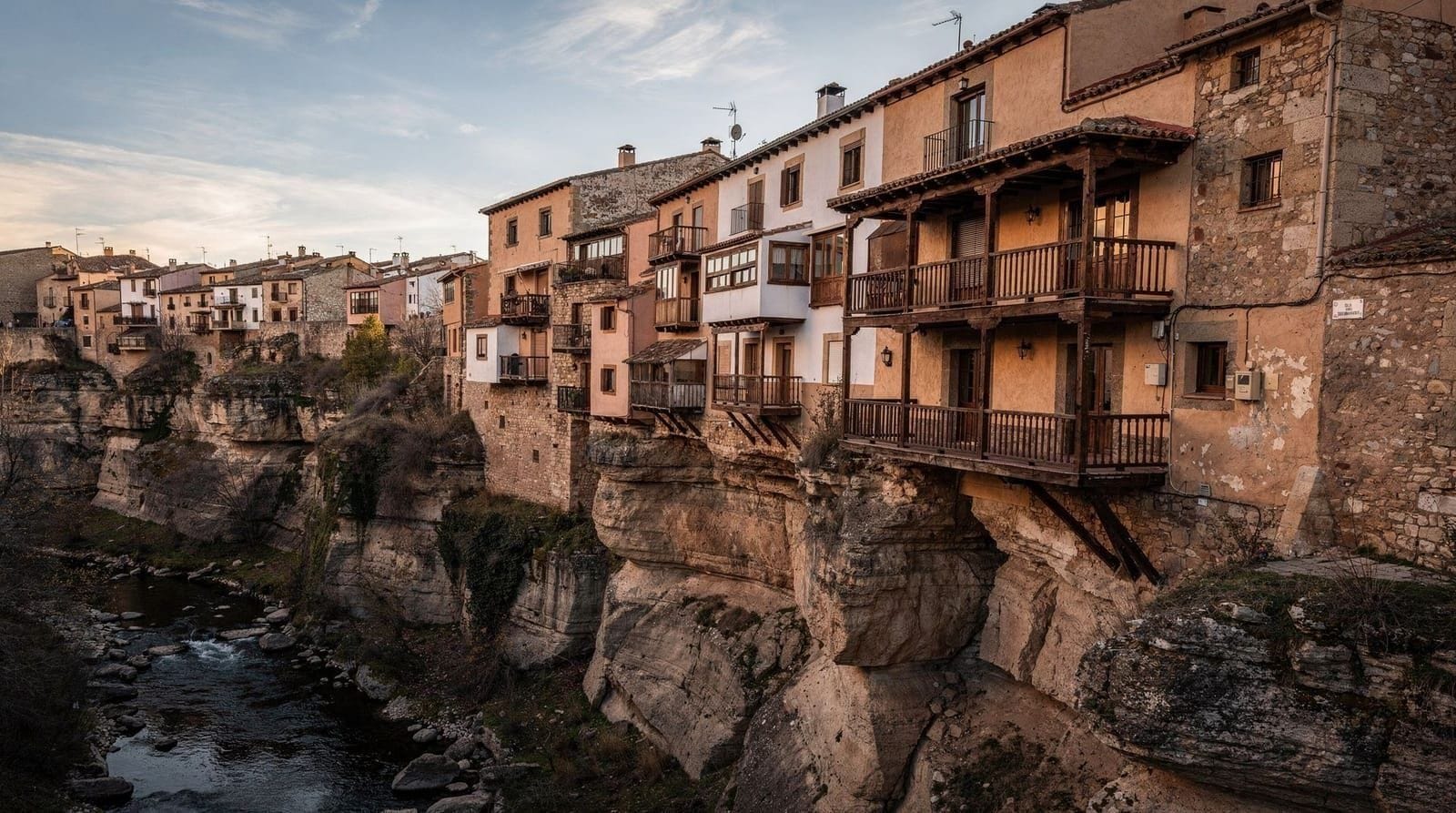
Cuenca is the day trip that surprises people who expect another walled Castilian town. The historic city sits on a narrow rock promontory between two deep gorges — the Huécar and the Júcar rivers — and the casas colgadas (hanging houses) literally overhang the cliff edge, their wooden balconies projecting into 50 metres of empty air above the river. The visual effect is unlike anything else in Spain and has been photographed so often that it risks feeling familiar before you arrive. It does not feel familiar when you see it in person.
The UNESCO designation (1996) reflects three things: the hanging houses themselves, the medieval walled city (one of the most intact in Castile), and an unexpected cultural dimension — Cuenca became the unlikely home of a major collection of Spanish abstract art in the 1960s and 1970s, when a group of artists associated with El Paso and the Grupo Cuenca movement established studios and museums here. The Museo de Arte Abstracto Español, installed inside one of the hanging houses, is one of the best mid-20th-century art collections in Spain.
At 55 minutes from Madrid by AVE, Cuenca is the third-fastest train day trip from the capital after Toledo and Segovia, and by far the least visited of the three. On a Wednesday in May, the old city has almost no tourist traffic at all.
| Where | Historic promontory over the Huécar gorge, ~165 km southeast of Madrid |
| Cost | from about €13 AVE each way; Museum of Abstract Art free, cathedral prices on its official website |
| Time needed | Full day (6–8 hours); half day possible if train-efficient |
| Getting there | AVE from Atocha, ~55 min, then bus/taxi to the old town |
| Best time | April–June or September–October |
Cuenca vs Toledo vs Segovia
| Cuenca | Toledo | Segovia | |
|---|---|---|---|
| Train time | ~55 min | ~30 min | ~30 min |
| Crowds | Light, even on weekends | Heavy, all year | Heavy on weekends |
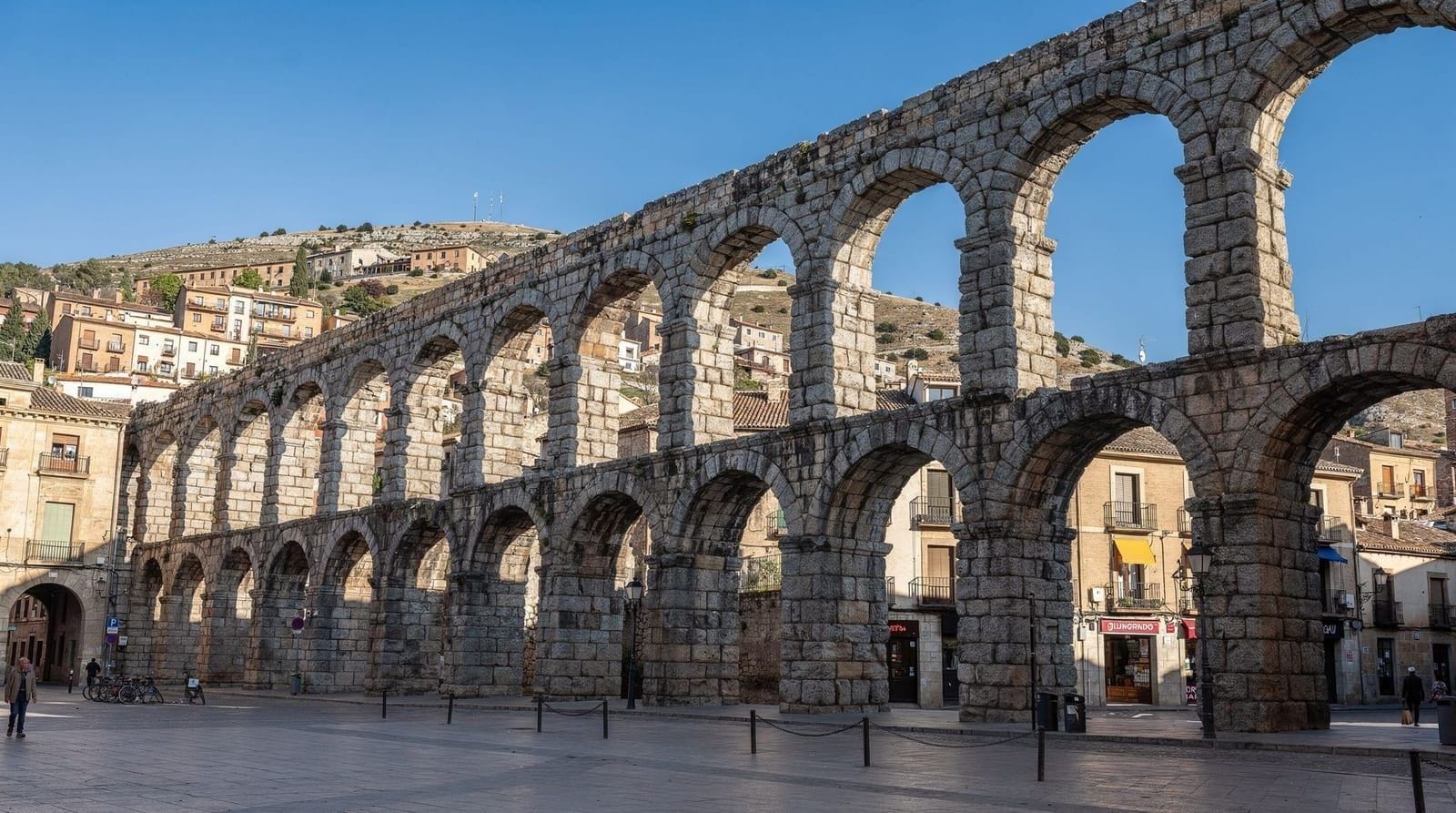
| Signature sight | Hanging houses over a gorge | Three-culture old city | Roman aqueduct & Alcázar |
| Best for | Art, geology, quiet | First-time history highlights | Castle views, roast lamb |
Getting to Cuenca from Madrid
The AVE from Atocha station reaches Cuenca’s high-speed station (Cuenca Fernando Zóbel) in approximately 55 minutes. Fares start at about €13 each way, depending on the train and advance booking. The station is about 5 km from the historic city; a shuttle bus to the bus station followed by a city bus, or a taxi, connects to the old town. Important: the bus to the old city goes to the lower new town, not the hilltop historic quarter. From the lower bus terminus, it is a 10–15 minute uphill walk or a taxi (€4–€5) to the hanging houses level.
By car: driving from Madrid (170 km on the A-3 motorway) takes about 1 hour 45 minutes. This is practical for the Enchanted City excursion (see below) since that site is 30 km from Cuenca and has no public transport.
Guided visit to Cuenca hanging houses and cathedral from MadridThe casas colgadas (hanging houses)
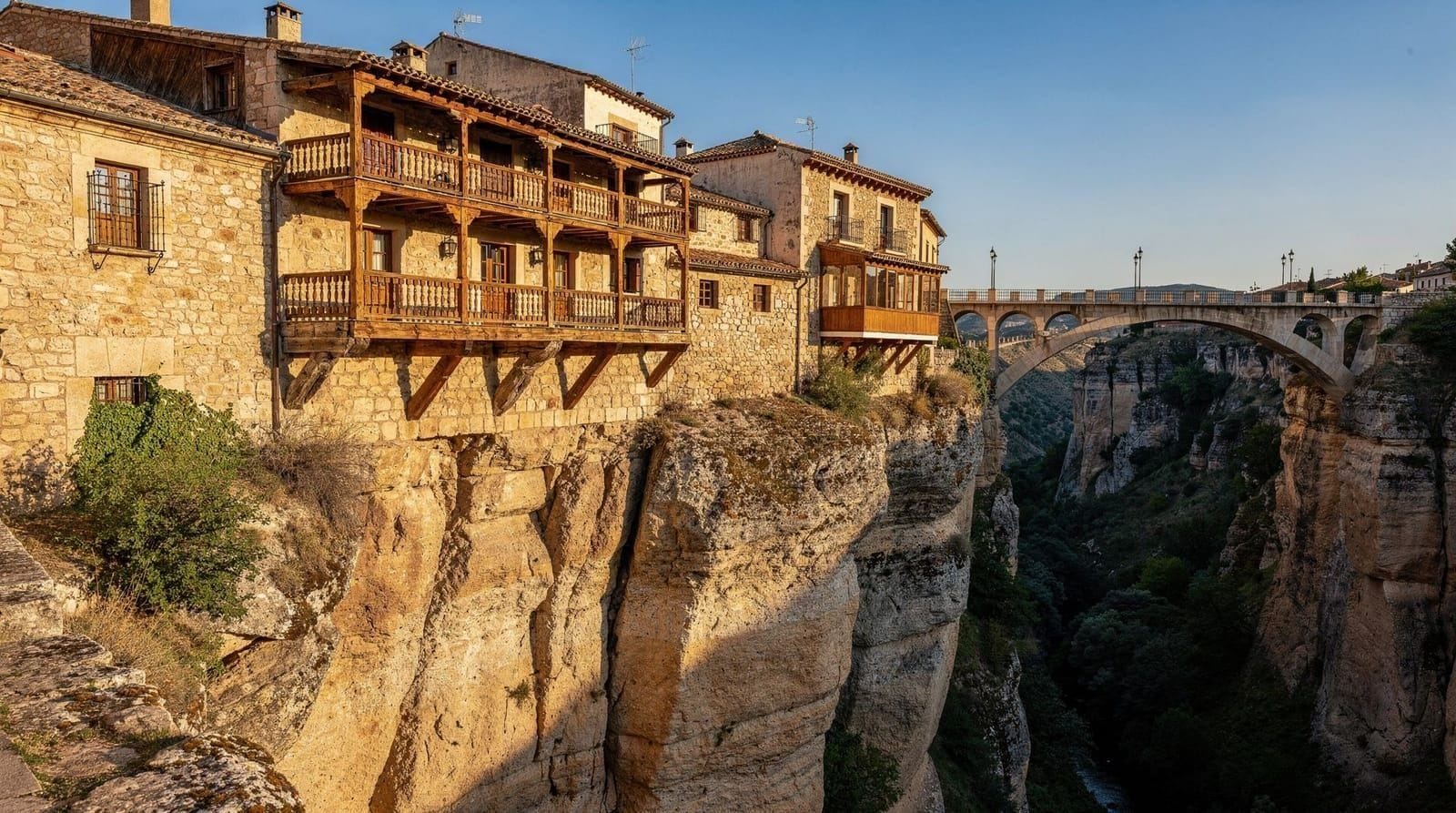
The hanging houses of the Huécar gorge are the image everyone arrives to see. Built in the 14th and 15th centuries on a cliff edge where land was scarce, the houses extend over the gorge on wooden corbelled balconies — the upper stories cantilevered out over the void, held by the structural logic of the cliff face rather than foundations. From the bridge (Puente de San Pablo, an iron footbridge at gorge level), looking up, the effect is vertiginous and remarkable: houses above, wall above the houses, cliff above the wall, all rising 50+ metres from the river.
Three houses form the famous hanging-house row on the Ronda del Júcar. One of them houses the Museo de Arte Abstracto Español (see below). One is a restaurant. The third is private. You can enter the bridge (San Pablo bridge, free) and stand on the footbridge for the classic view. The best photograph of the hanging houses is from the bridge at golden hour or early morning — midday light flattens them.
Museo de Arte Abstracto Español
The Abstract Art Museum occupies two of the hanging houses and is one of the art world’s best-kept secrets. Opened in 1966 by Fernando Zóbel (a Spanish-Filipino painter who settled in Cuenca), it houses works by Zóbel himself, Antonio Saura, Gustavo Torner, Luis Feito, Manuel Millares, Antoni Tàpies, Eduardo Chillida, and others associated with Spanish abstract art from the 1950s to the 1980s. The collection is the property of the Juan March Foundation.
The integration of the art with the setting is itself remarkable: standing in a 14th-century house over a gorge, looking at a Saura gestural painting from 1959, is not the experience you have at a conventional museum. Entry is free.
The cathedral and old city
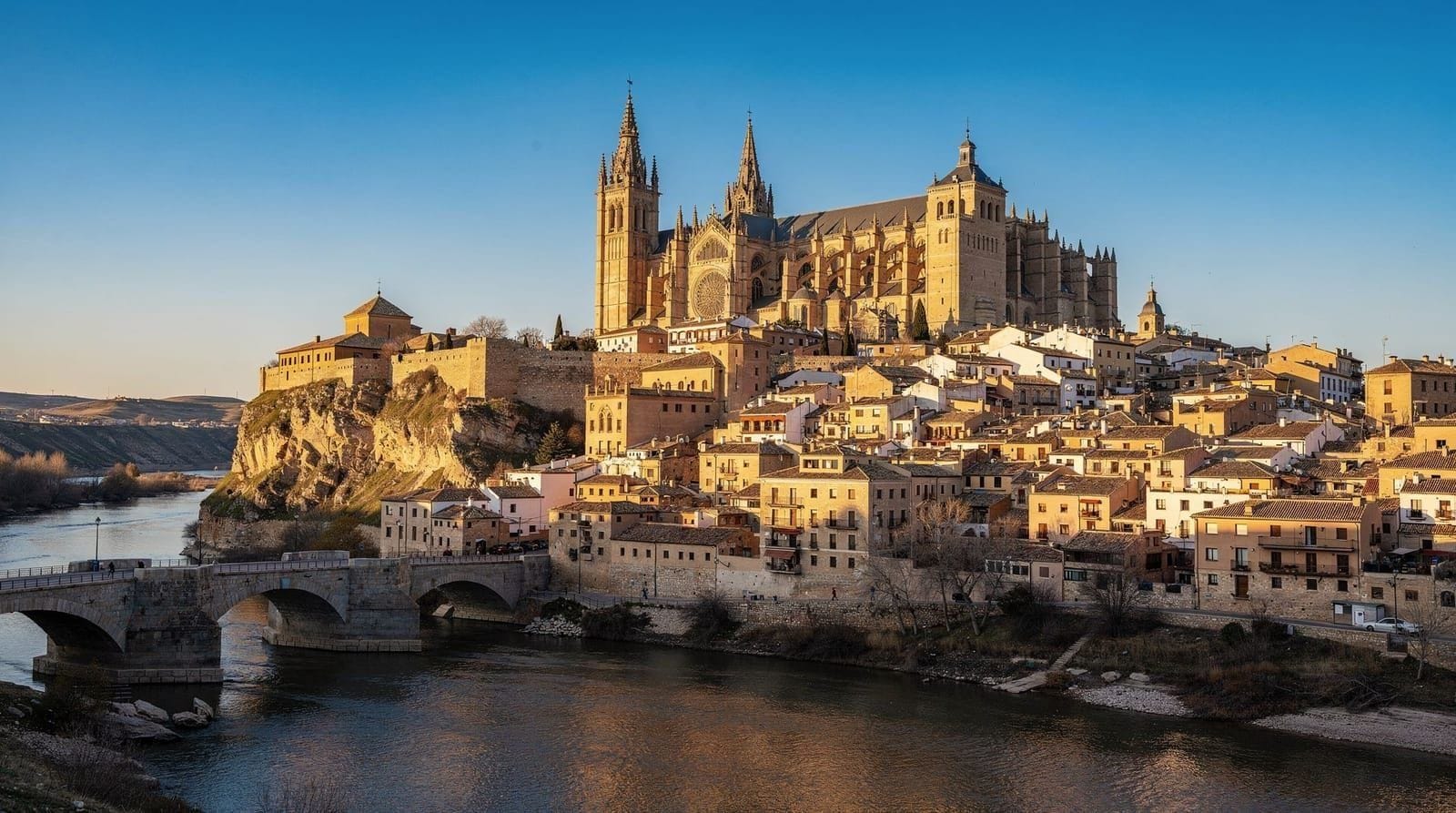
Cuenca’s Gothic cathedral (begun 1196) is one of the earliest Gothic buildings in Spain and the only Anglo-Norman Gothic cathedral on the Spanish mainland — the first bishop of Cuenca was French, and the French-trained stonemasons brought the new style directly from Normandy before it had spread through the Iberian peninsula. The west facade is an incomplete 20th-century reconstruction (the original collapsed in 1902). The interior is more interesting than the exterior: the triple nave, the iron grille choir screens (Plateresque, 16th century), and the Treasury. Ticket prices are on the cathedral’s official website.
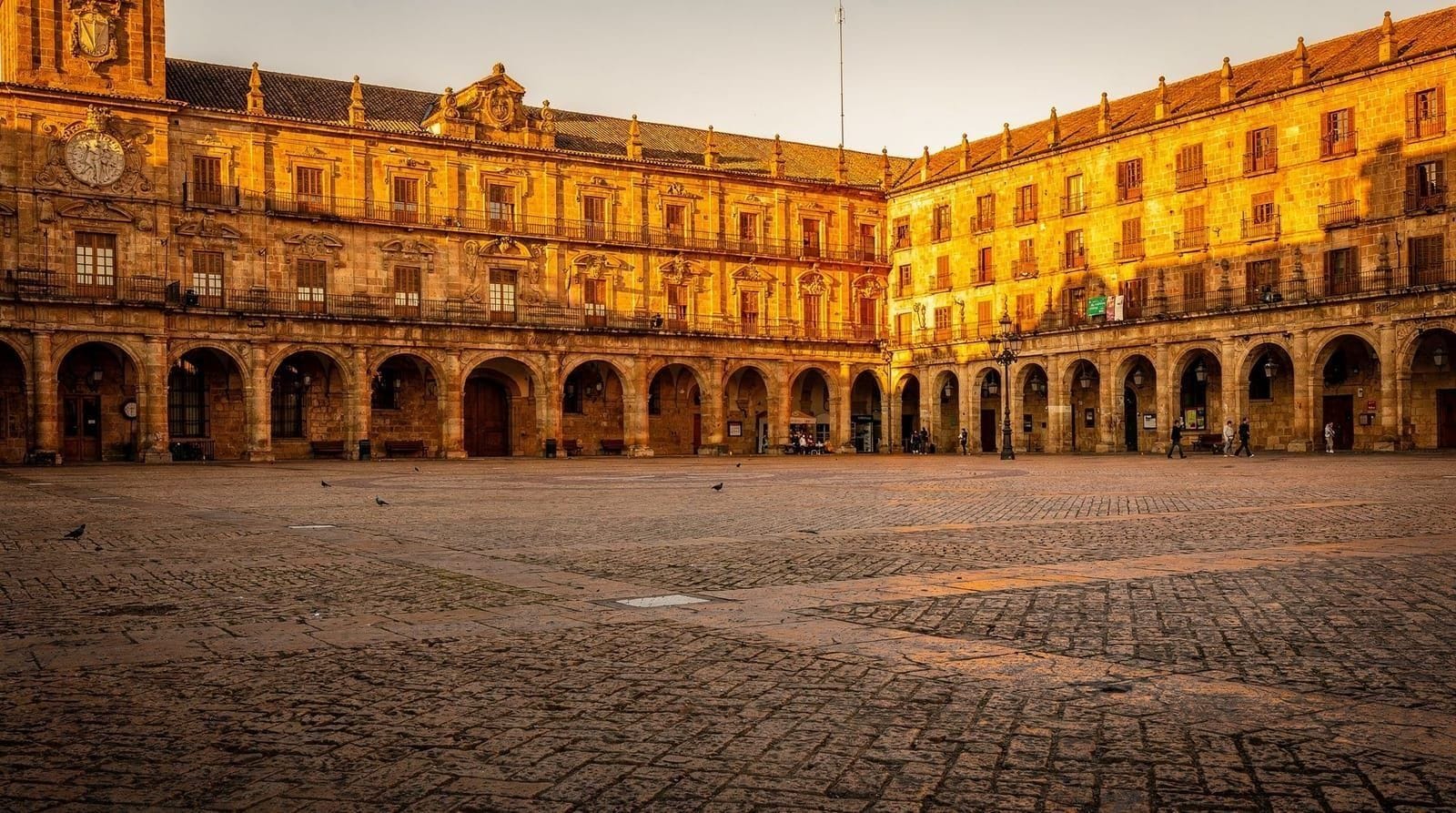
The old city on the hilltop promontory is compact and pleasantly unpolished for a UNESCO site: the Plaza Mayor is a working square, not a tourist performance; the restaurants serve to a mix of locals and visitors; the streets between the cathedral and the casas colgadas are narrow enough that you pass through the medieval urban structure intact.
Museo Diocesano: a strong collection of medieval religious art — 12th–13th-century Byzantine diptychs, Flemish tapestries, El Greco paintings — installed in the Bishop’s Palace adjacent to the cathedral. Ticket prices are on the cathedral’s official website; often overlooked by visitors focused on the modern art.
Viewpoints and the walk around the promontory
Cuenca’s dramatic setting rewards walking the full circuit of the rock promontory rather than sticking to the main streets between the Plaza Mayor and the hanging houses. The Hoz del Huécar path, descending from near the San Pablo bridge and following the river below the cliffs, gives the classic upward view of the casas colgadas and is one of the best free things to do in the city — allow 45–60 minutes for the round trip. On the opposite side, the Hoz del Júcar (the second, less-visited gorge) has a quieter walking path with fewer visitors and equally dramatic cliff views, reached from the Puente de San Antón at the western edge of the old town.
For an elevated view over the entire promontory, the Cerro del Socorro, a hill on the far side of the Júcar gorge, has a small chapel and a viewpoint that shows Cuenca’s full mesa-top layout at once — the cathedral, the hanging houses, and the walls tracing the edge of the rock. It’s a 20–25 minute walk uphill from the Puente de San Antón, best attempted in the cooler morning hours in summer, and is genuinely worth the modest climb for photographers.
Semana Santa in Cuenca
Cuenca’s Holy Week (Semana Santa) processions are recognised as a Fiesta of International Tourist Interest and are considered among the most solemn and musically distinctive in Spain — quieter and more austere than the flamboyant processions of Andalusia, with a strong tradition of sacred music (the city hosts a well-regarded Semana de Música Religiosa, a religious music festival, alongside the processions). If your visit coincides with Holy Week, expect the old town’s narrow streets to be genuinely busy with a mix of devotional and cultural tourism — book accommodation well ahead, as the city’s small hotel stock fills early for these dates.
For a step-by-step version of the journey, including how to time the return, see our Cuenca from Madrid guide. If you are comparing Cuenca with other rail-based excursions, day trips by train and the AVE day trips guide put the options side by side, and Atocha vs Chamartín explains which station you will leave from.
The Enchanted City (Ciudad Encantada)
About 30 km from Cuenca, in the Sierra de Cuenca mountains, the Ciudad Encantada is a natural site of eroded limestone formations — mushroom-shaped rocks, arches, balanced boulders, and tunnels formed over millions of years of differential erosion. The most famous formation is a mushroom-shaped rock weighing several tons balanced on a narrow stem. Entry €5; the marked path through the main formations takes 1.5–2 hours.
This requires a car or organised tour; there is no public bus from Cuenca. Day trips from Madrid that combine Cuenca with the Ciudad Encantada are the most practical option for visitors without a rental car. See Cuenca and the Enchanted City tour for the available tours.
Where to eat in Cuenca
Cuenca’s local cuisine is distinct from the central Castilian norm — mountain ingredients, game, mushrooms, and the regional dish of morteruelo (a dense pâté of liver, partridge, rabbit, and spices, served warm on toast). It is an acquired taste but an authentic one.
Mesón Casas Colgadas (Calle Canónigos s/n, inside the hanging houses): the most atmospheric restaurant in Cuenca, directly in one of the hanging houses with gorge views. Regional cuisine — morteruelo as a starter, roast lamb, wild mushrooms from the Sierra. Mains €18–€28. Book ahead; small and popular.
Figón del Huécar (Ronda de Julián Romero 6): reliable mid-range with good ajoarriero (salt-cod and garlic paste, a local classic), Manchego cheese, and venison in season. Mains €14–€22.
El Figón de Pedro (Calle Cervantes 15): a mid-range favourite for family cooking. Good zarajos (sheep intestines wound on vine shoots and grilled — not for everyone, but genuinely local). Also good trout from the local rivers.
Morteruelo: if you eat nothing else in Cuenca, try morteruelo — the mixture of cooked liver, game meat (partridge, rabbit, wild boar depending on season), lard, and spices, the consistency somewhere between pâté and porridge, served warm on bread. It is one of those dishes that is almost impossible to find outside the region.
Cuenca and Enchanted City tour from MadridTravellers without a car who want to see more of the region by rail can read day trips without a car, and anyone weighing a week in the capital with several excursions will find a ready-made plan in the Madrid week with day trips itinerary.
Practical information
The uphill problem: Cuenca’s old city is steep. The main tourist area (hanging houses, cathedral, Plaza Mayor) is at the top of a rock promontory. Coming from the lower new town by foot is a 15–20 minute uphill walk. Taxis from the bus stop to the hanging houses level cost €4–€5 and save significant energy for actual sightseeing.
Weather: Cuenca at 1,000 m elevation has cold winters and variable spring weather. Misty or overcast days in the gorge produce atmospheric conditions for photography. In winter, the hanging houses in snow are spectacular but access to the bridge can be slippery.
Timing: most day-trippers arrive on the first AVE around 09:30 and leave on the 17:00 or 18:00 return. The city is quiet enough that this timing does not produce the crowds you encounter at Toledo or Segovia.
How to fit Cuenca into a Madrid trip: Cuenca works as a full day from a 4–7 day Madrid stay, best reserved for day 3 or 4 after the city highlights. For those with one major day trip, Toledo or Segovia are stronger choices for first-timers; Cuenca rewards travellers who specifically want art, dramatic geography, and a city that has not been polished for tourism. Travellers who enjoy Cuenca’s slower pace often also like Salamanca, another university city with real local life beneath the monuments. See best day trips from Madrid for the comparison.
The gorge geology and the city’s unusual geography
Cuenca’s dramatic position is a consequence of geology. The rock promontory on which the historic city sits is formed from Cretaceous limestone and dolomite — hard, erosion-resistant rock — while the surrounding valleys have been cut by the Huécar and Júcar rivers through softer material over millions of years. The result is a mesa-like formation, with the rivers now running 50–80 metres below the hilltop.
This geological accident determined the city’s entire history: the Moors fortified the natural citadel (Cuenca’s name likely derives from the Arabic kunka, meaning “fortress” or “high rock”) in the early 11th century; Alfonso VIII of Castile besieged and took it in 1177 after a lengthy campaign (the height of the rock made direct assault impractical); the Christian settlement that followed built outwards from the narrow promontory top, eventually constructing houses over the gorge edge when horizontal space ran out.
The Huécar gorge is accessible on foot via the San Pablo bridge and a path along the river. The river is a modest stream — in dry summers little more than a trickle — but the gorge walls rise dramatically, with the hanging houses visible from below as the most spectacular example of what happens when medieval builders run out of flat land.
The Cuenca school of abstract art
The connection between Cuenca and mid-20th-century Spanish abstract art is not accidental. Fernando Zóbel arrived in Cuenca in the early 1960s, attracted by the landscape’s drama and by the city’s cheapness and quietness. He invited other painters — Antonio Saura, Gustavo Torner, Gerardo Rueda — to join him; they established studios, purchased buildings, and founded what became known as the Grupo Cuenca, a loose artistic community with no formal manifesto but a shared interest in material surfaces, texture, and the relationship between abstraction and landscape.
The museum (opened 1966) was the formal crystallisation of this community’s presence. The collection now represents the breadth of Spanish abstraction rather than just the Cuenca circle: Tàpies’ earth-coloured layered surfaces reference Catalan landscape; Chillida’s iron sculptures engage with space and weight; Millares’ sackcloth paintings carry explicit connections to Civil War violence and collective memory. The geographic specificity (the museum is in the hanging houses; the art was partly created in response to this landscape) gives the collection a coherence that a metropolitan museum cannot replicate.
The museum is genuinely under-visited relative to its quality. The Juan March Foundation, which manages it, also runs major exhibitions in Madrid — the Cuenca collection is the foundation’s oldest project and the one most directly linked to a specific place and artistic community.
Frequently asked questions about Cuenca
What are the casas colgadas of Cuenca?
The hanging houses (casas colgadas) are medieval residential buildings built over the edge of the Huécar gorge, with wooden balconies and upper stories cantilevering out over a 50-metre drop to the river below. Built in the 14th–15th centuries when space on the narrow rock promontory was limited, they are Cuenca’s most photographed sight. The best view is from the San Pablo footbridge at the bottom of the gorge.
What is the Museo de Arte Abstracto Español?
Spain’s best collection of abstract art from the 1950s–1980s, installed inside two of the hanging houses. Founded by painter Fernando Zóbel in 1966 and now managed by the Juan March Foundation. Works by Zóbel, Saura, Tàpies, Chillida, Torner, Feito, and Millares. Entry is free. An unexpected and significant cultural reason to visit Cuenca beyond the gorge.
How do I get from Madrid to Cuenca?
The AVE from Atocha reaches Cuenca’s high-speed station in about 55 minutes from about €13 each way. A taxi or bus then connects the station to the old town (5 km). By car, the A-3 motorway reaches Cuenca in about 1 hour 45 minutes — useful if you want to visit the Enchanted City (Ciudad Encantada), which has no public transport.
What is morteruelo?
Morteruelo is Cuenca’s signature dish — a dense, warm pâté made from cooked liver, partridge, rabbit, wild boar (seasonally), lard, cinnamon, cloves, and paprika, served on slices of bread. It is intensely flavoured and unlike standard Spanish tapas. Found at most traditional restaurants in the city; worth trying even if you are uncertain about it.
Is Cuenca less visited than Toledo and Segovia?
Significantly less visited. Toledo receives millions of day-trippers per year; Segovia draws heavy coach traffic on weekends. Cuenca, despite its UNESCO status and AVE access, remains relatively quiet even on summer weekends. This is partly because it is less known internationally and partly because the transit from the station to the old city adds a logistical step. For travellers who want the day-trip experience without the crowds, Cuenca is the clear choice.
What is the Cathedral of Cuenca known for?
Cuenca’s Gothic cathedral (begun 1196) is one of Spain’s earliest Gothic buildings, constructed in Anglo-Norman Gothic style imported directly from Normandy by French stonemasons and a French-trained first bishop. It predates most Spanish Gothic building by decades. The west facade is a 20th-century reconstruction following the collapse of the original in 1902. The interior Plateresque choir screens (16th century) and the Treasury with El Greco works are the highlights.
Top experiences
Bookable activities with verified prices and instant confirmation on GetYourGuide.