
Segovia or Toledo first? How to decide which day trip to take
If you have one day trip left in your Madrid itinerary, Toledo and Segovia are the two names that will come up in every conversation, every forum post, and every hotel breakfast recommendation. Both are UNESCO World Heritage Cities. Both are under an hour from Madrid by train. Both have medieval architecture that most European countries would build a national museum around.
| Toledo | Full day, Madrid Atocha, €12–€16 each way |
| Segovia | Half day, Madrid Chamartín, fare variable (see Renfe) |
| Time needed | 5–6hrs Toledo; 3–4hrs Segovia |
| Best for | Toledo: history/art. Segovia: food/families/time-pressed |
| Booking | Trains sell out on weekends in high season — book ahead |
But they are not interchangeable. Choosing the wrong one for your circumstances can mean either a rushed, incomplete visit to a city that deserved more time, or a half-day built around a single aqueduct and an early lunch. The right choice depends on how long you have, what you care about, and — honestly — how hungry you’ll be.
What Toledo actually involves
Toledo is a full-day commitment. The city was the capital of Visigothic Spain, the seat of the Spanish Inquisition, and one of the rare places in medieval Europe where Christians, Muslims, and Jews built side by side for centuries. That layering of history is visible in every street.
The Toledo from Madrid guide covers the logistics in detail, but here’s the honest summary:
- Train: 33 minutes from Madrid Atocha on the Avant AVE. Tickets run €12-16 each way depending on when you book.
- Time needed: Minimum 5 hours in the old town. Six is better.
- Main sights: The cathedral (world-class, allow 1.5-2 hours), the El Greco museum, the Jewish quarter with its two synagogues, the Alcázar, and the city walls with views over the Tagus gorge.
- Physical effort: Moderate. Toledo is hilly. The walk from the train station up to the old town is steep — most visitors take a taxi or bus for this part.
The cathedral alone is worth a separate afternoon. It contains original works by El Greco, Goya, Raphael, Titian, and Velázquez in a single building. The sacristy is one of the best collections of Spanish Golden Age painting outside a major museum. None of this can be rushed.
The destination overview at Toledo has current opening times and what to book in advance.
What Segovia actually involves
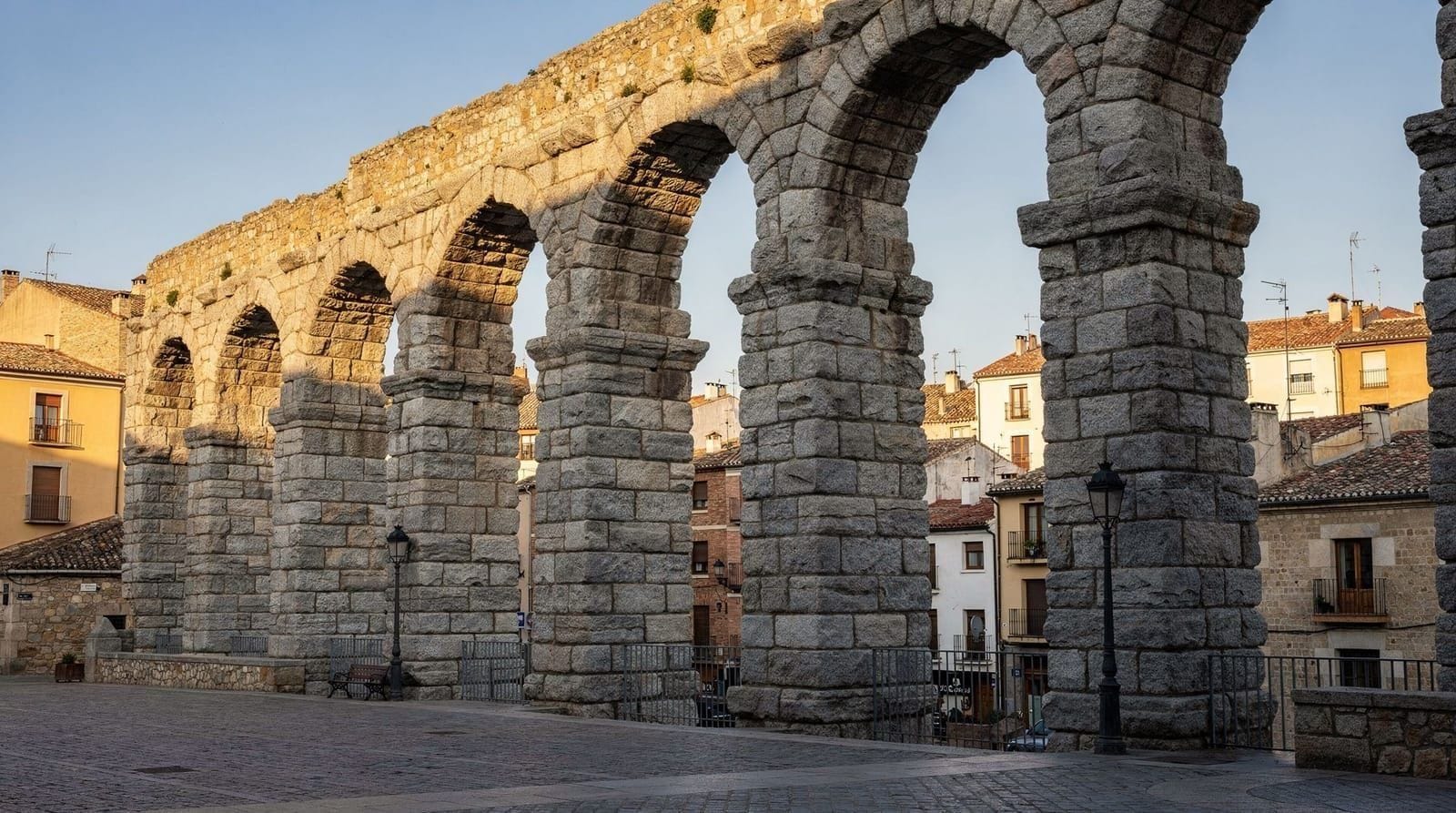
Segovia is faster, more compact, and more immediately dramatic. The Roman aqueduct — built around 50 AD, still structurally intact, 28 meters at its tallest point — is visible from the train station and serves as the city’s remarkable hello. Nothing in Toledo hits you that fast.
The Segovia from Madrid guide has full logistics, but the summary:
- Train: 28-30 minutes from Madrid Chamartín on the Avant. Fare varies (see Renfe’s website). Note: it’s Chamartín, not Atocha.
- Time needed: 3-4 hours is comfortable. You can do Segovia as a half-day and be back in Madrid for dinner.
- Main sights: The aqueduct (free, iconic), the Alcázar (Disney’s Sleeping Beauty castle was partly inspired by this building), the cathedral (less overwhelming than Toledo’s), the old town streets.
- The cochinillo: Suckling pig roasted in a wood-fired oven, served at restaurants like Mesón de Cándido, cut with the edge of a plate to prove how tender it is. This is one of the best things you can eat in Spain.
The difference in scale matters. Segovia’s old town is genuinely walkable in a morning. Everything that matters is within twenty minutes on foot. Toledo requires more planning, more walking, and more stamina.
Segovia has the current restaurant scene and what to look for in the Alcázar.
 Half Full Day CathedralCheck availability
The honest decision matrix
If you’re a first-time visitor to Spain: Toledo first. The layers of history there — the three-religion coexistence, the cathedral, the intact medieval street pattern — are genuinely unmatched. Segovia is wonderful but it’s supplementary. Toledo is foundational.
If you only have half a day or an afternoon free: Segovia. You can step off the train, walk to the aqueduct, have lunch, see the Alcázar, and be back in Madrid by 5pm. Toledo cannot be done properly in three hours.
If you care primarily about food: Segovia, without hesitation. Cochinillo in its home city, eaten at a proper restaurant with a glass of Ribera del Duero, is one of the great Spanish meals. Toledo’s food scene is decent but not destination-worthy in the same way.
If you’re a history or art enthusiast: Toledo, and consider giving it a full day rather than squeezing it into a rushed visit. The Toledo vs Segovia comparison goes deeper on the historical and cultural differences if this is the deciding factor for you.
If you’re travelling with children: Segovia is easier. The aqueduct is immediately understandable and impressive to kids. The Alcázar looks like a fairy-tale castle and has interactive elements inside. Toledo involves more church-heavy sightseeing that can lose younger visitors.
If you want to do both: Entirely possible over two separate days. The day trips by train from Madrid guide suggests how to structure back-to-back day trips without exhausting yourself.
Toledo day trip with local guide from MadridSide by side:
| Toledo | Segovia | |
|---|---|---|
| Train station | Madrid Atocha | Madrid Chamartín |
| Journey time | ~33 minutes | ~28–30 minutes |
| Ticket price | €12–€16 each way | variable, see Renfe’s website |
| Time needed | 5–6 hours | 3–4 hours |
| Signature food | Mazapán, local stews | Cochinillo (roast suckling pig) |
| Best for | History, art, three-culture heritage | Speed, food, families |
The train station confusion
This is the practical detail that catches people out most often. Toledo trains depart from Madrid Atocha. Segovia trains depart from Madrid Chamartín. These are the two main Madrid stations, on opposite sides of the city.
Getting the stations mixed up — showing up at Atocha for a Segovia train, or Chamartín for a Toledo train — means missing your departure and rebooking at full walk-up prices. Double-check before you leave. The metro connects both stations (lines 1 and 10 respectively), but the journey between them takes 25-30 minutes.
For a third destination that complements both: Ávila from Madrid is about 1h30 to 1h55 on the train, with the best-preserved medieval walls in Europe and a very different atmosphere from either Toledo or Segovia. It’s worth considering if you have a third day to spare.
What you’ll regret not doing
The most common version of this decision that people regret: doing Toledo on a half-day. Visitors who give Toledo three or four hours consistently say they felt rushed and missed the cathedral properly. Toledo needs time.
The best day trips from Madrid overview covers both cities in context — including seasonal considerations (both are hot in summer, both are far quieter off-season) and how each fits into a broader Madrid itinerary.
If you only have one day trip in your entire trip and you’re trying to decide: Toledo is the safe answer for most travellers. Segovia is the better answer if you’re short on time or if eating well is your priority.
Both are worth doing. The question is sequence and time allocation. Get that right and either trip will be a highlight of your visit to Spain.