Royal Palace of Madrid tickets — honest review 2026
Madrid: Royal Palace Fast Access Ticket
What makes the Royal Palace worth your time
The Palacio Real de Madrid is the official residence of the Spanish royal family — though the current king, Felipe VI, actually lives in the Palacio de la Zarzuela outside the city. The palace is used for state ceremonies and official receptions, which means it is both a working royal building and a museum, a combination that gives it a different energy from purely historical palaces.
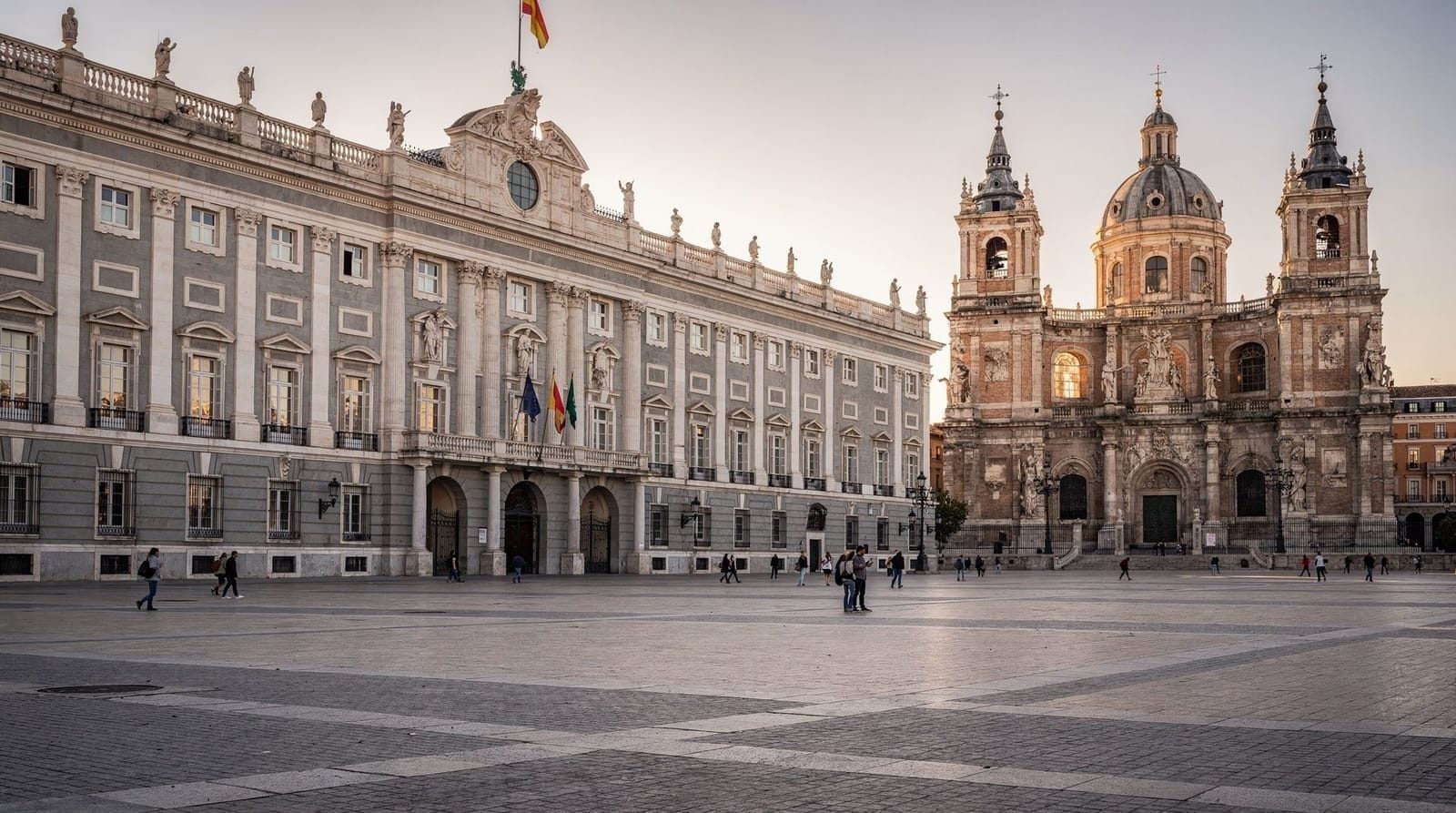
It is the largest royal palace in Western Europe by floor area: 135,000 square metres covering a full city block on the western escarpment above the Manzanares river. The 18th-century Italian baroque building replaced the Habsburg Alcázar that burned down on Christmas Eve 1734, and Philip V commissioned the new building from Filippo Juvara and Giovanni Sacchetti. The result is a statement of Bourbon confidence after a century of Habsburg decline — all dressed Guadarrama granite and limestone, with a facade that reads as both military fortress and ceremonial palace.
The Royal Palace fast-access ticket is the most efficient way to enter during busy periods, combining a reserved time slot with priority access through the dedicated pre-booked visitors’ lane.
Inside the palace: what you will see room by room
The visitor route runs through approximately 50 of the state rooms on the piano nobile (main ceremonial floor). A few rooms stand out enough to orient your visit around them.
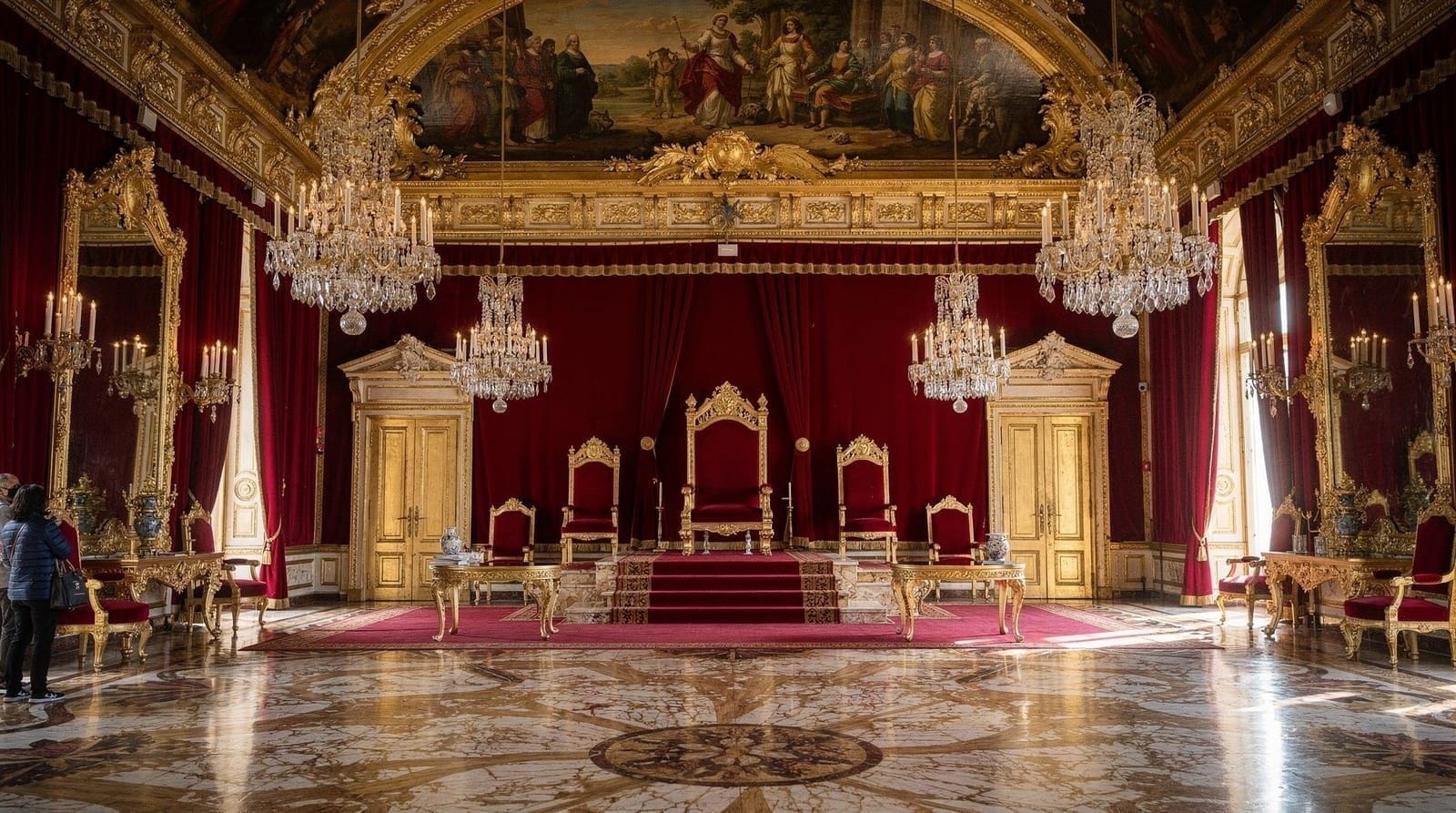
The Throne Room (Salón del Trono) is the visual climax. Tiepolo’s ceiling fresco — the Apotheosis of the Spanish Monarchy — fills the vault above two matching lion-flanked thrones in crimson velvet. The room has been used for the investiture of ambassadors since the 18th century and it reads exactly as intended: overwhelming, hierarchical, completely unapologetic. Spend 15 minutes here; photographs cannot capture the scale.
The Gasparini Room is the palace’s most technically elaborate interior. The chinoiserie decorative scheme was commissioned by Carlos III in the 1760s and executed by Matías Gasparini over 20 years. Every surface — ceiling, walls, floor — is covered in embroidered silk panels, carved stucco work, and inlaid marble. It is the room that makes visiting art historians go quiet.
The Royal Armoury (Real Armería) is a separate building within the palace complex included in the standard ticket and routinely undervisited because tourists don’t know to go there. The collection is one of the finest in the world: full suits of tournament armour for Carlos V and Philip II, ceremonial field armour from the Battle of Lepanto, equestrian armour for jousting. The craftsmanship of 16th-century Augsburg and Milan plate armour, seen in person at close range, is genuinely astonishing.
The Royal Chapel is used for the baptism and confirmation of royal children. The altarpiece and the organ are both intact from the 18th century; the chapel itself is frequently closed for royal events, so access is not guaranteed.
The Royal Pharmacy is a small annex showing the palace’s historic pharmacy collection: Talavera ceramic drug jars, glass phials, distillation equipment, and the pharmacy records going back to the Habsburg period. Small but interesting; 20 minutes is enough.
Guided vs self-guided: the honest assessment
The audio guide (available for rent inside at €4, not included in the basic ticket) is adequate for a solo visit. It covers the main rooms in the standard route order with reasonable art-historical commentary. For visitors who already have a background in Spanish or European baroque history, it is sufficient.
The Royal Palace skip-the-line guided tour adds a licensed guide who can answer questions, point out details the audio guide skips, and adjust the pace to the group’s interest. The added value is highest in the Throne Room (where ceiling symbolism requires explanation), the Gasparini Room (where the production history is half the interest), and the Royal Armoury (where the military and political context makes the objects meaningful rather than decorative).
For private visits, the Royal Palace premium skip-the-line experience offers a flexible semi-private format with a maximum of 6 people that allows deeper engagement with individual rooms at the group’s pace — appropriate for architecture enthusiasts, historians, or anyone who wants more than the standard route covers.
Practical details: pricing, hours, access
Standard adult entry: €18 (Royal Apartments and Armoury). Audio guide rental: €4 extra. The Royal Pharmacy and Royal Chapel are included when open.
Pre-booked skip-the-line tickets: €18–€22 depending on operator and time slot.
Guided tours with entry: €35–€55 per person (small group of 8–12); private tours from €150 for two.
Opening hours: Monday–Saturday 10:00–18:00 (October–March), 10:00–19:00 (April–September). Sunday and public holidays 10:00–16:00 year-round. Last entry 1 hour before closing.
Free EU and Ibero-American entry: Monday–Thursday, late-afternoon window (see FAQ). Requires proof of nationality or residence; other nationalities do not qualify.
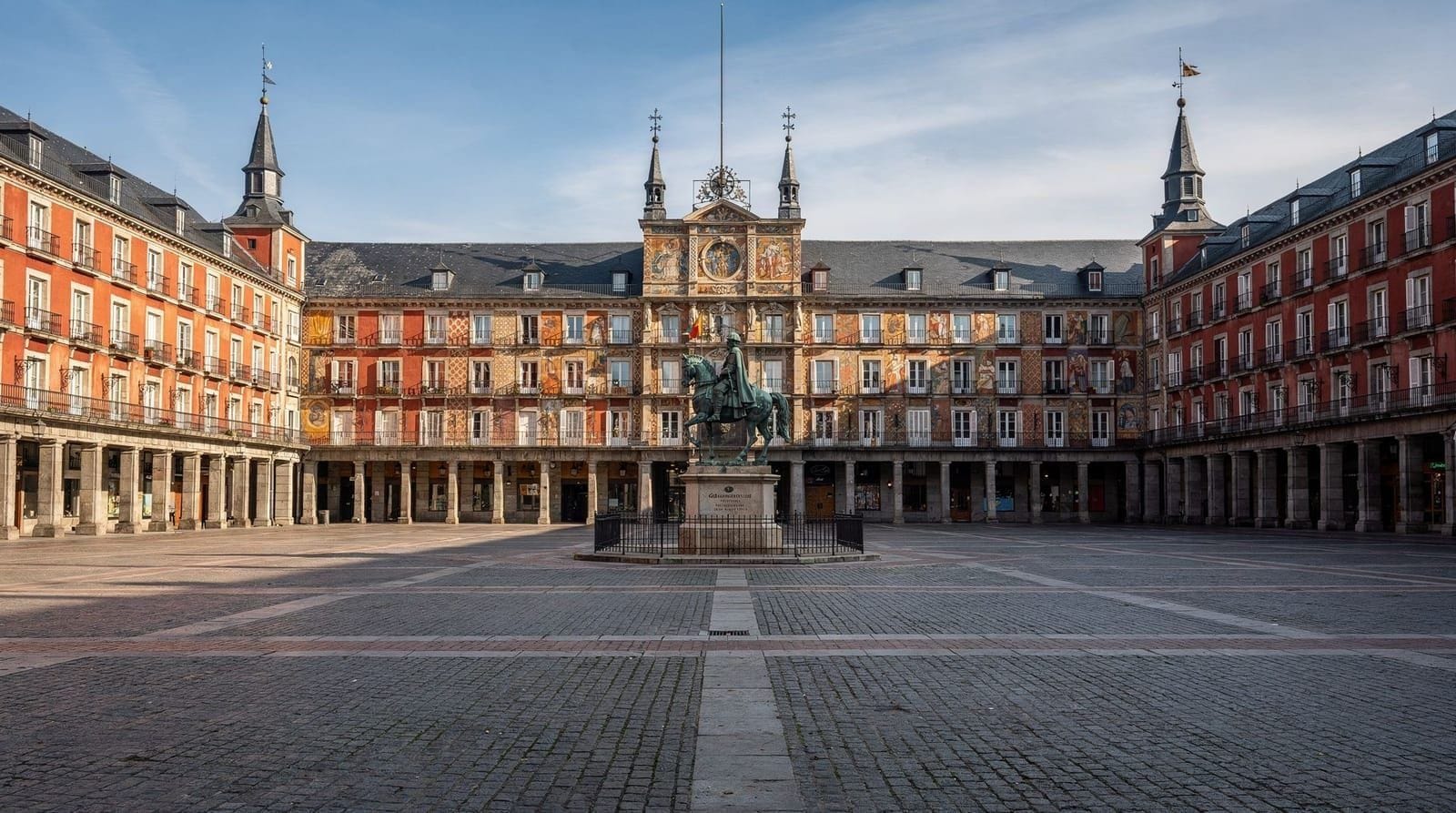
Getting there: The palace faces the Plaza de Oriente on its east side and the Campo del Moro gardens on the west. Nearest metro is Ópera (line 2 and 5), a 5-minute walk. The Plaza Mayor is a 10-minute walk east via Calle Mayor. See /destinations/austrias-plaza-mayor/ for the surrounding neighbourhood.
Combining the Royal Palace with the Almudena Cathedral
The Catedral de la Almudena stands directly south of the Royal Palace across Calle de Bailén, connected by a ceremonial plaza. Entry to the cathedral is free (a suggested donation of €1 is requested). The cathedral was consecrated in 1993 — it is Europe’s most recently consecrated Catholic cathedral — and the neo-Gothic interior with its contemporary-style windows is worth a 20-minute visit. The museum and dome viewing gallery (€8) offers one of Madrid’s best west-facing views, including the Guadarrama mountains on clear days.
For a full Madrid Austrias half-day, combine the Royal Palace with the Almudena, a walk through the Plaza de la Armería, and lunch in the Plaza Mayor area. See /guides/royal-palace-guide/ for a detailed self-guided route.
Verdict
The Royal Palace is one of Madrid’s essential visits and the queue problem is real enough in peak months that pre-booking is the default sensible choice. The guided tour adds genuine value for first-time visitors with no background in Habsburg-Bourbon dynastic history — the rooms are spectacular but they need context to cohere. The Royal Armoury is consistently underrated and worth prioritising before museum fatigue sets in. Budget a full half-day and combine it with the Plaza Mayor area for a coherent Madrid Austrias morning.
Compare top tours
Frequently asked questions about Madrid
Is the Royal Palace of Madrid worth visiting?
Yes, with one caveat: it is the largest royal palace in Western Europe by floor area, with 3,418 rooms (135 of which are open to visitors), and the state rooms on the main floor are genuinely spectacular — frescoed ceilings by Tiepolo, Gasparini's rococo chinoiserie room, and the Throne Room with its Venetian chandeliers are among the finest baroque-rococo interiors in Europe. But the visit is best appreciated with context; without it, the procession of gilded rooms can blur into each other after the first dozen.How long does a visit to the Royal Palace take?
The standard self-guided route through the open state rooms takes 1.5–2.5 hours at a comfortable pace. Add 30 minutes if you include the Royal Armoury (separate wing, included in the ticket), which holds one of the finest collections of medieval and Renaissance armour in the world — Carlos V's tournament armour is particularly impressive. Adding the Royal Pharmacy (small, 20 minutes) and the Cathedral of Almudena (free, five minutes' walk) makes a half-day programme.Do you need to pre-book tickets for the Royal Palace?
In peak season (April–September, Easter week, and any public holiday) the Royal Palace queue at the box office can run 40–60 minutes. Pre-booked tickets with a timed entry slot effectively bypass this queue. Outside peak season on a weekday morning you can usually buy at the door without a long wait, but the timed ticket also removes the uncertainty. For visits between late November and March, pre-booking is optional but still convenient.Is the Royal Palace free on certain days?
EU and Ibero-American citizens with proof of nationality or residence are entitled to free entry (self-guided visit only) Monday–Thursday from 16:00 to 18:00 (October–March) and from 17:00 to 19:00 (April–September). Other visitors pay full price at all times. Entry is also free for everyone on 18 May and 12 October. The free window is usable but results in a rushed visit since last entry is 1 hour before closing. Arrive early in the free window if you plan to use it.What is the difference between the basic ticket and a guided tour?
The basic ticket grants access to all open rooms with the audio guide available at rental for €4. A guided tour adds a licensed historian who explains the political and architectural history of the Habsburg and Bourbon dynasties, contextualises the art and furnishings, and points out details you would miss independently — the trompe-l'oeil ceiling perspectives, the royal family portraits as dynastic propaganda, the story of the palace burning down in 1734 and being rebuilt in Italian baroque style. For most first-time visitors, a guided tour adds genuine value.Can I visit the Royal Palace and the Prado on the same day?
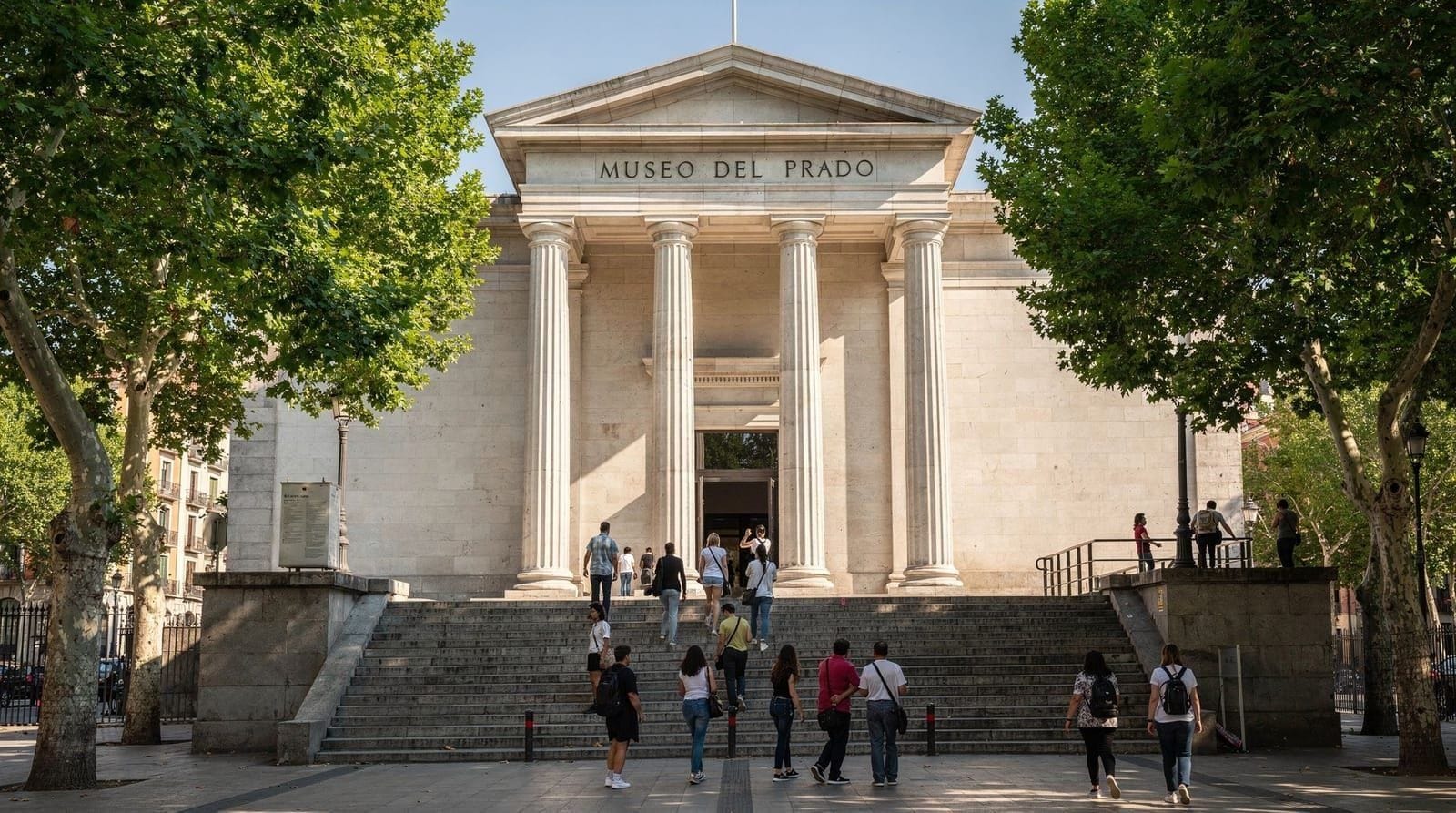
Yes, and many visitors do. The Royal Palace is in the western Habsburg quarter (Austrias), about 3 km from the Prado. Walking between them via Calle Mayor takes 35–40 minutes and passes through the Plaza Mayor. An alternative is a combination tour that covers both in a structured half-day or full day. Realistically, doing both museums justice requires 5–6 hours total; schedule the Royal Palace first (morning opening at 10:00) and the Prado in the afternoon.