
One day in Toledo: a realistic, honest itinerary that actually fits
Most “one day in Toledo” itineraries are either painfully vague (“visit the cathedral, explore the old town!”) or optimistically overstuffed with twelve things that couldn’t realistically fit into fourteen hours. This one is written for a real day — acknowledging that trains run at specific times, that the cathedral takes longer than the internet suggests, and that you will need to eat lunch somewhere that isn’t catastrophically overpriced.
| Train | Avant from Madrid Atocha, 33 minutes each way |
| Cathedral ticket | €12, book online to skip the queue |
| Total cost (excl. train) | Roughly €35–40pp for entries + lunch |
| Best departure | 8:30am to beat tour-bus crowds |
| Time needed | A full day, back in Madrid for dinner |
Toledo is one of the best day trips from Madrid if you approach it correctly. It is also one of the easiest to get wrong. The plan below has been designed around real opening times, real walking distances, and real priorities.
Hour-by-hour summary:
| Time | Activity |
|---|---|
| 08:30 | Depart Madrid Atocha |
| 09:05–09:30 | Arrive, climb to old town via escalators |
| 10:00–11:30 | Toledo Cathedral |
| 12:00–13:00 | Jewish quarter and synagogues |
| 13:00–14:30 | Lunch (away from Zocodover) |
| 14:30–15:30 | El Greco Museum |
| 15:30–17:00 | Alcázar (optional) or free walking |
| 18:00–19:00 | Train back to Madrid |
Before you leave Madrid
Two things to do the night before or the morning of your trip:
1. Buy your cathedral ticket online. The Toledo Cathedral costs €12 for the standard visit. The queue at the door on a busy morning — summer, weekends — can be 30-45 minutes long. Online booking lets you walk directly to the entrance. Buy it before you leave your hotel.
2. Book the 8:30am Avant train from Madrid Atocha. The train arrives at Toledo at approximately 9:05am. This is the critical timing decision of the entire day. Arriving two hours later means arriving as the tour buses have already filled the cathedral queue. The difference is real.
The Toledo from Madrid guide has current train prices and how to book on RENFE.
08:30 — Depart Madrid Atocha
The train station at Atocha is notable in its own right — the old Victorian iron and glass structure has been converted into an indoor tropical garden, while the modern RENFE platforms are in an adjacent building. Allow twenty minutes to find the correct platform and validate your ticket. The Avant to Toledo takes 33 minutes.
09:05 — Arrive Toledo, get to the old town
Toledo’s train station is at the base of the hill below the old city. It’s an attractive neo-Mudéjar building from 1919, but what matters is getting from it to the old town, which requires either a 20-25 minute walk uphill or a taxi/bus.
Most practical option: Take the escalators and travelators that the city installed on the hillside — they’re free, start from near the Bisagra Gate, and make the climb almost effortless. The journey from station to old town by escalator takes about 15-20 minutes at a relaxed pace.
The Toledo destination page has a map of the escalator access points.
09:30 — Arrive in the old town, find coffee
You have half an hour before the cathedral opens. Use it for a coffee and something small to eat at any café away from the main square. This is not the moment for a full breakfast — you’ll want lunch capacity intact later.
The Zocodover — Toledo’s main square — will be almost empty at this hour and genuinely pleasant. Walk through it now; it will be a different place by noon.
10:00 — Toledo Cathedral (allow 1.5-2 hours)
The cathedral opens at 10:00am Monday to Saturday, and only at 2pm on Sundays (visit it in the afternoon then). Go directly there when it opens.
Toledo’s cathedral is a 13th-century Gothic structure that took around 270 years to build. What makes it exceptional beyond its scale:
- The Sacristy: Contains one of the most concentrated collections of Spanish Golden Age painting outside a major museum. El Greco’s The Disrobing of Christ (El Expolio) hangs here. So does Goya’s The Arrest of Christ, Titian, van Dyck, and others. Plan at least 30 minutes in this room alone.
- The Transparente: A 18th-century baroque altarpiece with a hole cut in the ceiling above it — letting natural light fall theatrically onto the sculpture below. Nothing else in Toledo is quite like it.
- The Choir: 16th-century carved wooden choir stalls depicting the conquest of Granada in extraordinary detail.
- The Treasury: Houses a 16th-century monstrance by Enrique de Arfe that is three metres tall and weighs 180 kilograms. It’s used in the Corpus Christi procession and is otherwise on display.
Budget a minimum of 90 minutes. Two hours is not excessive if you’re interested in art or architecture.
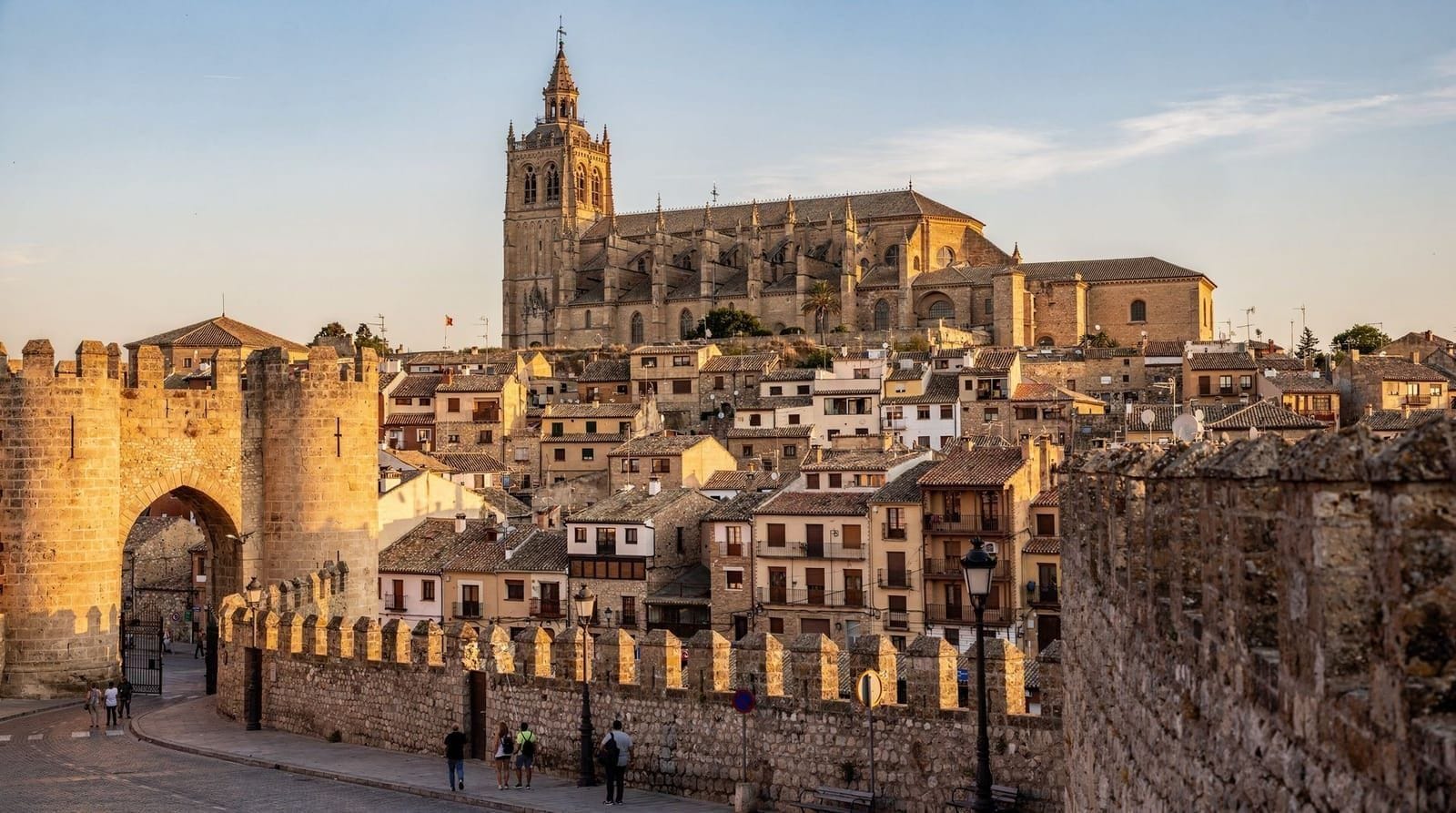 Toledo Tour with Cathedral and 7 MonumentsCheck availability
12:00 — Jewish quarter and synagogues
After the cathedral, walk south and downhill into the Barrio Judío — the old Jewish quarter, one of the most intact medieval Jewish neighbourhoods in Spain. Toledo had a large, prosperous Jewish community until the expulsions of 1492.
Santa María la Blanca is the older of the two main synagogues (built in 1180) and looks unlike any synagogue you’ve seen. The interior is a series of horseshoe arches in the Almohad style — built by Muslim craftsmen for Jewish use in a Christian city. It was converted to a church in the 15th century, which is why it still stands; most synagogues in Spain were destroyed or converted beyond recognition. Entrance is €4.
El Tránsito (also called the Synagogue of Samuel Halevi) dates from 1355 and is now home to the Sephardic Museum. The Mudéjar interior — Hebrew inscriptions, plasterwork, high windows — is stunning. Combined entrance with the museum is €3.
Allow 45-60 minutes for both.
13:00 — Lunch (not on Zocodover)
You are hungry and you are surrounded by restaurants. Walk past anything that has photos on the menu or a person standing outside trying to guide you in.
The best lunch option in Toledo is a proper menú del día at a bar or restaurant in or near the Jewish quarter. Budget €12-15 for three courses with wine. The streets around Calle de los Reyes Católicos and east of El Tránsito have several decent, local-facing options. You’ll know the right place by the presence of Spanish people eating lunch.
This is one of the clearest examples of what the tourist traps in Madrid guide describes — the trap applies equally in Toledo: proximity to the famous square inflates prices and deflates quality.
14:30 — El Greco Museum
The Casa-Museo del Greco is not actually El Greco’s house — that’s a persistent myth — but it’s an atmospheric recreation of a 16th-century Toledo home in the Jewish quarter, combined with a significant collection of El Greco’s work. The Views and Plan of Toledo painting here is one of his most unusual and interesting works. Entrance is €3, free on Saturdays from 2pm and on Sundays.
Allow 30-45 minutes.
15:30 — Alcázar (optional)
The Alcázar of Toledo is a 16th-century fortified palace that was rebuilt after its famous siege during the Spanish Civil War. It now houses the Army Museum, which is large and earnest. If military history and Spanish national history interest you, budget 60-90 minutes. If not, skip it and use the time for what follows.
The views from the Alcázar’s surrounding terraces over the Tagus gorge are free.
16:00 — Afternoon walk and viewpoints
The afternoon light in Toledo is excellent. The city is riddled with narrow streets that reward aimless wandering — stone walls, half-hidden doorways, the occasional glimpse of the gorge below. Walk east toward the Puerta del Sol, then loop back toward the Alcázar area and down toward the old bridge.
The Mirador del Valle, across the Tagus on the south bank, offers the classic panoramic view of Toledo’s skyline. Getting there requires a taxi or a 40-minute walk down and around — worth it if you have the time and energy.
What to do if you’re short on time
If you arrive later than 8:30am or have to leave earlier, the day compresses. Cut the Alcázar first — its views are free from outside anyway. If time is very tight, cut the El Greco Museum next and add 20 minutes to the cathedral instead; it’s the single sight you should never rush. The Jewish quarter walk can be shortened to Santa María la Blanca alone if needed, skipping El Tránsito. What you should never cut regardless of time pressure: the cathedral and lunch away from Zocodover, because those are the two parts of the day that define whether it felt rushed or complete.
If coordinating the train times and walking route yourself feels like more logistics than you want to manage, a guided day trip from Madrid handles the transport and pacing for you and adds historical context along the way.
Toledo day trip with a local guide from Madrid17:30 — Work back toward the station
Allow 30 minutes to get from the old town to the train station (walk down, take escalators in reverse, or taxi). Check the return train times when you arrive — several Avant trains run to Madrid each day (see the Renfe site for times). The day trips by train guide explains how to handle flexible return times.
18:00–19:00 — Train back to Madrid
A 6pm or 6:30pm departure gets you back to Atocha in time for a Madrid dinner at 9pm — perfectly calibrated to Spanish eating hours.
What this day actually covers
In honest terms: you’ve seen the cathedral properly, both synagogues, the El Greco museum, walked the Jewish quarter thoroughly, and had a good lunch. You’ve walked past the Alcázar. You’ve seen the old town at its quietest (morning) and its most atmospheric (afternoon). That’s Toledo, done well.
The comparison guide at Toledo vs Segovia explains how this day compares to a Segovia visit if you’re still deciding between the two. And the best day trips from Madrid overview contextualises Toledo within the broader options if you’re planning multiple day trips. More on what makes Toledo itself special is at the destination page.
One day in Toledo, done correctly, is more than enough. The key is doing it correctly.